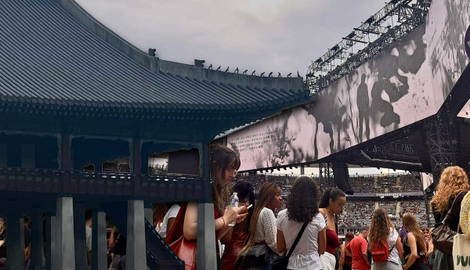

When Parasite won Best Picture and BTS began filling stadiums around the world, South Korea seemed to have become a cultural superpower almost overnight. But Korea’s story began long before K-pop and cinema captured the world’s attention. For more than two thousand years, kingdoms rose and fell on the Korean peninsula, leaving behind golden crowns, Buddhist temples, technological innovations, and a unique writing system. From ancient kingdoms to today’s Korean Wave, Korea’s history reveals a culture repeatedly transformed by exchange, conflict, and reinvention.
The Three Kingdoms That Shaped Korea’s Early Cultural Identity
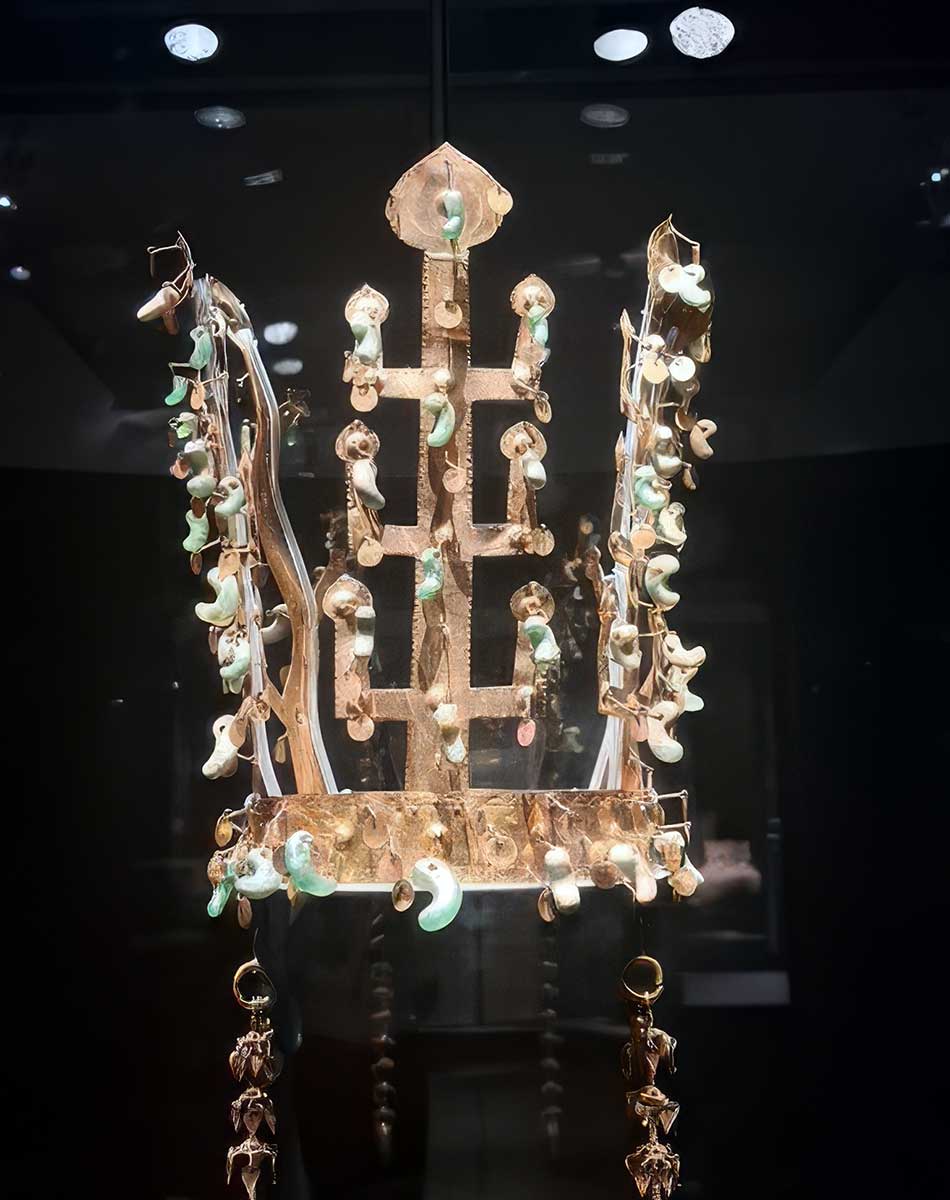
In 1921, a glittering discovery in the ancient city of Gyeongju offered a glimpse into Korea more than 1,500 years ago. Inside a royal tomb lay an elaborate gold crown. Tall, branch-like decorations hung with pieces of jade and tiny golden ornaments. It had belonged to the elite of Silla, one of the kingdoms in the Korean peninsula long before Korea existed as a single state.
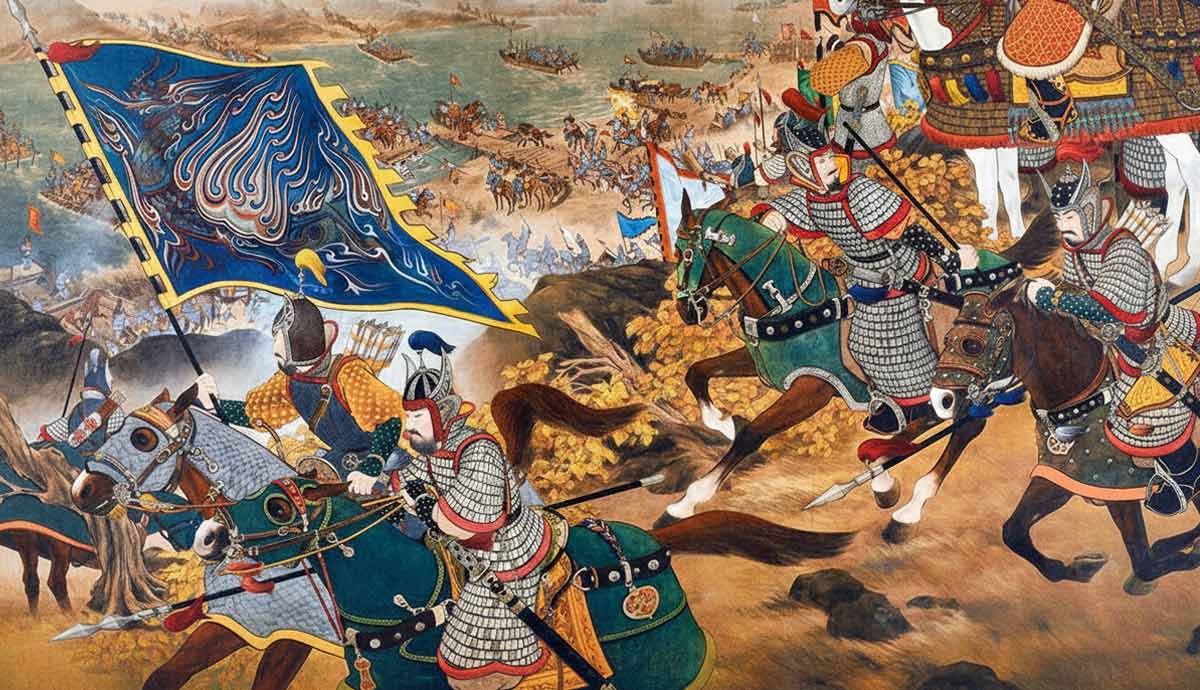
Much of the peninsula was eventually dominated by three rival kingdoms: Goguryeo, Baekje, and Silla. Each controlled its own territory and developed its own royal court, military, and artistic traditions. They regularly fought each other for land and power, but warfare was only one part of their story. The kingdoms were also part of a much wider East Asian cultural network.
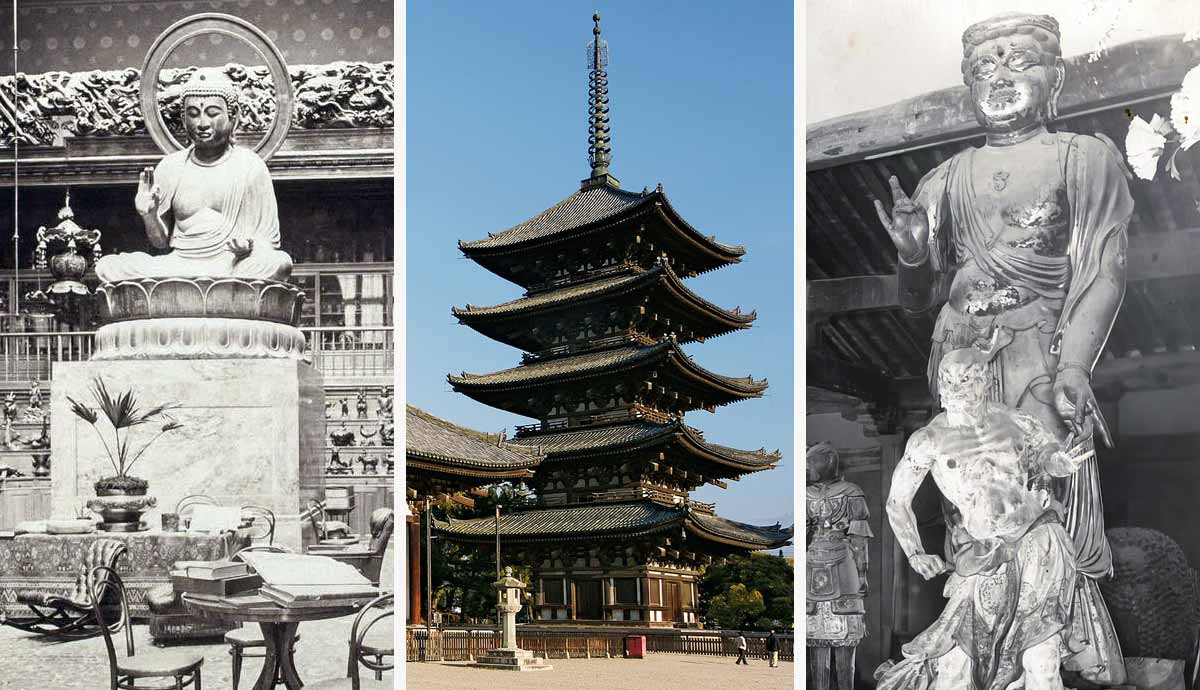
Buddhism was one of the most important ideas to arrive through these connections. Originating in India and reaching the peninsula through China, it was eventually adopted by all three kingdoms. Temples, sculptures, and paintings transformed Korea’s cultural landscape. Exchange also moved outward. Korean monks, scholars, and craftspeople traveled abroad, helping transmit Buddhist teachings, artistic techniques, and technologies to Japan.
By the 7th century, Silla had become the strongest of the three. With help from China’s Tang dynasty, it defeated Baekje in 660 and Goguryeo in 668, bringing much of the peninsula under its control.
Goryeo Gave Korea Its Name
A new dynasty emerged in the early 10th century. Founded in 918, Goryeo eventually brought much of the peninsula under one government. Its name also had an unusually long afterlife. Through contact with foreign merchants, variations of “Goryeo” traveled beyond East Asia and eventually morphed into the name “Korea.”
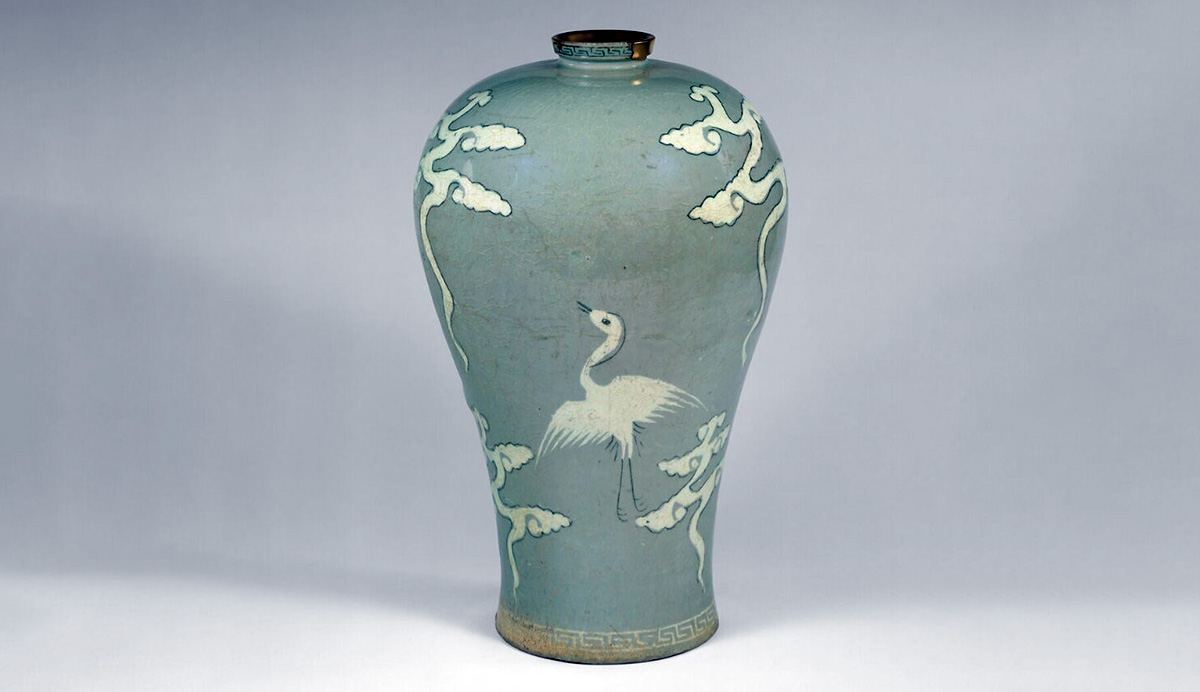
Goryeo was famous for its celadon ceramic. Korean craftspeople perfected a distinctive green glaze and decorated vessels with cranes, clouds, flowers, and other intricate designs. These objects became highly prized and remain among the most recognizable works of Korean art.
The period also witnessed an achievement that challenges a familiar European story of the invention of printing. In 1377, Korean printers produced the Buddhist book Jikji using movable metal type. It is the oldest surviving book known to have been printed using this technology, appearing decades before Johannes Gutenberg printed his famous Bible in Europe.
Koreans do not normally call their country “Korea.” In South Korea, the country is Hanguk (한국), formally Daehan Minguk (대한민국), while North Korea uses Joseon (조선).
King Sejong Created a New Alphabet
For centuries, Koreans relied heavily on Classical Chinese for writing. Yet Chinese characters were poorly suited to the structure of spoken Korean and difficult to master without years of education.
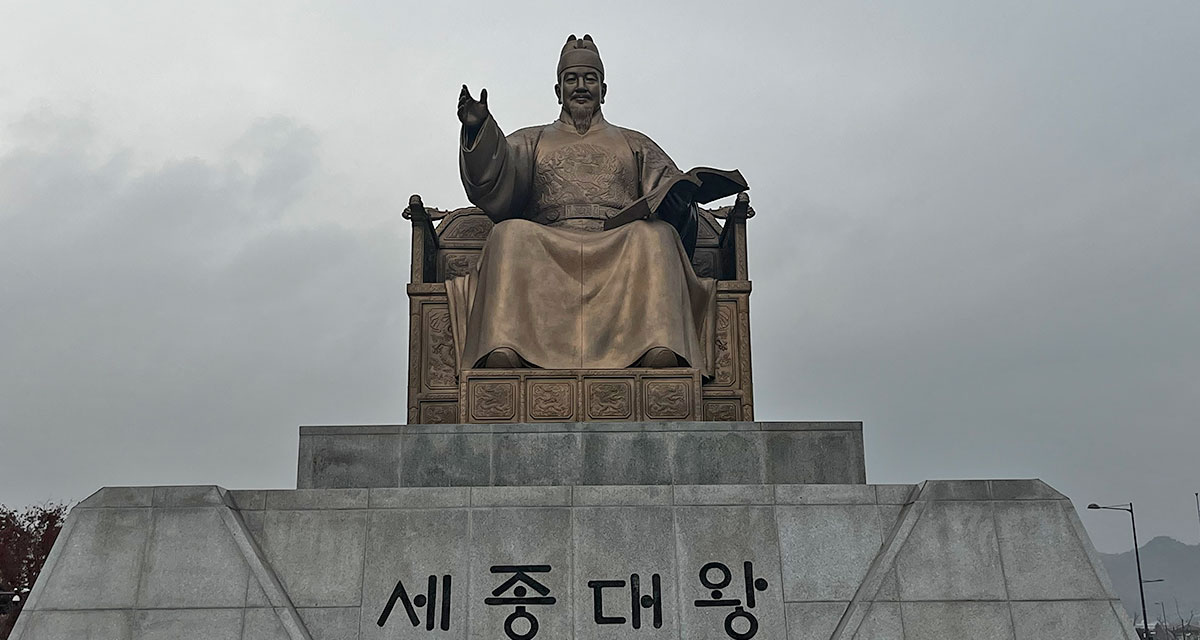
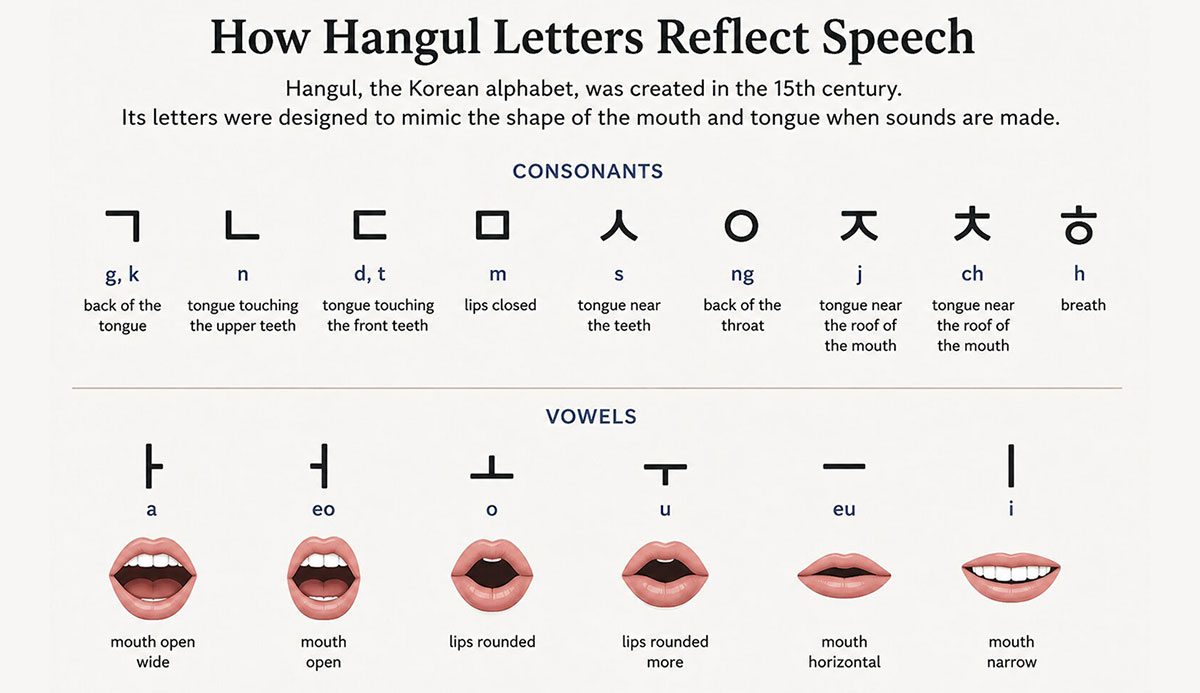
King Sejong of the Joseon dynasty wanted to change this. In the 15th century, he oversaw the creation of a new writing system designed specifically for the Korean language. It was formally introduced in 1446 in the Hunminjeongeum, whose title translates as “The Correct Sounds for the Instruction of the People.”
Today, that alphabet is known as Hangul.
Hangul was unusual because it was a writing system created from scratch rather than gradually evolving over centuries. Several basic consonants reflected the position of the speech organs used to produce their sounds. Letters were arranged into compact blocks representing syllables.
Its relative simplicity made literacy more accessible. Although some members of the educated elite initially resisted it, Hangul survived. Today, it is one of the most powerful and recognizable symbols of Korean culture.
Joseon Shaped Korea for More Than Five Centuries
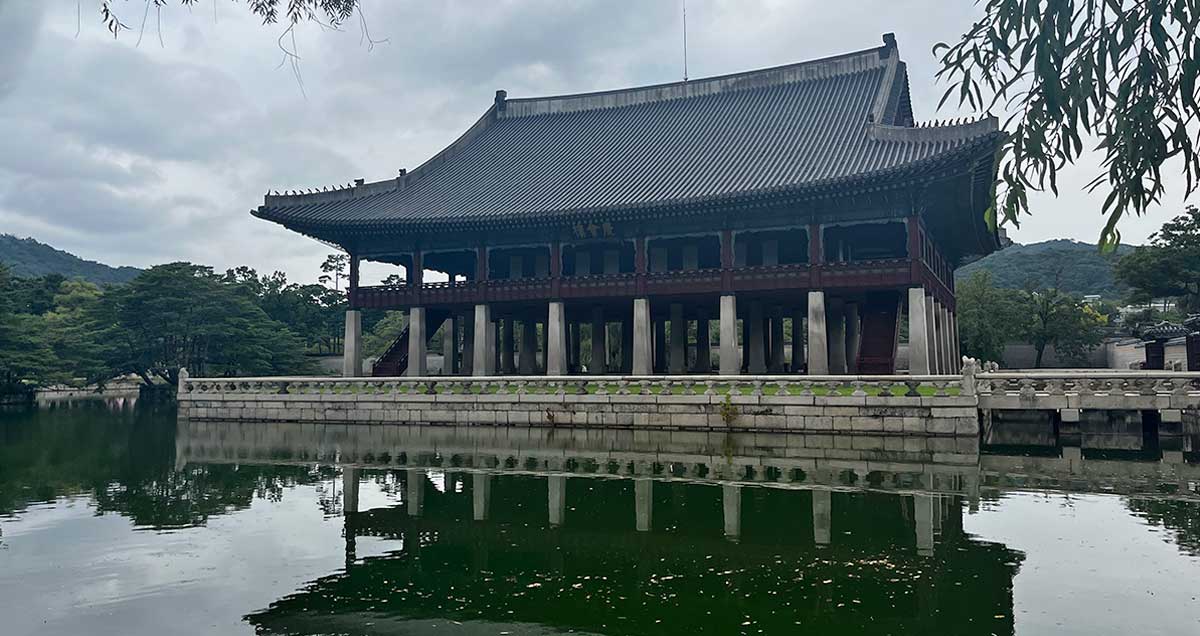
The Joseon dynasty ruled Korea from 1392 until 1910, leaving an enormous mark on Korean society. Confucian ideas shaped government, education, family relationships, and social customs, while scholars and officials developed a sophisticated bureaucratic state.
The period was also marked by artistic and scientific achievement. Scholars working under King Sejong developed astronomical instruments, calendars, and other technologies. Artists produced landscapes, portraits, calligraphy, and ceramics, while royal palaces transformed the capital.
Many things now immediately associated with traditional Korean culture took recognizable forms during Joseon. Yet the dynasty also faced repeated upheaval, including invasions and growing pressure from imperial powers during the 19th century.
By the beginning of the 20th century, Korea faced transformation unlike anything that had come before.
Japanese Rule and War Transformed Korea
Japan formally annexed Korea in 1910 and ruled the peninsula until its defeat in World War II in 1945. Colonial rule transformed Korean political, economic, and cultural life. It also generated resistance as Koreans fought to maintain political independence and cultural identity.
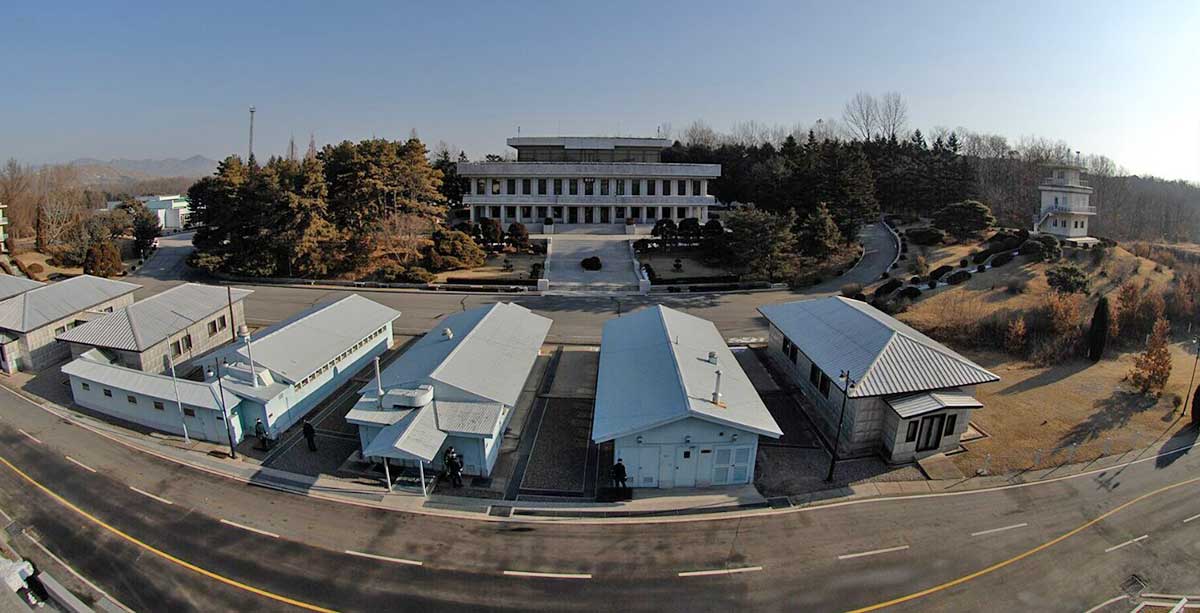
Liberation in 1945 did not produce a unified Korean state. The peninsula was divided into Soviet and American occupation zones, and separate governments emerged in North and South Korea in 1948.
War followed two years later. The Korean War, fought from 1950–1953, devastated the peninsula and killed or displaced millions of people. The fighting ended with an armistice rather than a peace treaty, leaving Korea divided between north and south to the present day.
South Korea emerged from the war facing enormous economic and social challenges. What happened during the following two decades would transform the country again.
South Korea Experienced an Economic Transformation
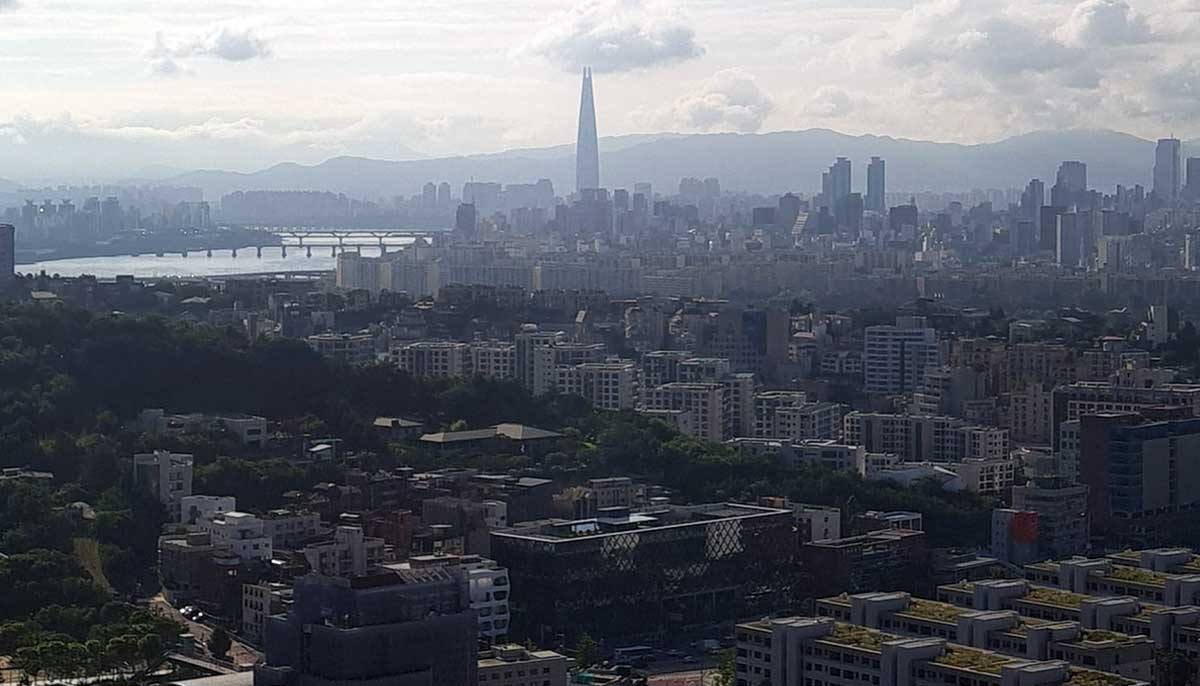
In the decades after the Korean War, South Korea experienced one of the most dramatic and successful economic transformations of the 20th century. Beginning particularly in the 1960s, rapid industrialization turned the country into a major producer of ships, steel, automobiles, electronics and other goods.
The transformation became known as the “Miracle on the Han River,” after the river that flows through Seoul. Cities expanded rapidly, living standards rose, and South Korean companies became increasingly visible around the world.
Economic growth did not initially mean political freedom. Much of South Korea’s industrial development took place under authoritarian governments. A powerful democracy movement developed alongside it, culminating in political reforms in the late 1980s.
By the turn of the 21st century, South Korea was on the brink of another remarkable change. This time, its exports would go beyond cars and electronics.
The Korean Wave Went Global

Long before BTS became a global phenomenon, Korean popular culture was already traveling beyond the country’s borders. During the late 1990s and early 2000s, South Korean television dramas, film, and popular music developed enthusiastic audiences across Asia.
The phenomenon became known as Hallyu, or the Korean Wave.
Digital platforms helped carry that wave much farther. In 2012, PSY’s Gangnam Style became a worldwide hit. The boyband BTS later built a vast international audience, while Korean television and cinema reached viewers who previously had little contact with Korean culture.
In 2020, Bong Joon-ho’s Parasite became the first non-English-language film to win the Academy Award for Best Picture. The following year, Squid Game became a global television phenomenon.
Today, the Korean Wave stretches beyond entertainment. Korean food, fashion, beauty, literature, language, museums, and heritage have all attracted growing international attention.
The global cultural superpower that once seemed to have appeared almost overnight had, in reality, been more than two thousand years in the making.