
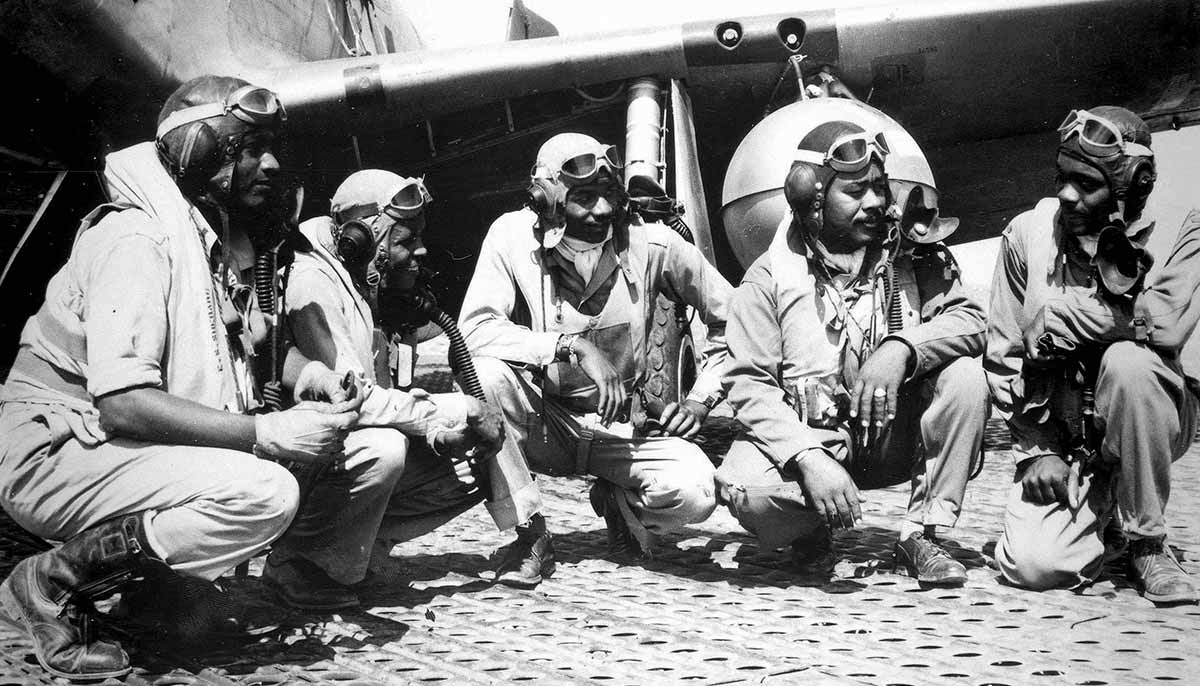
The Red Tails formed as an all-Black fighter pilot group that trained at Tuskegee College, hence their equally memorable nickname. They formed as African American civil rights groups pressured the government and military to allow Black pilots. As of 1940, few African Americans were qualified pilots, and even fewer existed in the US Army Air Forces USAAF. Any all-Black units were segregated from white officers. The 99th Pursuit Squadron first arrived in North Africa in April 1943, flying attack missions.
More squadrons arrived in July 1944 to form the 332d Fighter Group.
Early Ground Raids and the Transition to the P-51 Mustang
The Red Tails were assigned ground attack missions first, flying P-39 Airacobras and P-40 Warhawks in May 1943. These initial planes were not the most advanced and were worn out, making the pilots deem them unsuitable, but the airmen used them as their officers advocated for better fighters.
February 1944 marked the first combat missions as the 332d Fighter Group on ground attack missions. The squadron was re-equipped with the tough P-47D Thunderbolt, known as the Jug. While the pilots liked the Jug, the fighter group’s moment to shine arrived with the superlative P-51 Mustang. Flying this all-round performer, the pilots could fly higher, longer, or faster.
Why the 332d Fighter Group Painted Their Plane Tails Red
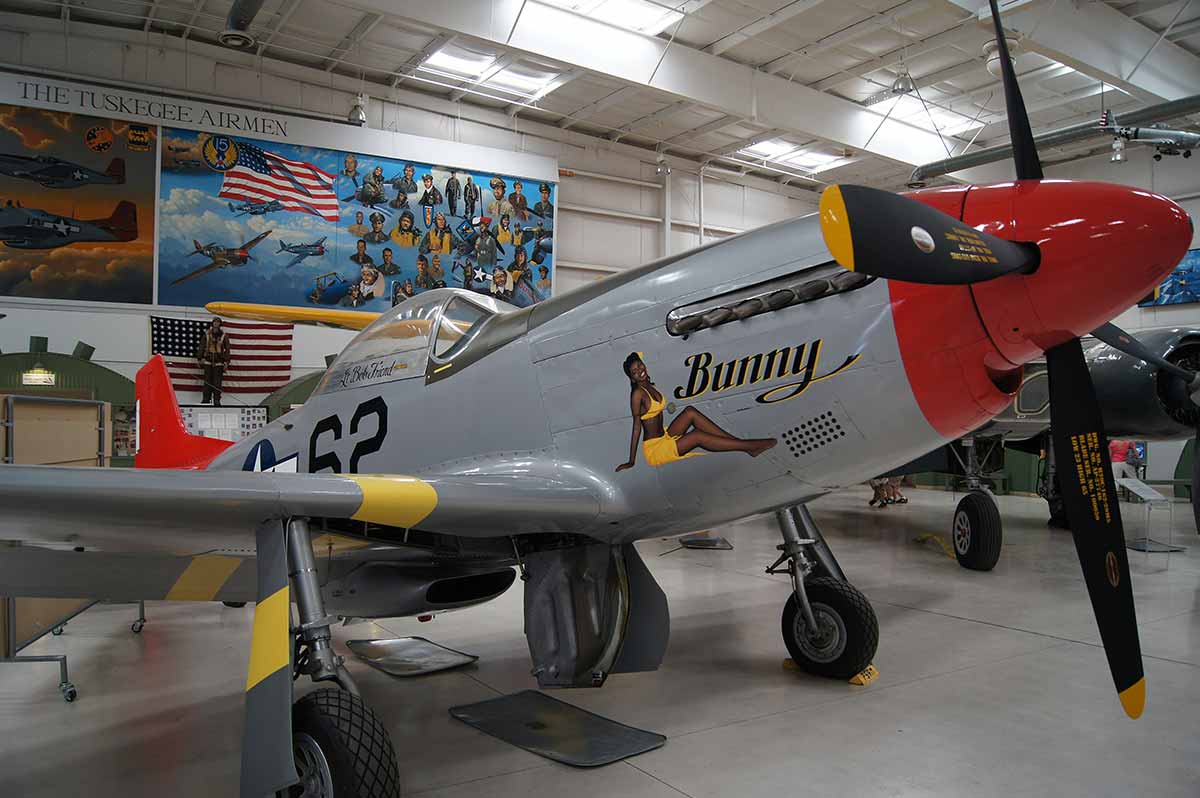
In July 1944, the 332d received their new steeds; they also received a new role: long-range bomber escort. For easier identification, they painted their plane tails completely red. The Mustang, an American design with a licensed-made Merlin engine, helped establish the Red Tails’ reputation. With excellent performance, the Mustang flew further, turned better, and dove quicker than its primary Luftwaffe opponents, the Bf 109 and Fw 190. Both proved capable dogfighters, especially in the hands of competent pilots.
Battling Racial Discrimination Inside the US Military

Sadly, no mention of the Red Tails can be made without mentioning discrimination. Even before the first squadron’s creation, few in the American military thought African Americans could be good pilots. It took an attachment to a Congressional bill in 1939, Public Law 18, by US Senator Harry Schwartz (R-Wyoming) to fund African American pilot training. That same skepticism about Black pilots followed the Red Tails to Europe. They needed to demonstrate themselves as equal to or better than white pilots. Soon, their discipline, skill, and doggedness in combat would earn them a grudging respect.
Protecting Allied Bombers Over Munich and High-Risk Romanian Targets
The Red Tails’ first Mustang-flown escort mission occurred on June 9, 1944, to Munich, Germany. One pilot, Cornelius Rogers, went missing in combat after five victories, and only two B-17 bombers were lost. But the Red Tails proved they could escort bombers deep over the Third Reich.
Their escort missions varied by location, too. As part of the 15th Air Force in Italy, the Red Tails’ reach covered Eastern Europe, most of Germany, and France. Higher-priority targets included the Ploesti oil refineries in Romania. This site supplied one-third of Germany’s fuel needs. Simply put, Hitler’s war machine needed the oil.
The Red Tails escorted more than seven attacks on Ploesti, which the Axis ringed with concentric rings of anti-aircraft guns. High numbers of Axis interceptors backed up these already formidable defenses, as one pilot went missing on those raids with minimal bomber losses.
Challenging Advanced German Me 262 Jets Over Berlin
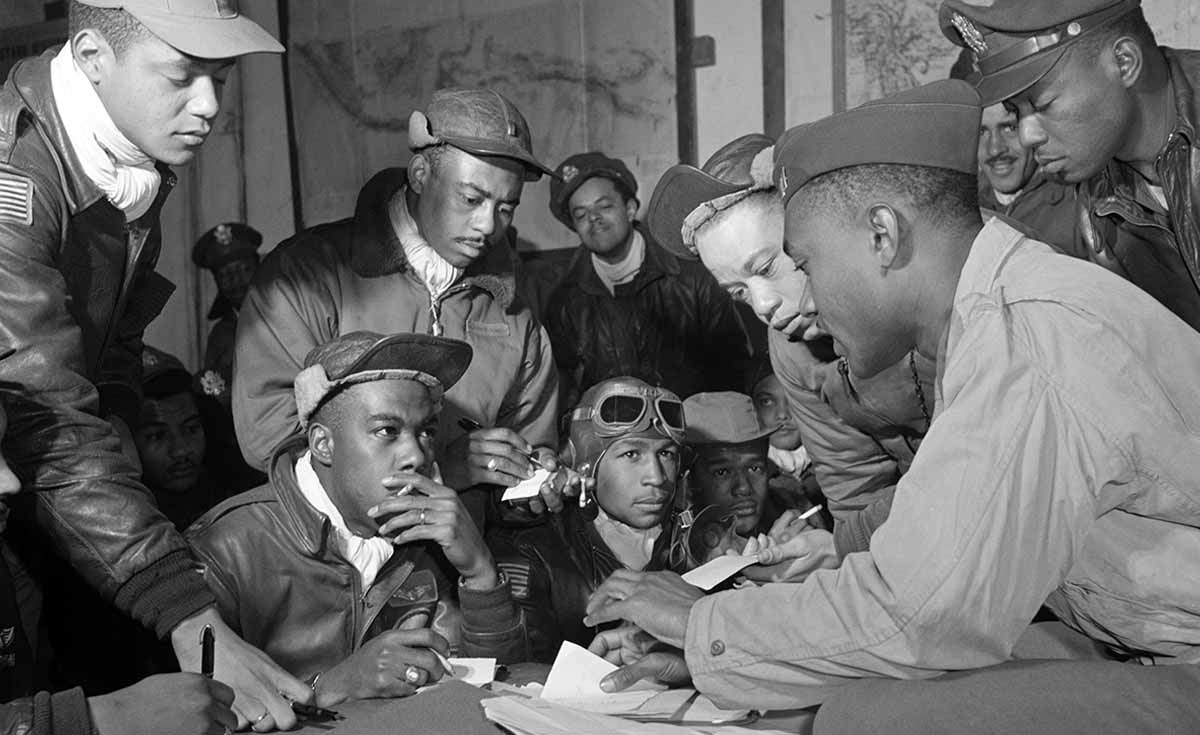
On March 24, 1945, the Red Tails flew their longest escort mission. From their base in Ancona, Italy, they escorted 15th Air Force bombers to Berlin on a 1,600-mile round-trip mission—the target: a Daimler-Benz tank plant on the city’s outskirts. As with any important sites, the Luftwaffe contested the skies above, even this late in the war.
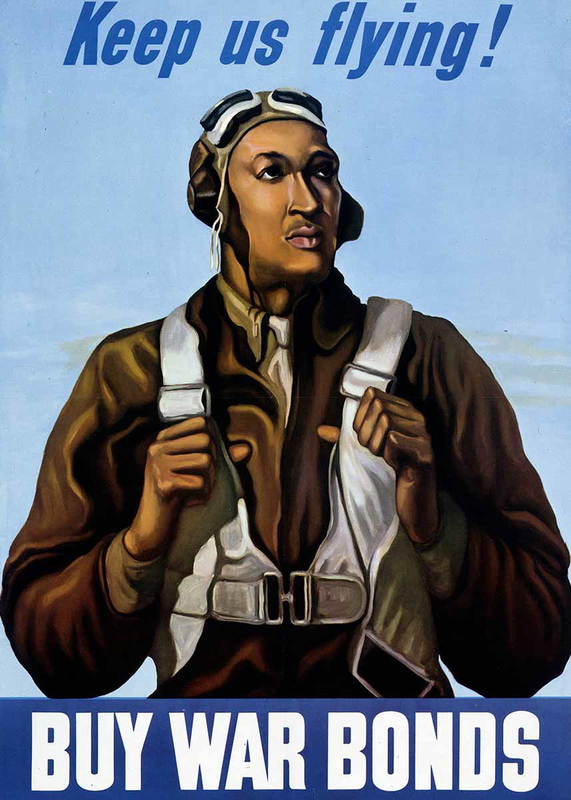
Two dozen Me 262s, the first operational jet fighter, attacked the bomber formations. Flying overhead, the Red Tails dove to intercept. The Me 262s’ much greater speed allowed them to leave at a pace the American P-51 couldn’t match. Yet the Mustangs flew higher and outmaneuvered the German jets. In the following battles, the Red Tails downed three Me 262s but lost five of their own. Such became the Red Tails’ reputation that bomber groups requested their presence, knowing their survival chances improved.
Despite the constant intolerance they faced, the Red Tails’ tenacious, consistent bomber-escort role cemented a legacy still respected today.