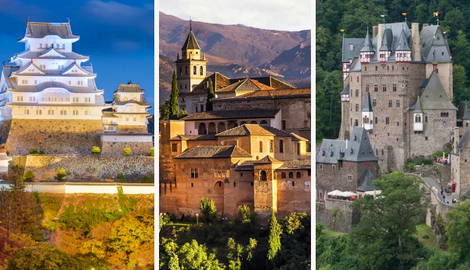

Medieval castles were much more than towering residences for ruling elites. They were formidable fortresses, administrative centers, and physical expressions of political power. From the stone bastions of Northern Europe to the soaring timber frameworks of Japan’s castles, these eight magnificent strongholds stand today as enduring monuments to human ingenuity, strategic design, and the turbulent history of the medieval era.
1. Edinburgh Castle, Scotland (11th Century)
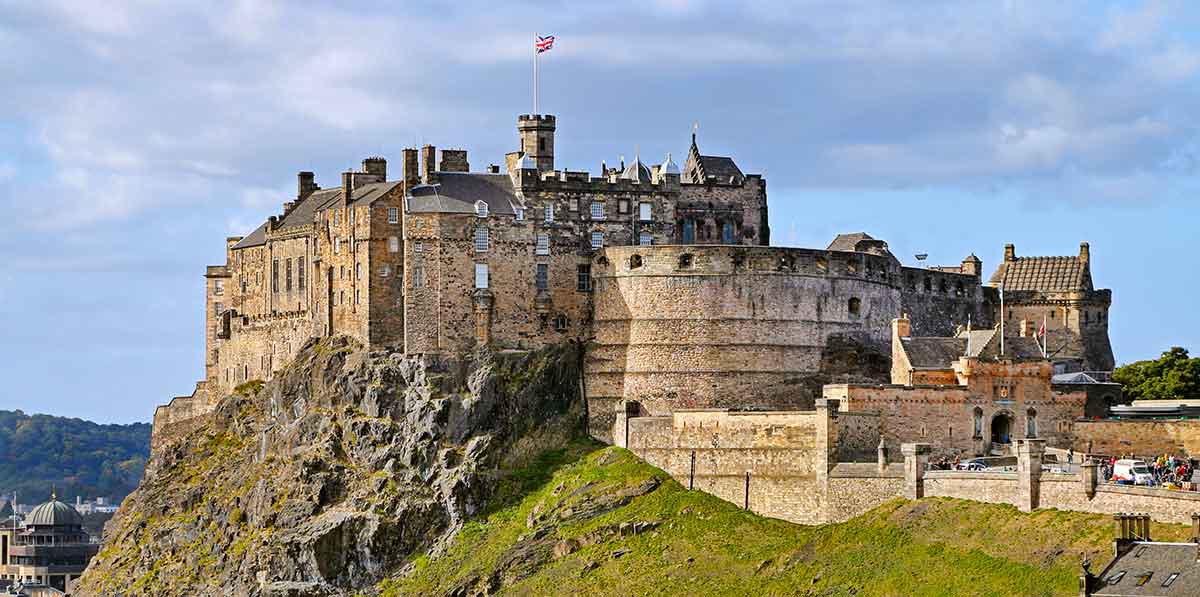
Edinburgh Castle, sitting high atop the city bearing the same name, started life in the early 11th century when King Malcolm III established the first recorded castle on the site. Future kings would add pieces. King David I added St Margaret’s Chapel in honor of his mother in 1130, and it is the oldest standing building in Edinburgh today. David’s Tower was constructed by David II in the 1370s-1380s following destruction during the Wars of Scottish Independence. In 1510, King James IV added the Great Hall, and in the 1570s, the Half Moon Battery was erected to rebuild the fortress after it was severely damaged in the Lang Siege.
The castle was at the center of many conflicts in Scottish history. During the late 13th and 14th centuries, the fortress changed hands repeatedly between English and Scottish forces. Robert the Bruce then famously ordered the castle’s defenses destroyed so it could not be held by English forces. In the 16th century, the castle was held by loyalists for Mary Queen of Scots, enduring a two-year artillery bombardment that destroyed much of its medieval architecture. She also gave birth to James VI there, who would become King James I of England.
Today Edinburgh Castle is a war memorial and popular tourist destination, welcoming around two million visitors each year.
2. Windsor Castle, England (11th Century)
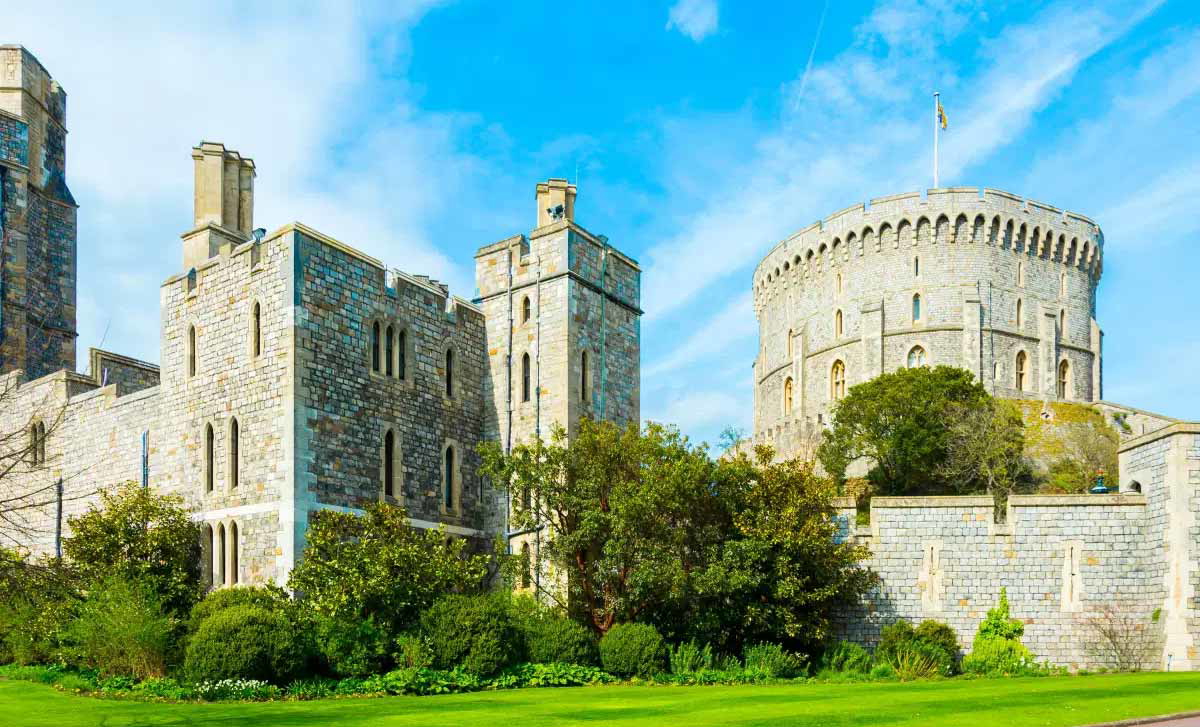
Nestled in the county of Berkshire, Windsor Castle could be one of the world’s most famous structures. One undisputed fact: Windsor Castle is the oldest inhabited castle. Started by William the Conqueror in the 11th century as part of a ring of defensive castles around London, subsequent rulers made improvements. It was originally a Norman Castle of wooden motte-and-bailey design, but was transformed into heavy stone fortifications under King Henry II and King Edward III, who started to use the castle as an official residence around 1350.
Though not a genuinely Gothic castle, Windsor contains many Gothic features. St George’s Chapel, built in 1348, has flying buttresses, pointed arches, and large stained-glass windows. The Round Tower, in the Castle’s center, was a central defensive point.
The British Royal Family uses Windsor Castle as a weekend residence. It is also the setting for when a citizen receives an award from the Royal Family. The State Apartments house world-famous artwork by Leonardo da Vinci, Michelangelo, Rembrandt, and Rubens, alongside armor worn by King Henry VIII.
3. The Alhambra, Spain (12th Century)
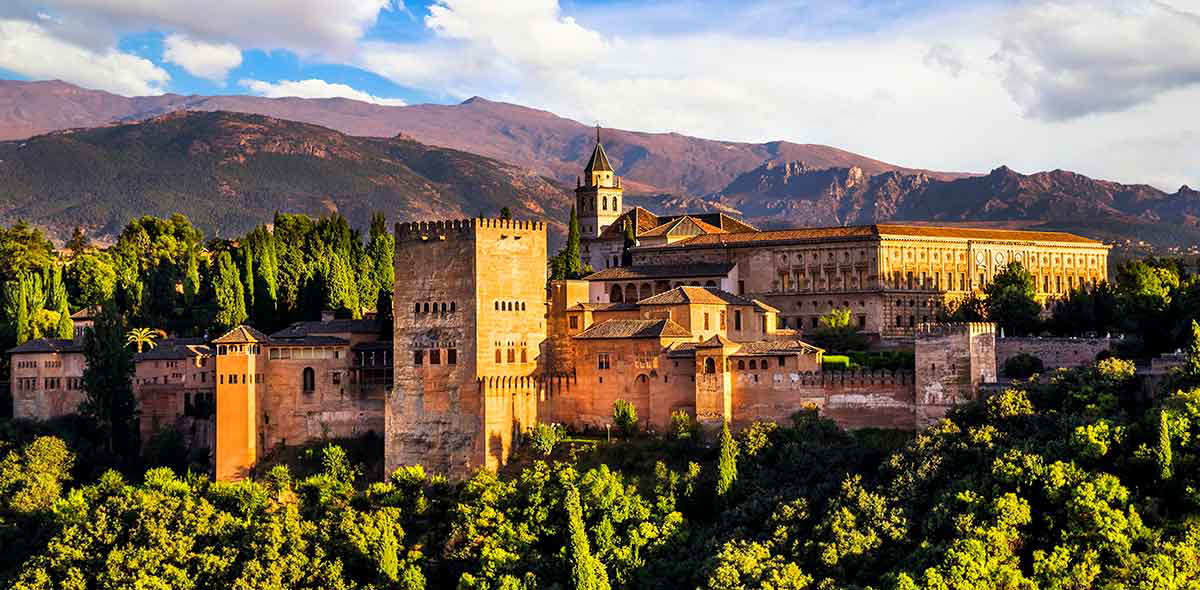
Alhambra Castle in Granada, southern Spain, is situated on a hill as an imposing fortress complex. The Moors (Muslim inhabitants of Spain) built the Castle atop Roman ruins in the 12th century. After the Christian Reconquest in 1492, it became a royal place. In 1527, Holy Roman Emperor Charles V commissioned a massive Renaissance-style palace right in the middle of the Islamic Nasrid complex, creating a striking visual contrast between Renaissance and Moorish architecture.
The imposing external fortress structure is juxtaposed with delicate internal design features. Among Alhambra’s features are reflecting pools, fountains, and channels. These embody paradise in Islamic culture. The Court of the Lions has a central fountain braced by a dozen marble lions. The ornate décor, featuring geometric patterns and calligraphy, adorns many of the rooms.
To combat the intense Andalusian heat, Nasrid engineers diverted water from the Darro River over six kilometers away using complex hydraulic channels. Running water, shaded courtyards, and deep basins act as natural evaporative cooling systems throughout the palaces
4. Eltz Castle, Germany (12th Century)
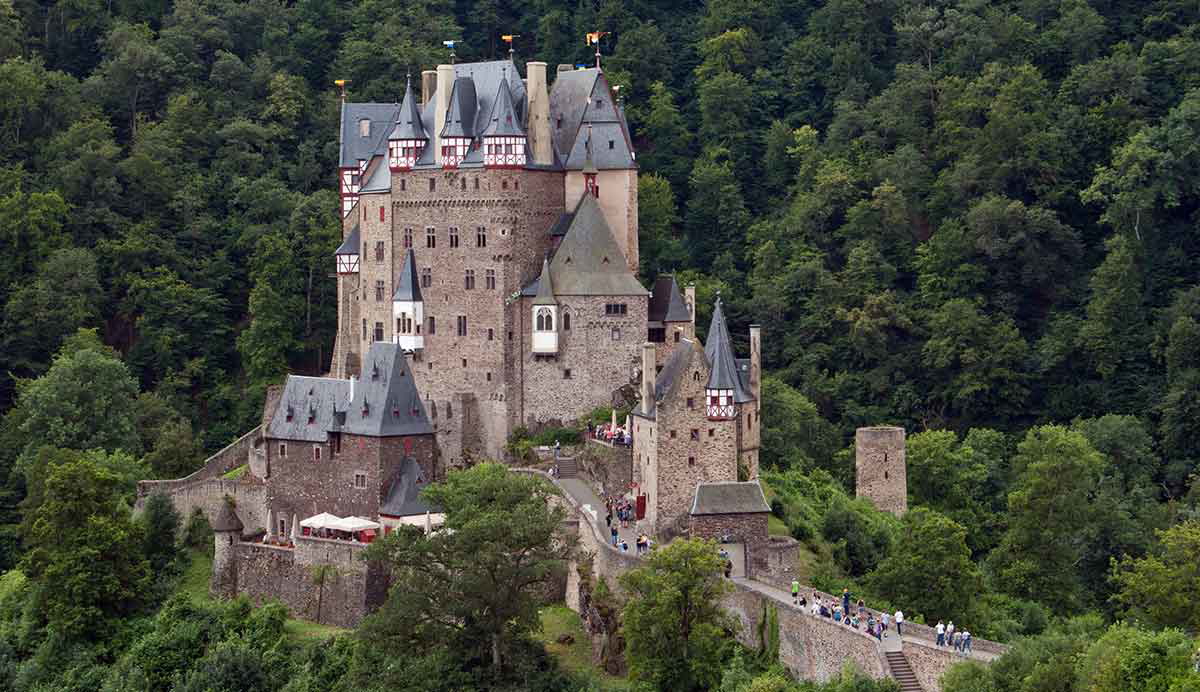
Eltz Castle is hidden in a forested valley above the Moselle River in Germany and has continuously expanded since the twelfth century. It is one of only two German castles among dozens never to have been destroyed and rebuilt. The castle has been held by the Eltz family since at least 1157, making it one of the very few historic estates continuously lived in and preserved by the same lineage for over 800 years. Because it escaped fire and sacking, its interior rooms contain rare 500-year-old original furnishings, armaments, tapestries, and gold artifacts preserved across centuries.
In 1268, three Eltz brothers divided the family inheritance but agreed to share the castle. Different branches of the family built their own separate tower houses and living spaces on the rock, resulting in the castle’s unique, multi-turreted “fairytale” skyline. Today, Eltz Castle is known for blending Gothic, Baroque, and Romanesque architecture. Boasting eight 35-meter-high towers and timber frames, this Castle makes for an unusual sight. Set amidst a natural preserve, visitors get a medieval castle’s full look with no modern structures around.
5. Himeji Castle, Japan (14th Century)

Japan, with its iconic militaristic samurai heritage, is no stranger to castles. With 100 remaining from feudal times, Himeji Castle’s construction began in 1333 and expanded massively in the 17th century. But of surviving Japanese castles, only 12 retain their historic wooden central keeps. Himeji is the largest, most complete, and best preserved of these 12 original castles. Due to the plaster-covered walls and its soaring roofs, Himeji is nicknamed “White Heron Castle,” as it looks like a soaring white bird.
Like many fortresses, Himeji Castle is a hilltop fort. Unlike European castles built of stone, timber framing provides the backbone. Thick, wooden walls, plastered in white paint, give Himeji its bright appearance. The base is stone, like most Japanese castles. Castle defenses are very intimidating to any attacker. Himeji’s defenses take on unusual parts, like a maze-like pathway to slow or confuse attackers. A more brutal defense is the stone drop windows or ishi-otoshi; defenders dropped rocks onto their besiegers’ heads. But while it was designed for war, the castle has never been attacked.
6. Malbork Castle, Poland (13th Century)
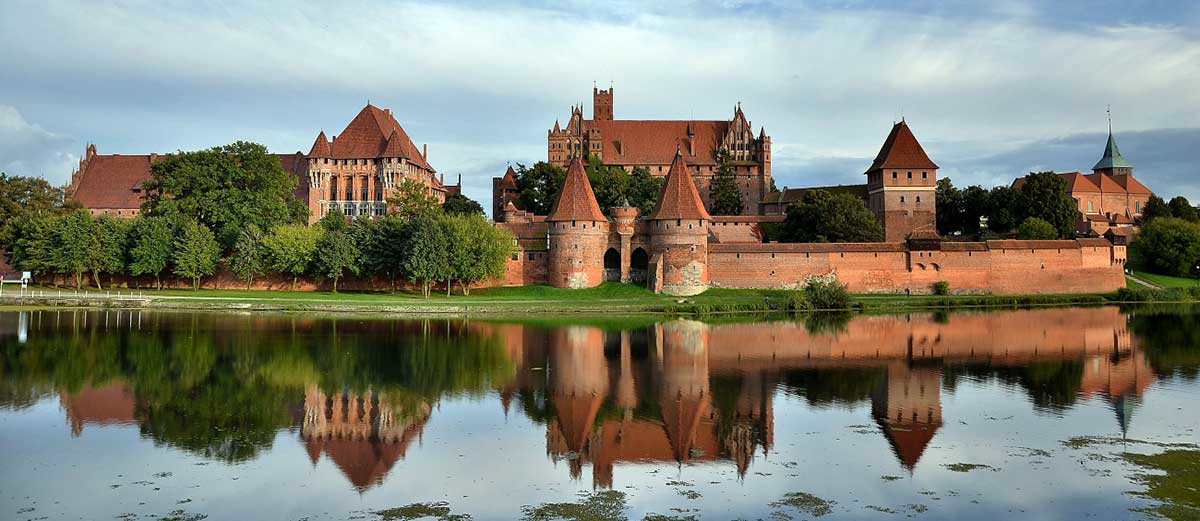
Malbork Castle started life as the Teutonic Knights’ headquarters in Malbork, Poland. These German Roman Catholic knights ruled much of Europe at the time, and originally named the castle Marienburg, in honor of the Virgin Mary. In 1309, Grand Master Siegfried von Feuchtwangen moved the headquarters of the entire Teutonic Order from Venice to Malbork, transforming the fortress into the administrative and military capital of their Baltic state.
Red bricks were characteristic of Teutonic buildings due to a lack of stone. The castle is estimated to comprise between 30 and 50 million handmade bricks. Construction began in 1274, with the final parts added by 1406. By then, Malbork Castle covered an impressive 44 acres or 143,591 square meters. It includes three tiers. The High Castle is the oldest and most heavily fortified section, housing the convent, chapter house, and Church of St Mary. The Middle Castle has the Grand Master’s Palace and vast banquet halls for receiving Europe’s nobility. The Low Castle is home to the armories, stables, granaries, breweries, and other day-to-day essentials.
The Teutonic Order lost the Castle in 1410 when it fell into the hands of mercenaries. Poland purchased the castle from them in 1457 during the Thirteen Years’ War. Over time and due to neglect, Malbork had fallen into disrepair by the 1940s, and then more than half the castle was destroyed in World War II. A thorough post-war effort restored the Castle to its initial appearance. Today, it serves as a museum.