
The French psychoanalyst Jacques Lacan has interrogated the gaze during his seminars in the early sixties. Unlike the thinkers before him, and contrary to our intuitions, he does not conceive of the gaze as a relationship or an activity, but thinks of it as an object. It is not that we gaze or that we are gazed upon, but that we play with others to elicit from them their gaze. For Lacan, paintings are tools by which painters elicit our gaze from us.
Lacan and the Split Subject
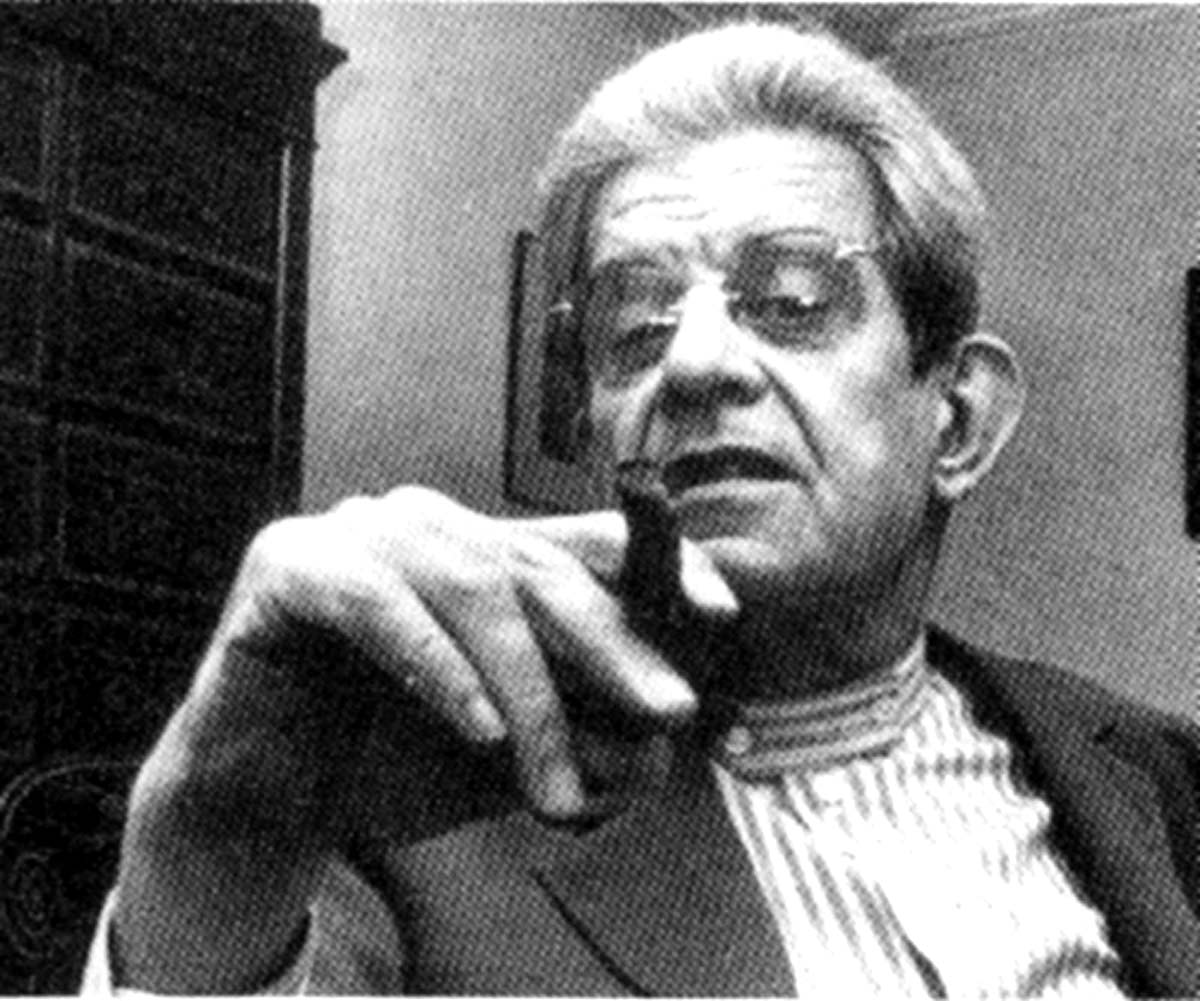
The concept of the gaze was introduced by Lacan in his 1964 seminar devoted to the four fundamental concepts of psychoanalysis. Through the interrogation of the concepts of the unconscious, repetition, transference, and the drive, he aimed to establish a theory of subjectivity.
What distinguishes Lacanian psychoanalysis from other philosophical approaches to this topic, for example, Husserl’s phenomenology, is that it conceives of the subject as split. The Lacanian subject cannot ever attain closure; it lacks. However, this state of lack is somewhat mended with objects, to which, according to Lacan, belongs the gaze.
Lacan is most famous for articulating the split of subjectivity on the level of our involvement in language. It is easy to see that, despite our best efforts, we are fundamentally unable to say what we mean. In consequence, we are always at least slightly dissatisfied with what we get through speaking. There is always something “extra” that we miss. This is not an accident or a deficiency in our knowledge, but the structure of desire itself.
We desire what we do not yet have. But when we finally attain it, it always turns out to be not what we were looking for. This philosophical argument seems evident to anyone who desires and was first proclaimed by Plato in his Symposium.
What makes it unique in Lacan’s conceptualization is the support it receives from de Saussure’s structural linguistics. We express our desires in language, so the rules of language are the form to which our eros has to conform.
The psychoanalytic subject is split between what he wants and what he gets in return. We want something that is not linguistic, but we express our desire through language. In the end, we get only a response in speech, which misses our real desire.
The Object a
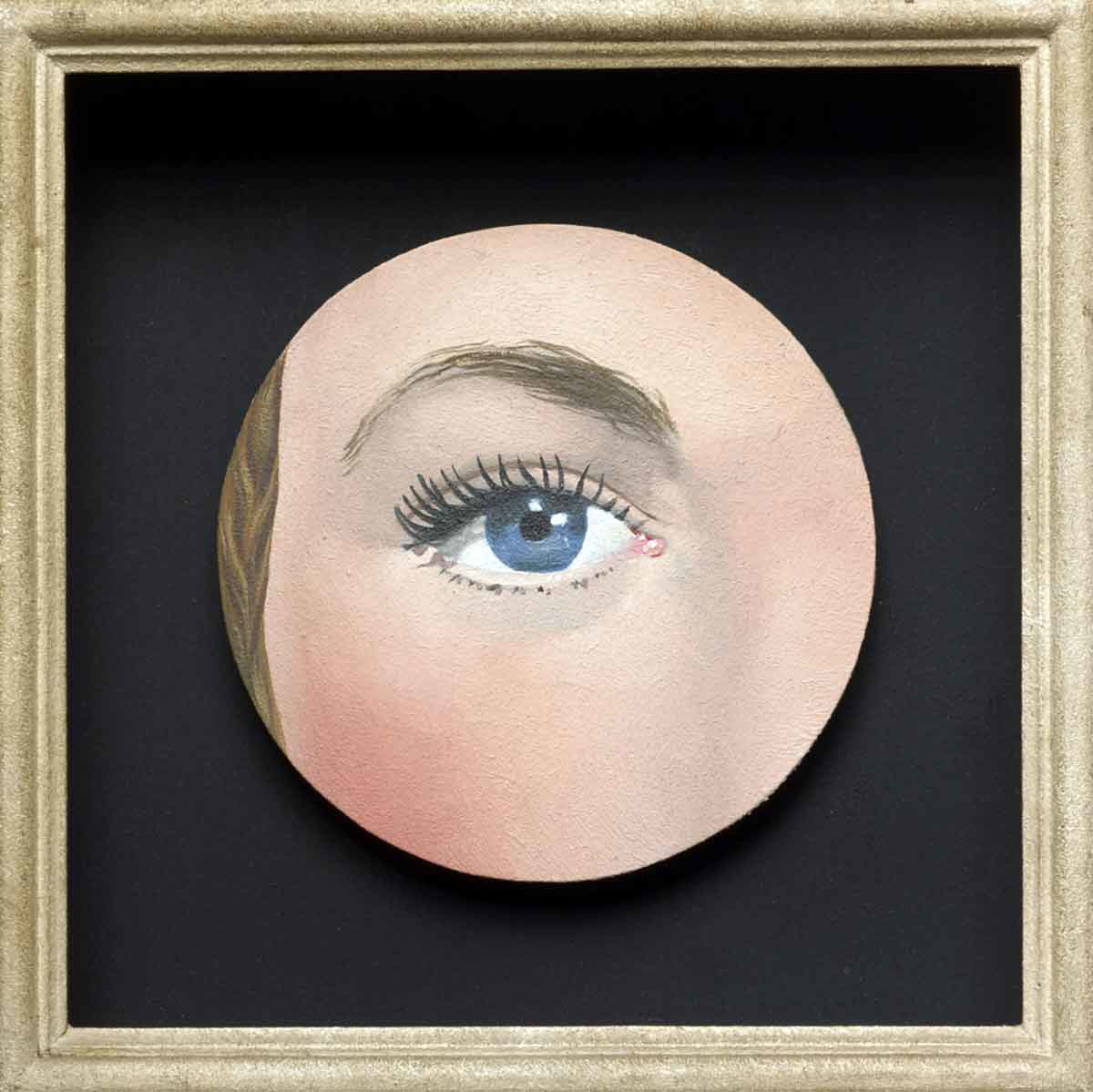
Lacan conceived of the object petit a as something that guides our desires. Its unusual name results from the corresponding notion of the big Other, which the French write as Autre. He is the respondent to our speech.
The object a is a small other, autre, and gets its name from the first letter of the French word. He is the object of our desire. This dynamic between the two makes the subject miserable, because his desire is expressed in language, but the object is not granted by the language.
We believe that the subjective split that each of us bears will be amended by the response from the small other. In other words, the object a is something that would make the subject whole again. While desire flows and turns outside of our control, its aim is focused on something tactile. We are split in our involvement with language, and the object offers a promise of reunification.
However, it is not the same for everyone. Each of us is focused on a different object. Lacan has conjugated this object in four, as oral, anal, scopic, and invocatory. To each one of these corresponds a certain drive that guides the subject towards it. The gaze is a scopic object, so it must be found within the domain of the visible.
Lacan’s theory of the three registers distinguished three domains in which our desires play out: the Real, Imaginary, and the Symbolic.
The Real corresponds to satisfaction and impossibility. The Imaginary is the field of the visible, of images and fantasies. The Symbolic is language and structures. The object a knots parts of all of these three registers.
In the realm of perception, the form that the object a takes is the gaze. It is primarily operating in the domain of the visible, so it belongs partially to the Imaginary. However, desire as such always stems from the fact that the subject is split, and the splitting takes place through language. Therefore, the gaze has a Symbolic component. The Real aspect of it is that it brings satisfaction.
But how does it work in reality?
The Gaze Is an Object
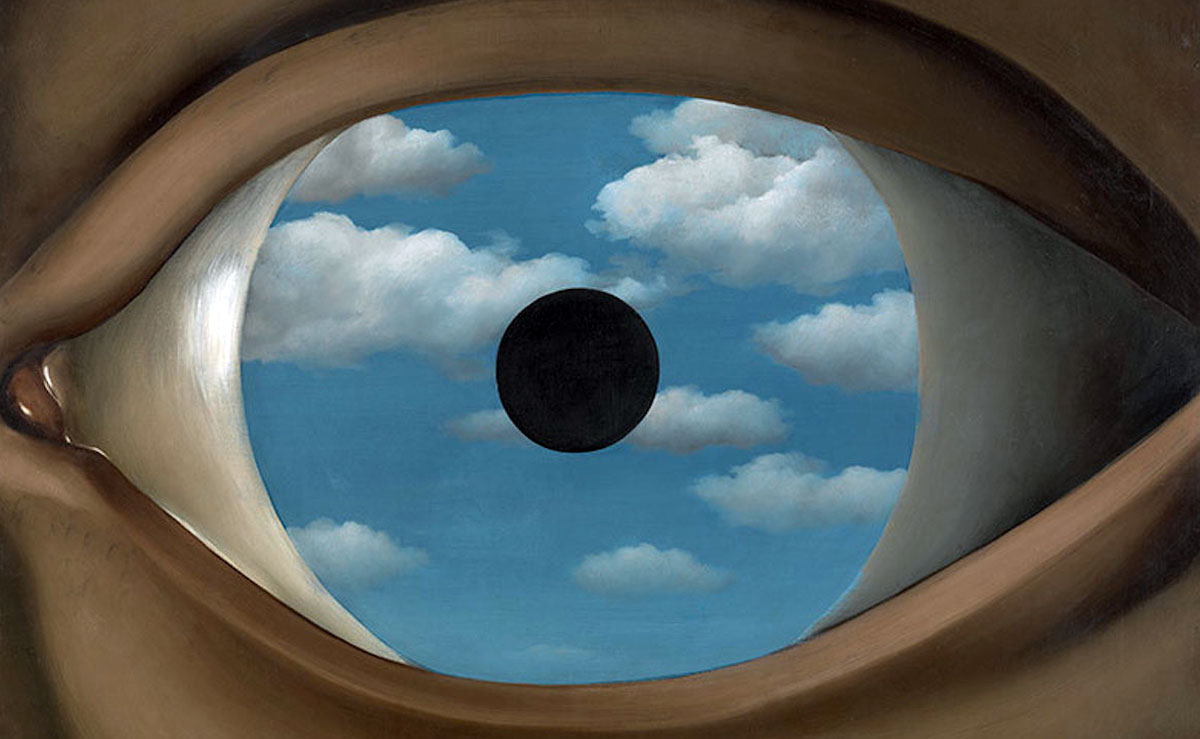
That the gaze is an object means that the subject strives to attain it. What distinguishes it among other objects of our desire is that it plays out in the domain of the visible. As we all know, the realm of images lends itself easily to desire. During an ordinary stroll, we pass at least multiple window shops, each of which is curated to capture our gaze.
Whatever is visible has the capacity to become the object a for someone. Sometimes, it is even we who do the curating of such a shop in order to elicit a gaze from somebody else. The gaze as an object has thus two modalities: we want to see something or to be seen by someone. It is either active or passive.
The active desire to see makes one a voyeur. The subject in search of the gaze in the active form looks for a vantage point from which something can be gazed at. If he succeeds, his scopic desire is satisfied, and he attains the gaze. In most cases, the satisfaction from the active gaze is incommensurable with the subject being seen. Were one to be seen, he would attain another object than he was looking for. He would get the passive gaze while looking for the active gaze.
In the case of the passive desire to be seen, we elicit the gaze from someone or something. We put ourselves in a position that makes the other look at us. If it succeeds, the gaze is attained, and we are satisfied. It is sometimes the case that one posts their selfie on Instagram for the public eye to see, but with the intent of being gazed at by one particular person. This is how the passive gaze works.
For Lacan, the logic of painting is similar to that of presenting oneself online.
Holbein’s Painting “The Ambassadors”

Lacan’s analysis of Hans Holbein the Younger’s 1533 painting The Ambassadors belongs to the pantheon of philosophical analyses of paintings, alongside Deleuze’s book on Francis Bacon. Lacan gave this analysis during the aforementioned seminar on the four fundamental concepts of psychoanalysis, where he also delved into the concept of the gaze.
The choice of this particular painting might not seem obvious, as on the surface, it is nothing more than a portrait of two French ambassadors to the Court of Henry VIII. However, among the various references to the theological disputes of the sixteenth century, we see an indistinct shape on the lower part of the painting. It is a skull.
For the spectator of this painting to see a skull, he has to take a specific position. It is not enough to squint one’s eyes or distance oneself from the canvas, but there is a need to stand in a unique relation to the painting. Looking at this painting on a screen, one should position oneself in the bottom-left corner of the device. If one succeeds in finding an apt position, the skull becomes visible.
Nonetheless, seeing the skull prevents the spectator from perceiving any other elements of the painting. When one knows the trick, there is a choice: either analyze the painting’s artistic qualities, meanings, and structure, or gaze at the skull.
Most of the spectators choose the latter.
The Painter and the Gaze
Despite initially being just a formless blob, the skull in The Ambassadors submerges the viewer into seeking the position from which it is perceptible. It is an object that we desire to see, so it is an object of our active gaze. However, it is also the painter’s passive object gaze. Holbein wants us to see this skull. He painted it in an anamorphic manner to demand that the spectator put in some work to see it. At the same time, he initially made it look like just a formless shape on top of an excellent painting, prompting our curiosity about what it is.
The painting is a tool by which the painter obtains our gaze by offering us something to look at. This double bind is what makes paintings unique. While in our everyday realities, we lack and thus desire, when looking at a painting, something special happens. We get the object that mends us a little. This is possible because we do not only get it in a passive or an active sense, but in both at the same time. Usually, it is not the case.
When one desires the gaze, it means he wants either to be seen or to see. In the case of the painting, the passive gaze, wanting to be seen, is desired by the painter. If he induces the desire of the spectator, as Holbein succeeded, then, only for a moment, the subjective split is mended.