
Modern hustle culture treats you like a resource to be optimized. With increased stress placed on your mind and body, you are prone to experience existential exhaustion. Long before modern corporate burnout became a global epidemic, the German philosopher Martin Heidegger issued a haunting warning that modern technology would eventually turn human beings into a lifeless standing reserve. A handful of brilliant minds of the Japanese Kyoto School took Heidegger’s diagnosis further. The Kyoto School of philosophy combined Western phenomenology with the deep insights of Zen Buddhism. The result was a philosophy that viewed the encounter with nothingness as a chance for a break.
Hustle Culture Turned Heidegger’s Standing Reserve Inward, Onto You

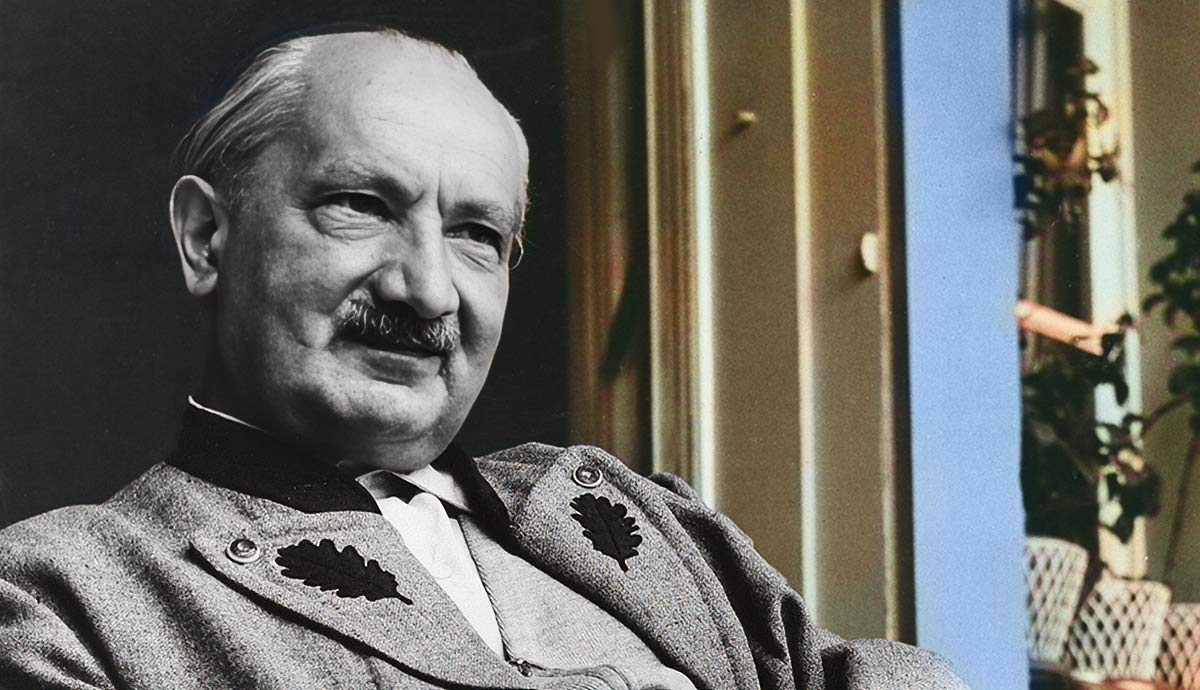
In his amazing critique of modern technology, Martin Heidegger introduced the concept of Bestand. The term translates as standing reserve. Without falling into nostalgia or romanticism, Heidegger calls for a destruction of the classical empirical or technological mode of perception, in favor of a poetic one.
The technological mode of seeing is a utilitarian lens that views nature as a massive stockpile of energy, data, resources waiting to be unlocked, transformed, stored, maximized for pure systemic efficiency. A river is no longer permitted just to be a river; it is now re-engineered into a potential hydroelectric power plant. Or in our case, perhaps a data center. A pristine forest is now no longer viewed as a living ecosystem; it is reassessed as a lumber asset waiting to be harvested on a corporate balance sheet.
The tragic reality of our contemporary era is that modern hustle culture has turned this aggressive, technological gaze directly inward. We ourselves have become the Bestand, the standing reserve of human capital. Guided by modern corporate metrics, key performance indicators, and the psychological weight of constant self-optimization, we treat our own minds and bodies as economic assets.
A lot of it is completely voluntary; some of us want to be endlessly mined for market value. No one sleeps anymore in the simple sense; we track our sleep cycles to maximize the next day’s high-focus blocks. Think also of corporate wellness programs, meditation apps, mindfulness seminars. It all sounds like self-care, but these are weaponized systems of self-surveillance.
The drive toward efficiency creates burnout. When you view your entire existence strictly through the transactional lens of productivity, you reduce your human dignity to a mere line item on a spreadsheet, a data point. This leads to an existential crisis.
Nishitani Studied Under Heidegger, Then Rejected His Answer to Nihilism
To find an escape, we can look to a fascinating intellectual crossroads where Western philosophy met Eastern spirituality.
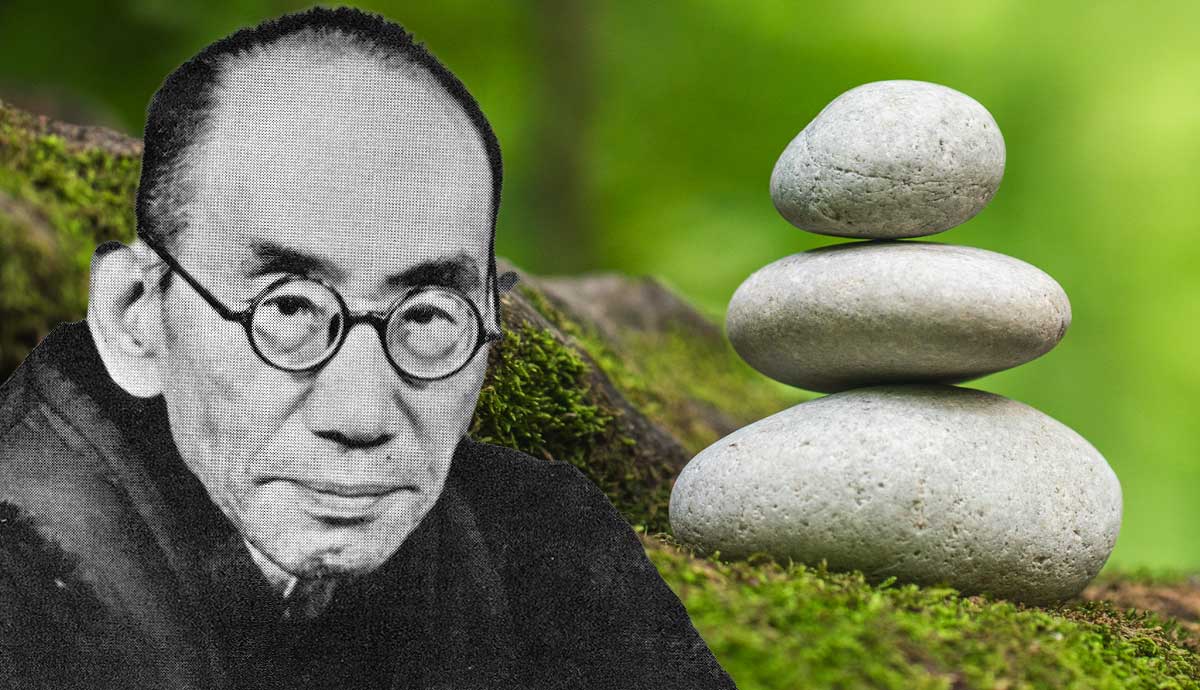
Keiji Nishitani, a preeminent and foundational figure in the development of Kyoto School philosophy, traveled extensively to Germany in the 1930s to study philosophy directly under Martin Heidegger himself.
The early pioneers of the Kyoto School were deeply alarmed by what they perceived as Western civilization’s irreversible slide toward nihilism. This spiritual vacuity stemmed from a purely mechanistic view of the universe, sustained primarily by the rigid and alienating Cartesian subject-object dualism.
The movement was far from reactionary. Instead of outright rejecting Western thought, the Japanese philosophers assimilated aspects of Western phenomenology. They used it as a rigorous academic framework to ground and articulate Eastern insights. They observed that the Western world was trapped in an agonizing, self-defeating cycle.
As modern science systematically dismantled traditional religious certainties, individuals were left staring into a terrifying, empty void of meaninglessness. Thinkers like Friedrich Nietzsche and Jean-Paul Sartre attempted to conquer this harrowing “nihility” through the aggressive assertion of the human will and subjective freedom.
Nishitani, by contrast, argued that this defiant approach only reinforced frantic, ego-centered isolation. Along with him, the Kyoto School introduced an attitude free from anxiety, oriented around a feeling of peace and non-attachment when confronted with the void. By bringing together Western existentialism with Mahayana Buddhism and Zen, they showed how the dissolution of meaning need not lead to despair or nihilism. Instead of fighting the void, they suggested surrendering the illusion of an isolated individual self that triggered anxiety in the first place.
Nishitani’s Emptiness Strips Away Your Job Title as a Source of Worth
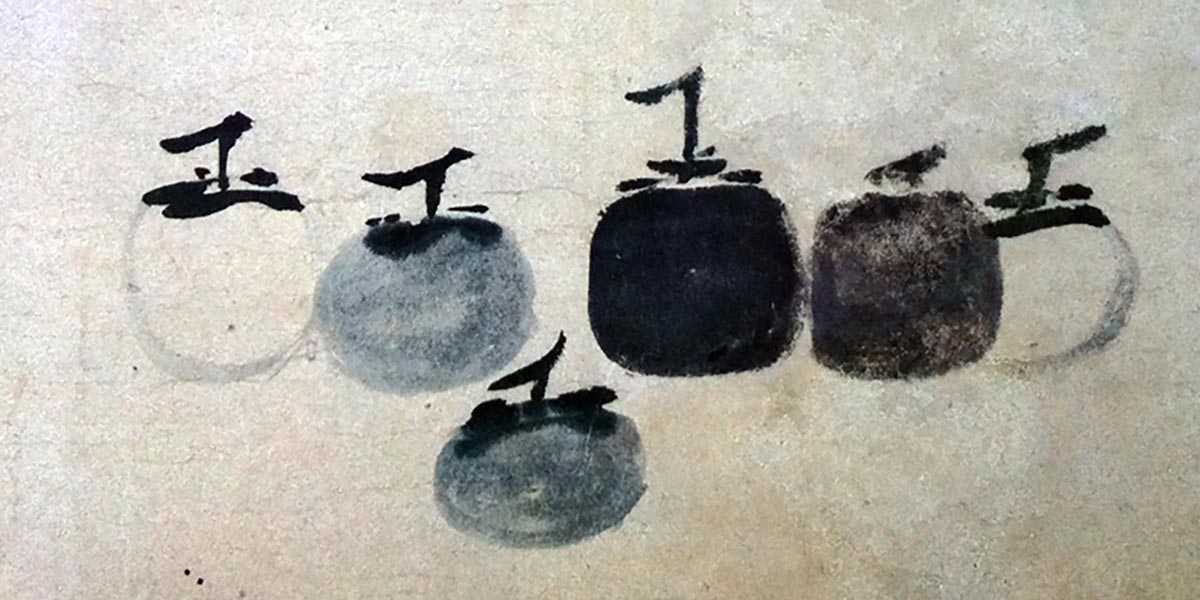
At the center of the Kyoto School philosophy lies the concept of mu. Mu refers to absolute nothingness that we were discussing.
For a typical Western mind conditioned by a cultural baseline of being, rather than becoming, as well as by material accumulation and technological thinking, the word “nothingness” gets associated with a terrifying black hole of passive despair, apathy, or nihilism. However, Nishitani explicitly and carefully contrasts mu with Western nihilism.
While relative nothingness is merely the painful absence of meaning or the void left behind when something gets destroyed, absolute nothingness is a fertile, boundless ground that collapses the artificial boundaries between the self and the external world. This opens up a space of radical freedom and pure potential rather than helpless anxiety.
One is, therefore, advised to step intentionally into this philosophical space and use it as an emergency brake. Or better yet, as a remedy for burnout. It can strip away the suffocating weight of corporate identities, social expectations, and performance pressures. The field of emptiness can annihilate the arbitrary labels that dictate your social and economic value. The labels lose their absolute authority over your soul. How fragile is the ego built up from them?
By embracing the fundamental Buddhist concept of anatman, or non-ego, you discover that no fixed self needs constant protection, improvement, or commodification. When you finally let go of the frantic, exhausting demand to validate your existence through endless achievement, the corporate superego falls apart. You rise out of a passive state of objecthood and stop being a resource. Absolute nothingness can bring you back to what Zen masters call your “original countenance,” a clean slate where your baseline existence is more real than your ego.
Remember, your anatman is completely beyond the reach of a corporate quarterly review.
Replace Calculative Thinking With Meditative Thinking to Break the Cycle

So here is the practical Heidegger burnout cure: We must liberate ourselves from technological, or calculative, thinking. Better yet, computational thinking: the aggressive, transactional mindset that treats time, people, and nature as problems to be solved, objects to be manipulated, or selves to be optimized.
Computational thinking should be replaced with meditative thinking, or poetic perception.
Calculative thinking is no less than the cognitive engine of burnout. Through such thinking we are constantly looking toward the next objective, the next milestone, the next metric. In contrast, meditative thinking does not seek to exploit the present moment for a future goal. And as the Zen tradition suggests, it turns the light inward to illuminate what is directly underfoot, effectively halting the restless, exhausting momentum of modern life.
To implement this transformative philosophy in your daily routine, you must actively build and fill your days with regular practices of pure experience. This means engaging in activities that are completely devoid of optimization goals or ulterior motives. An aesthetics of becoming. This is the absolute antithesis of the modern hustle or the self-improvement trend. It means doing something solely for the sheer, unadulterated reality of the act itself, free from the subconscious desire to track progress, learn a marketable skill, or meet a personal metric.
As a philosopher, I have a personal beef with the profanation of the act of walking. Walking used to be a beautiful philosophical practice, a sacred ritual for clearing one’s mind, meditating, taking stock of one’s recent findings. Under the influence of the calculative mindset, walking becomes another exercise in burnout. You track your steps on a smartwatch, monitor your heart rate zone, and listen to an educational business podcast at double speed to maximize your time efficiency. This is absolute sacrilege; we must rescue walking from becoming a standing reserve for technological thinking.
The same profound transformation applies to how we engage with other domains, such as literature and media. A calculative approach makes you read a self-help book or an industry report with a highlighter in hand, desperately trying to optimize your professional skill set or extract actionable data. A meditative approach invites you to get lost in a beautifully written text for the pure, unadulterated joy of the words themselves, completely devoid of practical utility or professional application.
The philosophical synthesis offered by the Kyoto School helps one perform a radical detachment, separating one’s self-worth from one’s occupational output. By systematically breaking down the strict, alienating perspective of modern consciousness, you can stop viewing yourself as a node in a network. You begin to experience life as an interconnected web of internal relations where your value is not transactional or conditional.