
At its core, philosophical realism asks a fundamental question about the relationship between reality and human knowledge: what exists independently of us, and what is merely a product of the mind? Given that science is our primary tool for understanding the world, we must ask what status to assign to scientific claims. Science continually posits unobservable entities, theoretical forces, and natural laws, but are these elements genuinely real? The collapse of logical positivism forced this question to the forefront, sparking the central debate between scientific realism and antirealism.
Scientific Realism and Antirealism
Scientific realism holds that science aims to give an actual account of the truth of the world, meaning accepted theories are believed to be at least approximately true.
It takes the theoretical at face value, both theories and scientific entities like objects, events, and processes, treating them as having truth values and constituting genuine knowledge of the actual world. Over time, on this view, science converges toward the truth.
Antirealism denies that this truth value is attainable for us, whether regarding entities or theories in general or specific kinds of them. It does not deny the success of science, only that this success comes from directly tapping into the truth of the world, or that doing so is even the goal of science.
What exactly counts as “real,” semantically, epistemologically, and metaphysically, varies between accounts. Scientific antirealism has typically focused on the unobservable, denying truth value to the unobservable entities that scientific theories, often using mathematics, predict and determine.
What we can take to be real, on this view, is just what we can observe. Scientific realism has typically been tied to natural kinds and fundamental laws, though neither association is strictly necessary to either position.
Putnam’s No Miracles
Hilary Putnam is one of the foremost defenders of scientific realism. He revised his views on the topic several times over his career, shaping and being shaped by contemporary philosophy of science.
Putnam first argued against the logical positivists’ instrumentalist view, which treated scientific theories as mere instruments for predicting and controlling phenomena. The positivists held that unobservable entities should not carry truth conditions, since they could not be verified by observation, and that truth was simply correspondence between language and world; unobservable entities acquired truth value only by association with observable terms and procedures.
Putnam countered that realism “is the only philosophy that does not make the success of science a miracle” (Putnam, 1975: 73). Given how extraordinarily successful our theories are, in empirical prediction, explanation, and causal manipulation, what explains that success if not that we are converging on the truth of the world? If scientific concepts were not at least approximately true, their success would be little short of miraculous.
Putnam Said Water Was Always H2O, Even Before We Knew It

Putnam held that having different, evolving theories of a theoretical entity does not diminish its realist standing. The theories still refer to the same real entity, just with increasingly refined knowledge.
A typical example is water and H2O. Even before it was known that water was H2O, the reference was still to the same thing. Updated theories of the electron have changed its properties massively, but all of them tap into the same natural kind, the same real entity.
This is also part of Putnam’s argument against the internalist view held by logical positivism. How we understand conceptual content is not purely determined by internal conception; meaning is also externally determined, tied to the world itself.
Realism is trans-theoretic, and semantics is not purely mental or internal. But it is also not entirely externally driven: two things indistinguishable to us may still be distinct natural kinds, and we can mix up two concepts and believe them the same when their underlying meaning differs.
Putnam Later Rejected the “God’s-Eye View” of Reality

After his argument against logical-positivist antirealism, Putnam challenged the typical view of metaphysical realism, and in part the essentialist view of natural kinds he had previously employed himself.
He saw difficulties with the idea of a view of the world in and of itself, the “God’s-eye view,” since our view is inevitably shaped by language and theory. There is no external vantage point outside our minds and our frameworks.
An ideal theory of the world, even within all empirical and theoretical constraints, will not have a uniquely determinate reference to reality. Putnam therefore denied that truth and reference amount to simple word-world correspondence, a position he had previously taken for granted.
Doubting that our concepts could be mapped cleanly onto reality, Putnam constrained truth by our capacities and frameworks, and scientific realism along with it. We cannot see the world in and of itself. But rather than embracing antirealism, he held that our theories remain approximately true, real in a scientific sense, even if we cannot epistemologically pin down that reality.
His reasoning was that our theories approach ideal theories, the result of science pursued to the ideal limit of inquiry, maximizing epistemic criteria. Theories are true insofar as their concepts correspond to the objects and properties that the ideal theory carves out.
Internal realism became Putnam’s middle ground between realism and idealism, trying to avoid the extremes of both.
Van Fraassen Said Theories Only Need to Work, Not Be True
More recently, scientific antirealism has had a revitalization. The modern take on scientific antirealism is largely shaped by Bas van Fraassen. As staunch an advocate Putnam was for realism, Bas Van Fraassen could be said to be for antirealism. Van Fraassen takes an empiricist focus, similar to that of logical positivists (or empiricists), yet he, like Putnam, also recognized its problems.
Van Fraassen thus merges it with realist semantics—taking scientific theories at face value as opposed to mere tools, in his account of constructive empiricism. A theory is empirically adequate if what it says about the observable phenomena in the world is accurate (regardless of what it says of unobservables). So while it takes the proposed entities and processes to be real, it remains agnostic about their truth when it comes to unobservables.
This is its stark differentiation from realism in its position of epistemology from empiricism—it is skeptical of the unobservable. We may take them to be true or false, but there is no need to believe or disbelieve them. Van Fraassen takes it that our evidence can never entitle our beliefs about unobservable entities. While our theories have to commit to them, we do not.
Pragmatic Scientific (Anti)Realism
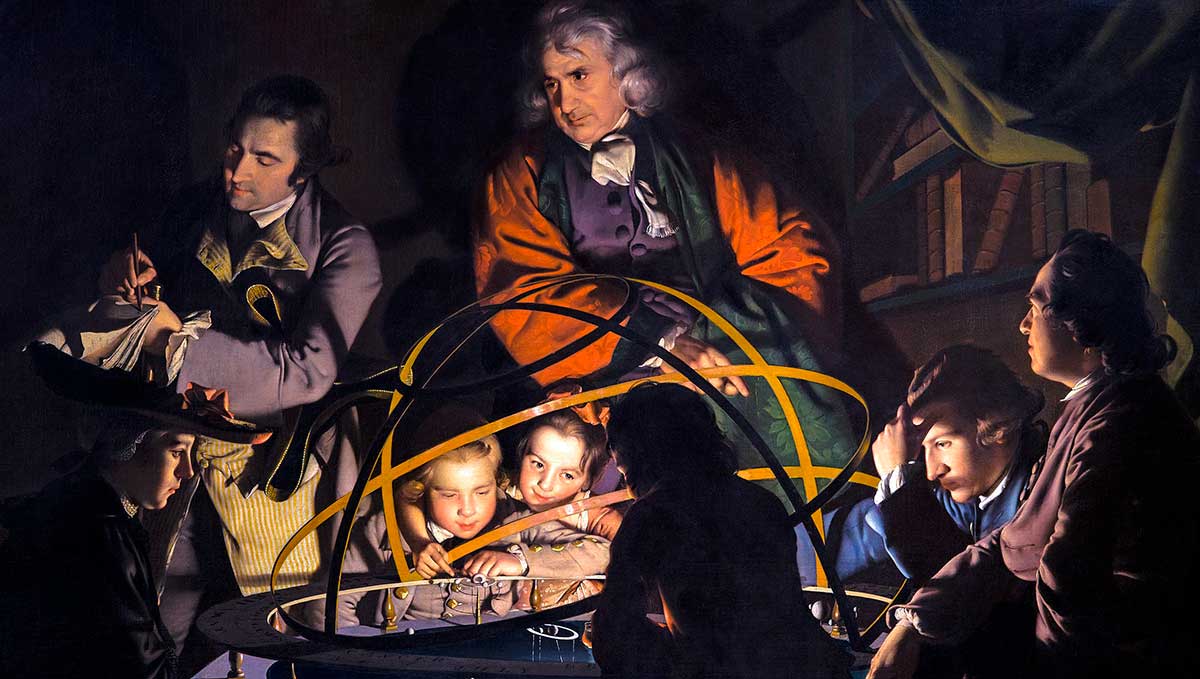
Science, under pragmatic scientific realism, mostly constructs models rather than discovering fundamental truth, aiming only to fit what can be tested. To accept a theory is to believe it is empirically adequate. Science need not, and should not, commit to whether its models determine the nature of reality.
The progress of science, on this view, produces increasing empirical adequacy rather than increasing truth. Antirealism sounds radical, but van Fraassen’s account simply weakens what we attribute truth to, without decreasing the power of science’s explanatory success. We do not need truth to explain that success.
The strong empiricist focus of constructive empiricism also leads it to reject metaphysical claims: if two theories share the same empirical content, there is no epistemic reason to prefer one over the other. In many ways it is a successor to the instrumentalism Putnam first argued against, though its acceptance of semantic realism sidesteps most of instrumentalism’s problems.
Both van Fraassen and Putnam take a pragmatic view of scientific realism, both aware that theories do not directly correspond to the world and that real epistemic limitations exist. Both wanted to loosen realism’s claim to give a true account of the world while still retaining some notion of scientific or empirical truth to explain science’s success.
Van Fraassen compares the success of theories to that of well-adapted organisms: only the successful survive, so selection makes success inevitable without any need for further explanation.
Pragmatic theories of explanation do not require the explanans to be true. There is no miracle in our theories’ success; failed theories like phlogiston or aether were simply selected out for failing the test of empirical adequacy.
The difference between the two philosophers is this: Putnam retains the importance of truth as an epistemic property, even with a pragmatic spin via ideal theory, while van Fraassen discards the need for truth value in pragmatic success altogether.
Van Fraassen also tries to limit the additions to his account of scientific antirealism, while Putnam retains a metaphysical commitment to a mind-independent reality that our theories approach. Van Fraassen’s clear addition is the epistemic distinction between the observable and unobservable, derived directly from empiricism.
Sources
- van Fraassen, B. C. (1980). The Scientific Image. Oxford University Press.
- Putnam, H. (1975). Mathematics, Matter and Method. Cambridge University Press.