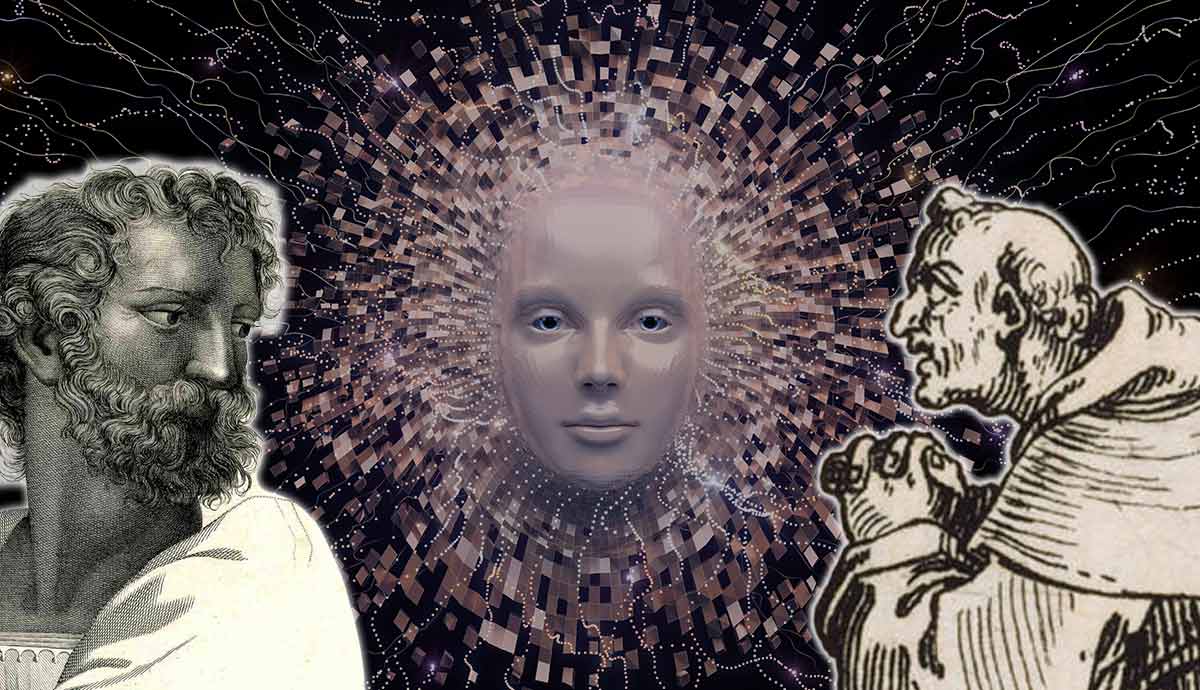

Aristotle affirms that true happiness and pleasure are indissociable, although happiness does not consist of a life of simple gratification or pleasant amusements as is commonly thought, since, for him, relaxation serves to restore the energy needed to dedicate oneself again to meaningful and pleasant activities. Rather, happiness lies in a life sufficiently provided with the assurance of leisure time, allowing us to continuously realize the fulfillment of our nature regarding our most godlike capacities.
What Sets Human Nature Apart in Aristotle’s Philosophy?
For Aristotle, an essential feature of happiness is the objective realization of our human nature, which transcends the constituent elements that make up our bodies. Through human intelligence, inquiry can be made into the most primary and universal principles of being—those furthest removed from sense perception and experience—allowing us to consider beings in terms of Being itself, rather than their accidental or contingent qualities. Humans can also apprehend the indubitable logical principles upon which all sciences rest, and are capable of internally directed, self-originating, voluntary action.
While the human soul, the principle which gives it life, shares in and depends on capacities related to nutritive powers (reproduction, growth, decay) and animal powers (sense perception, imagination, memory, as well as movement based on desires), the specifically human act of understanding involves the mind integrating within itself the form, the inner reality, of the intelligible object perceived, which is characteristic of our species-specific function. There is no limit to this. The entire universe, unbarred from view, can be contemplated by the mind, and it is this capacity that makes us most like what is divine, which Aristotle considers to be what is best and most noble in us.
What Are Aristotle’s Three Conditions for Ultimate Happiness?

Aristotle proposes three conditions that any conception of happiness must satisfy.
- Happiness must be the most estimable and ultimate end of action, always chosen solely for its own sake and never for anything else. Although other goods can be chosen for their own sake, they are chosen as subordinate ends to happiness.
- Happiness is self-sufficient. Possessing it makes life most desirable and lacking in nothing.
- Happiness must be what is most final and complete, such that nothing additional in goodness or perfection can be added to it.
For Aristotle, the goodness and pleasure of any being is a function of how well the fullness of its nature is realized. Self-fulfillment involves the most characteristically distinctive and sovereign functions of the being coming to the most perfect fruition and in the best way.

The life of speculative contemplation, which continuously researches and marvels at the deepest strata of being, in the best possible state of mind, is the activity most conducive to happiness and richest in pleasure. This is explained by the thesis that such activity actualizes our specifically human function as rational animals, which consists of our good. It is also explained by the thesis that pleasure, for Aristotle, is a quality that arises from (inherently accompanies) the optimal and unobstructed exercise of our perceptual and intellectual capacities. Since the exercise of our intellectual capacities realizes what is superior and most distinctive in us as a species, this exercise will contribute most to the fulfillment of our being. The idea is that the self is enriched more profoundly (experiencing greater expansion within) and pleasingly by perceiving theoretical insight than by experiencing perceptual discernment.
And since these capacities will be best realized when they are applied to the objects that most excellently perfect them, which, in the case of the understanding, concerns the most primary and universal causes, the contemplative life dedicated to understanding what is most general and primary will be the most fulfilling and satisfying activity, proper to our species.
How does this answer sit in relation to Aristotle’s criteria?
- The contemplation of what is universal and supremely primary corresponds to the most worthy and divine object of study, and this is pursued as an end in itself, not for other purposes.
- The continuous contemplation of what is most general and primary is the most self-sufficient activity, being as independent as possible from others or external circumstances; for in this activity the soul can harmoniously and intellectually be absorbed in the truth of being without losing one’s identity.
- Finally, the contemplative life is the most final and complete activity, as it realizes our highest capacity in the most excellent way, leading to the fulfillment of our whole being.
Why Do Humans Long for Truth Beyond a Finite Life?
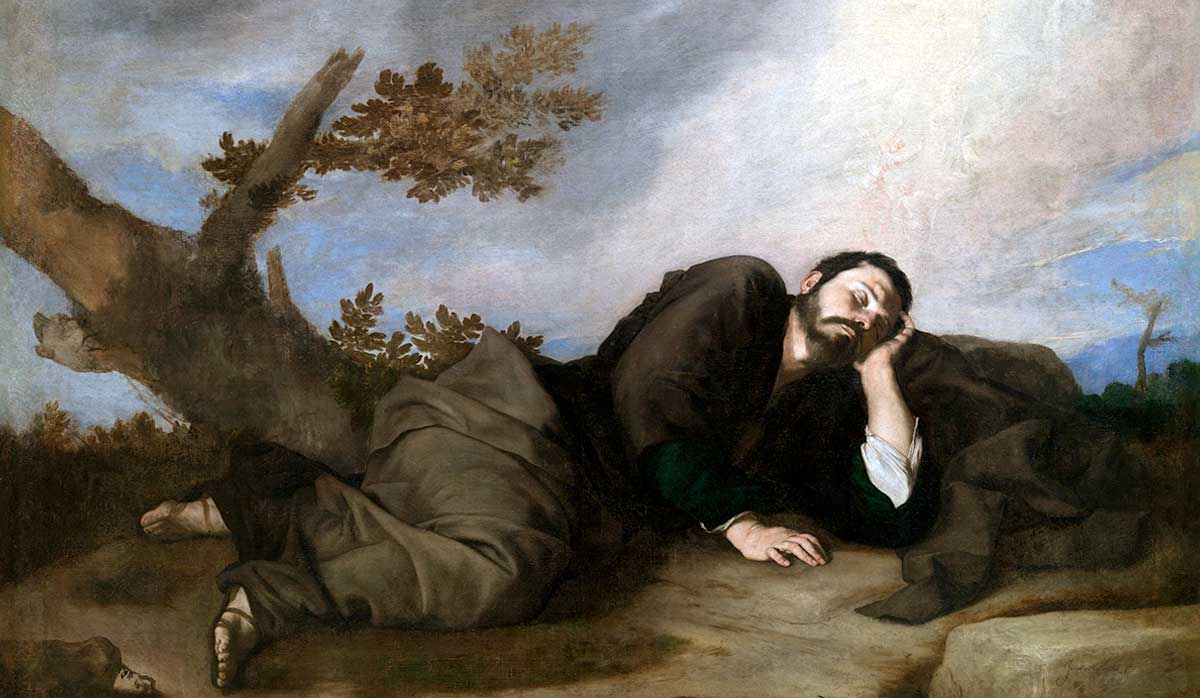
For Aristotle, the purpose of virtuous political activity is to guarantee the conditions of peace and stability so that citizens can fulfill their nature. In this way, the collective exists for the good of the individual. Even if these conditions are met, if we are by nature outfitted to know and possess within ourselves what is absolute and most universal, and this constitutes the most satisfying object of human desire, and nature, as Aristotle affirms, does nothing in vain, why do we yearn for what is unattainable in this finite life?
Aquinas, reflecting on Aristotle, reasoned that the desire to continuously contemplate immutable, all-embracing truth can only find its objective fulfillment in God, in an everlasting state, for only then could the soul dwell on the supremely real Truth proper to God’s being without end. This would indicate where philosophy reaches its limit and faith fills in the remainder. Petrarch, in On My Own Ignorance, says that Aristotle saw happiness the way a night owl sees the sun: only its rays in the distance, and not the sun itself.