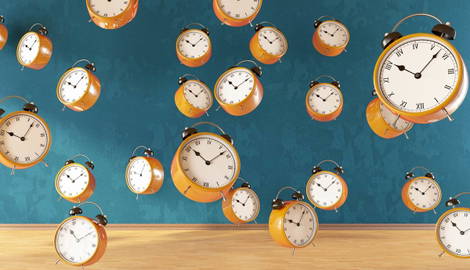

Questions of motion, change, time, and novelty are among the oldest in philosophy. Bergson’s approach may resonate with older thinkers in the history of thought, but he remains one of the most original contributors to the philosophy of time. Bergson wants to understand time as it is experienced directly. To do so, our conception of time must be stripped away from the spatial representations that science tends to impose on it. The result of the suspension is the concept of duration. Deleuze recovers the concept with precision and moves beyond.
Clock Time Measures Space, Not the Flow of Lived Time

The distinction between clock time and lived time is one of the oldest problems in the philosophy of temporality. Bergson offers a fresh and precise new interpretation with added philosophical weight. The question is significantly more complex than the difference between subjective time and measured time. The issue at hand is the fact that the two perspectives on time involve fundamentally different structures of reality.
Their confusion has led to numerous unnecessary, false problems in the history of philosophy.
Clock time is time spatialized. When we measure duration with a clock, we do not actually measure the flow of time. We measure the position of a hand on a dial, which serves as a spatial reference used as an arbitrary unit of time.
The hours and minutes we extract from this procedure are artificial constructs that do not reflect the nature of lived experience. They represent marks on a homogeneous, divisible medium constructed for practical purposes. Each unit is identical to every other. And unlike real moments of experiential time, they have no qualitative character; nothing distinguishes one instant from another. The past hour and the coming hour are, in clock time, completely interchangeable.
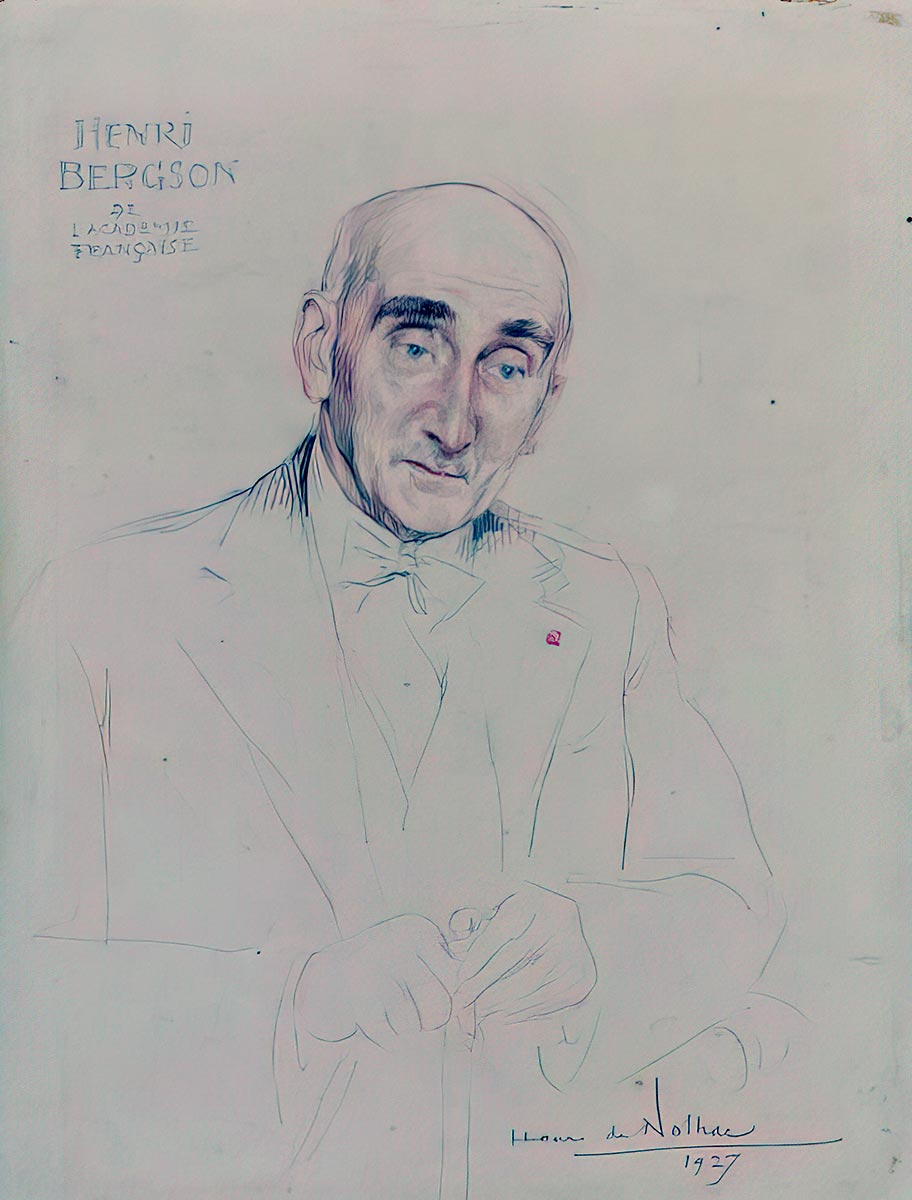
Bergson refers to experiential time as duration, or in French, la durée. Duration is not structured according to clock time. It is a continuous flow in which each moment is qualitatively distinct from the preceding and the following one. Duration analyzed is duration altered. An hour of hard work and an hour of leisure are completely different hours. They are distinct, qualitatively heterogeneous forms of duration.
Duration Is a Multiplicity That Changes in Kind When You Divide It

Deleuze further refines the concept of duration by bringing to the surface another latent philosophical concept from Bergsonism. It is crucial, Deleuze argues, to understand duration as a specific type of multiplicity.
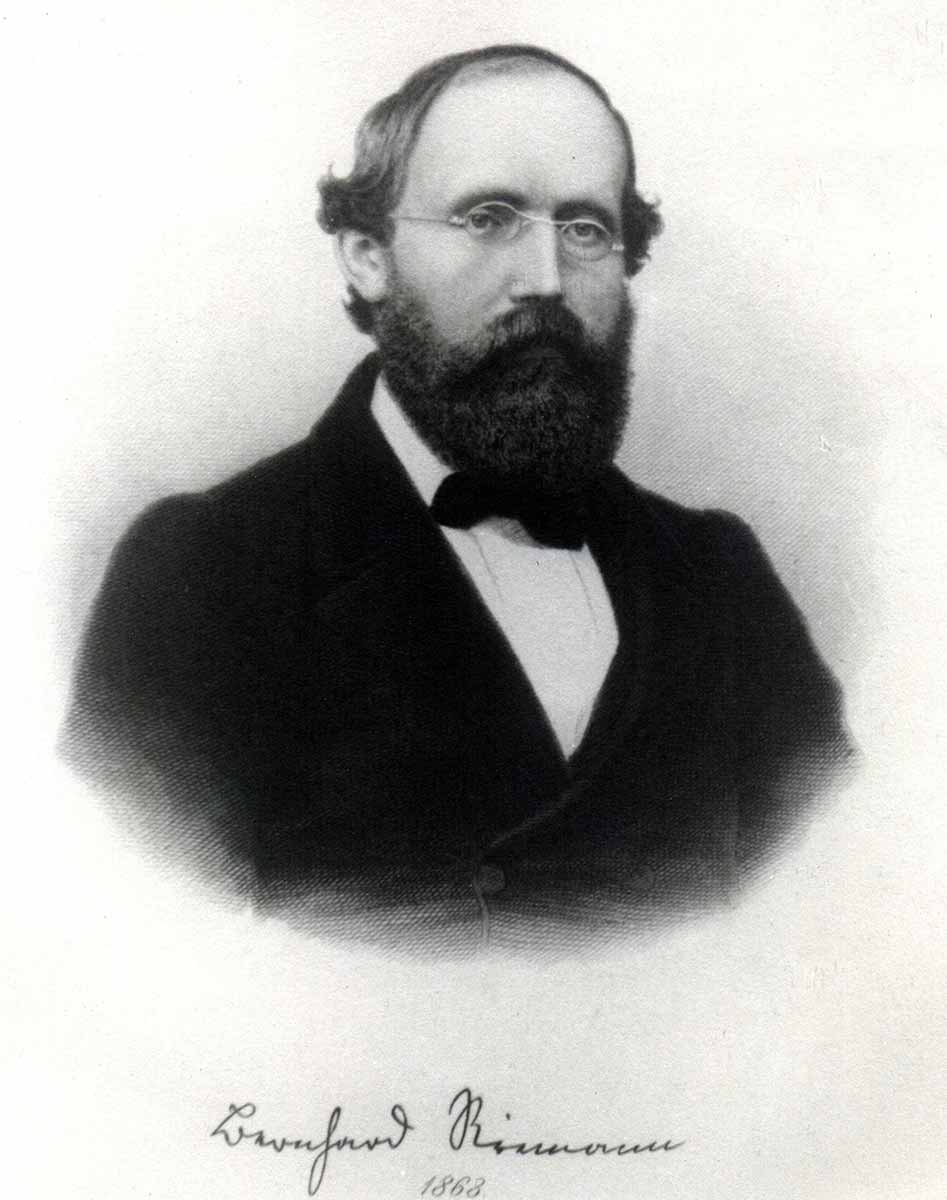
Deleuze traces Bergson’s term back to the mathematician Bernhard Riemann, who had introduced the term multiplicity (Mannigfaltigkeit) to describe a space whose metric is not fixed in advance but varies from point to point. Riemann distinguished discrete multiplicities, which carry their own measure, from continuous ones, which do not.
A discrete or numerical multiplicity can be divided without changing kind. Take any number: a number can be subdivided indefinitely, and each subdivision yields something of the same type as the whole. The unit remains homogeneous throughout the operation. Space is the philosophical model of this multiplicity.
Duration is a multiplicity of a fundamentally different kind. Duration cannot be divided without altering its own essence. In the essay “Time and Free Will,” Bergson offers an example of a feeling. For instance, take a complex affectivity that combines love and anxiety.
As long as this state remains unanalyzed, it has a particular qualitative character that belongs to it as a whole. The moment one tries to understand it and isolate its parts, the original state will be altered. What results from the division is a set of qualitatively distinct states that differ from one another in kind, and they are distinct from the original complex as well. Duration is fundamentally heterogeneous. Its essence is variation.
Duration is not indivisible, as Bergson himself might sometimes, rather misleadingly, suggest. It does divide, constantly even. But it is not made up of clearly distinct parts; it is made up of multiple diverging tendencies. Identifying these tendencies is no simple matter, as the process of naming and categorizing alters the thing named.
Difference in Kind Is Bergson’s Sharpest Tool Against Confusion

Let us focus on the distinction between differences in kind and differences in degree. It is, as Deleuze argues, the central critical instrument of the entire system. The blade, so to speak, with which Bergson cuts through some of the philosophical confusions that plague both science and metaphysics.
A difference in degree is a quantitative variation within a homogeneous medium. It is, one might say, more or less of the same thing. These are objective differences that can be measured, ranked on a scale, and expressed as numerical ratios.
Calculation in general presupposes that the terms being compared belong to the same kind. Once again, this is the domain of spatial composition. Multiple relations of substitutability or the relation between container and contained. Every spatial distinction is ultimately a distinction of position, dimension, or quantity within a uniform medium.
A difference in kind, by contrast, is not a matter of more or less along any scale at all. It is a difference in nature: two things differ in kind when no common measure ranks them, because they are not variations of a single underlying quantity.
Time does not really divide; it does not really work as a collection of {t1, t2,t3 … tx} moments, where each one is identical to any other. Duration does not produce smaller portions of the same homogeneous stuff. It produces states that are qualitatively distinct, irreducible to one another, and irreducible to any common system of measurement.
It is through this prism that Bergson identifies the history of philosophy to be largely a history of confusions. Philosophers have confused differences in kind for differences in degree. This is the fundamental metaphysical diagnosis. The physicist treats matter and consciousness as nothing but two diverging points on a single scale of being. Whereas in truth, they are genuinely distinct modes of reality.
Deleuze’s Own Move: Duration Is the Ground of All Difference
It is important not to conflate Bergson with Deleuze’s Bergson. Deleuze offers more than just a commentary. In some ways, one might say Deleuze aims to rehabilitate Bergson for the contemporary age. Deleuze’s Bergsonism is therefore more than just a summary of Bergson’s work. Deleuze builds on Bergson and invents his own concepts. One of the strictly Deleuzian contributions is the idea that duration is the ontological ground of difference.
This sets Deleuze apart as an independent creative thinker, while remaining deeply influenced by Bergson. Bergson uses duration primarily as a corrective concept; a way of restoring to philosophy what the spatialization of time has effectively concealed. The argument aims to rescue the complexity of experience from the distortions of spatialized thinking.
Deleuze reverses the direction. Rather than moving from the experience of duration toward a critique of false problems, he moves from duration as ontological structure toward a general theory of difference. Duration becomes a proper metaphysical postulate in the classical sense. Deleuze argues that duration is, in fact, ontologically before clock time.
Deleuze thereby fundamentally rearranges the relationship between time and space, perhaps in a way that Bergson could not even anticipate. With Bergson, space is an impure element in the sense that it obscures the operations of duration, unless properly distinguished. Deleuze takes this further: Not only must space be distinguished, but it must be seen that space or quantity is itself grounded in the temporal flux of becoming.
Deleuze uses Bergson’s work to shape his own methodology. Bergsonism thereby anticipates Deleuze’s own later project in Difference and Repetition. Within Deleuzian metaphysics, difference is primary, identity is derivative, and time is not the measure of movement but a primordial foundation of reality.
Why Confusing Time With Space Has Consequences Beyond Philosophy
There is more to the distinction between clock time and lived time than meets the eye. Much less than a change of aspect, these structures signal two entirely divergent forms of understanding and perception. The homogeneous discrete time of the clock is a construction. It is indispensable for science. However, it is simultaneously constitutively unable to capture the real dimension of time.
The second, duration, is a qualitative multiplicity whose parts cannot be separated without being transformed thereby in doing so. Duration is both continuous and heterogeneous. Time and space are two multiplicities that are fundamentally different in kind.
The concept of multiplicity sharpens the Bergsonist account considerably. Bergson, via Deleuze, relied on Riemann to frame duration as a specific type of multiplicity. Duration is not vague. Duration is divisible, but only in a way that changes its fundamental features.
The distinction between difference in kind and difference in degree, once again is the core of Bergsonism.
The persistent scientific tendency to reduce qualitative heterogeneity to quantitative gradation and to see differences of degree where there are differences in kind, as useful as it is, remains a dangerous intellectual monopoly that might even have detrimental ethical and political consequences. Despite being a structural feature of the way intelligence operates, or perhaps precisely because intelligence has a natural propensity to operate this way, it requires a deliberate methodological corrective.