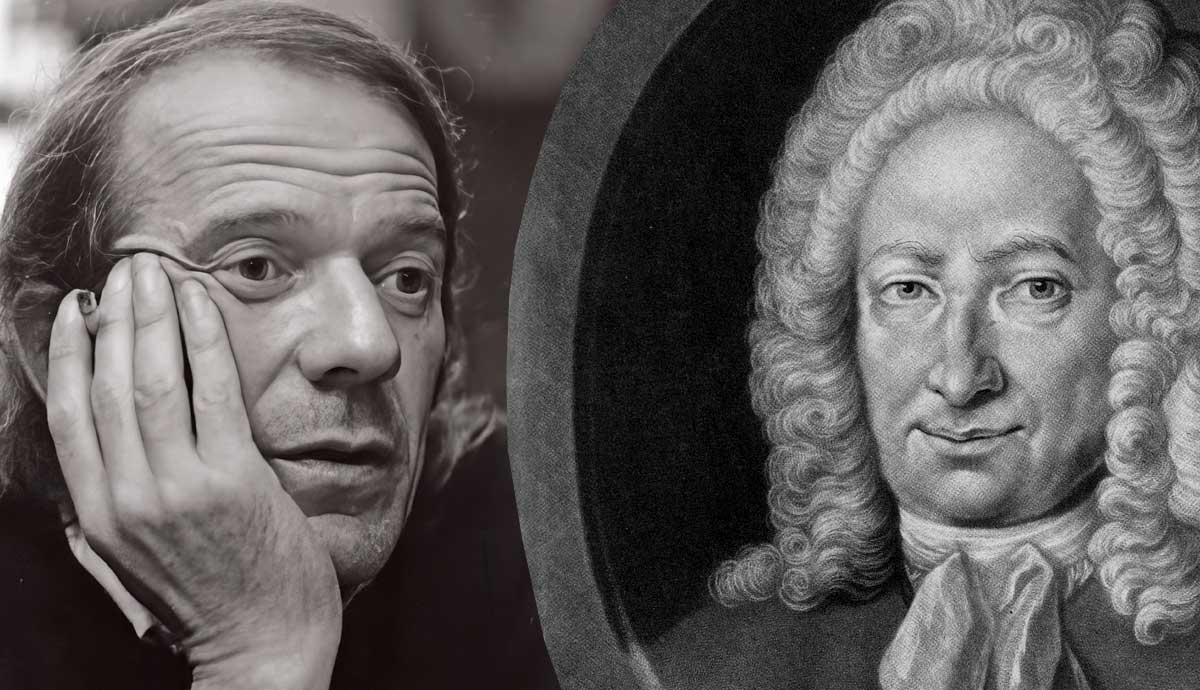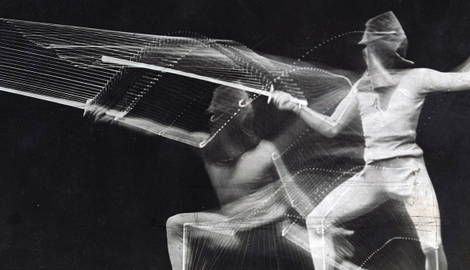

Ordinarily, the virtual either refers to something that has to do with computers, the internet, or otherwise to something unreal and abstract. With Deleuze, the term has a very different and technical, as opposed to technological, definition. Drawing on Henri Bergson’s radical theorization of memory, Deleuze shapes an original ontology of creation. The virtual becomes as real as the actual: an intensive matrix of forces. Deleuze delivers a cosmic architecture of pure creation; he shows how our universe remains an open system in constant flux.
In Philosophy, the Virtual Is Real, Not Digital or Simulated

It is time to perform another rescue mission. One must rescue the philosophical term virtual from its technological connotations. The Deleuzian use of the notion is something very different from the conventional meaning: something is considered virtual if it is digitally simulated: a virtual meeting, a virtual reality, a virtual assistant.
One of the dangers of the regular use of the word is that the virtual becomes associated with something that replaces the real, a pale or approximate version of what exists (the actual). In short, to call something virtual is, in ordinary language, to register it as a deficit.
The Deleuzian take on the concept of the virtual reverses the whole ontological hierarchy. The virtual is not a lesser form of what is real. The virtual is no less real than the actual, but it carries a different mode of existence. Understanding the distinction is arguably the single most important conceptual move for understanding Deleuze’s reading of Bergson. And Bergson’s work is in turn key to understanding Deleuze’s method of doing philosophy.
The distinction in question is between the virtual and the actual. Both are real. What distinguishes them is their mode of being. The actual is that which is clearly, perceptually given. It must occupy a determinate position in space and time. The virtual is what exists without being actualized in the present. Nonetheless, the effects of the virtual are as real as the effects of the actual.
Bergson’s analysis of memory is an excellent case.
According to Bergson, the past does not disappear; nor is it stored somewhere on the brain’s “hard drive” waiting to be retrieved. And it most certainly is not some faded copy or a neurological trace. Pure memory continues to exist in a virtual capacity. It is constantly present to the subject and actively serves it according to the needs and requirements of action in the present.
For Bergson, the Past Is Fully Real but No Longer Present
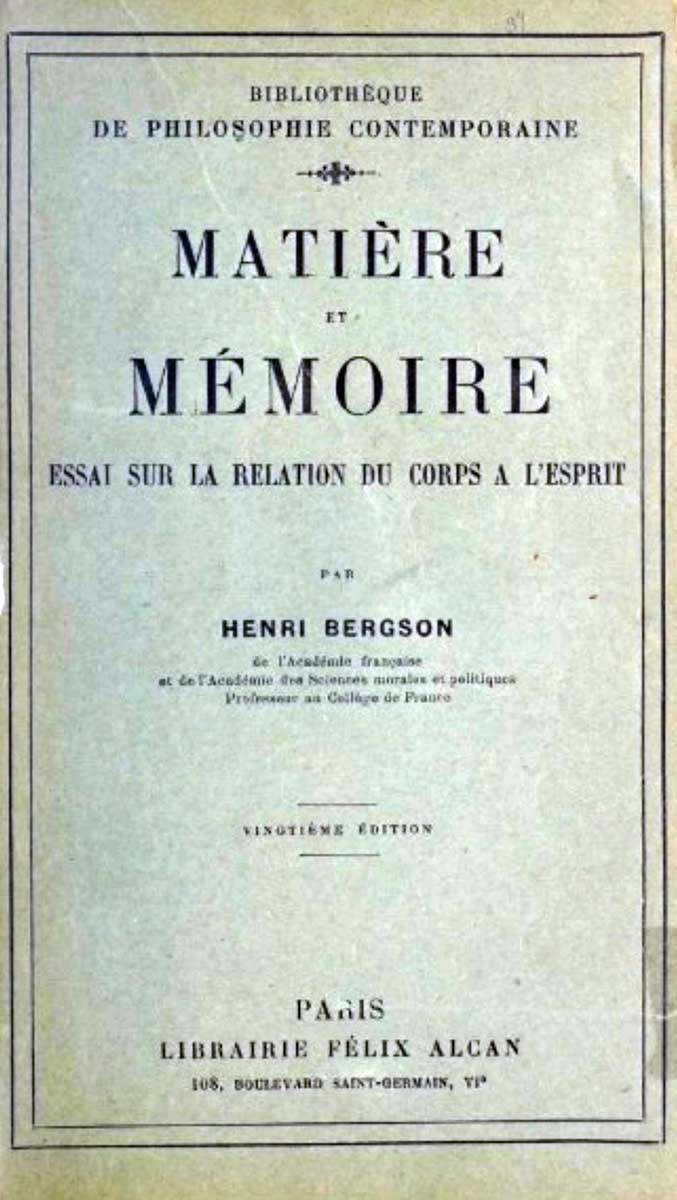
Bergson’s theory of memory begins with a distinction that cuts diagonally across almost every common assumption. Philosophers and psychologists have typically treated memory as a fading perception. Something like a dim copy, a sensorial echo of an experience.
The difference between a present perception and a memory is, in other words, a difference of degree. Perceptions are vivid and immediate; memories are distant and obscure. Bergson argues against the conventional interpretations. The difference between the present and the past is not a difference of degree. Once again, it is a difference in kind.
The common picture of memory stems from the common picture of time, that is, a linear understanding of time. One moment follows another; the only difference between one instant and the next, between the present and the past, is the difference in perceived clarity.
Bergson rejects the linear interpretation. It is, in contrast, the present that is perpetually ceasing to be, perpetually passing. The past, by contrast, remains stable. Without memory, there is no perception. The past coexists virtually with every successive present. The present is the mode of active becoming; the past is the mode of pure being. As Deleuze puts it in his book, Bergsonism, the past has ceased to act or be useful, but it has not ceased to be. It is identical with being in itself.
We are led thereby to one of Bergson’s most counterintuitive claims: the past is contemporaneous with the present. It does not come after the present and then recede. It is constituted simultaneously with the present, at the very moment that the present is experienced.
Deleuze Turns Bergson’s Memory Into the Structure of the Universe
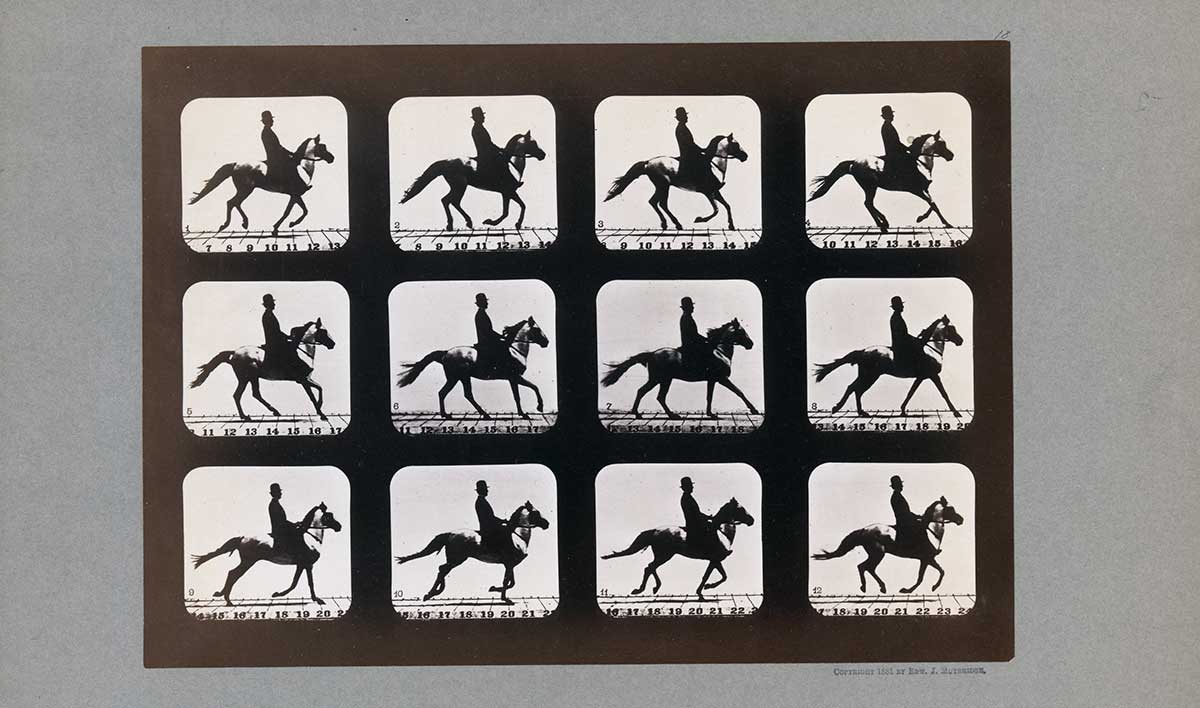
Deleuze’s decisive intervention lies in translating Bergson’s insights from a philosophy of internal experience into a grand, cosmic ontology. Where Bergson was often misread as a theorist of human psychology, confining duration and memory to the theater of consciousness, Deleuze strips away any lingering subjectivism. And with it, some of the critique leveled at Bergson by science and analytic philosophy.
Deleuze elevates the Bergsonian concept of pure memory to the status of the virtual. It thereby becomes a standalone, objective dimension of being. The virtual is not a psychological archive tucked away in our minds; it is the structural, unextended matrix of the universe itself. It continues to vibrate with its own reality before crystallizing into material objects.
By rendering the virtual a matter of cosmic architecture, Deleuze ensures a successful escape from the passive vacuum of traditional metaphysics and from psychological reductionism.
The virtual is indeed fully real, and it persists as a fluid landscape of differential forces, intensities, and genetic tendencies. Importantly, the virtual realm does not sit idly; its own activity distinguishes it. The virtual serves as the primary engine driving the production of the actual.
When the virtual undergoes actualization, it by no means copies itself onto reality like a stamp or a mold. The virtual is productive as it differentiates, breaking out into genuinely unexpected, novel forms. Through this conceptual upgrade, Deleuze transforms a theory of memory into a radical ontology of pure creation, proving that the universe is never a static, finished product but an open system in constant flux and turbulent becoming.
Actualization Creates, Realization Only Copies: Why the Difference Matters
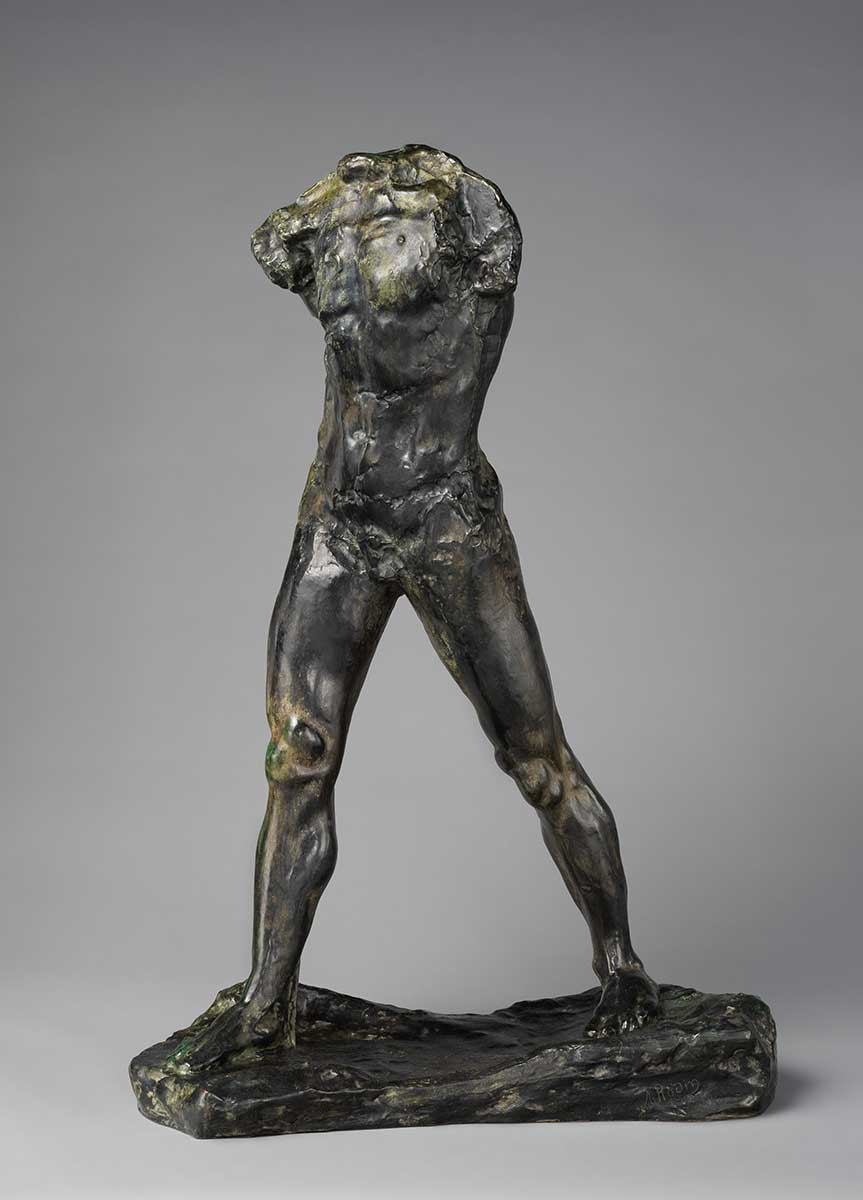
Having established the virtual as a complete dimension of being, Deleuze introduces another distinction that sharpens his account: the difference between actualization and realization. These two processes are easily conflated. Deleuze takes care to show how they are fundamentally opposed. Furthermore, confusing them is one of the most persistent errors for both common sense and philosophy.
During realization, something possible becomes real. Realization presupposes a possibility of the real that is fully formed in advance. What occurs then, during realization, is that the possible simply comes into existence; a transition from non-being to being.
According to Aristotelian logic, the possible is just a phantom; a projection of the real. Bergson identifies this as the source of one of philosophy’s deepest illusions: the retrograde movement of the true. The retrograde movement of the true is a process whereby we project a ready-made image of the real back into the past and then refer to it as a possibility. The possible resembles the real since it was constructed after its image.
Bergson’s example for explaining this illusion is a work of art. Once a symphony or a novel exists, we say it was “possible” all along. However, before it was created, that specific possibility did not wait anywhere to be realized. We read the possibility backward into the past only after the real thing appears, then forget we did so and imagine the possible came first. This back-projection is what Deleuze labels as the retrograde movement of the true.
Actualization is drastically different. The virtual does not resemble its productions. It does not contain, whether in miniature or in outline, the diversity of forms and entities that will emerge from it. When the virtual actualizes, it simultaneously differentiates. It creates genuinely novel forms through divergent lines of development that could not have been predicted from the structure of the virtual.
Actualization is therefore irreducibly creative. This is why Deleuze insists that the movement from the virtual to the actual is a matter of genuine production, contrasting it with the simpler disclosure of realization.
The Virtual Makes Reality an Open System That Never Stops Creating
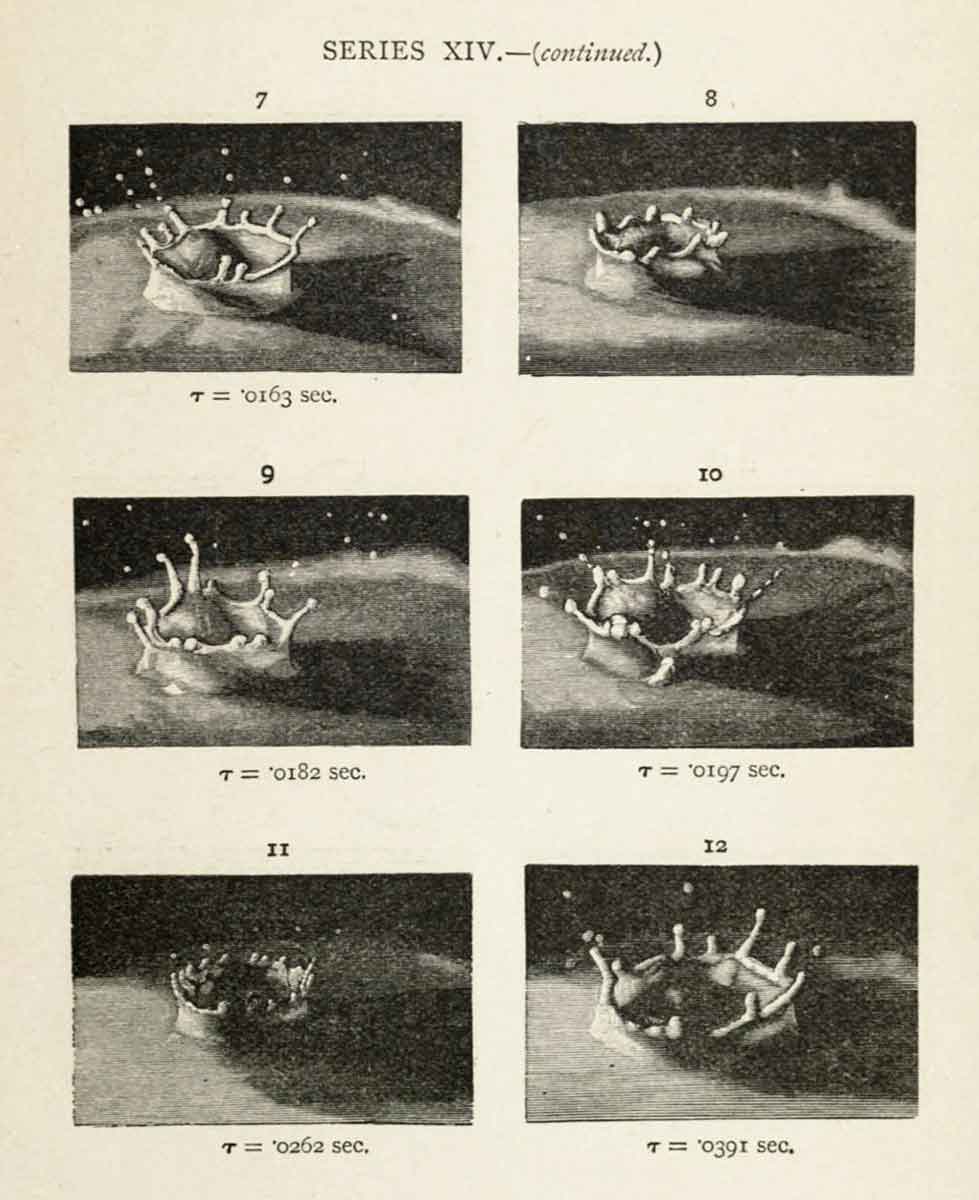
Deleuze’s insistence on the virtual-actual axis is more than an exercise in semantic gymnastics.
A close reading reveals a reclamation of the world’s inherent creativity. By tracing this trajectory from Bergson’s psychological ontology of pure memory to a cosmic architecture of pure becoming, the static and pre-packaged illusions of realization and the “possible” are thoroughly dismantled. Reality ceases to be a sterile vending machine for dispensing pre-formed blueprints. One is rather forced to confront a universe that is radically open, intensively structured, and full of forces that refuse to align with their constructions.
The paradigm shift hinges entirely on how the virtual undergoes actualization. Unlike the sterile mechanism of realization, which merely molds entities from phantoms and phantoms from entities, actualization demands a radical and unpredictable divergence. One might even claim, in a Deleuzian fashion, that it demands a line of flight.
Perhaps multiple lines of flight that branch out into resistant, rhizomatic chains of becoming. The virtual matrix contains no miniature blueprints of what is to come; the future is radically open as it makes reality into a perpetual self-differentiating force. The world morphs at the very moment of its physical emergence.
Deleuze makes philosophy, and therefore reality, come alive. We are no longer observing a sequence of static snapshots; we feel the dynamic pressure of a virtual past shaping our present, forcing the universe to reinvent its own creative parameters endlessly.
In this light, the distinction between the virtual and the actual becomes arguably Deleuze’s most vital philosophical contribution. To understand the virtual is to refuse the reduction of the world to a homogenous series of polished museum exhibits. It is rather an intellectual embrace of an open system that re-creates itself endlessly.
From overlapping traces of a body in motion to the fluid capture of a drop to the vibrant stroke of a brush, Deleuze’s Neo-Baroque philosophy reminds us that beneath the apparently stable surfaces of our daily lives, reality remains undeniably alive.