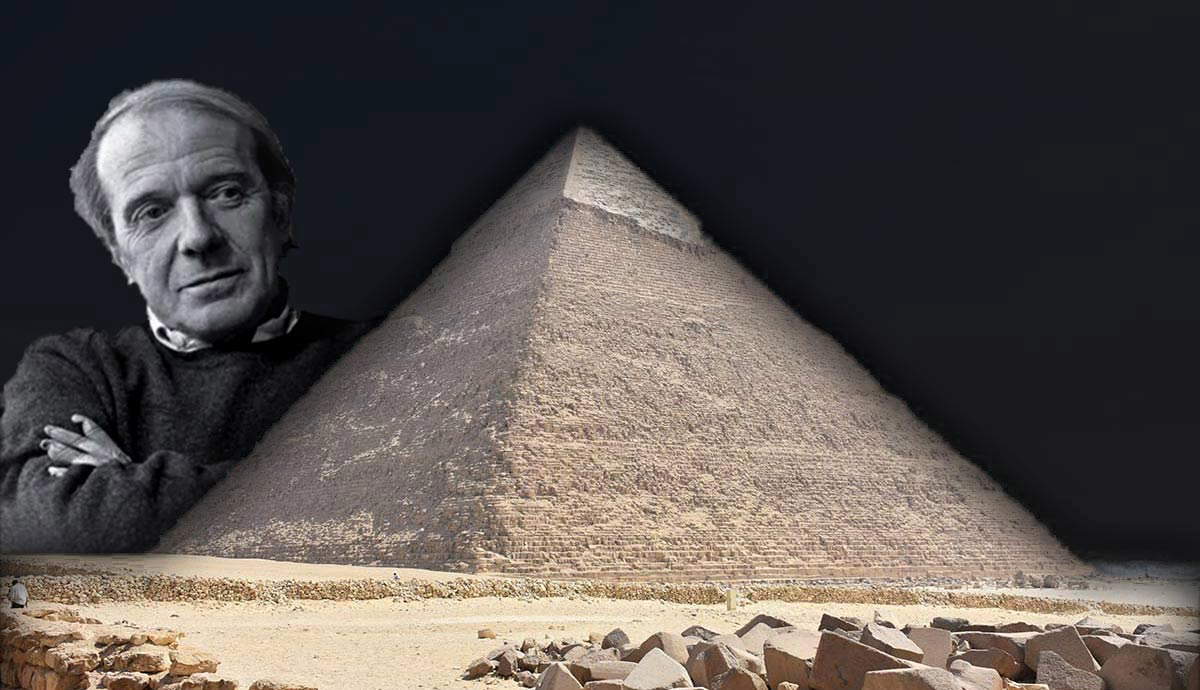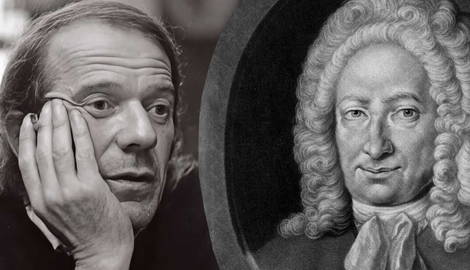

One could say Deleuze decided to “fold Leibniz in half.” But as he folded him once, he had to fold him again, over and over again, until each fold produced more folds. The infinite crimping, which the Leibnizian rationalist system should have been very susceptible to, suddenly produced as many neat folds as it gave birth to crumpled corners and numerous productive contradictions. And as the folds and creases accumulated, the more difficult it became to tell the difference between the inside and the outside of the surface. Resulting in a monstrous creation: the Fold.
Deleuze Turned to Leibniz Because the Most Orderly Metaphysician Was the Hardest to Fold
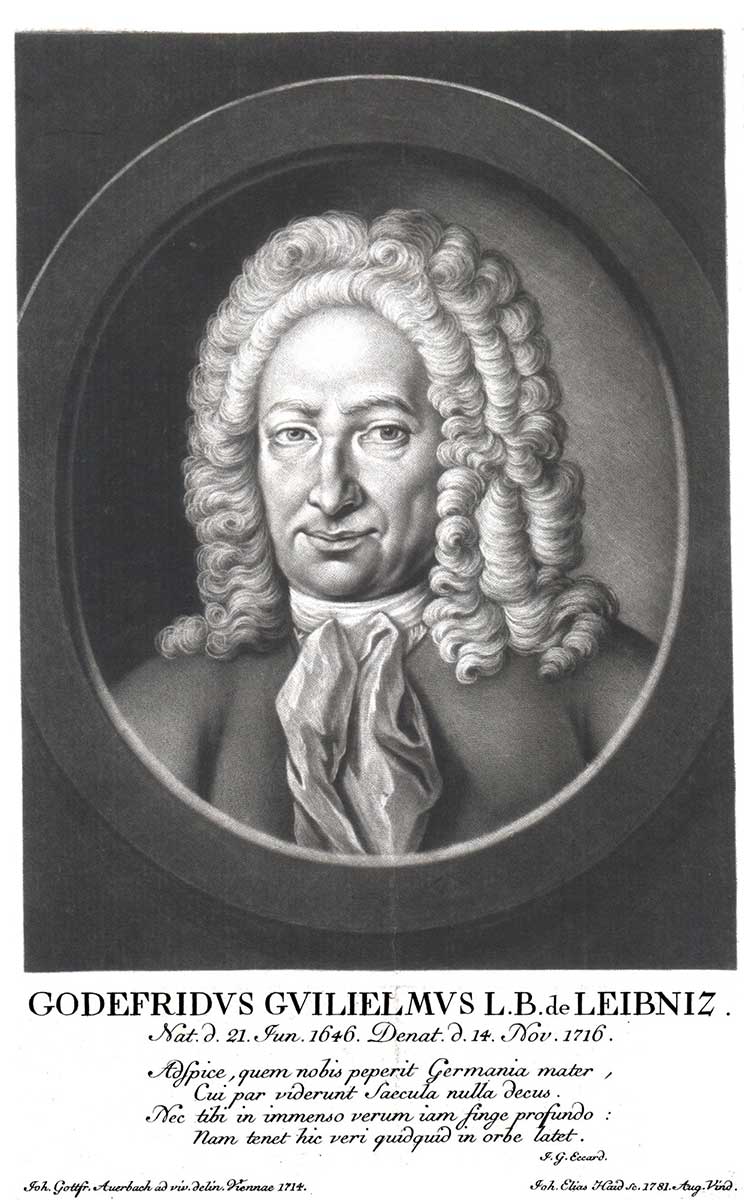
Due to his original, one might say eccentric reading of the history of philosophy, Gilles Deleuze has without a doubt earned his badge as a provocative thinker. His interpretations of Spinoza, Hume, Nietzsche, and Bergson can be described as productive and open.
He once described his method as a kind of philosophical “buggery”: approaching a thinker from behind, producing something that is recognizably the thinker’s offspring but monstrous, surprising, not quite expected. His points always move well beyond summary or commentary. Deleuze always attempts to pull something new, a concept specifically, in a way that allows him to shape something unseen, unheard of, from one historical figure to the next.
This makes Deleuze’s extended engagement with Leibniz all the more inspirational. The Fold: Leibniz and the Baroque, published in 1988 near the end of Deleuze’s major solo work, is his most sustained treatment of a single philosopher. The book spans across metaphysics, mathematics, music, architecture, and painting. The center of this discourse is occupied by a concept that Deleuze deploys throughout, namely the Fold.
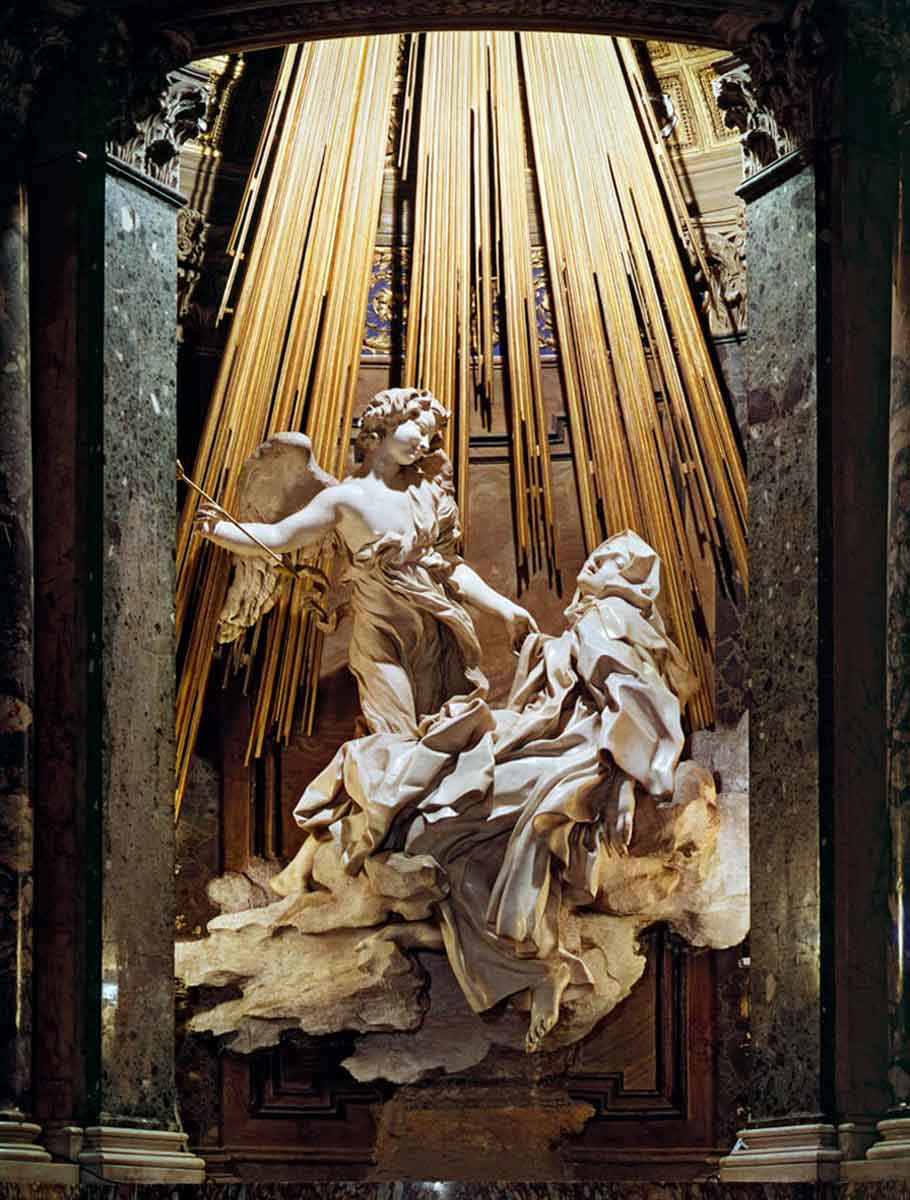
Why choose Leibniz, though? Leibniz was, without a doubt, the least likely target for Deleuzian appropriation, given the general style of philosophizing he adhered to. Leibniz, unlike Deleuze’s other chosen thinkers, is an orderly metaphysician; a theologian even.
The Leibnizian God is very different from a Spinozian God. The Leibnizian monads are each simple, indivisible substances; mirrors that operate like links in a perfectly determinate chain of the universe. A pre-established harmony ensures that all the different perspectives on the world align perfectly. Each monad operates in its own line of activity like a soldier. There is a distinct hierarchical structure and a theological, fundamentally rationalist confidence in the intelligibility of all things.
This sounds like the philosophical system of an arch-enemy, rather than an influence, on Deleuze.
The Fold Is Not a Shape but an Operation That Turns Outside Into Inside
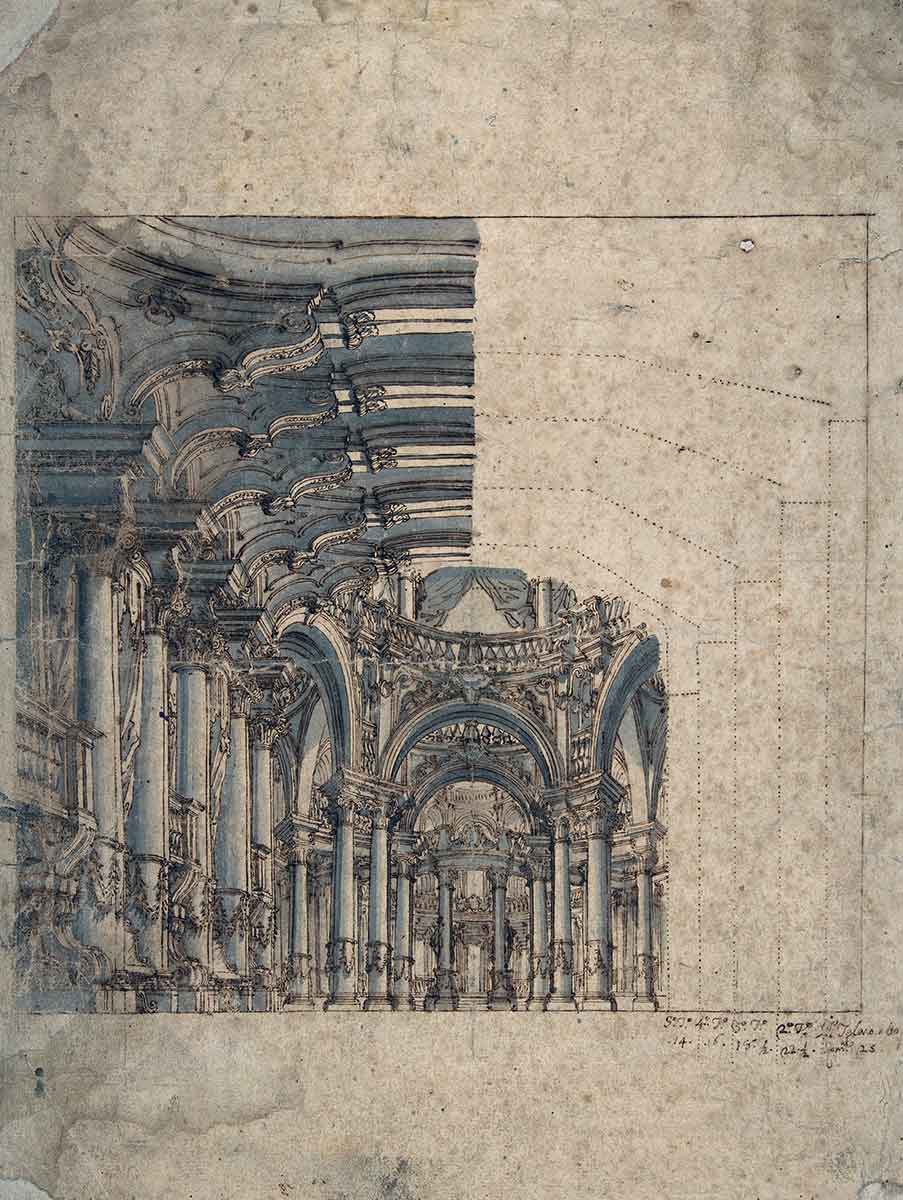
Some negative definitions of the Fold can offer a good starting point. The Fold is irreducible to a shape or a figure.
The first intuitive mental image that may occur to someone is that of crinkled paper or a curtain pleat. Strictly speaking, these associations are not wrong. But probably the most important aspect of the Fold is to think of it not as a noun, but rather as a verb, an activity, an operation. The Fold refers to the way in which matter and thought organize themselves.
The notion of the Fold informs the relationship between inside and outside. Normally, we think of interiority and exteriority as distinct zones, separated by a clear, or even by a somewhat opaque boundary. The organism’s skin is a clear instance. A wall is another, painfully obvious example. In each case, the inside and outside delimit different kinds of space.
But for Leibniz, the monad, for instance, is a kind of entity that has no windows; nothing passes in or out. It is, counter-intuitively, a pure interiority. An interiority that has no outside, and by that effect, it encompasses the entirety of the outside. A single monad contains the entire universe. Every monad carries inside itself a representation of the whole of creation. The inside of the monad is the outside world; it is folded inward, compressed, taken up into a perfectly singular perspective.
This is what Deleuze calls the Fold: the operation by which exteriority is internalized. Internalized, that is, without being reduced to sameness, and by which interiority is always already a form of expression that is also directed outward. The inside becomes the outside. The fold does not abolish the distinction between inside and outside; it rather makes it into a matter of degree and direction.
For Deleuze, the Baroque Is Not a Style but a Way of Thinking in Folds

The subtitle of Deleuze’s book Leibniz and the Baroque is distinctive. Firstly, Deleuze does not treat the Baroque as a historical period or an art-historical style that happens to be the milieu, an accident surrounding Leibniz’s philosophy. For Deleuze, the Baroque is a philosophical concept. A structuring effect of matter and thought that finds its philosophical expression with Leibniz. It is not that the Baroque influenced Leibniz, but that he embodied it.
For Deleuze, ornament, exuberance, theatricality, or other commonplace notions associated with the term are not the defining traits of the Baroque. It is the Fold. The Fold is the Baroque. Baroque art is characterized by surfaces that refuse flatness. Baroque spaces keep opening onto other spaces, folding as if endlessly, and the distinction between inside and outside starts to collapse. Light modulates chaotically; it does not illuminate uniformly; it does so selectively and dramatically, creating zones of indiscernibility.
The Baroque does not resolve tensions into stable equilibrium. It multiplies and intensifies them. Leibniz’s philosophy operates according to this very logic precisely. The complex multiplicity of irresolvable tensions continues to reproduce itself indefinitely through conceptual pairs: continuity and individuation, matter and spirit, the infinite divisibility of matter and the indivisibility of the monad.
Leibniz holds all of these in a complex, layered, labyrinthine system. The two floors of the metaphysical edifice are the material floor below, and the spiritual floor above—they fold into one another.
The Baroque, most importantly for philosophers, is a way of thinking. A mode of thought that could perhaps be reactivated today. The final chapters of The Fold gesture toward this exact possibility. A form of “neo-Baroque” where the Leibnizian architecture could be salvaged without its theological overtones.
Tracing Deleuze’s Leibniz, From the Baroque to Incompossible Worlds
The rest of the articles in this series trace the major threads of Deleuze’s engagement with Leibniz, moving from the most general to the technically most specific.
What Is the Baroque? Deleuze and Leibniz on Style and Thought will offer a detailed exposition of the philosophical concept of Baroque.
What does it mean to say that an aesthetic style is also a way of thinking? How does Deleuze construct the Baroque from first principles rather than simply borrowing the term from art history? And what is the relationship between Leibniz’s metaphysical architecture and the visual and spatial logic of Baroque architecture and painting?
Deleuze Turned Leibniz’s Windowless Monad Into a Folded Space will carry the central metaphysical argument.
The standard, non-Deleuzian reading of the Leibnizian monad emphasizes closure, its windowlessness, its hierarchical ordering under God’s pre-established harmony. Deleuze’s reframing transforms this picture significantly, as the monad becomes less of a sealed container and more of a folded space. Perception thereby becomes an active, perspectival expression of the world, rather than a passive mirror. The article will close in on the precise Deleuzian surplus that dissents from the standard reading. Needless to say, its philosophical relevance and productivity will be underlined.
The fourth article, Incompossible Worlds: Deleuze on Leibniz and Possibility, will address one of the most philosophically precise and consequential moments of The Fold.
For Leibniz, incompossible worlds are worlds that cannot exist at the same time. God has created one possible world to the exclusion of all others. Deleuze poses the question: What will happen to this framework if one considers it without the theological superstructure? What if incompossible worlds can, in fact, coexist? This time, not as rivals for divine selection but as genuinely simultaneous divergent series. This move bears on the same terrain that analytic modal metaphysics maps with possible worlds, though Deleuze’s move cuts against the Leibnizian assumption that possible worlds compete for a single actualization.
The Fold Still Matters Because It Lets Us Think a World Without Fixed Boundaries
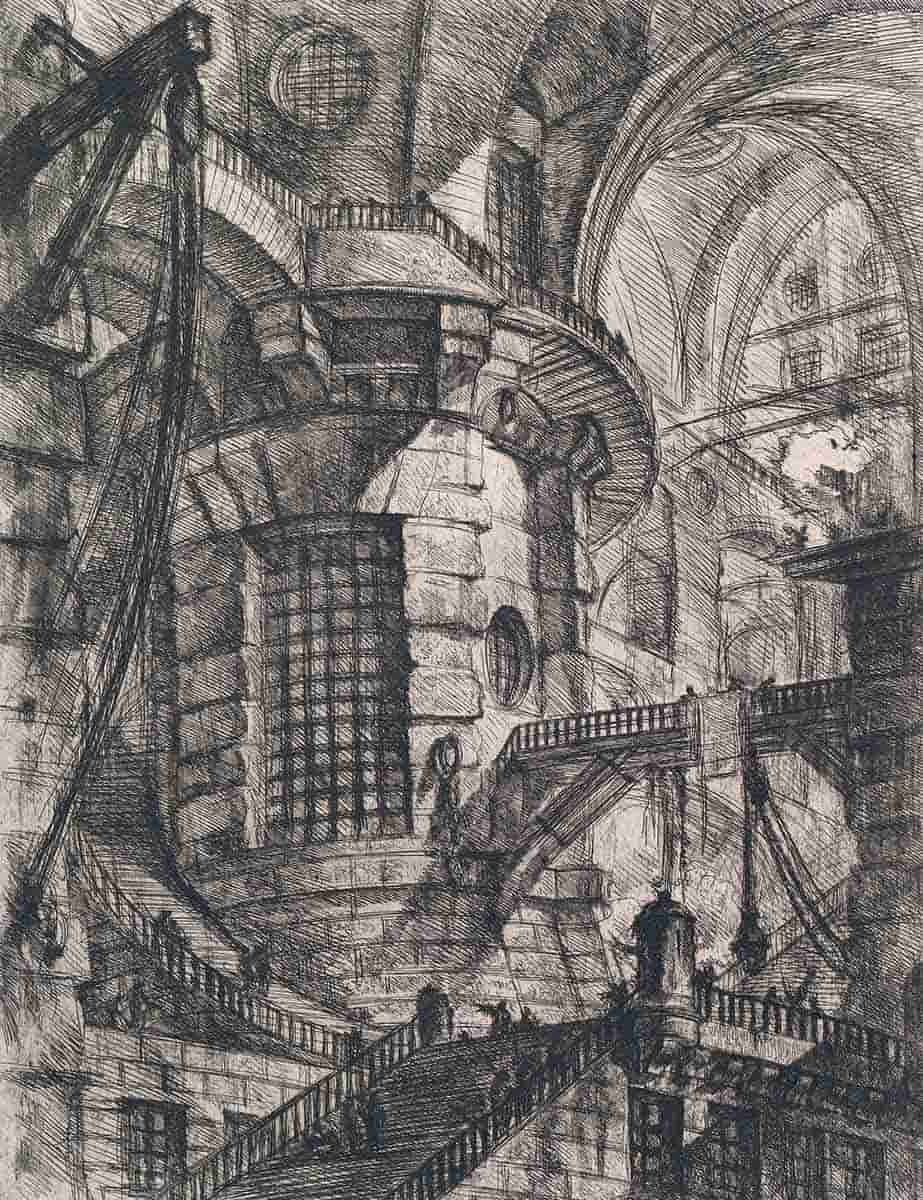
Deleuze’s encounter with Leibniz moves well over and above historical commentary. It is a radical, violent resuscitation, and no less a philosophy that stands on its own. Having stripped Leibniz of his rigid theological scaffolding, the totalizing God, and the neatly synchronized universe, Deleuze constructs a dynamic philosophy of movement.
The Fold re-enters the battleground of metaphysics and the history of ideas as the mechanism that shapes and organizes life and thought. An outside that is drawn inward, compressed, and expressed, shot forward as it were, as a singular perspective.
As the following articles in the series will hopefully demonstrate, the labyrinthine material and metaphysical architecture of the Deleuzo-Leibnizian Baroque holds wide-ranging implications. It becomes, if not a vital, then at least a useful and original weapon for reconsidering the nature of contemporary reality.
By tracing the movement from the dramatic, shadow-filled spaces of the Baroque, through the infinite interiority of the monad, to the dizzying coexistence of multiple, conflicting worlds, we discover a mode of thought that might just be well adapted to our own fragmented modernity. That is at least the not-so-humble promise of the Deleuzian neo-Baroque.
It does seem that the Leibnizian child, brought to the twentieth century by the midwife of a Deleuzian reading, is exactly what he intended: monstrous and usefully creative. If we can train ourselves to think through the logic of the fold, we could maybe stop looking for fixed boundaries where there aren’t any and shouldn’t be. Accordingly, we could stop seeing the universe as a stack of windowless monads and start seeing it as a single surface folded over itself without end.