
Arguably one of the most misunderstood concepts in the history of modern philosophy is intuition. Most readers hear “intuition” and think of a hunch, or a flash of instinct that arrives without argument. That association has quietly wrecked Bergson’s reputation. In his book Bergsonism (1966), Deleuze’s first task was to dismantle these prejudices. Intuition, properly understood, is a rigorous method with a clear philosophical task: to make philosophy as precise as science. By interrogating differences in kind rather than degree, this approach avoids false problems, enabling the mind to perceive reality’s fluid, qualitative duration directly.
Intuition Is a Method
Few philosophical concepts have suffered more from mistranslation than Bergson’s notion of intuition. The word, in usual parlance, tends to connote the pre-rational. This might be a hunch, an instinct, or some mode of knowledge that operates beneath the threshold of rational argument. If Bergsonian intuition really is something like a feeling, then Bergsonism is not philosophy, but poetry at its best and mysticism at its worst.
It is neither. Deleuze’s opening move in Bergsonism is to dismantle that reading.
Intuition is neither a feeling nor a disorderly sympathy or inspiration. It is a fully developed methodology. It prescribes strict rules and precise procedures. It has a determinate object of study. The conflation of intuition with vague inner experience is a simplification.
The methodological core of intuition is best understood by contrasting it with classical analysis.
Analysis, according to Bergson, always approaches the object from the outside. It translates experience into symbols, decomposing it into the smallest elements, and then reconstructing it from multiple, external points of view. That is fundamentally how science works. However, the analytic method carries an inherent limitation: no accumulation of external perspectives ever yields the experience itself – internally.
Intuition is the inverse of analysis. It attempts to comprehend the object from within; to inhabit its movement. The method is very different from psychological introspection. The objects studied by the method of intuition are not the private contents of consciousness. It is rather duration itself, the ongoing continuum of physical matter. Duration underlies both psychological experience and material reality.
The Deleuzian claim is that without the method of intuition, duration would remain as a purely psychological experience. It would be vivid, by all means, but philosophically, it would remain inert. Intuition allows one to transform lived time into a rigorous philosophical concept.
Bergson’s Three Rules of Intuition

Deleuze identifies three distinct rules that constitute intuition as a philosophical method. Philosophy has traditionally treated certain problems in a manner that is too conventional. As if philosophy were to supply only answers.
Bergson argues that the application of the categories “true” and “false” has as much to do with problems as it does with solutions. A badly stated problem will generate endless, irresolvable debate, simply because the question itself is malformed. Deleuze makes a first rule out of this.
There are two particular forms of false problems related to the first rule.
The first type is a confusion of more with less. “Why is there something rather than nothing?” The confusion here lies in treating nonbeing as if it were simpler than being. As though nothingness was a result of subtracting being from itself. As though nothingness were simpler than existence.
The second false problem involves badly analyzed composites. These are questions that tend to group very different entities, primarily space and time, together into the same category.
Second rule: intuition is a method of separation. When experience presents us with a composite, that is, a mixture of elements that differ in kind, the task of philosophy is to separate those elements according to their natural articulations. Duration and space, memory and perception, instinct and intelligence; these concepts constitute fundamental ontological distinctions. They are the result of Bergson’s careful dissection of composites into their genuinely distinct components.
The risk, without this rule, is that philosophy measures its mixtures with a unit that is itself already mixed, and so it fails to reach the ground of experience in the first place.
The third rule: Some problems must be stated and resolved in terms of time rather than space. This is where intuition links with duration. Space, for Bergson, is the domain of differences in degree. However, these differences, both greater and lesser, belong to the domain of quantitative variation. Duration, on the other hand, is the domain of differences in kind. These are genuine qualitative changes. Duration is the irreducible element of experience that resists the analytic tendency to flatten qualitative difference into quantitative gradation.
Intuition Works by Splitting Experience Into Things That Differ in Kind
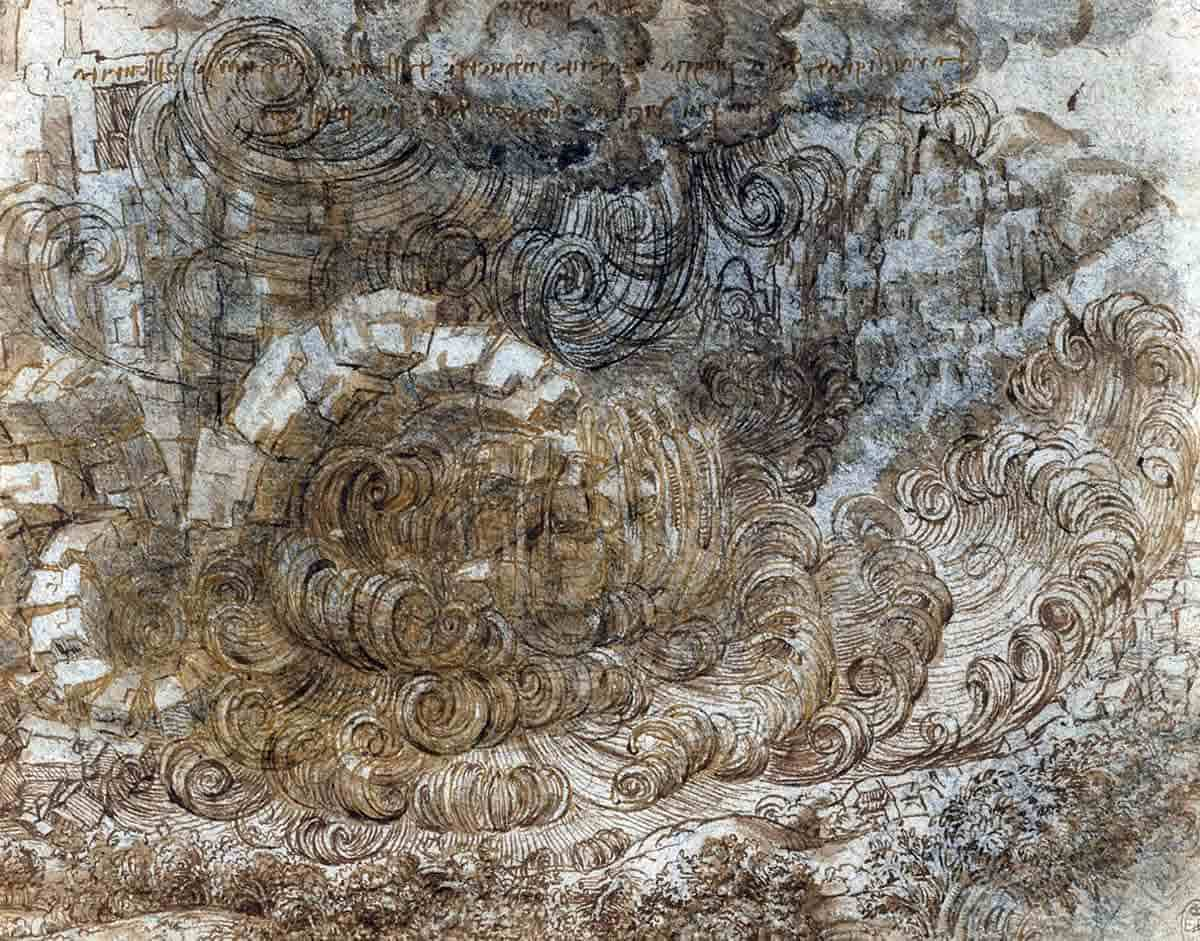
Given that the second rule of intuition involves a method for division, or separation, it makes sense to ask: what exactly is being separated? Bergson introduces the concept of the composite.
Experience never presents us with pure elements. What we encounter in ordinary perception is always a mixture. Duration is tangled up with space, memory interpenetrates perception, quality is mixed with quantity everywhere. The task of intuition is the difficult work of untangling the surface effect of experience by identifying the tendencies that have been compounded together within it. Intuition must separate time and space according to their natural articulations.
Tendency is a philosophically precise term. Neither duration nor space exists as a self-contained, isolable thing in the world. They are directions, dispositions, tendencies – not things. When intuition divides a composite, it traces the lines along which its components tend to lie.
The pure presences, as Deleuze calls them, are never fully given in experience. They are reached by extending the lines of experience beyond the point at which experience itself turns. They are beyond experience, and they operate as conditions of experience.
Intuition does not abandon experience for abstract concepts. The conditions it seeks are not broader than what they condition. They are, in Deleuze’s formulation, the conditions of real experience rather than the conditions of possible experience in general.
This is precisely what distinguishes Bergson’s method from Kant’s transcendental analysis, which identifies the universal conditions of experience but at the cost of remaining indifferent to what is singular and irreducible in any particular case.
What intuition ultimately discloses, then, is difference in kind: the qualitative heterogeneity that analysis systematically conceals by reducing everything to differences of degree/quantity. This is the philosophical aspect of the method: a novel sensitivity to what is genuinely distinct in reality.
Bergson Wanted Philosophy as Precise as Science, on Its Own Terms

The charge most frequently leveled at continental philosophy and Bergson in particular is that they belong to a class of philosophical discourse that trades in beautiful but ultimately impressionistic prose. This discourse is also seen as doing so at the expense of conceptual rigor. This is what Deleuze wants to confront.
The concept of precision in Bergsonism is therefore not incidental. Bergson, Deleuze argues, wanted to establish philosophy as a discipline as exact, within its own domain, as science.
The Deleuzian reading runs directly against the received image of Bergson as an anti-scientific thinker. The misreading stems from the confusion between two very different kinds of critique.
Bergson does not reject scientific knowledge. He only rejects the assumption that the current scientific method is exhaustive of the entire range of epistemic certainties. Science achieves its exactitude by working on immobile cross-sections of reality, by fixing, measuring, comparing, disassembling, and re-assembling various elements. The method, Deleuze argues, is legitimate and conducive to truth. The error arises only when this procedure is treated as the only accurate model of rigor. Philosophy, in this view, should have no business imitating the scientific method. This is where analytic philosophy and philosophy of science diverge from Bergson and continental philosophy.
Bergson introduces his own account of precision: Precision implies an adequate articulation of a problem in terms that are demanded by the object. The precision of the question is thereby determined not by its formal structure but according to the way its terms correspond to real differences in kind. This helps avoid the fallacy of badly analyzed composites.
The concept must be modeled on the thing itself rather than imported from elsewhere. Moreover, the concept must come from the thing itself. Such a concept, Bergson insists, applies to this one thing and nothing else. Concepts must analyze things in their singularity.
Intuition Is the Key That Unlocks All of Bergsonism
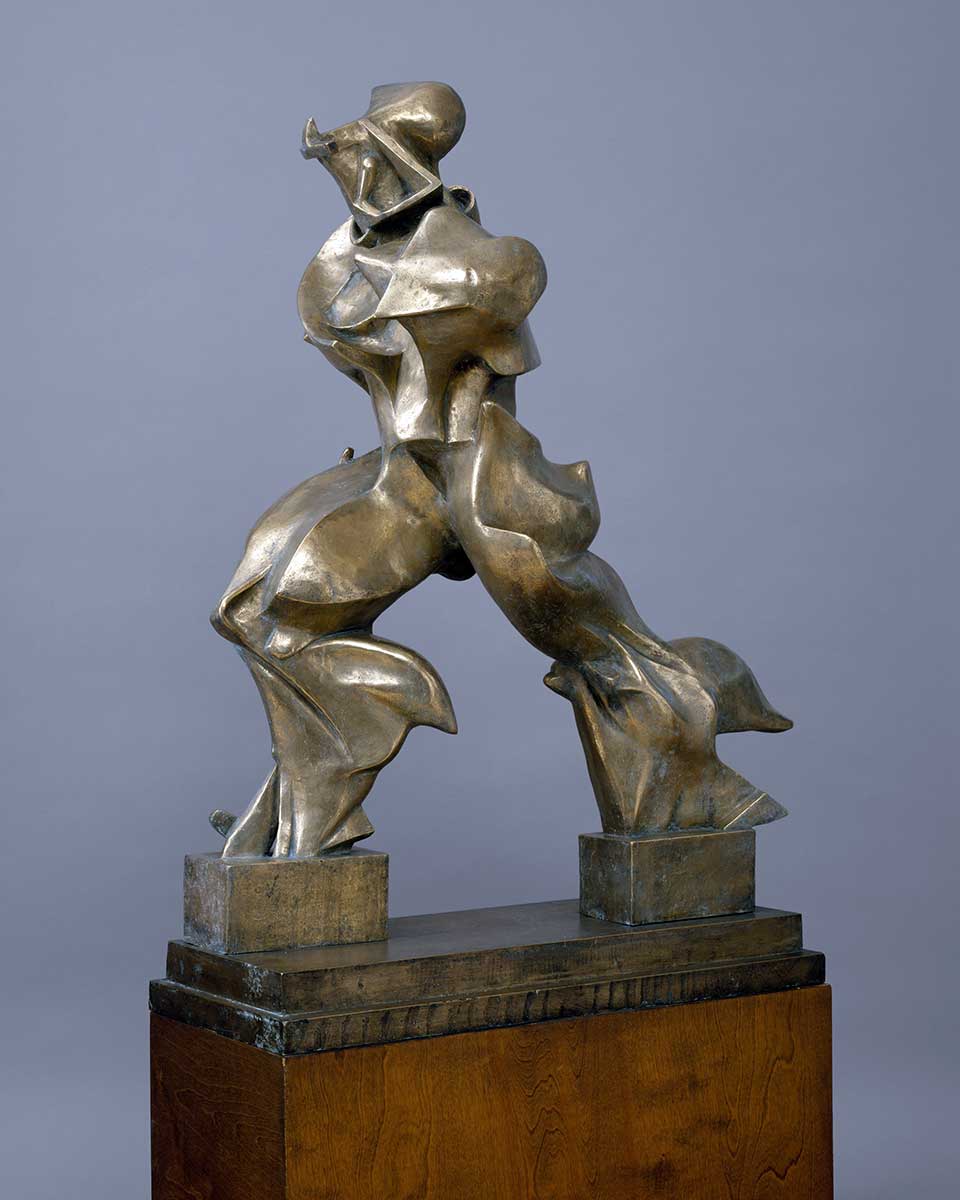
Intuition, therefore, is not just a faculty of some vague inner experience. It is a free-standing philosophical method with determinate rules and a precise object of investigation.
Henri Bergson turns the test of truth and falsity against problems themselves, refusing to inherit the banal questions at face value. Intuition proceeds by dividing the experiential composites into their distinct components by tracing the tendencies compounded beneath the surface of perception. It proceeds to orient the entire procedure toward time rather than space. Toward temporal duration as the domain where genuine differences in kind become visible.
What holds the three rules together is the conviction that the dominant tendency of human thought, in science or in philosophy, which is to spatialize the temporal flux of becoming, must be resisted. One must avoid freezing the moving into the static, reducing qualitative difference to quantitative gradation, or measuring the continuous stream of time into discrete, homogeneous units. Intuition serves as a corrective by providing the intellectual tools to restate philosophical problems in terms that are more adequate to the concrete and the immediate.
Intuition in this sense holds the key to understanding Bergsonism. That is why Deleuze’s book must be read in the strictest sequential order, from the first page to the last. This is not the case for all of Deleuze’s books. Without the notion of intuition, duration remains a lived experience without philosophical purchase. Or a mere “illusion,” as Einstein would have it.