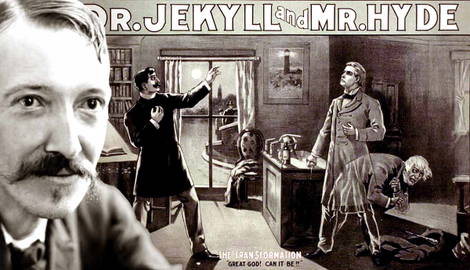

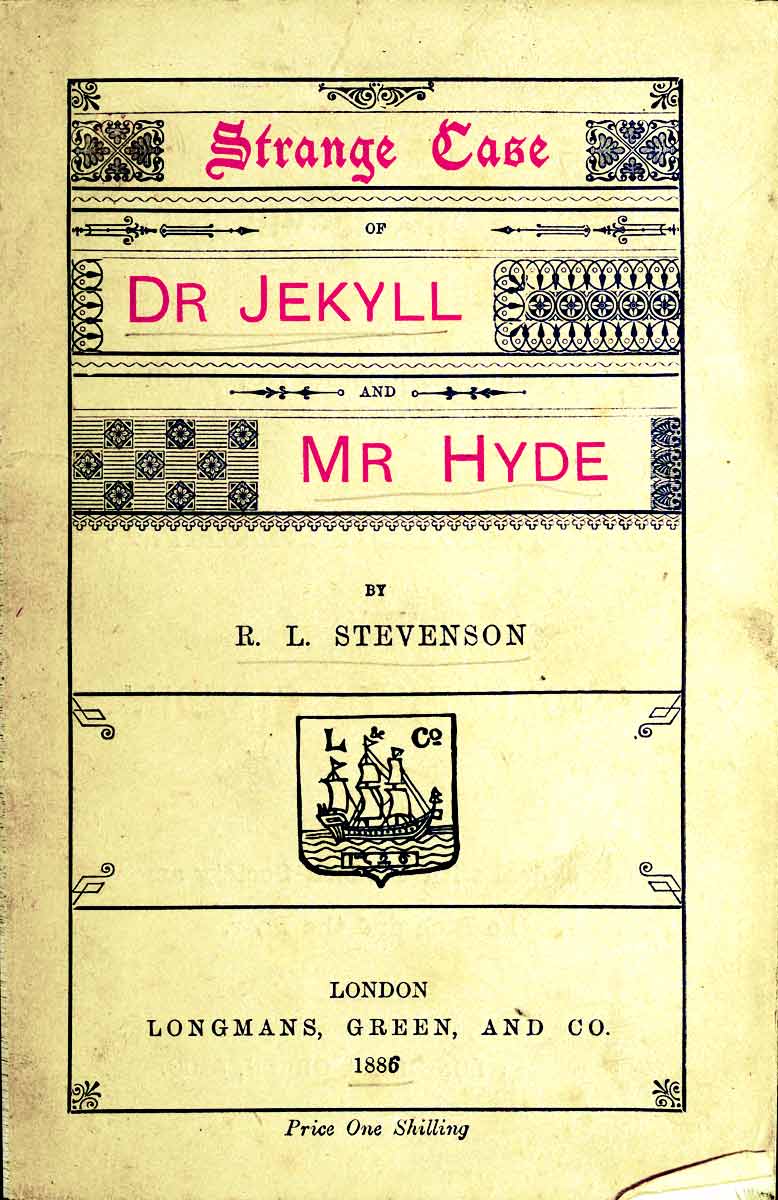
During the late 19th century, when the shadows of expressionism were stalking Western art, writers and philosophers seized on the notion that modern man is a divided man. Might the civilized face he shows the world by day hide the barbarian (or beast) within that walks the night? While Robert Louis Stevenson (1850-1894) first gained acclaim as the author of Treasure Island and other boyhood adventures, his 1886 The Strange Case of Dr. Jekyll and Mr. Hyde paired the evolving mystery novel with an uncanny psychological undertow that anticipated Freudianism.
Jekyll and Hyde and Hidden Pleasures
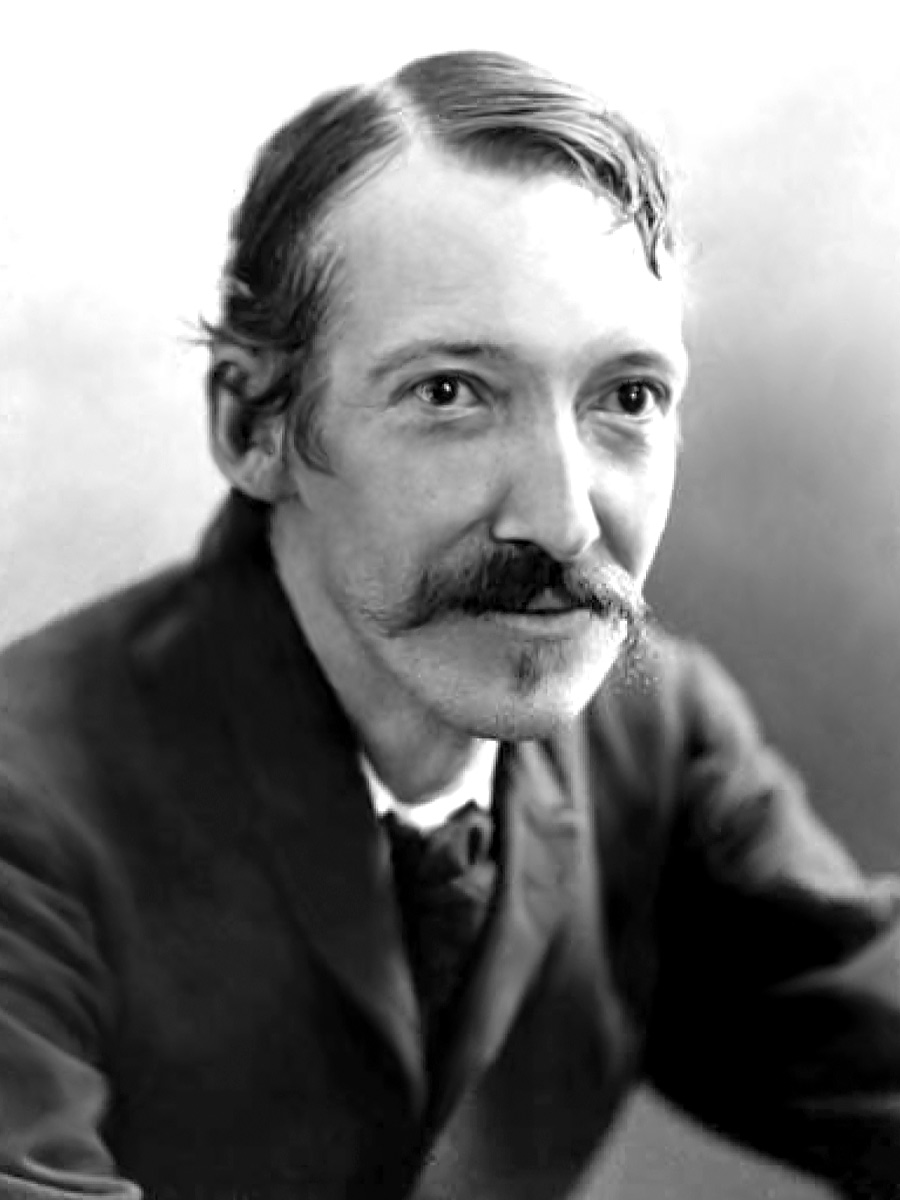
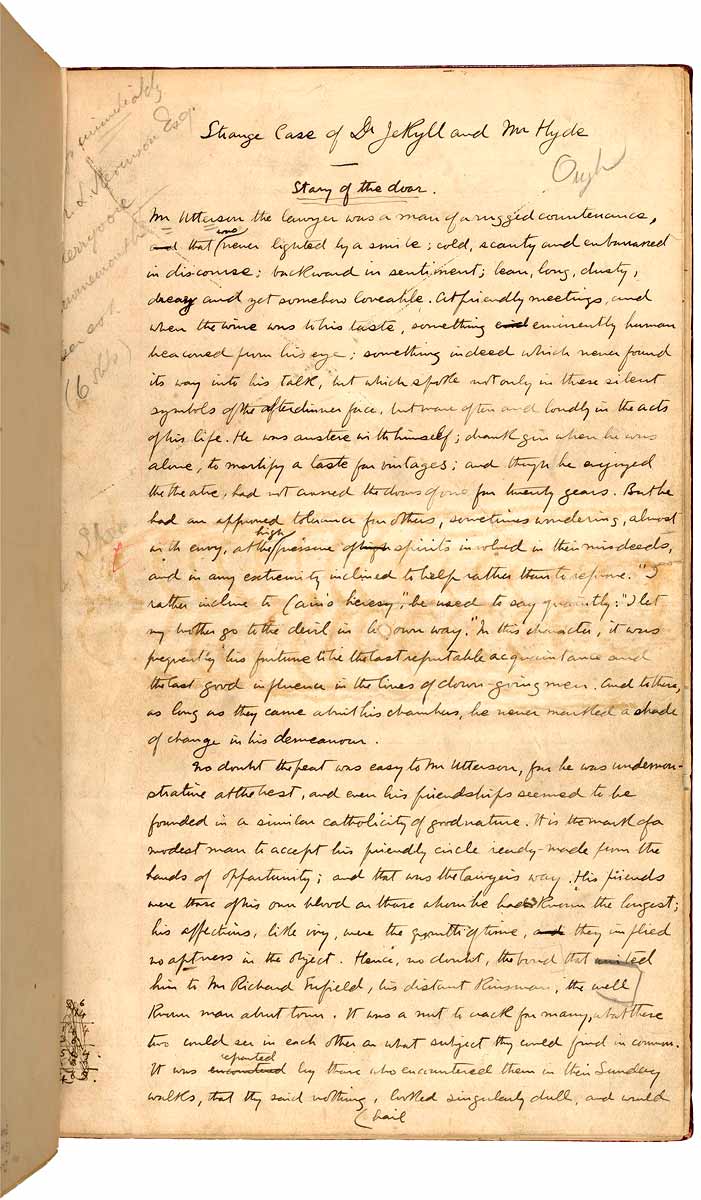
Strange indeed is Stevenson’s momentous novella, first published in the USA and in England a few days later. Readers in both countries found it so compelling that a stage version bowed soon after. His compact 141-page masterpiece has an equally intriguing backstory. While the author said he wrote his first draft in a few weeks, it was evidently permanently and hastily erased. Fearful that her husband’s literary reputation would be scorched by the book’s “indecent” sexual innuendo, his wife Fanny is said to have insisted that the first draft be burned and for him to begin anew.
Today’s readers then evidently have a somewhat bowdlerized and censored version of the original manuscript with references to the characters’ sexual proclivities either muted or outright neutered. Nevertheless, astute adult readers may well read “between the lines” to decipher more or less what sorts of villainous or immoral “pleasures” are indulged in by London’s Henry Jekyll, the book’s fatally flawed Faustian protagonist.
While the prosperous and outwardly proper Dr. Jekyll is Stevenson’s main character and would-be hero, he is observed from a distance, that is, through the myopic, easily deceived eyes of his close associates, notably Mr. Utterson, who is also his lawyer. As many critics have pointed out, Stevenson’s self-described “shilling shocker” largely dispenses with female characters to focus exclusively on this small circle of bachelor friends, with the schizoid Jekyll in the middle.
Secrets Behind the Door
In the first chapter titled “Story of the Door,” the narrative opens as a Mr. Enfield recounts to his distant cousin Utterson a disturbing scene he witnessed a few days previous. Returning home after a night out amid the “labyrinths of a lamplighted city,” he espied a young girl dashing across a dingy side street who suddenly collides with and is trampled on by a sinister, dwarfish man walking the other way. Enfield and the other shocked bystanders collar the perpetrator, a Mr. Hyde, and press him to immediately pay 100 pounds to the girl’s aghast family for any injuries.
As it happens, this cool, sneering “Satan-like” fellow is the other half of Stevenson’s titular dynamic duo. But he is hardly the better half. Enfield’s anecdote jogs Utterson’s memory as he recalls that Edward Hyde is the sole beneficiary of a bizarre new will that Dr. Jekyll drew up in his own hand, much to Utterson’s professional dismay. Could it be possible that a rapscallion like Hyde found his way into the largesse of a respectable fellow like Jekyll? If so, Utterson speculates, blackmail must be involved.
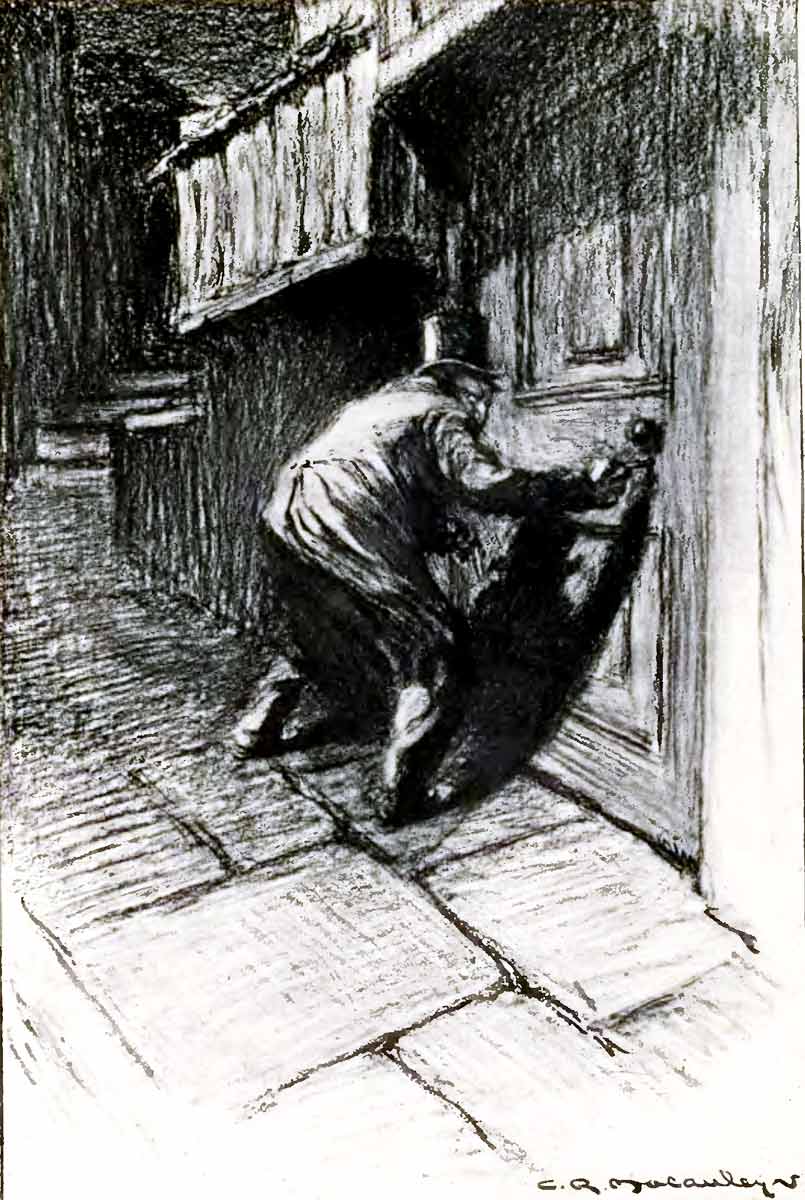
Doubling back, attentive readers would do well to pay heed to the importance of the aforementioned “door” that Stevenson cites scores of times in his precisely constructed, deceptively simple allegorical horror story. The door referred to is evidently a cellar entrance at the shabby rear of a large urban house that Hyde enters so as to procure the money demanded of him. Now, Utterson is determined to discover if the two Hydes are in fact the same person. In Stevenson’s memorable pun, Utterson says to himself, “If he be Mr. Hyde … I shall be Mr. Seek.”
First, he stakes out that cellar entrance to wait for Hyde to reappear. Not only does Utterson finally catch his furtive mystery man there, but he also confirms Enfield’s observation that the pale, unpleasant, vaguely “troglodytic” chap possesses a key to the door. Furthermore, it is obviously apparent to Utterson that the door is the back entrance to Jekyll’s stately residence. Stevenson slowly lays out the pertinent details, brick by brick, revealing that this rear door leads to Jekyll’s laboratory and an old adjoining surgical theater, both in a building separated from the main dwelling by a garden.
By contrast, when Utterson seeks out the front entrance to Jekyll’s well-appointed home amid the abutting “ancient handsome houses,” he notes its “great air of wealth and comfort.” This is where Utterson, the detective, will be greeted by elderly servant Poole, who confirms that the seldom-seen Mr. Hyde not only has the run of the household but all the servants have orders from Master Jekyll to obey him. Thus, Stevenson artfully literalizes how Jekyll has divided his life, his very being, into two: his posh, public half out front and his taboo private half that comes and goes through a clandestine back door.
No doubt the load-bearing wall of scores of scholarly literary dissertations (and sturdily so) this symbolic front/rear opposition represents the age-old “duality of man” that Stevenson wishes to express and problematize in his cautionary tale. In this sense, it recalls Mary Shelley’s Frankenstein and other tales of misbegotten 19th-century scientific creation while looking forward to H.G. Wells’ similar sci-fi sagas of modern male hubris, for instance, The Invisible Man and The Island of Doctor Moreau.
Basic (and Base) Instincts
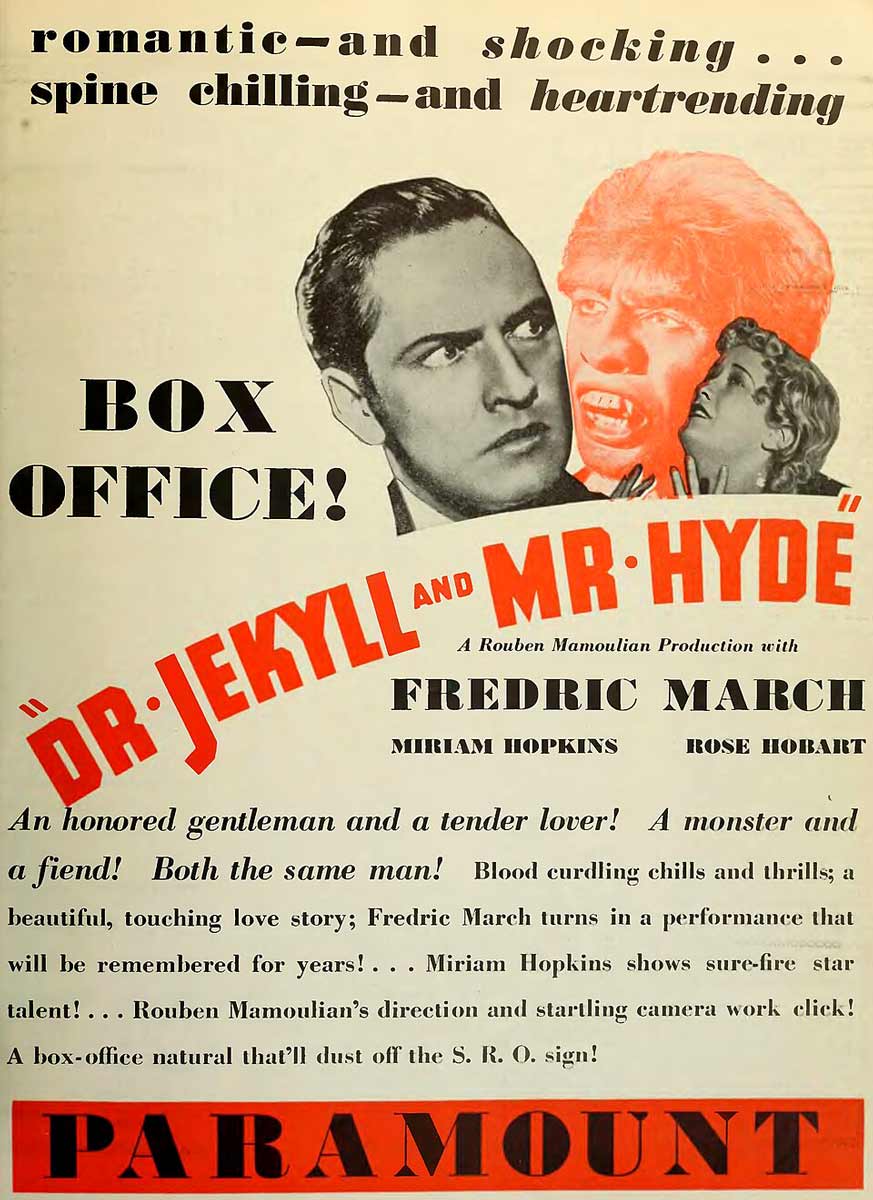
In his private correspondence and daily life, Stevenson was something of a freethinking (if part-time) bohemian who rebelled against his parents’ strict Calvinist religious views on life, work, and acceptable morality. Of course, he was also living in the Victorian era when U.K. life and culture hardly encouraged hedonistic or even liberal-minded lifestyles. Recall that, notably, his contemporary Oscar Wilde was scandalously jailed and his reputation (and life) ruined once his homosexual relations became public knowledge.
While enjoyable as a sophisticated tale of terror, Jekyll and Hyde reaches beyond its generic literary foundations to make a statement on the dangers of repressively “bottling up” humanity’s physical or instinctual sides. As an archetype of the Western “mad scientist,” Jekyll experiments on himself, seeking to isolate and contain all the malevolent and so-called immoral urges that have befallen man since, well, the Fall of Man. If the good doctor were to concoct a potion that could separate his “good” half from his “bad,” surely society would benefit. On the other hand, a latter-day skeptic might ask if Jekyll’s experiments aren’t designed as a sly way for him to evade responsibility for any misdeed or vice his alter-ego might indulge in London’s nocturnal world. “Don’t blame me,” says Jekyll, “it was that guy Hyde.”
Stevenson’s Edward Hyde is thus a punky stand-in for the animalistic urges, appetites, and emotions that often humans keep hidden, or at least try to. Well over a century has lapsed since Stevenson’s influential Gothic tale, and while Western society has very much liberalized its moral edicts, it’s also tragically true that human “civilization” nevertheless continues to harbor and mask its two-faced, sociopathic individuals. From America’s charming serial killer Ted Bundy to its now-notorious monster Jeffrey Epstein, there continues to be a long line of Hyde’s hiding, and thriving, in plain sight.
Stevenson was a great believer in the power of dreams, most especially with regard to his creative spark. During an era when theories of the unconscious were finding their way into the conscious minds of Viennese psychologists like Sigmund Freud, Stevenson found the front door into his story via a series of dreams that both haunted and inspired him. Looking ahead, Freudian-literate readers will also see Hyde as a primal “id” character who is an itchy bundle of animalistic desires and emotions. Correspondingly, it’s easy to view Jekyll as the “ego” and/or “superego” character: in the former, he is responsible for obtaining the things the id wants, ideally in a socially acceptable fashion; in the latter, he is tasked to somehow stop or at least refine Hyde’s bestial behavior.
Darwinian Devolution
Hyde’s most striking (literally) act as a force of evil comes when he commits a crime of “singular ferocity” one moonlit night near the river. His victim: a prominent elderly man out walking alone, whom Hyde first accosts and then suddenly, brutally, beats to death with a cane, executed with “ape-like fury.” In the century of Darwin, and only 15 years after his revolutionary The Descent of Man, there was ascendant a blasphemous new zeitgeist, at least among the intellectual elite, that plucked the origin of the human species from God’s divine right hand and placed it into the brawny knuckles of prehistoric apes.
With the murder, there’s no going back for either Hyde or Jekyll. Hyde’s late-night revelry, carousing, and unspecified “pleasures” by contrast amount to monkey business, the wicked antics of a juvenile boy on the loose with no curfew. The murder and subsequent police dragnet force Hyde into hiding, a turn of events that ironically allows his “keeper” Jekyll to repent and once again enjoy the company of his gentlemen friends. Will this be Stevenson’s happy ending, with that brute Edward Hyde exiled and caged back into Jekyll’s chastened soul?
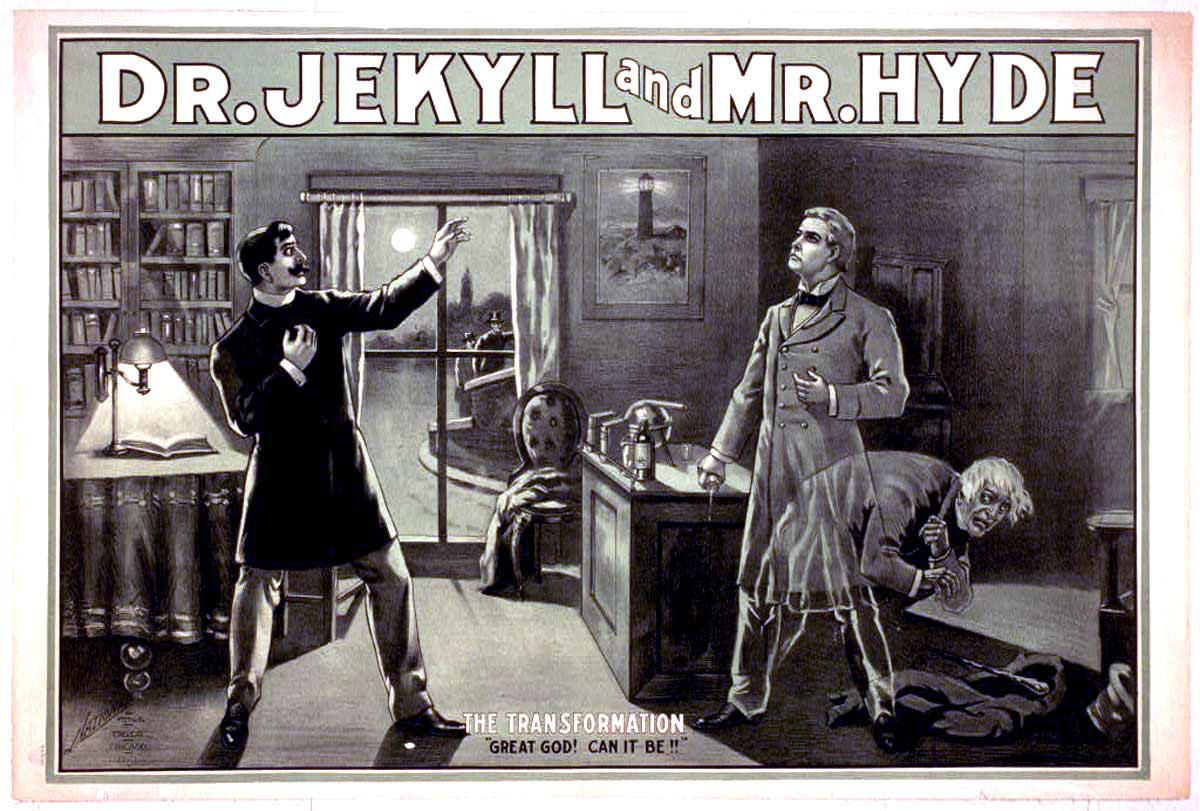
Alas, ‘tis not to be. Call it Freud’s “return of the repressed,” but in turn, both voluntarily and involuntarily, Jekyll again devolves into Hyde for further illicit adventures in foggy London town. Fatefully, and famously, the latter mutation happens as the doctor sits in the sun on a bench in Regent’s Park, resolved to banish Hyde forever. In a matter of seconds, something comes over him. He feels bold, unbound, reckless, then nauseous. He looks down at his hands, now sinewy and hairy. Shocked and distraught, he is once more Edward Hyde, a hunted man, “thrall to the gallows.”
Jekyll and Hyde: The Addiction and the Aftermath
In the various powders and potions that Jekyll boils and bubbles together in his laboratory, then drinks, he discovers the insidious elixir that will change him into Hyde, younger and more diminutive than himself, and ready to seek out his fix of “vicarious depravity.” Initially, Jekyll can readily return to his old self with the elixir neatly doing double duty as an antidote. But as the drug becomes habitual, it’s Hyde who gains the upper hand. Thus, Stevenson delivers another timely modern topic through the back door, namely drug addiction, which has transformed many a respectable man (and woman) into a hellish beast.
Speaking of human beasts, especially those that troll darkened streets, it’s more than a little eerie that Stevenson’s Mr. Hyde could easily be mistaken for another London denizen, a real one. Not the duplicitous Dr. Jekyll but the notorious “Jack the Ripper,” whose ghastly 1888 murder spree terrorized London only two years after Stevenson’s brilliant horror classic first saw the light of day.