
Grasping the meaning behind an artwork may be possible through deep observation, but this method fails in comparison to understanding it through the artist’s own words. Luckily for us, the world-renowned Dutch artist Vincent van Gogh left behind a legacy of his most private thoughts in the form of almost 900 letters. These letters narrate the story of his life in his own unfiltered words, from the moment he started painting up until his difficult last days. Reading this correspondence is akin to stepping inside the mind of Van Gogh.
Building a Brotherly Bond With Theo
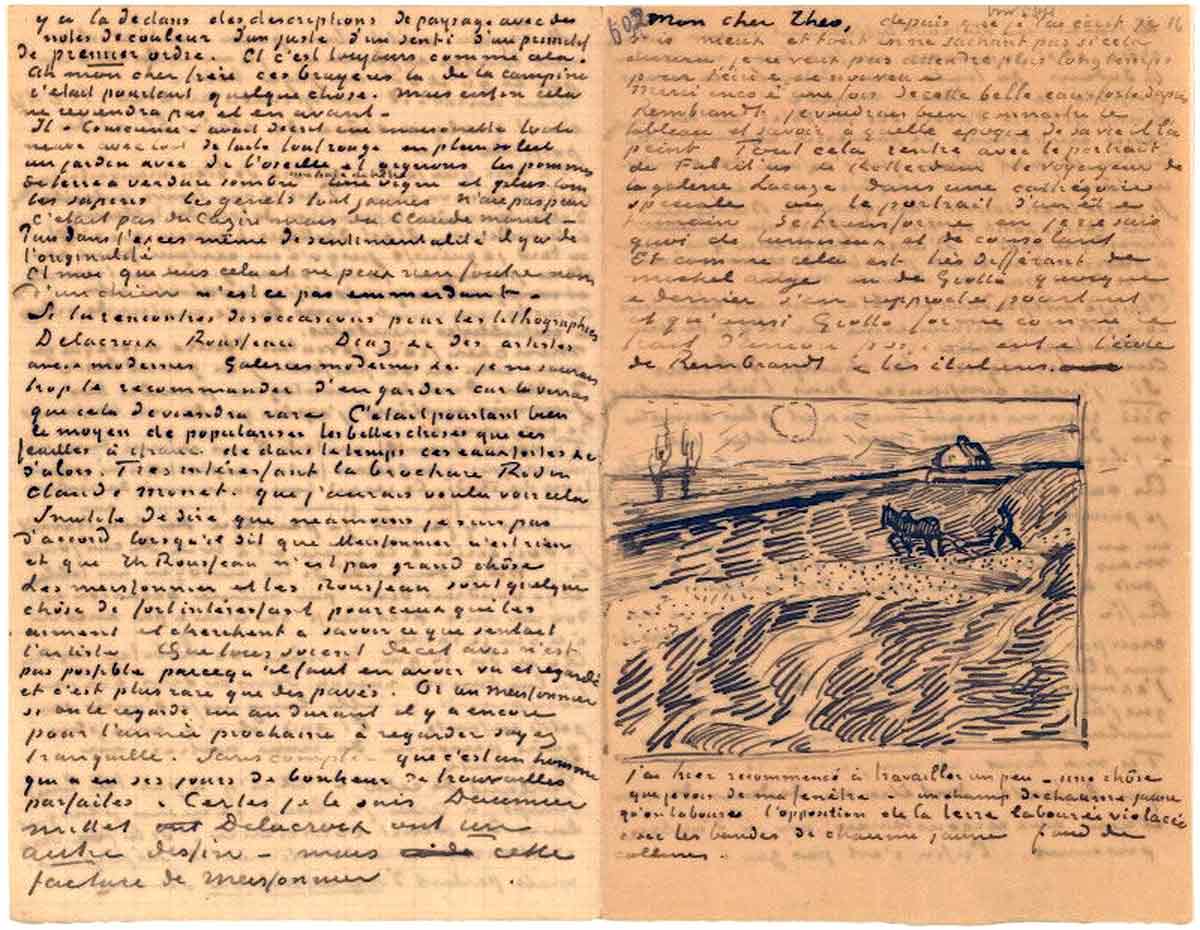
Most of the letters Van Gogh wrote were addressed to his younger brother Theo. The two brothers had an incredibly close bond that only grew stronger as Vincent’s struggles with his mental state increased. They started their correspondence in September 1872 when Van Gogh was living in The Hague working at the art dealership Goupil & Cie. This exchange of letters lasted until the end of Van Gogh’s life in 1890.
It is a well-known fact that Van Gogh struggled financially during his lifetime. The only reason he was able to pursue a career as an artist was due to the financial and emotional support that came from Theo. Theo essentially acted as the buyer of Vincent’s art. Van Gogh would send all his completed paintings to Theo, who would then attempt to sell them in Paris through his contacts in the art world. In return, Van Gogh received a monthly allowance from his brother that allowed him to continue painting.
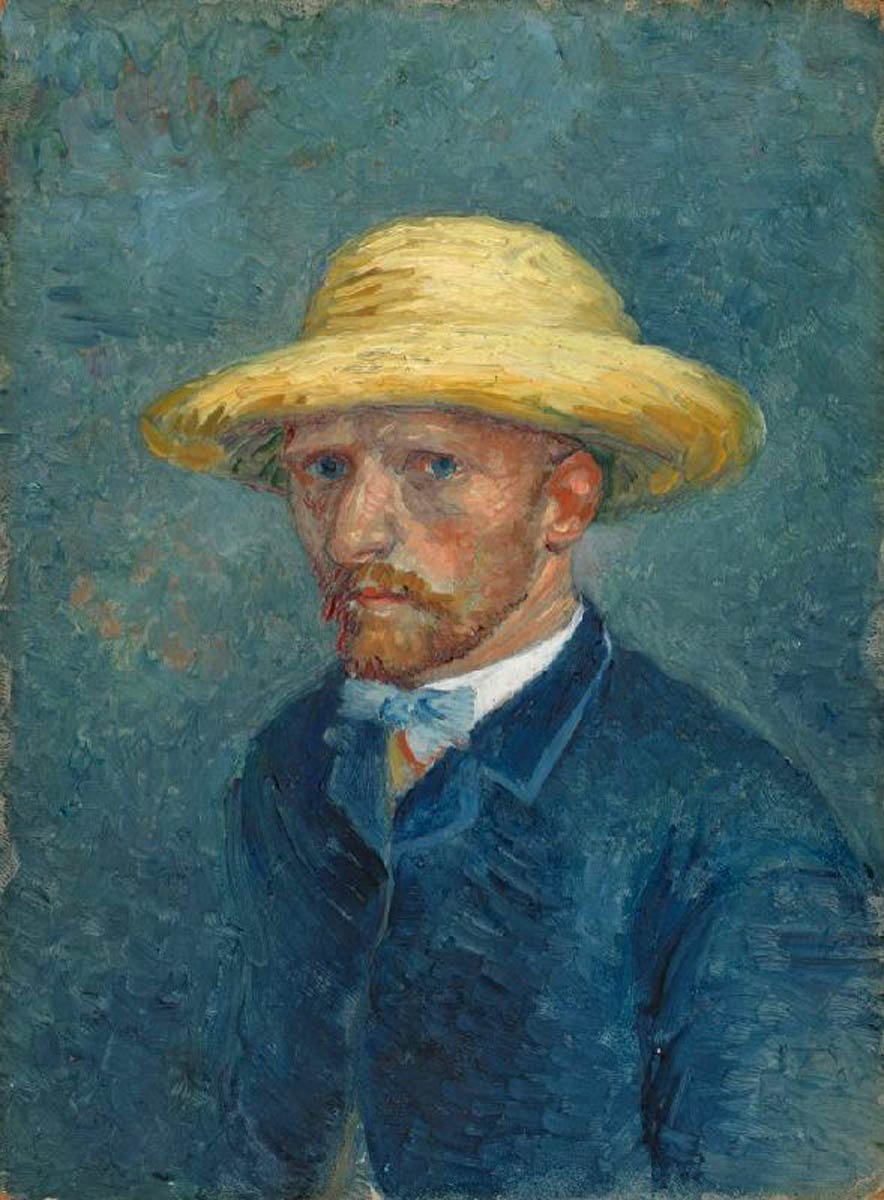
Theo’s role is therefore central to the story of Vincent van Gogh. The letters exchanged between the two brothers are a testament to their close relationship as well as a clear record of the financial agreement between them. Without the letters exchanged between the brothers, we would not know Van Gogh’s character and details of his life and work as extensively as we do today. The importance of the letters to researchers is emphasized by the lack of any correspondence between Vincent and Theo in 1886-87, when the two brothers were living together in Paris. We know that Van Gogh’s style went through a major shift in Paris through other sources, but no other document is able to provide as detailed and personal an account about the artist as his own letters sent to his brother do. For instance, when Van Gogh decided to admit himself to a psychiatric hospital after having multiple breakdowns in 1888-89, he wrote to Theo in a letter:
“. . . but above all it seemed sad to me that all that had been given to me by you with so much brotherly affection, and that for so many years, it was however you alone who supported me, and then to be obliged to come back to tell you all this sad story…”
These deeply touching words not only reveal Van Gogh’s private thoughts about his tragic circumstances, but also show how he recognized Theo as his sole supporter. He expressed both sorrow and gratitude in this account, which further highlights the relevance of the letters and the brotherly bond between Vincent and Theo in understanding Van Gogh’s distressing life and his artistic genius that persists despite everything.
Artistic Introspection Through Letters
Van Gogh is popularly interpreted as a mad genius who painted purely out of intuition and passion. While there is some truth to this, this view overlooks an important side of his artistic practice that resulted in the masterpieces we admire today. Right after deciding to pursue a career in art around 1880, Van Gogh did not have a creative environment in which he could learn and develop himself. At that time, he was living in a mining village in Belgium known as the Borinage and had little connection to other artists. He remedied his lack of artistic knowledge by moving to The Hague toward the end of 1881 to work under the tutelage of his cousin’s husband, Anton Mauve, who was an established painter of the Hague School.
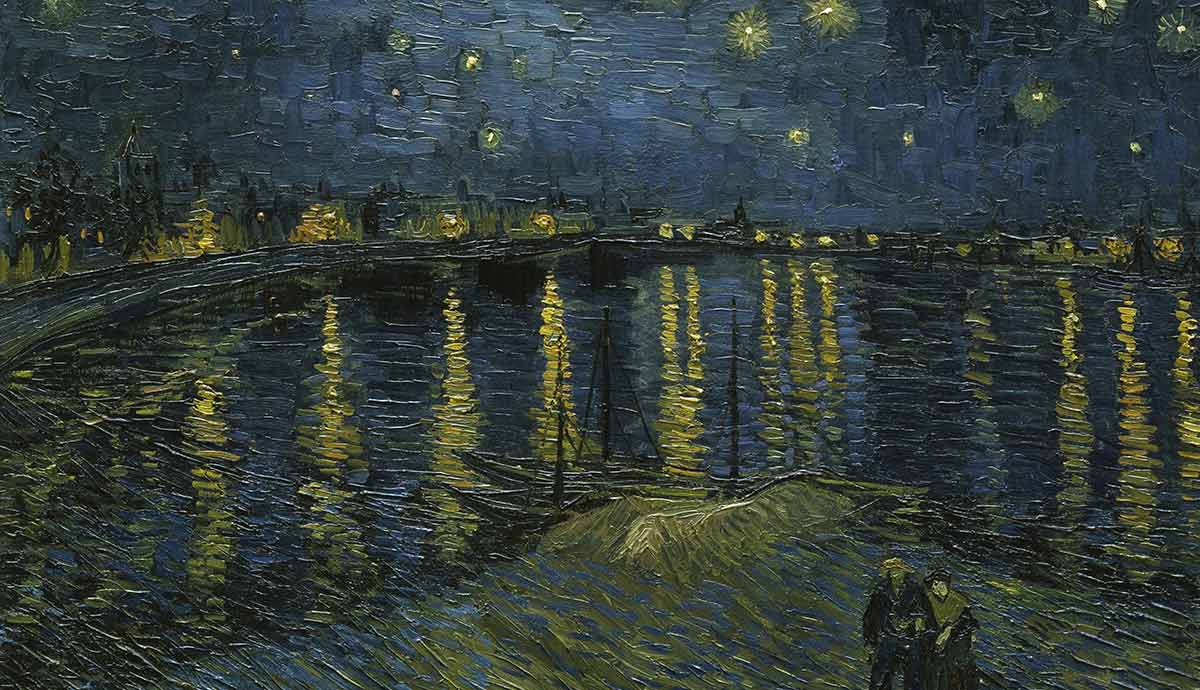
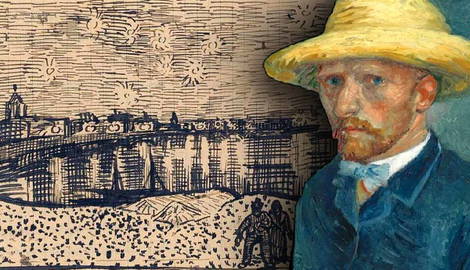
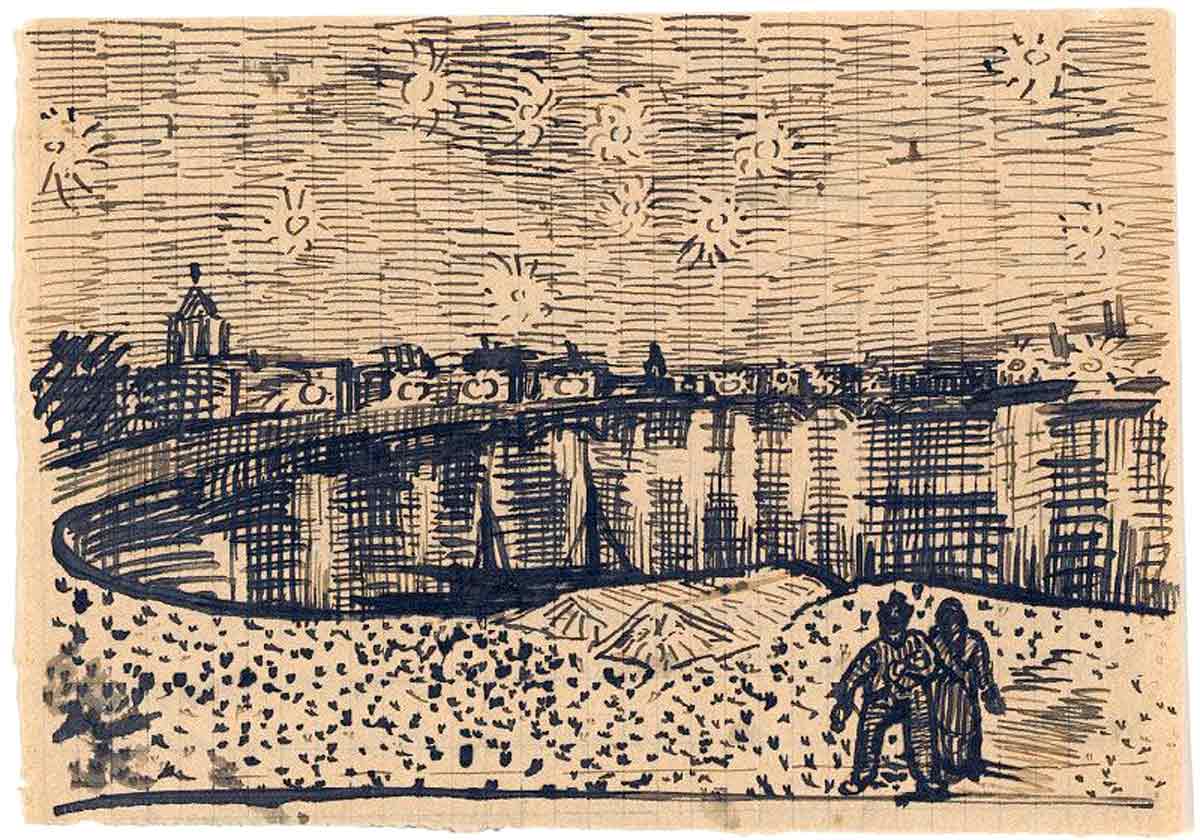
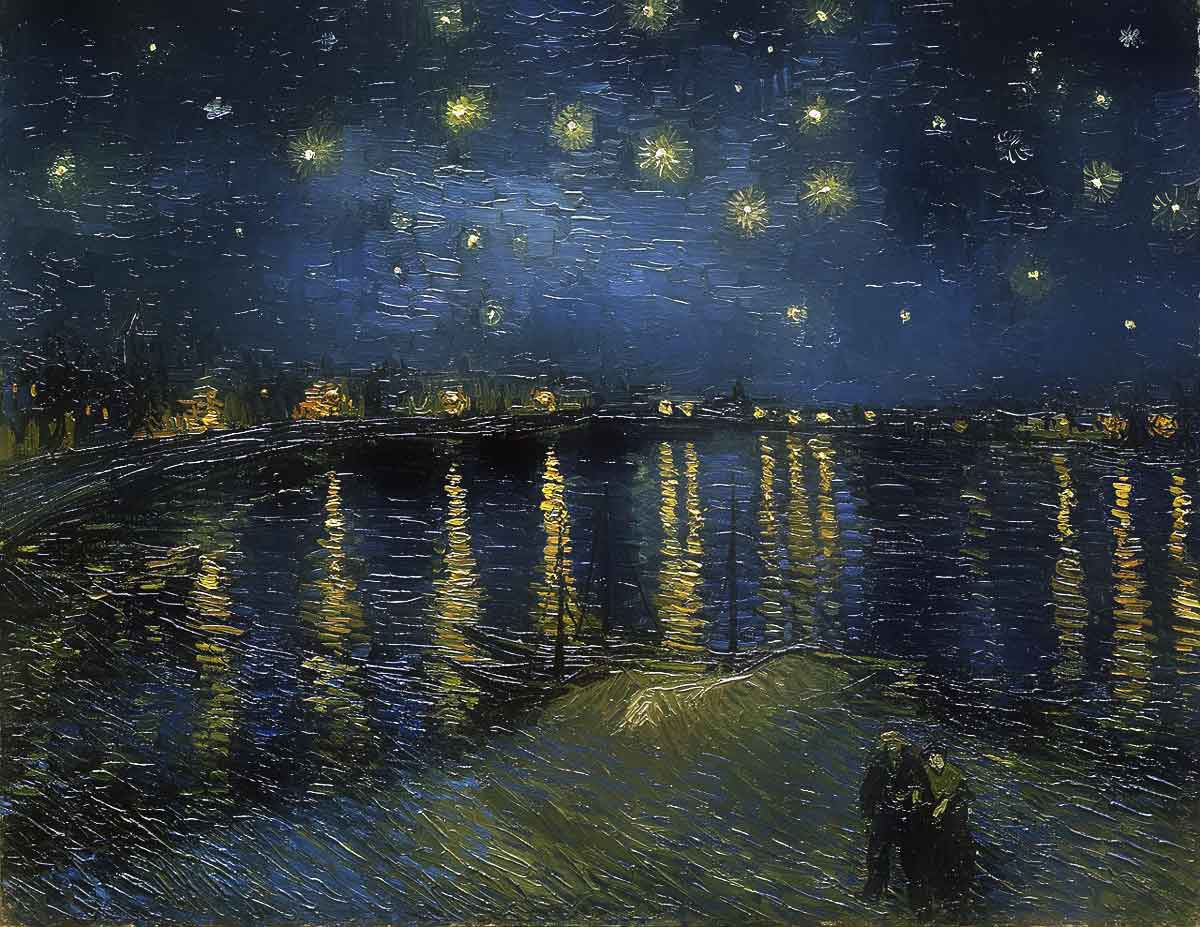
In 1885, Van Gogh also enrolled in the Royal Academy of Fine Arts in Antwerp to build his foundational technical skills in drawing and painting. However, throughout his career as an artist, Van Gogh’s letters to Theo, his sister Wil, and some artist friends remained the central medium via which he worked through his ideas. He discussed his creative plans at length in his letters, including detailed analyses of colors and small sketches of paintings in the margins. For example, when describing his painting Starry Night Over the Rhône to Theo in a letter, Van Gogh gave an exhaustive description of the colors:
“The sky is green-blue, the water is royal blue, the areas of land are mauve. The town is blue and violet. The gaslight is yellow, and its reflections are red gold and go right down to green bronze. Against the green-blue field of the sky the Great Bear has a green and pink sparkle whose discreet paleness contrasts with the harsh gold of the gaslight. Two small coloured figures of lovers in the foreground.”
One of the major projects the artist took up during his time in Provence was painting his famous Sunflowers, a series that actually consisted of seven paintings. Van Gogh’s elaboration of the process of working on this series in his letters truly demonstrates his technical prowess and clear artistic vision. He laid out the effect he wanted to achieve with each painting and the color combinations he used. For example, in a letter from August 1888, he wrote to Theo, “The sunflowers are progressing; there’s a new bouquet of 14 flowers on a green-yellow background, so it’s exactly the same effect . . . as a still life of quinces and lemons that you already have, but in the sunflowers the painting is much simpler.”
His plans did not stop here. Toward the end of the year, the artist decided to combine the sunflower paintings with another work titled La Berceuse that was a portrait of Madame Augustine Roulin, the wife of his postman friend Joseph Roulin. Van Gogh made five versions of La Berceuse and wrote about his plan to make a triptych in May 1889:
“You must know, too, that if you put them in this order: that is, the Berceuse in the middle and the two canvases of the sunflowers to the right and the left, this forms a sort of triptych. And then the yellow and orange tones of the head take on more brilliance through the proximity of the yellow shutters. And then you will understand that what I was writing to you about it, that my idea had been to make a decoration like one for the far end of a cabin on a ship, for example.”
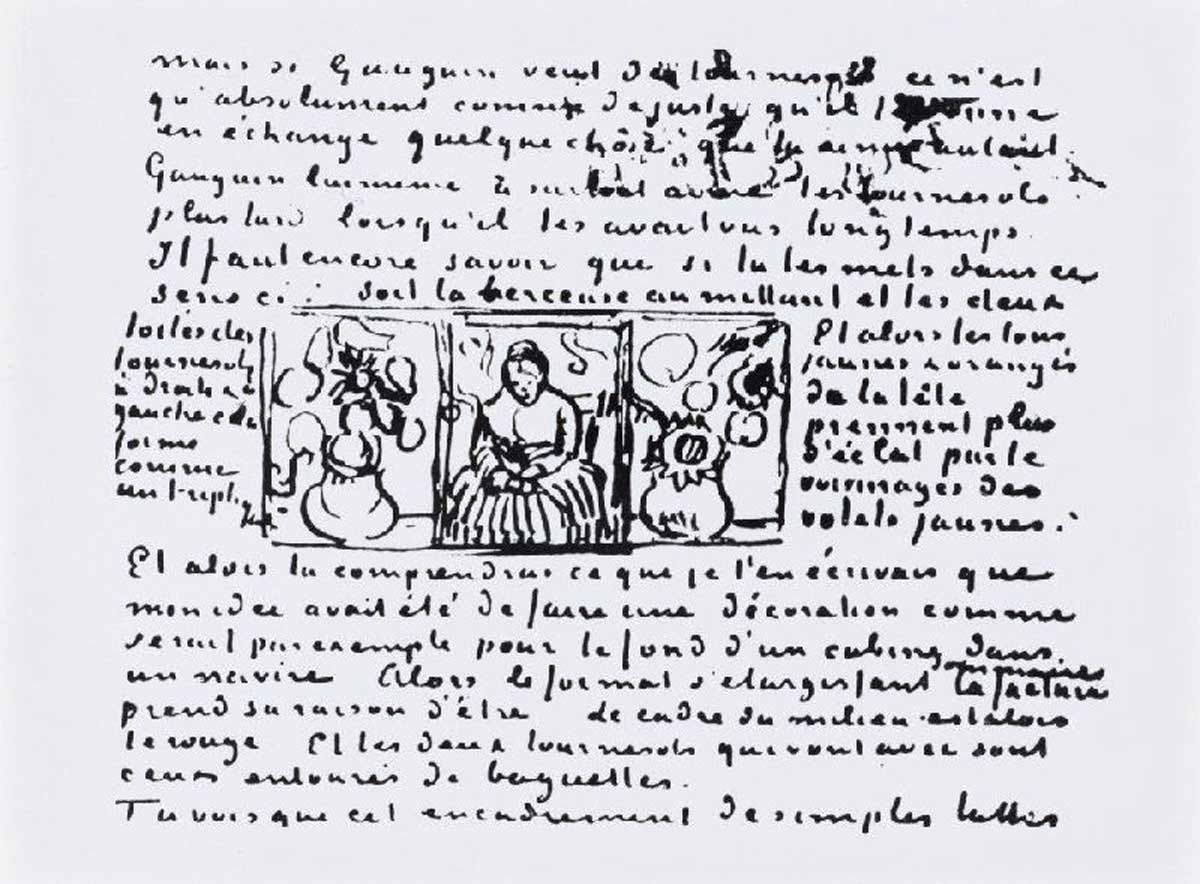
He went on to specify the exact kind of frame that he wanted for each painting in the triptych to intensify their color effects. This focus on technical details, the color palette of the compositions, the exact placement of each work, and the intentional selection of frames shows how deliberate Van Gogh’s artistic process was. This level of planning was also not isolated to the Sunflowers but extended to most of his major paintings. While a large part of his method involved working spontaneously and creating entire paintings in one sitting, he invested a significant amount of thought behind each subject, each form, and each color. Van Gogh was therefore not a mad genius who achieved greatness in his work out of pure talent and intuition, as his success involved meticulous planning as well as numerous setbacks that were carefully processed through his letters.
Letters as a Document of Van Gogh’s Illness
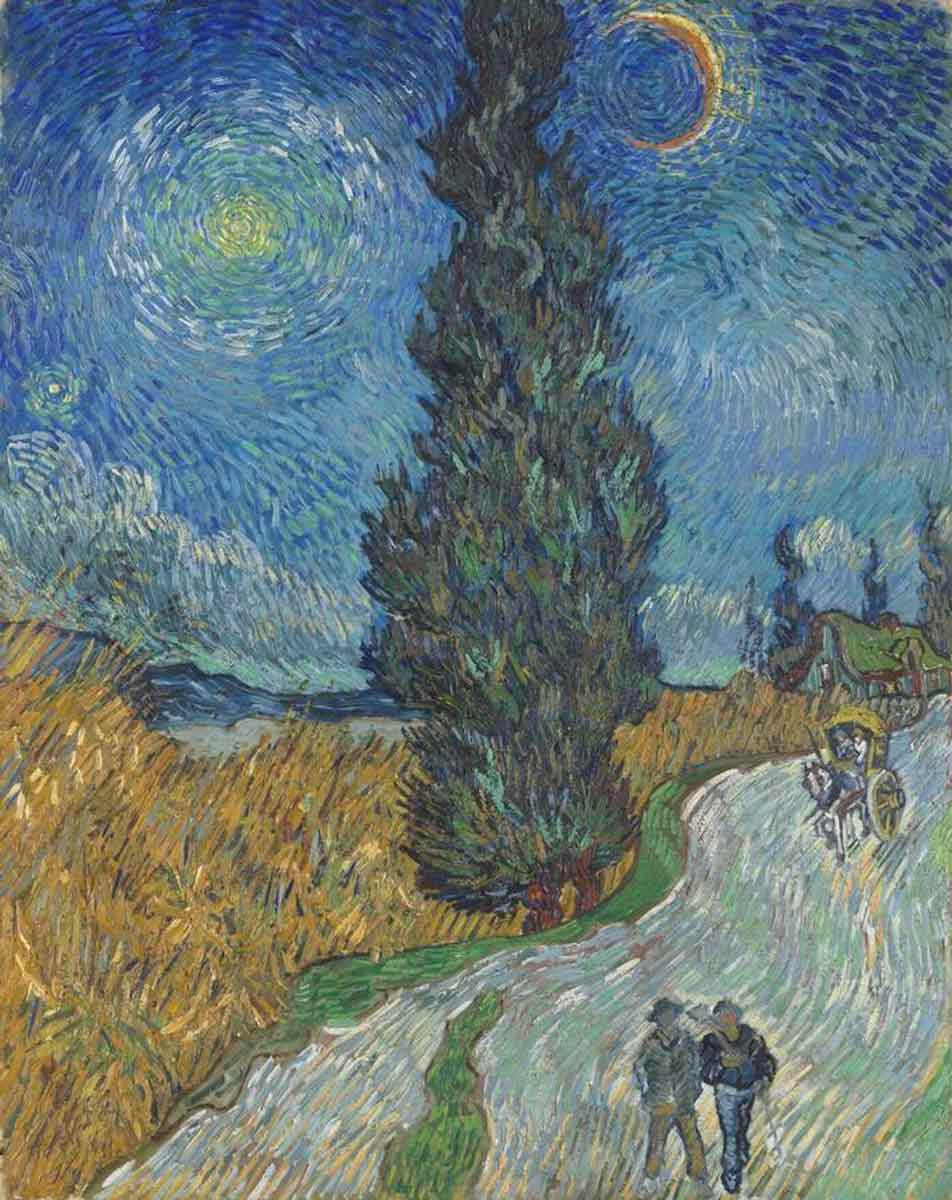
Van Gogh’s letters are valuable for understanding his art and working process, but they also serve as documents of the artist’s illness that deeply influenced the last two years of his life. His first major psychological breakdown is also the most famous one that involved Van Gogh cutting off part of his ear. This occurred in December 1888, and by May 1889, the artist had voluntarily admitted himself to a psychiatric hospital in Saint-Rémy-de-Provence. Apart from painting, writing letters to Theo remained his central means of self-expression. He kept his brother updated on his condition and his experiences at the hospital, sometimes even describing his breakdowns in great detail, such as in this letter from August 22, 1889:
“For many days I’ve been absolutely distraught, as in Arles, just as much if not worse, and it’s to be presumed that these crises will recur in the future, it is ABOMINABLE. I haven’t been able to eat for 4 days, as my throat is swollen. . . It appears that I pick up filthy things and eat them, although my memories of these bad moments are vague . . .”
His letters show that he was well aware of his circumstances and accepted the hardships he was going through. Despite his struggles, Van Gogh maintained an optimistic outlook on his life throughout this period. He constantly reassured Theo and his family about his health and turned all his focus onto painting. Even a few days before his death by suicide, the artist wrote to Theo in what was to be the last known letter he sent to his brother, “As for myself, I’m applying myself to my canvases with all my attention, I’m trying to do as well as certain painters whom I’ve liked and admired a great deal.” This clearly portrays Van Gogh’s unwavering determination to paint and clarity about his artistic vision.
A Masterpiece in Words: Publication and Afterlife of the Letters
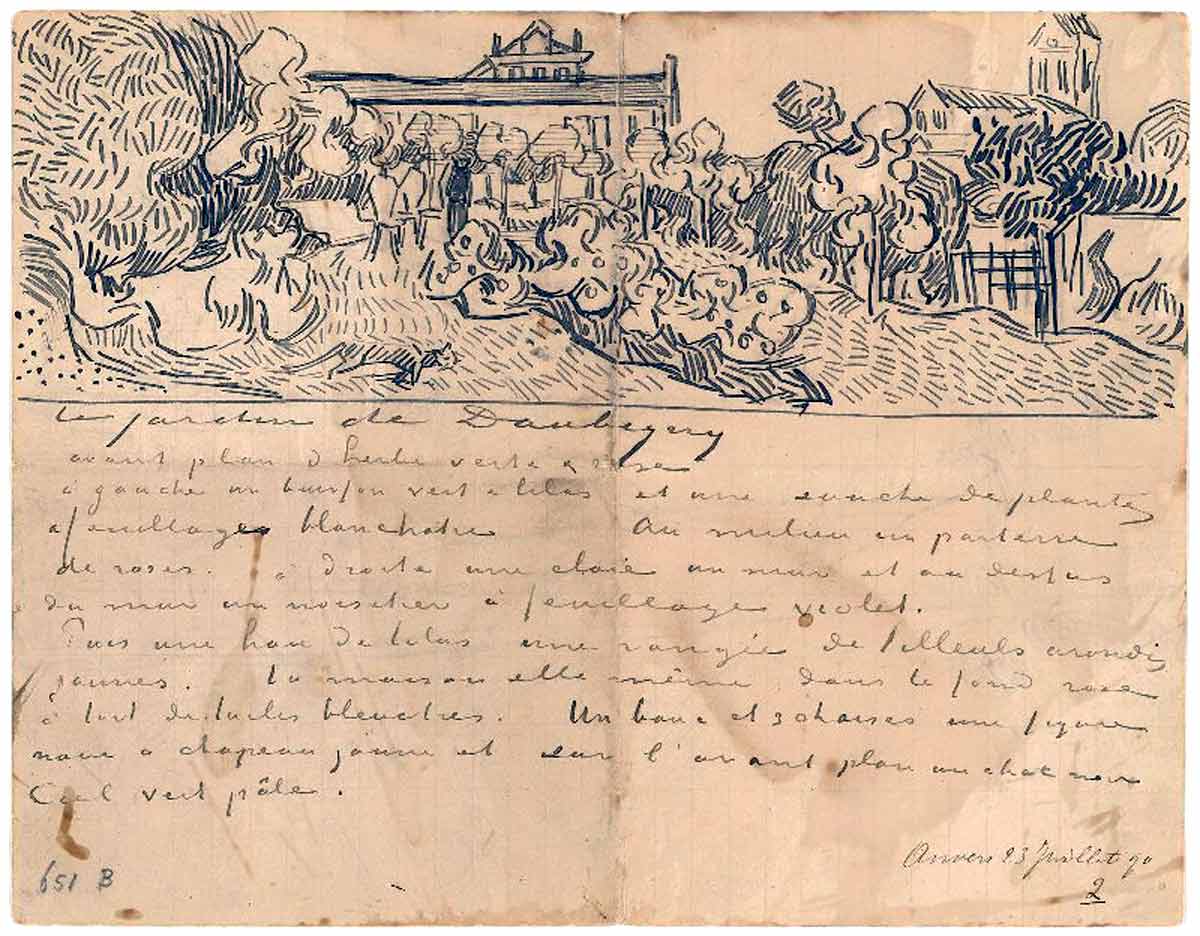
What happened to Van Gogh’s letters after his death? As explained before, Theo was extremely close with his brother and remained his confidant until the latter’s death. Because of his love for Vincent, Theo saved every letter his brother ever sent him. Theo passed away six months after Vincent, leaving behind a vast collection of paintings, drawings, and letters from his brother. Theo’s wife, Johanna van Gogh-Bonger, inherited this collection and was left to deal with its afterlife in the absence of her husband.
While most of the letters Theo wrote to Vincent were not preserved, Jo found the neatly stored collection of Vincent’s letters to Theo. She read through the deeply moving words charged with raw emotions reflecting Van Gogh’s views on life, art, religion, nature, and love. Reading these letters made it clear to Jo that this artist’s words were just as important as his paintings. She intended to share this treasure trove of words with the world, as she was convinced that it was not possible to fully experience Van Gogh’s art without reading his letters. Jo worked tirelessly in order to bring attention to Van Gogh’s work. She succeeded in organizing several exhibitions and sales to important museums. The letters remained a key force in driving Jo’s efforts.
With this in mind, she began working on editing the letters in order to publish them as a book. The first major edition of the letters was published in 1914 under the title Vincent van Gogh. Brieven aan zijn broeder. Soon, as Van Gogh’s name gained importance, there were other editions of the letters being published. Ever since his death, Van Gogh’s letters have become an important part of his story, providing a deep understanding of the mind of a tormented yet remarkable artist.