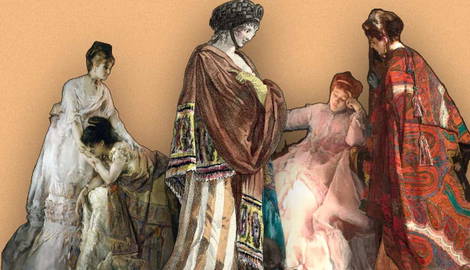

Cashmere shawls are woven woolen textiles that have a long history in the Indian subcontinent. These shawls were, and still are, used to wrap or drape across the body during the winter months, while also serving as fashionable accessories. Made from extremely soft, warm, and lightweight wool, the cashmere shawl became a staple in French fashion when it entered European markets during the 19th century. These textiles can also serve as tools for examining social hierarchy and femininity, as well as the dynamics of colonial power.
What Is Cashmere?
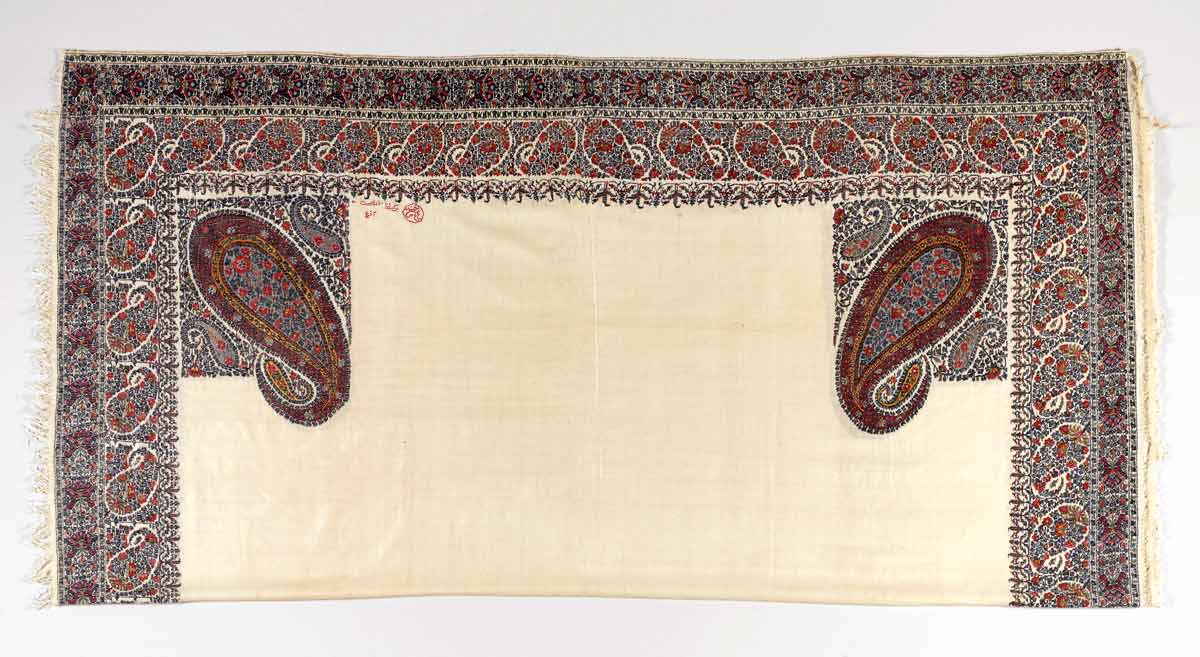
For centuries, cashmere shawls have been produced in the valley of Kashmir, which today sits at the border of North India and Pakistan. Shawls were an important part of Indian clothing. Due to their high prices, the fashion for high-quality cashmere shawls was largely restricted to royalty and the upper classes. Indian miniatures from the 17th century often depict the shawl as part of the court dress, with Emperor Akbar of the Mughal dynasty being particularly famous for wearing cashmere shawls. The earliest record of these textiles in writing dates back to the 16th century in the administrative history document of Akbar. Skilled weavers and designers have kept this craft alive in the region despite the unstable trade history of cashmere shawls once it entered European markets by the end of the 18th century.
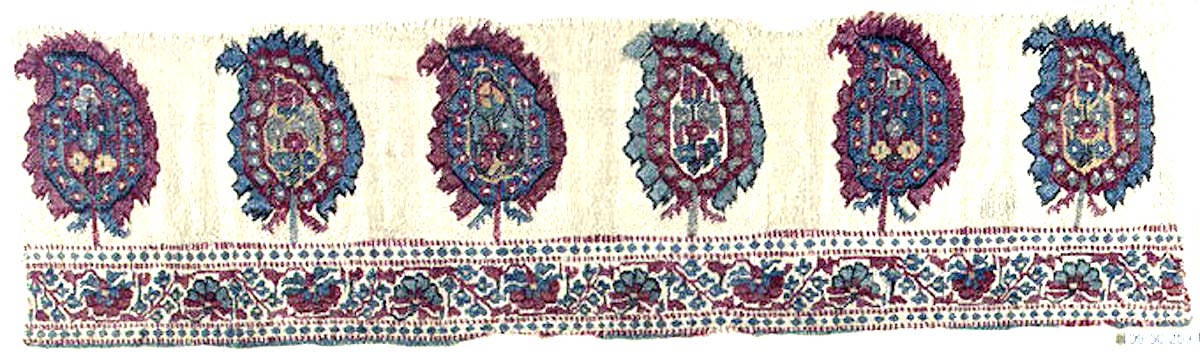
Cashmere refers to the yarn used to make these shawls that is extracted from the fleece growing on the underbelly of mountain goats called the ‘Changthangi’ or cashmere goats. These animals are native to the valley of Kashmir, making this yarn an exclusive and rare material. The rarity of this material, along with its exceptional sensual qualities, rendered cashmere shawls an exclusive, luxury product.
The cashmere shawl demonstrated exquisite craftsmanship and design. Traditional shawls featured a prominent design characteristic called the ‘buta,’ which appears to be a pine cone with its top twisted, and is today famously known as the paisley motif. Moreover, since the yarn was extremely fine, the process of weaving was also painstaking to the extent that it took six months to a year to provide one shawl during the 19th century. Some shawls had designs embroidered on them instead of woven in, and the former took a shorter time to produce and were much cheaper. The production team for shawls involved a large group of people with specified roles, generally including a designer, a ‘color caller,’ a ‘pattern master’ and a number of weavers. The cashmere shawl was therefore rooted in collective, cooperative production practices common in Indian textile history.
Cashmere Shawls: A Fashion Obsession in France
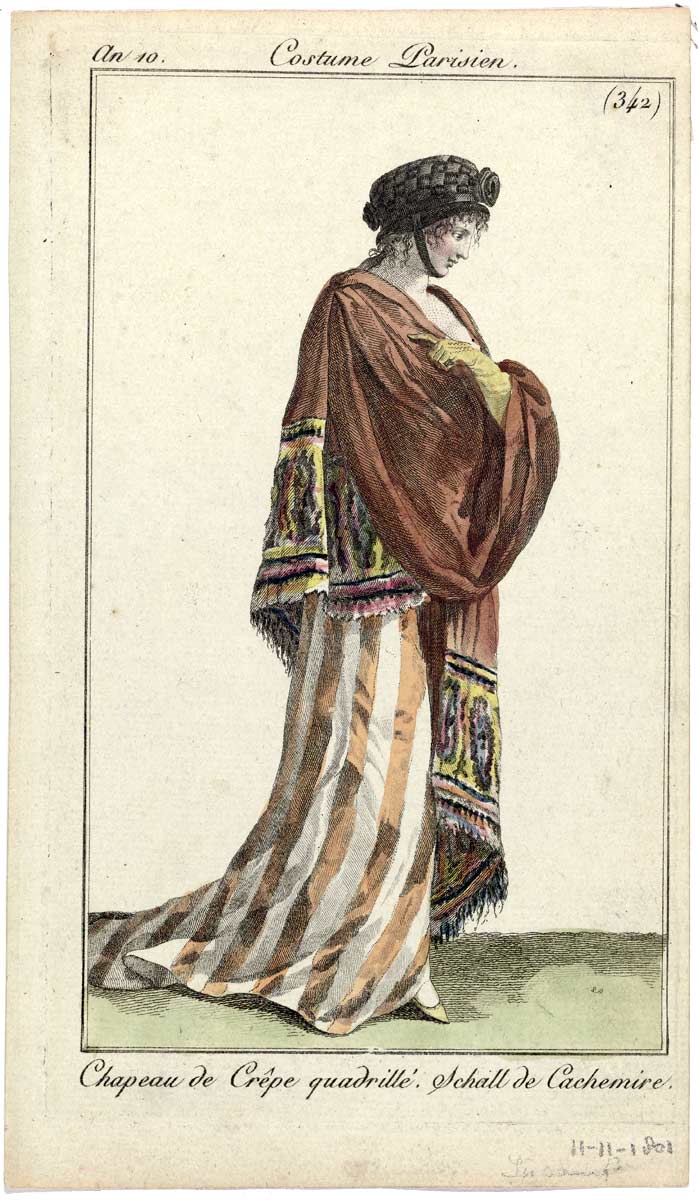
Cashmere shawls became exceptionally popular in France during the 19th century. The country received approximately eighty percent of the cashmere shawls imported into Europe in that century, making it the largest consumer of these textiles during this period. Consumers were fascinated by their exotic origins and the diversity of colors and ornamentation. But most importantly, the soft and malleable texture of the shawl resulted in a highly pleasurable sensual experience that became an indicator of luxury. The soft and warm cashmere shawls began replacing the cloaks traditionally worn as outer garments by French women in the 19th century. The shawl had a benefit over its alternatives. Since it was not bulky but still warm, it could serve a dual function as a form-fitting outer garment while also providing adequate warmth and comfort to the wearer.
Cashmere shawls entered France during the Egyptian campaign of Napoleon Bonaparte that lasted from 1798 to 1801. While they had already been imported into the country by the end of the 18th century as part of English fashion, the vogue for them increased rapidly after they were sported by Empress Joséphine, wife of Napoleon. She can be seen with a shawl by her side in a portrait made by François Gérard in 1801 and even wearing a dress made from a cashmere shawl with the paisley motif decorating the hem in a painting by Antoine Jean Gros from 1808. After this act by the Empress, donning a shawl became a requirement for every fashionable lady in France. Fashion magazines regularly released a wide range of prints that featured the cashmere shawl as part of a fashionable lady’s attire. Many ladies from the aristocracy also draped shawls across their arms at the wedding of Napoleon and Marie-Louise, his second wife, in 1810.
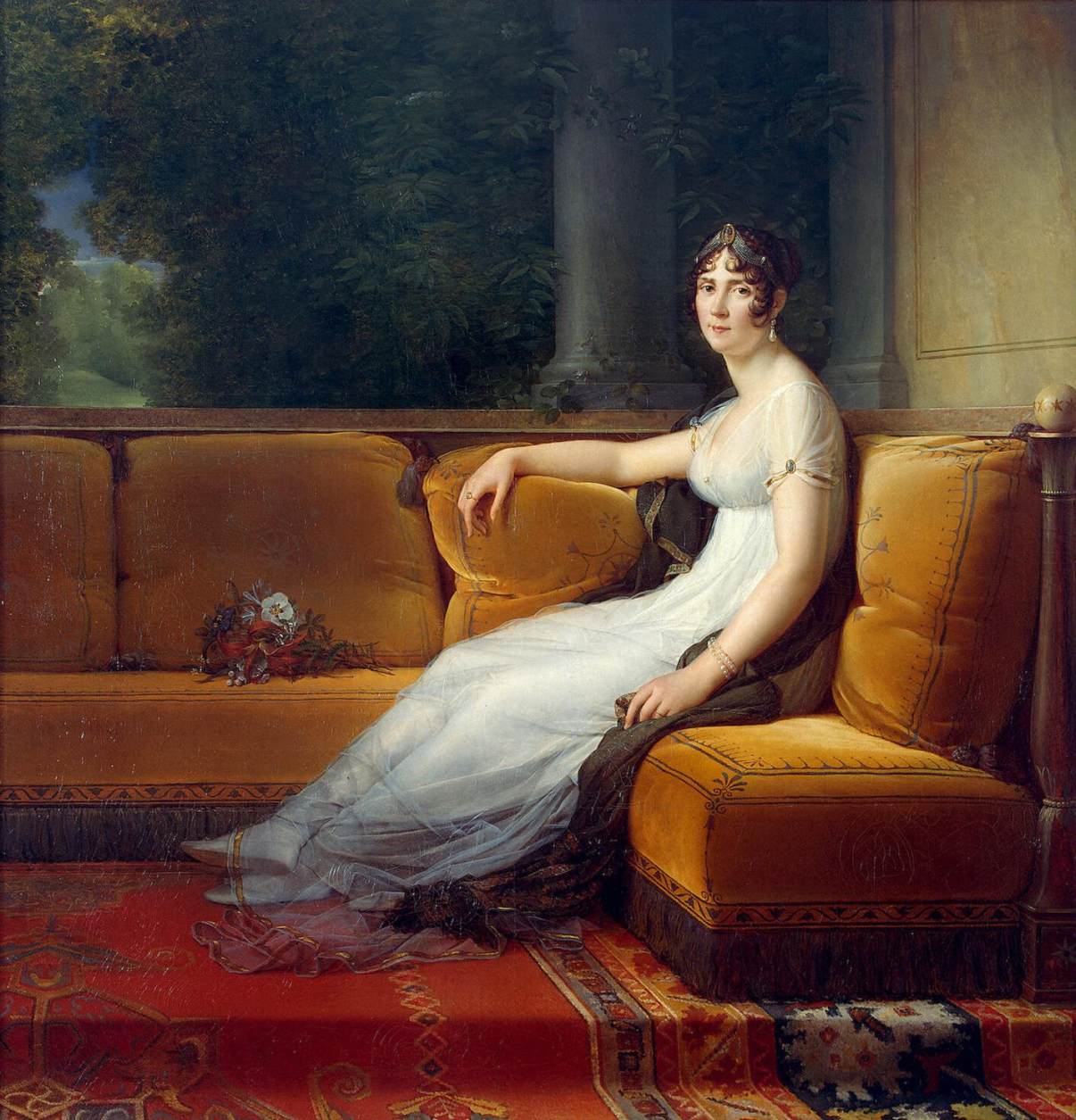
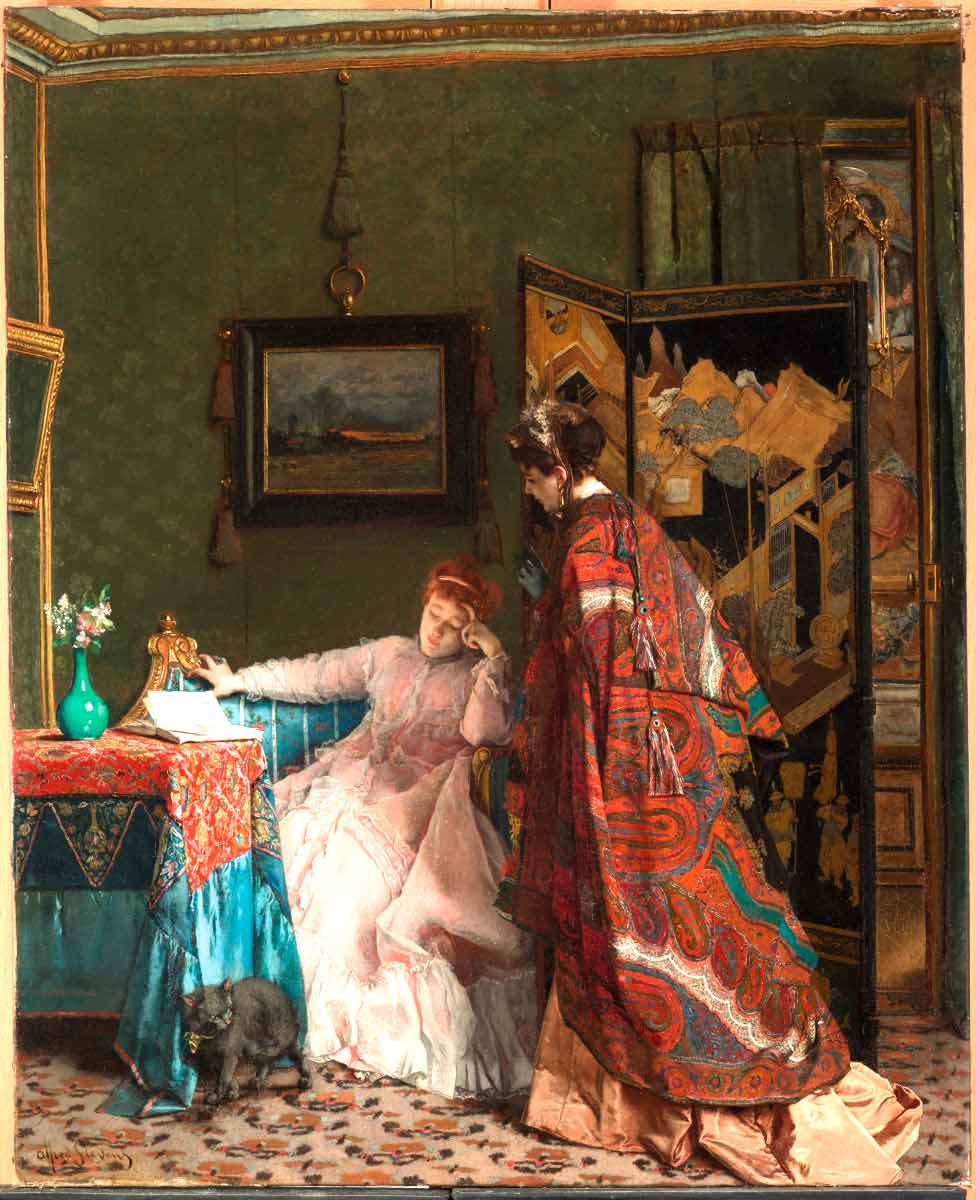
The cashmere shawl in France not only made a fashion statement, but also came to signify social status. As it was beautifully designed and expensive yet not too imposing in its extravagance, the shawl eventually became a symbol of bourgeois status in France, roughly between 1815 and 1870. Carrying a shawl was considered a marker of one’s position in the social hierarchy, and even properly draping a cashmere shawl became part of the etiquette training of a lady. Numerous paintings of upper-class women from the 19th century also portrayed them wrapped in a shawl.
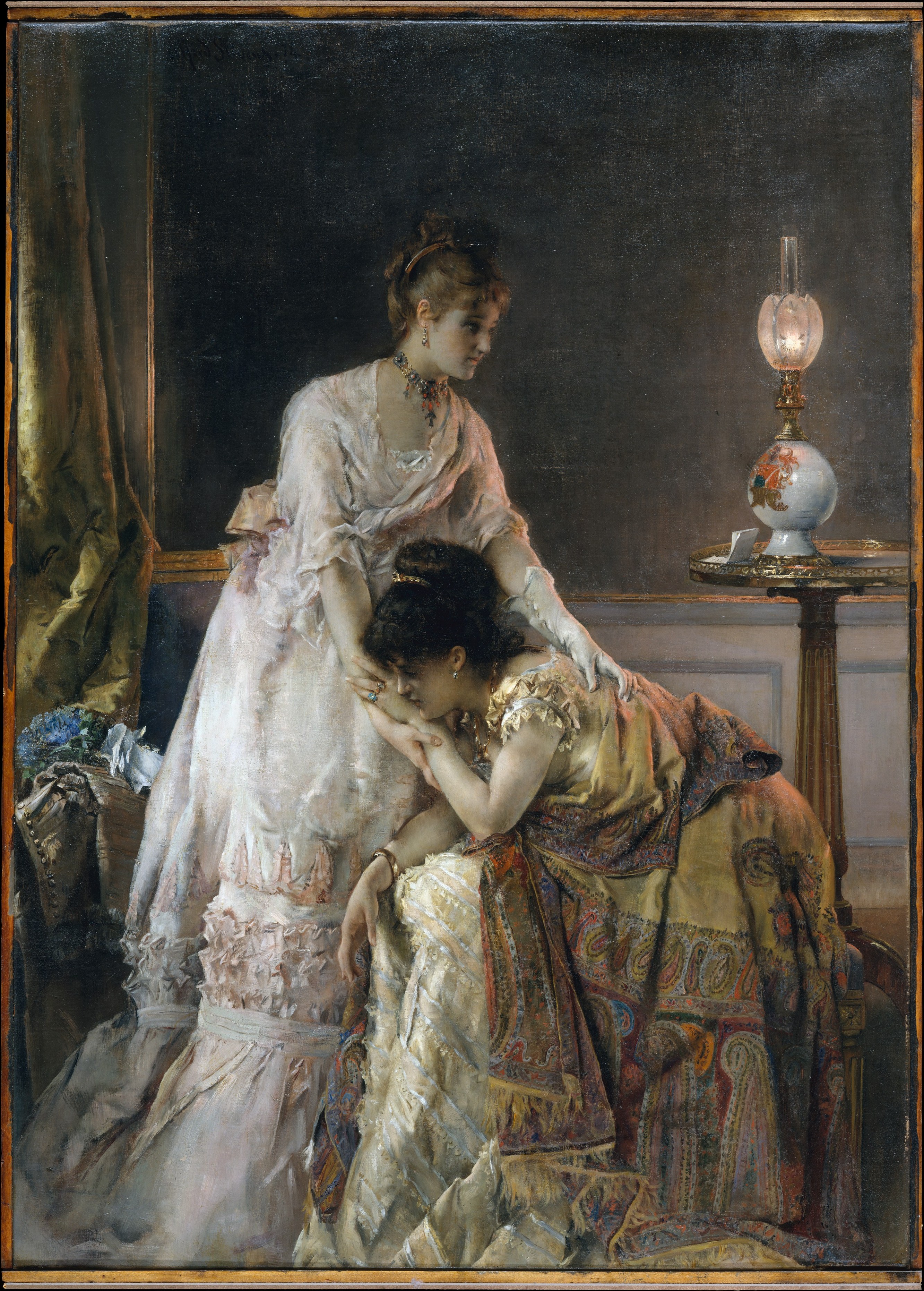
The Belgian artist Alfred Stevens was particularly known for such works, and his paintings titled The Visit and After the Ball show how the cashmere shawl integrated seamlessly into French fashion. A lot of such paintings featuring women draped in cashmere shawls are set in a domestic environment, signaling how strongly this textile was associated with domesticity and femininity. In fact, cashmere shawls became ideal gifts for married women or women who were suitable for marriage, and grooms often gifted shawls to their brides on the wedding day. This association of the shawl with domestic femininity was carefully maintained in 19th-century France, as social norms considered it improper for unmarried women to own shawls, since they were objects that a woman must receive from her husband as a gift.
European Imitations of the Cashmere Shawl
While French consumers were relishing this exotic luxury, the cashmere shawl put domestic textile manufacturers at a loss. Not only was the textile fascinating due to its exotic origins and design qualities, but cashmere was also a practical material for everyday clothing. No other textile in the market could match these qualities. To add to that, cashmere shawls imported from the Indian subcontinent had transformed into a representation of wealth and status. However, domestic manufacturers saw an opportunity to enter the market that had grown exponentially during this period by introducing French-manufactured imitation shawls.
This was a tedious undertaking due to the exclusivity and exotic associations of cashmere shawls. For example, it was difficult for French producers to compete with Kashmiri shawls because the yarn used in the former could not match the sensual qualities of the latter. To combat this, certain firms even attempted to import cashmere goats from Kashmir in order to extract authentic pashm wool, but this was a failed attempt as the animals could not survive in a different climate. As a result, French manufacturers had to rely on other materials, or even undo previously used shawls from India to use their yarn to weave new shawls. By 1816, however, the importation of pashm wool from Iran became possible for French textile manufacturers who could now produce cashmere shawls to match the sensual qualities of Kashmiri textiles domestically.
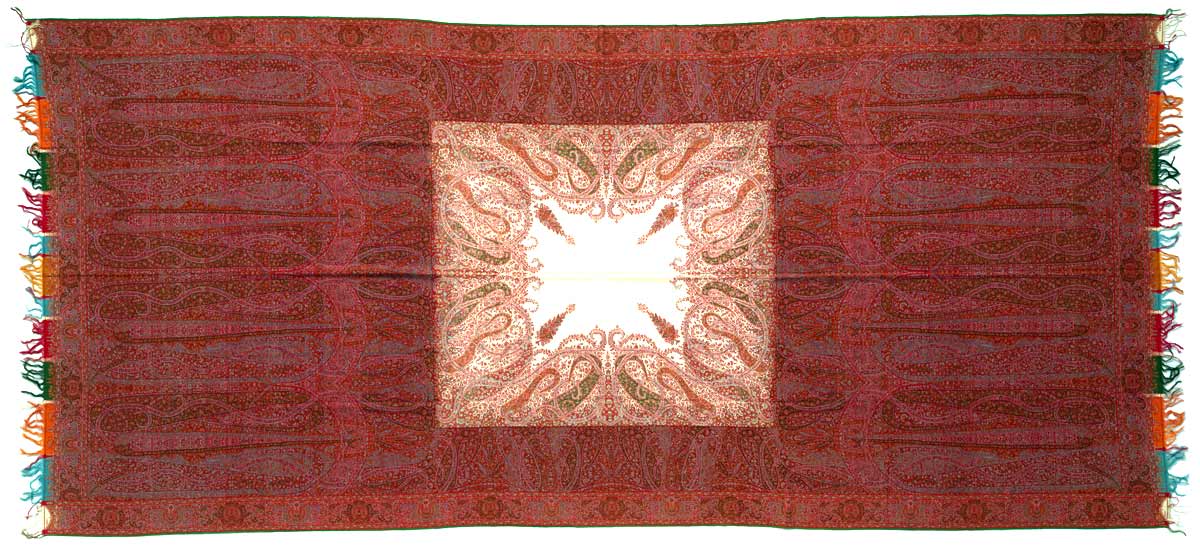
Although they lacked the authentic material for shawl production, French companies still held an advantage in the market. Shawls imported from Kashmir were created with native designs that were usually limited to a narrow border. French shawls exaggerated these authentic designs to fit the European taste that preferred wide borders that filled the entire surface and were decorated with large buta or paisley motifs. As Empress Joséphine had set the trend for original cashmere shawls, the Empress Marie-Louise followed suit by setting a fashion trend for shawls manufactured in France. In 1812, she received 12 shawls produced by Guillaume Ternaux using pashm wool and the twill tapestry technique implemented in the weaving of shawls from Kashmir. Nevertheless, the success of original cashmere shawls did not diminish substantially, although Kashmiri artisans were obliged to modify their designs to suit European tastes and keep pace with the growing market in France.
After Joseph Marie Jacquard’s invention of the Jacquard loom, which automated the weaving process, the mass production of textiles became possible in Europe. French shawls woven on this loom started appearing in the markets in 1818, and the rising popularity of this mechanism revolutionized shawl production in both France and the UK. By the mid-19th century, a town in Scotland known as Paisley managed to become a prominent presence in the market for shawls.
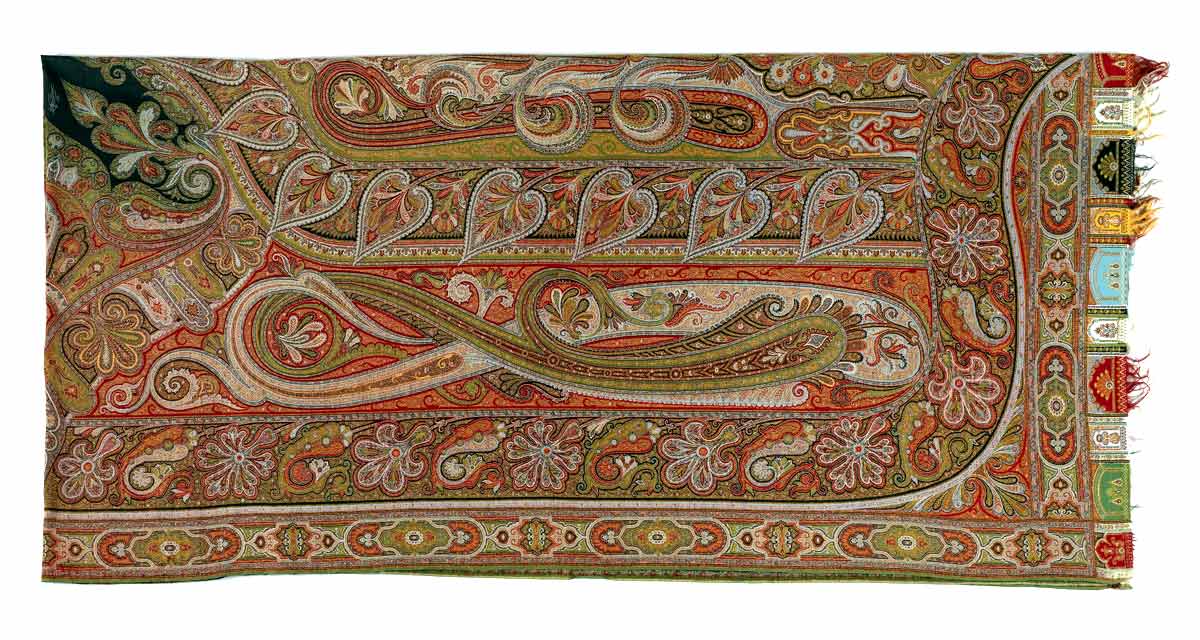
The well-organized factories, as well as the implementation of mechanized production practices, allowed this Scottish town to change the legacy of cashmere shawls from India, so much so that the famous buta motif came to be known as the paisley motif after the 19th century. Eventually, imitation shawls appeared in every household in France. Their designs had taken completely new forms, retaining only remnants of traditional Kashmiri motifs, as can be seen in a shawl made between 1855 and 1865, possibly in Paris or Paisley. The design on this artifact is almost unrecognizable from shawls made in Kashmir dating earlier in the century, but on careful inspection, one can notice a stylized version of the paisley motif along the borders. To add to this, mass-produced shawls were significantly cheaper in price and therefore more accessible. The quality of the material and design naturally varied as one went lower in price, but these textiles were cherished nonetheless.
The Fate of Cashmere Shawls in French Fashion Post-1870
After the Franco-Prussian War broke out in France in 1870, the demand for cashmere shawls in France declined. This coincided with a dying trend for wearing them, but many women still continued adding shawls to their attire. Some kept shawls stored in boxes without wearing them, while others found ways to repurpose the garment in order to make jackets, wall hangings, and even piano covers. The dwindling demand, combined with exploitative policies implemented by the English East India Company on shawl production in Kashmir had adverse effects on the weaver. Many of them fled Kashmir and settled in Punjab, where they could no longer access raw material for shawls, while many others died in the famine of 1877. The Kashmiri shawl industry that was once booming with royal patrons and global consumers slowly shrank under political and economic pressure.
And yet, cashmere shawls are alive and well today as luxury and fashionable accessories. Once an article of clothing worn by both men and women in Asia, the shawl transformed into a symbol of femininity and bourgeois status in 19th-century France. The textile traversed different regions across the globe over the course of centuries, taking on varying meanings in different cultural contexts. Its history as a masculine accessory has faded over time as the shawl is primarily worn by women today.
Today, pure cashmere or pashmina shawls are still considered exclusive items, with some pieces priced as high as $4,000. These prices not only reflect the quality of the wool but also the expert craftsmanship and the long hours invested in producing the shawl. While a high-end shawl is not afforded by many, cheaper versions costing a few hundred dollars are also produced to cater to a different market. Despite strong European influences on shawl design, traditional motifs and design systems have survived in shawls manufactured in India and neighboring regions. Colonial intervention has, however, influenced the industry’s infrastructure and shaped how the history of cashmere shawls is understood today. The most striking effect of this is reflected in the very name that signifies the shawl today: cashmere, an anglicized version of Kashmiri, as in from Kashmir.