
The name Vincent van Gogh brings to mind intense and vividly colored paintings, but it also conjures the image of a tormented man cutting off his ear with a razor inside his house. Both images are true and overlapping, as this Dutch artist continued painting until his last days before committing suicide. The chaotic paintings made during his final weeks, particularly the work Wheatfield with Crows, appear to have been painted by a madman who knew that his end was close. But is this a historical fact?
The Last Weeks in Auvers-sur-Oise
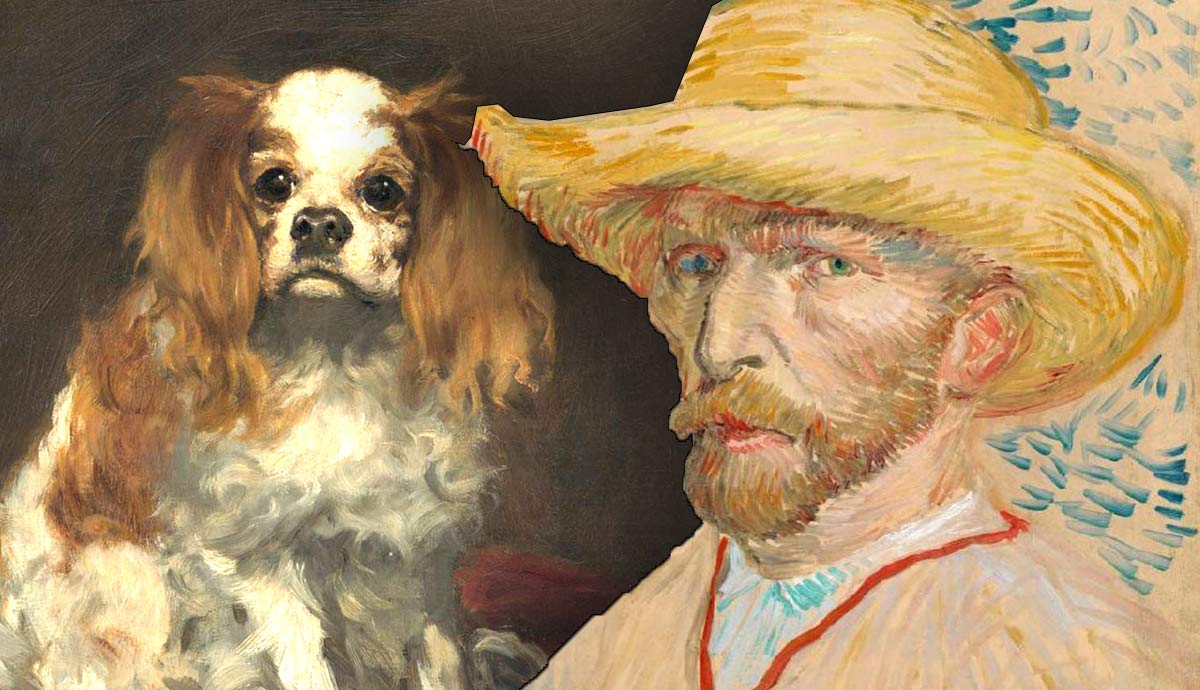
Van Gogh suffered his first mental breakdown in December 1888. After having an argument with his friend and peer Paul Gauguin, the Dutch artist cut off his ear with a razor in his Yellow House in Arles. He was admitted into the hospital the next morning but had little recollection of the whole event. As his mental state became more unstable during the next few months, Van Gogh decided to willingly admit himself into a psychiatric hospital in Provence in May 1889. He stayed at the asylum under the supervision of professionals until May 1890, after which he moved to a small artists’ village near Paris called Auvers-sur-Oise, his final destination. In Auvers, Van Gogh lived in a rented room in an inn, and his health was supervised by a homeopathic physician named Paul Gachet.
Van Gogh would visit Gachet multiple times a week, so the two became close friends, especially as the former suspected that the doctor was suffering from the same “nervous ailment” as him. His days in Auvers were filled with productivity as he immersed himself in painting. Doctor Gachet encouraged him to keep working, and being fascinated with the beauty of Auvers, Van Gogh clearly agreed, as he stated in a letter to his brother Theo, “Auvers is decidedly very beautiful. So much so that I think it’ll be more advantageous to work than not to work, despite all the bad luck that’s to be foreseen with paintings.”
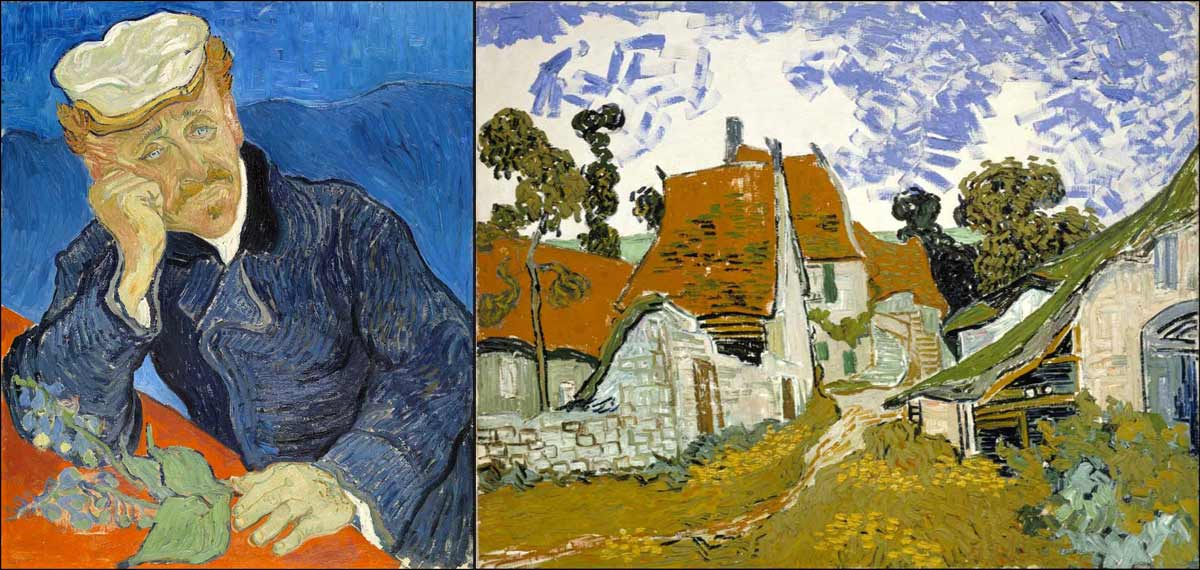
The artist continued planning paintings, making small sketches in his letters and looking for new subjects throughout his time in this village, and most of the works executed here are landscapes capturing the character of this northern village. But despite making efforts to be productive and take care of his health, Van Gogh was dreadfully aware of his psychological problems that had persisted despite his stay at the asylum.
His early days in Auvers were optimistic as he wrote to his brother, “I still believe that it’s above all an illness of the south that I caught, and that the return here will be enough to dispel all that.” However, this optimism disappeared quickly. Van Gogh had moved to Auvers toward the end of May, and only two months later, on July 27, he walked into a field and shot himself in the chest with a revolver. Wounded, he managed to walk back to his room at the inn, only to pass away on his bed two days later, on July 29. He was 37 years old at that time. Van Gogh’s death by suicide has remained a long-discussed historical incident, and his paintings from Auvers are often viewed as containing clues of this tragedy.
Vincent’s Turbulent Wheatfields
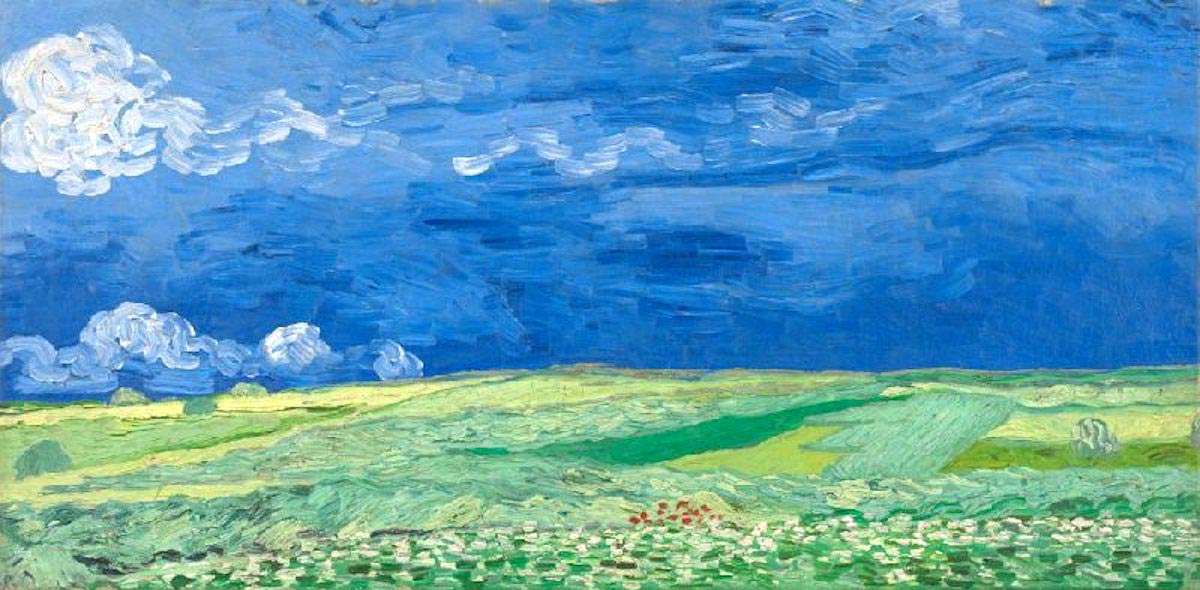
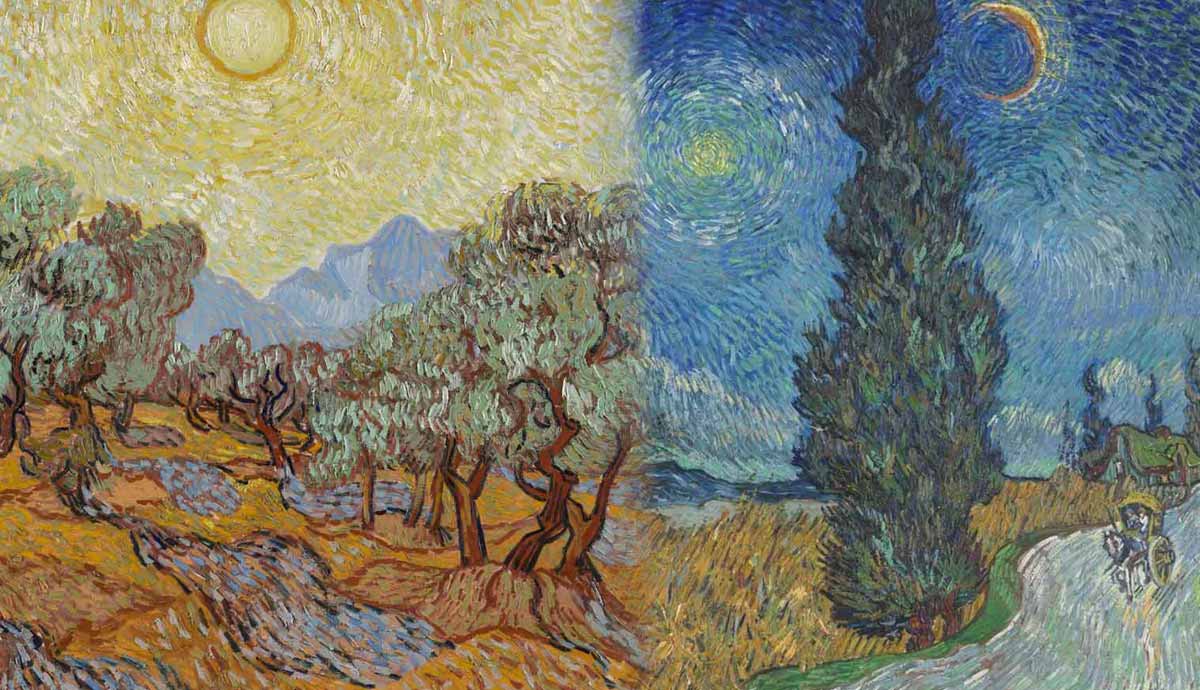
Not only did Van Gogh continue painting during his final weeks in Auvers, but he also attempted to experiment with different formats and wider canvases. Some of the major works that the artist made during this period include a series of twelve paintings depicting a wheatfield made on canvases measuring 20 in x 40 in. The painting Wheatfield under Thunderclouds is a famous example from this series, composed of serene blues and greens, depicting a peaceful yet empty landscape. Van Gogh described these paintings in a letter to Theo from July 10, writing, “They’re immense stretches of wheatfields under turbulent skies, and I made a point of trying to express sadness, extreme loneliness.”
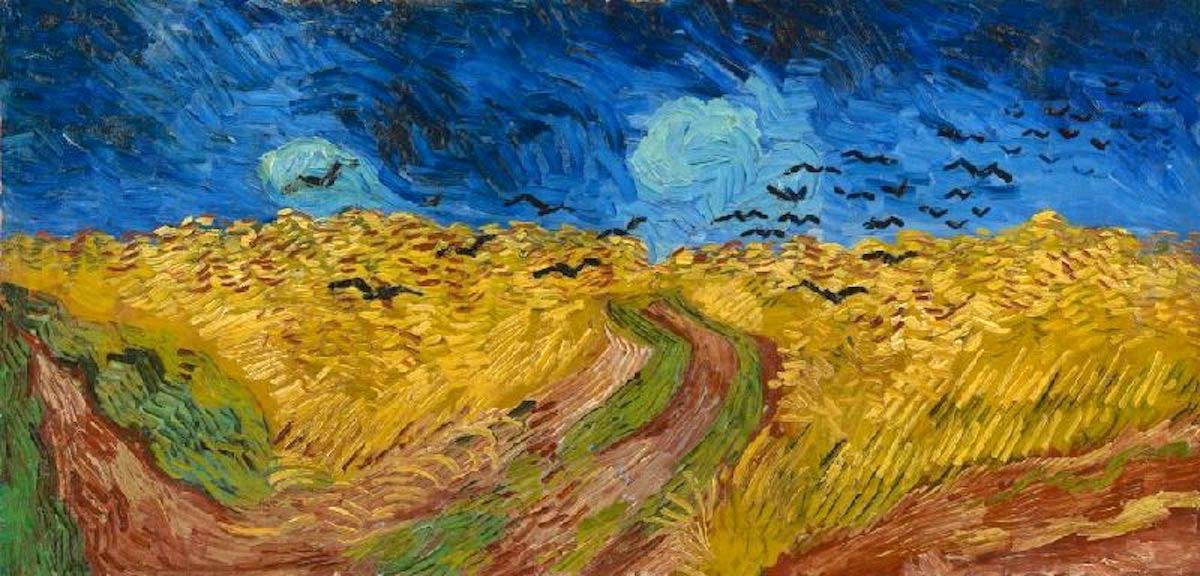
The canvas that is frequently cited as the most prominent indication of Van Gogh’s declining mental state is Wheatfield with Crows, made in July 1890. Often understood as his last painting, it depicts a turbulent landscape of wheatfields with crows flying under a dark blue, stormy sky. The harsh brushstrokes, combined with saturated, intense colors, give this painting an unsettled effect, with the deep blue of the sky contrasting with the bright yellow wheatfield and the green-and-red pathway. The winding path appears to be a dead end, and the crows flying overhead appear ominous. These turbulent wheatfields comprise an important part of his oeuvre, shedding light on his artistic development that persisted during his final weeks. However, these works were not the only paintings that Van Gogh made in Auvers.
Other Paintings From Auvers
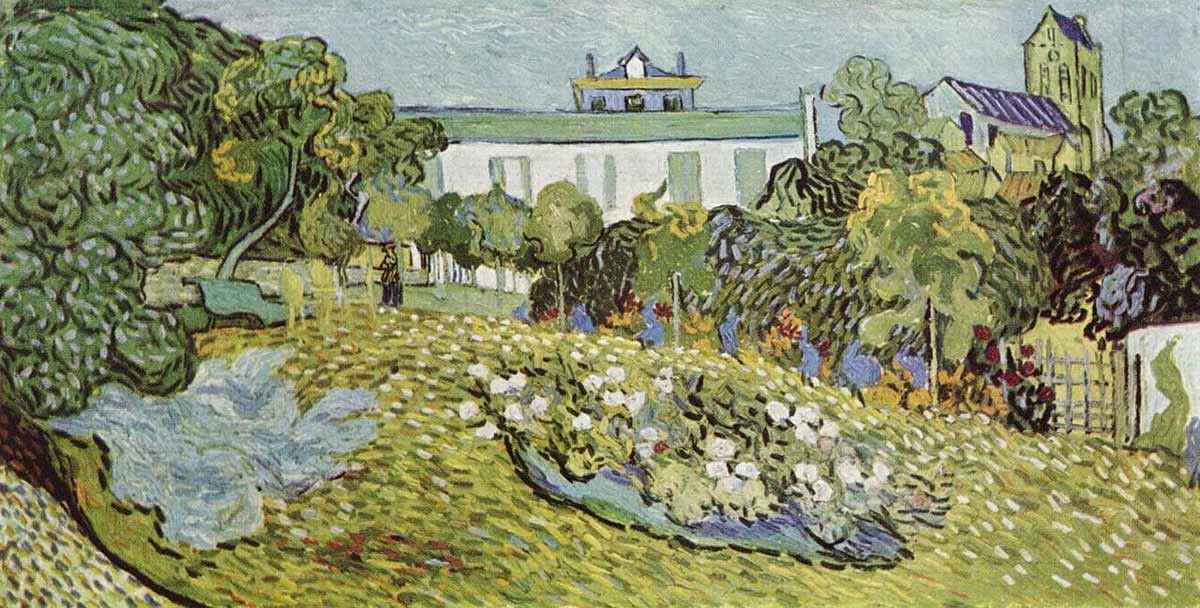
Right after describing the wheatfield canvases in his letter to Theo, Van Gogh mentioned another painting he was working on called Daubigny’s Garden. It shows a blooming garden at the house of the French painter Charles-François Daubigny. The painting is a serene landscape, flooded with vivid shades of green. The forms and brushstrokes are dynamic and exhibit a lot of character, typical of Van Gogh. He painted another similar canvas as well as a smaller study of this scene during this period.
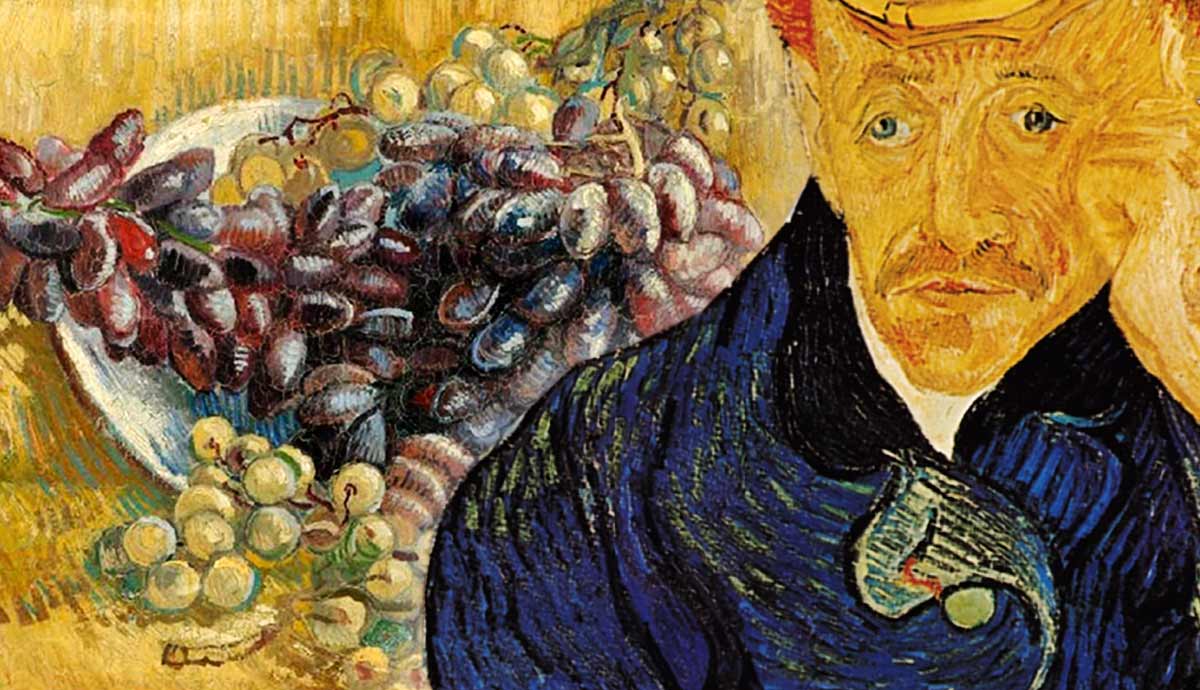
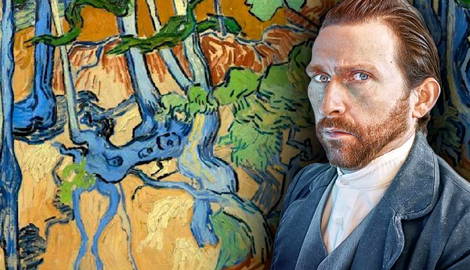
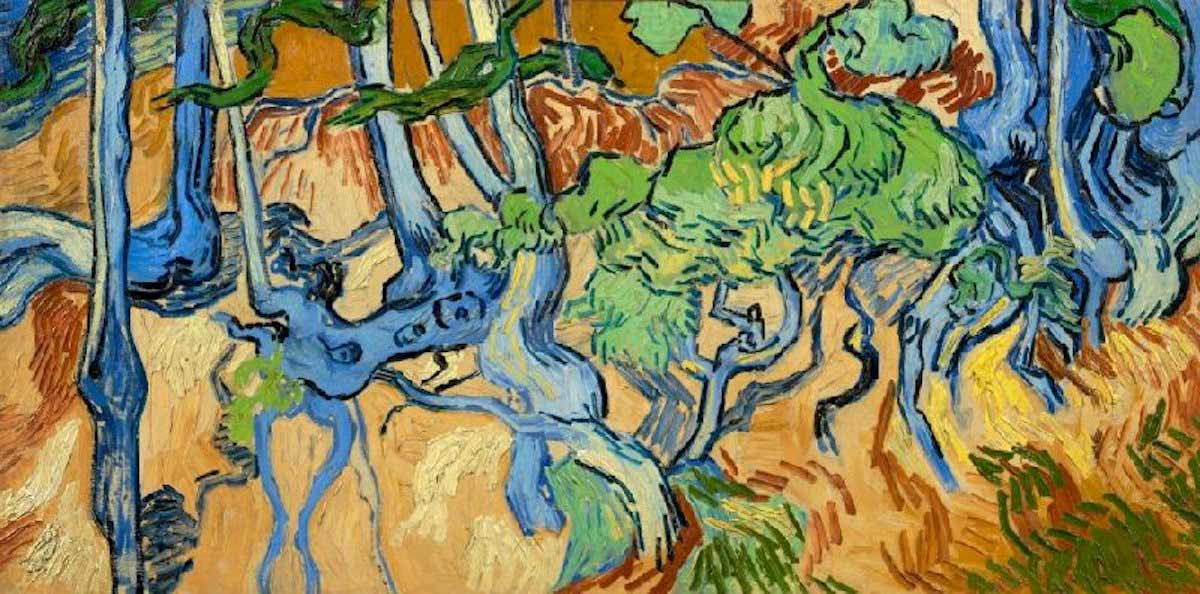
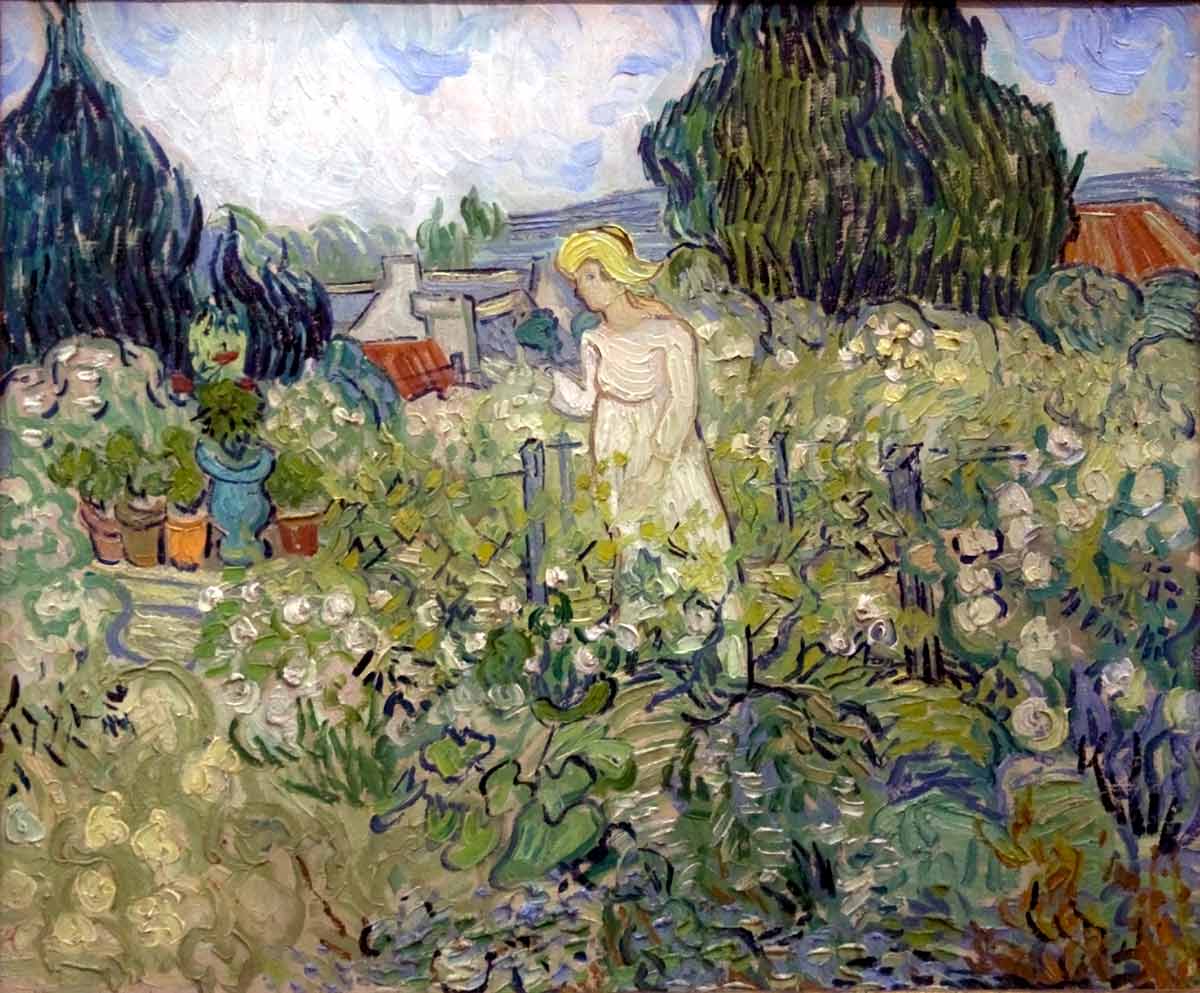
With calmer brushwork, lighter colors, and a peaceful scene depicting the restful beauty of nature, these paintings of Daubigny’s garden elicit an effect distinct from Wheatfield with Crows. They are less popular than the latter but shed light on an important period in Van Gogh’s artistic development. In addition to the garden, Van Gogh also painted several portraits in Auvers, including two of Doctor Gachet and one of his daughter Marguerite Gachet, as well as two paintings depicting Gachet’s garden. But the work that researchers actually consider to be the last painting Van Gogh ever made is called Tree Roots. This work is made on a wide canvas and is composed of strong lines and vivid colors, adding visual intensity to the subject of exposed roots and trunks of trees entangled on a slope.
Paintings as a Signal of His Death?
It is true that Van Gogh was suffering toward the end of his life. He had poured almost ten years into a career as an artist and produced around 2000 paintings and drawings, and yet, he had managed to have only one major sale in his lifetime: The Red Vineyard, made in 1888. Unable to earn a living from his profession, Van Gogh struggled financially and had to rely on his brother. Theo was working at the art dealership Boussod, Valadon & Cie in Paris and earned enough to support his household as well as his brother. But unhappy with his circumstances, he began toying with the idea of leaving his position to start his own business as an art dealer in July 1890. This presented the fear of financial instability for both Theo’s family and Vincent, which was aggravated due to the ill health of Theo, his wife Jo, and their baby during this time. Van Gogh had expressed his regret about being a financial burden to Theo on multiple occasions, and these new circumstances must have intensified his anxiety.
It is possible that Van Gogh’s anguish during this period translated into his work, but there is no clear evidence that his last paintings hint toward his death. For example, the paintings of wheatfields, which are often cited as a clear indication of his impending suicide, don’t have a singular interpretation. Despite appearing chaotic and signifying loneliness, Van Gogh also considered them to be visual expressions of what he considered “healthy and fortifying about the countryside.” Moreover, exploring paintings apart from the wheatfields paints a different picture, as works such as Daubigny’s Garden and Marguerite Gachet in the Garden appear calmer and more peaceful.
This mystery is particularly highlighted when we look at Van Gogh’s letters from this period, which point toward a productive artist experimenting with new formats and searching for a studio space to continue his practice. In a letter from June 3, 1890, he wrote, “But anyway, I live from day to day – the weather is so fine. And my health is good, I go to bed at 9 o’clock but I get up at 5 o’clock most of the time.” Viewing Wheatfield with Crows in particular as the final canvas signaling his death is only a popularly held belief that supports the narrative of the tortured artist. In reality, it is difficult to say when Van Gogh had begun planning his suicide, or if he did so at all.
Despite the visual and textual sources available to us, it is not possible to fully understand Van Gogh’s mental state during the days before his death. He may have expressed his anguish through his paintings, but that is only one interpretation. It is even more improbable to recognize what the artist was thinking or feeling when painting a particular canvas. It is only after his work became popular posthumously that the myth about his last paintings as visual suicide notes was amplified. The actual story of Vincent van Gogh is more complex and layered. Based on his letters from his final weeks, his mental state fluctuated constantly. On good days, he was optimistic about the future, but during his difficult days, he often expressed hopelessness and uncertainty. Nevertheless, despite his struggles, Van Gogh’s legacy is not merely a sensationalized story of a mad and tormented genius, but rather, his legacy consists of a massive oeuvre marked with technical innovation and a unique style that forever changed the course of European modern art.