
Pablo Picasso’s abusive behavior towards his partners is hardly news to art historians. He tormented his lovers and family members physically and mentally and even threatened their artistic careers and well-being. Still, a debate rages on whether we should separate art from the artist or include all possible points of view in discussing his works. Read on to learn more about Picasso’s art from the lens of feminist art history.
Pablo Picasso: The Quintessential Great Male Genius
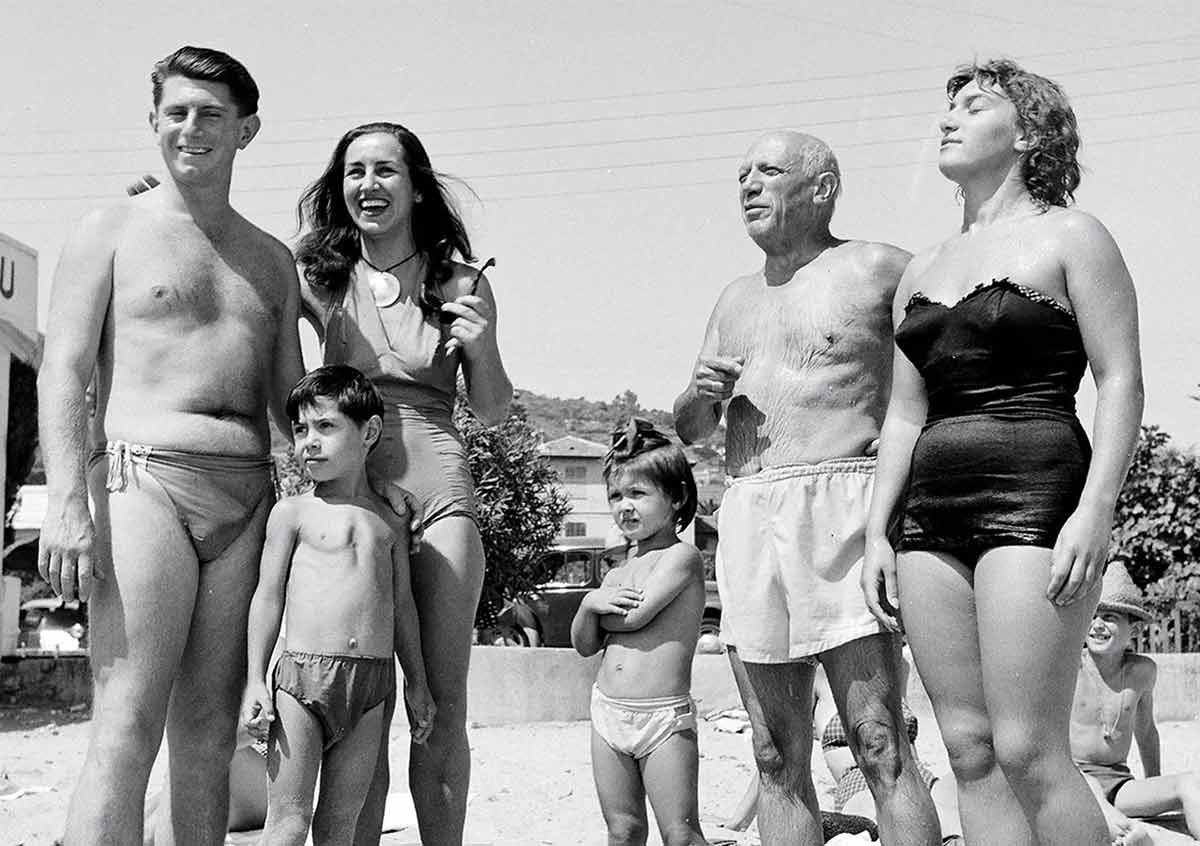
In Western art historical literature, the character of a genius has already become an archetype. He is a tormented artist, always a man, almost always white, whose bad behavior towards other people—mostly mothers, lovers, and children—is somehow excused by his outstanding creativity and never-ending inner conflict. Pablo Picasso is one of the best representatives of this archetype.
The idea of dissecting Picasso’s art and life with the instruments of feminist art history is far from new. This theoretical domain that put forward women’s perspectives began to emerge while Picasso was still alive. From the 1960s, art historians began to question the role of women in the global history of art. From muses, models, or simply passive pictorial symbols, they turned into personalities with their own stories. Picasso’s oeuvre, which relied heavily on women in his life, became one of the most obvious targets for analysis.

One of the most influential publications on the matter was the 1988 book Picasso: Creator and Destroyer written by Greek-American author Arianna Huffington. Huffington attempted not only to highlight the negative aspects of Picasso’s personality but also to locate them within his undoubtedly complex and remarkable oeuvre. A conversation with Picasso requires nuance: one can certainly be an abusive, manipulative partner and a skilled and talented artist simultaneously. Still, for many decades, Picasso’s wrongdoings were romanticized and glossed over for the sake of his great art. Contemporary art historians aim to balance all aspects of Picasso the Artist and Picasso the Man.
Goddesses and Doormats: Picasso’s Relationships
Picasso’s obsession with sexuality and abusive behavior in relationships is far from new to the discourse. Picasso’s first permanent relationship with Fernande Olivier already highlighted his fears and insecurities. Although clearly in love, he was possessive and jealous. As Olivier herself later explained, he basically isolated her inside their studio in Bateau-Lavoir (the famous artistic commune inside an abandoned factory). Fernande was the first one to leave when she became infatuated with a young Italian Futurist. Perhaps the shock of rejection forced Picasso to become even more possessive in his further relationships. After Fernande, he would always be the one to leave first.

The topic of inspiration itself and the concept of an artist’s muse reveal the uncomfortable nature of many works by Picasso. Intellectually and artistically insatiable, he always searched for new ideas and forms not only in art but in people around him. Essentially, Picasso’s love for women was based on extracting artistic resources from them and reducing them to his artistic expression. His first wife, ballet dancer Olga Khokhlova, was of use to Picasso for less than five years before Picasso moved on to an affair with a 17-year-old Marie-Thérèse Walter.
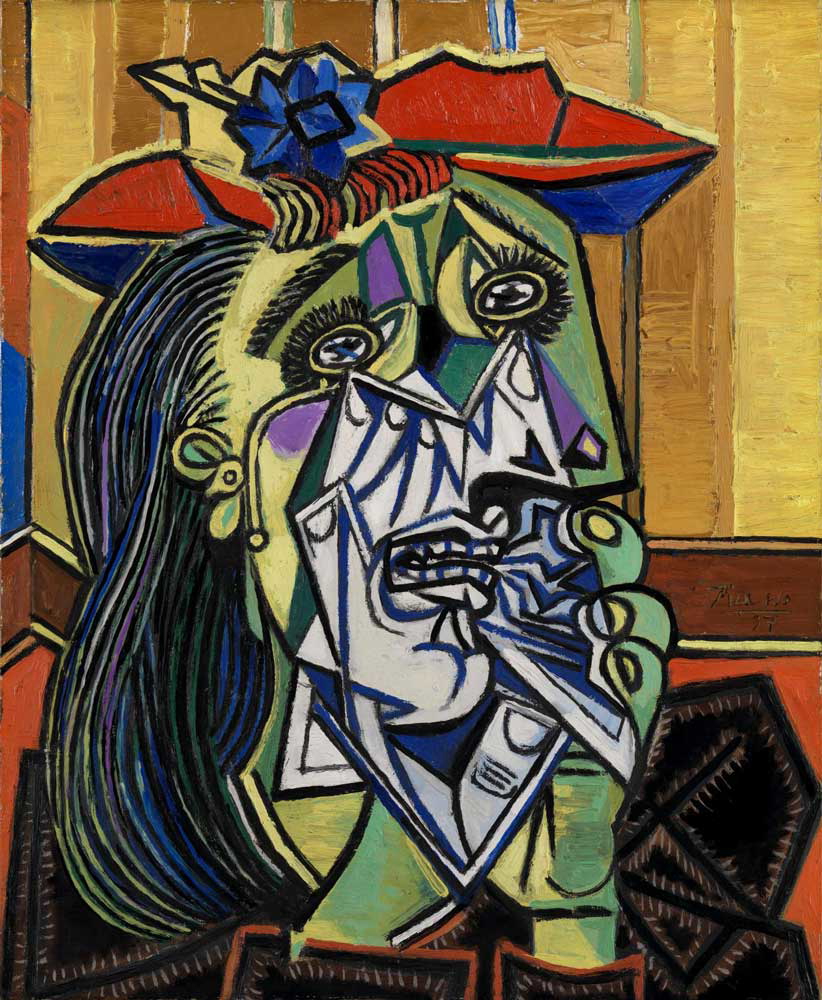
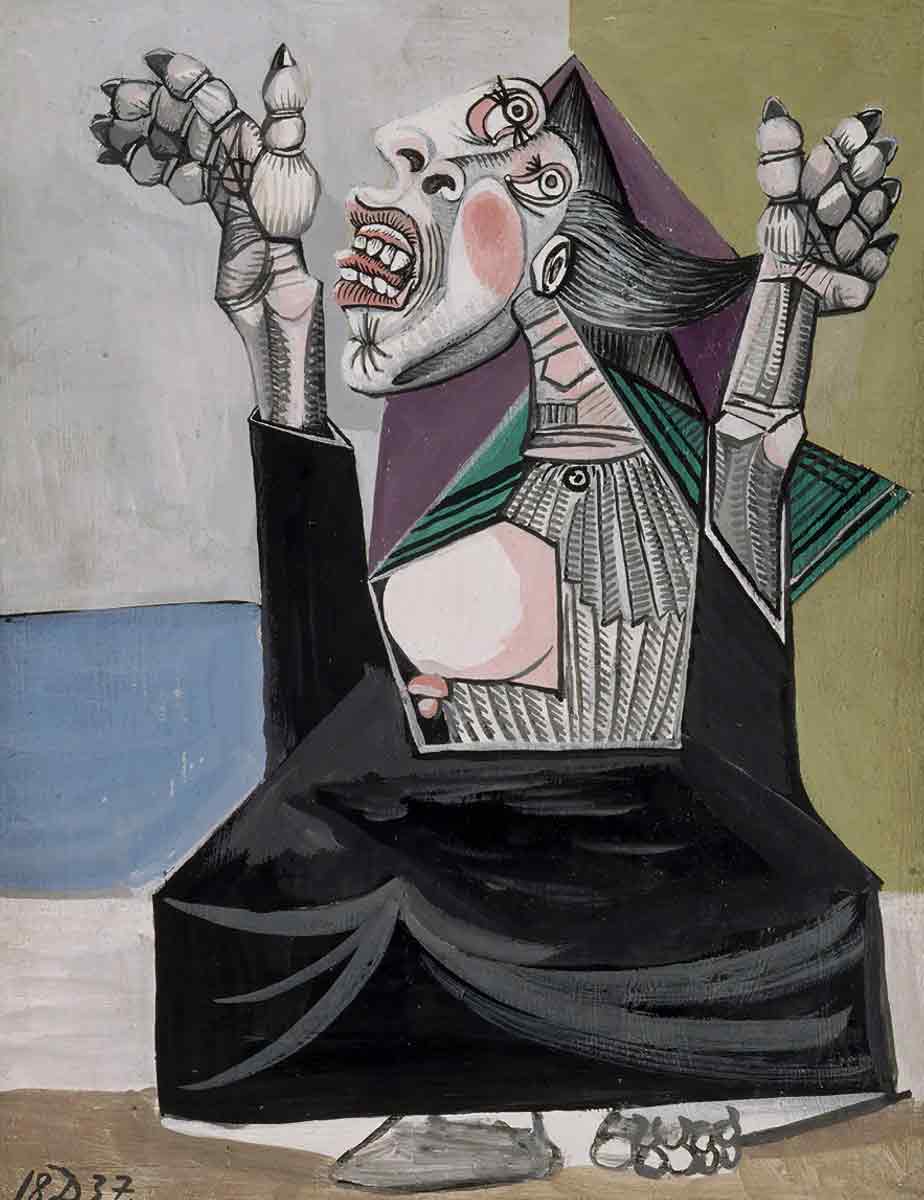
His most dramatic relationship, however, was with the photographer Dora Maar. For almost eight years of their relationship, he relied on Maar’s artistic advice (some art historians believe she was the principal creative force behind the famous Guernica) while also discouraging her from her own work. Picasso forbade Maar to paint and ridiculed her photographic career. He humiliated her by forcing her to fight Marie-Thérèse Walter for his love. An intelligent, hard-working, and talented woman, in Picasso’s oeuvre Dora Maar remained known as the hysterical Weeping Woman, with her face distorted in a repulsive grimace. Maar hated the painting and refused to associate herself with it.

In Picasso’s relationships, the same pattern repeated over and over again: when the period of initial excitement and sexual chemistry was over, the muse was mercilessly discarded. As he once told Walter, he believed there were only two types of women: goddesses and doormats. And clearly, many of his partners made this transition in real time.
Picasso’s second wife, Jacqueline Roque, committed suicide soon after his death, tormented both by him and by his absence. Dora Maar and Olga Khokhlova suffered severe mental breakdowns.
Françoise Gilot, a painter and the mother of two of Picasso’s children, suffered almost a decade of physical and emotional abuse in the relationship but managed to leave before Picasso got tired of her. Enraged, Picasso mobilized all his resources to effectively destroy Gilot’s painting career. He convinced gallerists to stop representing her work and destroyed all possessions she left in his home, including paintings, letters, and personal belongings.
Cubism & Femininity
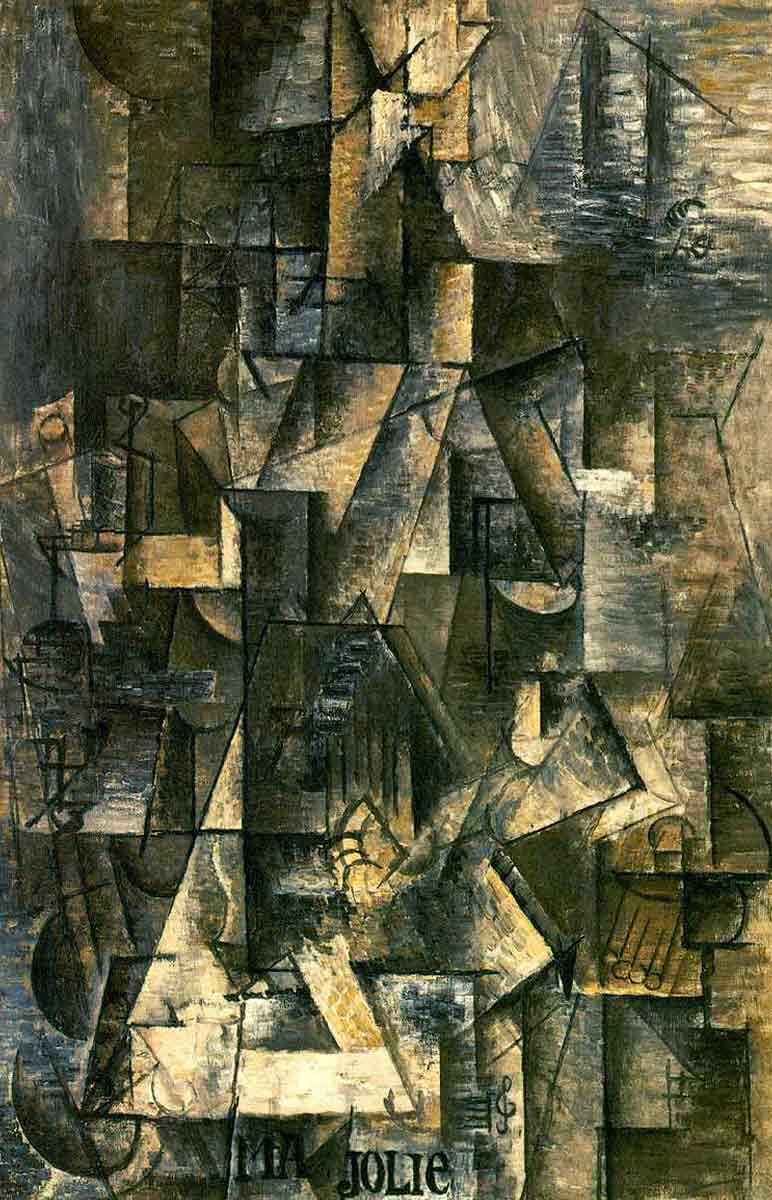
The feminine form, particularly a nude one, is one of the most popular subjects in Cubist art, standing next to still-lifes with bottles and musical instruments. Cubist vision dissected female bodies in the same way it dissected attributes of male pastimes like smoking pipes, bottles, and guitars. Thus, it clearly sets the framework of who is looking at what. This was a gesture of intellectual dominance, particularly when applied to other human beings. For that matter, Cubist depictions of the feminine body were inherently sexual, based on dominance and rather aggressive unpacking of form. For Picasso, who identified himself with the Minotaur—the mythological half-man, half-beast—the components of aggressive sexuality combined with analytical thinking played a particularly important role.

Some art historians admit Picasso’s obsession with a distorted feminine form to his fear of femininity. Apart from the fear of being abandoned, evident after his relationships with Fernande Olivier and Françoise Gilot, it was also a fear of death. Around the time of painting Les Demoiselles d’Avignon, Picasso contracted a venereal disease during one of his frequent brothel visits. The painful and humiliating recovery process raised in him the fear of feminine sexuality, as he blamed sex workers for his illness rather than addressing his own reckless sexual behavior. Perhaps the masked faces of Les Demoiselles reflected this phobia and, at the same time, helped Picasso overcome it. Still, this incident provides an important insight into Picasso’s treatment of feminine form and femininity. For him, the feminine was almost always linked to desire, and the desire was inherently connected to physical threat.
The Pablo-Matic Failure
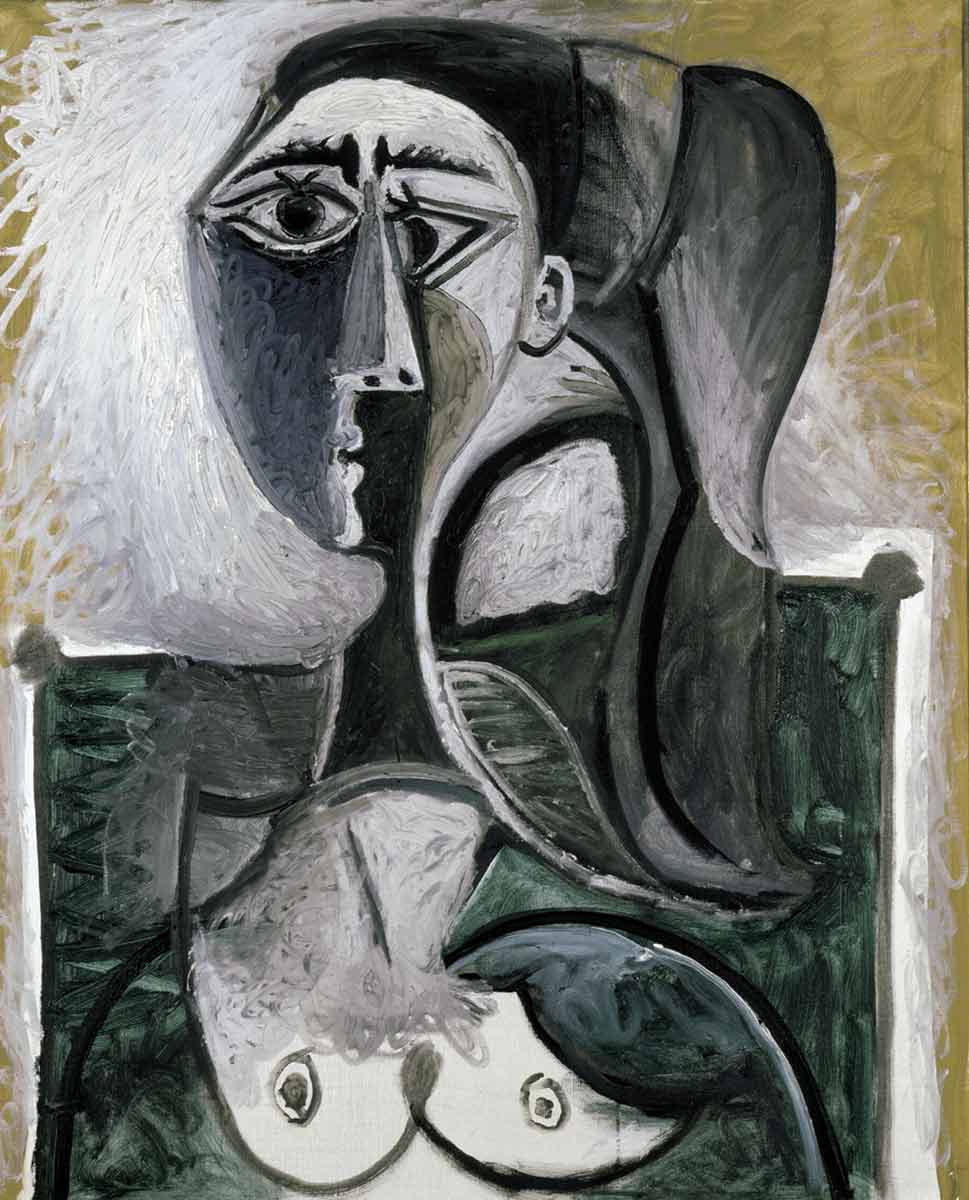
The most recent attempt to publicly reconsider Picasso’s legacy and his misogynistic behavior occurred in 2023 in The Brooklyn Museum in a show It’s Pablo-matic, co-curated by comedian Hannah Gadsby. Despite its promising concept, most visitors complained that the exhibition lacked actual analysis of the issue and was mostly based on Gadsby’s opinions and jokes rather than on valuable academic critique. Picasso’s works presented on the show were small and hardly his best ones, giving the co-curating comedian room for criticism of style rather than substance. A small selection of Picasso’s etchings and drawings was accompanied by some paintings by women artists from the Museum’s collection. However, as visitors noted, many of these artists were actually inspired by Picasso’s art and spoke about him favorably.
Some viewers criticized the show for its anti-intellectualist stance. Too many jokes by Gadsby focused on the supposedly ridiculous aesthetic of modernist art, mocking it rather than dissecting the oeuvre of Picasso with instruments of the feminist critique. Gadsby commented on Expressionist sculpture and Cubist works on paper, in the same manner that some visitors compare modern artworks to their children’s experiments. Instead of launching a conversation on why exactly we ignore Picasso’s misogyny, Gadsby and Brooklyn Museum curators simply attempted to laugh off decades of intellectually complex work without enriching the discourse.
What Do Pablo Picasso’s Heirs Have to Say?
Today, the legacy of Pablo Picasso is managed by a group of his heirs. Despite their shared ancestor, they continuously highlight that professional interest is the main aspect that holds them together. The only person who opted out of the Picasso family enterprise is the artist’s granddaughter, Marina Picasso. Marina’s father was Paulo, the oldest son of the artist, who died of alcoholism-related issues two years after Picasso passed away. Marina’s brother committed suicide on the day of Picasso’s funeral because he was not allowed to attend.
Marina was the only heir who sold her share of the inheritance, unable to forgive her grandfather for the pain he caused her family. In 2001, she published a memoir that described how Olga Khokhlova, her grandmother and Picasso’s first wife, was forced to raise children in dire poverty, as Picasso refused to support them. Moreover, she highlighted constant emotional abuse and the overbearing presence of Picasso that ruined the family from within.