
In 1879, a postman in rural Hauterives in France stumbled across a stone that caught his attention while he was doing his rounds. It ignited a 33-year-long passion.
Ferdinand Cheval was his name, and working alone, he spent more than three decades building a palace. Despite having no architectural training, his work has become a monument to fantasy and imagination, exemplifying the spirit of one man’s creativity and a passion for DIY.
Who Was Ferdinand Cheval Before He Built the Palais Idéal?
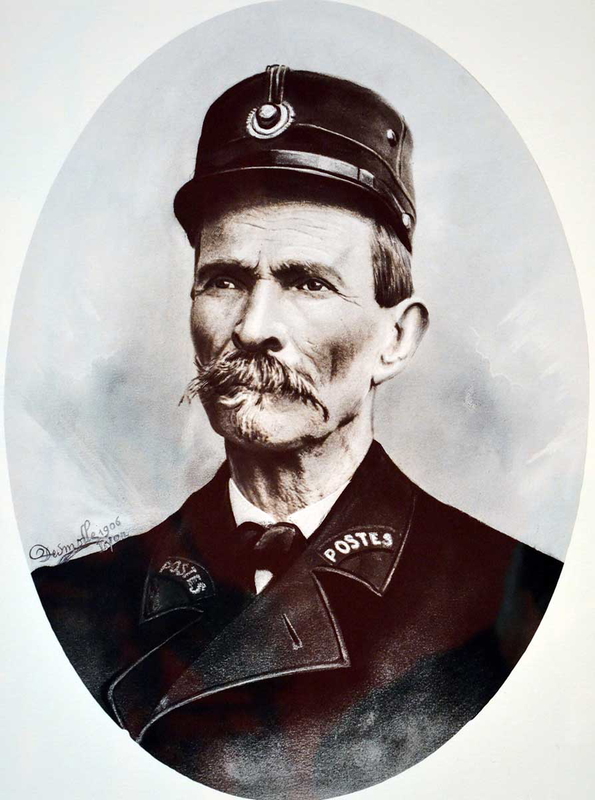
Ferdinand Cheval was born in 1836 into a poor farming community in Charmes-sur-l’Herbasse in Southeastern France. He left school at the age of 13 and originally planned to become a baker’s apprentice, but became a mail carrier instead. During his life, he suffered significant loss, outliving both of his wives (he remarried after his first wife died) and all three of his children.
He expressed that he had had a dream in his younger days where he was building a palace or a cave, and around 15 years later, an incident reminded him of this dream. He was walking fast and stumbled upon a rock of such strange shape that he picked it up and took it home. The next day, he returned to the spot and found more stones with the same features of sandstone shaped by water. He said to himself, “Since Nature is willing to do the sculpture, I will do the masonry and the architecture.”
And so the 43-year-old man spent the next three decades fulfilling that desire, building the most famous example of naive architecture in the world.
How Did a Rural Postman Build a Palace by Hand?
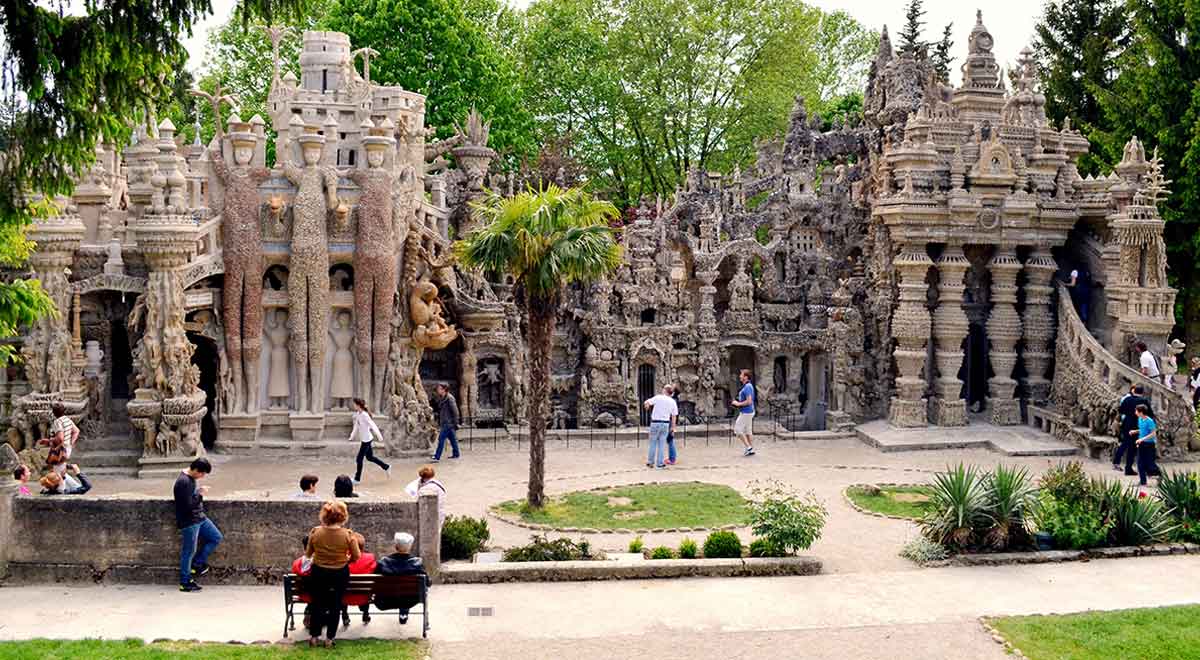
For a single human being, building a palace by hand is, quite literally, a monumental task. Ferdinand collected rocks on his 20-mile mail route, first using his pockets, then a bag, and eventually a wheelbarrow, as his task became grander.
He often worked at night by the light of a lamp, creating a wire frame of his palace and then covering it with wet cement and lime into which he pressed his rocks and stones. It was a slow process of hard labor, mixing architecture and sculpture, but the palace began to take shape, turning into a gargantuan structure as the years passed on.
What Features Make the Palais Idéal Such a Visual Masterpiece?
Ferdinand’s mail route took around two days to complete, and he spent a lot of time alone, sleeping in barns along the way. His thoughts were entertained by imaginary visions influenced by the imagery on postcards he delivered.
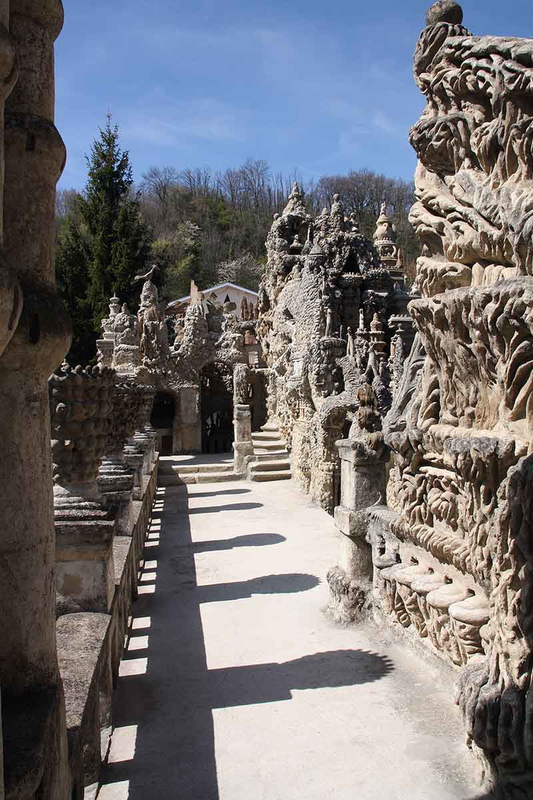
He incorporated fantastical elements into his structure, and drew from architecture from all over the world, turning his palace into a surreal landscape of magic with winding staircases, grottoes, turrets and labyrinthine corridors. Decorative façades draw on features from famous buildings such as the Royal Pavilion in Brighton and the Sagrada Familia, as well as aesthetic styles from Christian, Hindu and Egyptian architecture, among many others.
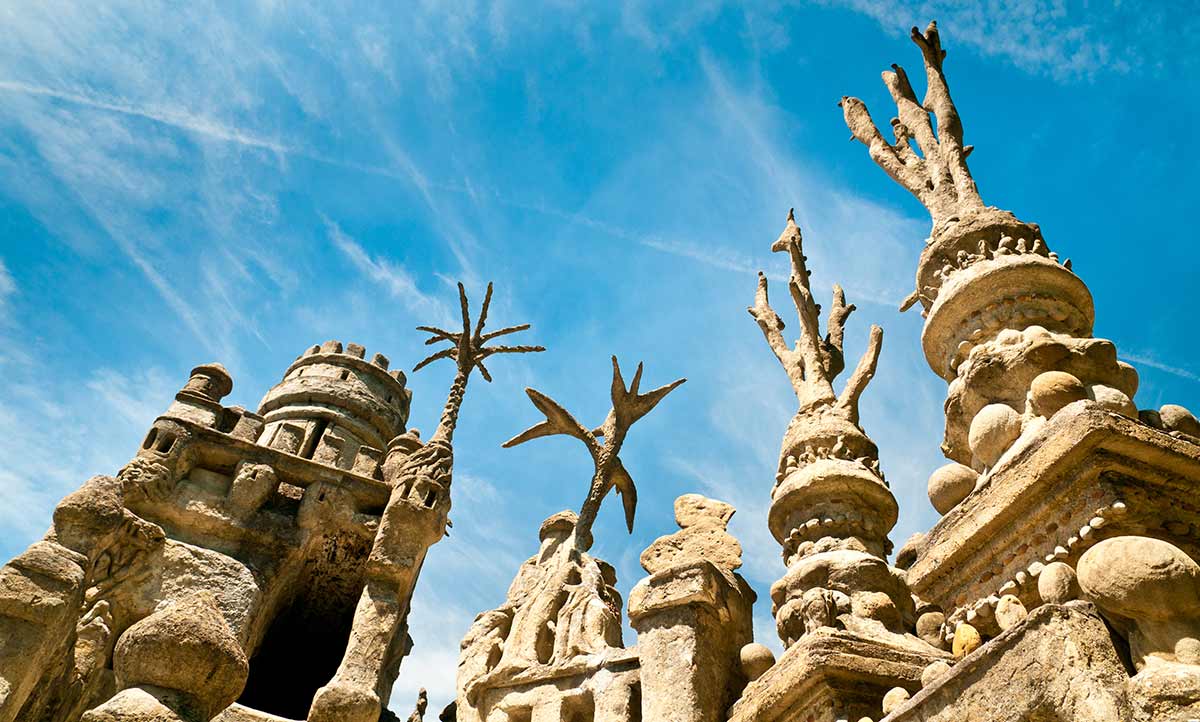
The palace is also a monument to nature, with the north façade resembling a forest. It even has two waterfalls, which Cheval named the Source of Life and the Source of Wisdom.
Despite the influence from so many sources, the overall structure remains visually coherent with a distinct style of its own, attributed to Ferdinand Cheval’s methods and brilliant mind. Throughout the palace are inscribed the words of Cheval, which he carved as a narration. Here, he describes his work as the “Dream of a peasant” and “The Pantheon of an obscure hero.”
What Happened to Ferdinand Cheval and His Palais Idéal?
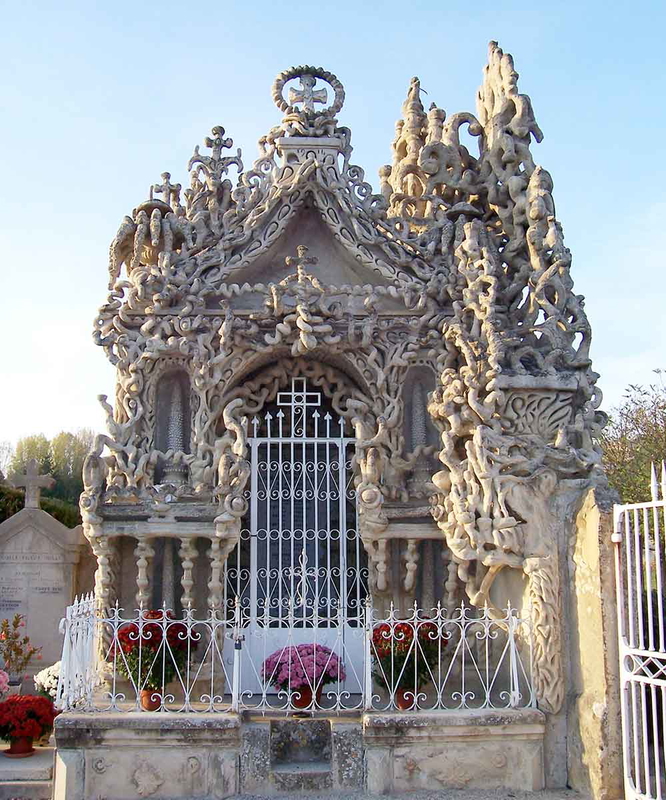
Cheval wanted to be buried in his palace, but for legal reasons, his request was denied. So he spent another eight years building himself a mausoleum, which he finished one year before his death in 1924 at the age of 88.
His work was widely recognized for its cultural and artistic value, especially by Pablo Picasso, who had great admiration for Cheval. The Palais idéal du facteur Cheval was declared a national monument in 1969, and today it is a place that commands deep respect and draws tourists from around the world.