
Southern African Ndebele art has become an iconic part of the region’s ethnic landscape and a common motif in South African art. With bold, vivid shapes and designs, it adds a unique dimension to a colorful landscape of art and culture.
The Historical Trauma Behind Ndebele Mural Art

In the latter half of the 19th century, the Ndebele people came into major conflict with the Boers, who were expanding their territory. The Boers, descendants of the Dutch and other Europeans, put many of the Ndzundza Ndebele homes to the torch and confiscated Ndebele land, creating a dynamic of oppression and dispossession many decades before apartheid was written into the legal framework of racial control.
The Ndzundza Ndebele people were scattered and worked on the Boer farms as indentured laborers, yet still maintained their chiefdom in secret despite having no land. Their national identity did not dissipate, but evolved to include resistance.
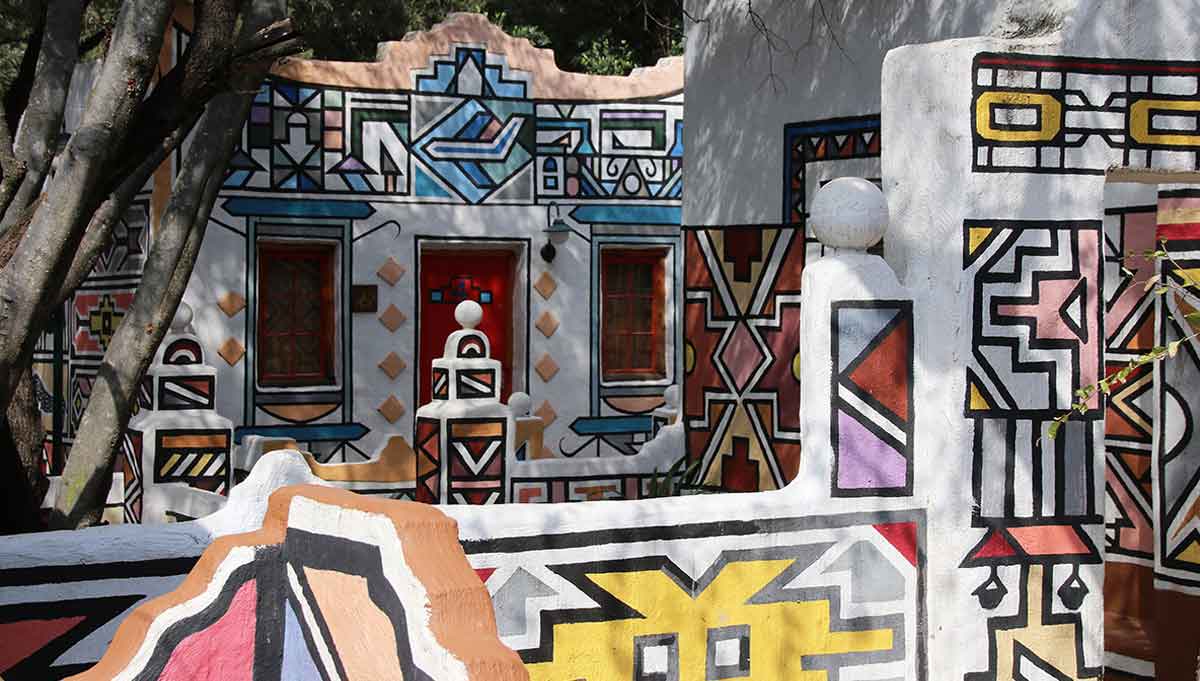
The most obvious form this resistance took was through communicative methods, which took the form of art painted on houses. To the Boers, the designs were nothing more than decorative, but the symbols had meaning. While the idea of coded messages has gained traction as a popular legend, the extent of the complexity remains debated.
From 1948, the Ndebele people were subject to the laws of apartheid, which were finally relaxed in the early 90s and completely abolished in 1994. Throughout that time, the distinctive art continued to adorn the homes of the Ndebele people in South Africa.
How Ndebele Women Built an Iconic Visual Tradition
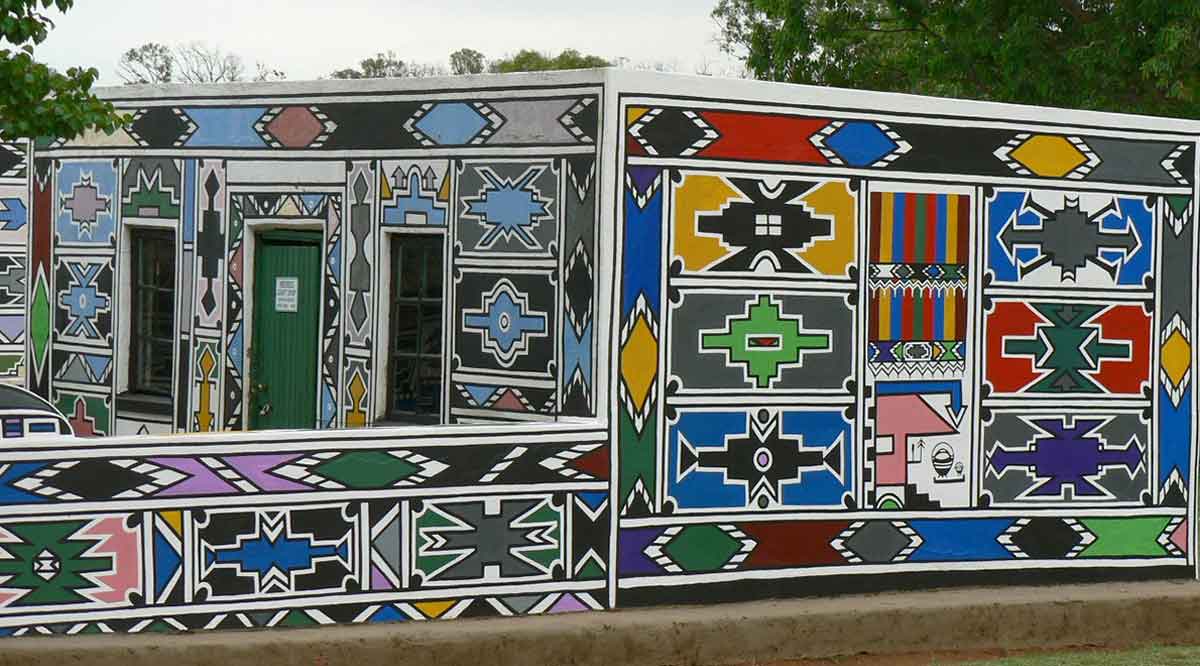
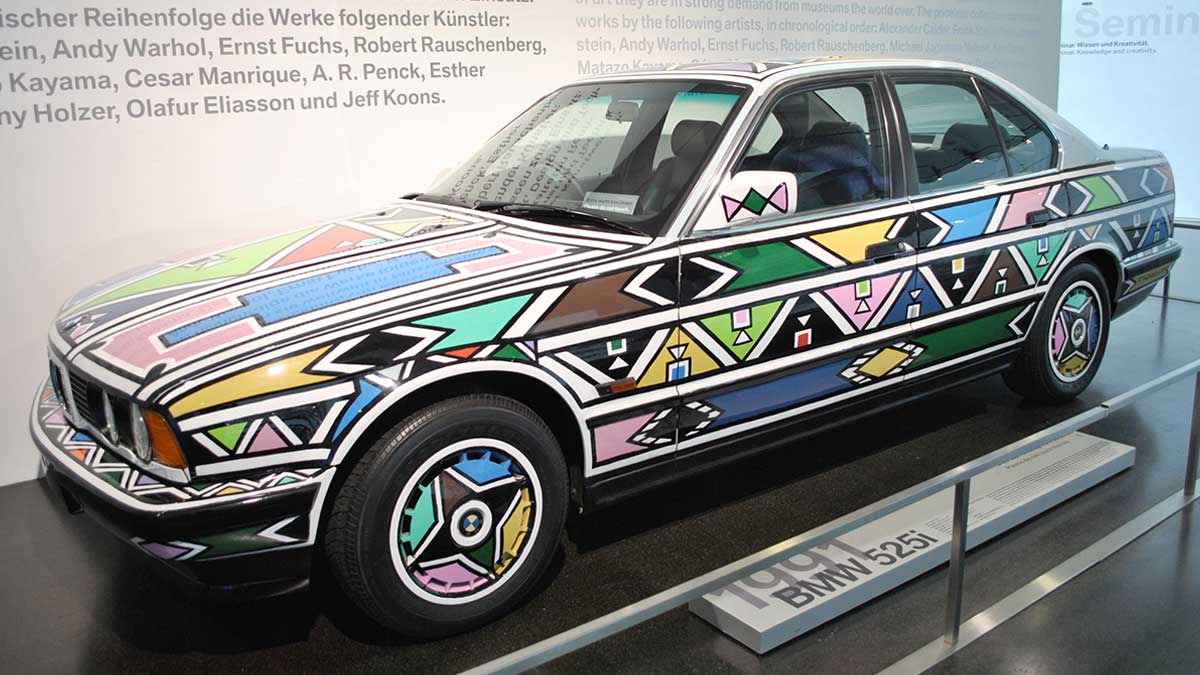
Women painted the houses and still do. The tradition, passed down from mothers to daughters, has evolved in style, as methods have changed and more colorful pigments have become available. Finger painting with natural earthy tones gave way to bright colors applied with brushes. Highly visible acrylic statements have spread far beyond the medium of paint and the Ndebele homeland. It is a cultural symbol woven into fabrics, beadwork, canvas art, and even, famously, on automobiles.
The Hidden Meaning Behind Ndebele Shapes and Colors
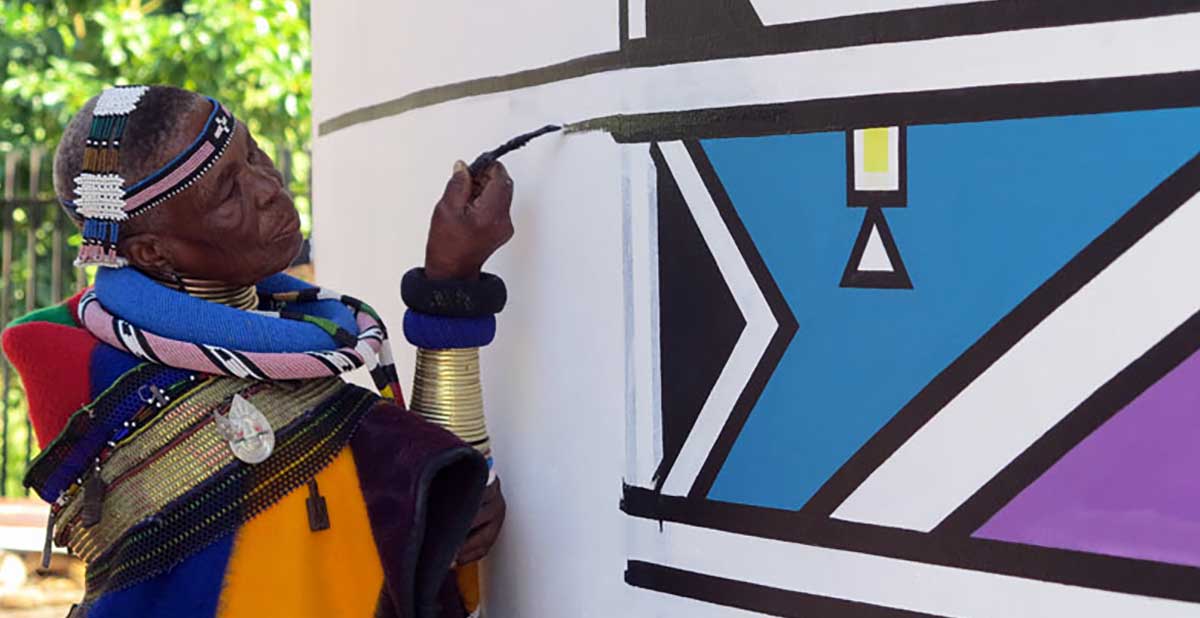
From an outsider perspective, the designs are popular, but few realize it’s a system of visual symbolism. Vocabulary and the meanings of symbols, however, are a subject of scholarly debate, and ideas of fixed designations remain unclear.
Nevertheless, some surface meanings are apparent. Rounded shapes refer to femininity and fertility, while triangular shapes evoke masculinity and protection. Horizontal lines represent the stability of the earth, while vertical lines can represent growth. Colors are also symbolic. Red evokes strength, courage, or suffering through rites of passage, while white represents spirituality, purity, and the ancestors. Yellow represents wealth and fertility, and green represents life.
Symbolic meaning, however, is not set in stone and can vary from region to region and from person to person. The Northern Ndebele of Zimbabwe did not experience the same history as the Southern Ndebele of South Africa, and traditions of design evolved differently.
The designs are not permanent, and new layers are added on special occasions like births, marriages, initiation rites, and major ceremonies.
How Esther Mahlangu Took House Wall Murals to the Global Stage
No conversation on Ndebele art can be had without mention of its most critically acclaimed artist, Esther Mahlangu. Born in 1935, she began painting as a child, but it wasn’t until the late 1980s that she gained international recognition.
Her art was first displayed to a European audience in France in 1989 at the Magiciens de la Terre (Magicians of the Earth) group exhibition. After this recognition, she was commissioned to paint murals and exhibit work in 12 countries. Of major note was the commission to paint the exterior body of a BMW, following in the tradition of others who had done the same, such as Frank Stella, Andy Warhol, and David Hockney.
The popularity of Ndebele art has grown since the end of apartheid. At a national level, it is no longer suppressed but promoted as a unique facet of South African design, while on an international stage, it draws attention from art lovers and galleries.