
Abstract art became popular in the early 20th century and gradually transformed, developing new meanings and contexts over time. Some art historians believe that, in a way, abstract art has always been present. They think that it can be surprisingly discovered in ancient cave paintings and Renaissance frescoes. Read on to learn about the fascinating and long evolution of abstract art.
The Origins of Abstract Art: How to Categorize Cave Painting?
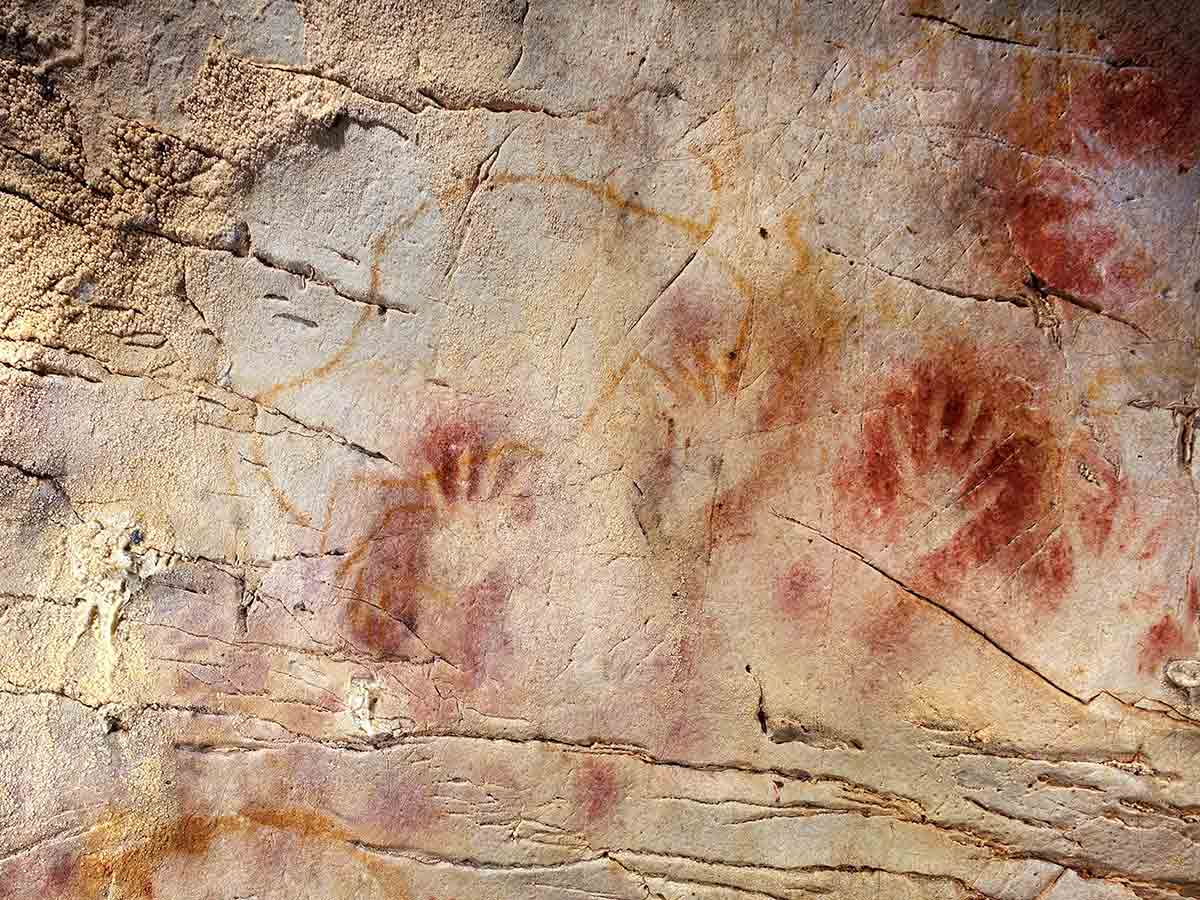
Traditionally, we would begin the story of abstract art from the modern era, when artists consciously separated themselves from any attempts to depict objective reality. The common understanding of abstract art is based on its inherent opposition to the figurative—intangible vs. tangible, immaterial vs. physical. Abstraction is usually presented as an intellectual achievement that took human artists centuries to reach. However, if we think a little bit wider, we can come to surprising conclusions.
The problem lies in the definition of art itself and the understanding of artistic intent. Some historians believe that the earliest marks left in caves by our ancestors were, in fact, the first examples of abstract art. These marks may not have been misunderstood reflections of something real but pure explorations of painting and leaving marks.
Renaissance Abstraction: The Underappreciated Innovation of Fra Angelico

Usually, we associate abstract art with modernity and the changing conceptual relationship between society and art. From a pictorial language, art transformed into a form of education and a vessel of ideas and then into an individual expressive medium with a conditional relationship to the physical world. Some art historians believe that the way of thinking that led to the invention of abstract art as we know it could be found in Renaissance painting. Back then, secular painting was only emerging, and most art served religious purposes. Paintings had three distinct functions: to educate the illiterate, to remind the followers of the principles of their faith, and to manipulate their emotions, triggering feelings of devotion, adoration, fear, or compassion.
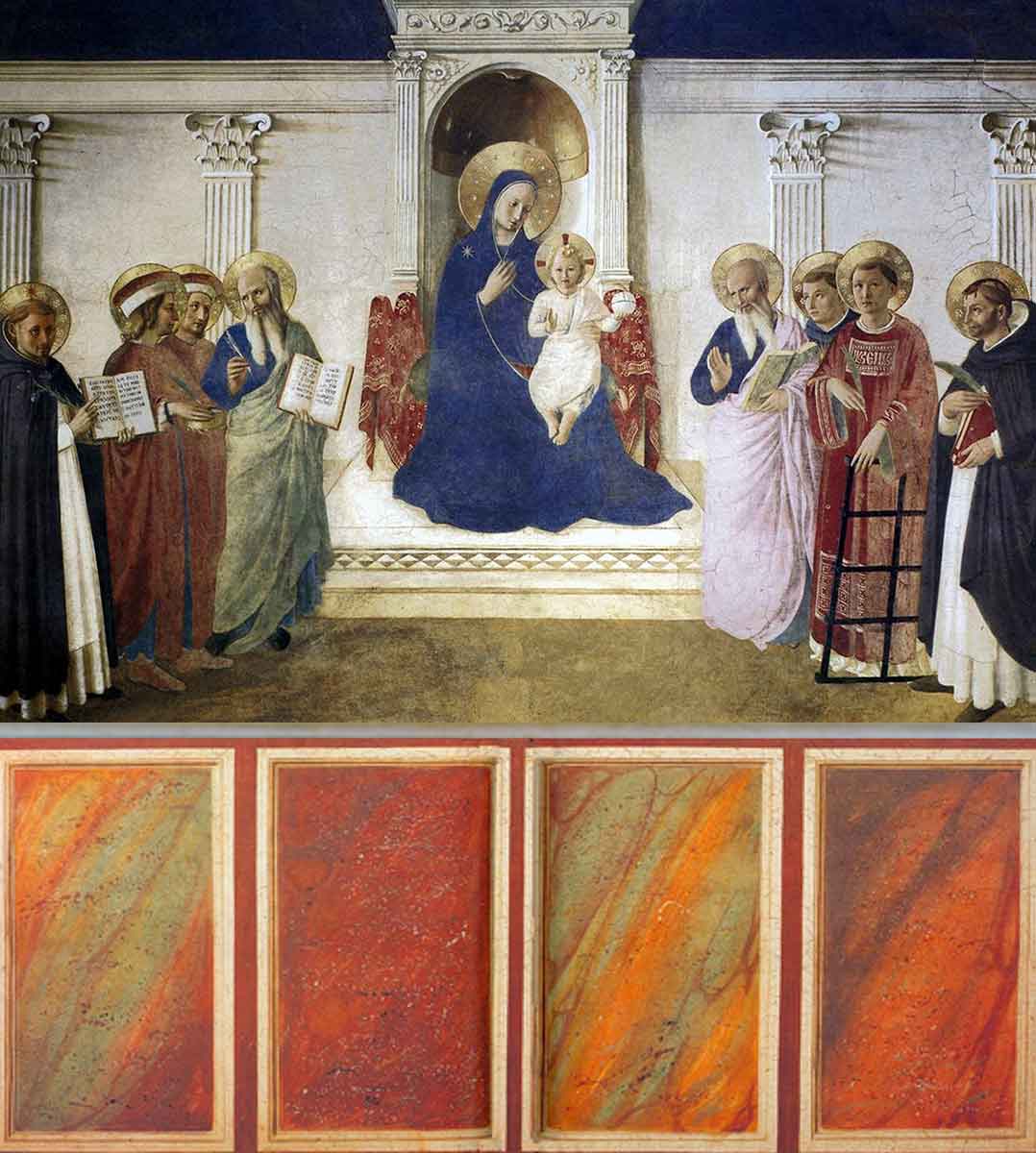
However, in the works of one of the greatest Renaissance artists, we can find elements that do nothing for any of these functions. Fra Angelico was a Dominican friar and one of the most outstanding artists of the 15th century. In 1450, he painted a fresco for the San Marco monastery in Florence. The fresco painting represented the figure of the Virgin Mary holding the infant Jesus surrounded by saints. The most interesting part, however, does not belong to the central image.
Behind the composition of figures, Fra Angelico added four panels that looked strangely similar to canvases Jackson Pollock would paint five centuries later. The images on these panels mimicked the texture of marble but featured colors that did not occur in nature, and Fra Angelico was well aware of that. Art historian Georges Didi-Huberman suggested these could be symbolic representations of Christ’s tomb. If he was right, this could mean that Fra Angelico was the earliest abstract art pioneer we know.
Paul Gauguin and the Post-Impressionists
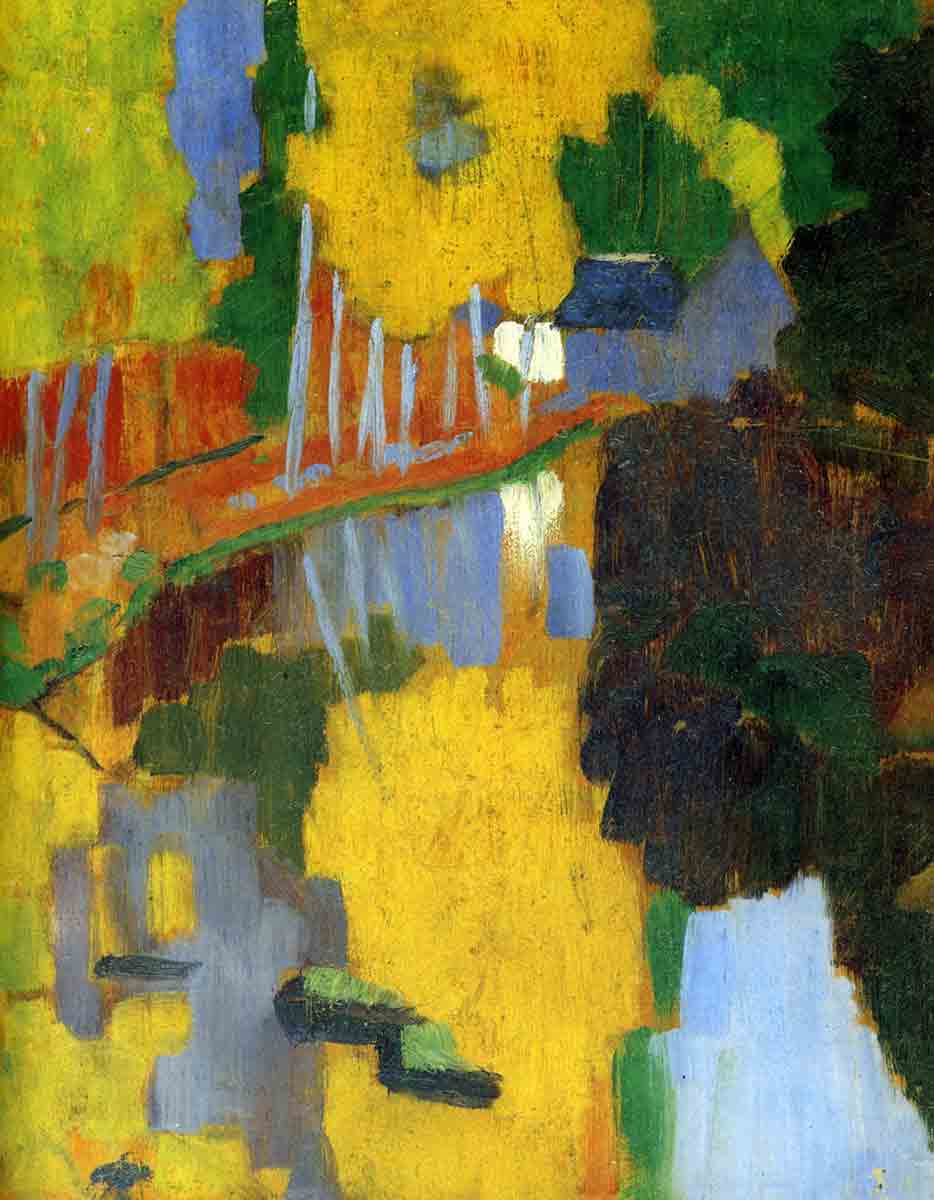
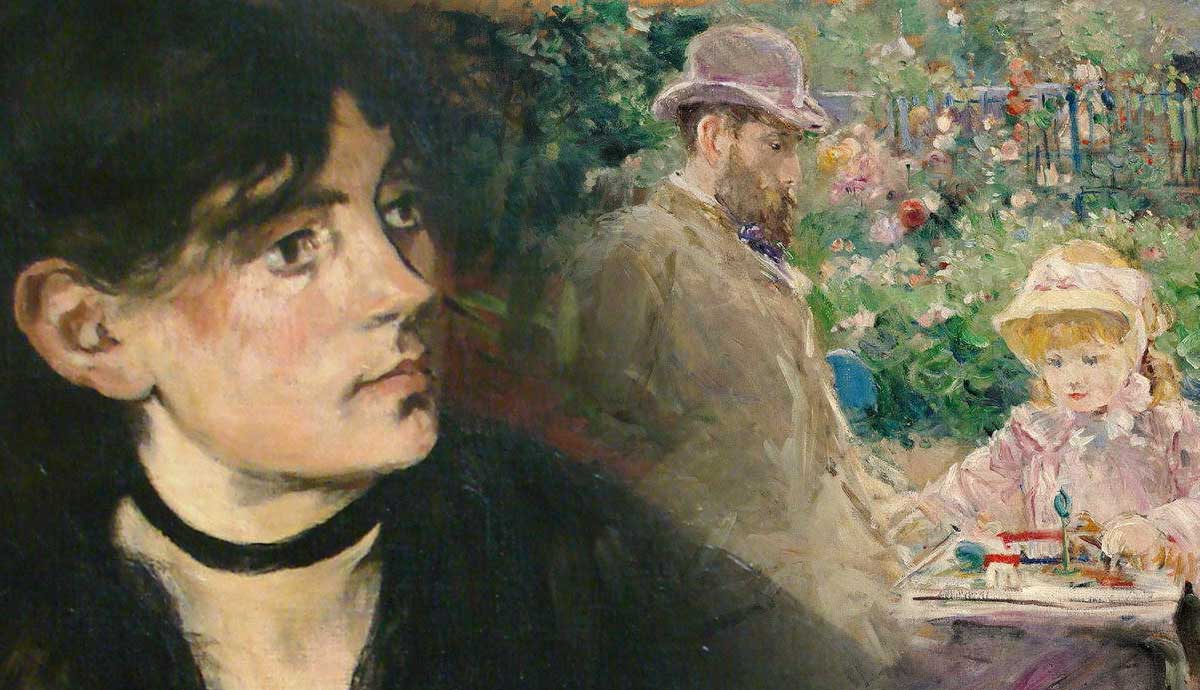
Still, the definitive turn toward abstract imagery happened in the late 19th century, when urbanization and technical advancements forced artists to experiment with light, space, and perception of art. Divisionism was an important art technique that brought modern artists closer to departing physical reality. Instead of using traditional ways of applying paint, Divisionist painters applied small strokes or even dots of primary colors that were supposed to mix in a single vivid composition.
Although Paul Gauguin painted mostly idealized tropical scenes, his art nonetheless was an important step towards abstraction, as he utilized flat planes of bold color, using the brightest tones he could find. One of Gauguin’s disciples, a Post-Impressionist called Paul Serusier, painted a landscape under his guidance that seemed almost abstract. Serusier’s close friend, another influential artist, Maurice Denis, later stated that any painting, before representing “a battle horse, a nude woman, or some story, is essentially a flat surface covered in colors arranged in a certain order.” Although this idea may seem obvious now, back then, it functioned as an important step in appreciating painting as a medium separate from the real object it tried to represent.
Automatic Writing
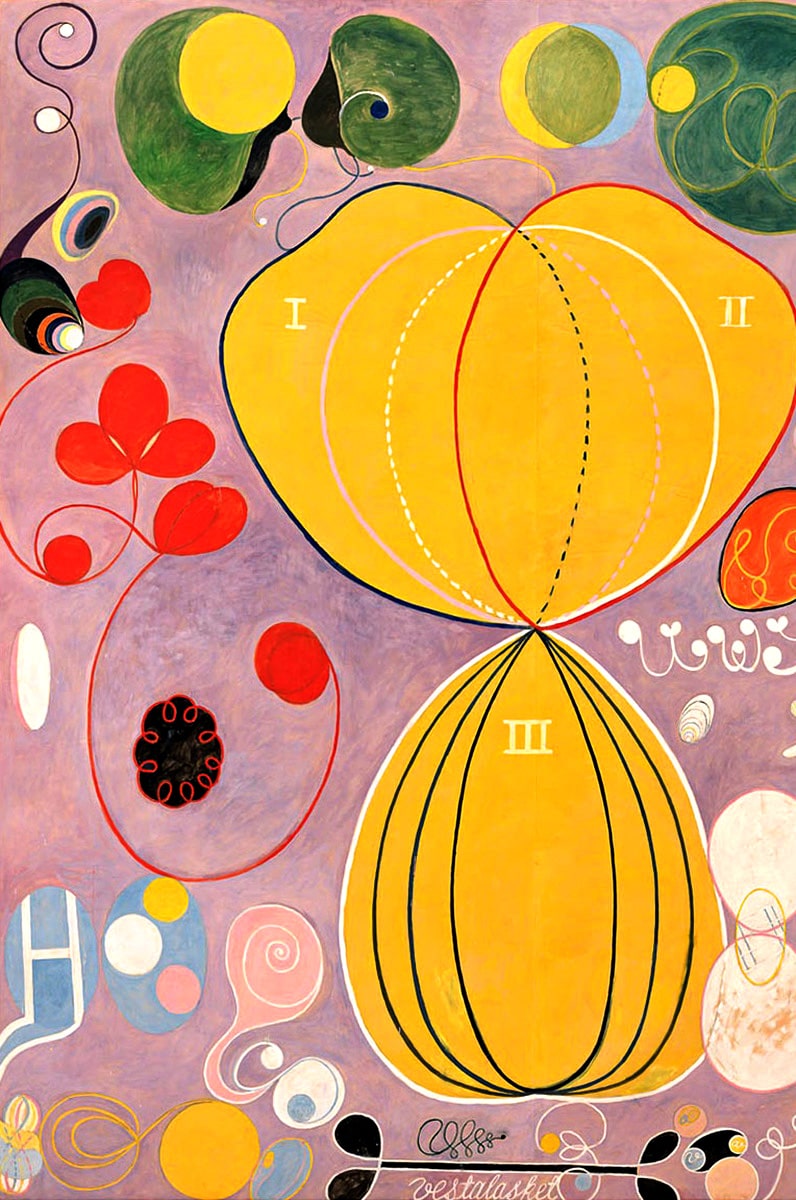
The development of abstract art greatly benefited from the widespread spiritual practices and beliefs that occupied the minds of educated Westerners from the second half of the 19th century. The appearance of almost invisible technologies such as radio, telephone, and telegraph raised concerns that some other forces might also exist—those that connected the world of the living to other realms.
In the 19th century, spiritual seances were a popular hobby among Western intellectuals. The medium (usually a woman) entered the state of trance and allegedly connected to the spirit world. During such seances, the medium spoke on behalf of the spirits, wrote absurd texts, or created automatic drawings that sometimes had no real-life references. Early abstract art of the pioneering artist Hilma af Klint was born from such seances. Initially, she created her works “dictated by the spirits,” with no conscious artistic involvement. Hilma af Klint’s early works were fluid and mostly relied on organic forms. However, gradually, she started to increase her artistic involvement, deliberately creating coded compositions and diagrams. Her art started to move towards more strict geometric forms.
Geometric Abstraction
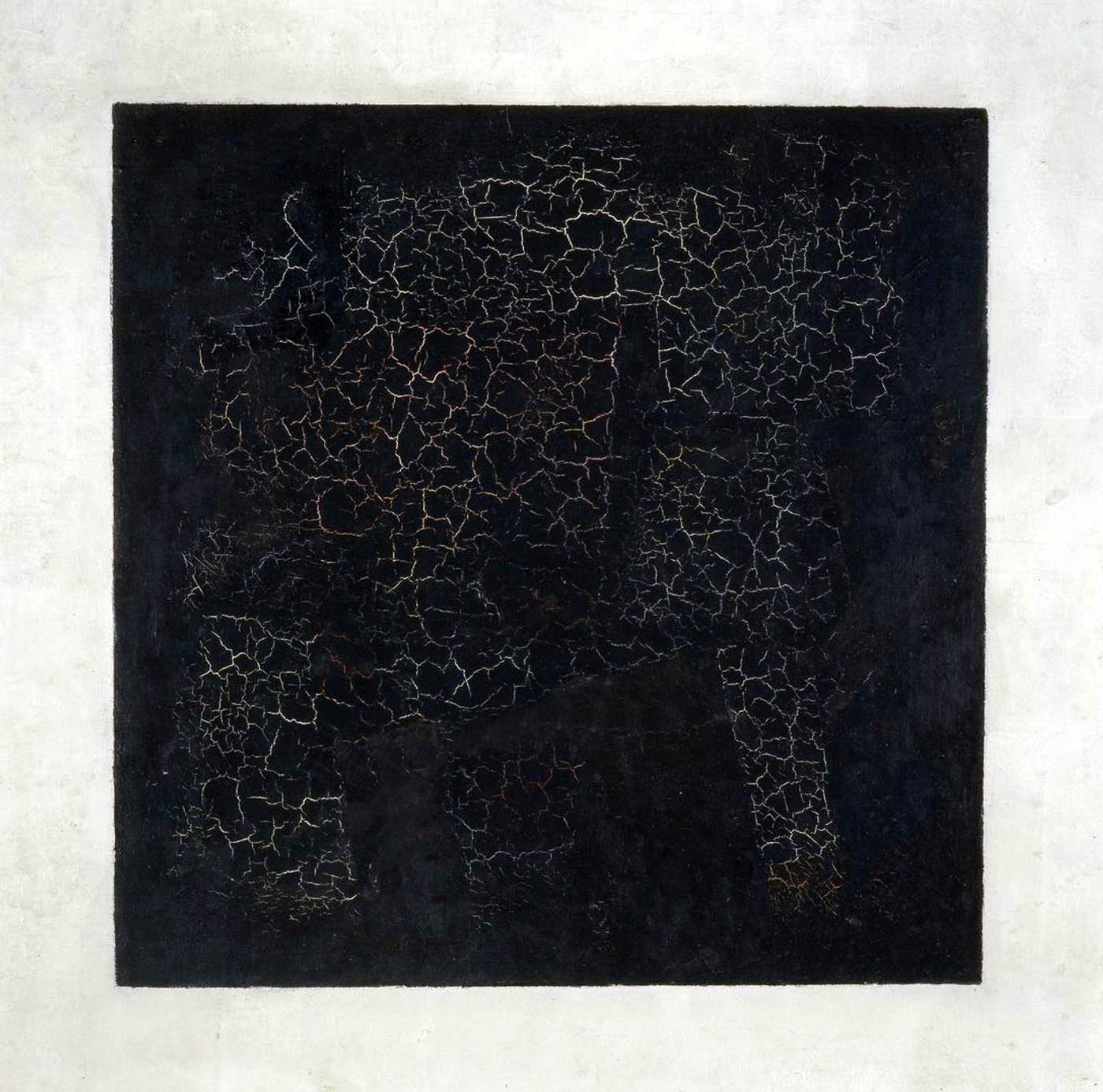
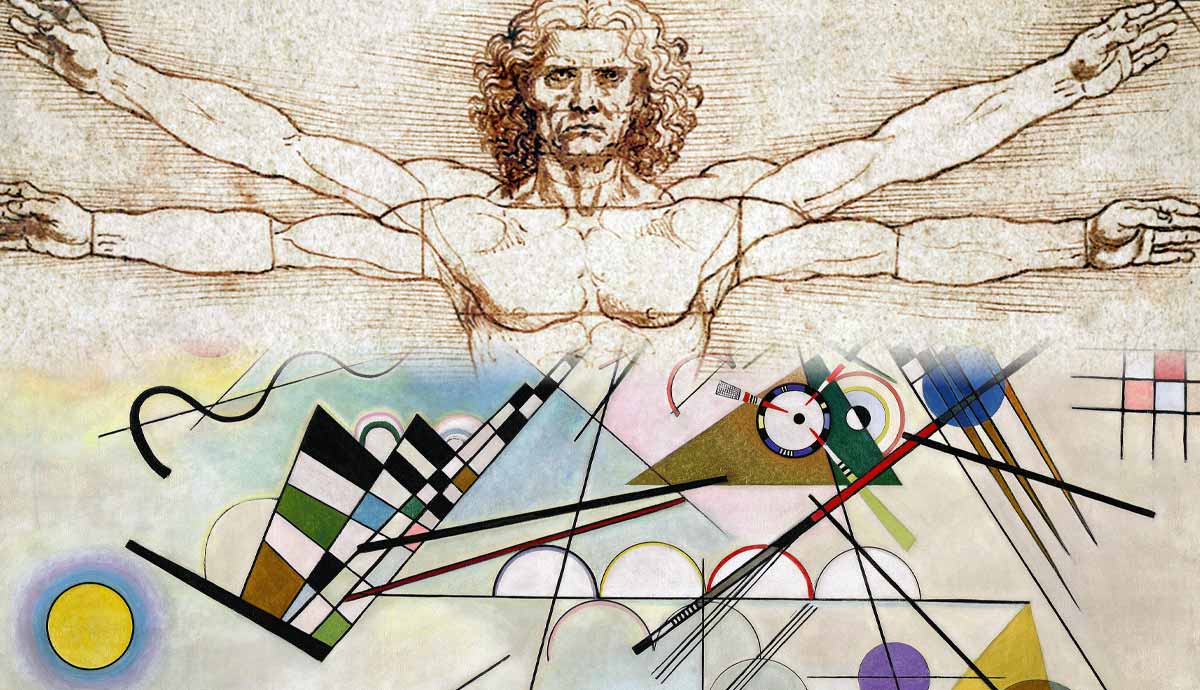
The emergence of geometric abstraction was the decisive point in the history of abstract art. It was a conscious step away from the organic forms found in nature toward man-made rigidity and intellectualism. In a way, it reflected the principles of Sacred Geometry found in various religions, including Hinduism and Buddhism. Sacred geometry was the set of principles that prescribed meanings to geometric figures so they could be used in rituals.
Geometric abstraction maintained the connection to spiritual practices yet emphasized artistic intent and a clear understanding of structure. Kazimir Malevich’s famous Black Square, despite its seeming simplicity, was a radical and bold statement. The flat black square, measured and painted by a man, was the literal antithesis of the yellow sphere of the sun. Thus, the simple figure proclaimed independence from nature,which was finally achieved by mankind in the new century.
Synesthesia
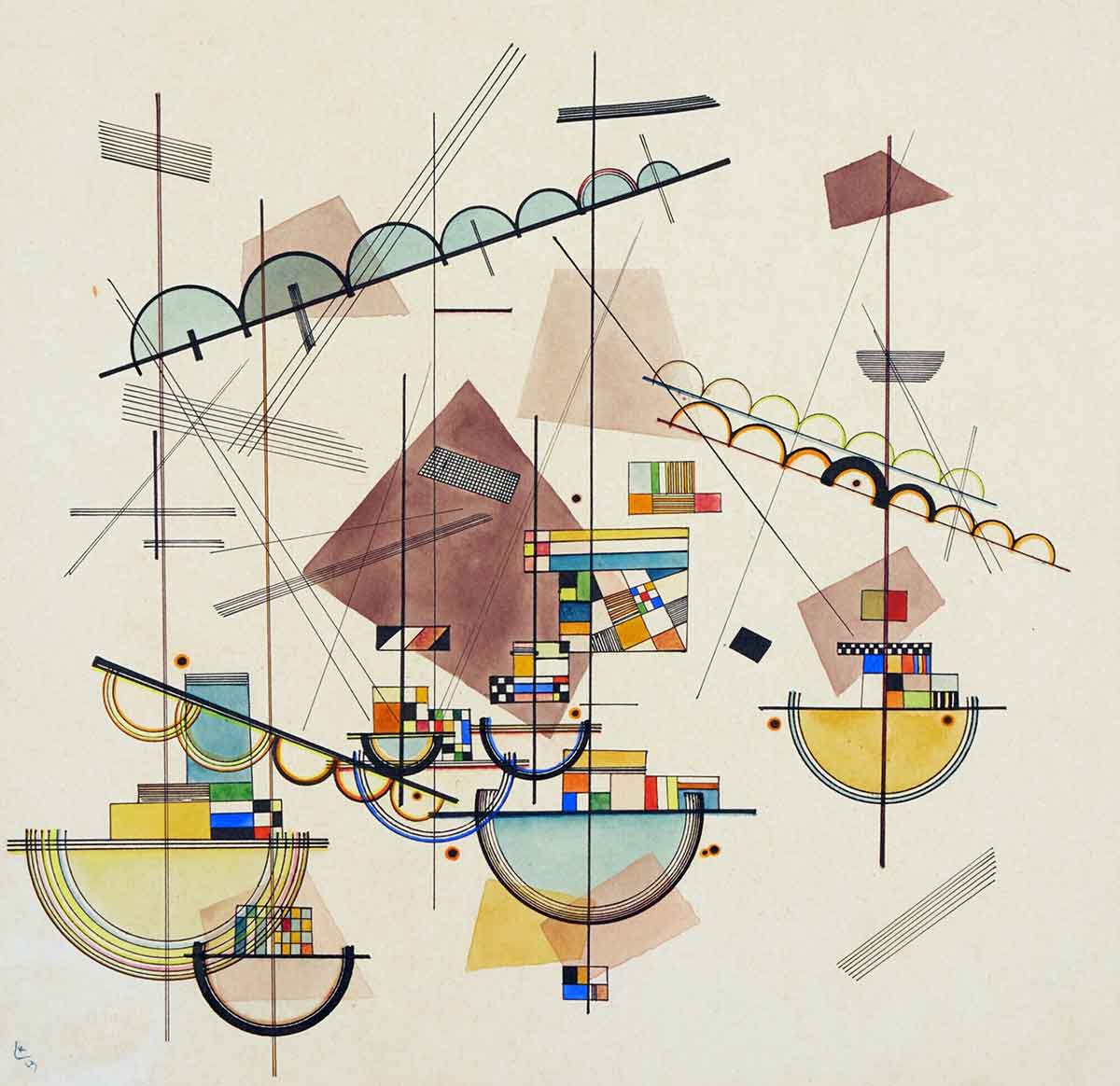
Another factor that contributed to the variety of abstract art forms emerging was the development of the studies of the human brain. Wassily Kandinsky, another pioneer of abstraction, allegedly had synesthesia, a perception phenomenon in which cognitive stimulation of certain parts of the brain stimulates others, which is similarly unrelated. In other words, he could literally hear color and line as his brain confused sensory paths. Thus, Kandinsky’s abstract compositions were, in fact, musical pieces that no one could hear but him. As studies show, synesthesia effects are unique for every person experiencing it.
In relation to abstract art, studies of synesthesia demonstrate that colors and forms can indeed hold organic meanings and associations perceived more broadly than usual. Their subjectivity makes them even more valuable from an artistic point of view, as they render images unique for every viewer, whether synesthetic or not.
Abstract Expressionism & Gesture Painting
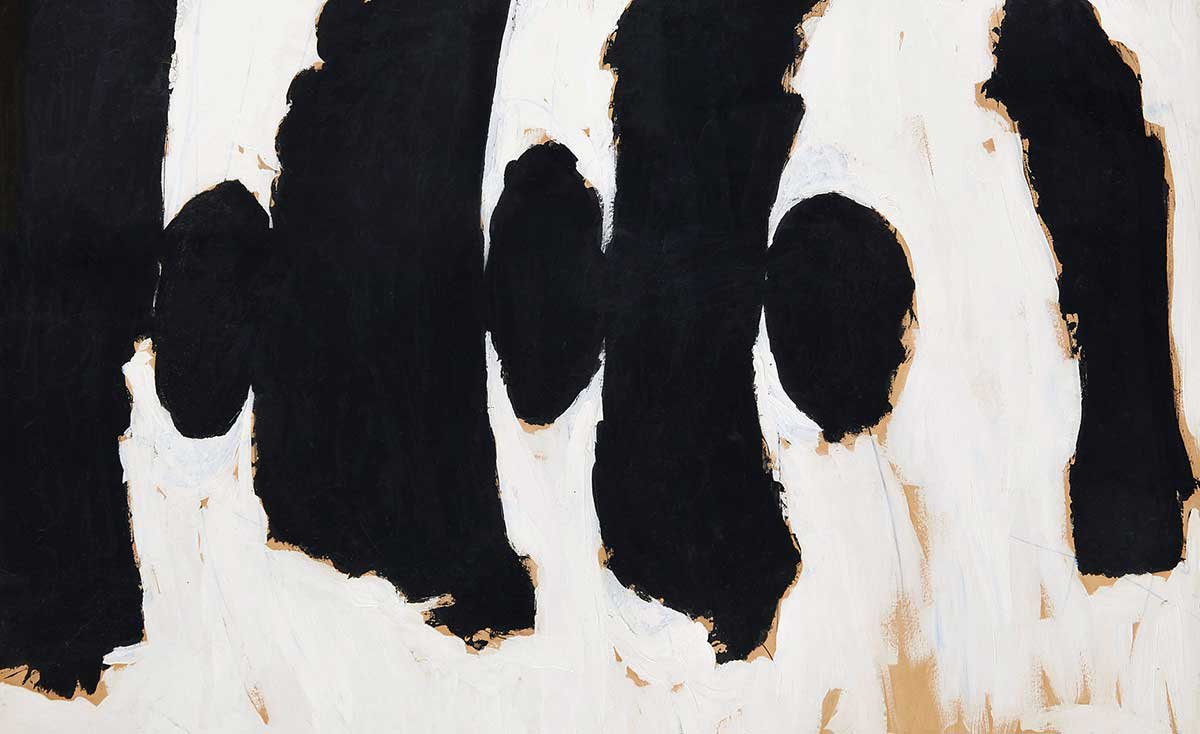
Abstract Expressionism originated in the USA in the 1940s. In the years of the Great Depression, some artists who would later form the movement were employed by the American government as mural painters. The officials saw public art as an effective means to give jobs to artists amidst economic crises and affect the moral state of the local communities. Murals were usually large-scale paintings, and thus, they required different approaches to the interaction between an artist and their base material. Instead of a small canvas, the painters had to deal with large walls. Thus, the brushstrokes became broader and lines bolder. These artists soon applied these qualities to their studio works.
Large-scale artworks often involved the artist painting with not just their hand but their entire body, stretching and bending, following the lines. In Abstract Expressionism, such movement, known as gesture painting, became a way of expressing individualistic emotion. Body language expresses the mind without words or symbols.
Minimalist Abstract Art

The appreciation of form and color and their expressive potential reached its peak during the decades of Abstract Expressionism. Afterward, it began moving towards more refined and distilled forms. Minimalist art of the 1960s aimed to do exactly that, getting rid of the visual noise of expressive brushstroke and texture. Minimalist abstract artists claimed that their pure forms were objective and did not rely on their experiences or emotions. Agnes Martin’s works reflected exactly that—the harmonic precision of straight lines and right angles. She relied on mathematical formulas and strict calculations to achieve optical perfection of proportion and line.