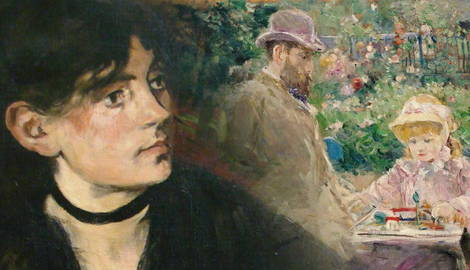

Édouard Manet and Berthe Morisot were among the most prominent and influential names in the history of Impressionism. With the age gap of ten years, they started their relationship as a teacher and his student and turned into equal colleagues who inspired each other. Some art historians suggested that they even had a secret relationship that was over after Morisot married Manet’s younger brother. Read on to learn more about the relationship between Édouard Manet and Berthe Morisot.
Édouard Manet & Berthe Morisot: The Origins of the Great Impressionists

Édouard Manet was born in 1832 into the well-off family of a prominent judge. His father did not want to hear about an artistic career and offered his son a choice to either study law or travel overseas to become a naval officer. Neither of the options suited Manet, and he insisted on making painting his full-time profession. He soon became known as a young radical whose art was too raw, original, and shocking to be accepted by the public. Still, among fellow artists, he soon received a reputation as the most important painter of his era.
As a young man, Manet began a secret relationship with his Dutch piano teacher and even fathered a child. Unable to confess this to his father, the artist hid his son for more than ten years until the Manet family patriarch died, and the couple could finally marry. After a decade of waiting, however, married life was hardly anything more than a habit for the artist, and he actively engaged in affairs with his models.
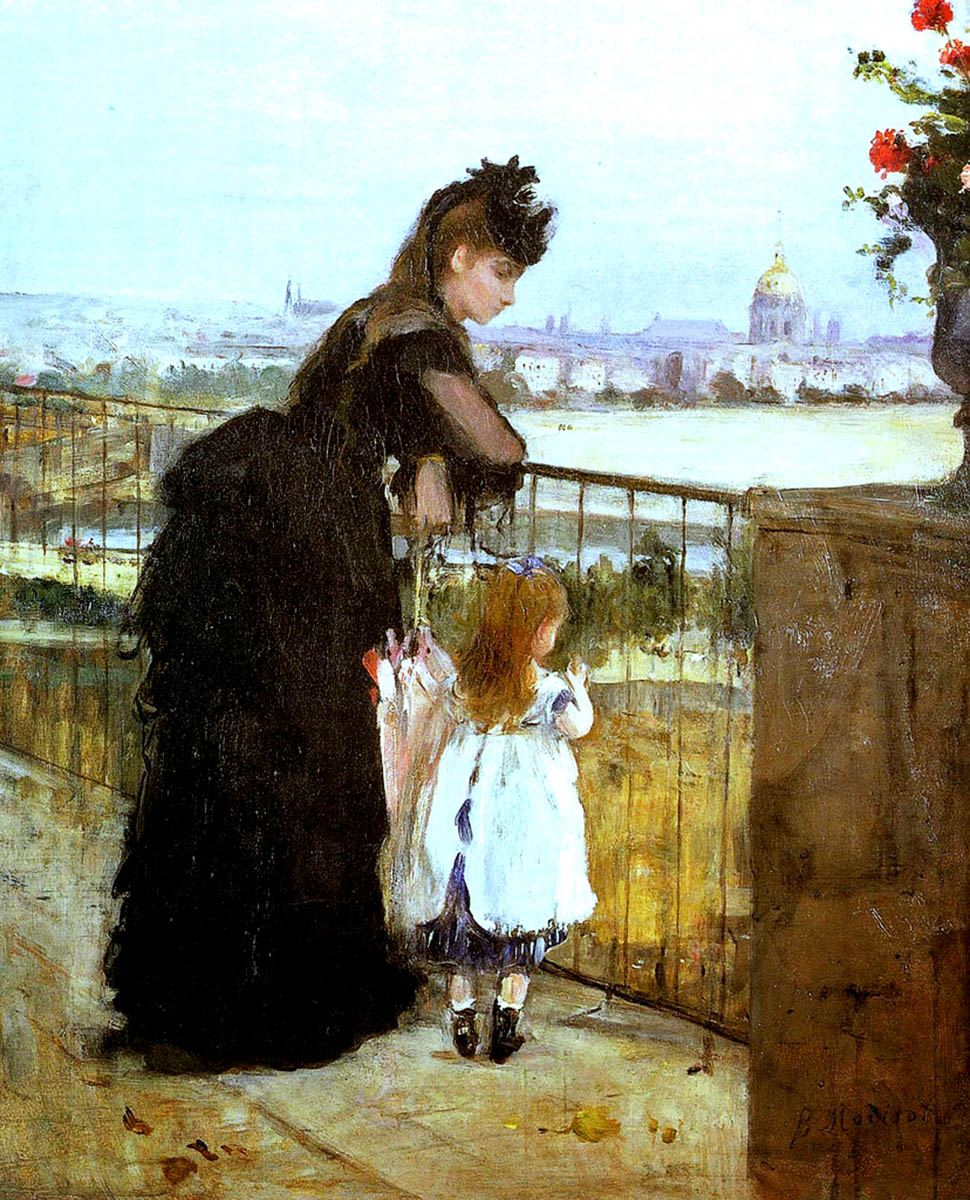
Berthe Morisot, born in 1841, also had a privileged upbringing that was even further complicated by her gender and social status. However, she was lucky to have a liberal mother and the famous Rococo master Jean-Honore Fragonard as one of her ancestors. Both Berthe and her sister Edme demonstrated an inclination and talent for art, and their mother eagerly agreed to find a tutor for them. However, upon discovering the girls’ talents, their first art teacher warily warned the mother that if the girls continued their education, they would turn into professional artists rather than passionate hobbyists. In the mid-19th century, this was still considered scandalous for the women of their class. Eventually, Edme gave up and married a naval officer, abandoning art. Berthe, however, remained devoted to her cause and spent her entire, although short life, painting.
Manet’s Students
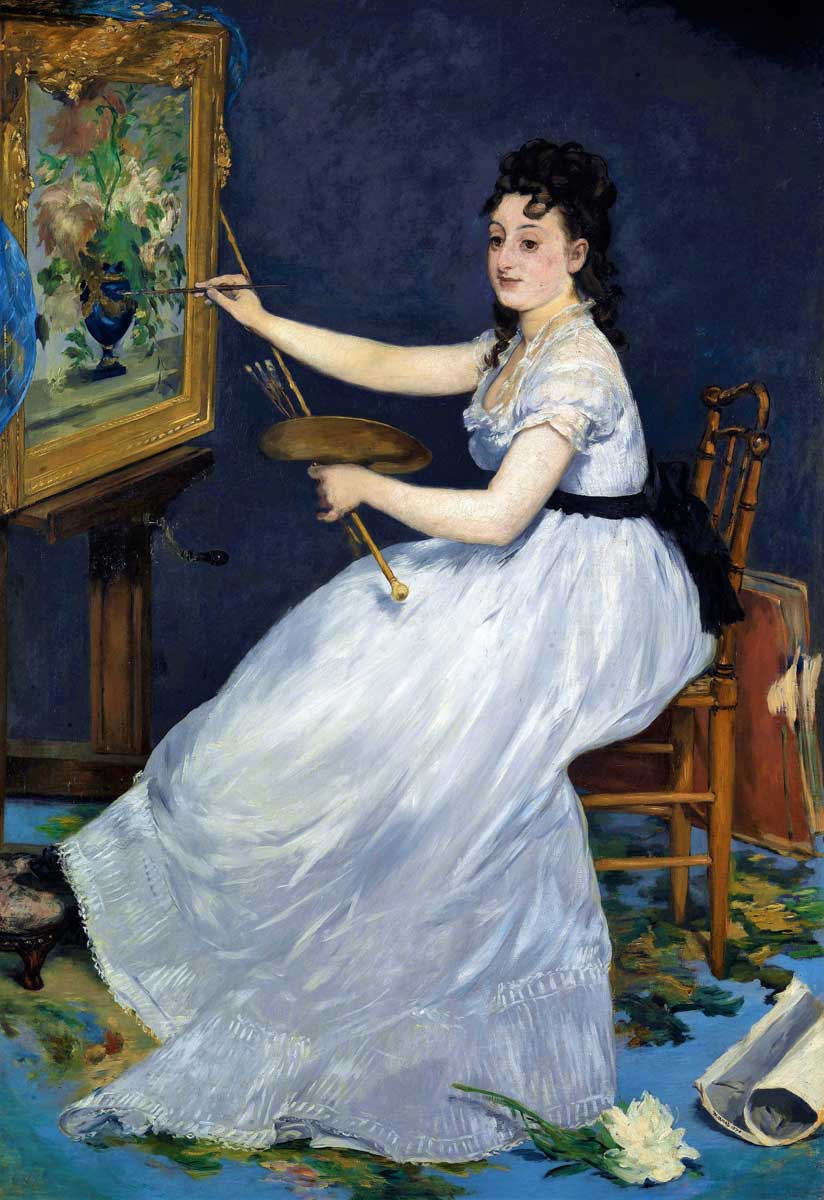
Édouard Manet rarely took students into his studio, but in dire need of money, he agreed to tutor not one but two women. Joining Berthe Morisot in the studio was Eva Gonzales, another ambitious Impressionist who came from a similarly privileged background. However, two women do not feel comfortable in one studio. Trying to motivate them, he instead pitted them against each other.
However, the identity of Manet’s favorite student becomes clear if we compare his portraits of Berthe Morisot with that of Eva Gonzales. He painted Gonzales as a lady of her class, with an obvious reference to the classical rules of Western portraiture of the century: adorned by the attributes of her art (or an eccentric hobby?), she wears a white dress that looks absurdly impractical for painting. Her pose is rigid and unnatural, and her face is painted over so many times that it almost loses its resemblance.
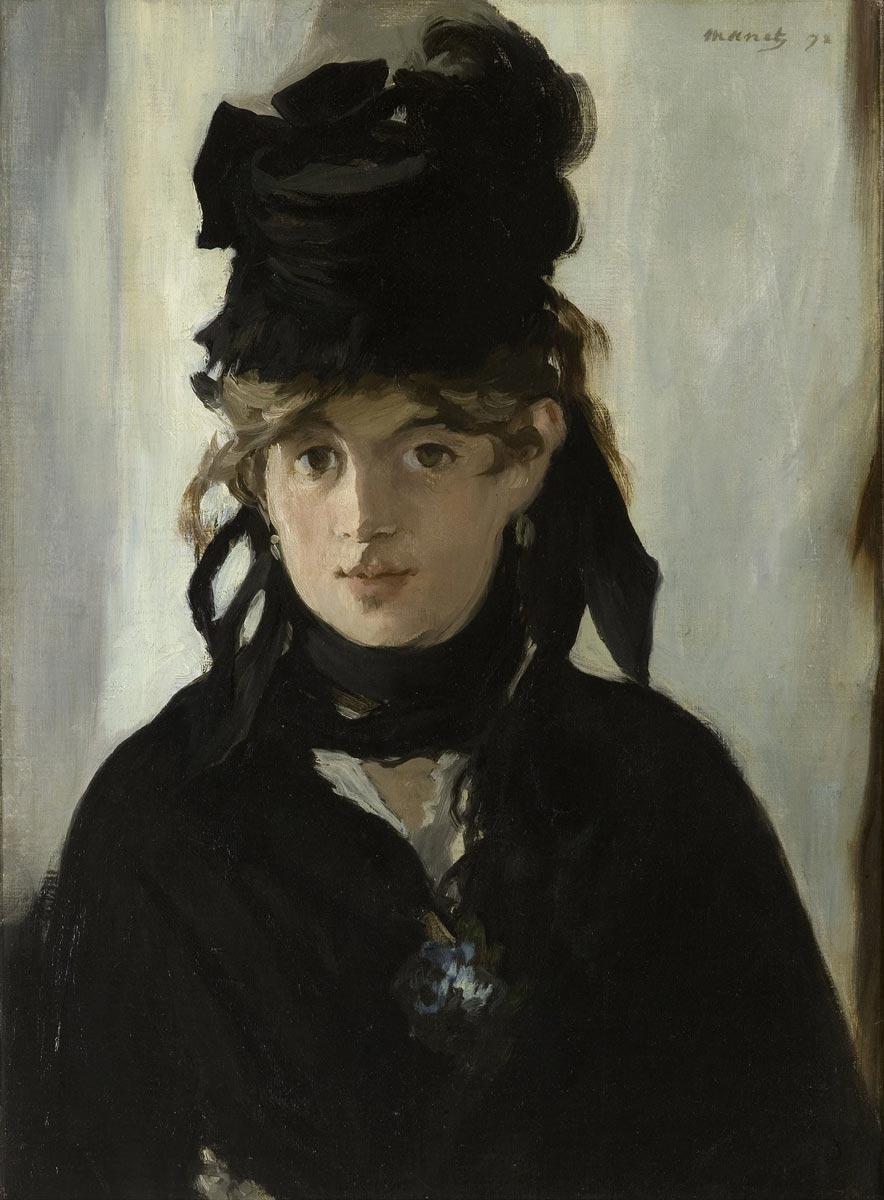
By contrast, numerous portraits of Berthe Morisot present a woman not limited to her social status or occupation. She is a smart and clearly interesting personality, with impeccable taste and little affectation. Morisot’s talent and skill were so immense that soon, she transformed from a student into a fellow artist who suggested ideal and technical solutions to the man she once saw as her teacher.
The Ruined Portrait

However, not all was well between the artist and his ex-student. Occasionally, Manet would allow himself remarks and gestures that would upset Morisot. In one instance that almost ruined their relationship, Manet even took the liberty of repainting a work by Berthe and ruining her plans. In 1870, Morisot was working on a portrait of her mother and sister for that year’s Autumn Salon but struggled to get it right. Something was clearly missing, and she decided to consult Manet. Before she could intervene, Manet took a brush and first repainted the small fragment of Morisot’s mother’s black dress and then the entire work, turning it into “the prettiest caricature.”
Morisot was shocked and heartbroken: not only did Manet ruin her portrait, but he also jeopardized her chances at exhibiting at the exhibition, as they normally did not accept works painted by more than one person. Morisot’s mother, however, loved the painting despite the agonizing effect it had on Berthe.
The Trocadero Myth
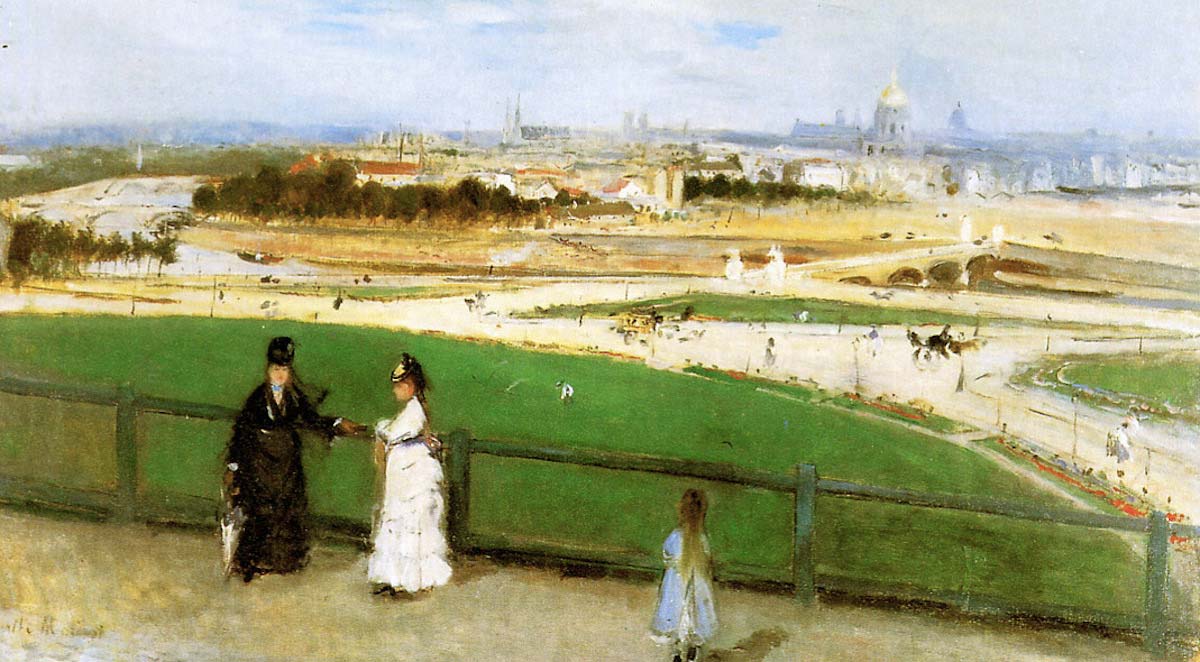
One of the most famous biographers of Manet, a Frenchman called Henri Perruchot, spread an appealing, although unsubstantiated, rumor that Manet copied one of the works by Morisot before even meeting her. Allegedly, the painter was so struck by the painting View of Paris from the Trocadero that he went to the same location and copied the composition. In reality, Morisot painted her work later than Manet did, at a time when both were already working together.
That being said, the influence of Berthe Morisot on Édouard Manet’s art is hard to overestimate. She was the one who suggested Manet should paint outside, using the famous Impressionist concept of plein air painting. She was also incredibly skillful in arranging human figures in her works. Manet had difficulty with it and thus often copied the position of his figures from works of the Old Masters.
Artistic Exclusion

However, despite the obvious talent of Berthe Morisot and the respect her male colleagues had for her, she was never allowed to become another one of them. Male artists who represented various styles and movements gathered together in bars and cafes and painted bartenders, waitresses, and acrobats. A woman of a working-class background, like the immensely talented and lucky Suzanne Valadon, was able to attend such gatherings, unafraid of jeopardizing her reputation (to be fair, Valadon never cared for even a semblance of reputation). In the case of Berthe Morisot, such behavior was out of the question. For that reason, the thematic variety of her work differed largely from that of her male counterparts. She was not permitted to paint scenes of Parisian nightlife, so she primarily focused on domestic interiors, often featuring a window as the sole connection to modernity available to women of her class.
Family Ties

To retain her artistic independence and save her family’s reputation, Berthe Morisot had to eventually get married to someone who would consider her occupation serious. She found the perfect candidate in Manet’s younger brother Eugene. He was also an artist, although hardly as innovative as his brother, and was ready to support his talented wife and act as her manager. Several months before the marriage, Morisot lost her father, so the ceremony was quiet and private. In 1878, the couple had her only child, Julie, who would lose both of her parents as a teenager and would be raised by a group of family friends, which included Stephane Mallarme and Pierre-Auguste Renoir.
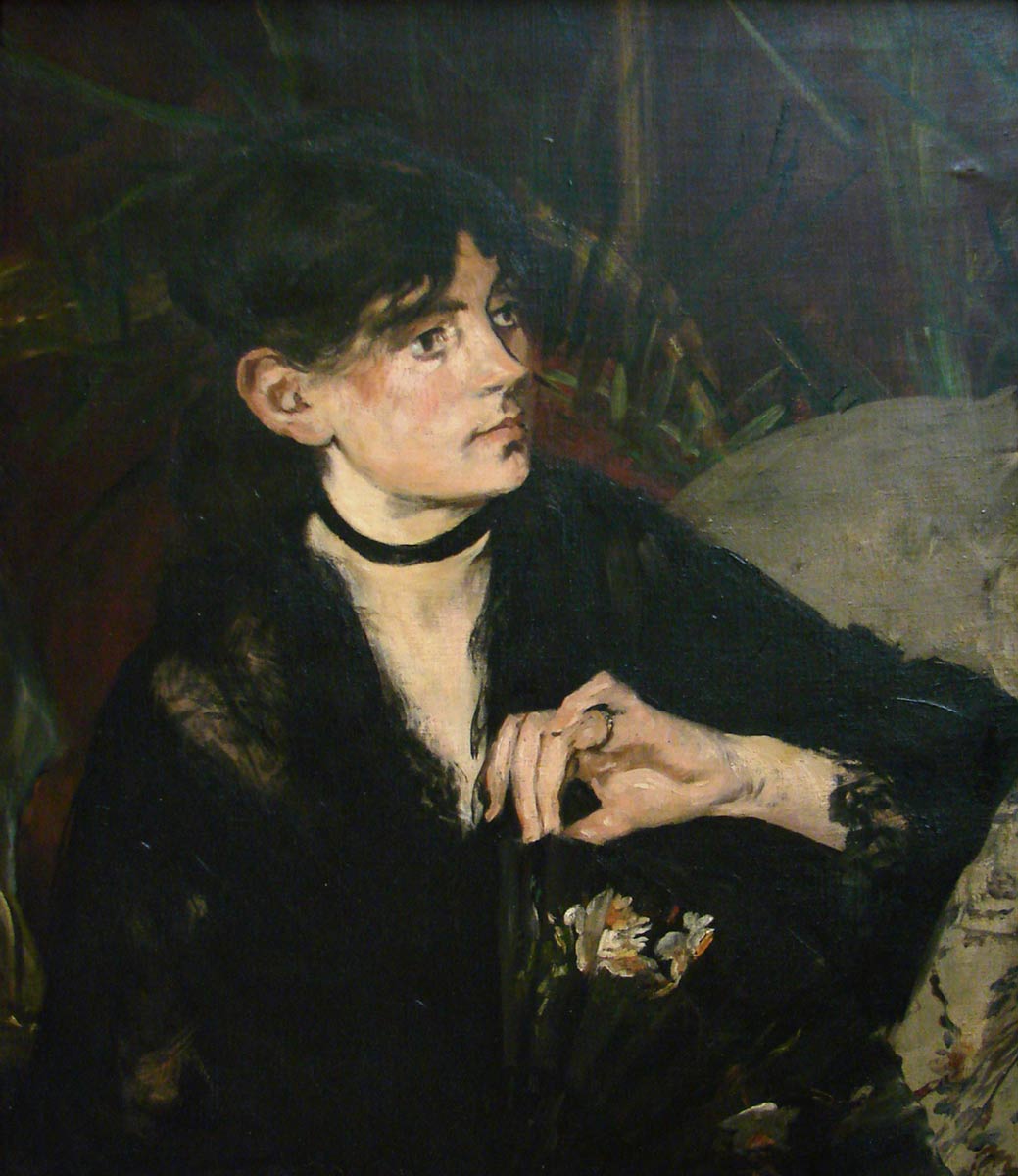
Soon before the marriage, Édouard Manet stopped painting portraits of Berthe. The last portrait, and the tenth in the artist’s oeuvre, was a rather dark image of Morisot distancing herself from the painter and blocking the canvas with her hand with an engagement ring. Some art historians saw this portrait as simply an expression of transforming family ties and etiquette rules, while others insisted it was an even more meaningful gesture, hinting at the possible secret relationship between the two artists.
The Alleged Love Affair Between Berthe Morisot & Édouard Manet
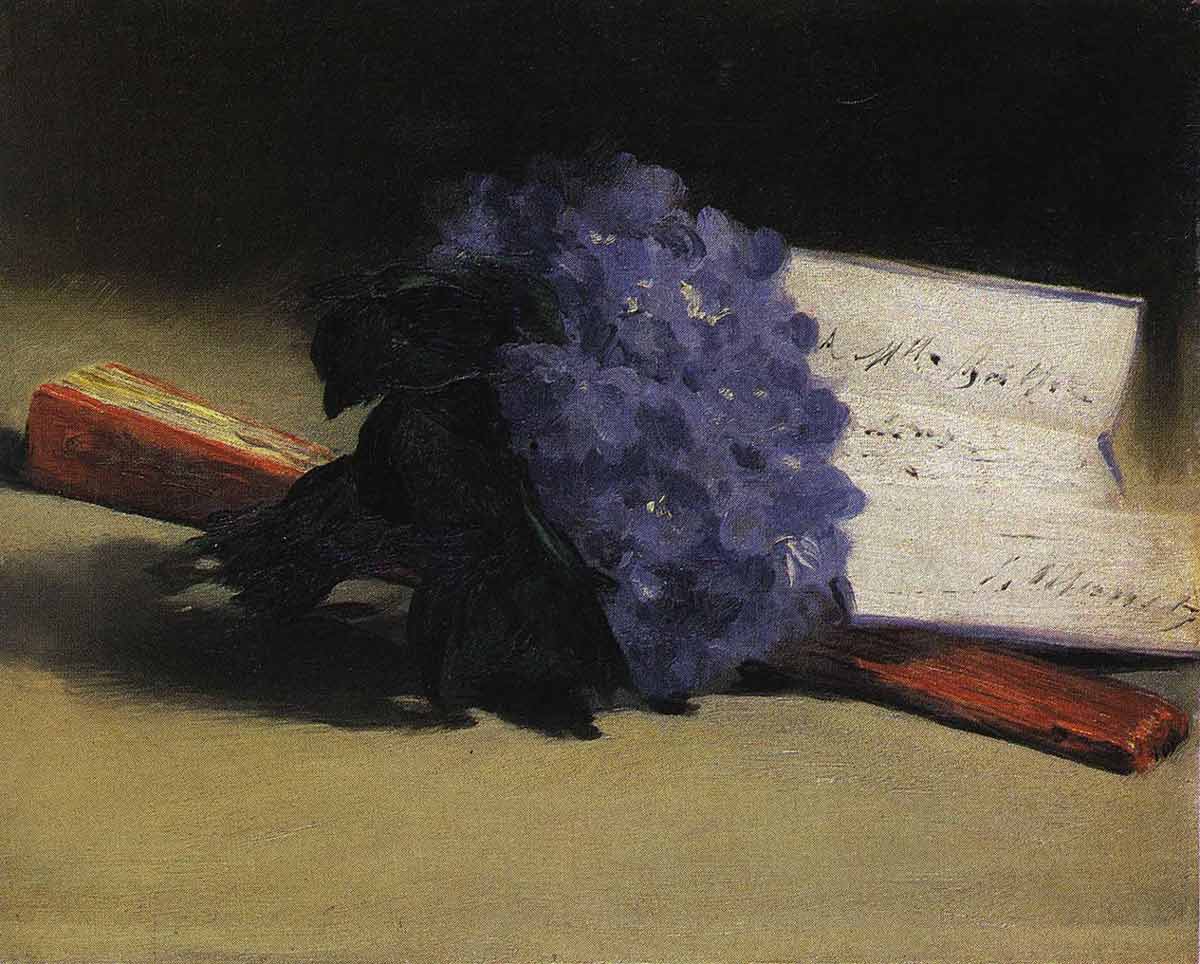
Some art experts believe that the relationship between Morisot and Manet was far more complex than the creative affiliation of the two talented artists. They often use the collection of portraits as proof that the couple hid their true relationship—or, even more tragically, never expressed their feelings to each other. The favorite proof of the theory’s proponents is a small painting by Manet, executed soon after the first hints of Morisot’s relationship with Eugene Manet became obvious. A small still-life showed a bouquet of violets, similar to one of her famous portraits, a fan that appeared in several other scenes featuring Berthe, and a handwritten card on which only her name could be detected.