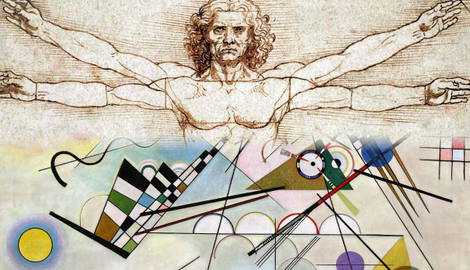

Most frequently, the theoretical basis of art creation is written by art historians and philosophers, who study the progression of art, and its aesthetic and ideological principles. However, some artists occasionally decide to transform their practice into theory and legitimize their approach to art by explaining it with a treatise, an essay, or a lecture. For example, famous artist David Hockney once devised a questionable theory that could explain the outstanding artistic mastery of Renaissance painters.
1. Leonardo da Vinci and His Chaotic Art Theories

The famous Italian polymath left his mark on almost every domain of human knowledge. Leonardo studied medicine, architecture, fortifications, zoology, engineering, and many other disciplines. Da Vinci considered himself primarily a scholar and an engineer. His vast research interests were reflected in his writings about art and art theory. Da Vinci was certainly not the first Italian artist to systematize his knowledge of art, as there were others before him who wrote treatises on proportion, geometry, color, and form. However, his most significant features were the wide scope of his writings—he aimed to connect art and science in every possible aspect—and the overwhelming chaos that reigned within them.
Most of da Vinci’s art theories were scattered around his diaries. Despite the artist’s ambitions to publish an all-encompassing art manual, he was too unfocused and easily distracted. While starting his work on the proportions of a painted human body, he quickly became overwhelmed by physiological complexities and moved on to start a text on anatomy. His own painted work, surprisingly, broke most of the rules he formulated. Leonardo was interested in theory and not in practice and had trouble focusing on one aspect for too long.
2. Albrecht Dürer

The famous German printmaker and painter Albrecht Dürer lived and worked in the conceptual and ideological field of the Northern Renaissance. Artists and creatives of the time were concerned with the theoretical and scientific basis of artistic creation. Dürer was the first German artist to formulate his ideas in writing. In fact, developing a coherent theoretical basis for creative work was the core of Dürer’s professional interests. For him, the desire for knowledge was the main driving force.
The core of Dürer’s theoretical work was the research of proportion. By studying Antique Roman sculptures and real human bodies, Dürer tried to calculate the ideal proportions for a harmonious and balanced figure. He formulated his findings in calculations in two treatises for educating artists: Four Books on Measurement, which focused on geometry, and Four Books on Human Proportion, which explored the methods and techniques of accurately translating the proportions of three-dimensional human figures into two dimensions.
3. Piero Della Francesca

Piero della Francesco was a painter and mathematician who worked during Early Renaissance Italy. He was a talented and well-known artist who eagerly adopted external influences and incorporated them into his unique style. Although he initially painted with tempera, after interacting with his Flemish colleagues, he learned their methods of working with oil and began using both media simultaneously.
Piero della Francesca studied geometry and mathematics and was particularly concerned with perspective. He published treatises on constructing painted perspective, providing not only the theoretical basis but also a series of practical exercises for his readers. His manuals also explained how to rotate three-dimensional figures accurately within the pictorial space to retain the illusion of depth and maintain a recognizable form.
4. Giovanni Battista Piranesi
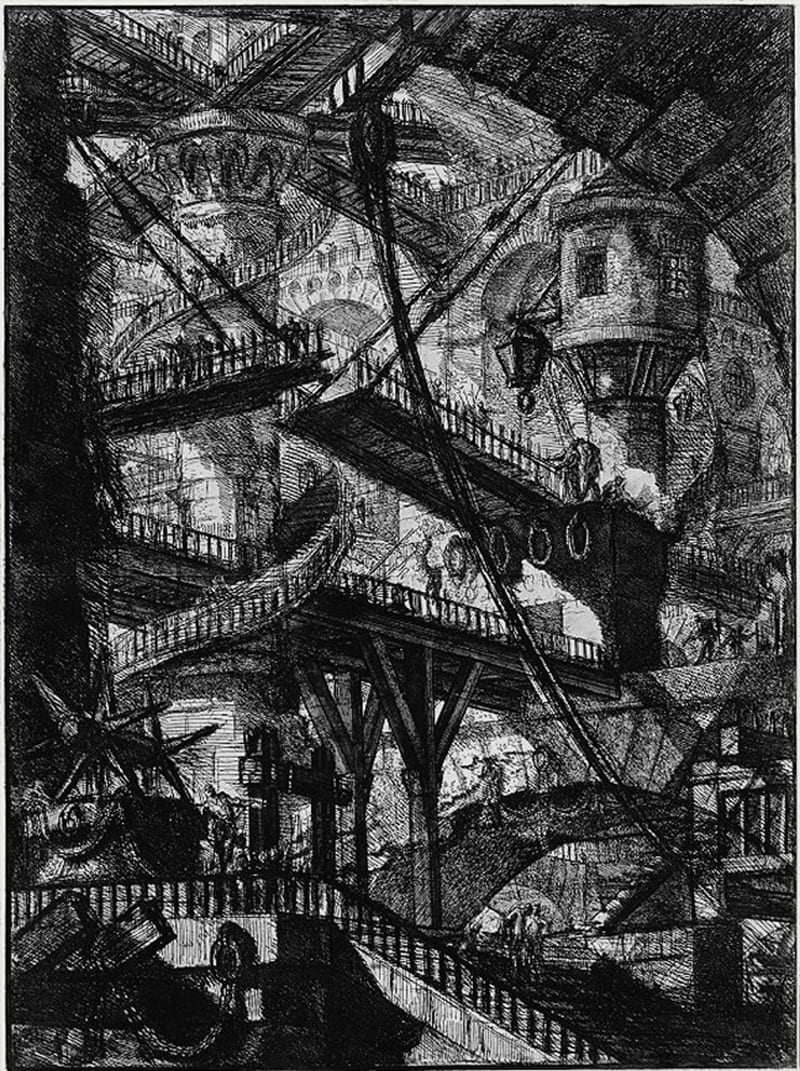
Giovanni Battista Piranesi was an architect who managed to construct only one building during his lifetime. Most of his projects were too complex to be realized and were deeply rooted in Piranesi’s studies of archaeology and culture of Antiquity. His most famous works were fantastic and unsettling images of Imaginary Prisons—stone structures with strange machines and stairs that led nowhere, defying the laws of physics.
Piranesi’s architectural experiments resulted from his manipulation of many aesthetic influences. However, they were all constructed based on Roman architecture. During his travels to Rome, Piranesi studied and measured the city’s most famous ancient buildings and developed his own classification of Roman styles and forms. He believed that the Romans based their architecture not on Greek but on Egyptian style, formulating an entirely new timeline of the historical progression of styles.
5. Wassily Kandinsky
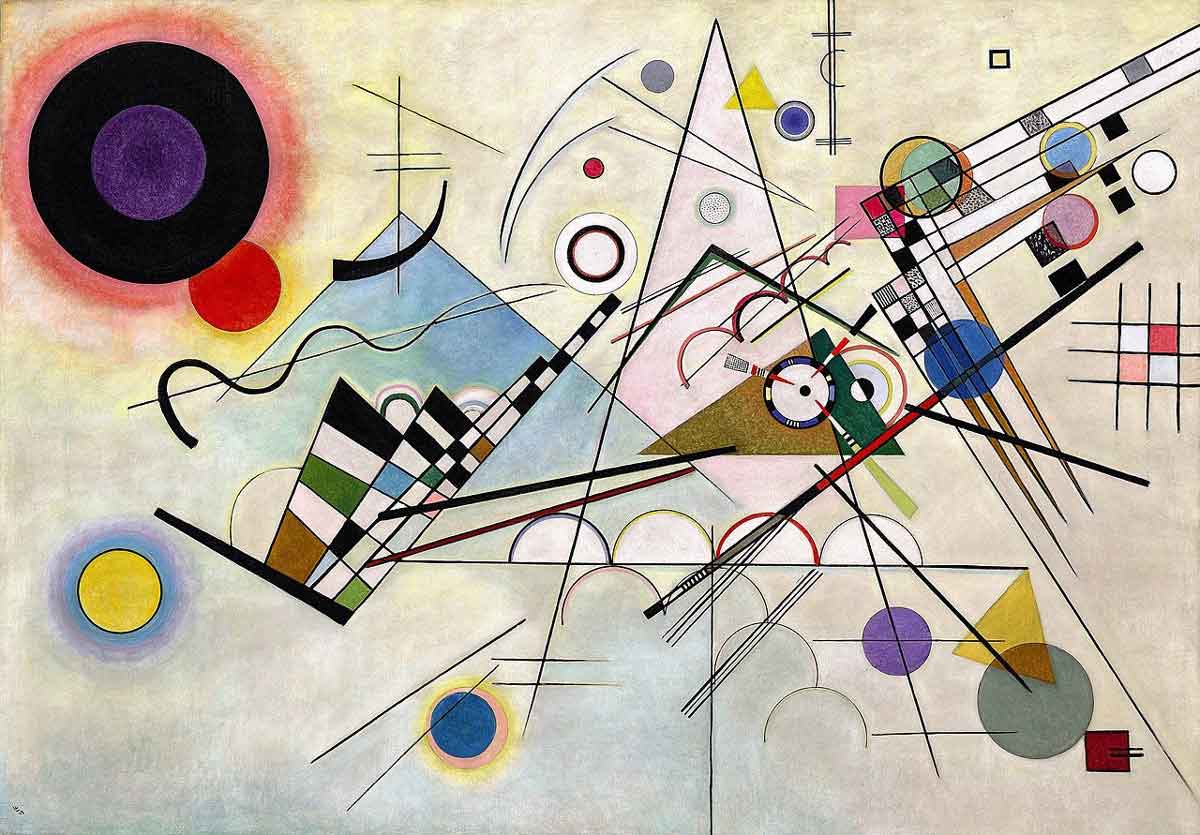
The pioneer of abstraction Wassily Kandinsky became a professional artist only in his forties. Although he had practiced art before, his main occupation was law. Perhaps, as a practicing lawyer, Kandinsky developed a habit of formulating and defending his ideas in verbal and written forms. That skill later led him to publish a series of works that explained his approach to art and his belief in the necessity of abstract art for the development of humanity. In his famous essay Concerning the Spiritual in Art, he explained how pure color and pure form can affect the human soul, evoking emotions and non-physical experiences.
6. Kazimir Malevich

In the era of Kandinsky and Malevich, the act of writing a theory to justify one’s approach to art was not entirely unusual. The art world was swarming with manifestos, treatises, essays, lectures, and other forms of written or spoken apologies. Still, Kazimir Malevich was one of those who went further than most. He first became famous while working in the Cubofuturist style, which blended the geometry of Cubism with Futurist dynamism.
In 1915, Malevich developed Suprematism, a painting style that relied on simple geometric forms of primary colors. Several years later, he published The Non-Objective World, which expressed the reasons and principles of the new movement. According to Malevich, Suprematism was the logical continuation of Impressionism and Neoprimitivism. It took the final step of freeing the painted surface from the confines of meanings, symbols, and expressions.
7. Piet Mondrian
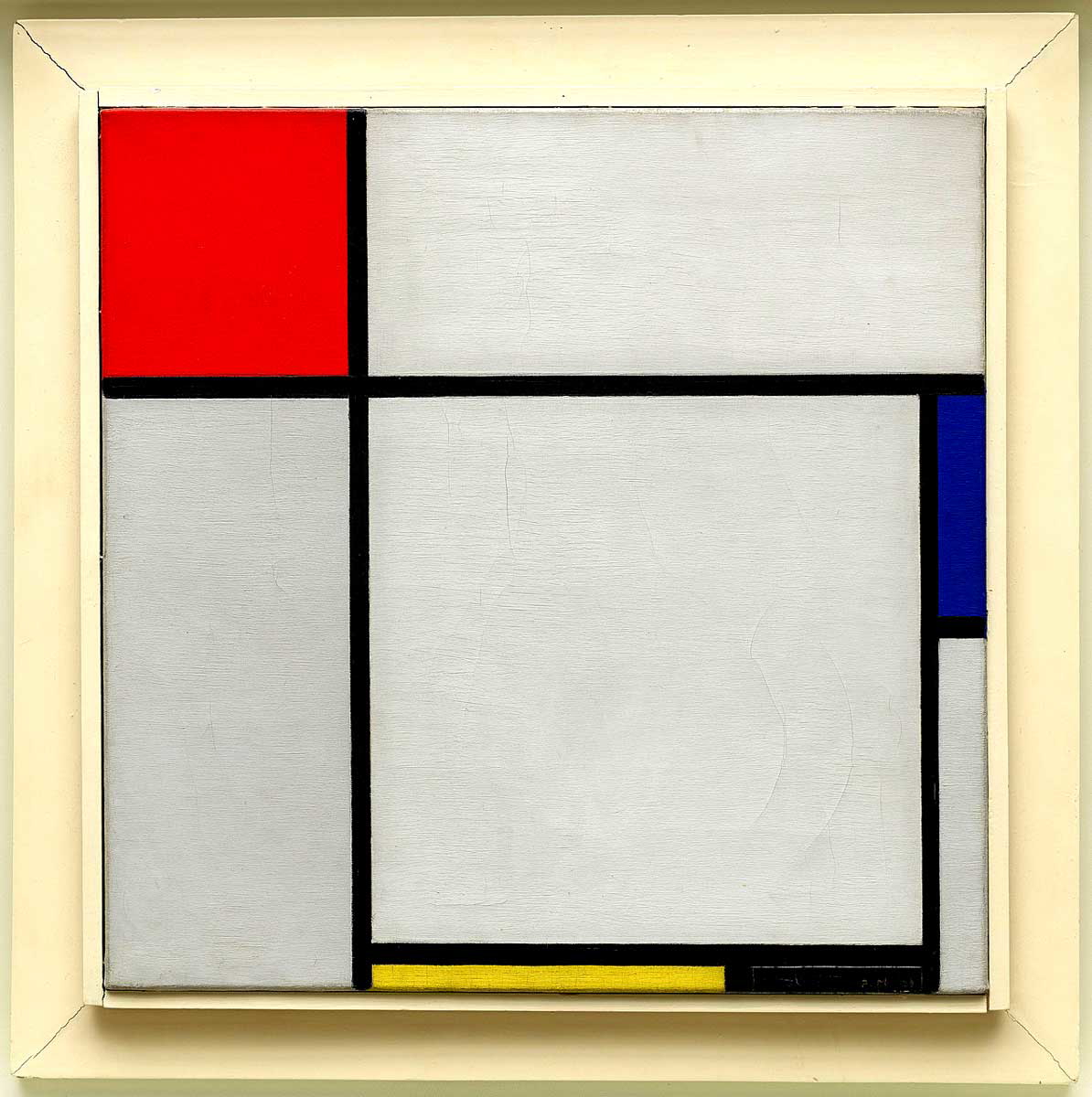
In 1917, Dutch abstract painter Piet Mondrian developed an art theory of Neoplasticism that combined spiritualist teachings of Theosophy and strict Calvinist faith. Mondrian insisted that all works of art were created intentionally and thus represented collections of artistic decisions rather than accurate representations of objects. He also believed that every concept, idea, or event could be reflected through the basic natural act of antagonism—the horizontal line of the Earth’s surface hit by the vertical light coming from the Sun’s center. To free art from the limitations of interpretations, cultural differences, and imitations of reality, Mondrian suggested using only verticals and horizontals painted with primary colors, arranged according to the desired visual rhythm and tension between the colored fragments.
8. Paul Klee

One of the most famous Bauhaus teachers, Paul Klee was a multi-faceted and deeply intellectual artist who studied and experimented with many theories on color and form. During World War I, he experimented with applying modern art to aircraft camouflage, painting planes in Expressionist and Fauvist styles.
In Bauhaus, Klee mostly taught his students composition. He developed his own approach based on the concept of a thinking eye—the way of perceiving and understanding visual forms. In his published lectures, Klee expressed the natural connection between abstract forms and feelings, introducing it in the form of visual poetry. He insisted that true art did not reproduce the visible but rather made the invisible evident.
9. Laszlo Moholy-Nagy
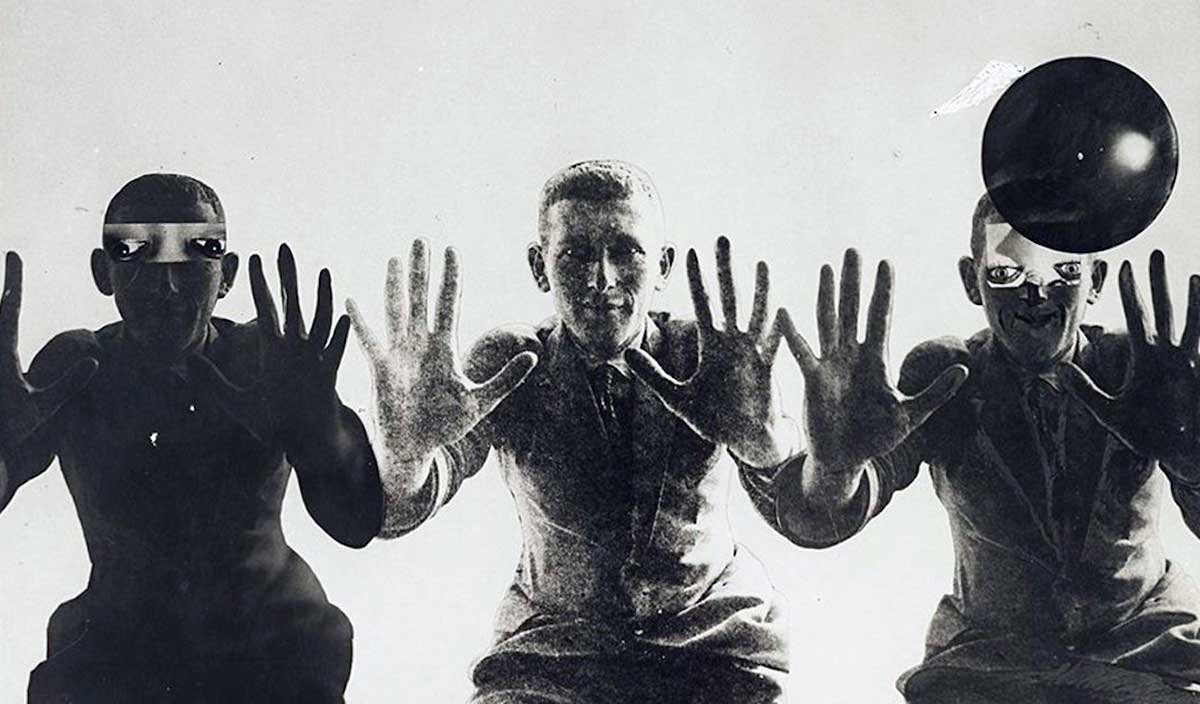
Like Kandinsky and Klee, Hungarian artist Laszlo Moholy-Nagy was a Bauhaus professor, but unlike them, he focused his efforts on photography. By the 1920s, photography was already deeply ingrained into Western culture and needed new directions to develop. Moholy-Nagy was one of the inventors and advocates of the New Vision movement, which regarded photography as an independent medium, loosely related not only to other visual art forms but to the physical reality. The New Vision ideology promoted abstract photography, the use of photomanipulation, montage, experimental techniques, and elements of typography.
Laszlo Moholy-Nagy inverted the traditional direction of artistic development. Instead of making photography depend on the laws of painting and sculpture, he encouraged painters to develop a photographic vision that would manifest itself in painting, giving it unique modern properties.
10. David Hockney: The Unlikely Theory of a Famous Pop Artist
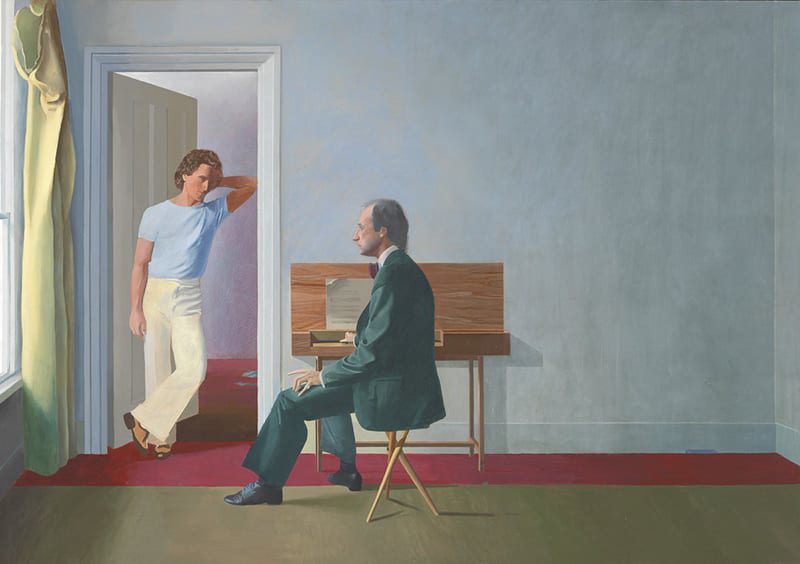
In 1999, painter David Hockney, known as one of the key figures in Pop Art, made a surprising contribution to his field of work. Unlike other artists who published theories related to their own artistic choices, Hockney went further. As an artist frequently criticized for his supposedly low skill, Hockney studied the works of the Early Renaissance masters, known for their incredible realism and intricate detail. After thorough research, he suggested that this complexity was rarely a result of great skill and, more frequently, of the use of optical instruments, such as camera obscura, that created reversed projections of images and curved mirrors. However, the theory was not accepted well by art historians, who claimed Hockney ignored a major segment of historical evidence and the history of perspective studies.