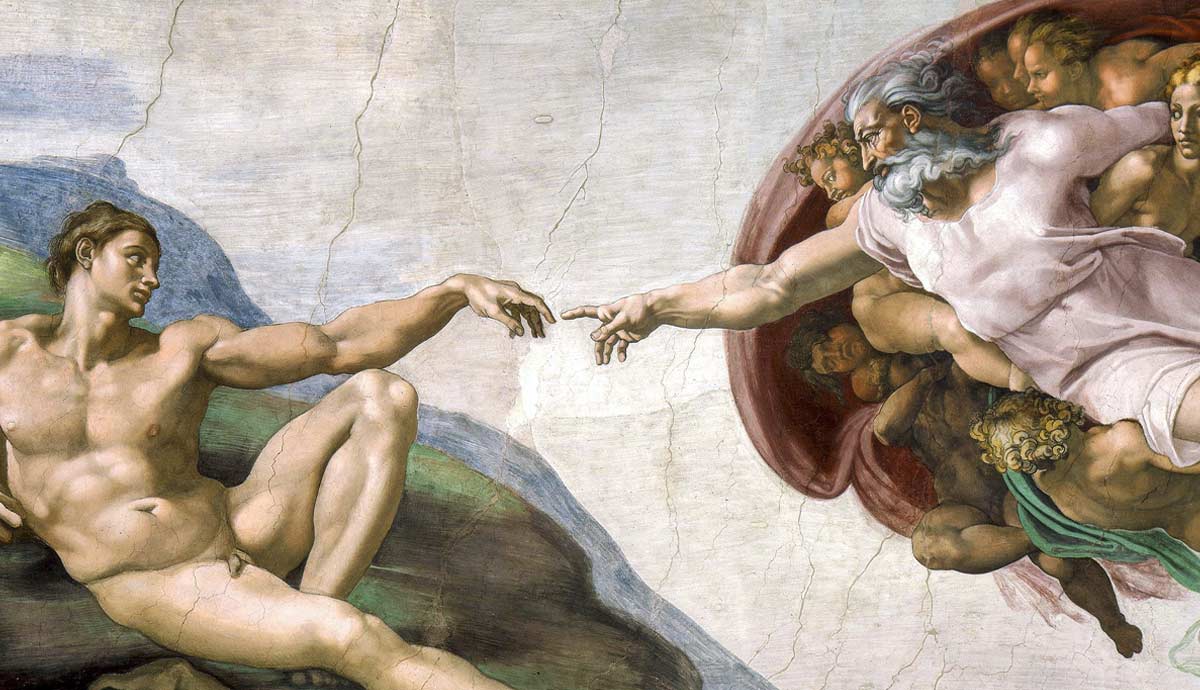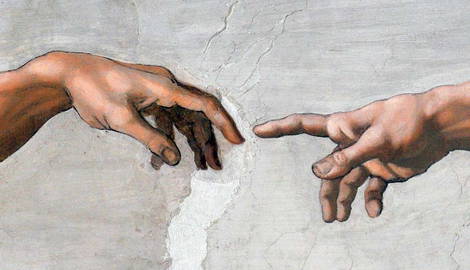

Michelangelo’s Creation of Adam is one of the nine central scenes of the Sistine Chapel in the Vatican and dates between 1508 and 1512. The fresco captures the charged moment before the divine contact, where God imparts life to Adam. The detail with the almost-touching hands symbolizes human existence and is one of the most recognizable scenes of Renaissance art. Discover in the article the multiple layers of meaning and hidden secrets of the fresco through theological symbolism, Neoplatonic ideas, and possible hidden anatomical references!
The Sistine Chapel and Michelangelo’s Frescoes
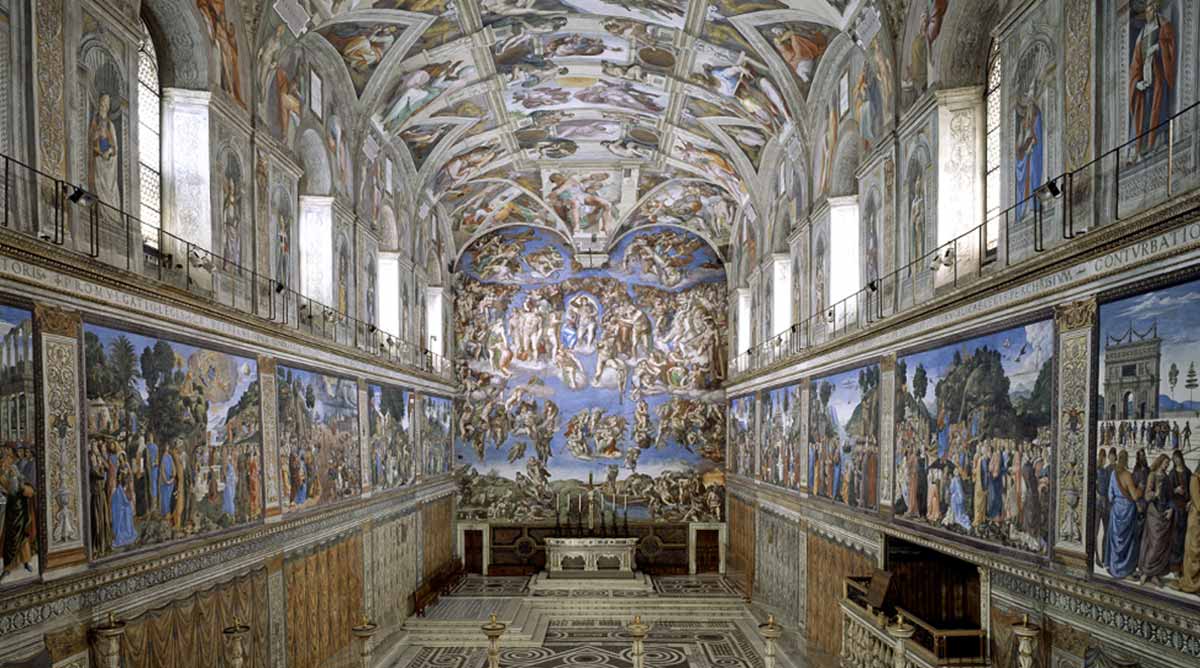
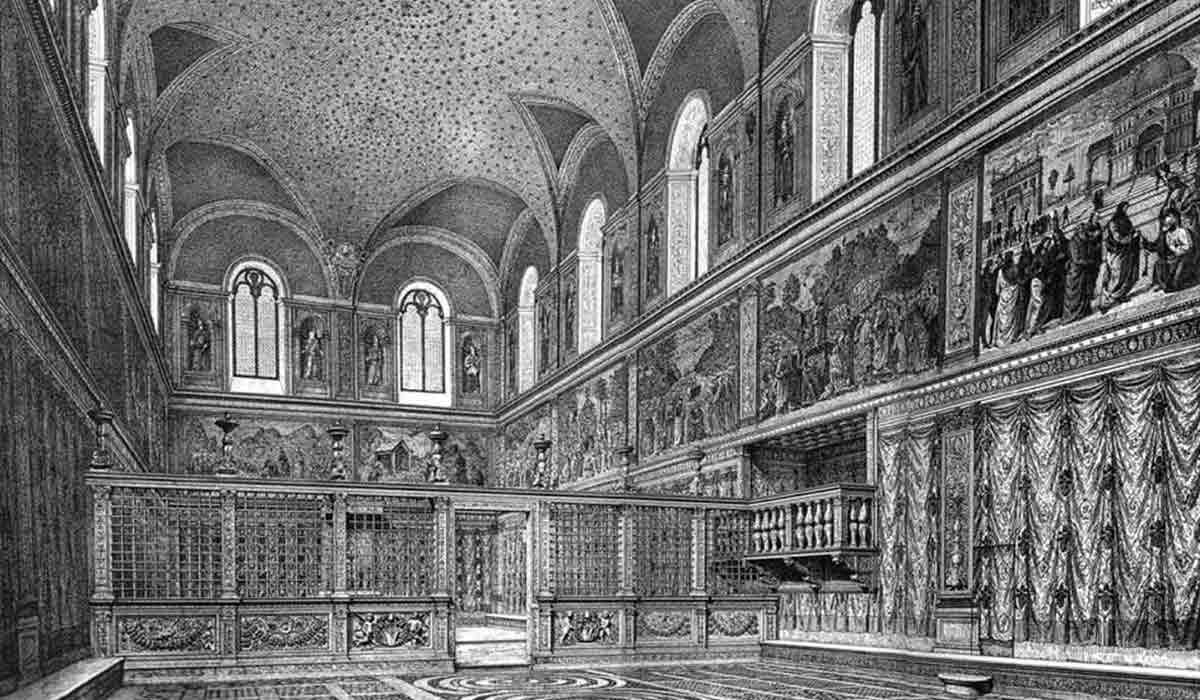
Between 1475 and 1482, Pope Sixtus IV commissioned the architect Baccio Pontelli to reconstruct the former papal chapel of Nicholas III. The building was subsequently renamed the Sistine Chapel: Cappella Sistina. The chapel was dedicated to the Virgin Mary, as Pope Sixtus IV was a strong advocate of the doctrine of the Immaculate Conception. Beyond its liturgical function, the chapel was intended to host, and continues to host to this day, the conclave of cardinals for the election of the Pope.
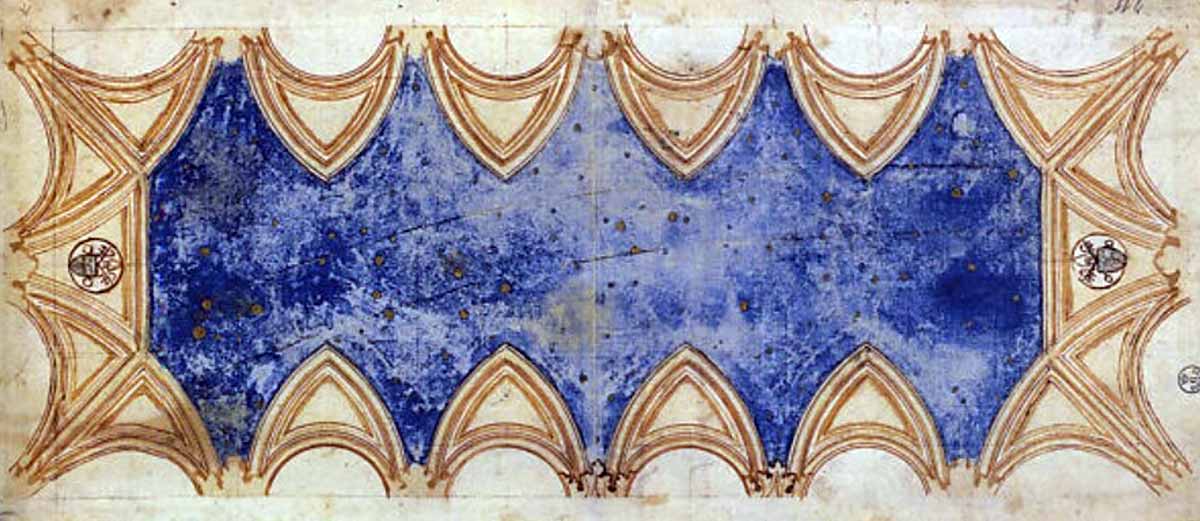
In 1481, three prominent Florentine painters (Sandro Botticelli, Domenico Ghirlandaio, and Cosimo Rosselli) and an Umbrian (Pietro Perugino), were invited to Rome to execute the pictorial decoration of the chapel. The initial program included papal portraits and narrative cycles depicting the lives of Moses and Christ, while the ceiling was painted as a blue-starry sky by Pier Matteo d’Amelia, a 15th-century Umbrian painter.
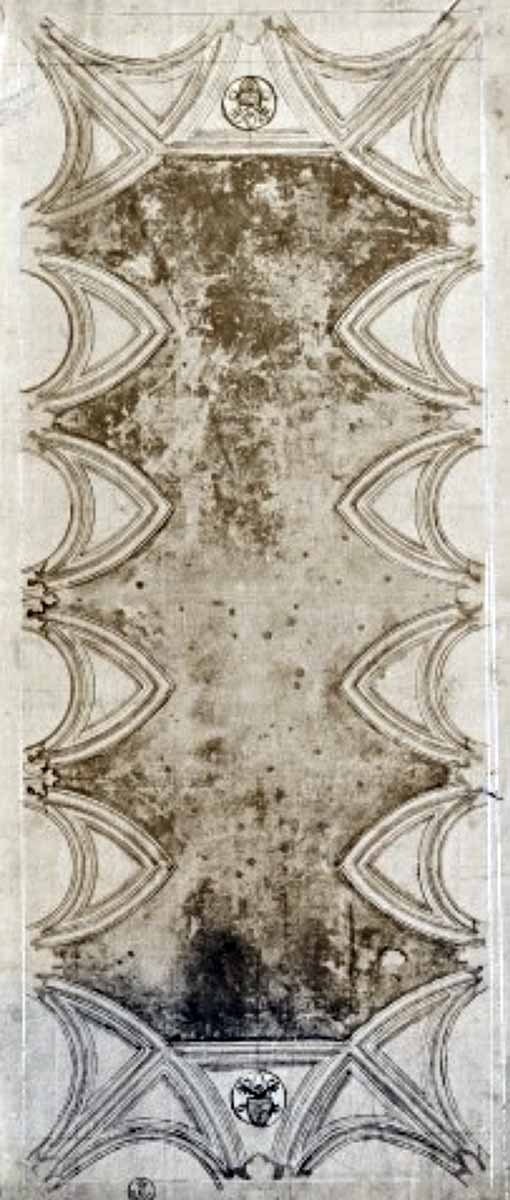
On the 10th of May in 1508, Pope Julius II commissioned Michelangelo to undertake the new decoration of the ceiling. Michelangelo initially hesitated, regarding himself primarily as a sculptor (despite having already produced works such as the Doni Tondo) and lacking prior experience in fresco painting. He finally accepted the commission. Initially, he intended to work within the existing architectural framework; however, he soon abandoned this approach in favor of a more complex and ambitious iconographic program. Rather than a simple depiction of the Apostles, he chose to represent scenes from Genesis, framed by prophets, sibyls, and the ancestors of Christ.
For more than four years, Michelangelo worked with extraordinary intensity. With minimal assistance, he allowed no one to observe the progress of his work. In 1511, Pope Julius II, impatient to witness the results, ordered the partial removal of the scaffolding. When he attempted to comment, Michelangelo responded with notable firmness, leading to a new conflict between them.
Iconography Program of the Sistine Chapel Ceiling
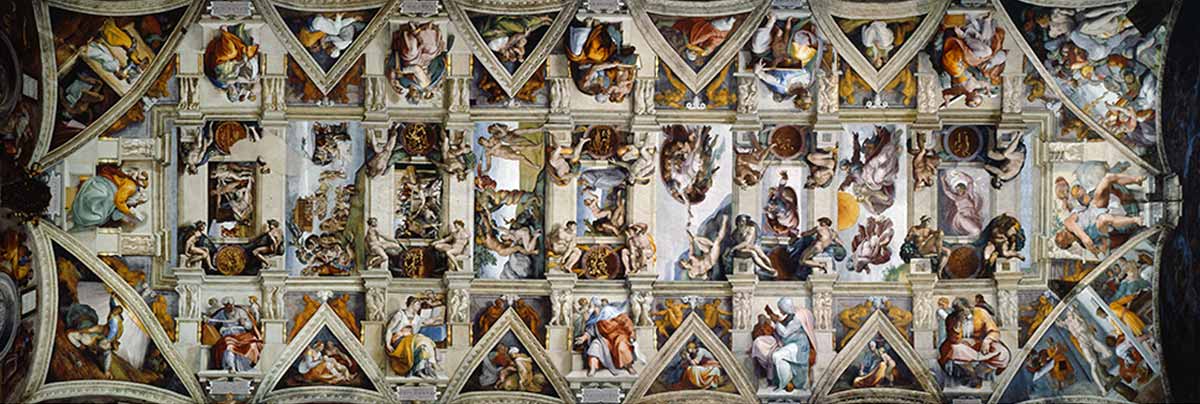
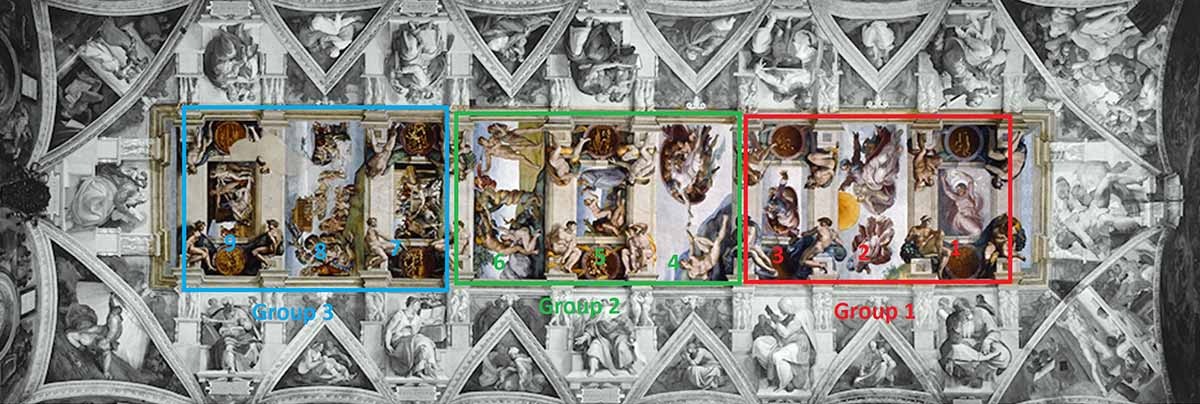
The central scenes of the ceiling consist of nine narrative scenes divided into three groups. Group one features the Separation of Light from Darkness (Genesis 1:1-5), the Creation of the Sun, Moon, and Planets (Genesis 1:11-19), and the Separation of Land from Sea (Genesis 1:9-10). Group 2 consists of the Creation of Adam (Genesis 1:27), the Creation of Eve (Genesis 2:18-25), and the Temptation and Expulsion from Paradise (Genesis 3:1-13, 22-24). Group 3 features the Sacrifice of Noah (Genesis 8:15-20), the Flood (Genesis 6: 5-8, 20), and the Drunkenness of Noah (Genesis 9:20-27).
The central scenes refer to the creation of the universe and the history of humanity, according to the Old Testament. These themes are framed by seated Prophets and Sibyls, figures believed to have foretold the coming of the Messiah. Michelangelo’s intention to elevate the human spirit, combined with the mystical dimension of religious subject matter, appears to have been further developed during the four years of work, reflecting the philosophical atmosphere of Renaissance Neoplatonism.
The earlier scenes in Group 1 are characterized by narrative detail and compositional richness. In contrast, the next scenes, such as the Creation of Adam, emphasize essential forms: the main figures are monumental in scale, with enhanced plasticity. Here, Michelangelo synthesizes his entire artistic knowledge, drawing upon his sculptural experience.
For Giorgio Vasari, Michelangelo’s achievement represented the nec plus ultra. “No painter,” he wrote, “needs to concern himself with new poses, new methods of drapery, new ways of expressing the marvelous in art. One only needs to look at a face painted by Michelangelo to see every conceivable perfection.”
The Creation of Adam
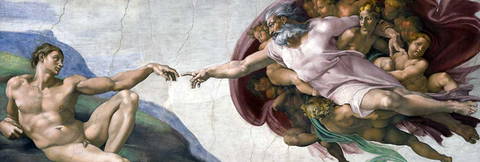
He then went on, beyond that scene, to the Creation of Adam,
wherein he figured God as borne by a group of nude Angels of tender age,
which appear to be supporting not one figure only, but the whole weight of the world; this effect being produced by the venerable majesty of His form and by the manner of the movement with which He embraces some of the little Angels with one arm, as if to support Himself, and with the other extends the right hand towards Adam, a figure of such a kind in its beauty, in the attitude, and in the outlines, that it appears as if newly fashioned by the first and supreme Creator rather than by the brush and design of a mortal man.
Lives of the most eminent painters, sculptors, and architects by Giorgio Vasari
The Creation of Adam depicts the moment in which God imparts divine life to the first human being. God, as the Creator, appears to emerge from infinity, enveloped in a vast mantle beneath which a group of nude angels can be discerned.On the opposite side, Adam lies upon the earth, set against a landscape of green vegetation and a strip of blue sea. God extends His right hand, the index finger directed toward Adam’s hand without making contact: a gesture charged with tension and profound symbolism.
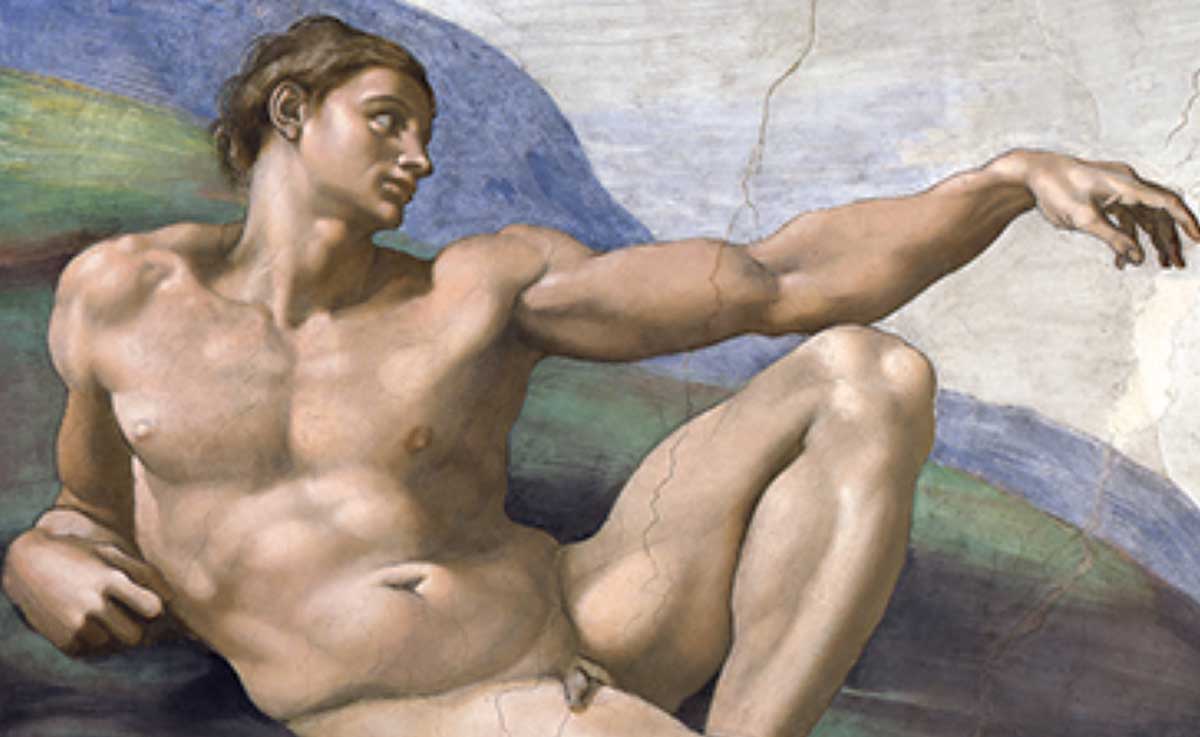
The detail of “the fingers almost touch” serves as a recurrent symbol of divine creation in both art and poetry.
As Benjamin Blech (2009) observed:
“… here we see Adam, the first man, just formed from the dust of the earth […] not only Adam here, but according to both Neoplatonic and Kabbalistic thought, Adam Kadmon, the primordial man, the model of all human life and the microcosmic model of the universe. We also see God here […] in the role of Creator; he who created Adam creates all of us. Michelangelo’s depiction of God in this scene has sparked intense discussion and questions over the centuries.”
Multilayered Readings/Meanings of the Creation of Adam’s Figures
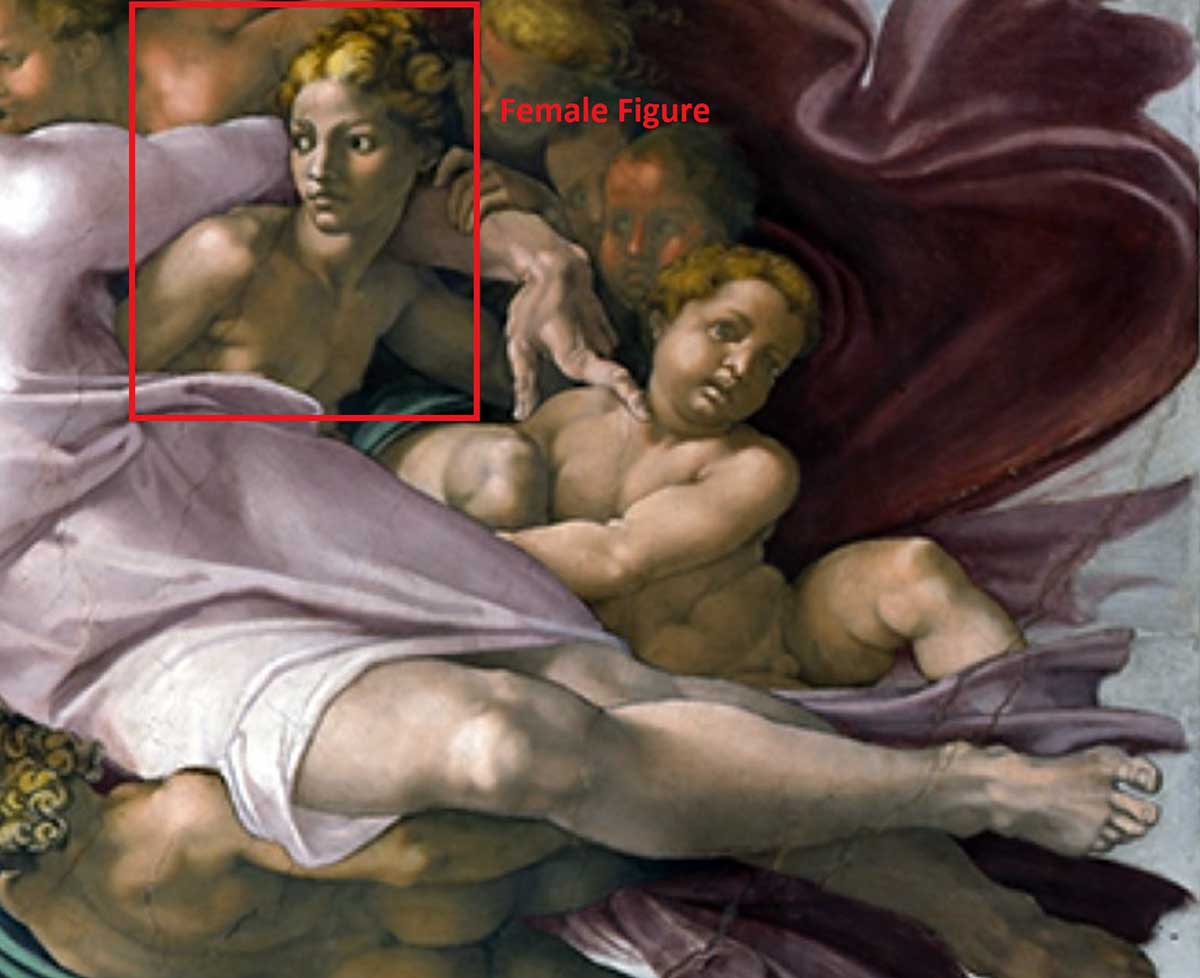
Who is the young woman beneath God’s left arm? What does the infant beneath His hand represent? What is the role of the boy on the right, in direct contact with the Creator? Why is God surrounded by so many figures that appear to support Him in mid-air? And what accounts for the extraordinary complexity of the composition?
Two principal interpretations have been proposed. According to the first, the figure represents Eve, or the soul of Eve, awaiting her counterpart, Adam. The second interpretation associates her with the Neoplatonic concept of Wisdom, influenced by Kabbalistic thought. At the same time, Eve has been interpreted as a symbol of the Virgin Mary, the ideal woman, embodying the purest expression of the feminine principle included in the doctrine of the Immaculate Conception.
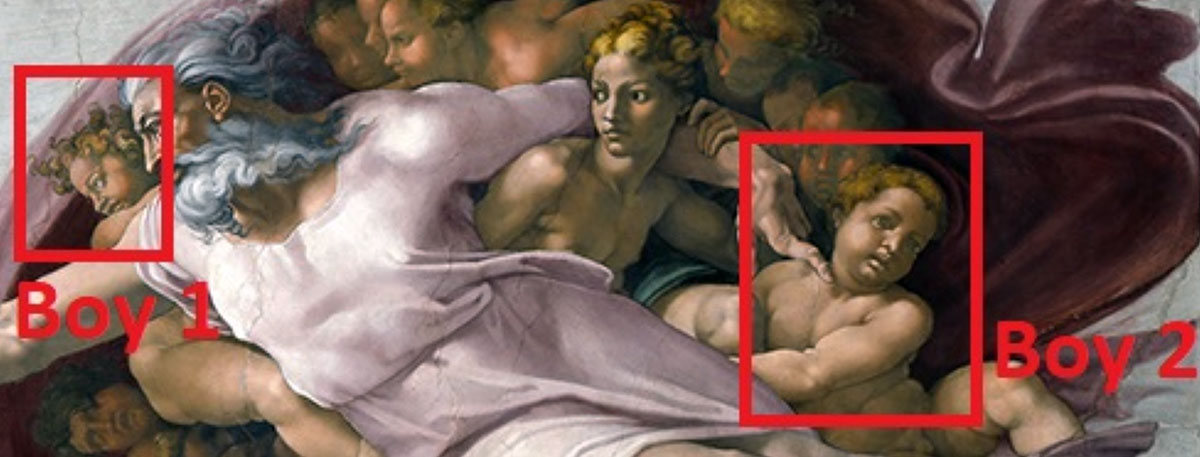
The two child figures are also subject to multilayered readings. The infant beneath His left hand (figure 2) is in contact with the female figure. Maybe it is associated with the concept of maternity. Moreover, the boy, the young woman, and the male figure beneath God’s right leg form a symbolic representation of family. The other boy nearest to God (figure 1) is seen either as His Son, implying the presence of the Holy Trinity, or as the soul of Adam.
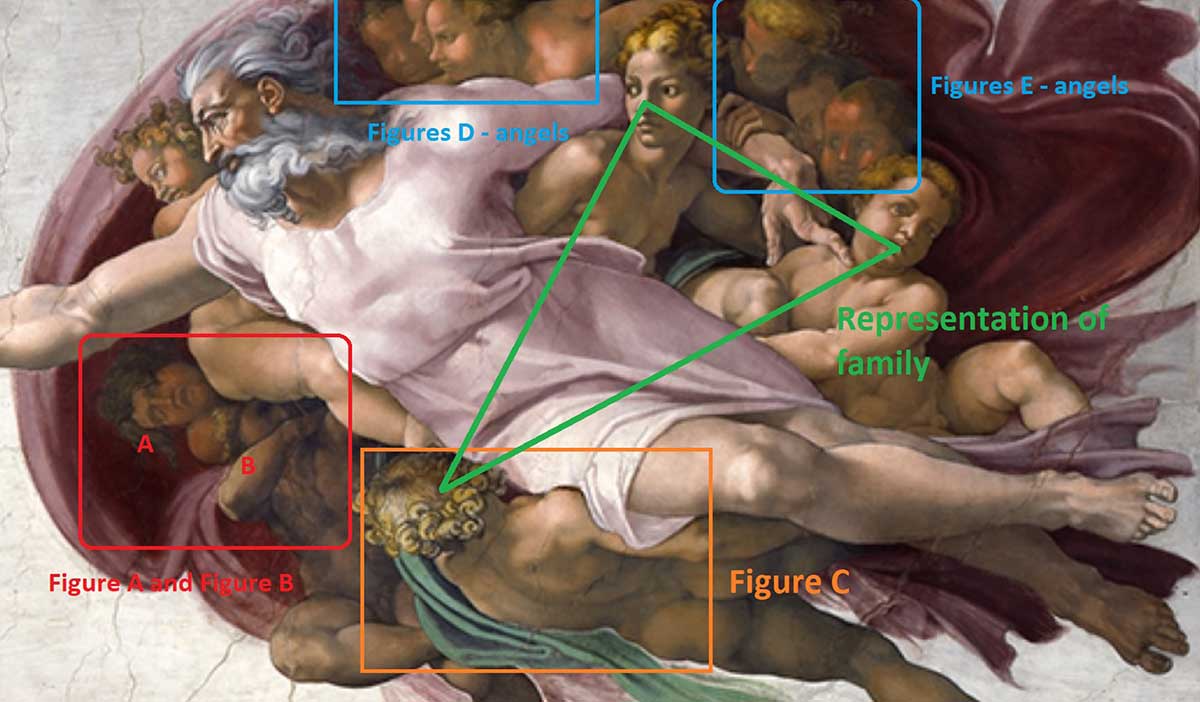
The central figure beneath the Creator (figure A) has a darker tone and remains within God’s shadow. Its face turns away from Adam, and some scholars interpret it as a demonic figure. Behind it, a second figure (figure B) with closed eyes has been similarly interpreted as demonic, incapable of withstanding divine presence and energy. The third figure (figure C) is seen from behind and has a green garment. As mentioned, it may represent the male form of the symbolic representation of the family. Moreover, the green color of the garment, associated with nature and earth, may reference the material origin of humanity, as Adam is formed from soil. As far as the three figures positioned above God’s left shoulder (figures D) and the other three behind His left arm (figures E), they may correspond to the six angels associated with the six days of Creation.
The Hidden Anatomical Hypothesis
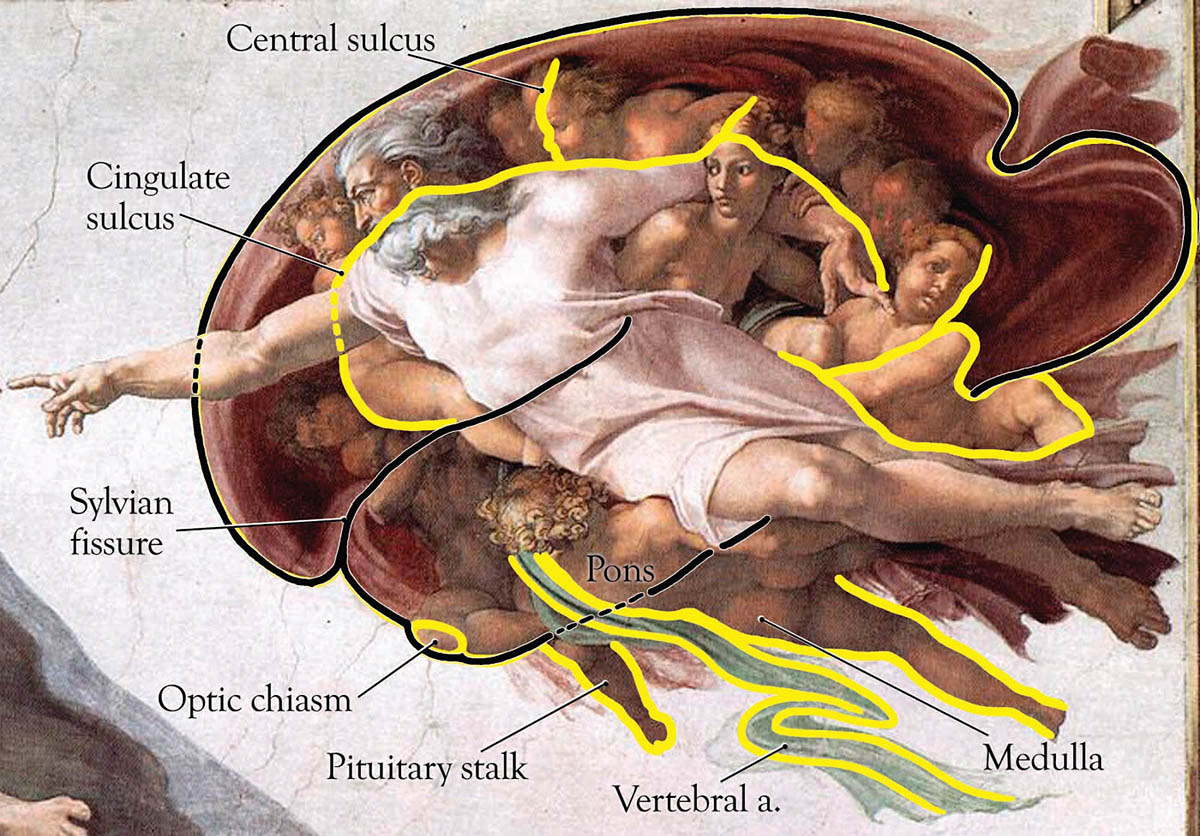
According to an interpretative approach, this complex depiction of god may conceal anatomical references. The surgeon Frank Meshberger observed striking similarities between the composition of the fresco and the human brain. Specifically, he argues that the composition surrounding God resembles a mid-sagittal section of the human brain. Examining the shape of the mantle and the surrounding spatial configuration, he identified elements resembling major brain structures such as the cerebral hemispheres, cerebellum, occipital lobe, cortex, and brainstem. Based on this, Michelangelo may have encoded a symbolic representation of a “hidden brain” within the image of God. In this perspective, the scene of the Creation of Adam functions not only as a theological representation but also as a scientific statement, combining knowledge, science, mystery, and perhaps even a spiritual self-representation…
The Defining Moment in Michelangelo’s “Creation of Adam”
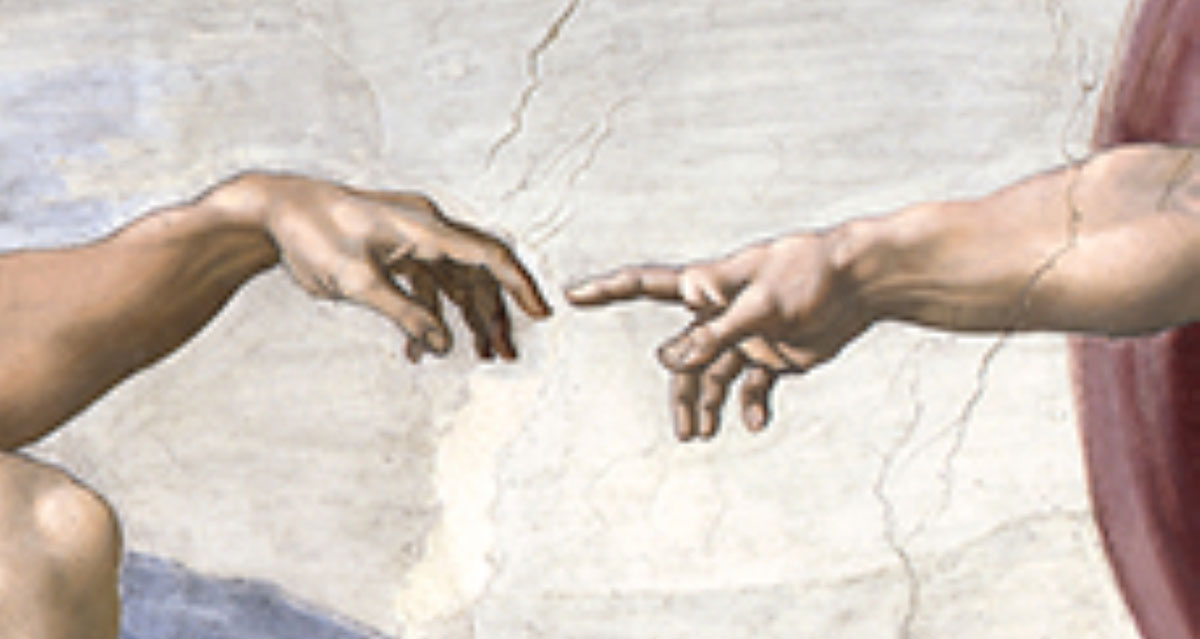
The defining moment in the Creation of Adam is that of the almost-touching fingers of Adam and God. It is indeed this small gap between them that adds tension and transmits “the unique moment of the beginning of life” in a very special way. Adam’s lifeless hand contrasts with the divine hand of the Creator. As Ernst Gombrich observed, the Creation of Adam stands out for its simplicity and expressive power: nothing distracts from the central gesture.
It is no coincidence that this image is one of the most widely recognizable scenes of Renaissance art, completely connected to the creation of man. That is why it has been used to this day as the ultimate symbol of human existence and reproduced in every possible way, celebrating the divine gift of life.