
Sandro Botticelli is one of the most renowned Florentine painters of the Renaissance. A defining characteristic of Botticelli’s painting is its “revelatory” power. His works are rich with contradictions and layered meanings. They reflect aspects of Medici society in 15th-century Florence. At the same time, they engage with Neoplatonic theory through their mythological themes. Let’s uncover the secrets of Botticelli’s “The Birth of Venus”!
Who Was Sandro Botticelli?
Sandro Botticelli apprenticed with Filippo Lippi, who exerted the greatest influence on his style. He spent almost his entire life in Florence, making only one significant journey in 1481 to Rome. Pope Sixtus IV entrusted him, alongside Ghirlandaio, Perugino, and Cosimo Rosselli, with the decoration of the Sistine Chapel. The fact that he was summoned to Rome for such a commission confirms his notable reputation.
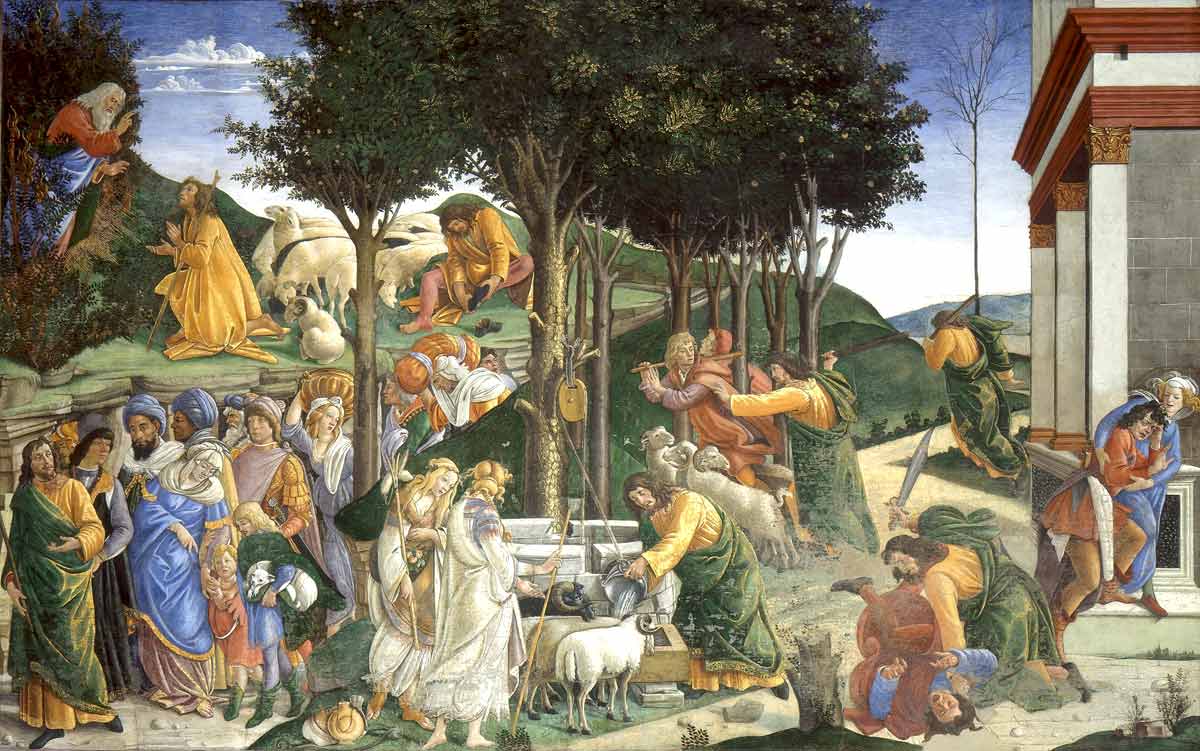
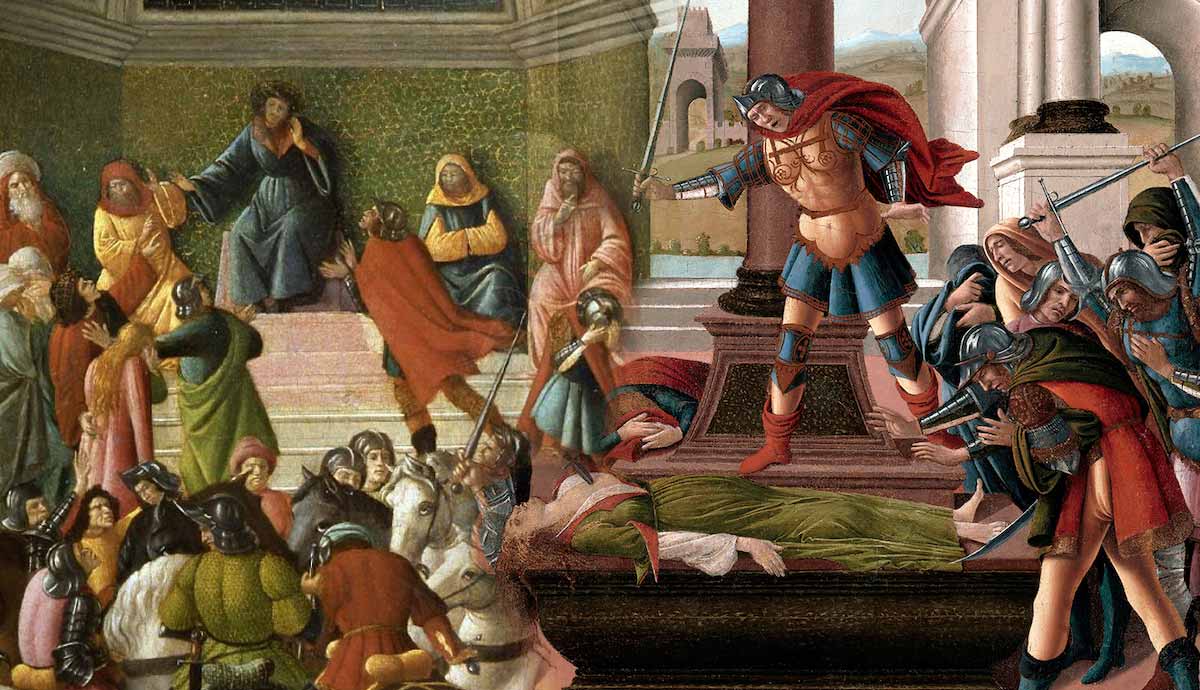
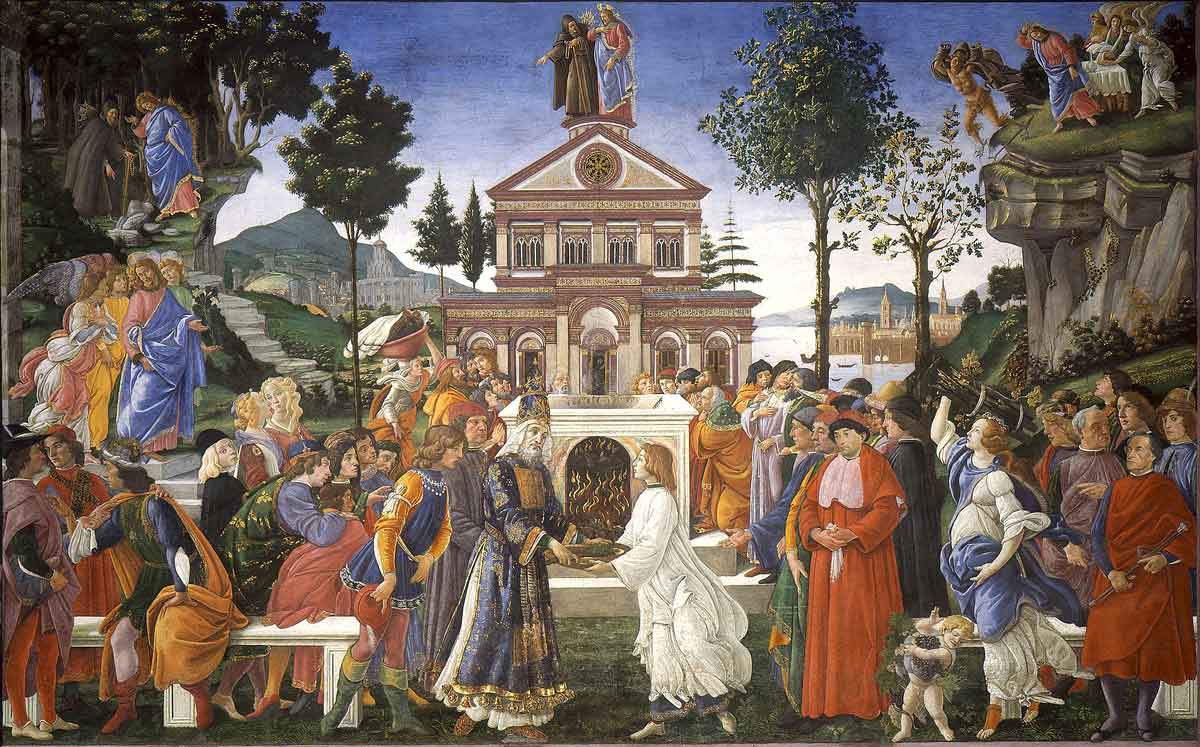
The pope assigned Botticelli an iconographic program that involved decorating two facing walls with scenes from the life of Moses and the life of Christ, along with episodes from the Old and New Testaments. Three frescoes—highly complex and densely populated compositions—survive from Botticelli’s hand, revealing the influence of ancient works he encountered in Rome (Scenes from the Life of Moses, The Temptations of Christ, and The Punishment of the Rebels).
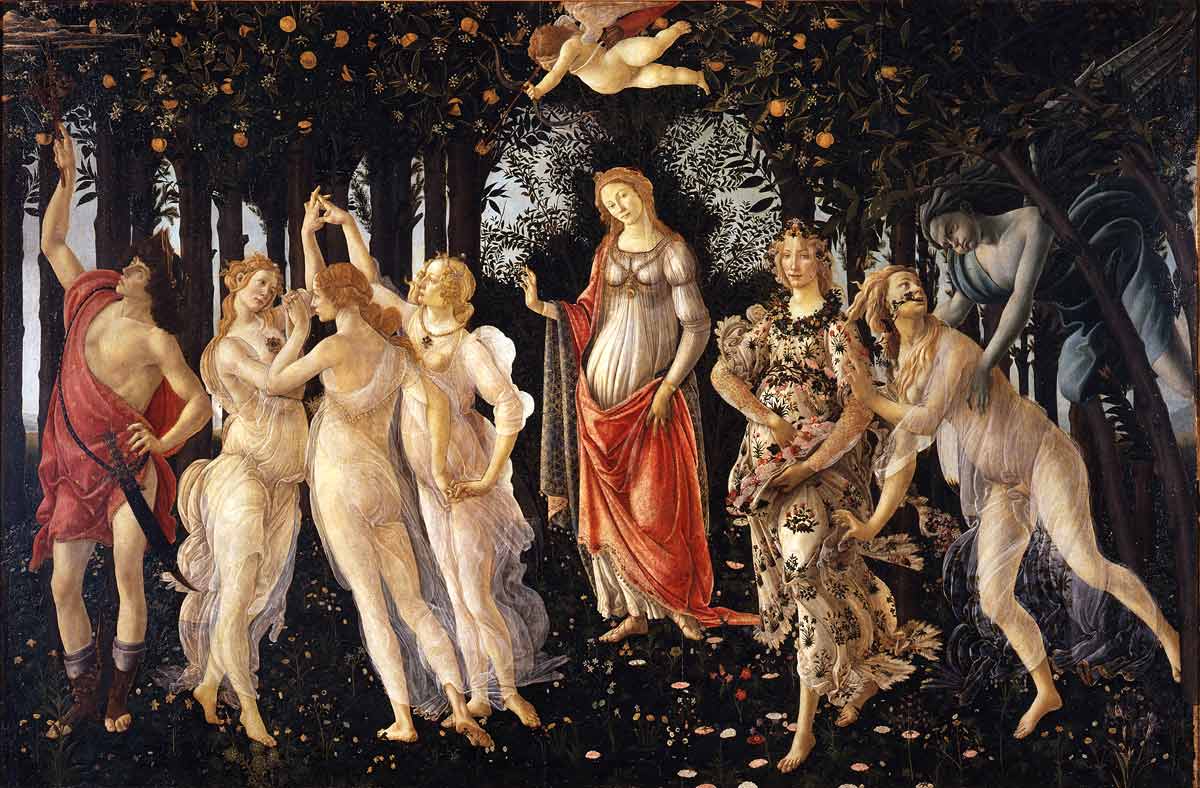
Upon returning to Florence, Botticelli had consolidated his personal style. He then produced a series of impressive works. These include the celebrated allegorical paintings, mostly based on mythological themes, which he created after the mid-15th century. Among them, stand out The Birth of Venus (1484–1485) and Primavera (1478), now exhibited in the Uffizi Gallery in Florence. The popularity of these works, more than five centuries after the painter’s death, is striking and universally testifies both to their aesthetic value and to Botticelli’s enduring appeal in the history of art.
Opinions on Sandro Botticelli
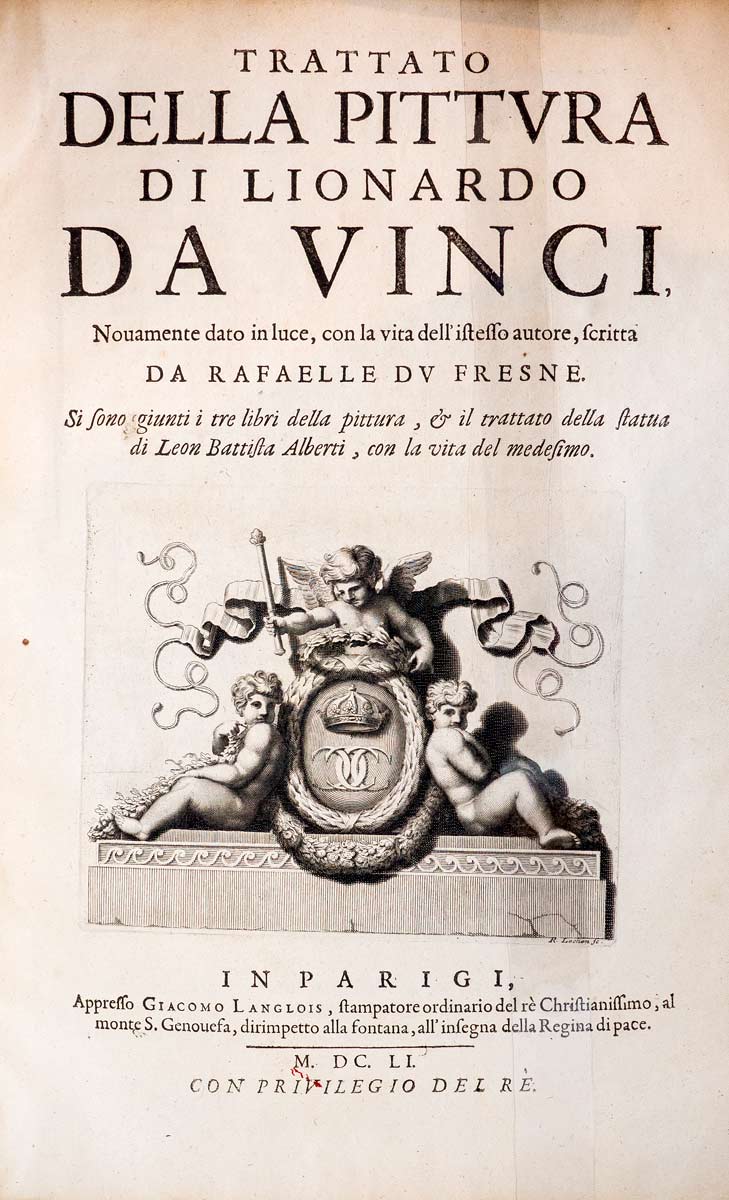
Sandro Botticelli is the only painter of his era mentioned by Leonardo da Vinci in his Treatise on Painting. On the other hand, Giorgio Vasari, in his Lives of the Artists, was the first to attempt to explain the contradictory nature of the artist’s oeuvre as a reflection of the contradictions of his own life. Referring to the artist, he explicitly confirms Botticelli’s reputation as well as his admiration for him, attributing to him characterizations such as “affected” and “eccentrically ingenious.” Yet it is interesting that, at the beginning of his biography, he reproaches Botticelli for his inability to manage the wealth he acquired through his work, so that he would not suffer in the final years of his life.
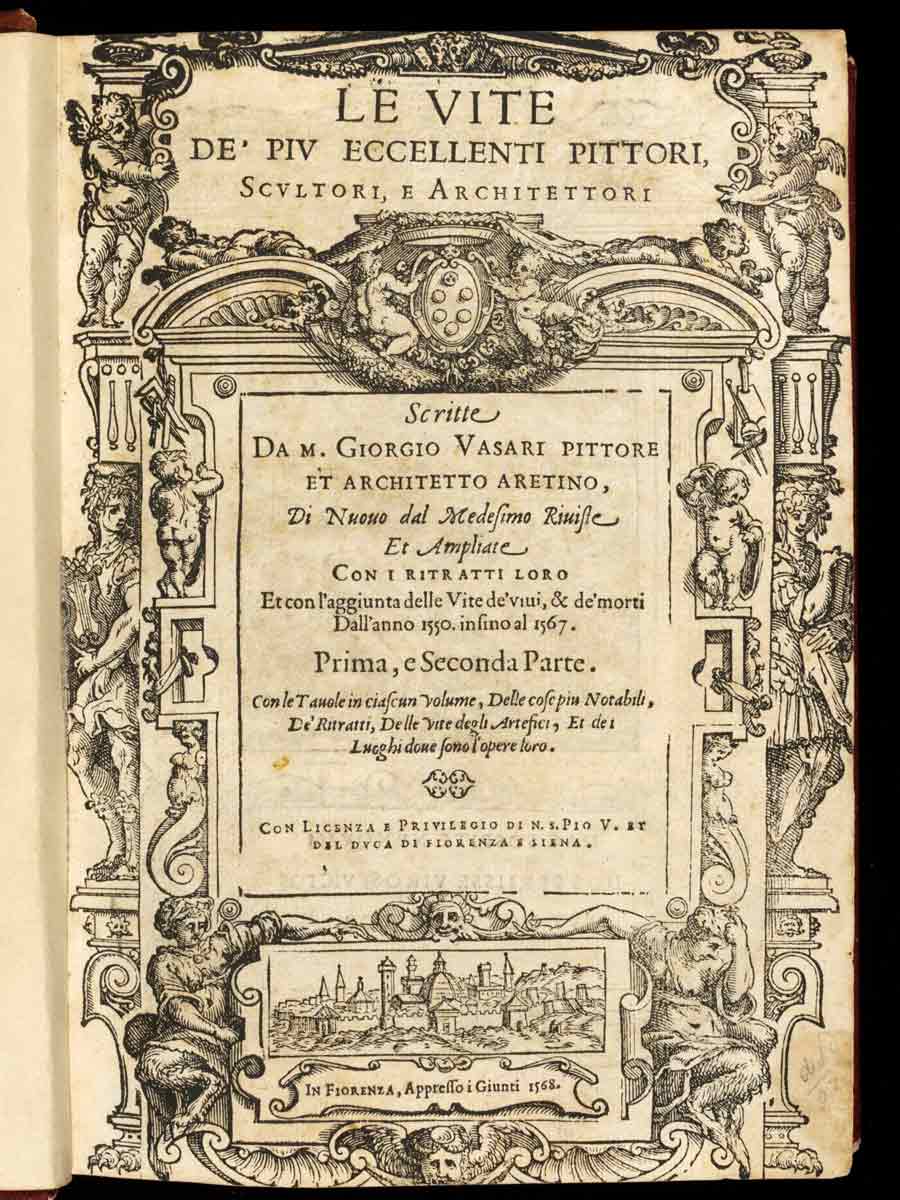
For centuries, a large number of scholars emphasized his Neoplatonism, perhaps suppressing all other aspects of his work. Botticelli was highly regarded during his lifetime, receiving many commissions from the Medici. However, his fame did not last after his death. In the following centuries, until the mid 19th-century, he was virtually unknown. Some referred to his works as merely “graceful.” During the Neoclassical period, matters did not improve.
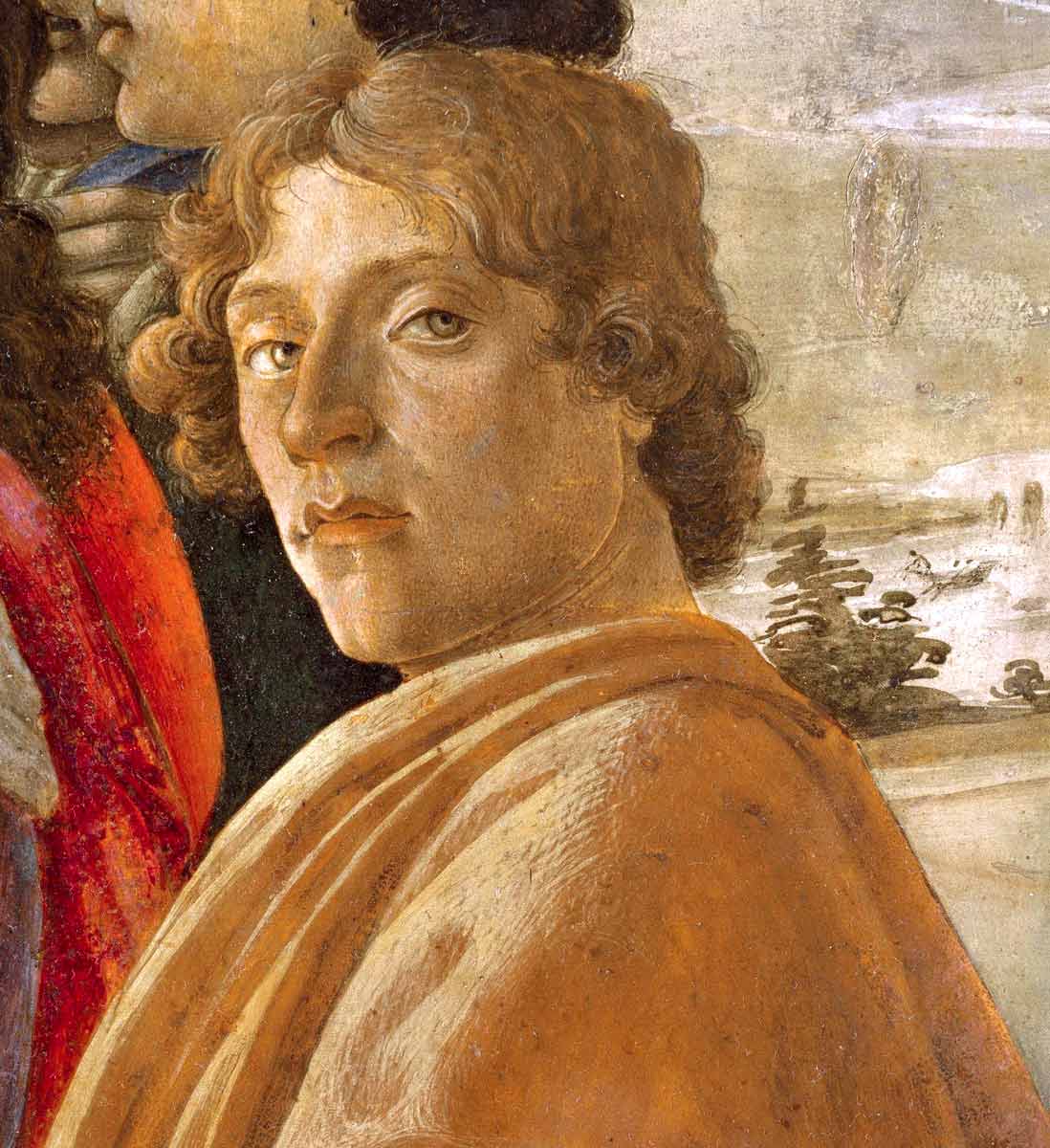
In the mid-19th century, Botticelli returned to the spotlight. In 1873, Walter Pater devoted one of his studies to the painter, noting:
The chief characteristic of Botticelli is the result of a diffused sympathy with humanity in all its forms: when it is in uncertain condition, when it is charming and in rare instances when it is elevated… He painted other scenes from the history of the goddess of love besides her birth, but never without a touch of death in the gray flesh and the wan flowers.
In 1877, John Ruskin emphasized the need to reinterpret Botticelli’s oeuvre, daring to label him a “mannerist.” Walter Pater summarizes the key features of the painter’s personality:
He has, then, the freshness, the uncertain but restrained cheerfulness, which mark the early Renaissance, and which perhaps make it the most interesting period in the history of the mind. The study of his work helps us to understand the peculiar hold which Italian art has had upon our culture.
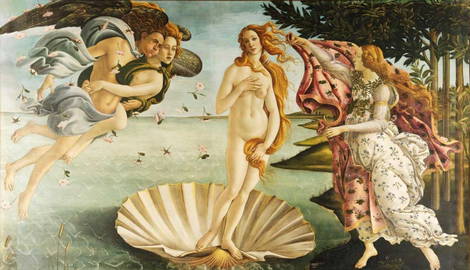
The Birth of Venus
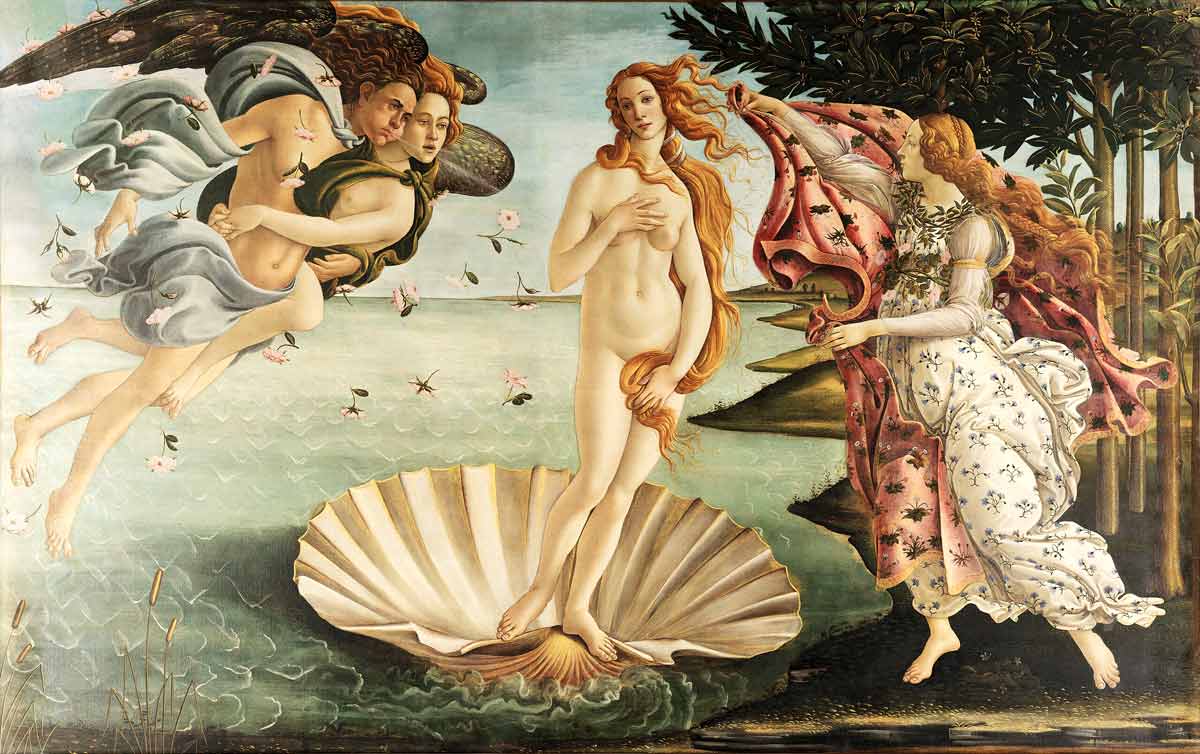
Many views have been expressed regarding the work’s exact dating, the circumstances of its commission, and its patron. It is likely dated after Botticelli’s return from Rome, around 1484/5. Iconological studies have demonstrated the Neoplatonic inspiration of its subject matter. Additionally, the work appears to have been intended, along with Primavera, for a pupil of the humanist philosopher Marsilio Ficino, Lorenzo di Pierfrancesco de’ Medici. It is thus a work that expresses the Neoplatonic aesthetics of the Renaissance.
The painting does not present a Christian but a classical myth of the birth of Venus. Classical poets were known in the Middle Ages, but only during the Renaissance did these myths spread among the educated. For them, Greek and Roman mythologies were more than charming tales. They believed so strongly in the superior wisdom of the ancients that they considered myths to conceal profound and mysterious truths. The story of Venus’s birth symbolized the mystery through which the divine message of beauty entered the world.
Ancient Myths
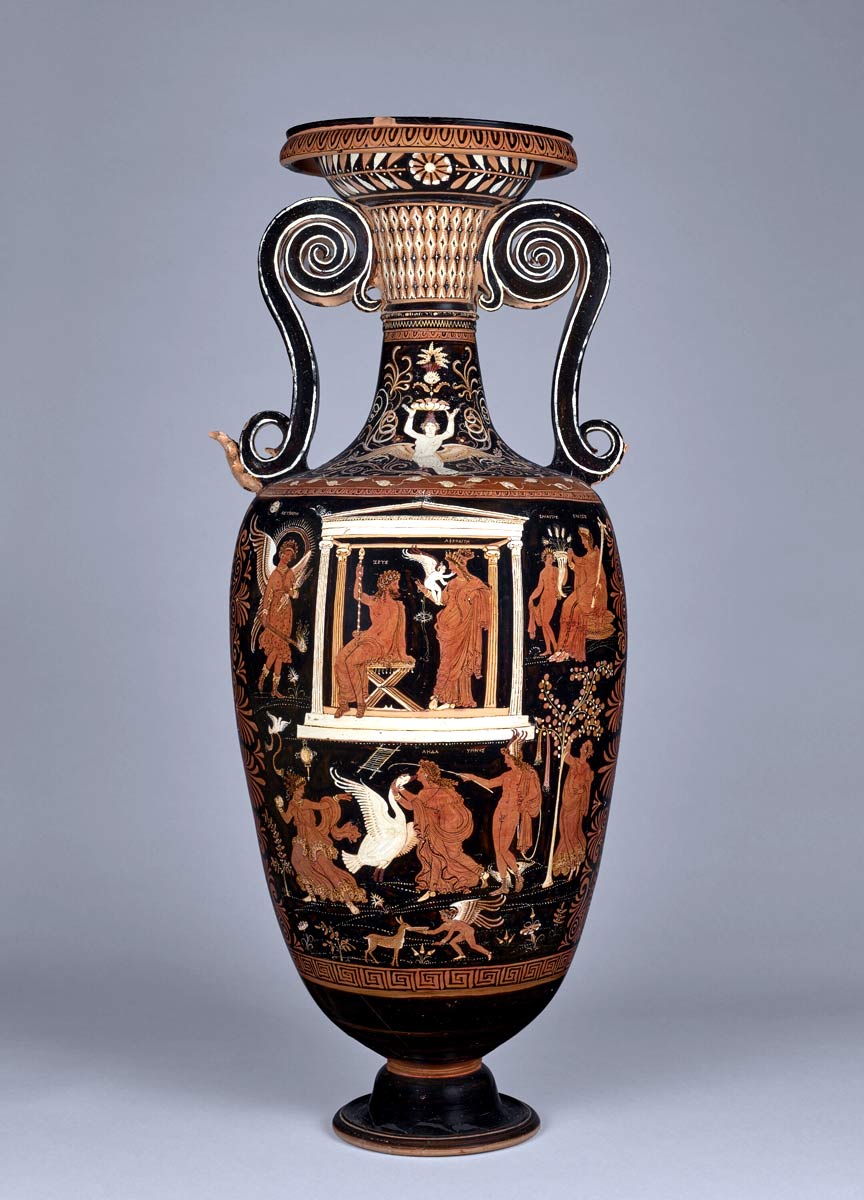
There are different versions in Greek mythology from the ancient writers regarding the origin and birth of the goddess Aphrodite. According to Hesiod in Theogony (8th century BC), which recounts the creation of the world, Cronus severed the genitals of his father Uranus, casting them into the sea, where for a long time they drifted with the waves of Oceanus. Around them a white foam formed, from which a maiden arose. She first went to Cythera and then appeared in Cyprus as a stunning goddess. Grass grew beneath her feet and around her. Gods and men named her Aphrodite. Upon her birth, she was accompanied by Eros and Himeros.
Homer, by contrast, in the Iliad does not recount the myth of Aphrodite’s birth from the sea. He presents her as the daughter of Zeus and Dione and as protector of the Trojans—the enemies of the Greeks, who were themselves under the protection of the goddess Athena.
The Central Figure: Venus
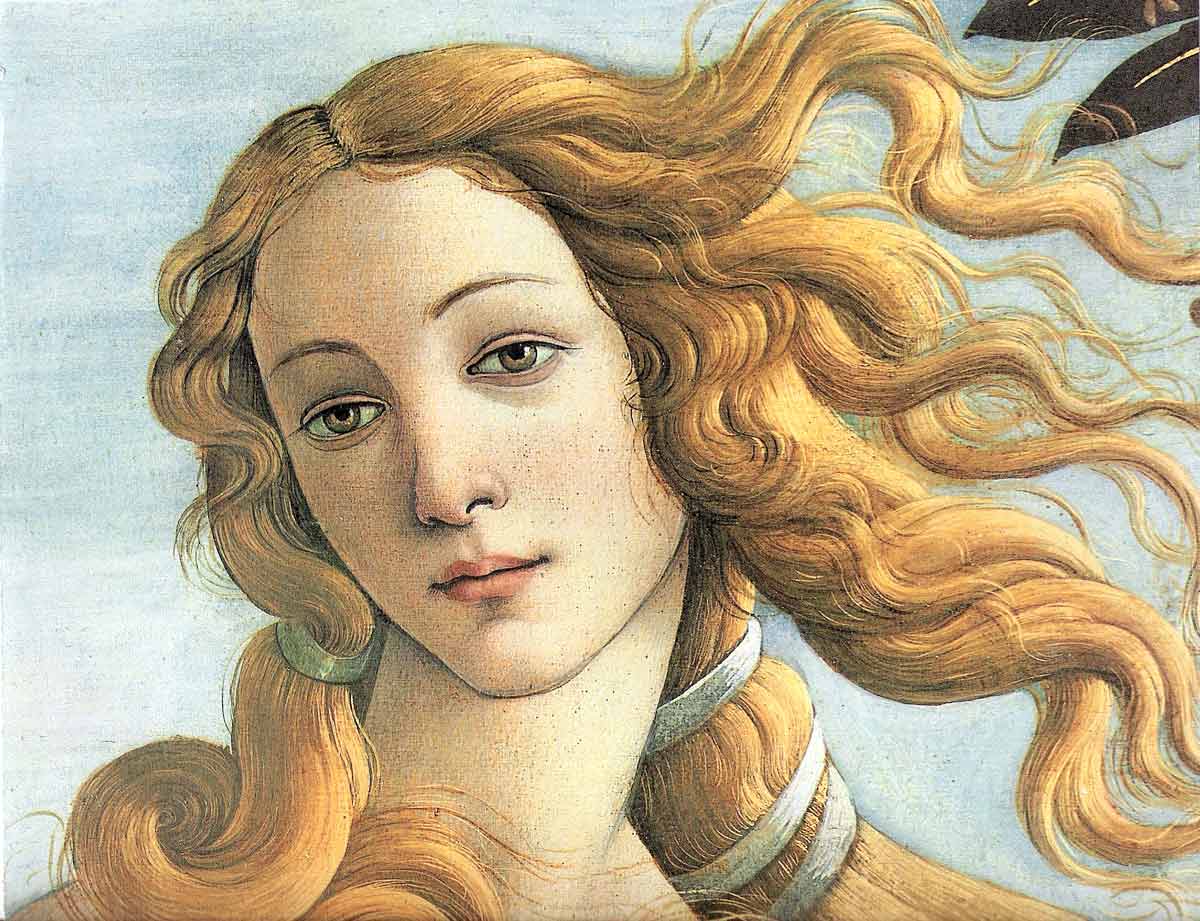
E.H. Gombrich and numerous other scholars agree that the work’s theme is readily comprehensible. The central nude female figure is Venus, the Greek goddess of beauty, emerging from the sea upon a shell. Her pose recalls the ancient prototype of the Venus Pudica (modest Venus).
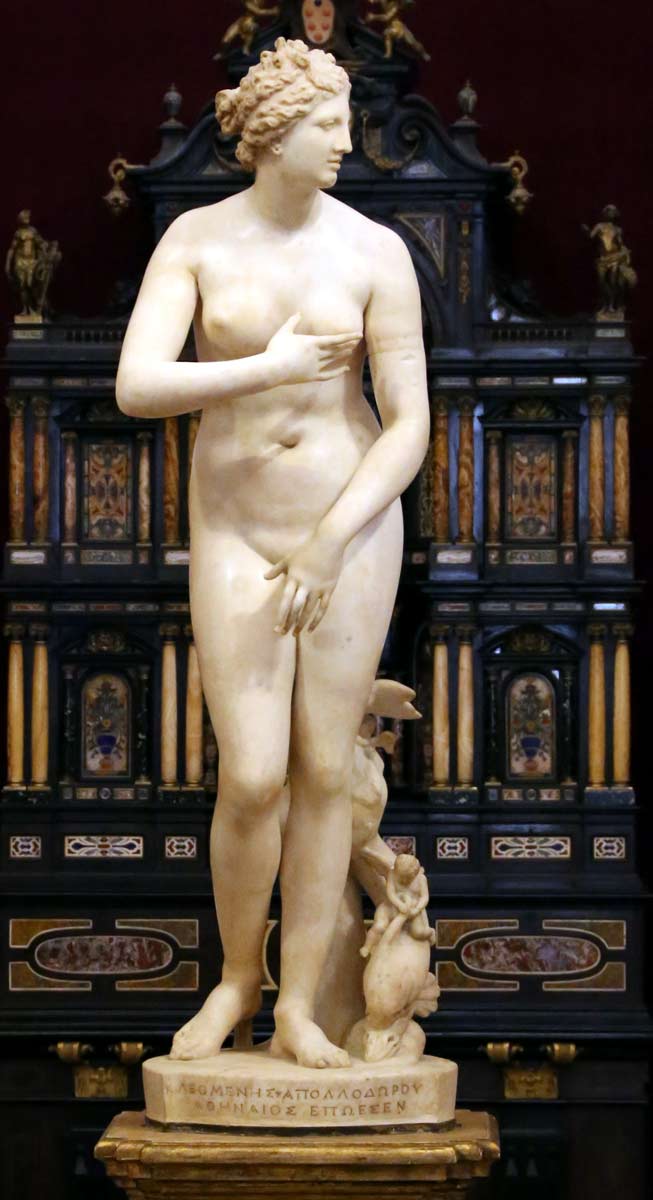
The Venus Pudica (modest Venus) type is a pose in Western art, perhaps best known through The Birth of Venus by Botticelli. The pose depicts a Venus usually covering her breasts with her right hand, and her groin with her left hand. The name pudica refers to Latin pudor, meaning a sense of modesty or shame. The first Venus Pudica is the sculpture Aphrodite of Cnidus (or Knidos) from the 4th century BC (although she does not cover her breasts) by the famous Greek sculptor Praxiteles. The marble sculpture of the Hellenistic period from 1st century BC, known as the Medici Venus, follows the Venus Pudica type and closely resembles the central figure in Botticelli’s painting.
The stylistic rendering of the dominant figure has been the subject of countless interpretations. Indeed, the draftsmanship reveals certain technical weaknesses. The deliberate use of sharp contours seems puzzling, especially when compared with works of other artists of the same period, in which realistic rendering, mastery of drawing, and the use of chiaroscuro were at their height. Nevertheless, as E.H. Gombrich notes:
Botticelli’s Venus is so beautiful that we do not notice her unnaturally long neck, her very sloping shoulders, or the strange way her left arm joins the body… or rather, we should say that the liberties Botticelli took with nature to achieve a graceful outline add to the beauty and harmony of the design, because they enhance the impression of a being of infinite tenderness and fragility, who has just arrived on our shores as a heavenly gift.
Other Figures
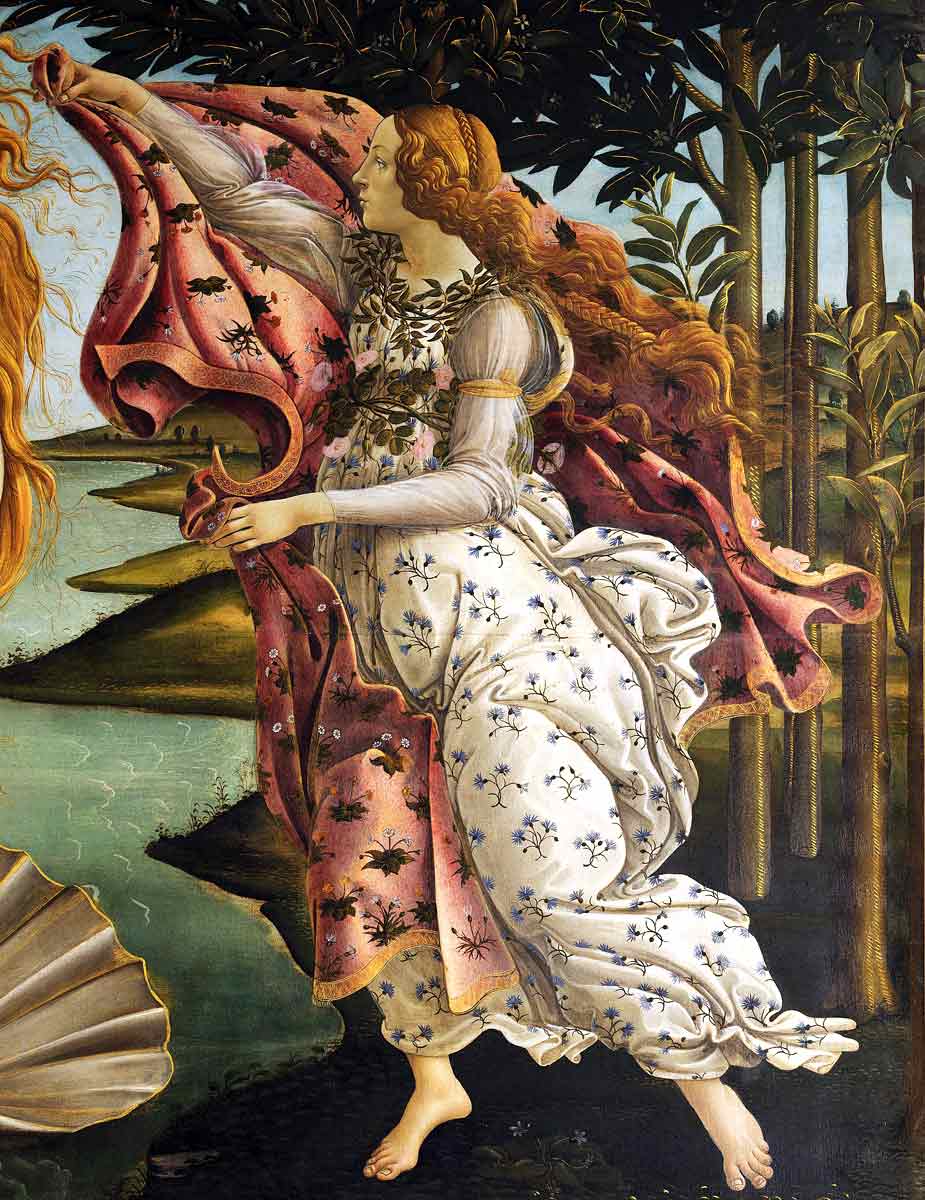
On the left appear two figures, male and female, blowing at the shell to carry it to shore. They represent Zephyrus, the winged god of the west wind in Greek mythology, accompanied by a female figure who blows with him, and who, according to Vasari, is likely Aura, a minor goddess of the breeze. As Venus is about to step onto land, she is awaited by a female figure, perhaps one of the three Horae—the Greek minor goddesses of the seasons and of temporal divisions—attendants of Venus. The floral decoration of her dress suggests she is the Hora of Spring.
Other scholars identify her as Flora, a Roman goddess of spring and flowers, who covers Venus with a purple flower-embroidered cloak. In this interpretation, the secondary female figures are associated with Botticelli’s Primavera. The female held by Zephyrus, according to this version, is the nymph Chloris, who, in myth, transforms into Flora—the figure that stands beside her in Primavera.
However, for some, the title by which the painting is universally known does not correspond precisely to its iconography. It may not, in fact, represent the birth, but rather the arrival of the goddess on one of the islands traditionally linked with her, such as Cythera in Greece or Cyprus.
A Difficult Task: The Symbolism and Interpretation of the Painting
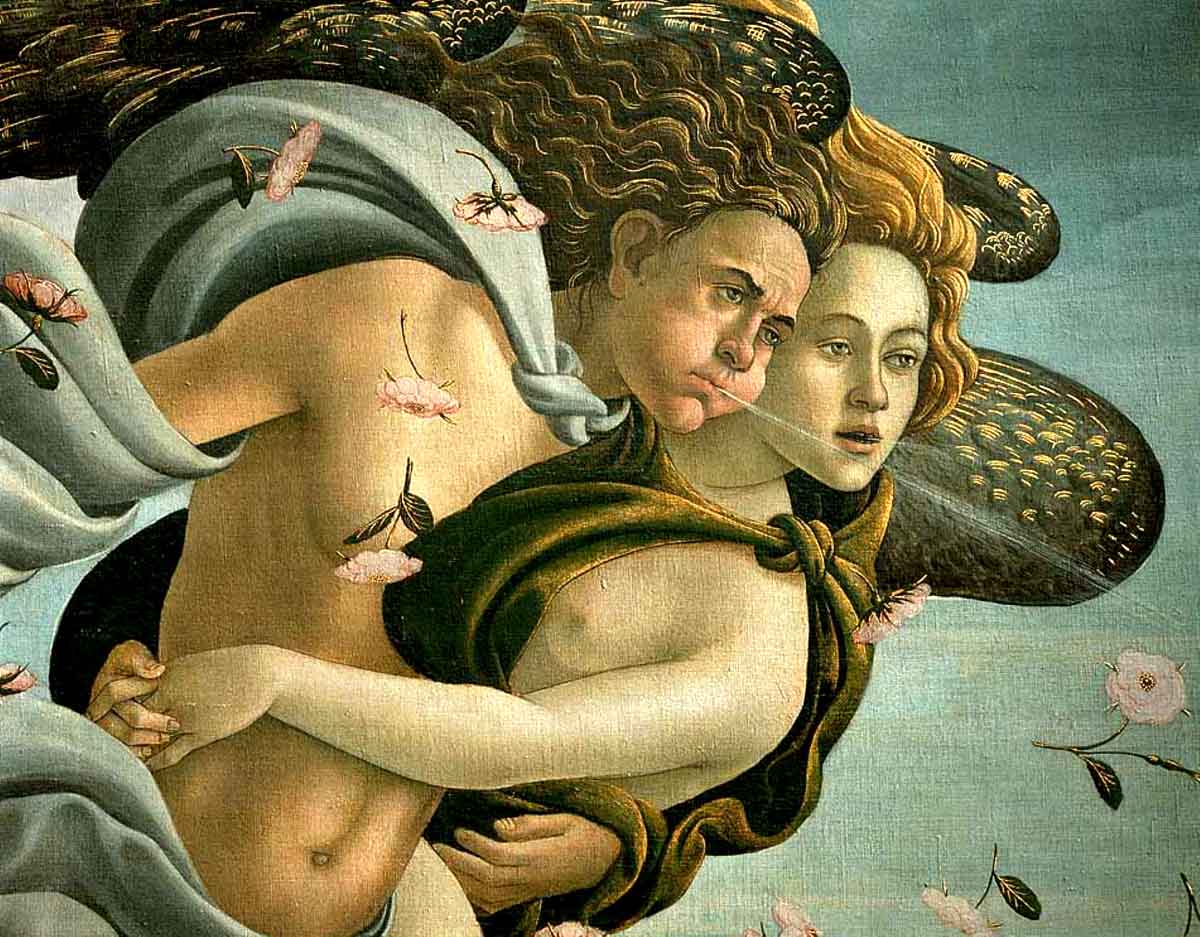
The Birth of Venus is perhaps one of the few works to have inspired so many attempts at interpretation over the centuries. What is certain is that the painting places great emphasis on the rendering of movement.
Botticelli’s vision diverges from the principles of naturalism. His figures appear less solid, rarely given volume, and not set within a perspectival space. This is evident in this work, where the background lacks any detailed landscape. Using translucent colors, he veils the vanishing points of perspective, heightening the painting’s atmospheric intensity.
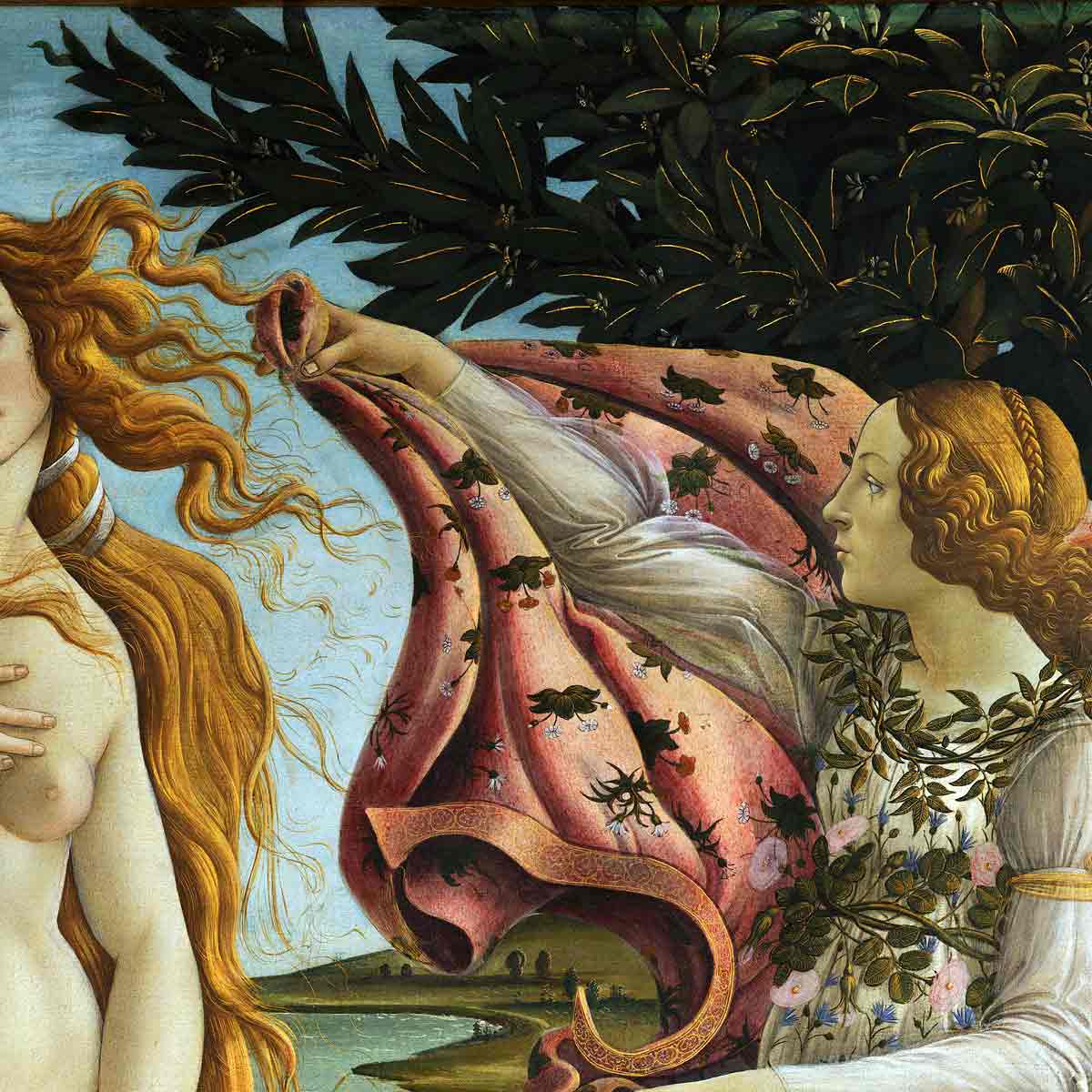
The laurus nobilis trees to the right of the painting, as well as the laurel wreath of the right-hand female figure, may reference the name Lorenzo (perhaps that of Lorenzo di Pierfrancesco). Similarly, the flowers floating around Zephyrus and adorning the Hora/Flora’s dress and mantle evoke the Latin word florentia, meaning “blooming.” Some have mistakenly connected this element with the name of the city of Florence.
Neoplatonic Aesthetics in Botticelli’s “The Birth of Venus”
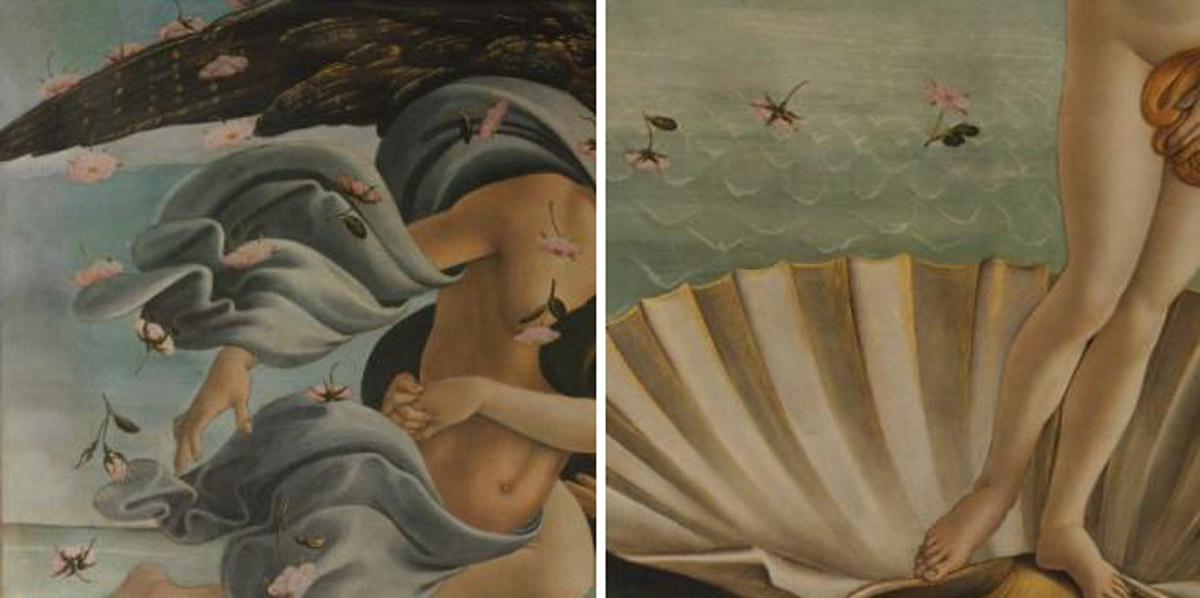
Some scholars relate the choice of scene to an ancient Greek Homeric hymn:
Of gold-wreathed and beautiful
Aphrodite I shall sing to whose domain
belong the battlements of all sea-loved
Cyprus where, blown by the moist breath
of Zephyros, she was carried over the
waves of the resounding sea on soft foam.
The gold-filleted Horae happily welcomed
her and clothed her with heavenly raiment
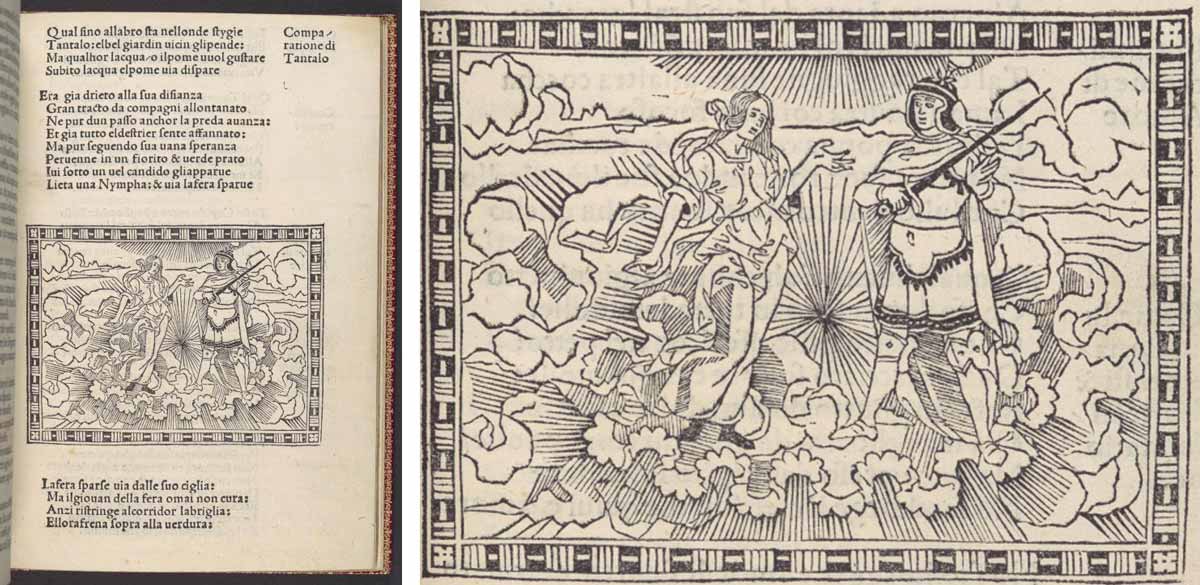
This hymn is believed to have been known in the Neoplatonic circle of Lorenzo de’ Medici, which included prominent figures such as the humanist poet Angelo Poliziano. His famous poem Stanze per la giostra (1475) appears to share certain affinities with the painting’s iconography.
He was already far in pursuit of his desire,
much removed from his companions,
yet the prey did not advance by even a single step,
and already his steed felt wholly weary;
but still, following his vain hope,
he arrived in a flowery and green meadow:
there, beneath a white veil, appeared to him
a joyful Nymph, and the wild beast vanished away.
Many scholars have suggested that this depiction of the elusive “white deer” transforming into a nymph amid a green, blooming meadow—likely inspired Botticelli’s portrayal of the goddess’s birth, particularly the elements of the locus amoenus, the nymphs/Horae, and the Zephyrs.
The otherworldly beauty of Botticelli’s painting demonstrates the Neoplatonic inspiration of its subject matter. Renaissance Neoplatonic aesthetics developed in the circle of Marsilio Ficino at the renowned Careggi Academy, where a select group of distinguished citizens and scholars gathered, initiated into Platonic philosophy. The central feature of Neoplatonic aesthetics was the spiritual essence of beauty, in contrast to ugliness.
Beauty was regarded as a visible symbol of the divine, and Botticelli seems to have embodied this idea (divine love—love for the divine) through the figure of the nude Venus. It is considered that Neoplatonic philosophy inspired the conception of large-scale works of secular rather than religious content. Classical deities, however, were not depicted as carefree Olympians of Ovid, but as symbolic incarnations of deeper moral or metaphysical truths.
This is a painting of delicate sensitivity, apparently destined for a small and select audience, likely within the Medici circle. Yet Botticelli’s art simultaneously managed to achieve universal acceptance over the centuries, offering a paradigm of artistic creation that resonates with the absolute values of the Renaissance.
The ethereal grace and Neoplatonic symbolism of Botticelli’s Birth of Venus transcend time, inviting viewers to reflect on the union of the classical and the spiritual. More than five centuries after its creation, the painting continues to inspire, embodying both the ideals of its age and the timeless pursuit of harmony and meaning in art.