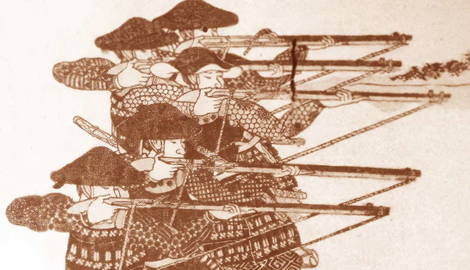

When gunpowder weapons were first introduced into feudal Japan, they revolutionized warfare and transformed nearly four centuries of established military practice and structure. Before this, samurai culture and tactics included elements of ritualized combat, archery, and swordsmanship. The introduction of guns sparked an arms race that favored sheer numbers of soldiers and extensive production of weaponry over individual skill and lifelong training.
How Did a Shipwreck Bring Firearms to Feudal Japan?
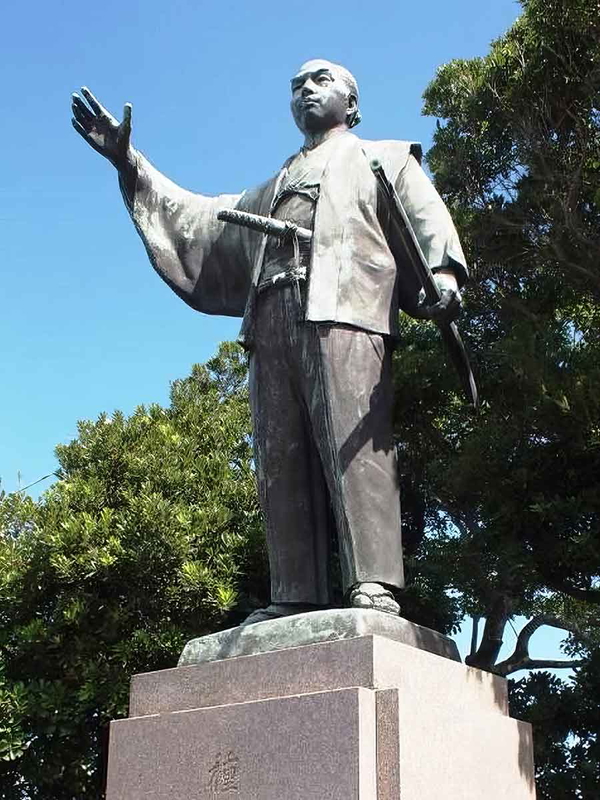
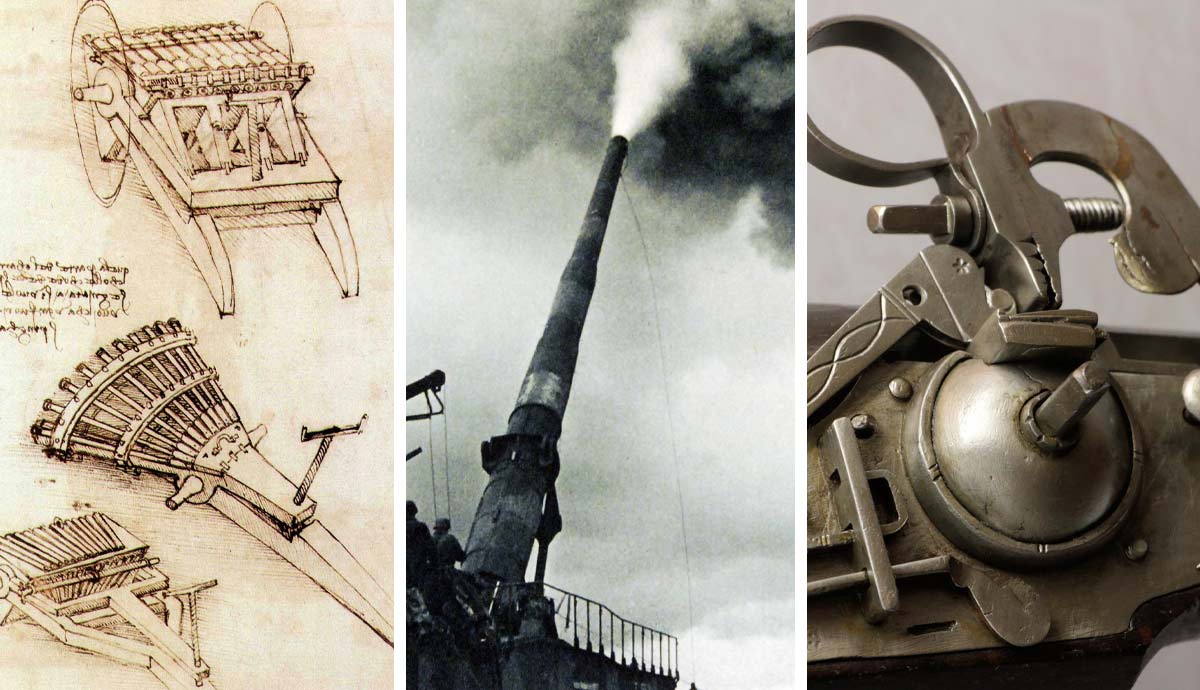
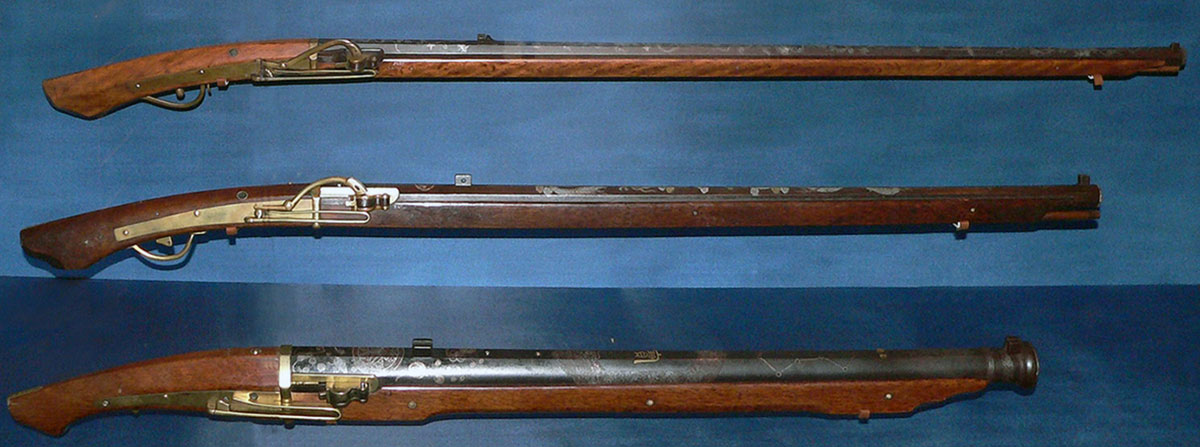
Japanese history changed forever on August 25, 1543, when Portuguese merchants aboard a Wokou vessel were shipwrecked and drifted ashore at Tanegashima Island south of Kyushu. The European weaponry aboard the vessel caught the attention of the Tanegashima lord, Tanegashima Tokitaka, who was amazed by the ability of firearms to ignite powder with fire. He bought two matchlock arquebuses for a staggering fortune said to be around 2,000 ryō of silver. Realizing the advantage the firearm could provide his forces in battle, Tokitaka quickly ordered his head swordsmith, Yaita Kinbei, to copy the design.
While Japanese swordsmiths had great expertise when it came to forging steel for blades, the construction of the threaded breech plug proved remarkably tricky. Some mythical tales say that Kinbei was so desperate to learn the secret of the screw that he married off his daughter Wakasa to a Portuguese sailor in exchange for the technical knowledge.
Within two decades of their introduction, matchlock weapons were being manufactured in the thousands by production centers in Sakai and Kunitomo, among other places. By the late 1500s, Japan likely had more firearms than any single European country, and it had produced tens of thousands of guns by the start of the 1600s.
How Did Matchlock Guns Change Japanese Warfare?
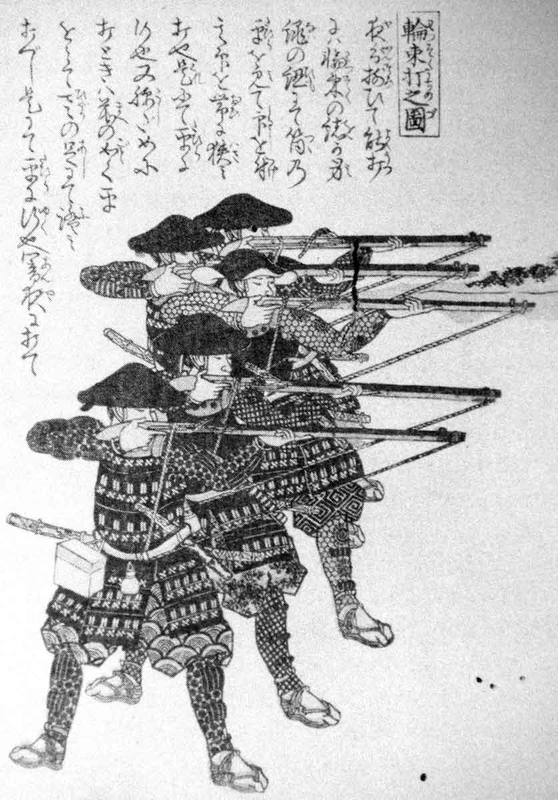
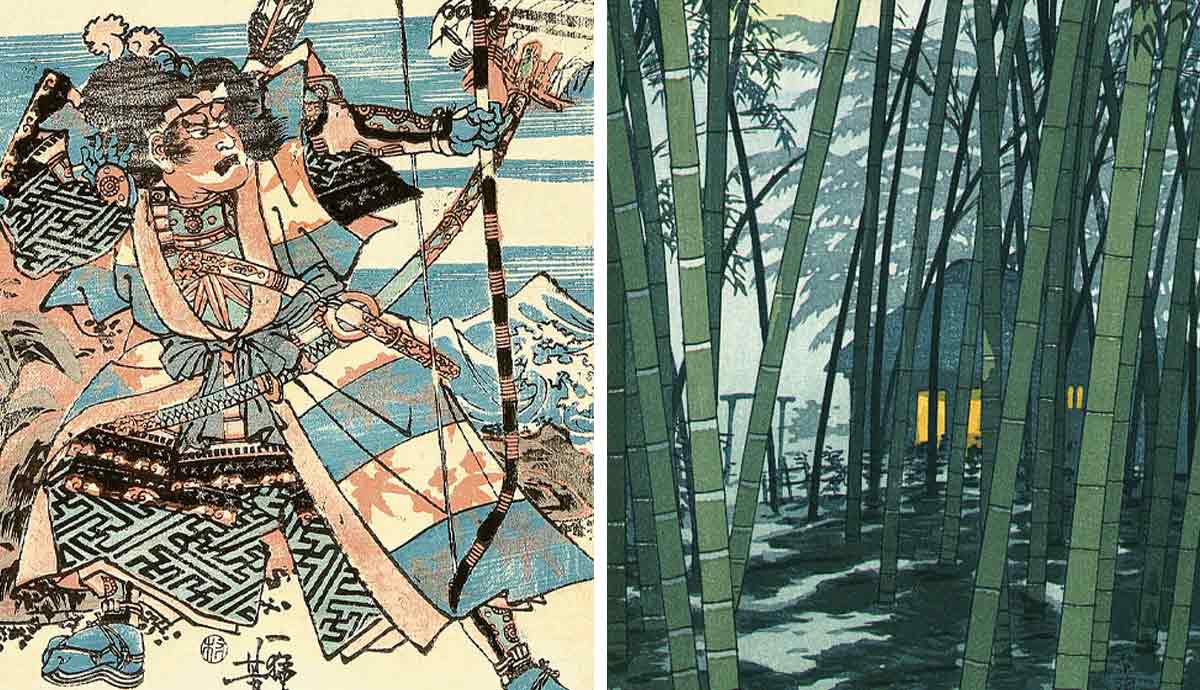
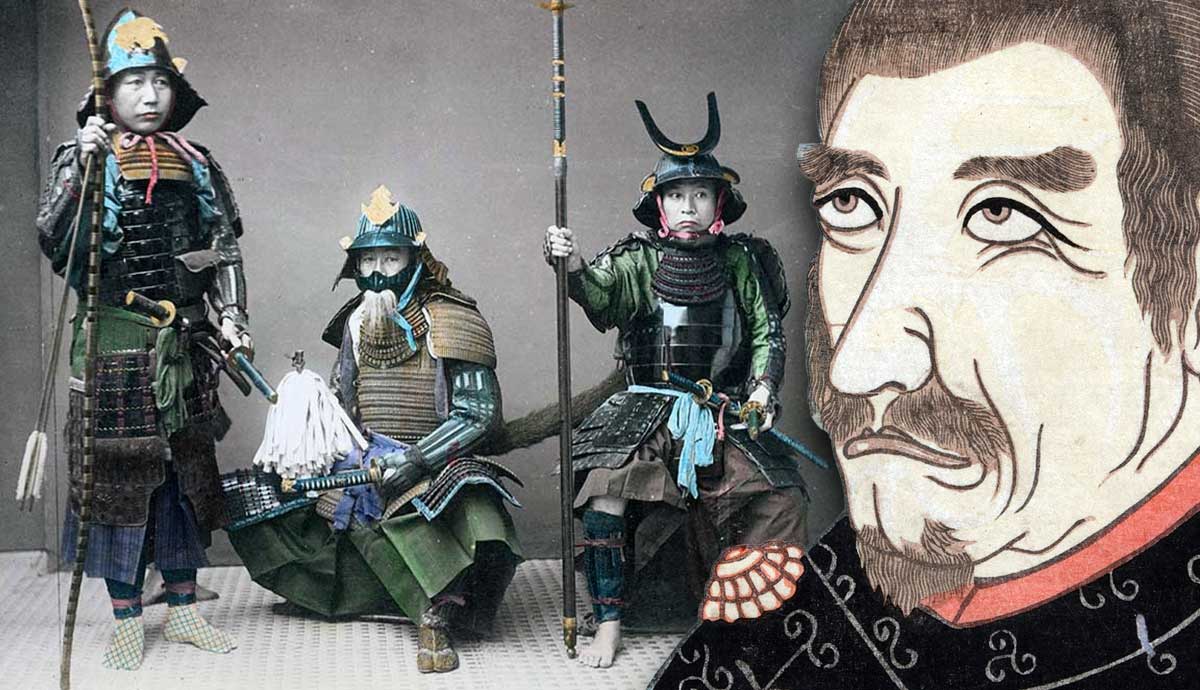
Prior to the introduction of the matchlock, years of dedicated training determined a warrior’s effectiveness in battle. Years of practice were also required to draw, aim, and release the asymmetrical yumi longbow properly. At the time, elite martial skills were passed down through strict family lineages and kept power in the hands of the samurai class. Regarding the function of the matchlock, the weapon worked by using a slow match to ignite a pan of powder, which then fired the lead ball. The simple process required only days or weeks of training for an average peasant infantryman to defeat armored opponents.
While a master archer could land multiple arrows in the time it took a gunner 20 to thirty 30 seconds to load and fire one shot, thousands of peasants could be trained into an effective army for a far lower cost. As such, tactical battles in the Age of Warring States shifted from personal combat to controlling disciplined volley fire. Oda Nobunaga, one of the first unifiers to grasp the true power of firearms on the battlefield, acquired 500 matchlocks for his infantry units in 1549.
Why Did the Battle of Nagashino Prove Samurai Cavalry Was Obsolete?
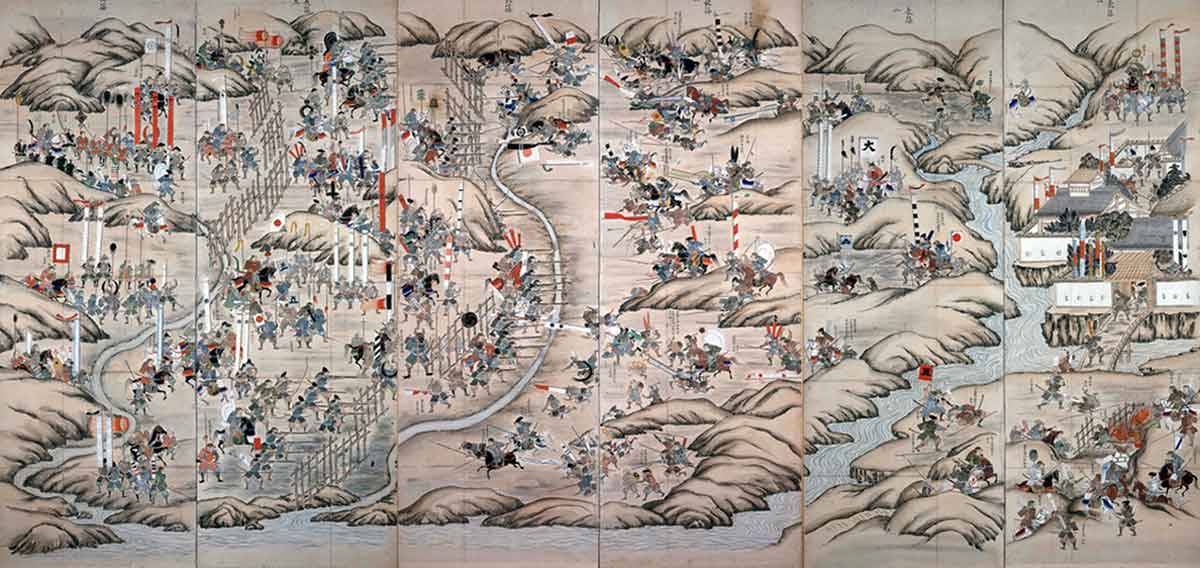
The greatest example of the matchlock’s effectiveness came on July 28, 1575, at the Battle of Nagashino. Oda Nobunaga and Tokugawa Ieyasu‘s combined forces faced off against the mounted warriors of the Takeda clan, who were known far and wide for the strength of their horsemen. Roughly 12,000 to 15,000 Takeda warriors attacked in waves across the plain of Shitaragahara in an effort to smash through enemy lines with mounted force.
They were met by roughly 3,000 of Nobunaga’s matchlock gunners positioned behind staggered wooden palisades. To counter the slow rate of fire of the matchlock, Nobunaga organized his gunners into three rotating ranks to provide a continuous stream of fire. By the time the charging cavalry reached the barricades, they were greeted with rotating volleys from the matchlocks and sustained terrible casualties. Approximately 10,000 Takeda men were killed, including a large portion of their most experienced generals. The strategy at Nagashino significantly altered the belief that traditional samurai cavalry could survive against concentrated gunfire, gradually changing the nature of samurai warfare.
Why Did Japanese Rulers Ban Firearms and Disarm Commoners?
One way guns affected Japanese society was by making Gekokujō easier, a pattern in which the lower overcame the higher in rank. All of a sudden, an ashigaru foot soldier armed with a simple matchlock could defeat an experienced samurai with advanced martial arts skills. The situation caused the political class to take steps to curb the problem. Weapon ownership among commoners was soon restricted. Declarations such as the Edict of 1588, outlawing peasants from owning swords, guns, and other weaponry, also assisted leaders in maintaining Japan’s class system. During Japan’s Edo period between 1603 and 1868, the shogunate strictly regulated firearm production and distribution.