
The Middle Ages were the age of castles on the European continent. Germany alone is estimated to have at least 25,000 structures that can be deemed a “castle.” However, many never made it past the end of the Middle Ages (15th century). They were foremost military installations, so many ended up in ruins. However, the ones that survived into modernity preserved history within their battlements. From urban citadels to water castles and hilltop forts, the following 10 castles offer a glimpse of medieval architectural grandeur.
| Castle Name & Location | Historical Origin | Architectural & Cultural Highlights |
| Edinburgh Castle
Scotland, UK | 12th Century
King David I | Built on a volcanic plug; houses St. Margaret’s Chapel (oldest building) and Scotland’s crown jewels. |
| Eltz Castle
Germany | 12th Century
House of Eltz | Fairytale aesthetic in a secluded forest; features 8 towers and original 800-year-old timber-frame structures. |
| Chillon Castle
Switzerland | 12th Century
Counts of Savoy | Island fortress on Lake Geneva; inspired Lord Byron’s poetry; strategically controlled the Via Francigena. |
| Malbork Castle
Poland | 13th Century
Teutonic Order | The largest brick structure in Europe; Gothic design; designated as a UNESCO World Heritage Site. |
| Castle of Loarre
Spain | 11th Century
Sancho el Mayor | Premier Romanesque architecture; key fortress during the Reconquista; filming location for Kingdom of Heaven. |
| Golubac Fortress
Serbia | 14th Century
Serbian/Hungarian | Situated on Danube River cliffs; 9 towers; historic border stronghold between the Ottomans and Hungary. |
| Conwy Castle
Wales, UK | 13th Century
Edward I | Masterpiece of military architecture; features 8 massive round towers and a fortified barbican gateway. |
| Castel del Monte
Italy | 13th Century
King Frederick II | Unique octagonal floor plan with 8 octagonal towers; design possibly influenced by Middle Eastern architecture. |
| Hohenwerfen Castle
Austria | 11th Century
Archbishop of Salzburg | Set on an Alpine rocky cone; served as a state prison; featured in the film Where Eagles Dare. |
| Beersel Castle
Belgium | 14th Century
Duchy of Brabant | Moated brick fortress; rare medieval use of brick; famously lamented by Victor Hugo before its restoration. |
1. Edinburgh Castle, Scotland (UK)
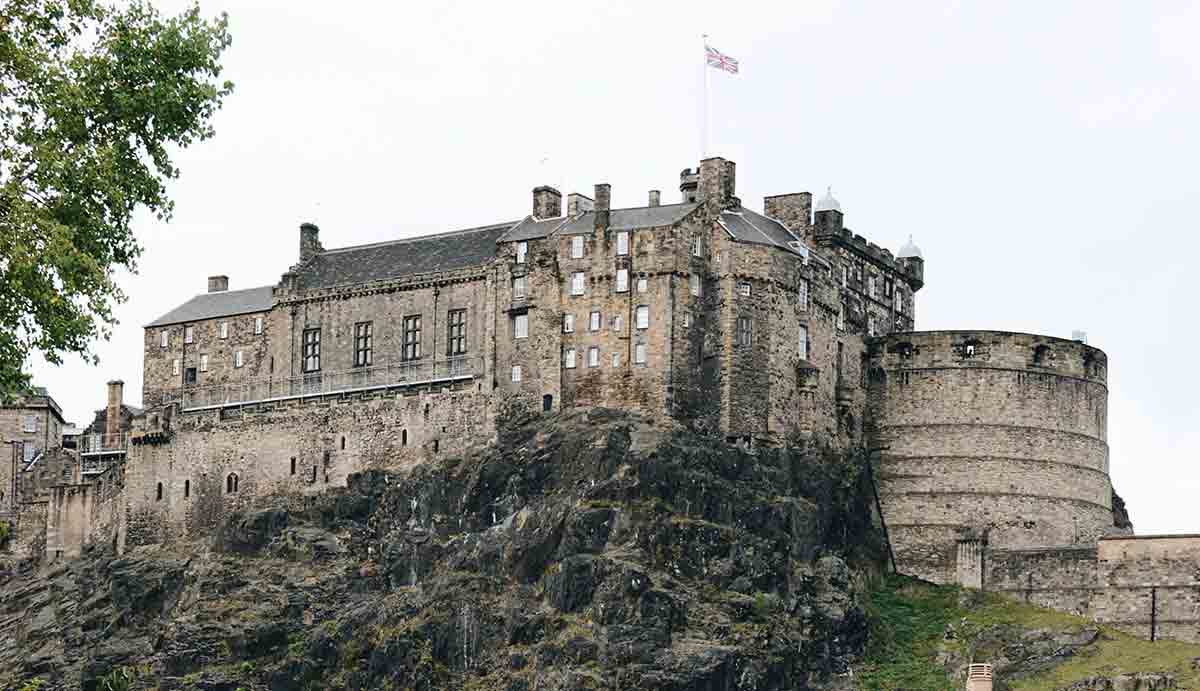
Castle Rock started its life as a volcanic plug that had survived glacial erosion to tower over the Scottish capital today. Indeed, Edinburgh grew around the fortress on the rock, which offered a clear strategic advantage.
At the beginning of the 12th century, King David I began erecting the first stone buildings here, such as St. Margaret’s Chapel, which is the oldest surviving structure. Throughout the Middle Ages, the fortification served as Scotland’s royal residence, safekeeping the crown jewels among other valuables.
Edinburgh Castle saw a lot of military action throughout its long history, changing hands between the Scots and the English several times. Although it is a tourist attraction, the castle still houses a military garrison, albeit for ceremonial purposes.
Annually, around two million visitors walk up to Edinburgh Castle along the Royal Mile, the castle’s main link to the city below. In times of peace, royalty would tread this path, but in times of war, this sloped accessway would witness some heavy fighting.
2. Eltz Castle, Germany
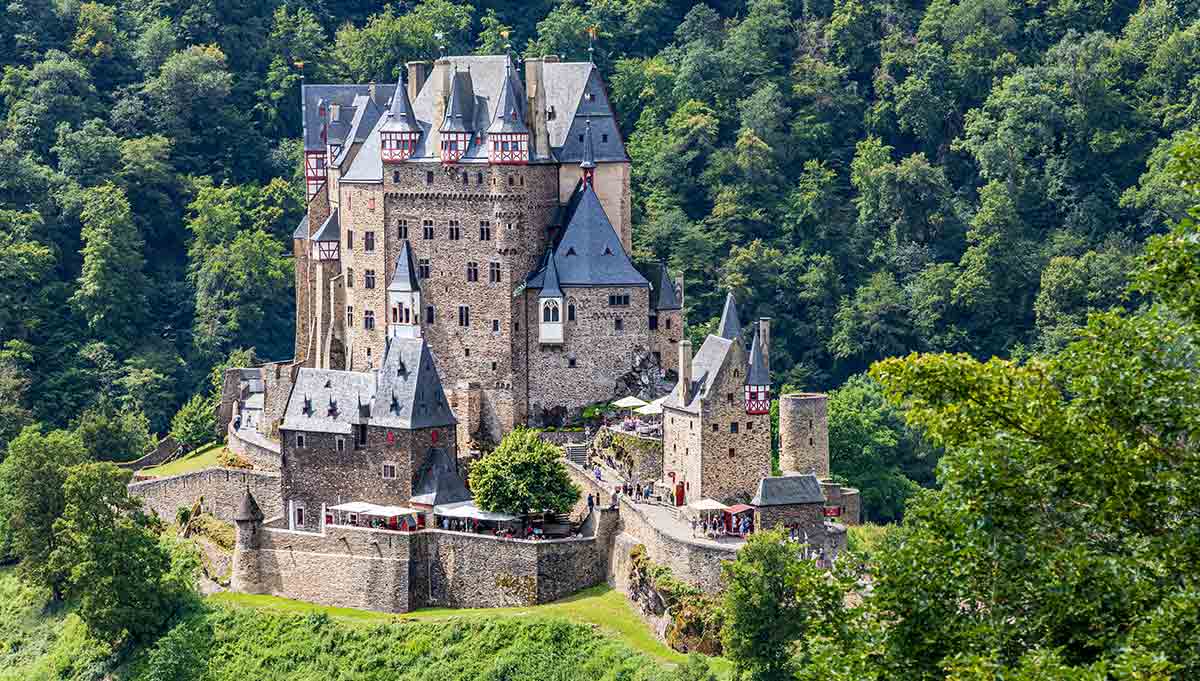
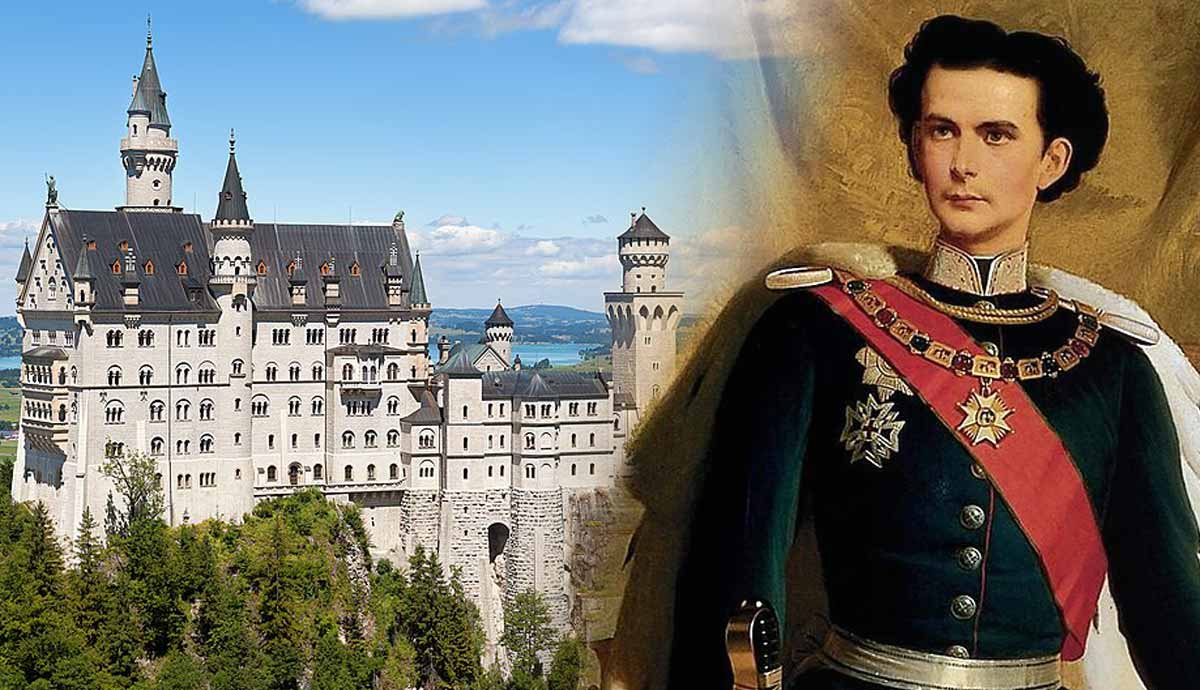
Although the castle that is often said to have inspired Disney, Neuschwanstein Castle (1886), is a modern edifice, Germany does have a fairytale-like castle that dates back to at least the 12th century. This was the time when the keep was erected to protect valuable trade routes in Frederick Barbarossa’s Holy Roman Empire. Miraculously, Eltz Castle managed to evade destruction to become a showcase of 800 years of German architectural heritage.
Eltz Castle is the epitome of a medieval castle, boasting eight towers up to 35 meters high, turrets, and an exterior timber frame structure. The secluded yet picturesque location further enhances the medieval feel. Perched on a 60-meter-high rock, Eltz Castle sits in a valley, surrounded by forest on all sides.
Despite restoration work in the mid-19th and early 21st centuries, the fortification has preserved much of its medieval fabric from the time when the House of Eltz constructed it in 1157.
3. Chillon Castle, Switzerland
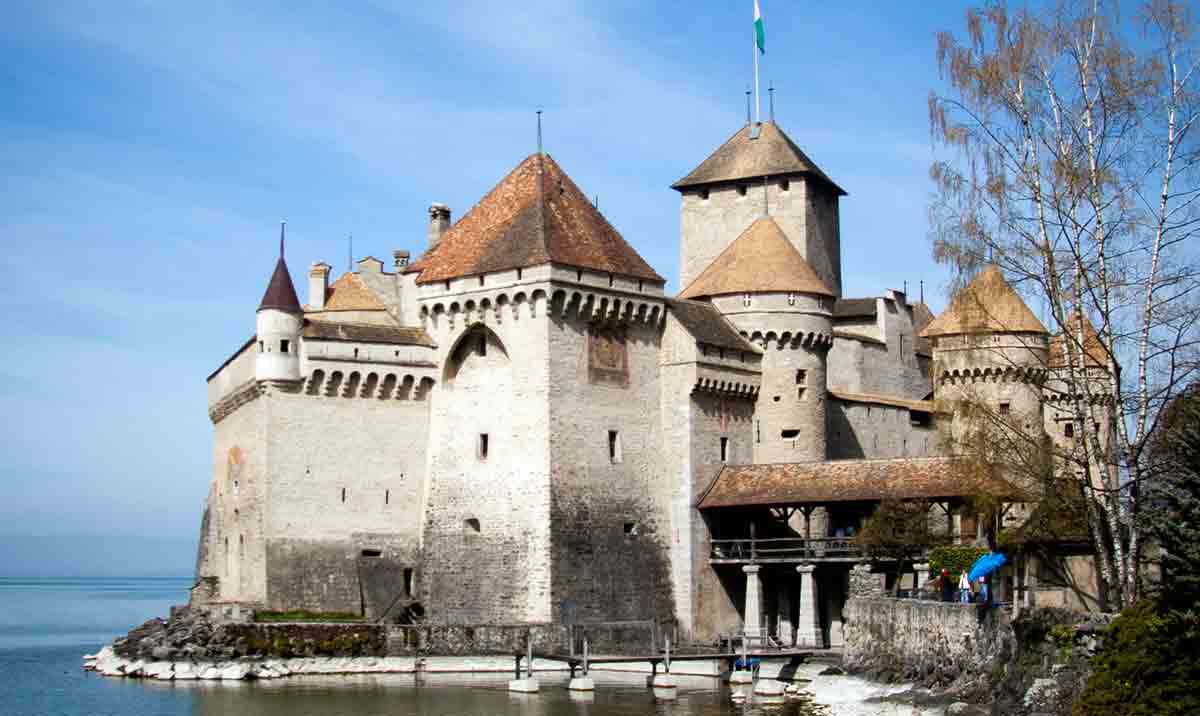
Situated near the Swiss-French border, Chillon’s etymology reveals its unique location: “a rocky platform.” This tiny limestone rock, some 100 meters long and 50 meters wide, has been home to a fortification since at least 1150.
The Counts of Savoy chose a strategically important location next to the Via Francigena, a medieval route from Italy (Rome) to France and, further north, to Germany and England. A single garrison stationed at Chillon Castle would control the road and charge a toll to travelers.
The square donjon is the oldest part of the waterside castle that is connected to the mainland via a bridge that used to be a drawbridge. Despite its relatively small size, Chillon has three main courtyards.
For a period, the castle was a prison, which inspired Lord Byron to write his lauded poem The Prisoner of Chillon (1816), about François de Bonivard, the islet’s most famous captive. Notable figures who visited Chillon include Jean-Jacques Rousseau, Leo Tolstoy, and Queen Elizabeth II.
4. Malbork Castle, Poland

Malbork Castle, unknown author, 2019. Source: Tourist Information Center, Malbork
The full name of the next fortification on our list is the Castle of the Teutonic Order in Malbork, which reveals who built it in the 13th century. The German crusaders named the structure Castle of Mary, or Marienburg, in their native language.
During the Middle Ages, every power that held the castle expanded it, so by the very beginning of the 15th century, Malbork Castle had become the largest brick structure in Europe (and still is). It is located in the town of Malbork, southeast of Gdańsk, in the historic region of Pomerania.
After the Thirteen Years’ War (1457), the castle on the banks of the Nogat River became Polish and would remain so for the next three centuries. It had managed to stay out of harm’s way up until the end of World War II (1945), when heavy shelling nearly turned it into ruins.
The restoration of the Gothic castle has been ongoing since the 1960s, and Malbork Castle was designated as a UNESCO World Heritage Site in 1997.
5. Castle of Loarre, Spain
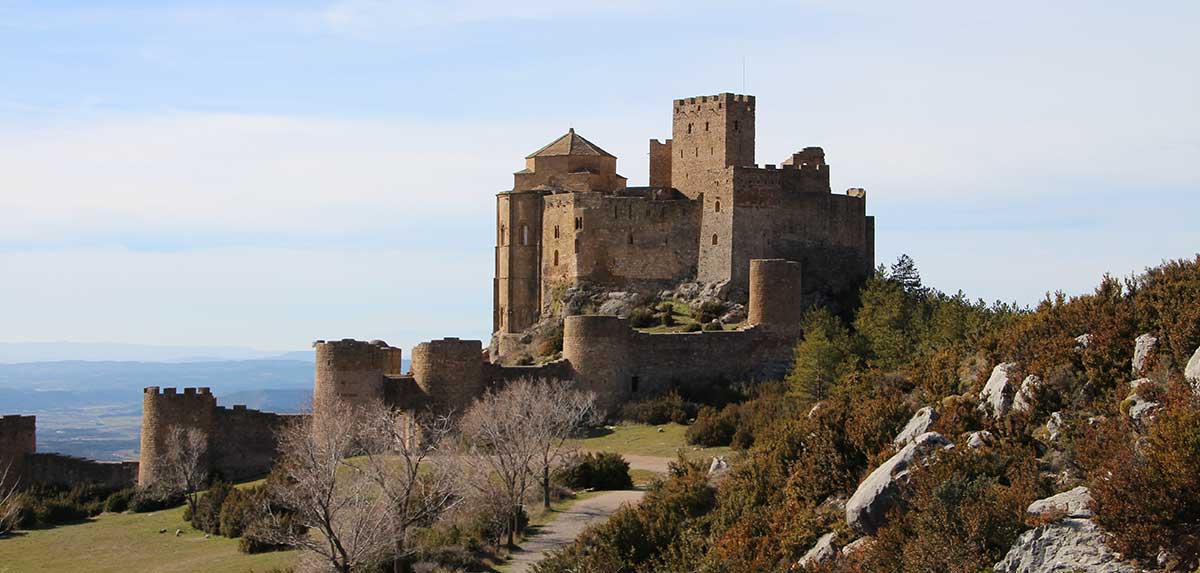
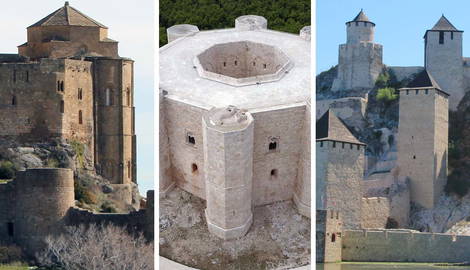
A fine example of Romanesque architecture, the Castle of Loarre dates back to the 11th century. At the time, the nearby town of Loarre, in what was then the County of Aragon, sat on the frontier between Muslim and Christian lands. Sancho el Mayor, the king of neighboring Pamplona, began the construction of the castle that would later play a vital role in the Reconquista. As part of this effort, a community of the St. Augustinian order was established here.
The outer walls were constructed around the 13th century. Although time took its toll on the structure, several restorations in the 20th century helped preserve one of the oldest castles in Spain. Ironically, some structures at the entrance to the fort were removed at the time for a better view of the castle. This did not stop the English filmmaker Ridley Scott from using Loarre Castle as a filming location for his 2005 epic Kingdom of Heaven.
6. Golubac Fortress, Serbia
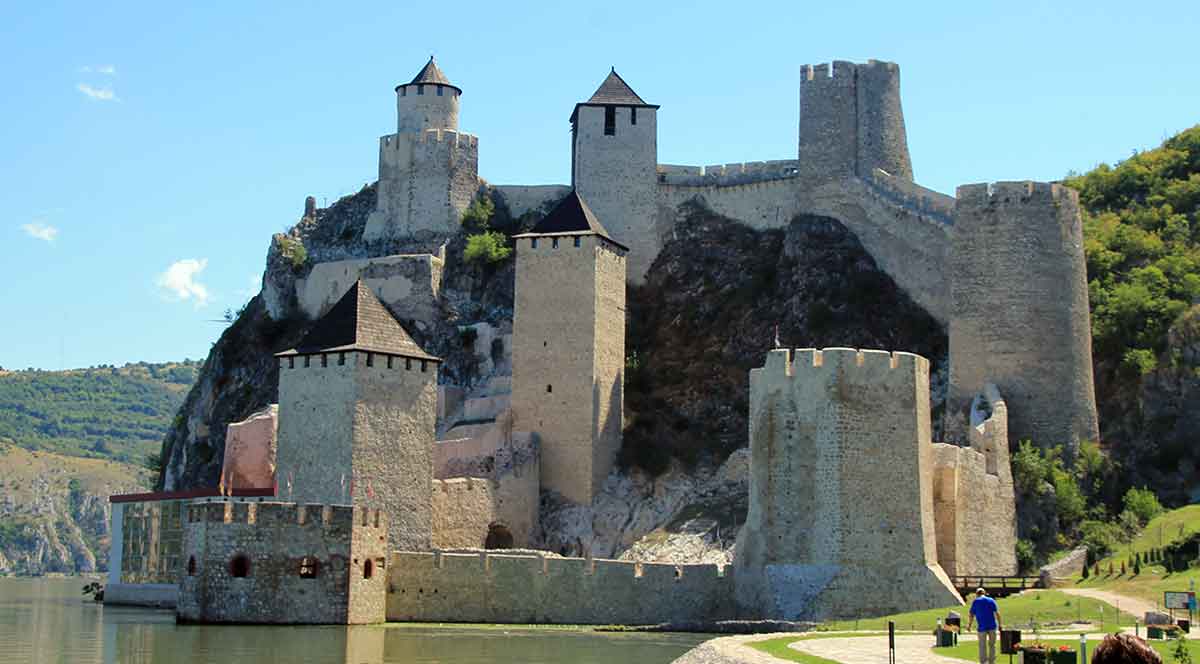
Golubac Fortress is as mysterious as it is impressive. Its first mention dates to 1335 as a Hungarian stronghold, but its present-day appearance is probably earlier, dating back to the Serbian medieval state.
Likewise, there are many legends surrounding the origins of its Slavic name, literally, “Place of Pigeons.” For centuries, Golubac was on the border between the Ottoman Empire and Hungary, until it finally came under Serbian rule in 1867.
The reason why so many nations wanted to conquer it was its location: Golubac stands on a cliff on the banks of the river Danube, at the entrance to the Đerdap Gorge.
Modern archeological excavations have confirmed Roman and subsequent Byzantine presence, proving that the area was of strategic importance in Antiquity as well. Today, all nine picturesque towers in the inner and outer city have been reconstructed, turning Golubac Fortress into one of the nation’s main tourist destinations.
7. Conwy Castle, Wales (UK)
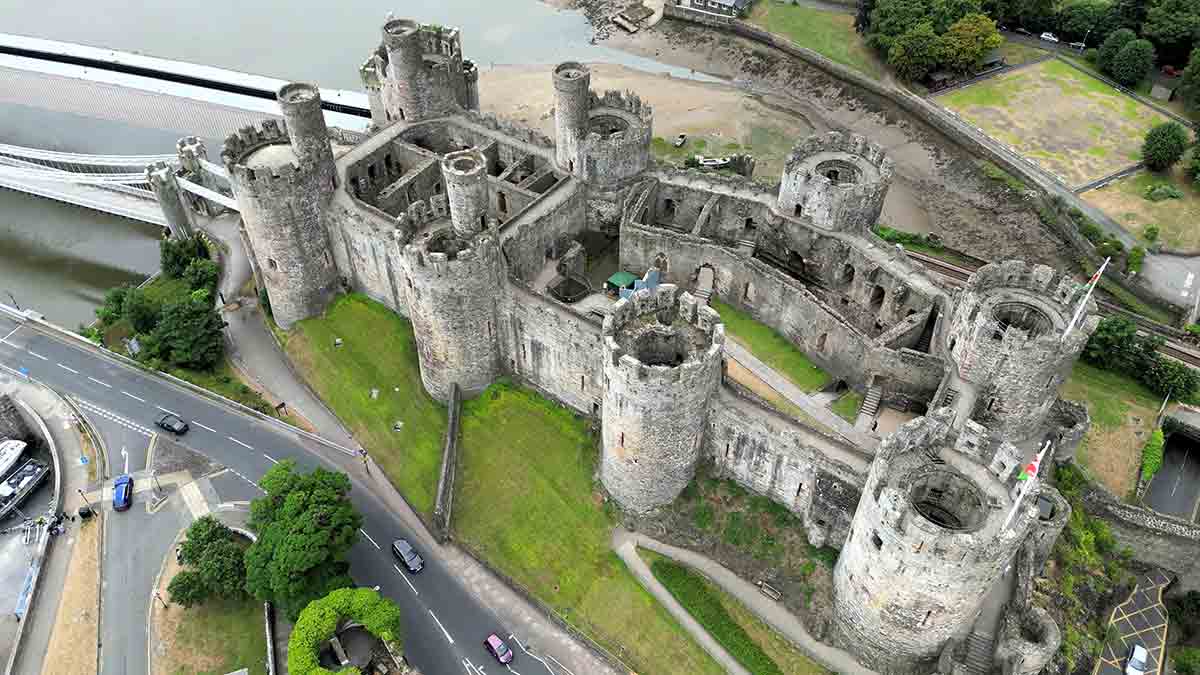
Since its construction in the late 13th century, Conwy Castle has changed little in appearance. The price of the structure was a hefty £15,000, which was a sum the King of England, Edward I, was willing to invest as part of his Conquest of Wales.
For those who watched the 1995 historical drama Braveheart, this king is known as Edward Longshanks or the Hammer of the Scots. The fortification is located in North Wales, near the mouth of the eponymous river where it meets the Irish Sea.
Set on a coastal ridge overlooking an important river crossing, Conwy Castle’s most noticeable feature is its eight round towers and a fortified gateway (barbican). Its appearance is one of the finest examples of military architecture in Europe of that age.
Up to the English Civil War in the 17th century, it saw numerous battles, after which it became an inspiration for painters. Today, Conwy Castle attracts several hundred thousand tourists each year.
8. Castel del Monte, Italy
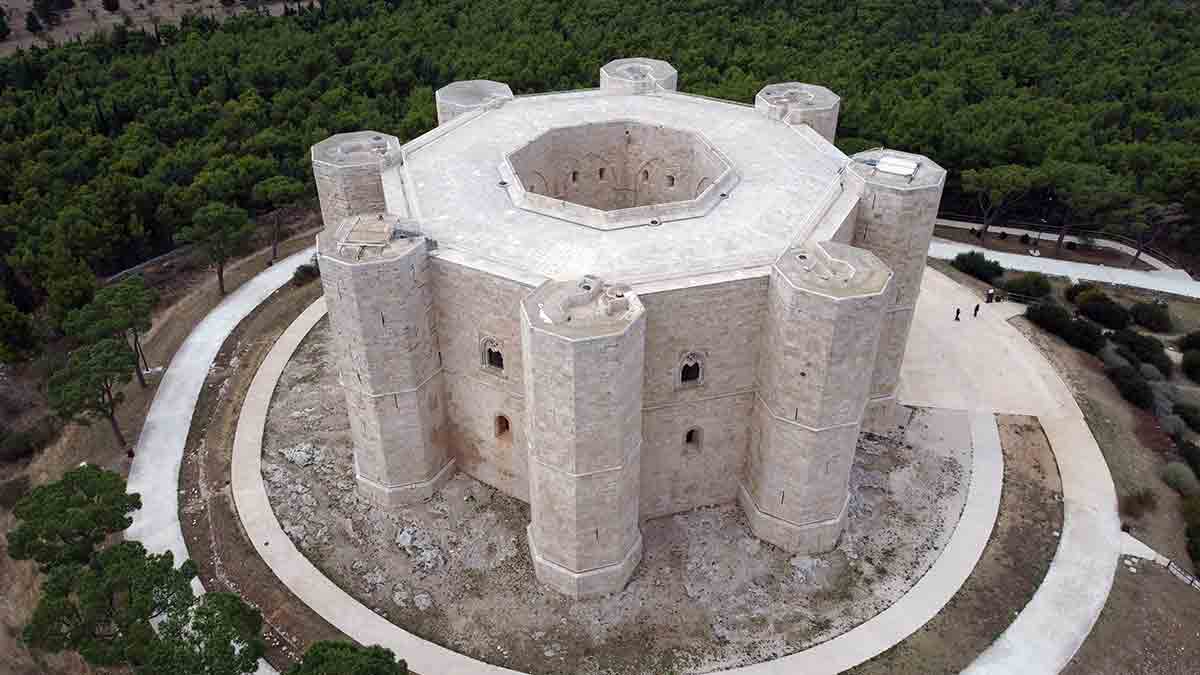
The “Castle of the Mountain,” in Italian, sits on a rocky hillock south of the town of Andria. This is the region of Apulia, or the “heel” of the “boot” of the shape of Italy.
The unusually shaped 13th-century citadel dates back to the time of King Frederick II, who inherited the land from his mother. The exact purpose of the structure is still up for debate, with some considering it to have been a hunting lodge, while others claim it was a proper castle with curtain walls.
Castel del Monte boasts an octagonal plan with eight closely spaced octagonal towers. The design is atypical of the region and may have been influenced by the layout of the Dome of the Rock in Jerusalem, which Frederick II saw in person during the Sixth Crusade in 1229.
Although the citadel lost its original marble walls and columns, the only military action it saw was during World War II, when the Americans used it as a navigational aid station.
9. Hohenwerfen Castle, Austria
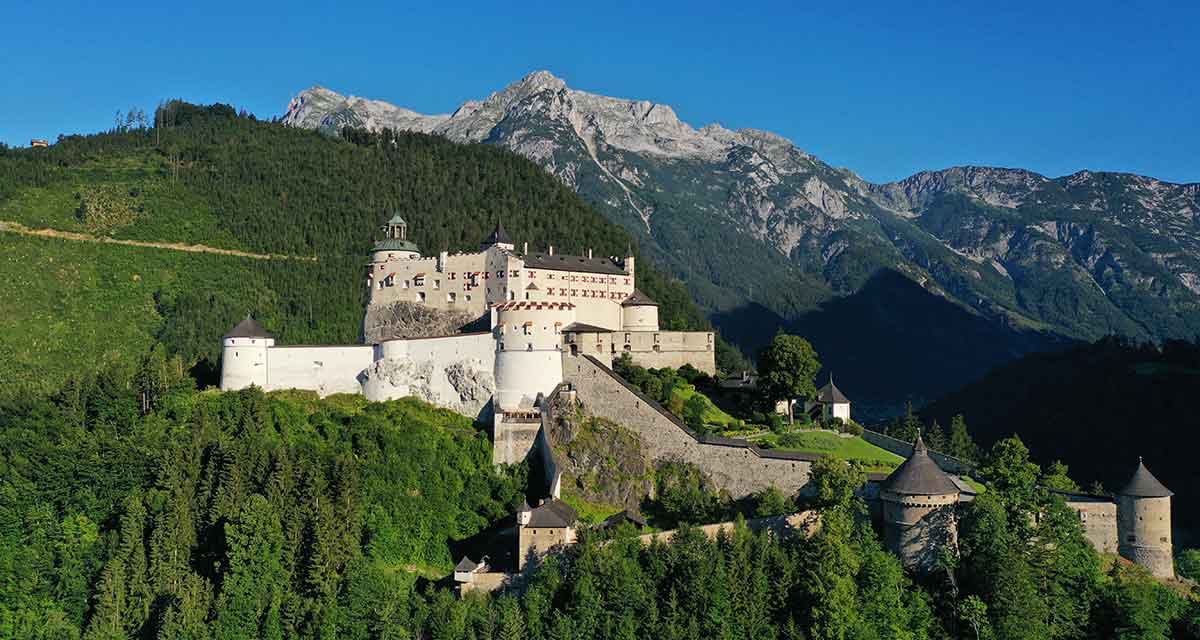
The rocky cone above the market town of Werfen in the Austrian Alps was the perfect setting for a fortification. The Archbishop of Salzburg started constructing Hohenwerfen Castle in the latter half of the 11th century.
After several extensions, around the year 1500, the fortress got the look it has preserved to the present day. Its surroundings are picturesque, as it sits in a narrow valley formed by the Salzach River, connecting Salzburg to Villach in Carinthia.
The castle’s design was inspired by the more famous Hohensalzburg Fortress in Salzburg, some 40 kilometers to the north. Hohenwerfen served as a state prison for a number of centuries, which gave it a somewhat sinister reputation that the movie industry exploited.
In the 1968 adventure war film Where Eagles Dare, starring Clint Eastwood, Richard Burton, and Mary Ure, the fort became the fictional Schloß Adler, a Nazi stronghold. Likewise, Amazon’s The Man in the High Castle TV series, based on Philip K. Dick’s novel, placed the Führer‘s headquarters there.
10. Beersel Castle, Belgium
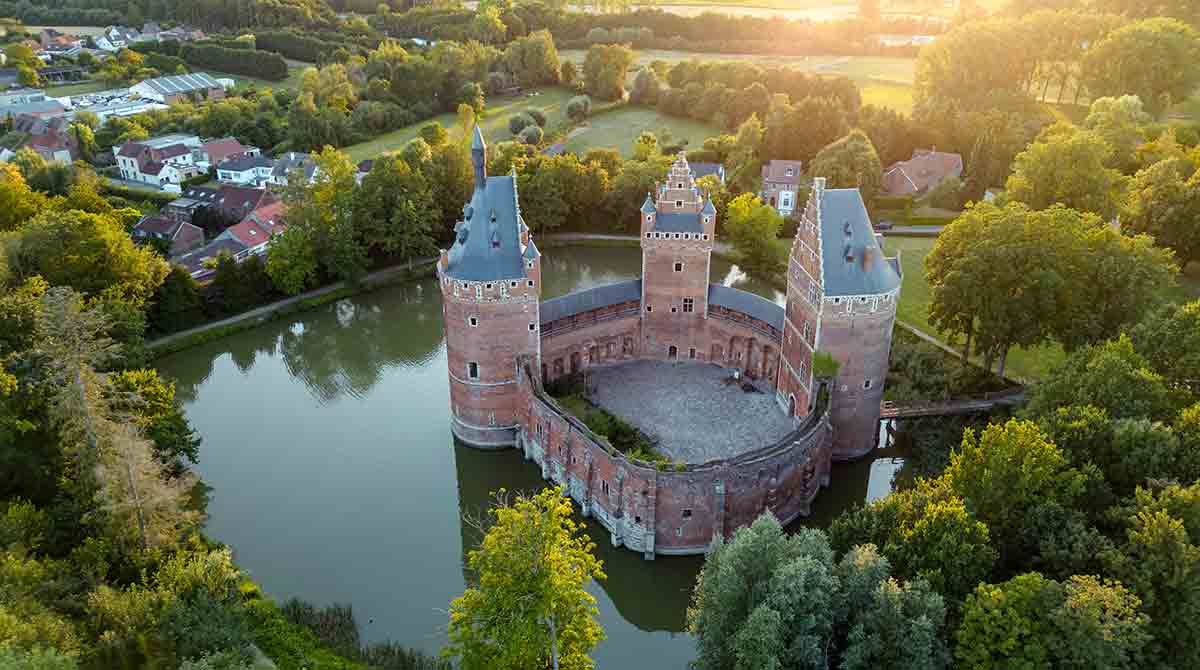
Today, Beersel Castle sits on the green outskirts of Brussels, but in its heyday, it lay at the frontier of the Duchy of Brabant.
The moated fortress got its present shape in the mid-14th century, and its main building material was brick, which was an oddity in the Medieval Ages. The three chestnut-colored towers, a large inner courtyard, and a picturesque circular moat gave the castle its unique, postcard-like appearance.
Beersel was sacked twice, in the 14th and 15th centuries, but it was swiftly rebuilt each time. However, in the following centuries, the structure fell into disrepair. At one point in the 19th century, a cotton factory operated inside its walls.
Even the famous French writer, Victor Hugo, who lived in exile in Brussels, lamented over Beersel’s decrepit state. Château de Beersel underwent major restoration in the 1930s, so today it is a museum open to the public.