
The sword is the quintessential item in a premodern warrior’s kit, at least as far as pop culture is concerned. It is a dedicated weapon of war and steeped in symbolism. As such, it is only natural that it comes to mind for most people.
Many of the stories told about premodern warfare, like the Icelandic sagas, emphasize the use of the sword in an effort to highlight battlefield valor; they also can be said to sanitize much of the chaotic nature of battle. The reality of warfare was brutal and practical, calling for a simpler weapon: the polearm.
Whether it was the Greek dory, the Japanese naginata, or the English billhook, the use of a long hafted implement rather than a sword was far more common to soldiers of yore for several important reasons.
Logistics
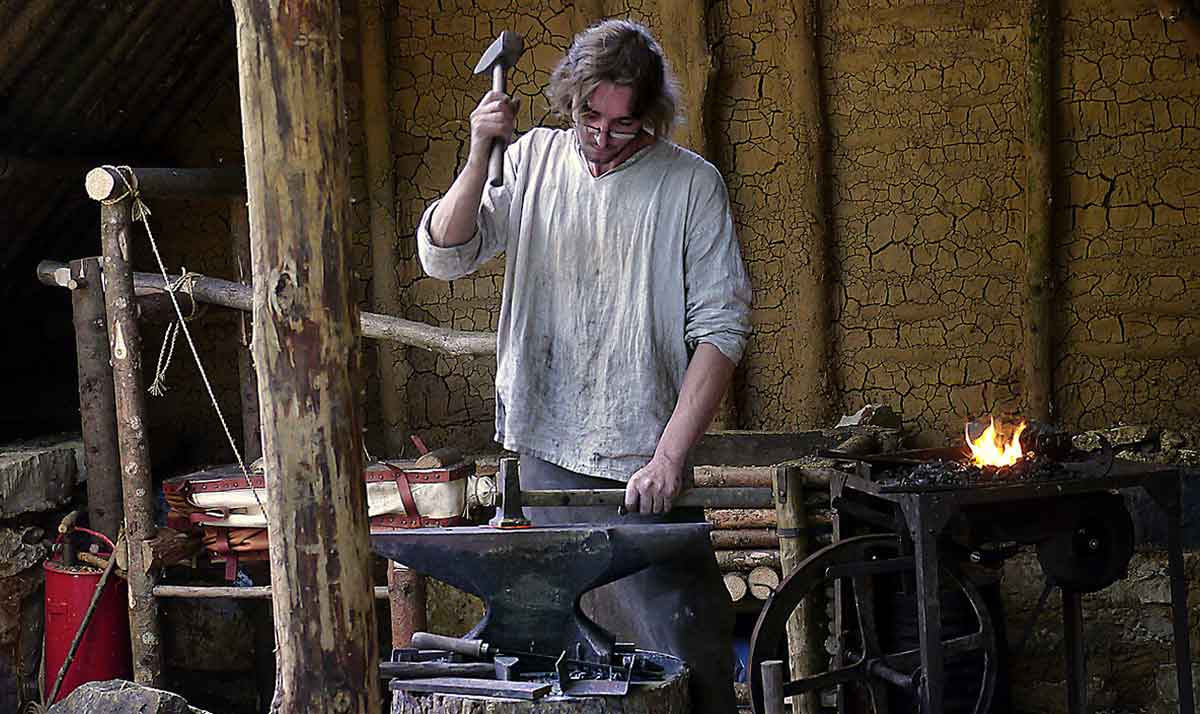
No matter how well an army is trained or how high its troops’ morale, its ultimate limit to effectiveness is how well it can be supplied. Compared to a sword’s blade, even a short one, a spearhead or axehead takes far less metal to make, and when these items have to be crafted en masse to equip an army, that adds up. For example, the blade of an arming sword (Oakeshott type X-XII) might weigh 0.5 kg, whereas a spearhead could weigh a quarter of that or even less.
Making a sword’s blade takes longer than it does to make a spearhead, and it takes a lot more skill to do so. To make a full-length sword out of a billet of iron or steel, it has to be heated, flattened, and sometimes folded upon itself and reshaped if there are impurities in the metal. Shaping the blade, especially with hand tools, could take weeks, not including the time spent sharpening it.
It also takes far less time to teach someone to use a spear or similar hafted weapon than it does to teach them how to swing and use a sword properly. For spears, the most basic action is to point the tip at the enemy and stab; the basics of doing that could be taught to recruits in a matter of days. Such quick training enabled the drafting of combat-capable (in the loosest sense of the word) peasant levies that could be called upon to bolster a medieval army’s numbers.
Size and Range
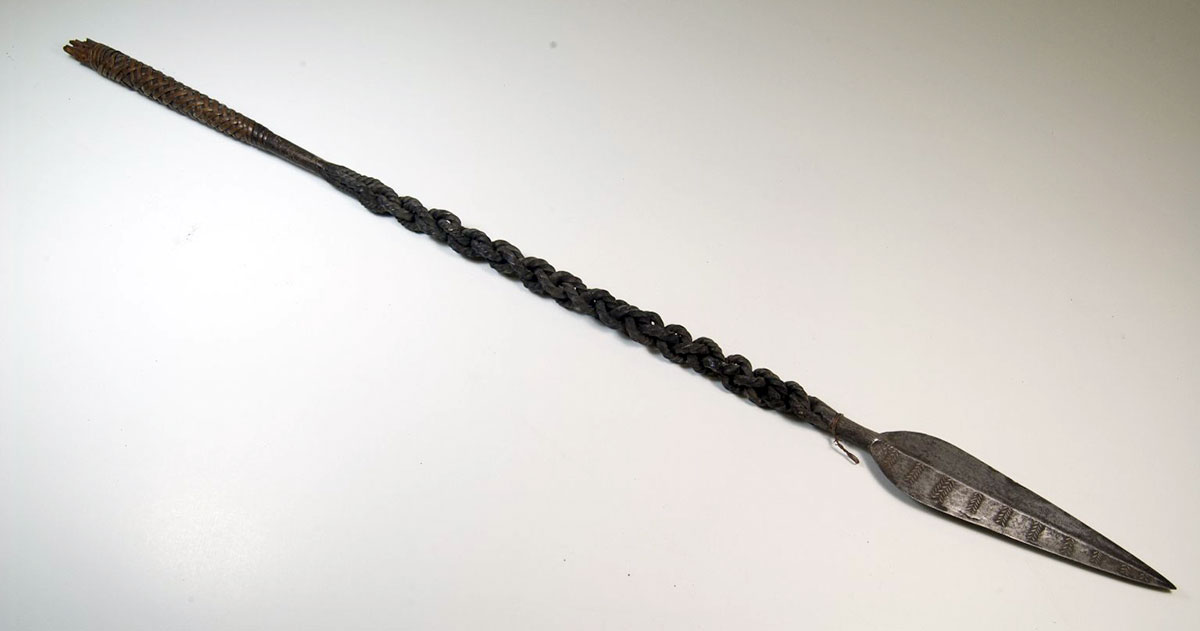
Hafted weapons are longer than swords, enabling a spearman or halberdier to keep a swordsman away from him. The extra length of the polearm can provide a psychological advantage; even if the attacker is armed the same way, the sheer size of the weapon is likely to make even the most battle-hardened warrior think twice about closing the distance.
With that increased size also comes increased mass and kinetic energy when the polearm is in full swing. Surviving accounts of medieval warfare from knights describe the terrifying experience of facing a polearm.
Versatility
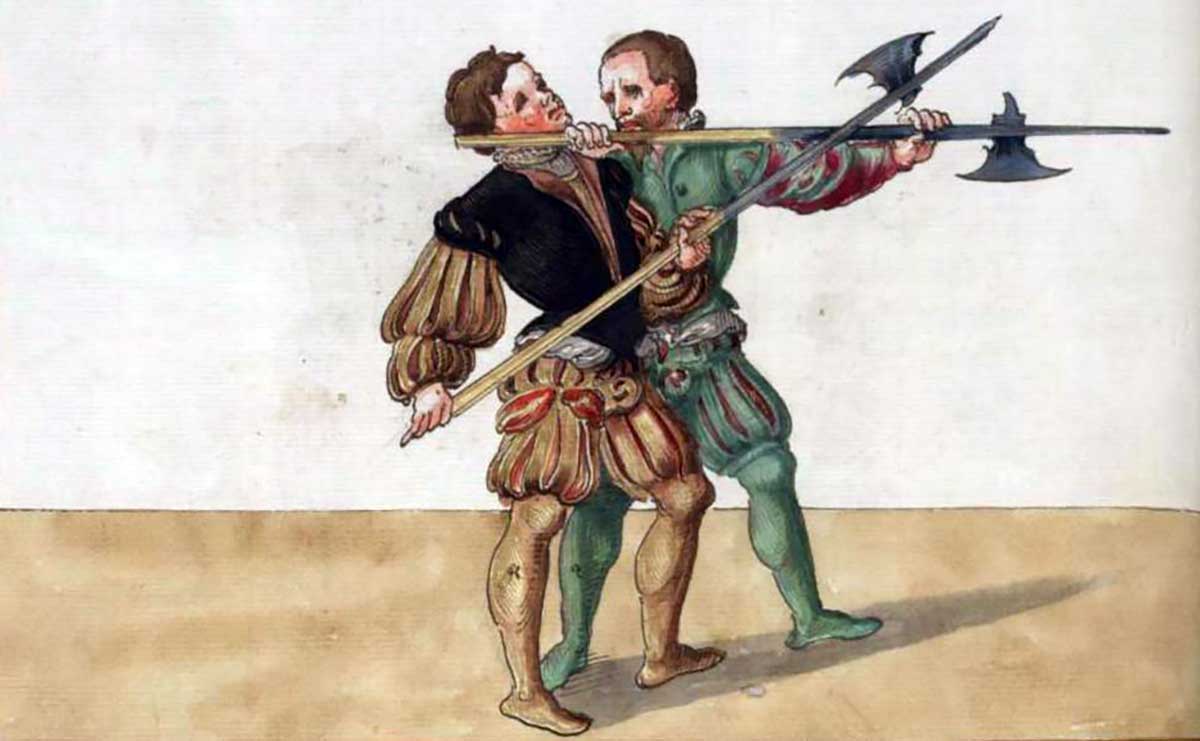
The entire haft of a polearm is a grippable surface, whereas a sword hilt is only long enough for two hands with a bit of space. The fighter could, therefore, alter the effective length to adjust for close-range fighting. They could keep their foe at the maximum distance possible, or anywhere in between by loosening one hand on the haft and sliding it forward or backward with the other hand. Altering the hand orientation between a thumbs-facing and thumbs-aligned grip affected leverage, point control, and range.
Lighter spears could be used one-handed and paired with a shield. During the Early Medieval Period, the spear-shield combination was the preferred choice for most infantry who were accustomed to fighting against lightly-armored foes. Shields offered some protection against arrows.
The spear, while effective for most of history, did not keep up with armor development. Starting around the 14th century, fully-articulated plate became prevalent, making shields redundant. Eventually, fighters took to using a host of different polearms that incorporated axeheads, hammers, and heavy blades. These gradually supplanted the basic spear because of the increased versatility of tactics that could be brought to bear.
Formation Tactics
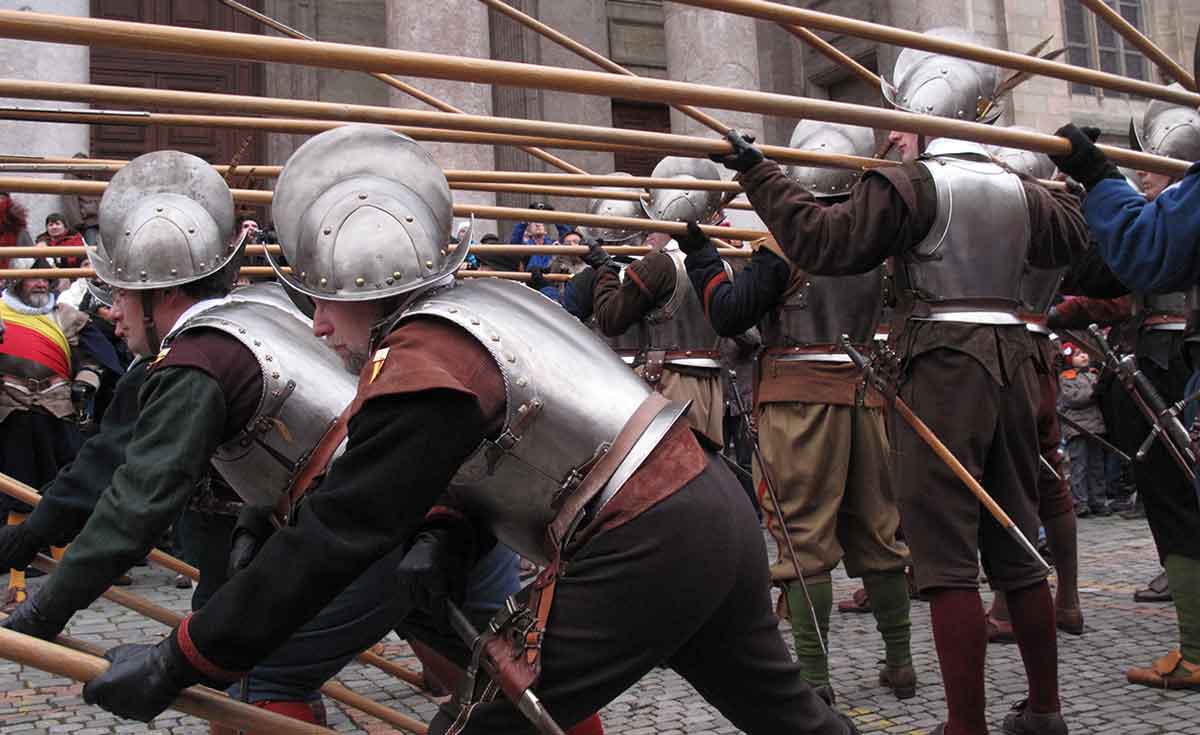
In the context of medieval warfare, most of the time, fighting in a formation provided an invaluable psychological advantage over fighting singly. Soldiers would be encouraged by the presence of their comrades nearby. The Spartan phalanx, which is one of the most well-known formations in history, worked by using overlapped shields and a wall of spears, which enemies could not penetrate easily.
Another polearm-based military formation was the pike block, made famous by the Swiss. The first several ranks of soldiers would have pikes pointed forward to create a dense wall of points; any subsequent ranks would have their pikes held diagonally, which would make it easier for them to lower and replace the numbers of any fallen in front.
The schiltron of Scottish warfare was also popular, consisting of troops who were arranged in a circle to protect themselves from all sides.
Polearms as Anti-Armor Tools
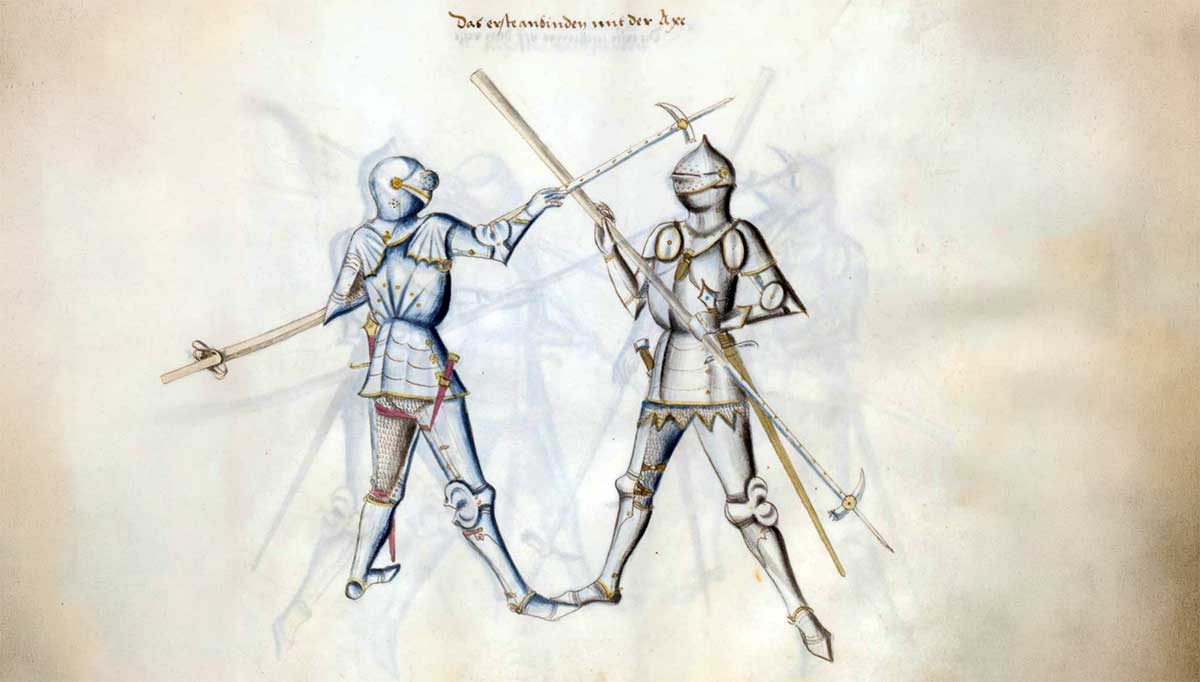
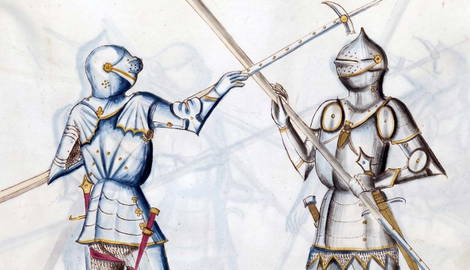
A hafted weapon was more than just a bludgeoning or stabbing weapon. It could be used to throw a man to the ground with wrestling-like maneuvers, making it easier to either finish him off or restrain them for later capture Many manuals that have been recovered, such as Joachim Meyer’s Art of Combat, the anonymous Burgundy text La Jeu de la Hache (The Play of the Axe) or Fiore de’i Liberi’s Fior Battaglia (The Flower of Battle) reference the use of poleaxes, partisans, spears, and other battlefield hafted weapons in this way.
If a fighter were of noble birth, he could reasonably expect to be held for ransom if captured rather than killed outright, especially as the cost of equipping and training a knight rose with the aforementioned advances in armor and weapons. Even kings, if captured, could fall victim to this practice, most famously Austrian duke Leopold V’s capture of Richard I. The King of England was released for 100,000 marks of silver, which is roughly $3 billion in modern money.
Fighting Against Cavalry
There is an enduring image of a rank of spears being braced against an onrushing cavalry charge, thanks to the existence of movies like Braveheart. Even though it and similar movies may be fictional, the idea of hafted weapons being useful against cavalry is historically accurate.
Even well-trained warhorses will not charge headlong into a thicket of spears, which were also long enough to prevent momentum from carrying the horse and rider into the massed ranks of spearmen. After the initial clash, the extra length of the polearm could be used to attack the rider who otherwise would have been out of reach of any foot soldier. The cavalry would veer off and seek the flank of another target.
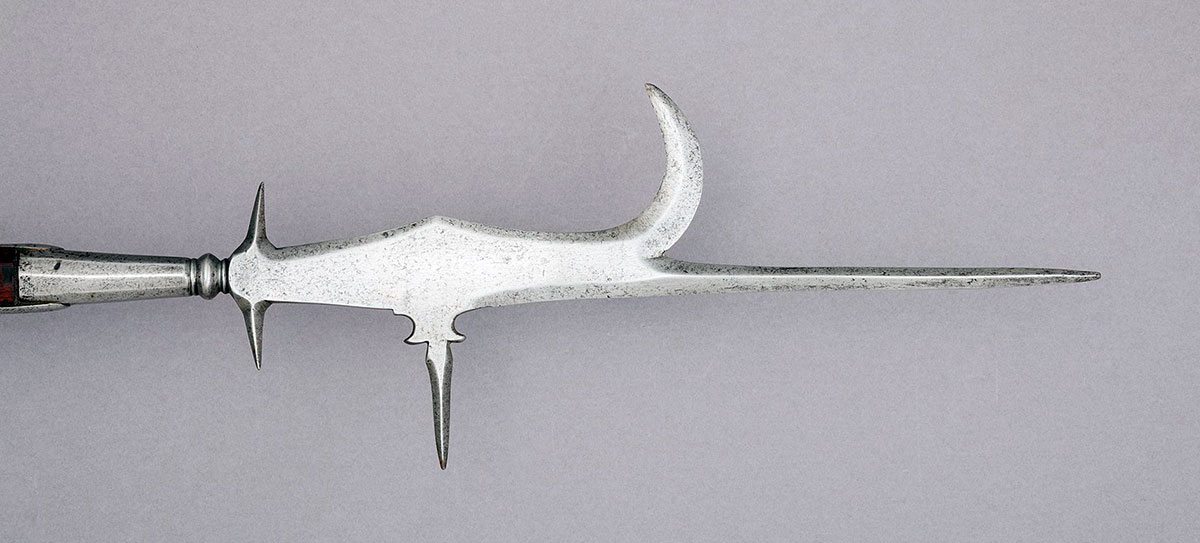
With training, infantry could also use specially-designed weapons such as the English billhook to pull riders from their mounts. Similar hook spears existed in other cultures; the guisarme pictured above is an example of a French variant of the billhook.
Polearms in Asia
We’ve discussed medieval Europe’s use of polearms. However, they were a universal idea, known in Asian cultures as well. In Chinese military philosophy and martial arts, the spear (qiang) is often called the “king of weapons,” and many techniques involving it were passed down in martial schools of thought, such as Xingyiquan.
The guandao, although called a halberd, is more like a cutting glaive, most famously wielded by the Eastern Han general Guan Yu as his personal weapon. Infantry and cavalry alike were frequently equipped with a similar weapon.
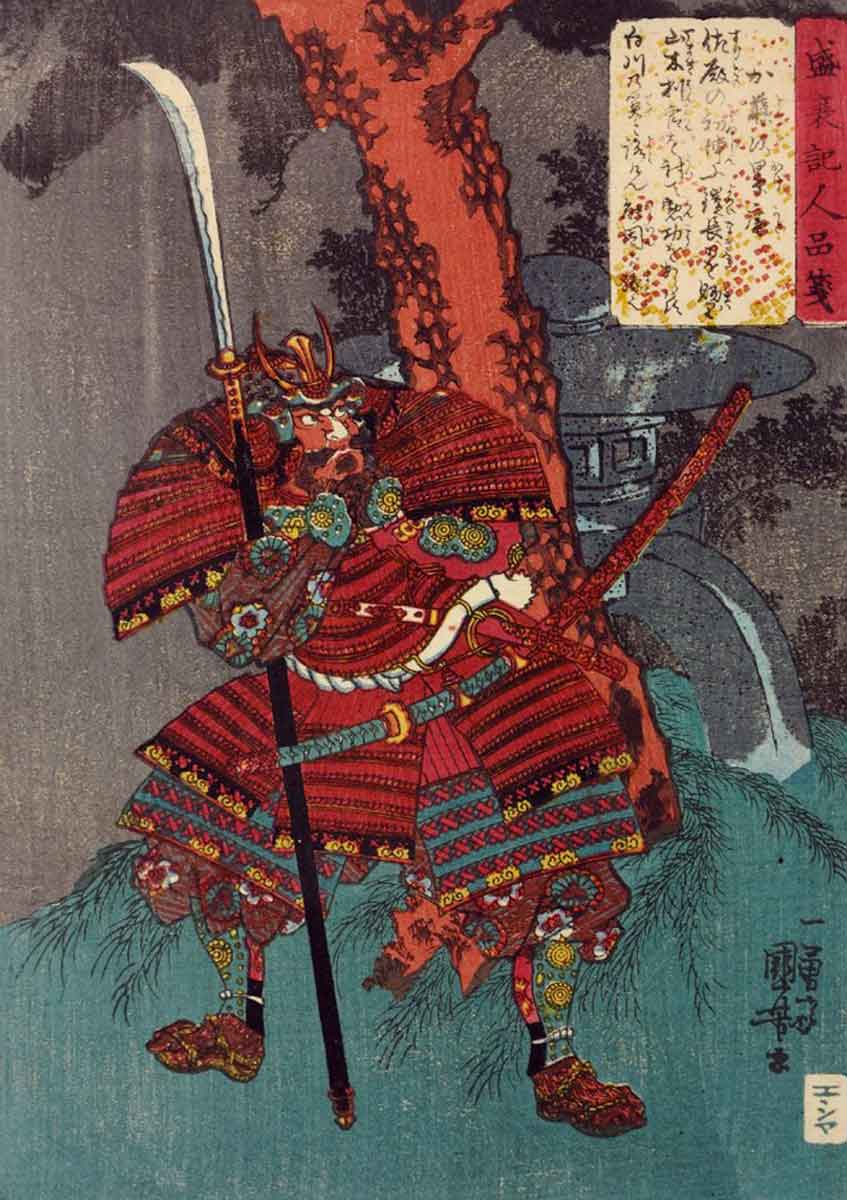
In Japan, the yari and the naginata were staples of premodern warfare. The naginata was the standard infantry weapon during the Heian and Kamakura period, later replaced by the yari as massed formation warfare became more common. The sohei warrior monks also used the naginata.
For the reasons we’ve mentioned, large hafted weapons were some of the most important and influential weapons. They have existed since humanity first sharpened a long stick and took up arms against predators; even if they do not seem as glamorous as swords, their role in war cannot be overstated.