
Caravaggio is widely considered one of the most influential painters in history, an artist who defined his era. He also led a tumultuous life, killing a man in a street brawl, which led him to spend the rest of his short life on the run, painting furiously as he went. An uncompromising visionary, Caravaggio upset the very clergy that commissioned his work, reimagining the most sacred of scenes in unorthodox ways.
The best museums with Caravaggio paintings are scattered across six countries, holding the roughly 80 works he left behind.
Caravaggio’s Life in Brief
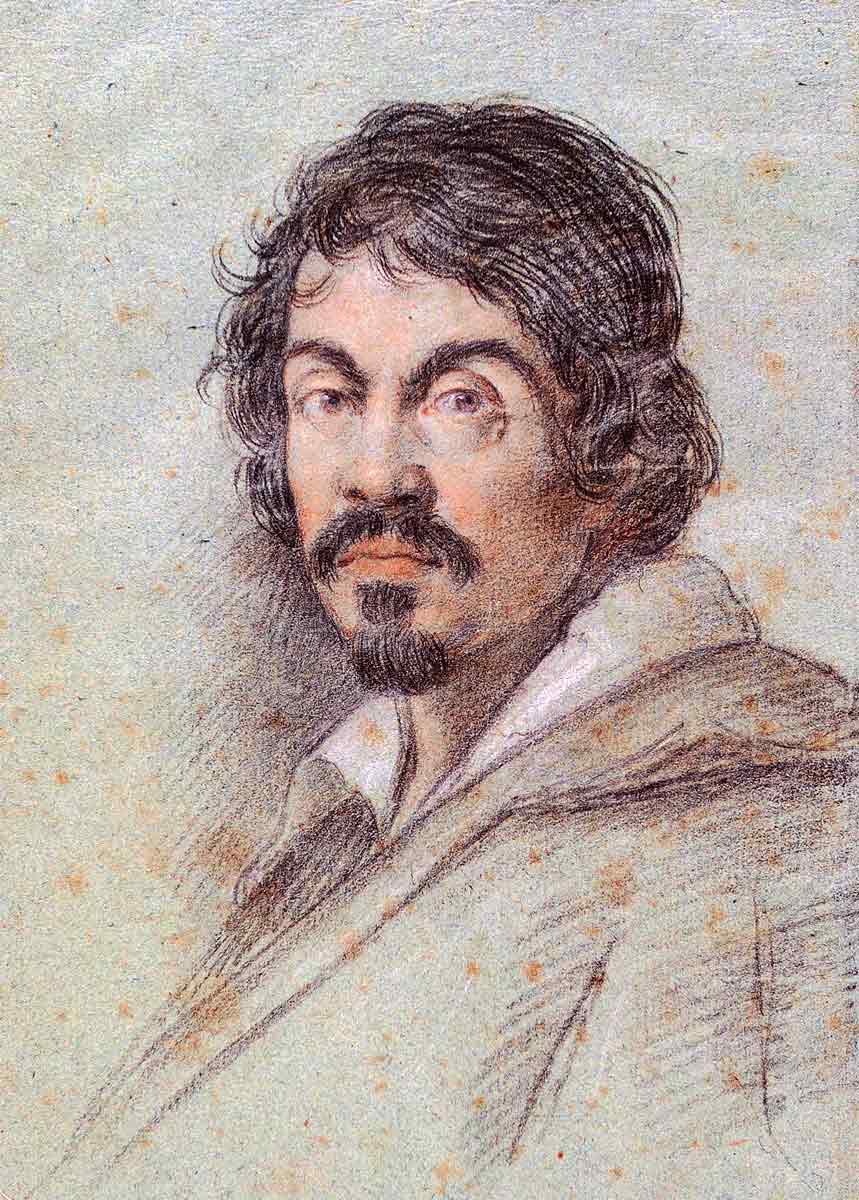
Michelangelo Merisi da Caravaggio was born in Milan in 1571. After training under a competent but unremarkable Milanese painter, he arrived in Rome around 1592 and swiftly found patronage under Cardinal Francesco Maria Del Monte. Under his patron, who gave him lodgings and an introduction, the young Caravaggio moved from small secular paintings for private collectors to major church commissions within just a few years. What set him apart from the start was his use of light, a single raking source that made skin look alive, and sacred subjects look human in ways that delighted some and unsettled others. Caravaggio’s use of light and the contrast between light and dark (chiaroscuro, in Italian) was a game-changer in the Baroque art world.
It is around this time that his hot-blooded temper began to show. By the early 1600s, Caravaggio’s police record ran to multiple assaults, illegal weapons charges, and at least one incident we know of involving a plate of artichokes being thrown at a waiter. But it was the killing of Ranuccio Tomassoni in 1606, a man Caravaggio had several physical run-ins with, that forced the talented painter into a life on the run. In his four years of exile, which saw him flee first to Naples, then Malta, and eventually Sicily, Caravaggio would continue to paint unabated. He lobbied all his major contacts for a papal pardon while in exile, his plea eventually heard in 1610.
To kickstart your tour of museums with Caravaggio paintings, it might help to first understand what this young artist was capable of and how the Catholic Church both craved and struggled with his work. To this end, the very best place to start is no museum at all, but a small chapel just a few minutes’ walk from the Pantheon in Rome.
1. San Luigi dei Francesi, Rome, Italy
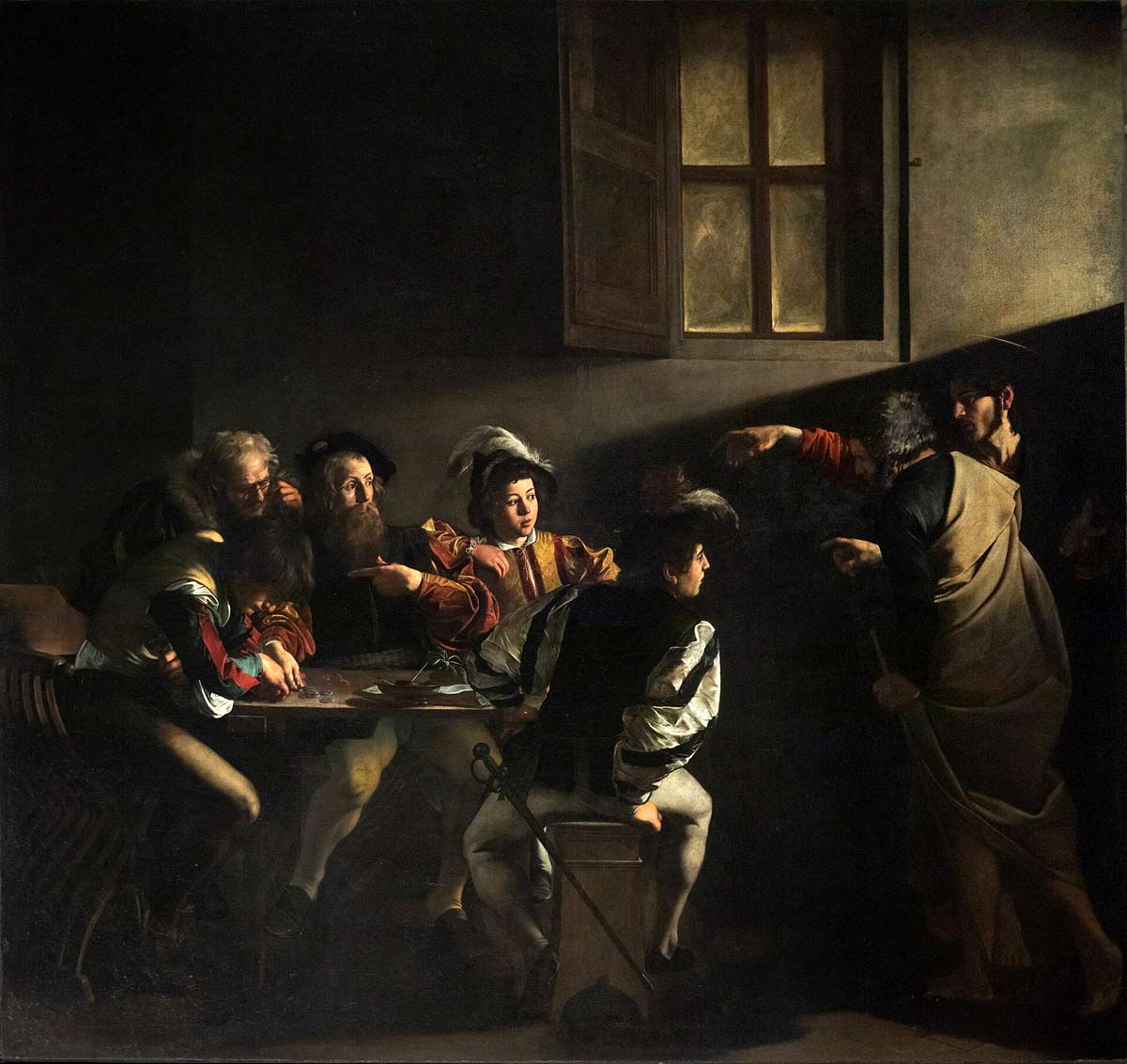
The Contarelli Chapel, a working church, holds three Caravaggio paintings that one could easily claim “made” his name. The Calling of Saint Matthew (1600) shows the moment Christ summons a tax collector from his counting table, and just about everything about it is enchanting: the tax collector wearing contemporary Roman clothes, a room with no discernible holiness about it at all, and a single beam of light carrying much of the painting’s meaning. The clergy were not especially delighted with the piece, but they accepted it nonetheless.
The third chapel painting, Saint Matthew and the Angel, fared even worse. Caravaggio’s first version showed Matthew as a rough peasant with dirty feet, the angel practically guiding his illiterate hand through the gospel text. This one was initially rejected outright, deemed far too undignified by the clergy. He then painted a tamer replacement for the wall, while the rejected original made its way into the collection of Berlin’s Kaiser-Friedrich-Museum, where it was destroyed in 1945 during World War II and is now known only through photographs.
Insider Tip: Entry is free, but the paintings are lit by coin-operated lights, so bring a couple of euro coins. Note that the church, like most things in Rome, closes for lunch.
The start of a brilliant (albeit short-lived) career: The Contarelli commission launched Caravaggio into the top tier of Roman painters, and more commissions followed in quick succession. But so did trouble, of course, and so did the paintings that the Church found a little too edgy to keep. Caravaggio would then choose to make smaller, more personal work for private collectors during his early years in Rome.
2. Musée du Louvre, Paris, France
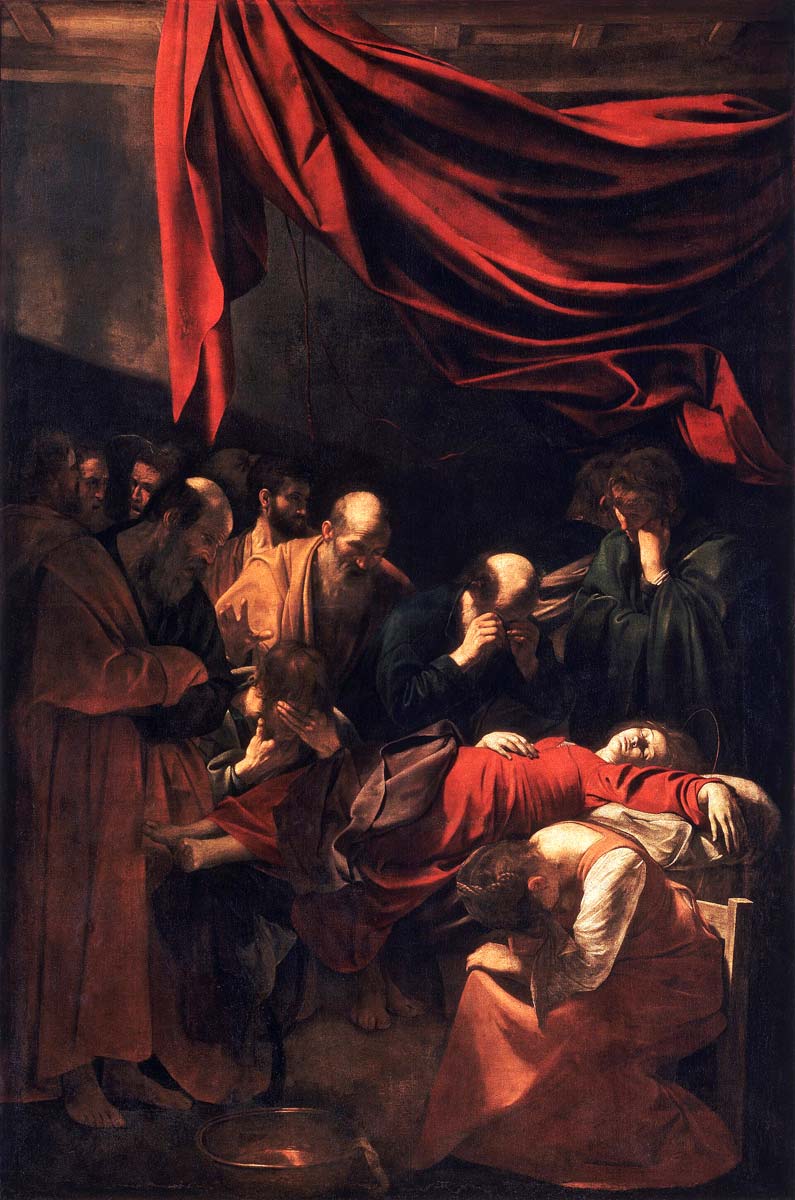
The Death of the Virgin (c. 1604) was one of those pieces commissioned for a Roman church and rejected almost as soon as it was delivered. Caravaggio had painted the Virgin Mary lying down, bloated, her feet toward the viewer, and surrounded by apostles who looked more like dock workers than disciples. The rumor mill began almost immediately, with people saying that the model who posed for the painting was a local prostitute. The Carmelite friars who had commissioned the painting, flushed to no end, promptly sent it back.
What happened next says a great deal about how the art world actually worked, and undoubtedly still does. Flemish painter Peter Paul Rubens, who recognized the painting’s value, advised the Duke of Mantua to buy it, and it went on brief public display in Rome before leaving the city for good. Contemporary accounts record that painters queued to see it in those final days. The piece eventually passed into the French royal collection and has been at the Louvre ever since, nearly four meters (13 feet) tall and as unapologetic as the day it was rejected.
Caravaggio on the run: The killing that changed the course of Caravaggio’s life happened on May 28, 1606, during what appears to have been a brawl at a tennis match. Ranuccio Tomassoni died of his wounds, and Caravaggio fled Rome that same night, with a capital sentence issued against him that gave any citizen of Rome the legal right to kill him on sight. He never managed to return. The four years of exile that followed eventually took him to Malta, where the Knights of St John gave him the largest commission of his career, the piece you ought to see next.
3. Co-Cathedral of St John, Valletta, Malta
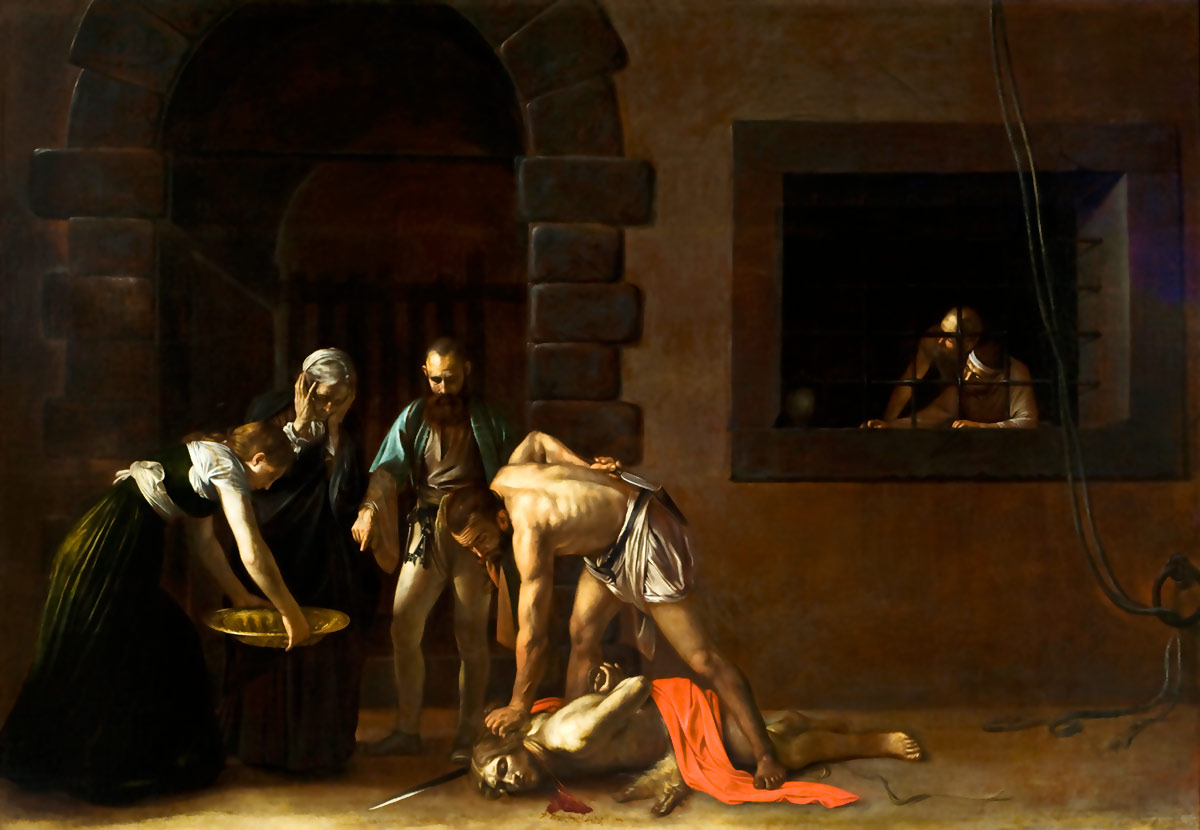
The Beheading of St John the Baptist (1608) is the only painting Caravaggio ever signed, and he chose to do so in the painted blood pooling beneath the Baptist’s severed head, a detail you can catch if you stand close enough. At roughly 3.7 by 5.2 meters (13 by 17 feet), it is also the largest painting he ever made, and it hangs in the Oratory of the Co-Cathedral of St John in Valletta, in a room that was purpose-built to house it.
Less than a year before, the Knights had made him one of their own, giving him an actual knighthood, which was no small turnaround for a man with a death sentence waiting back in Rome. It did not last. Within months, he was back in prison, this time in Malta on a charge the records never quite spell out, before escaping by rope and fleeing to Sicily. Nobody has ever worked out how he got over the walls. The Knights had the last word, though. That December, they gathered in this same oratory, in front of the painting he had made for them, and threw him out of the order as “a rotten and fetid limb.”
4. Galleria Borghese, Rome, Italy
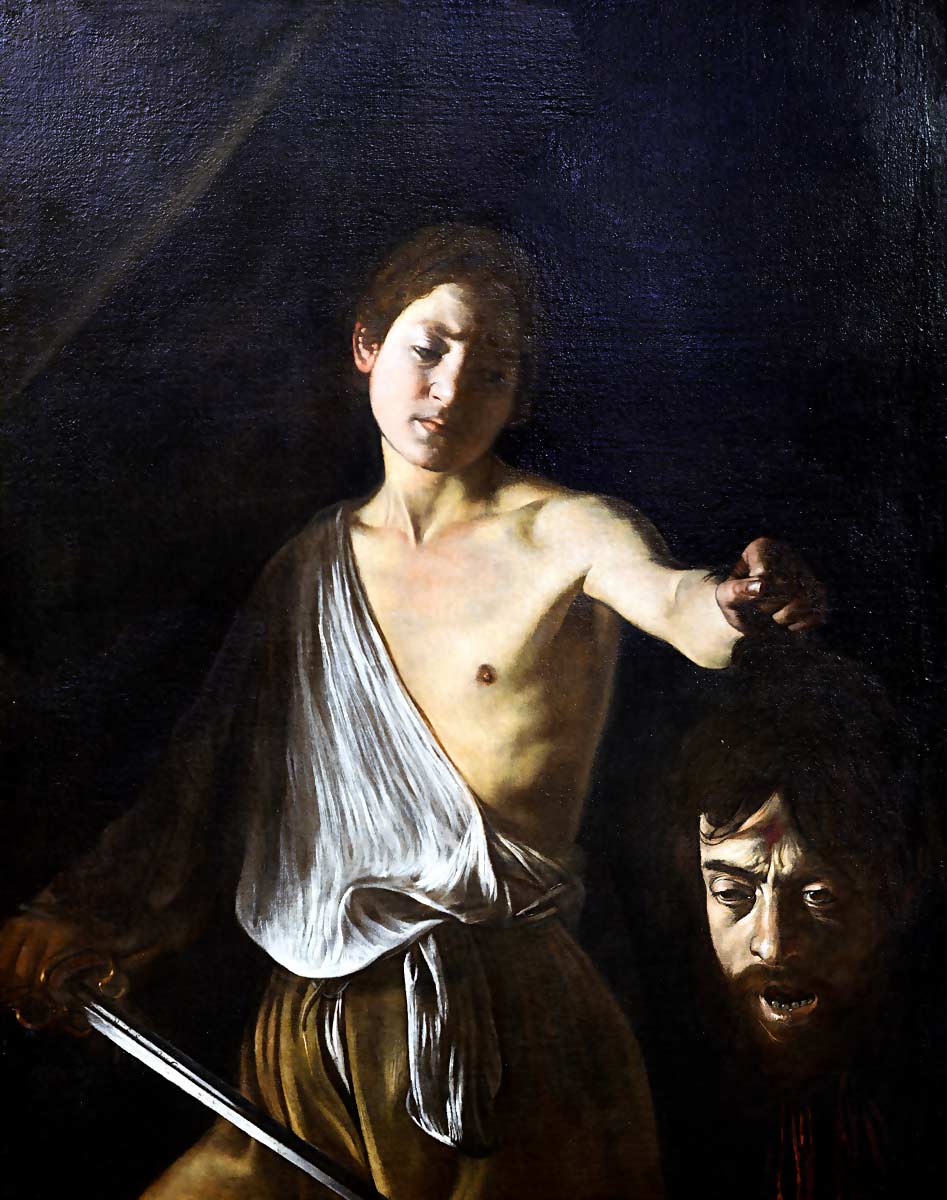
Of the six Caravaggios in the Galleria Borghese, the most arresting is David with the Head of Goliath (c. 1610), painted during the artist’s final months while he was desperately seeking a papal pardon. Many scholars believe the severed head is a self-portrait, making the work feel less like a biblical scene than a grim act of self-reckoning. Nearby hangs Boy with a Basket of Fruit (one of his earliest Roman paintings), which highlights just how much his style evolved over less than two decades. The collection also includes Saint Jerome Writing, the Madonna dei Palafrenieri, and the Young Sick Bacchus, giving a rare overview of Caravaggio’s career in one fell swoop.
The collection itself has a colorful history of its own accord. Cardinal Scipione Borghese, the pope’s nephew and one of Rome’s most aggressive and ruthless collectors, acquired masterpieces with a determination that occasionally strayed into outright coercion. The result is one of the finest art collections in Italy, assembled by methods that would raise many an eyebrow today.
Wherever Caravaggio went, trouble followed: By late 1609, Caravaggio was back in Naples for the second time, having been forced to flee Sicily as well. The papal pardon was reportedly close to being issued. Then he was attacked outside a tavern, badly enough that some accounts suggest he was nearly killed, possibly by agents of the Tomassoni family looking for revenge. Caravaggio did survive the attack, and he returned to painting at once.
5. Museo Nazionale di Capodimonte, Naples, Italy
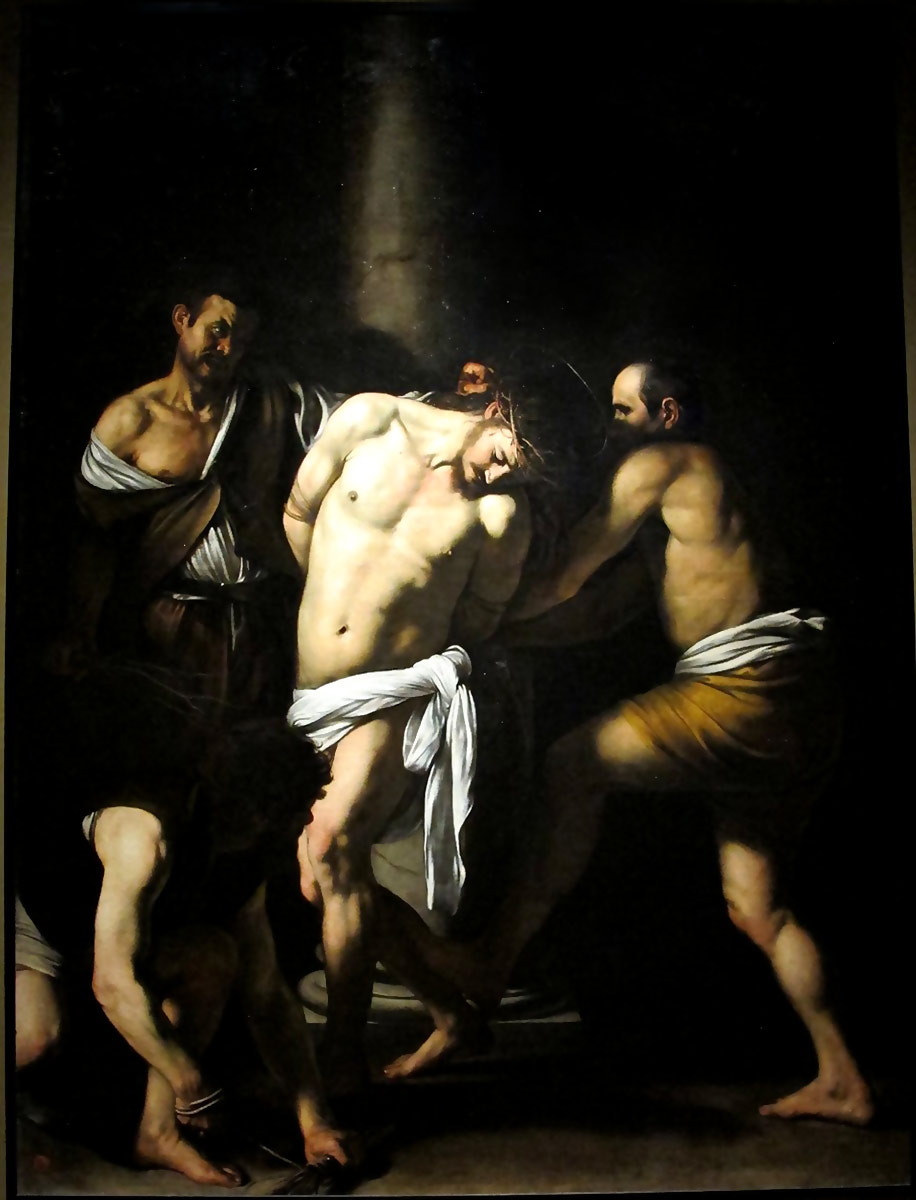
The Flagellation of Christ (1607) belongs to Caravaggio’s years in Naples: three torturers closing in on Christ at the column, most of the canvas given over to darkness. Tommaso de Franchis commissioned it for his family chapel in San Domenico Maggiore, and there it stayed for something like 350 years, written up in the city guidebooks and gawked at by travelers. The worries around safety and conservation finally saw the piece moved up the hill to the Capodimonte in 1972. It is plausible that Caravaggio may have come back to it, since some believe he reworked the picture as late as 1610, in the last months of his life.
Even though the painting has moved on, the church itself is still worth a look while you are in Naples. For a Caravaggio that never left its original setting, you want the nearby Pio Monte della Misericordia, where his Seven Works of Mercy still hang in the spot it was made for. For the Capodimonte itself, allow at least half a day. The museum occupies a royal palace in a large park above the city, and the collection extends well beyond Caravaggio.
Caravaggio died in July 1610 on a beach at Porto Ercole, after being mistakenly detained there while his boat, carrying several of his paintings, went on without him. He fell ill, developed a fever, and died within days, just three days short of his pardon. A life and a talent cut short way too soon, yet an influence that is still felt in the art world over four centuries later.
6. Kunsthistorisches Museum, Vienna, Austria
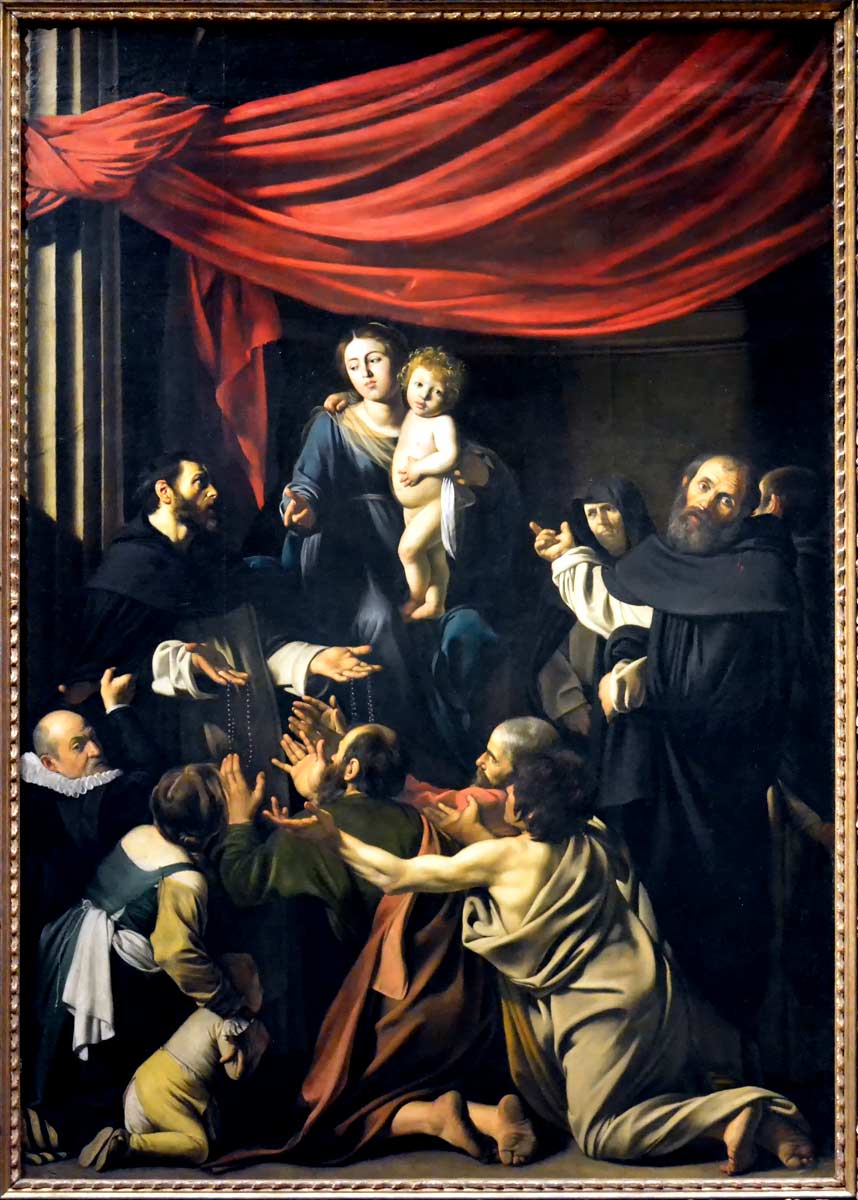
Of the three Caravaggios in Vienna’s Kunsthistorisches Museum, the most compelling is the Madonna of the Rosary (1606–7), painted in Naples in the weeks immediately after the killing and his flight from Rome. It was commissioned but never delivered to its original patron, and ended up on the open market, where a group of Flemish painters (among them Rubens) joined forces to buy it and donate it to a church in Antwerp, specifically so that other northern painters would have the chance to study it.
Few stories capture Caravaggio’s reputation better. He was a wanted man living in exile, yet some of the most important painters in northern Europe were willing to pool their money so others could study his work. The painting eventually made its way into the Habsburg collection and has been in Vienna ever since, and knowing the circumstances in which it was made really does change how it looks when you stand in front of it.