
Ancient Egypt unfolded across more than 30 dynasties from around 3100 BC to the Roman conquest in 30 BC, a span of roughly three millennia. Its tombs, temples, and papyri have been excavated, preserved, and dispersed to museums across three continents over the past two centuries, which means seeing the full picture really does require visiting more than just Cairo. The museums below cover the entire arc of Egyptian dynasties, from Predynastic figurines through to the Ptolemaic Era, with particular emphasis on the famous Old, Middle, and New kingdoms that produced the pharaohs almost everyone has heard of.
1. Grand Egyptian Museum (GEM), Giza, Egypt
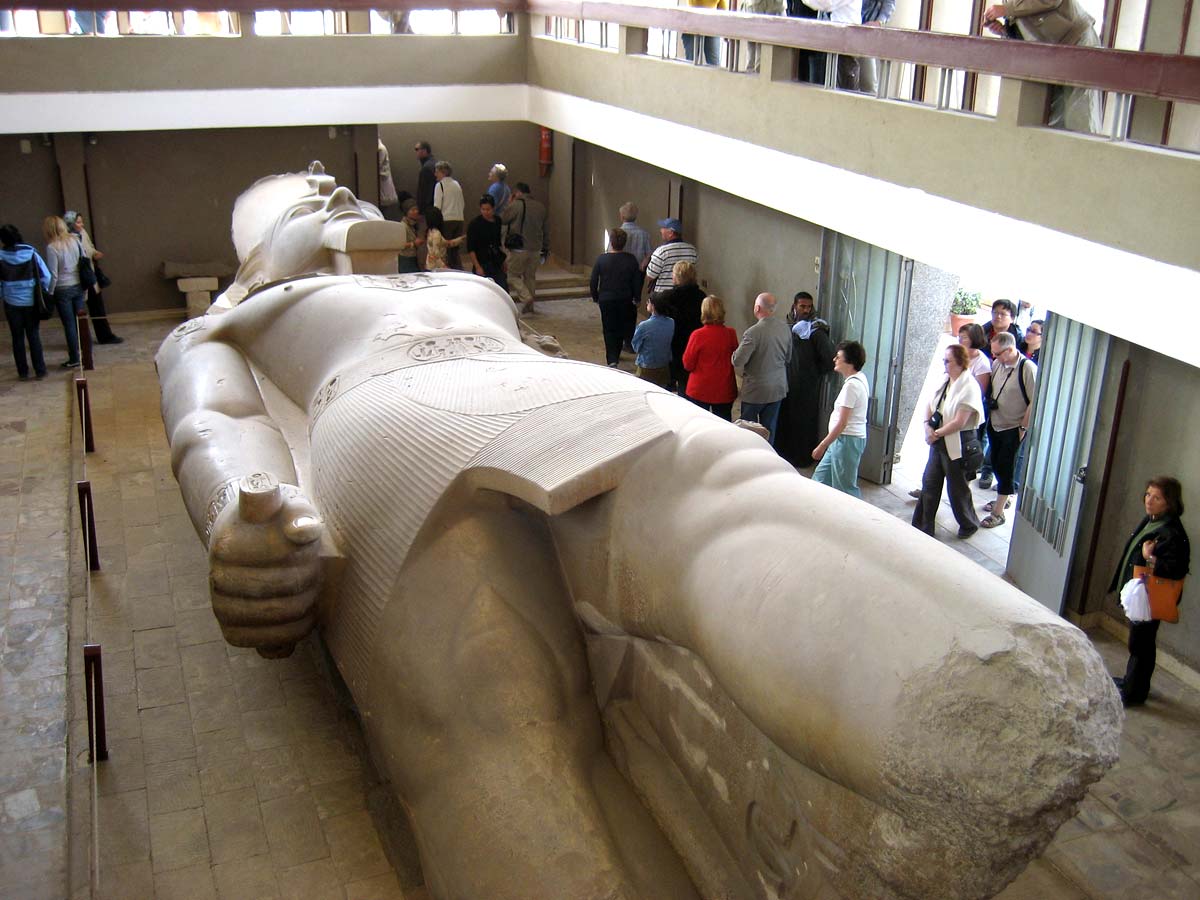
More than 30 years after its plan was first announced, the Grand Egyptian Museum finally opened to the public in November, 2025. It is the world’s largest archaeological museum dedicated to a single civilization, showcasing more than 100,000 artifacts. The twelve galleries are arranged chronologically, ranging from prehistoric Egypt to the Greco-Roman period.
The Grand Atrium alone spans 10,000 square meters (more than 100,000 square feet), while the Grand Staircase holds more than 60 monumental artifacts, culminating with a jaw-dropping panoramic view of the Giza Pyramids framed through a triangular window. The undisputed centerpiece is the Tutankhamun Gallery, which displays all 5,398 objects from the boy-king’s tomb together for the very first time since Howard Carter discovered them in 1922. His famous gold funerary mask sits behind bulletproof glass, getting the level of protection it deserves.
2. Egyptian Museum, Tahrir Square, Cairo
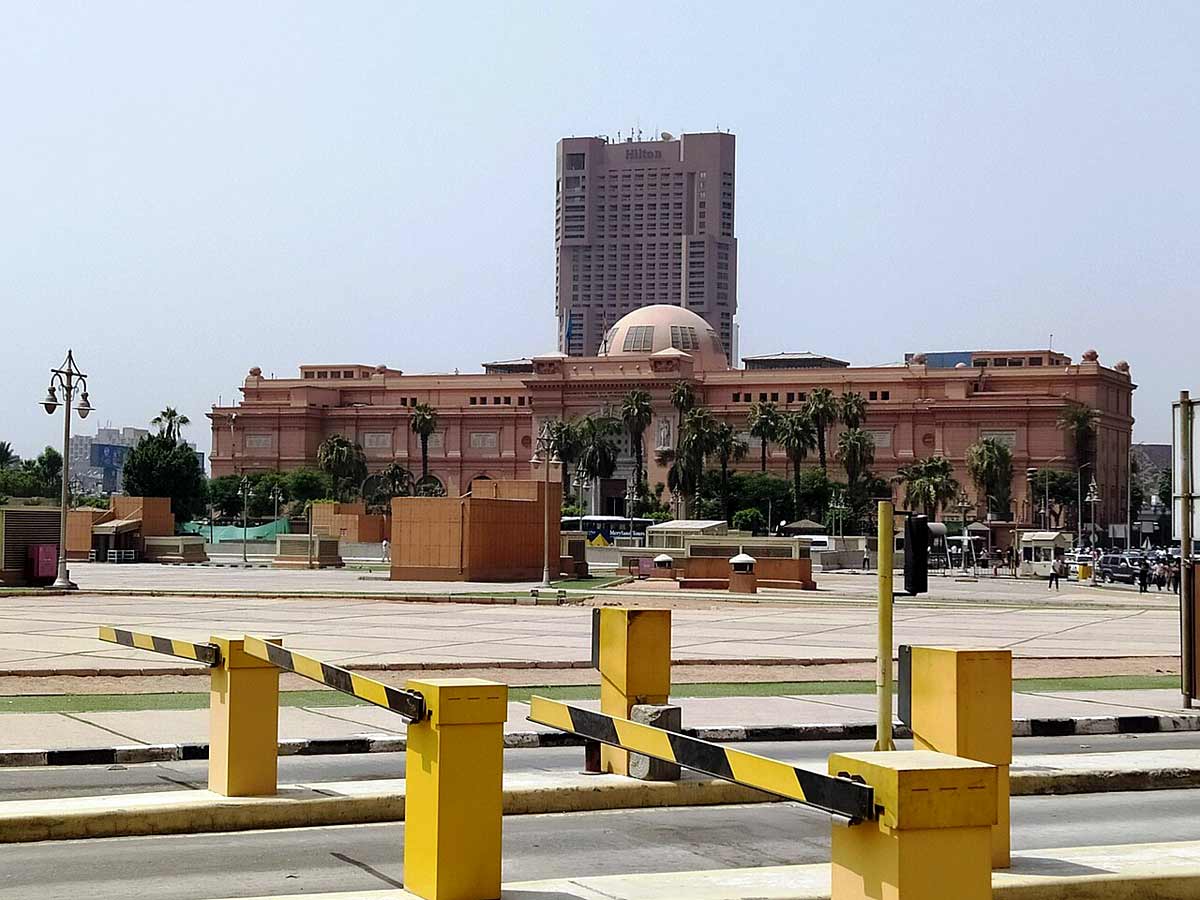
Even now that the gleaming new GEM is open, the original Egyptian Museum in Tahrir Square remains an essential stop for anyone interested in Egyptian history. Opened in 1902, in a striking pink neoclassical building designed by French architect Marcel Dourgnon, it’s the oldest archaeological museum in the entire Middle East and once held the largest collection of pharaonic antiquities anywhere in the world, with over 170,000 items at its peak.
With the entire Tutankhamun collection now moved to GEM and the Royal Mummies have relocated to NMEC across town, the Tahrir museum has shifted focus to its remaining strengths. These include old kingdom statuary, middle kingdom sarcophagi, the spectacular collections from the tombs of Yuya and Thuya (Tutankhamun’s great-grandparents), and the artifacts unearthed from the royal tombs at Tanis.
The building itself, with its soaring central atrium and wonderfully old-fashioned 19th-century display cases packed to bursting, remains a kind of museum of museum history as much as a museum of Egypt. There’s an old-world charm to it that the slick new GEM simply can’t replicate.
3. National Museum of Egyptian Civilization (NMEC), Cairo
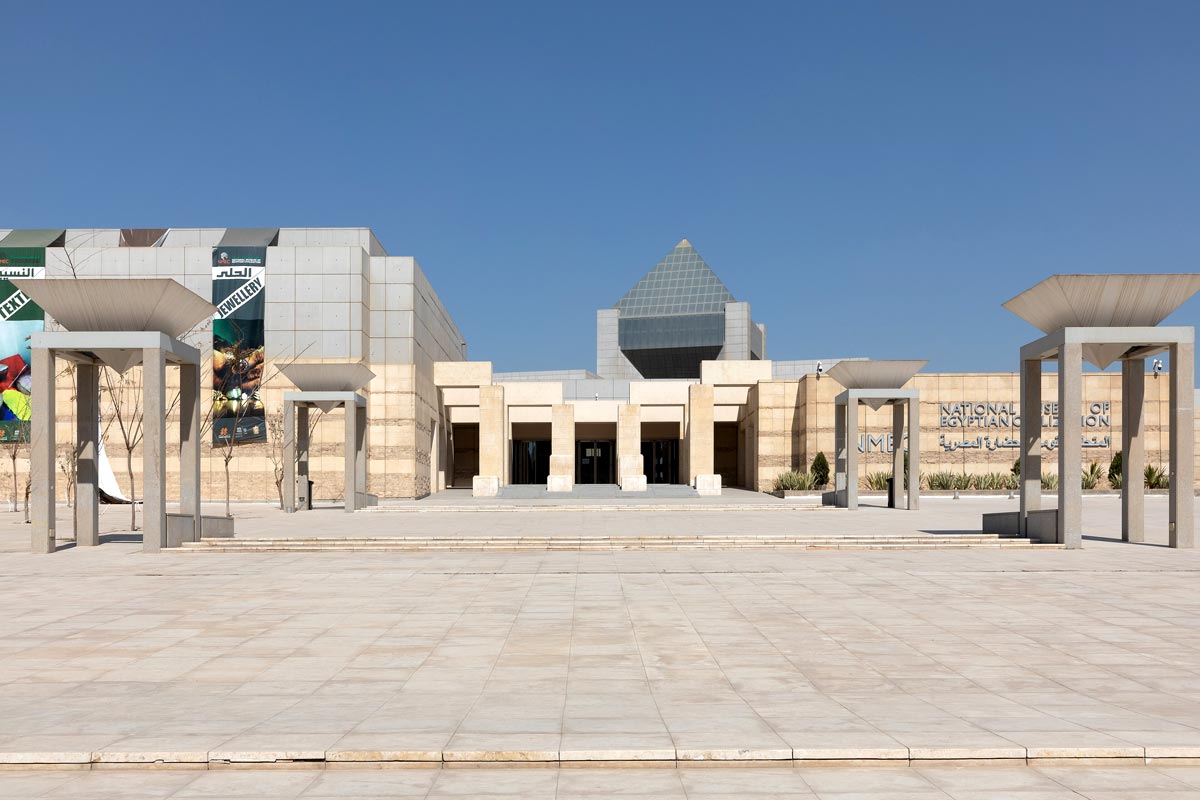
Opened in stages from 2017 and fully inaugurated in April 2021 with the unforgettable Pharaohs’ Golden Parade, the National Museum of Egyptian Civilization sits in the Fustat district of Old Cairo. Unlike the other Cairo museums, NMEC traces the entire history of Egypt from prehistoric times right through to the present day, rather than stopping abruptly at the Roman conquest in 30 BC.
The undisputed showpiece of the museum is the spooky Royal Mummies Hall, where 22 mummies (18 kings and four queens) rest in dimly-lit, temperature-controlled cases. They include some of the most famous pharaohs ever to rule, like Seti I, Ramesses II, Hatshepsut, Thutmose III, Amenhotep I, and the unidentified “Younger Lady” now widely believed to be Tutankhamun’s mother. Each mummy has an information panel showing the latest CT scans and DNA analyses, which adds a fascinating modern science aspect to the experience.
The wider galleries cover dynastic Egyptian history alongside Coptic, Islamic, and modern periods, giving a sense of cultural coherence that purely pharaonic museums tend to miss completely.
4. Museo Egizio, Turin (Italy)
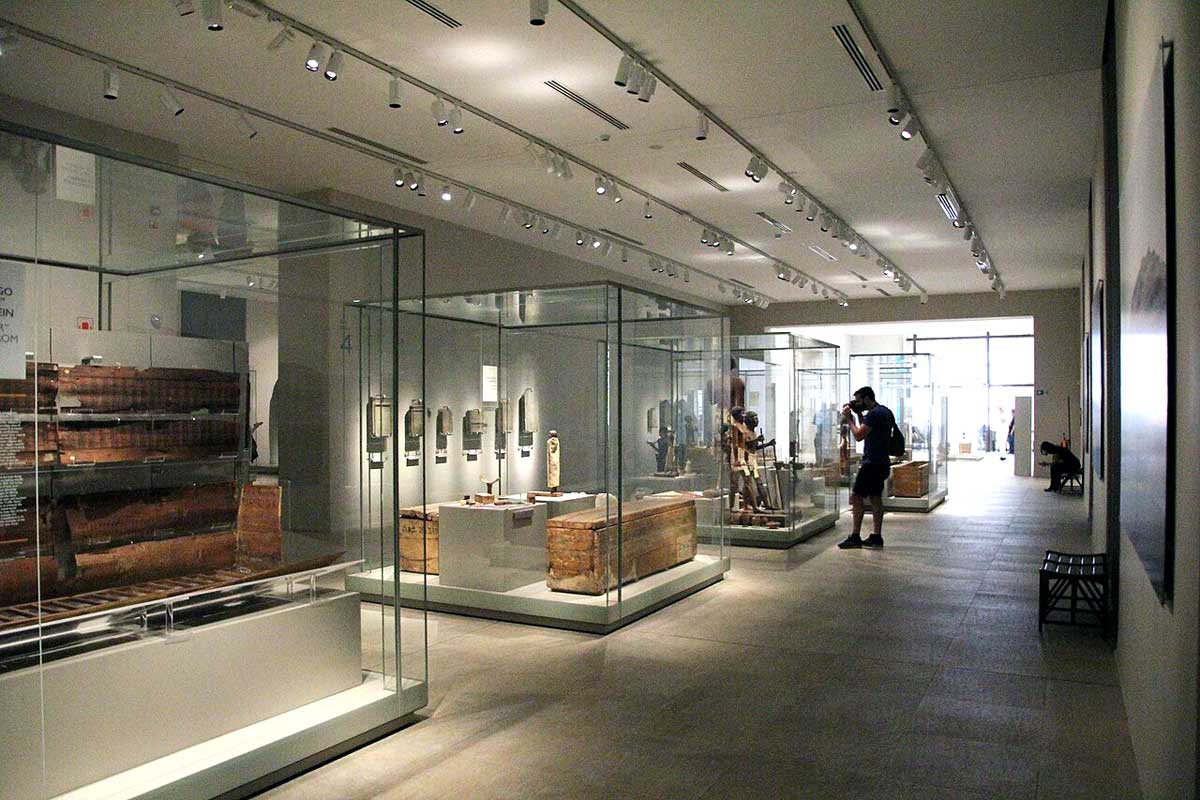
Founded in 1824 by King Charles Felix of Savoy, Turin’s Museo Egizio is the world’s oldest museum dedicated entirely to ancient Egyptian culture and holds the largest collection of Egyptian treasures outside Cairo devoted exclusively to the civilization. Its roughly 40,000 artifacts are spread across four exhibition floors, and recently enjoyed a major expansion.
The Statuario, the museum’s grand double-height hall of pharaonic statues, has been a fixture since 1824 and was beautifully redesigned by Oscar-winning Italian set designer Dante Ferretti for the 2006 Winter Olympics. The intact tomb of the architect Kha and his wife Merit, excavated by Ernesto Schiaparelli (uncle of the famous fashion designer and an avid Egyptologist) at Deir el-Medina in 1906, is a rare example of a non-royal burial found completely undisturbed, with all its furniture, clothing, food offerings, and personal possessions still in place.
The small rock-cut temple of Ellesiya, gifted by Egypt in gratitude for Italy’s role in the rescue of the Nubian monuments in the 1960s, sits fully reassembled in its own dedicated gallery. The museum also holds three full copies of the Book of the Dead, one of which is the oldest known complete version anywhere.
While Egypt often campaigns for the return of its ancient treasures spread around the world, it has never requested that any be returned from Turin. So respected is the collection in Italy that the two countries collaborate closely on its upkeep. It really is, by far, the best museum for Egyptian dynasties outside Egypt.
5. The British Museum, London
The British Museum holds roughly 100,000 objects related to ancient Egypt, the largest such collection anywhere outside Egypt itself. Best of all, entry is free, and the famous Egyptian sculpture gallery is one of the very first spaces most visitors reach after coming through the main Great Russell Street entrance.
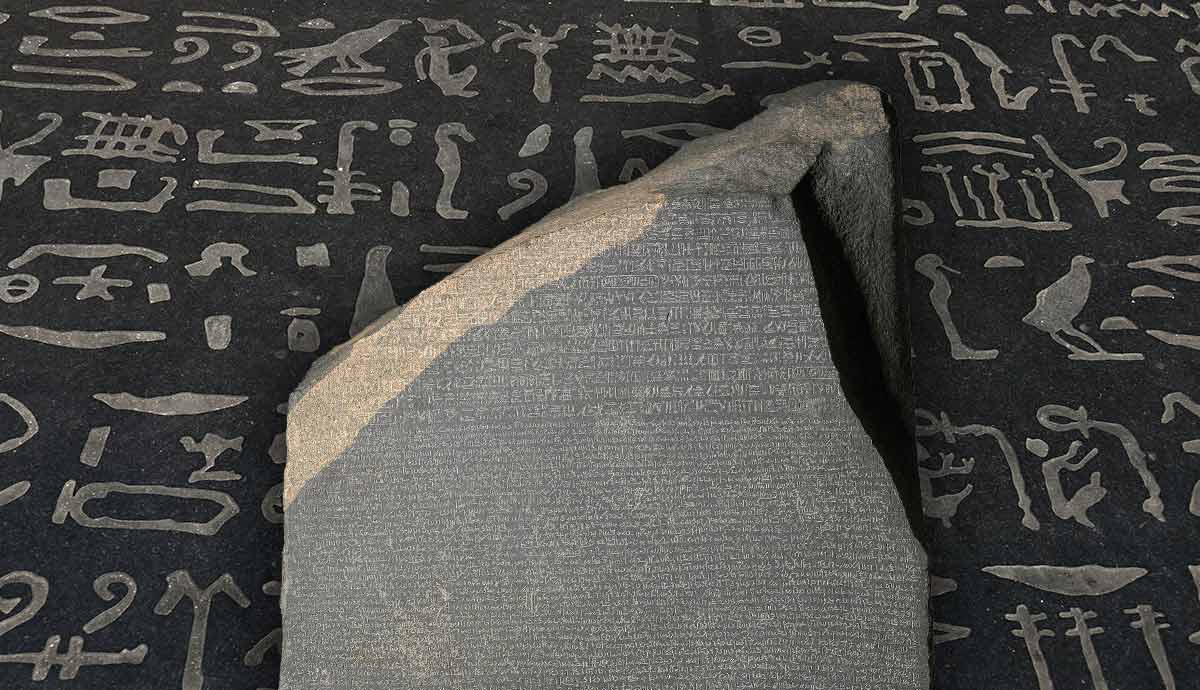
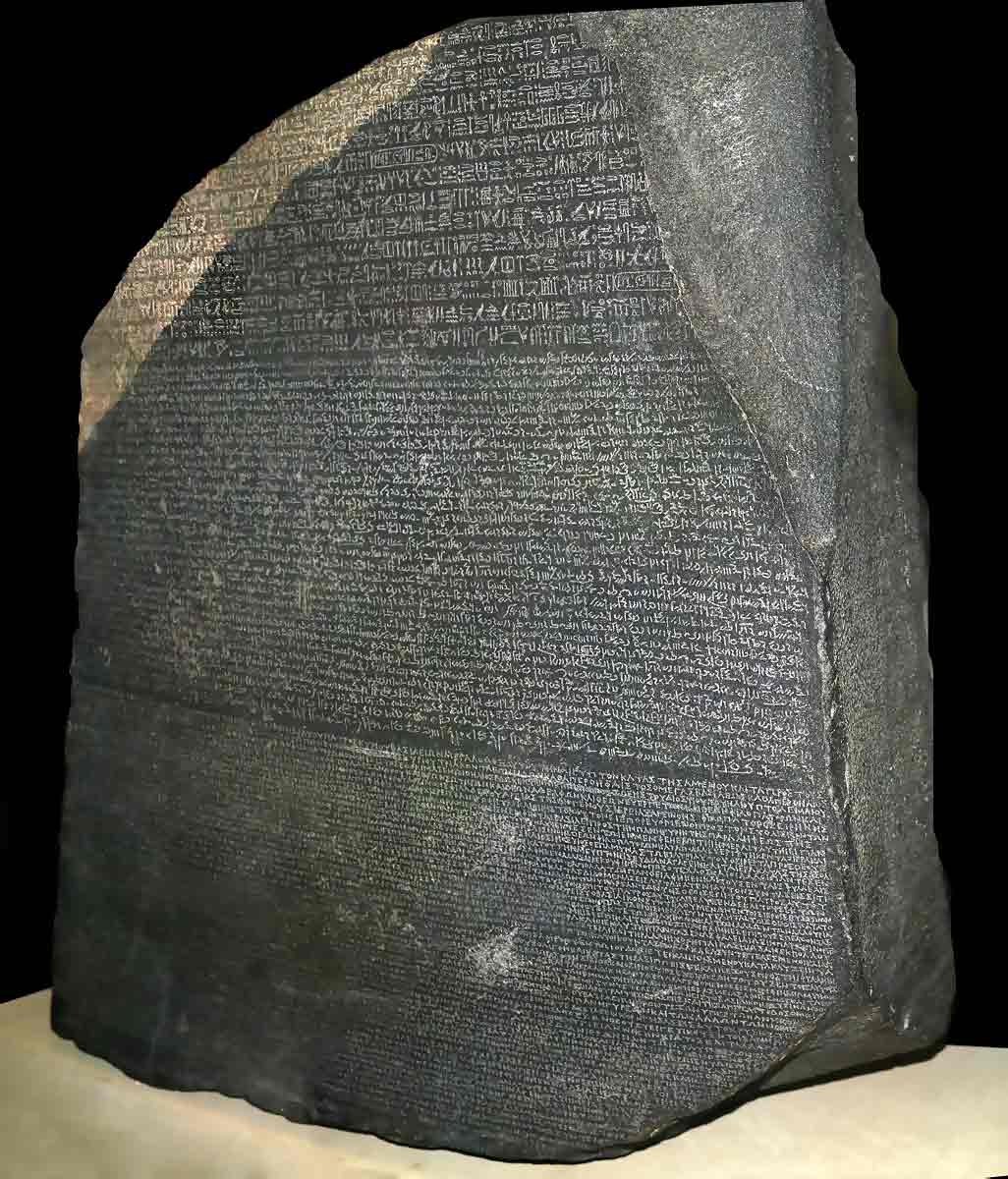
The Rosetta Stone is the most-visited single object in the entire museum. It was found by French soldiers near the town of Rosetta in 1799 and transferred to British possession under the 1801 Treaty of Alexandria. Its trilingual inscription (in hieroglyphs, Demotic Egyptian, and ancient Greek) finally allowed French scholar Jean-François Champollion to crack the code of hieroglyphs in 1822, opening up 3,000 years of Egyptian history to the modern world.
Other major highlights include the colossal bust of Ramesses II, the elegant Gayer-Anderson Cat (a bronze sculpture from around 664 to 332 BC), the painted wooden coffin of Henutmehyt, and extensive holdings of papyri, jewelry, and shabtis. Egypt has been formally requesting the return of the Rosetta Stone for years, so far without success.
6. The Louvre, Paris
The Louvre’s Department of Egyptian Antiquities was founded back in 1826 (by none other than Champollion himself, the man who cracked the hieroglyphic code) and is one of the largest in the world, with approximately 50,000 objects displayed across two separate visitor circuits: a thematic tour of daily life on the ground floor and a chronological tour of pharaonic history on the floor above.
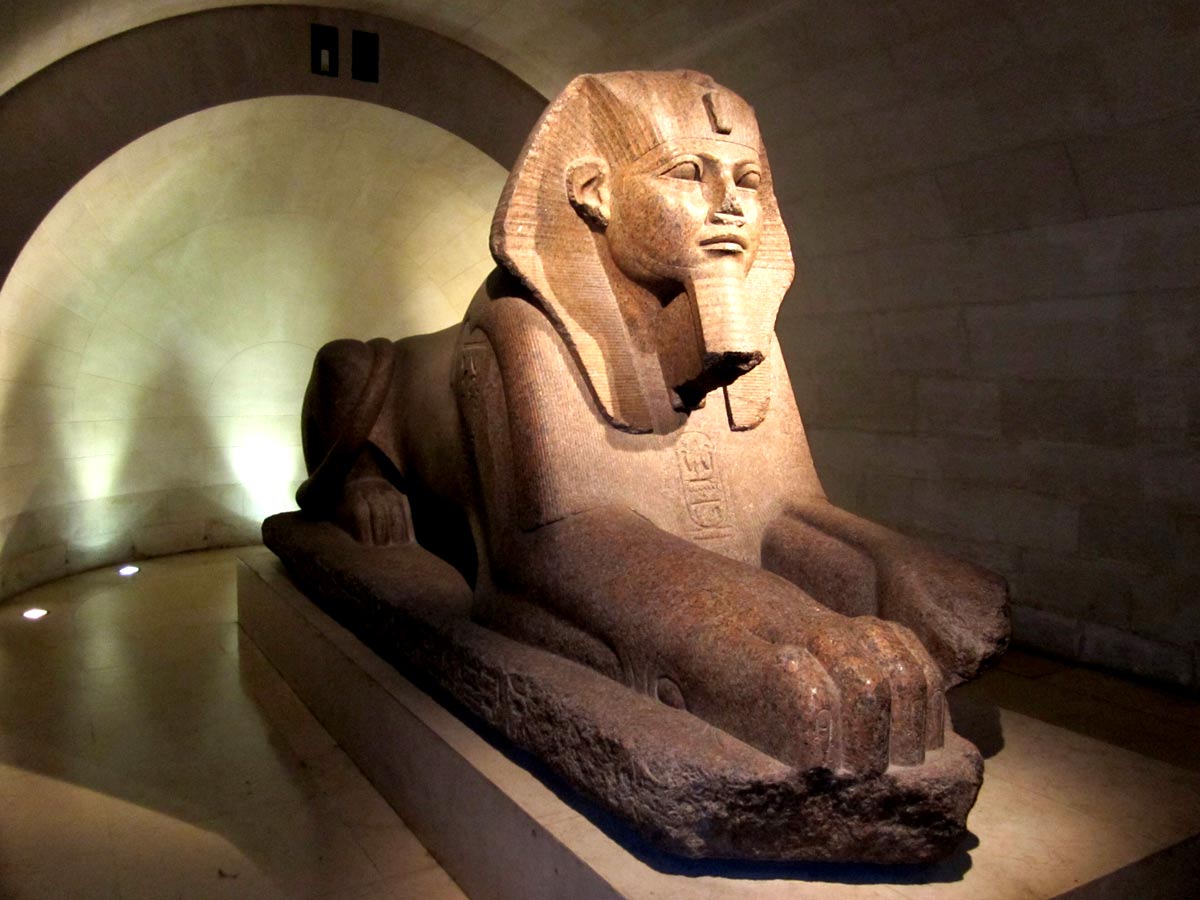
The Great Sphinx of Tanis, carved from striking pink granite around 1900 BC and associated with several New Kingdom pharaohs over the centuries, guards the entrance to the galleries. The famous Seated Scribe (Old Kingdom, around 2500 BC) remains startlingly lifelike after 4,500 years, with his inlaid eyes seeming to track viewers around the gallery.
Other major pieces include the Dendera zodiac ceiling (a beautifully detailed Ptolemaic sky map), the gold statuette of Queen Karomama, and a vast collection of Amarna-period art from the strange reign of Akhenaten, including fragments salvaged from his short-lived royal palace at Tell el-Amarna.
7. The Metropolitan Museum of Art, New York
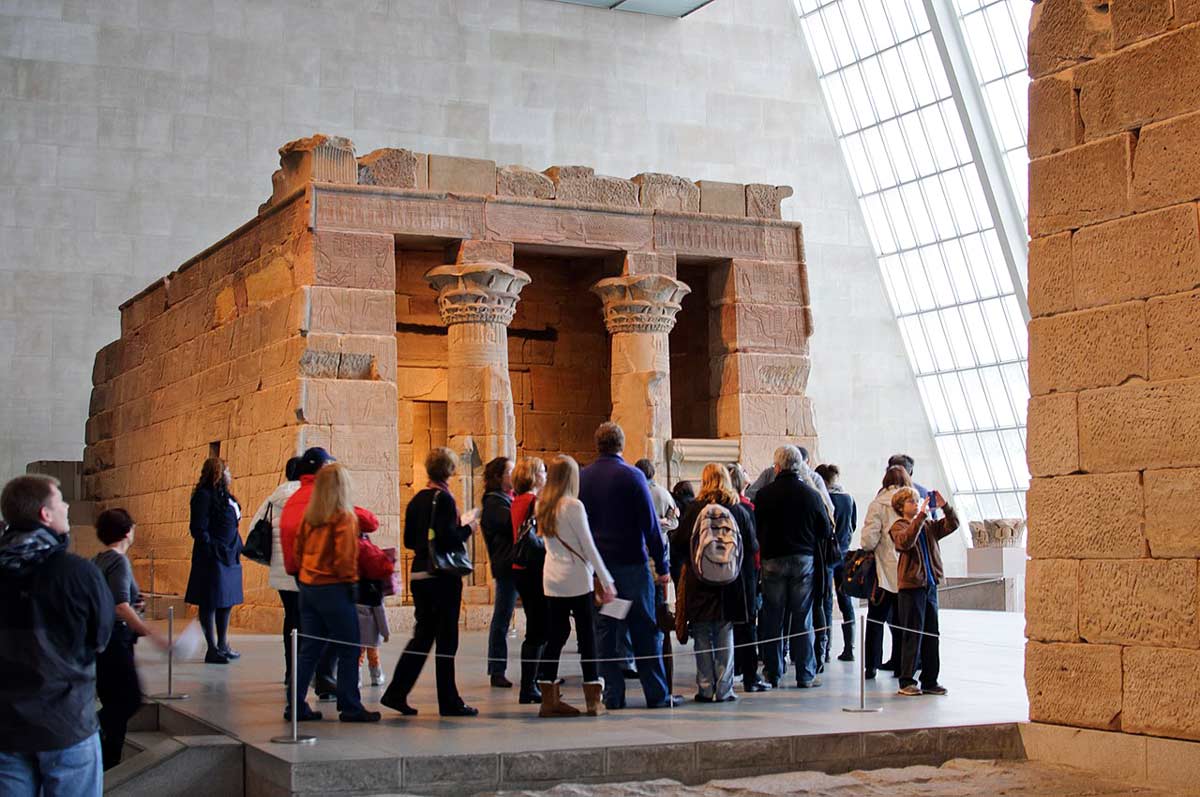
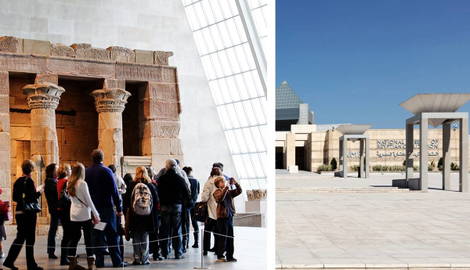
The Metropolitan Museum of Art’s Egyptian Art department holds approximately 26,000 objects dating from the Paleolithic through to the Roman Period. The astonishing aspect is that nearly all of them are on public display across 40 dedicated galleries on the museum’s first floor. Its single most dramatic object is the Temple of Dendur, a complete Roman-era sandstone temple built around 15 BC, under Emperor Augustus.
The temple was gifted to the United States by Egypt in 1965 in recognition of generous American aid during the UNESCO Nubian monuments rescue effort, and was painstakingly reassembled stone by stone in the glass-walled Sackler Wing overlooking Central Park in 1978.
Other highlights include the funerary assemblage of Meketre (a 12th Dynasty chancellor) with its remarkable painted wooden models of his estate, the gold jewelry of Princess Sithathoryunet, a Middle Kingdom blue faience hippopotamus affectionately nicknamed William (the museum’s unofficial mascot), and a full architectural model of the tomb of Perneb. The department also holds one of the finest collections of Amarna-period objects anywhere outside Cairo, ideal for anyone fascinated by Akhenaten’s revolutionary reign.