
There’s an old adage that every road leads to Rome. At its height, Rome’s reach was so vast that no single modern museum could hope to hold all its material legacy. Some of the best museums for Roman history are in Rome (shockingly enough), but equally important collections sit in Naples, London, and a handful of provincial capitals across the former Empire. Here are the ones you shouldn’t miss.
1. Capitoline Museums, Rome
The Capitoline Museums have a strong claim to being the oldest public museum in the world. They occupy two Renaissance palaces on Piazza del Campidoglio, the square designed by Michelangelo.
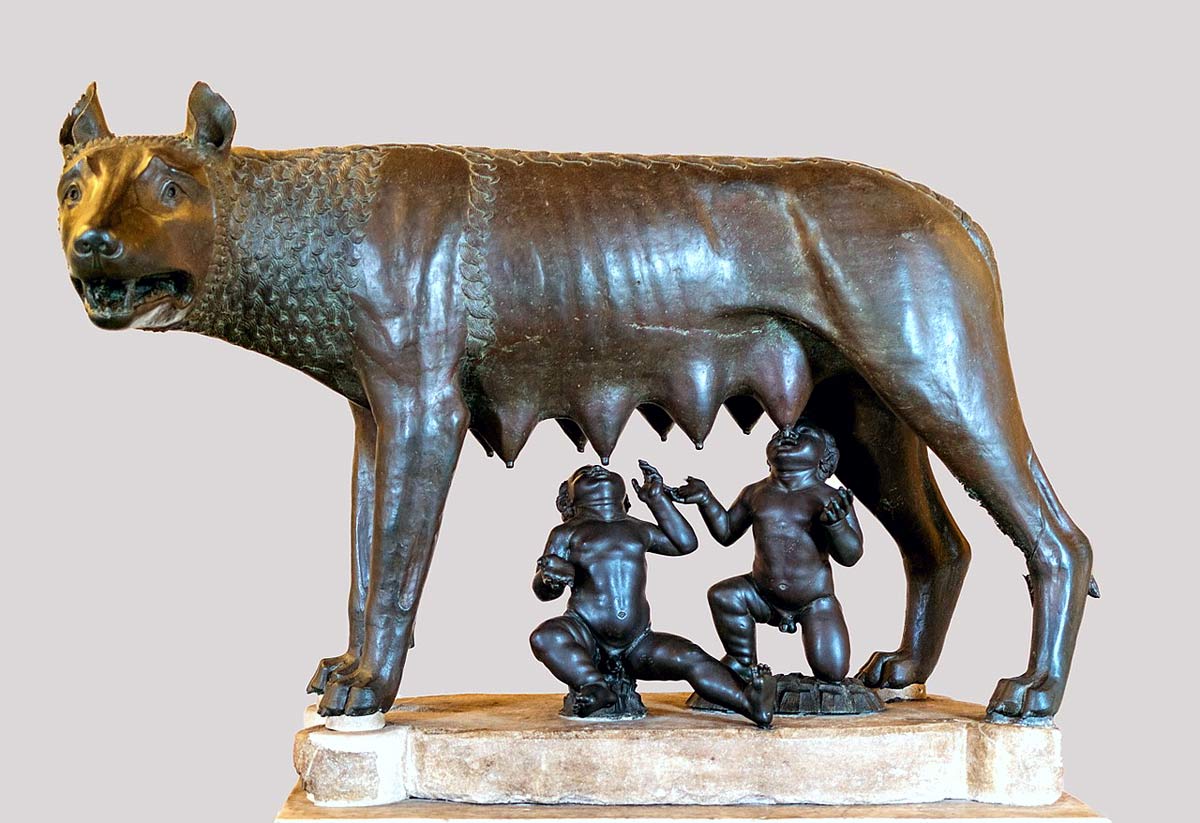
The Capitoline Wolf is the symbol of the museum and the mascot of Rome itself. So revered is she that local soccer team AS Roma puts her on the team crest, and we all know how fanatical Italians get about their soccer. For centuries, the bronze she-wolf nursing Romulus and Remus was assumed to be Etruscan, dating to around 500 BC. Then in 2006, restorer Anna Maria Carruba published her finding: the wolf had been cast in a single piece using a method medieval bronzeworkers favored, not the segmented Etruscan technique. Radiocarbon dating two years later placed her somewhere between the 11th and 12th centuries. Roman officials were not amused. The twins, by the way, were added in the 15th century.
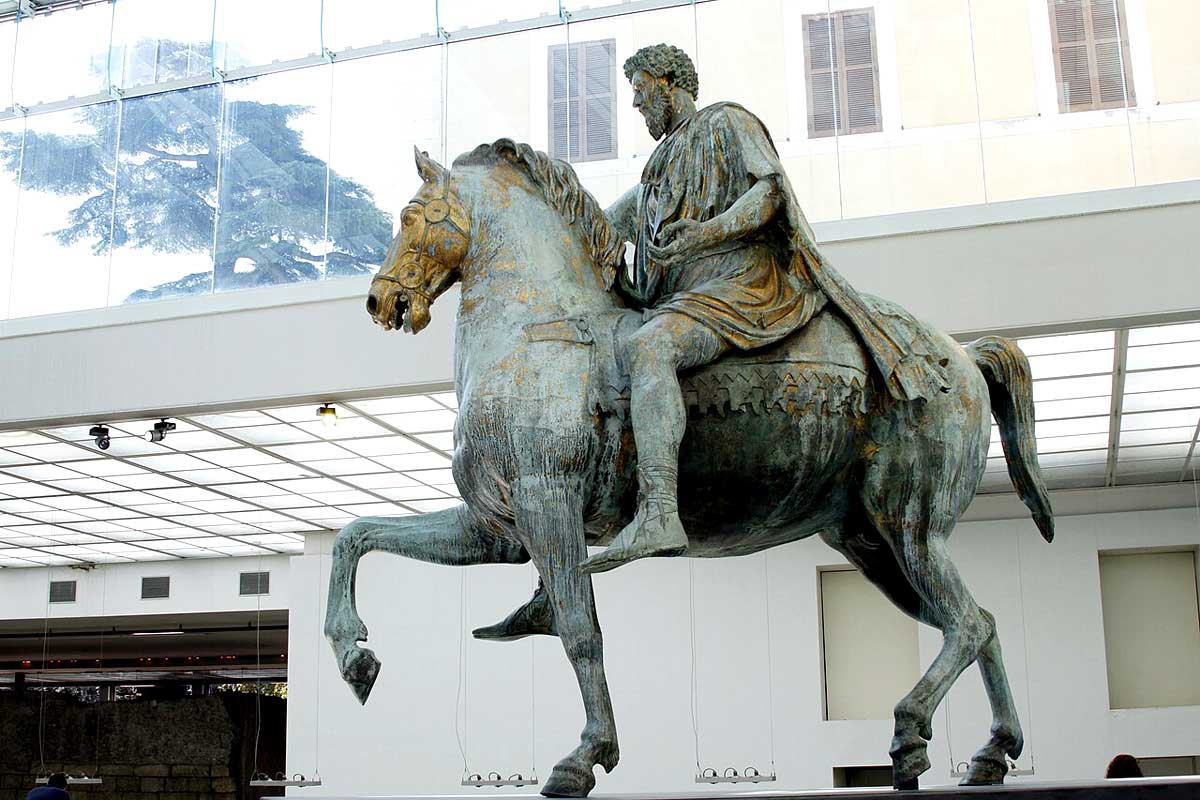
The other piece worth seeking out is the original equestrian statue of Marcus Aurelius (the one in the piazza is a replica). It survived the Middle Ages only because early Christians mistook the pagan emperor for Constantine, the first Christian ruler, and refused to melt it down for scrap. Almost every other Imperial bronze equestrian got recycled into church doors or cannons. Marcus, ironically, a Stoic philosopher under whom waves of Christian persecution were carried out, owes his survival to a case of mistaken identity that lasted a thousand years.
2. National Roman Museum (Palazzo Massimo), Rome
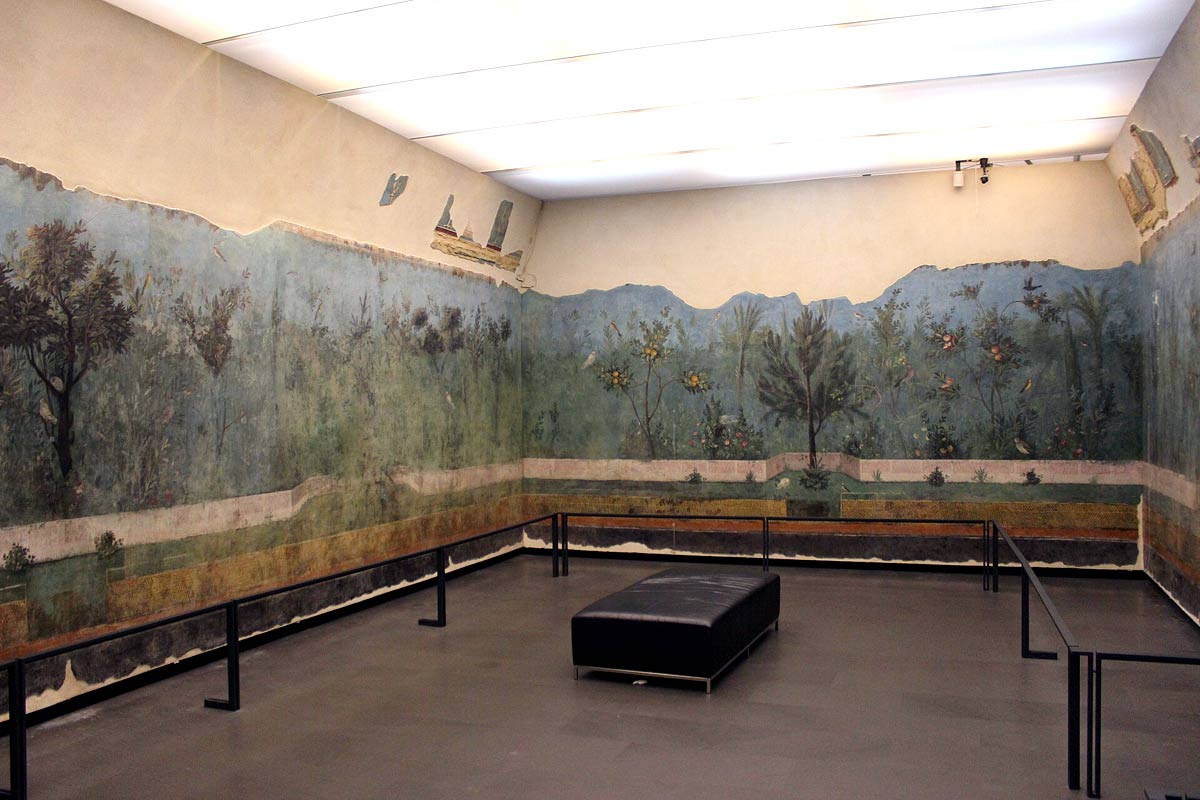
The Museo Nazionale Romano is spread across four sites in central Rome. If you don’t have time to explore them all, opt for arguably the most important: Palazzo Massimo alle Terme near Termini Station. The upper floor recreates three rooms lifted from Roman villas (including the famous painted garden from Empress Livia‘s villa at Prima Porta).
But the piece to seek out is the Hellenistic Greek sculpture, the Boxer at Rest, a 1st-century BC bronze recovered in 1885 from the Quirinal Hill. He’s slumped on a rock after a fight, face battered and bumpy cauliflower ears unmistakable. His hands are still wrapped in the leather-and-metal caestus gloves that made Roman boxing closer to bare-knuckle slaughter than sport.
A combined ticket covers all four site over three days, which is enough time to do them all justice.
3. National Archaeological Museum of Naples (MANN)
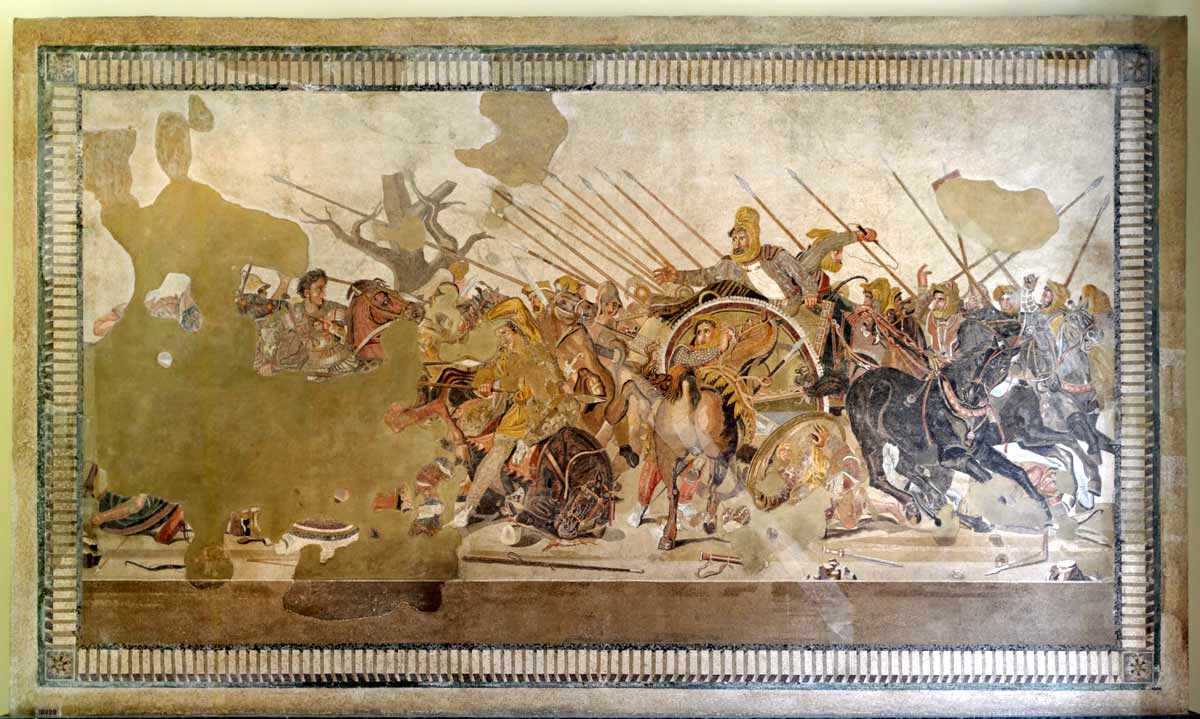
MANN holds the world’s finest collection of artifacts pulled from Pompeii, Herculaneum, and all the other cities buried by Vesuvius in AD 79. The Alexander Mosaic from the House of the Faun (around 1.5 million tesserae depicting Alexander smashing into Darius III at the Battle of Issus) is the most famous Roman piece. But the room that tells you most about Roman life is the Secret Cabinet.
When the Bourbon excavators started pulling phalluses and brothel frescoes out of Pompeii (along with garden statuary depicting the god Pan getting frisky with a goat), the royal family hid everything in a locked room. Access required written permission, and the only visitors allowed had to be men of “mature age and respected morals.” Women weren’t allowed in, period. Access remained heavily restricted under Fascism and only fully opened to the general public in 2000. The collection makes clear that the Romans had a much more relaxed relationship with their bodies than the Victorians, who eventually inherited their stuff.
Insider Tip: Visit MANN before Pompeii. Most of the finest pieces were moved to Naples for safekeeping, so the ruins can feel empty or almost meaningless unless you’ve seen the museum first. Naples is a 70-minute high-speed train from Rome’s Termini Station and potentially doable as a day trip if you don’t mind an early start.
4. The British Museum, London
The British Museum’s Roman collections span the breadth of the empire, from the Iberian Peninsula to Syria to Britannia. Why do the Brits have so much? Having an empire of their own helped, as did two centuries of well-funded archaeological digs, and having the often dubbed world’s first national museum (opened in 1759) with shelves itching to be filled.
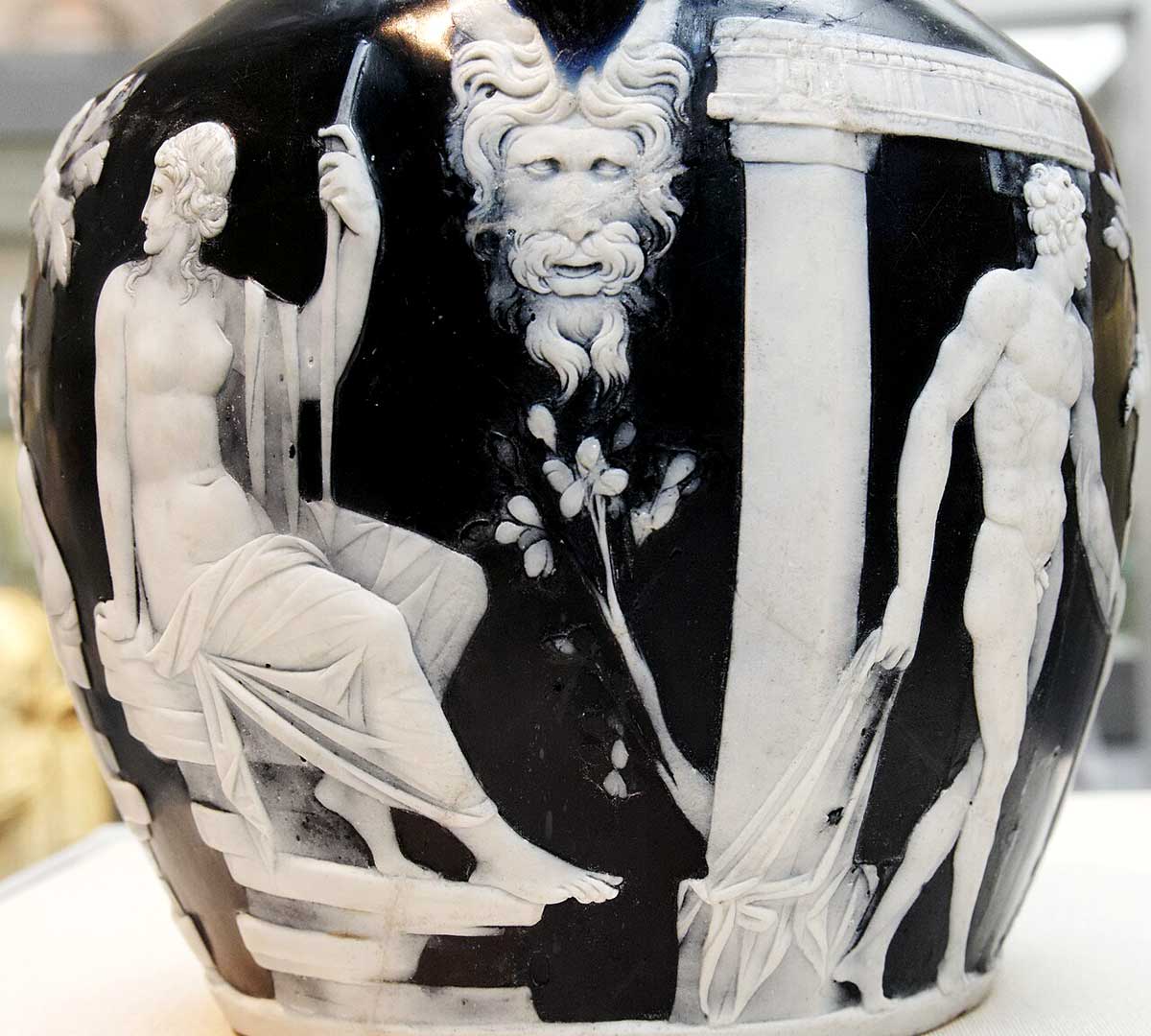
The Portland Vase, a cameo-glass marvel from around AD 25 that inspired Wedgwood, is the most famous Roman piece on display. But the gossip-worthy one is the Warren Cup, a Roman silver drinking cup from the 1st century AD decorated with reliefs of two pairs of male lovers. It was bought in 1911 by an eccentric American collector named Edward Perry Warren (who also commissioned a marble version of Rodin’s The Kiss with an added erection that scandalized the English town it was later donated to).
Warren tried to sell the cup to the Boston Museum of Fine Arts, which refused it. In 1953, US customs banned it from entering the country altogether. The piece bounced between private collectors for decades before the British Museum bought it in 1999 for £1.8 million. It’s now displayed without fuss, which perhaps should’ve been the point all along. Entry is free.
5. Ara Pacis Museum, Rome
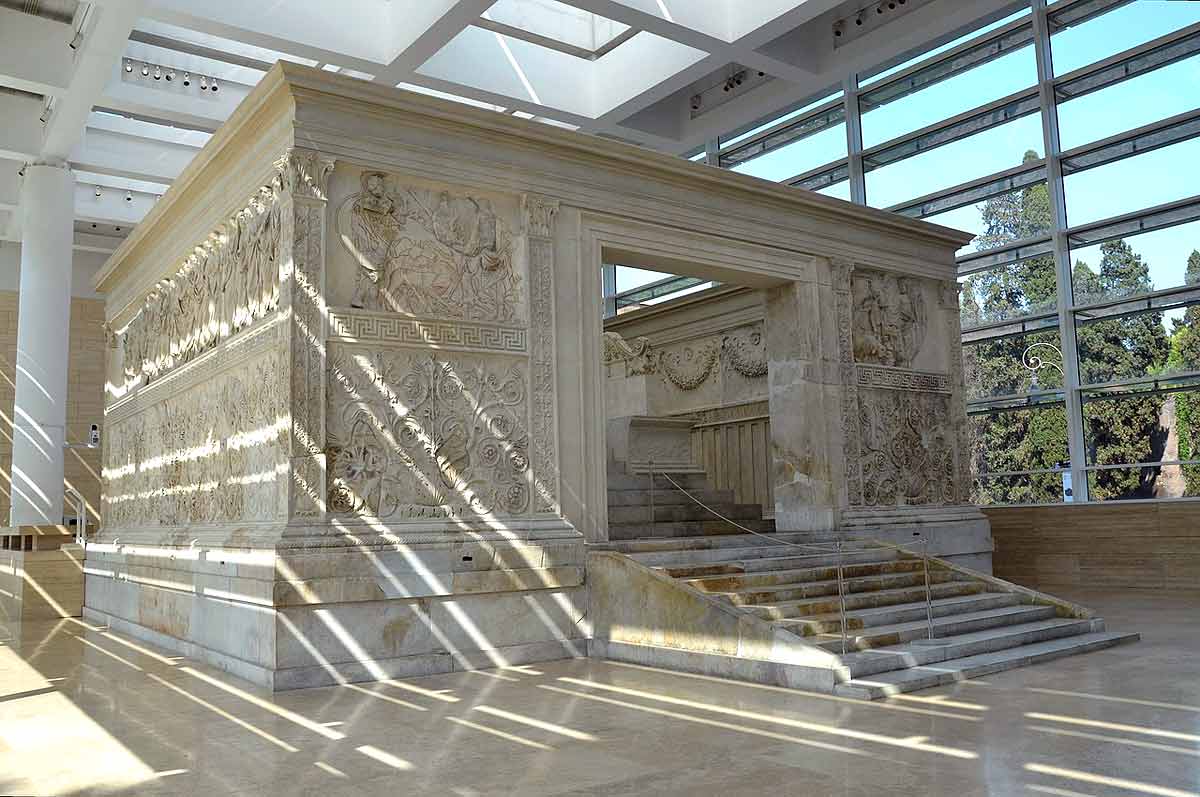
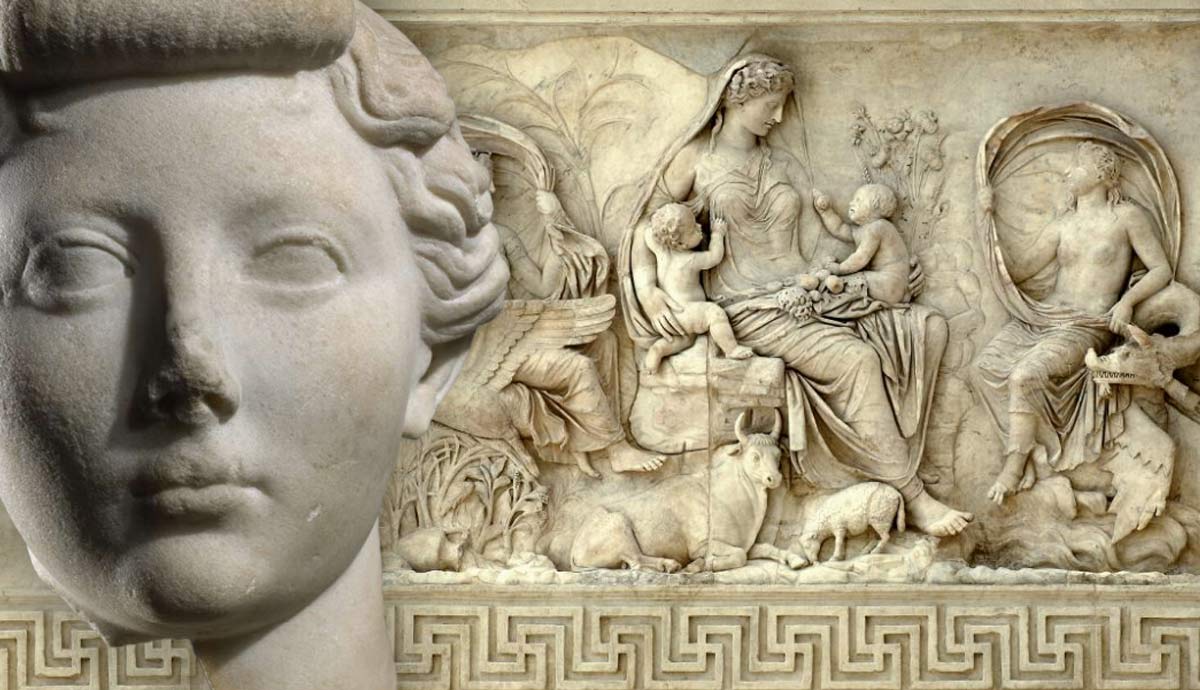
The Ara Pacis Museum is the only major Roman museum built around a single artifact, and that artifact has been through more than most. The Ara Pacis Augustae (the Altar of Augustan Peace) was commissioned by the Roman Senate in 13 BC and dedicated four years later to celebrate the peace Augustus had brought to the empire after his campaigns in Spain and Gaul.
Fragments had been surfacing in Roman digs since the 16th century, scattered between the Uffizi, the Louvre, and the Vatican, until Mussolini got involved. As part of his program to refashion himself as a 20th-century Augustus, Il Duce had them tracked down and reassembled for the 2000th anniversary of Augustus’s birth in 1937–38. A Fascist-era pavilion went up beside the Tiber to house the altar, conveniently next to the Mausoleum of Augustus that Mussolini had also restored. The propaganda was many things, but subtle was not one of them.
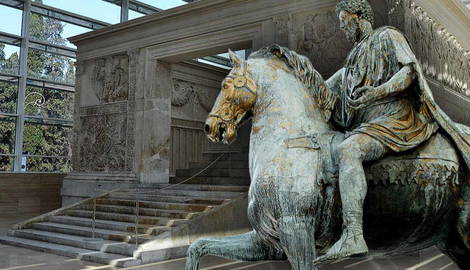
By the 1990s, the pavilion had become a leaky disaster, so the city commissioned American architect Richard Meier to design a replacement. Romans absolutely hated it, and critics called the new glass-and-travertine building a gas station, a McDonald’s, a coffin, and even a bunker. The mayor’s challenger ran on a promise to demolish it. He did not demolish it. The altar inside is still magnificent as ever.
6. Lugdunum Museum and Roman Theaters, Lyon, France
Lyon was founded in 43 BC as Lugdunum and served as the capital of Roman Gaul for three centuries. The Gallo-Roman Museum sits on the hillside of Fourvière alongside the ancient Roman theater and odeon (both still in use for summer concerts). Designed by Bernard Zehrfuss in 1975, the building is mostly buried in the hillside, and you spiral down through it on a long concrete ramp that mimics archaeological stratigraphy (the layers of soil and debris that build up over a site like tree rings).
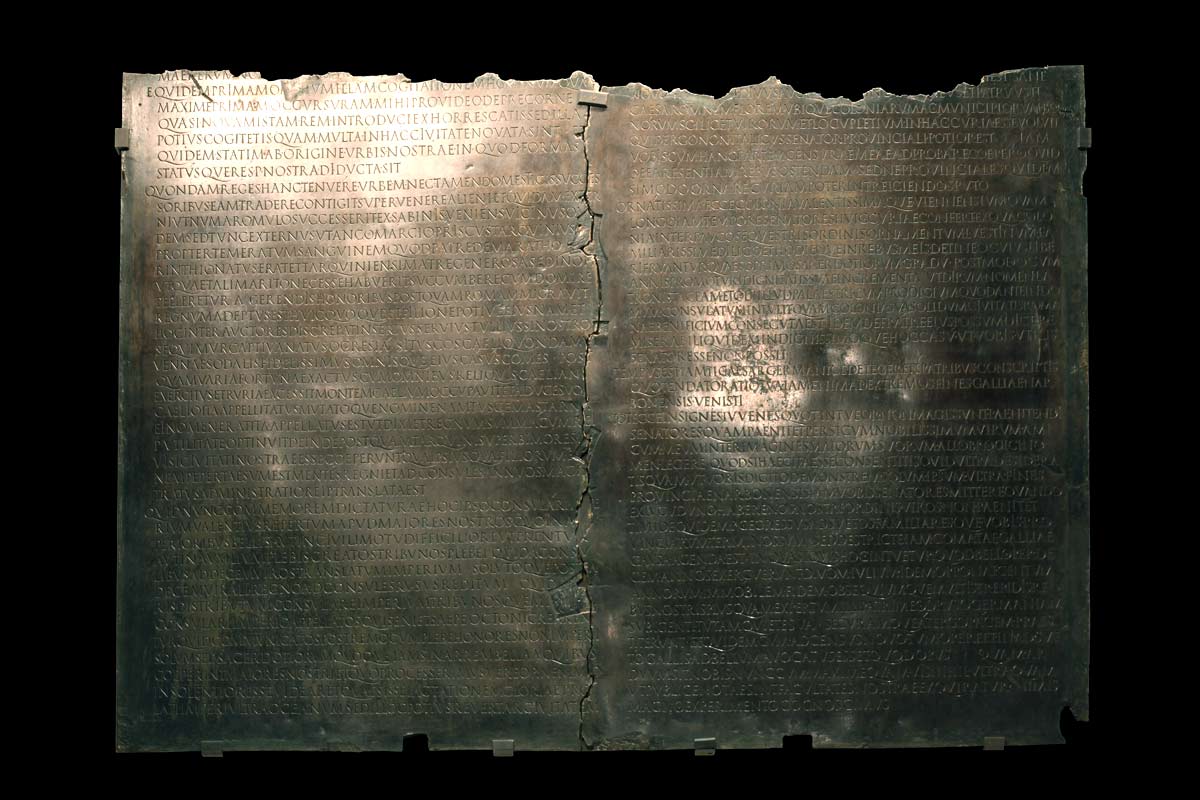
The piece that makes a visit worthwhile is the Claudian Tables: bronze plaques inscribed with the verbatim speech Emperor Claudius gave to the Roman Senate in AD 48, arguing that Gauls should be admitted as senators. The historian Tacitus also recorded this speech, but he cleaned it up considerably for his Annals. The bronze version is the real, rambling argument Claudius actually gave, full of historical asides and defensive tangents. It is the closest thing we have to a recording of a Roman emperor in mid-speech.