aic


Wealthy Romans paid significant attention to their home decor. Every piece was chosen as a status symbol to demonstrate wealth, prestige, and the great deeds of the family’s ancestors. The villas of Pompeii’s elite were no exception. These homes were hidden and preserved by the catastrophic eruption of Vesuvius in AD 79. While this was one of Rome’s greatest disasters, it means that today we can experience what it was like to step into a grand Roman domus. One of the most spectacular elements of Roman home decor were the mosaics, complex artworks made up of millions of tiny stone tesserae. Discover five of the most impressive Roman mosaics preserved at Pompeii and what they tell us about life in the ancient Roman Empire.
1. The Alexander Mosaic & Global Political Ambition

Just north of the Forum in Pompeii, past the Temple of Fortuna Augusta and down the street named the Vicolo del Fauno by modern excavators, you will come upon one of the most visited houses in the city. The House of the Faun (VI.12.2) was named for the statue of a bronze faun found frolicking in the center of the atrium (central reception court) fountain.
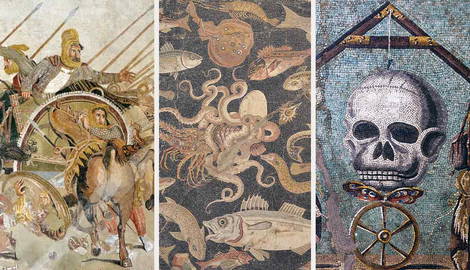
This 2nd-century BC domus (house) was large and luxurious with mosaics throughout, on the floors of side rooms, and even surrounding an elaborate garden fountain. But the most famous is just beyond the atrium on the floor of the exedra (grand garden sitting room). It is known as the Alexander Mosaic. It shows a scene from the Battle of Issus in 333 BC between Alexander the Great and Darius III, the last Achaemenid King of Persia. The mosaic was probably created around 120-100 BC.
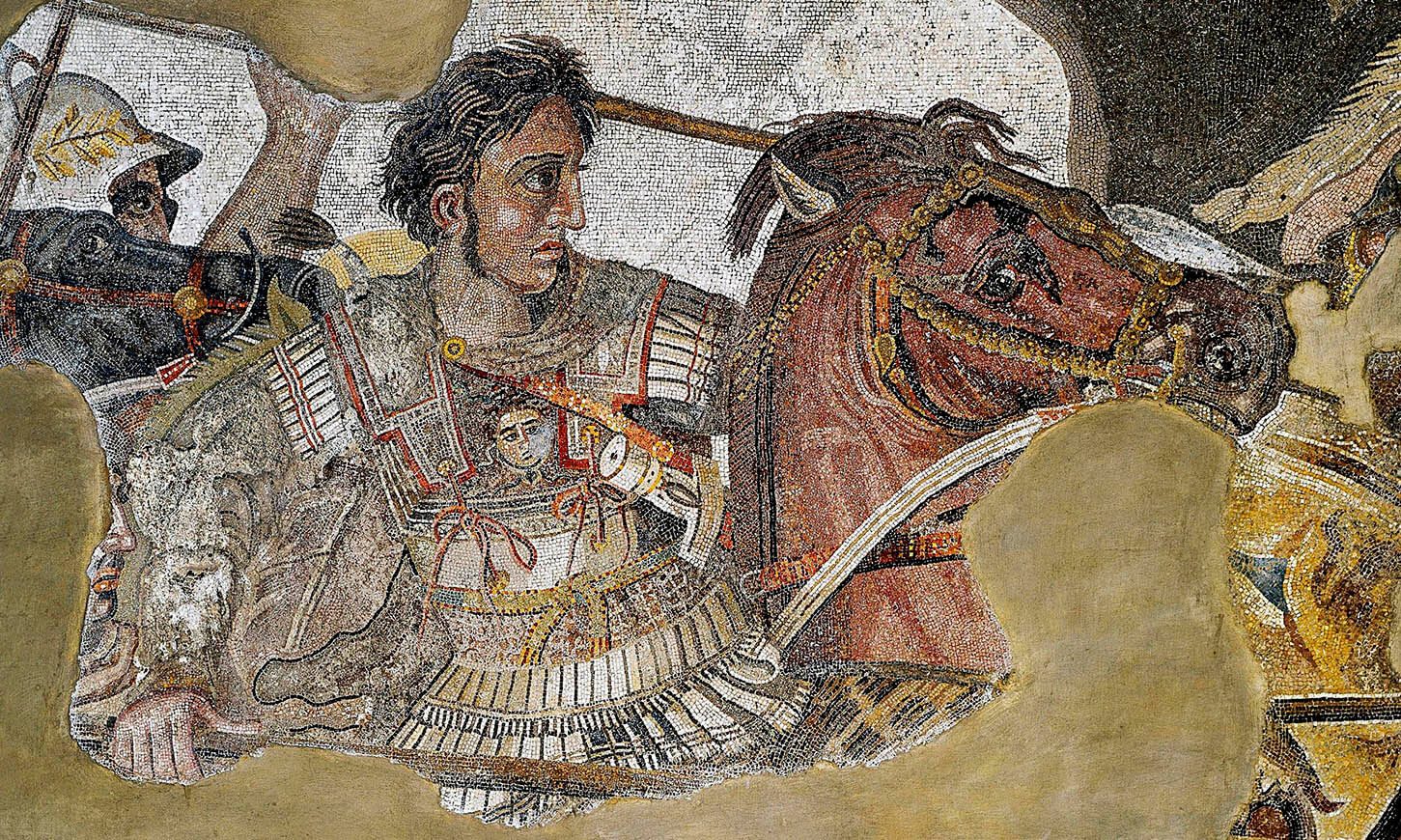
Measuring 272 cm by 513 cm (8 ft 11 in by 16 ft 8 in), the mosaic covered the expanse of the room’s floor. It was first discovered in the 1830s by excavators working for the German Archaeological Institute and was initially thought to be depicting a battle scene from the Iliad. The mosaic comprises around 1.5 million tesserae, or small cut cubes of glass and stone. It was likely a copy of a 4th-century BC painting by Philoxenus of Eretria, whom Pliny the Elder refers to in his works.
In the painting, the mighty general Alexander charges across the field of battle on horseback towards Darius, his spear thrusting into an oncoming Persian who recoils in pain. On the opposite side of the battlefield, a Persian frantically turns his horse around, navigating dead bodies, as his leader charges towards Alexander in his chariot. The scene is incredibly detailed and provocative. It would have made an excellent talking point for any visitors to the grand home.
2. Memento Mori: “Remember You Must Die”
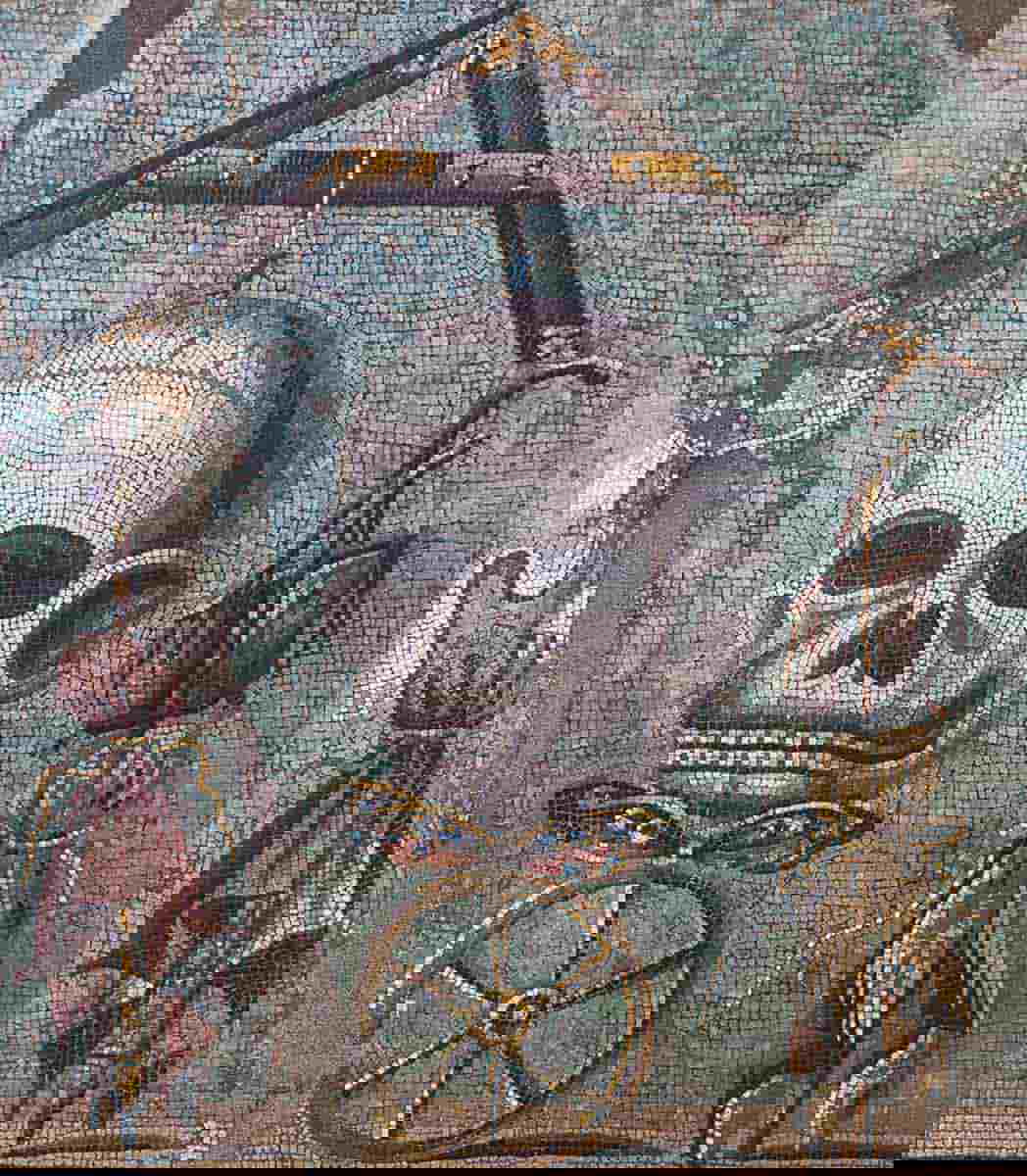
In two different properties, two mosaics appear to foreshadow the tragic end of the people who once commissioned and enjoyed them. Memento Mori, meaning “Remember You Must Die,” was a popular theme in Roman art. It was a reminder to live in the moment and enjoy the day, for tomorrow was an uncertainty promised to no one.
The first, depicting a skeleton in black and white holding a wine jug in each hand, was also found in the House of the Faun. The second is a sophisticated and colorful depiction of a human skull hanging from the Wheel of Fortune found in the House of the Vestals (VI.1.7), another large and wealthy building. There is a clear link between dining and death. The Wheel of Fortune mosaic was discovered on top of the dining table at the garden triclinium and would have provided a poignant reminder to dinner guests.
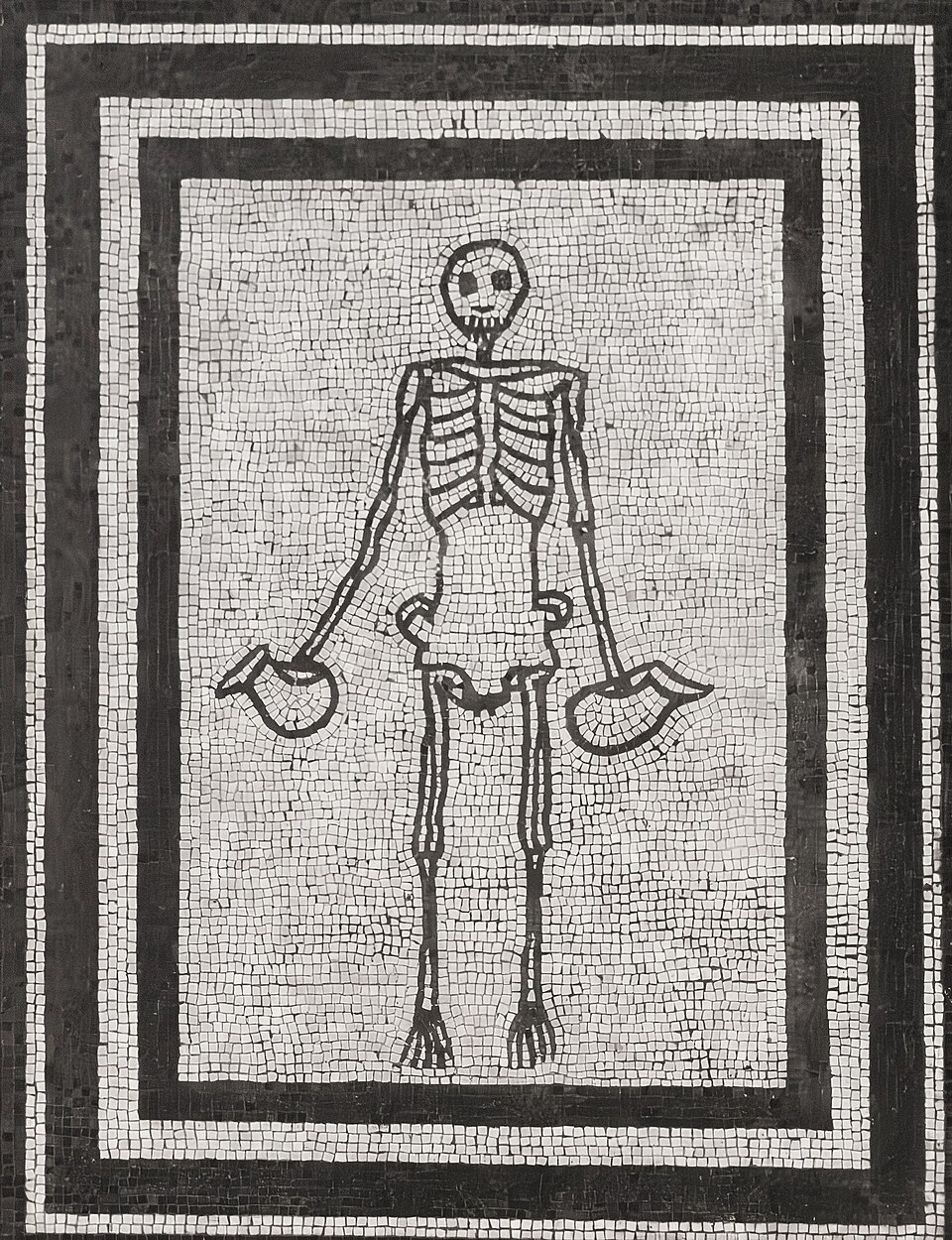
Similar mosaics have been found beyond Pompeii. In 2016, excavators discovered a reclining skeleton mosaic surrounded by food and wine. A mosaic of dancing skeletons was found in a villa in Boscoreale.
Memento Mori was not limited to mosaics. Larva convivalis, miniature bronze skeletons, were frequently given as gifts at the dinner table. Their presence urged guests to savor transient joys and acknowledge the ever-present proximity of death. Crafted with articulated limbs, these tiny skeletons could partake in the festivities through a lively, jiggling dance.
3. Cave Canem & Other Entranceway Mosaics in Pompeii
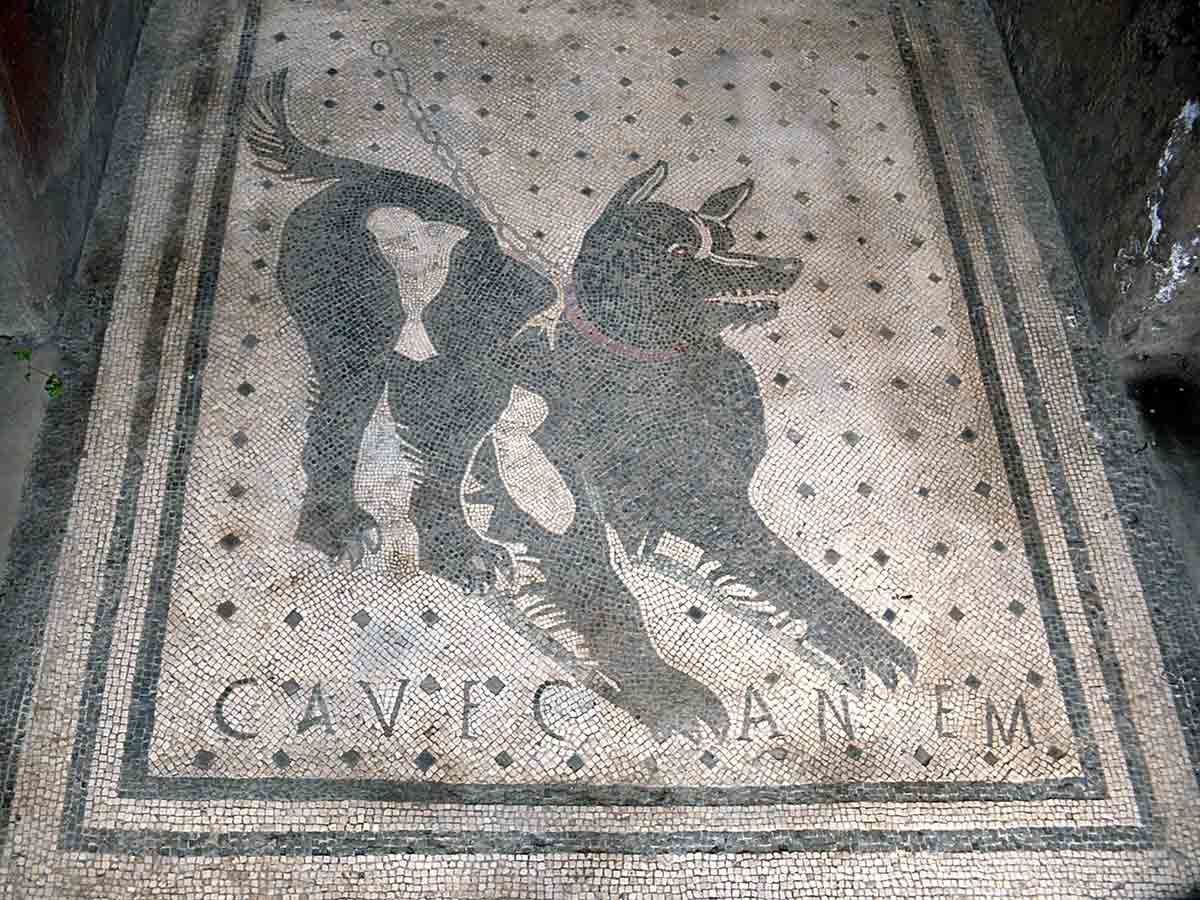
Though mainly used for decoration, mosaics could also be used as a warning. A special mosaic can be found in the fauces (entrance passageway) of The House of the Tragic Poet (VI.8.5), just beyond the front door. Emblazoned in black-and-white tiles is a large depiction of a black dog. This dog had pointy ears, white spots, a long tail, and was tied to a chain by his red collar. Below his feet was a warning written in tesserae: CAVE CANEM (Beware the Dog).
Two very similar mosaics have been found elsewhere in the town, each depicting a black dog with pointy ears tied to a chain attached to its red collar. Tragically, the remains of a dog wearing a collar and chain have also been discovered in Pompeii, with the dog’s ears and stature appearing to match those depicted in the mosaics.
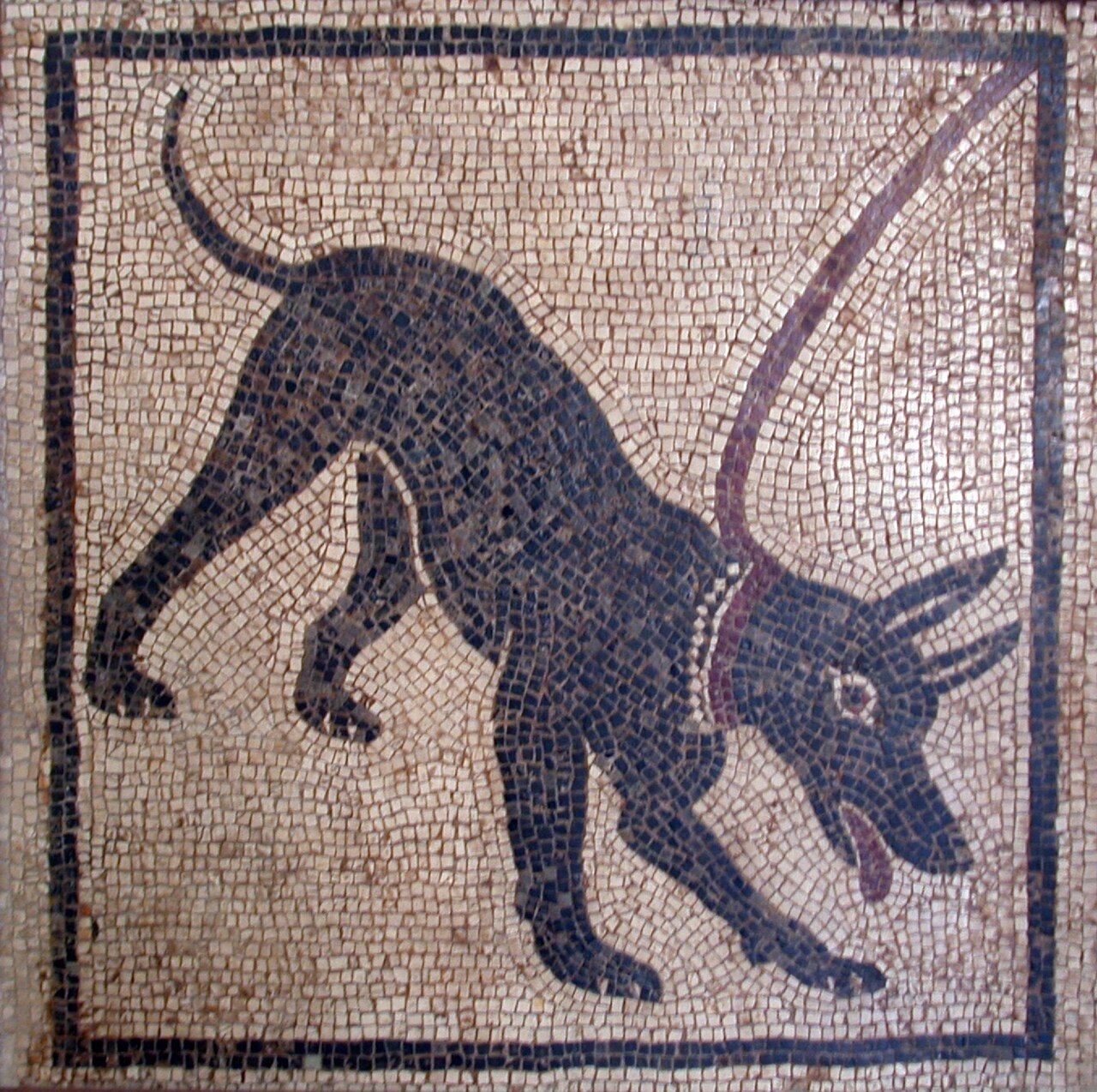
The practice of owning guard dogs was probably common in the Roman world. In his Satyricon, the Roman writer Petronius has his protagonist describe seeing a sign that read “Cave Canem” upon entering the house he was visiting for dinner. The dog depicted probably represents the preferred breed for this type of work.
But warnings were not the only type of notice to be found in Pompeian entryways. At the entrance to a house in Region VII, a mosaic reads Salve Lucru (Welcome, gain!). Put simply, the owner of this house, likely a trader, wishes his guests good fortune as they enter his home.
4. Octopus vs Lobster: Food and Luxury
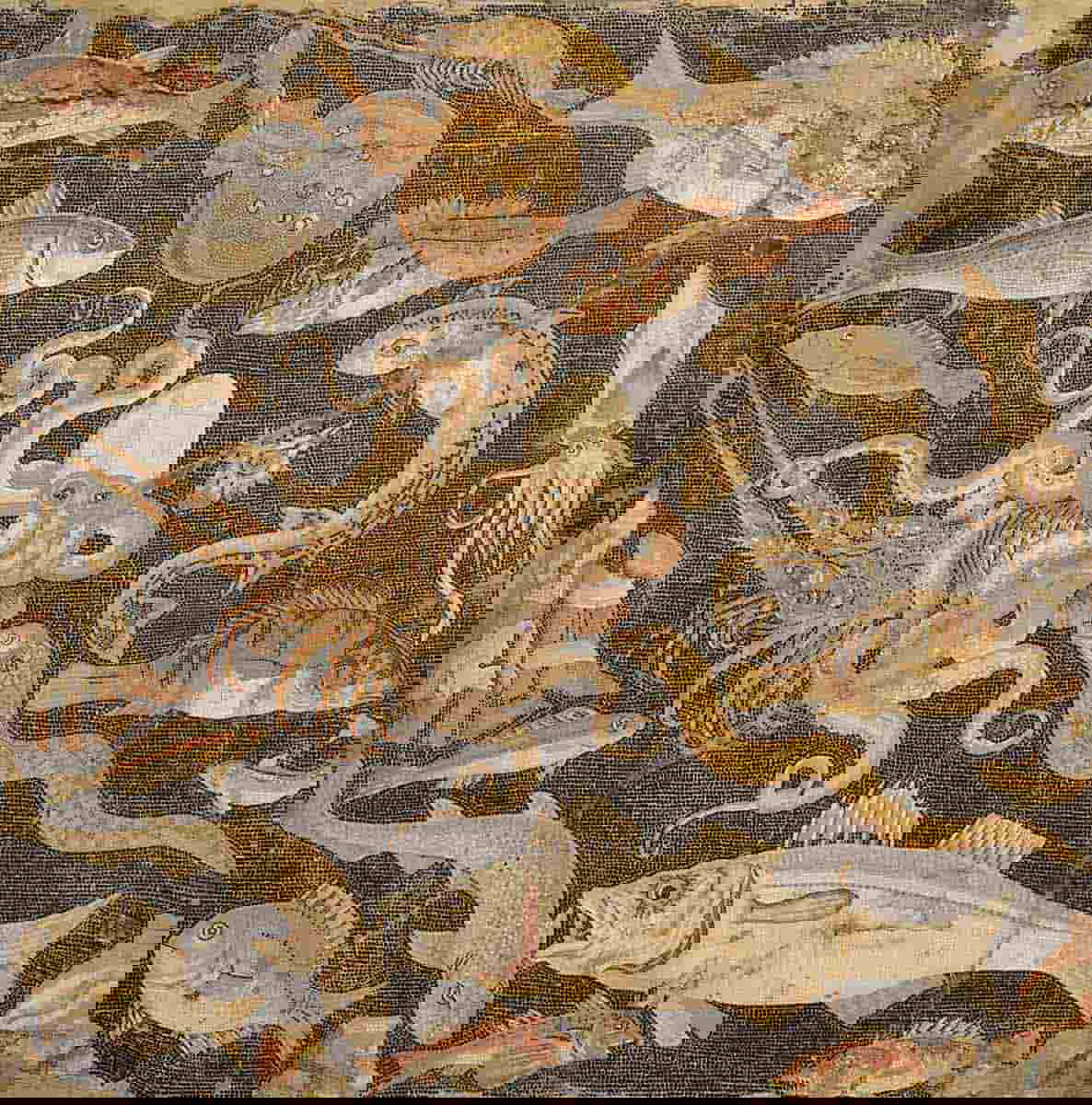
Another common mosaic subject was food. An especially beautiful example was found in the triclinium (indoor dining room) of a house at VIII.2.16. Measuring 88cm by 88cm (34.6 inches by 34.6 inches), this elaborate mosaic of marine life is a sight to behold, but should not be confused with a very similar mosaic found in the House of the Faun.
At the center, an octopus with wide eyes fights a lobster. Around the periphery, 21 types of marine and bird life can be seen, including fish, eels, and even a little kingfisher bird. Elsewhere, a rather simple mosaic reveals the food-related occupation of the property’s owner.
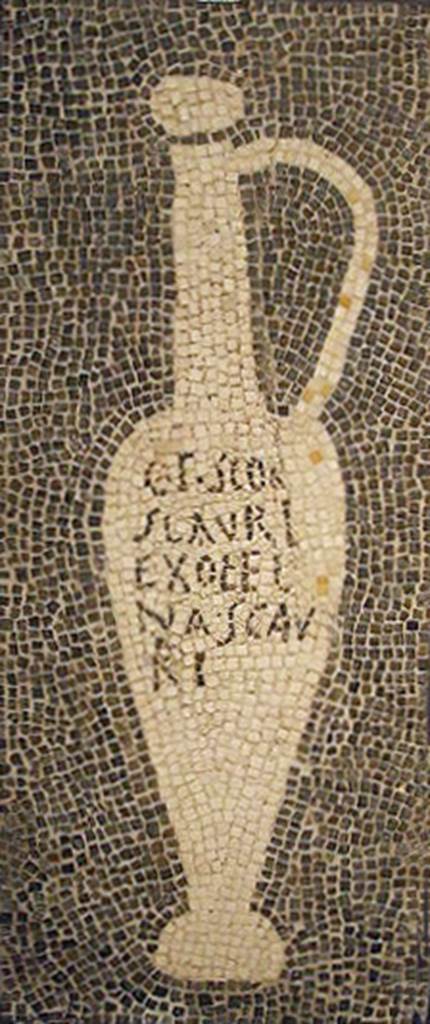
Found in the House of Aulus Umbricius Scaurus (VII.16.15), a mosaic panel showed a container of the popular Roman fish sauce, known as garum, inscribed G.F. SCOM[bri] SCAURI EX OFFI[ci]NA SCAURI. This translates as “the flower of Scaurus’ mackerel garum from the factory of Scaurus.” Scaurus was Pompeii’s leading fish sauce manufacturer. Bottles of his product have been discovered around the Mediterranean.
Elsewhere in Pompeii, mosaics decorating the walls of homes have been used by historians to understand the Roman diet. From one house, an elaborately detailed square mosaic depicts large fish and ducks strung up and ready to be cooked. However, not all food was depicted as ready to eat. Mosaics and frescoes of animals were also commonly found in dining rooms, kitchens, or reception rooms. One example depicts a cat catching a chicken in its mouth, while below, a drake and a female duck expectantly await their fate on the kitchen table.
5. Mythology & Theatrics in the House of the Tragic Poet
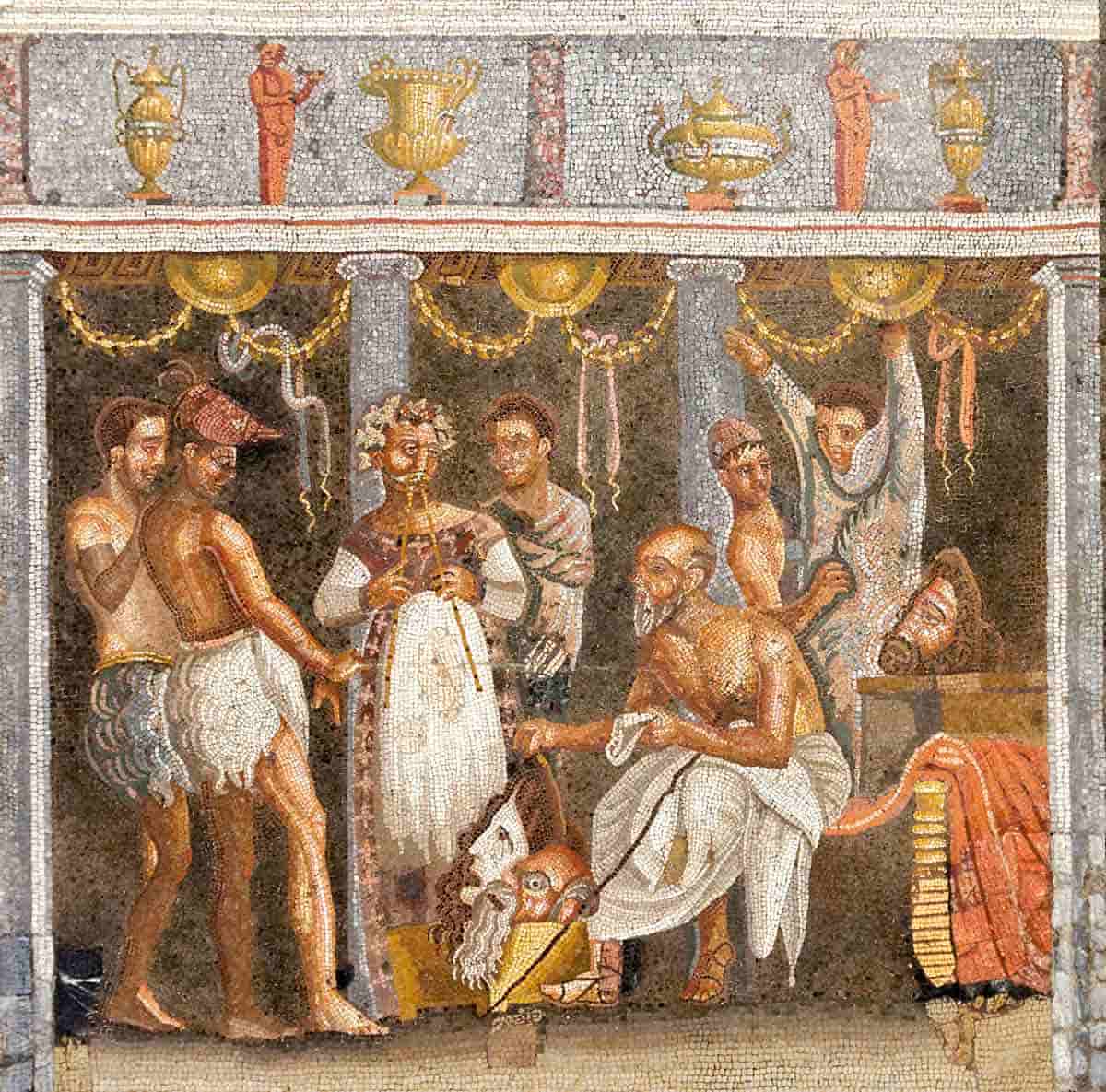
Mythology and theatrical stories from the stage were also common themes in Pompeii’s mosaics. In 1824, excavators discovered 20 painted and mosaic panels dedicated to theatrics in the House of the Tragic Poet, giving the house its moniker.
Adorning the tablinum floor was a detailed mosaic depicting choregos actors in the backstage hustle, with one dressing, another playing a flute, and additional characters surrounding a box of masks meant for the upcoming performance.
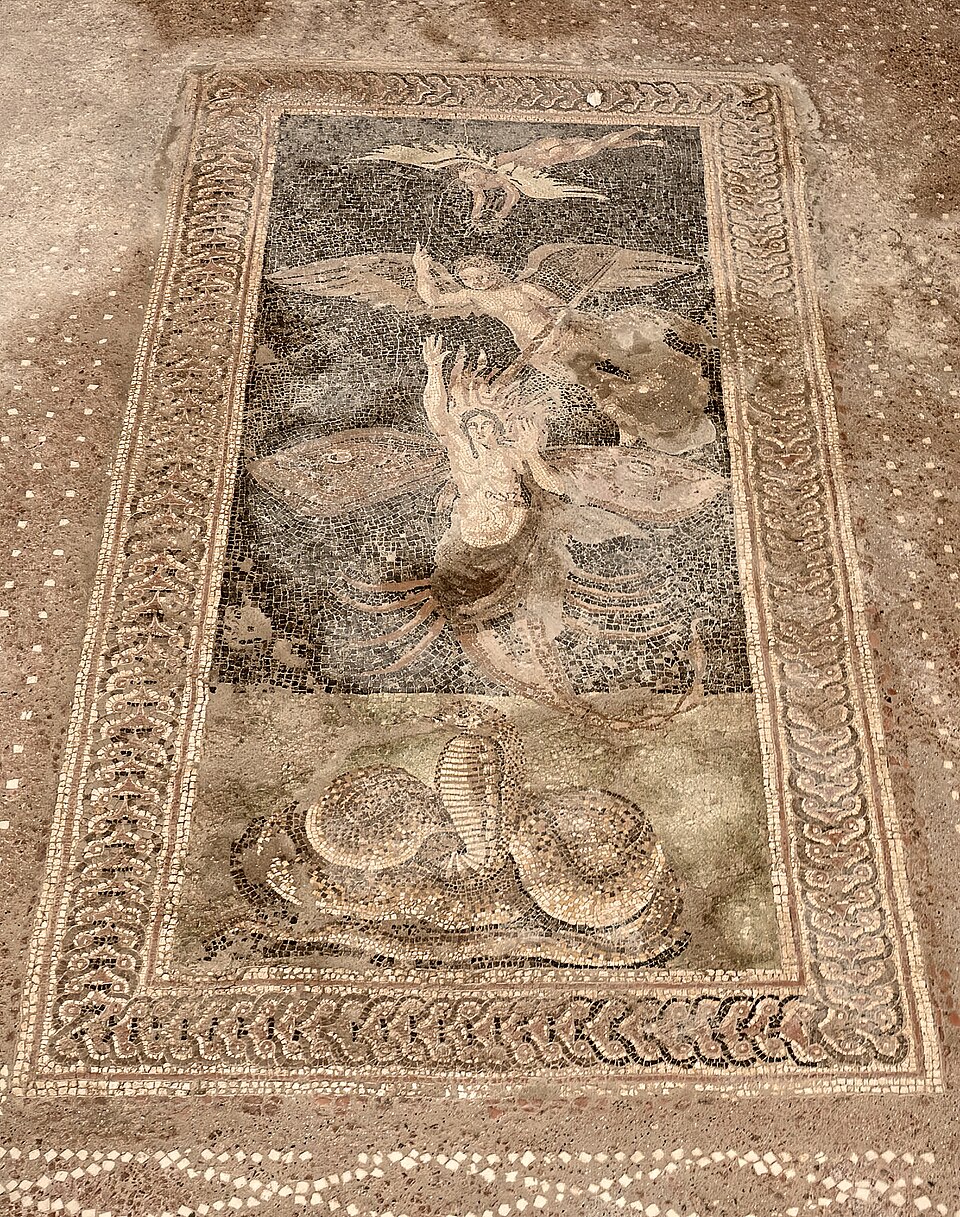
Elsewhere in the town, excavators recently discovered a striking mosaic in the so-called House of Orion (IV.2.15-16). Here, the “Orion Mosaic” features a winged male emerging from a scorpion, beneath which is a coiled cobra. Above, an angelic winged figure points skyward with one hand and holds a torch, setting ablaze the head of the first figure. A third winged figure above offers a laurel crown to the ones below. The scene represents the myth of Orion.
The depiction of myths, legends, the arts, and theatrical themes in mosaics was intended to reflect positively on the patron of the home. Not only did it demonstrate their level of culture, but also their international connections, occupation, or source of income.