
What does it mean to be a Nietzschean? Mention it at a party, and some will believe that you’re a visionary. The other half will assume that you’re about to ramble about “the death of God” over whiskey shots. But let’s drop the stereotype. Friedrich Nietzsche was one of humanity’s most radical thinkers. His work turned everything regarding ethics, reality, and individual power upside down. To be a Nietzschean is to follow his philosophies of self-overcoming, discarding traditional ethics, and forging one’s own life path.
The Will to Power: Embracing Strength and Ambition
Nietzsche posited that existence is motivated not by survival and pleasure but by something deeper: a Will to Power. This is a longing to grow, overcome difficulties, and create new and better things. All of these show the Will at work.
Now compare it with its opposite: passivity. Two colleagues work in the same office. One takes risks, learns new skills, and is promoted over the years. The other does as little as possible, moans about their boss, and can’t wait for retirement.
Which of them is really alive? To live like Nietzsche means being one of those rare people who feel ‘everydayness’ as a burden they can’t bear—always trying to become stronger, smarter, sexier, whatever.
Today, this idea is more relevant than ever before. Many individuals say they feel “trapped” in patterns or zones that make them feel comfortable, such as watching box sets on Netflix or spending time on social media when they could be doing something creative, but don’t feel like it.
The philosopher would respond: “Don’t vegetate—create! Don’t just exist. Flourish!”
Of course, you don’t have to be rich or famous to take his advice. Indeed, not many people might know about your achievements outside of close friends and family members. But it’s still worth asking yourself regularly: is my life getting fuller (and more meaningful), or am I stuck in a rut?
Master vs. Slave Morality: Rewriting Ethics for the Modern Age
The philosopher had a decidedly unpopular moral view. Most of our traditional values, in his view, have a basis in what he called slave morality. Slave morality, under the direction of the weak, idealizes humility, compliance, and victimization. By contrast, master morality, embraced by the powerful, idealizes power, drive, and perfectionism.
A modern-day example? Look at social media outrage. There is a culture of bringing people down for errors or for being too successful.
Nietzsche would say this stems from resentment—the bitterness of the powerless who try to bring others down instead of lifting themselves up. This is thinking that fosters a culture of blame instead of self-actualization.
A Nietzschean answer? Turn a deaf ear to critics and keep winning. Focus on your aims rather than pleasing everyone else.
Not, of course, in some cruel and selfish way. Nietzsche wasn’t prescribing a cartoonish villainous mindset. But he was saying, “Don’t keep apologizing for wanting more.” Don’t let guilt hold you back. Be strong, be bold, and create your own values.
Instead of waiting for permission to triumph, grasp your life and shape your moral values for yourself. That is practicing master morality.
Beyond Good and Evil: Thinking Critically in a World of Absolutes
Have you ever noticed how everybody wants to divide the world into good and evil? Politics, moral dilemmas, even pineapple pizza (which, admit it, is a divisive one). Nietzsche saw such thinking as a cop-out. In Beyond Good and Evil, he argued that the world isn’t a simple matter of black-and-white moralism.
Think of real situations where morality is not always black and white. A journalist, for instance, discloses confidence in a bid to uncover bribery. Betrayal or a case of justice? Moral judgments are a matter of perspective and situation for Nietzsche.
A Nietzschean thinker doesn’t necessarily believe in social conventions at face value; they question them. They will wonder: who determined that this is wrong? What if the reverse is correct?
Today, from cancel culture to political party affiliations, everyone wants to follow the group but not necessarily with a critical thinking mind. Instead of following the group, Nietzsche invites us to think independently.
To live in terms of Nietzsche is to reject dualism and to rejoice in life’s complexity. There is no universe of black and white but a continuum of yet unknown viewpoints.
The Übermensch: Self-Transformation and the Highest Ideal

One of Nietzsche’s best-known—and most misunderstood—terms is the Übermensch, sometimes translated as “Overman” or “Superman.”
No, it isn’t a case of soaring about in a cloak and ruling over everyone else. The Übermensch is one who continually reimagines and redefines himself, overcomes traditional values, and bears full responsibility for shaping his own fate.
Consider entrepreneurs, thinkers, and artists like Taylor Swift, Oprah Winfrey, and Steve Jobs. None of them followed present-day conventions; they built new ones for themselves. No matter how you may perceive them, such individuals embody self-improvement, overcoming challenges, and striving for something greater.
But here’s the catch: becoming an Übermensch isn’t a matter of privilege, and it’s not a matter of being powerful. It’s a matter of constant self-improvement. It’s not about changing the world but about changing yourself.
The question is: do you work towards mastery over yourself each and every day? Every challenge, every decision, and every difficulty is an opportunity for transformation.
To affirm that Ubermensch is a reality means to deny stagnation. Your life is your work of art, and you’re its creator. Do you shape it into a work of art, or will other humans shape your life?
The Death of God: Navigating a World Without Objective Meaning
Probably Nietzsche’s most famous (and most terrifying) idea: God is dead. No, he wasn’t simply trying to be edgy. What he meant was that traditional religious beliefs no longer held the same power, and humans were left without direction.
The problem? Most people replaced religion with shallow things like money, fame, or empty diversions, none of which provide lasting fulfillment.
A Nietzschean doesn’t search for meaning outside; they create it for themselves. That doesn’t mean life isn’t meaningful—it simply means that you have a say in what makes it meaningful.
For some, it is in art; for others, it is in individual grandeur or in developing deep relationships. What matters is not inheriting values unthinkingly, but taking them to heart.
Look at individuals who spend years working to climb the corporate ladder, and even when they “succeed,” they are often unfulfilled. They lived according to an external script, not one they had scripted for themselves. According to Nietzsche, following an external script and not creating your own purpose can lead to a state of nihilism.
Instead, he’d say: “Don’t depend on society to give your life purpose. Give yourself a purpose for living. Give yourself a reason for living in something that actually brings fulfillment, not in whatever society tells you is important.”
Eternal Recurrence: Living as if Life Repeats Forever

Here’s a thought exercise: what if your life kept repeating over and over exactly as it is? All your decisions, all your regrets, all your experiences, forever and ever? Would you ever become happy with that?
This is eternal recurrence, then, in Nietzsche’s view. Not rebirth, but whether you’d enjoy your life choices. Do you think that, knowing that you’d have to repeat every moment, every decision, and every experience ad infinitum, you’d be happy with your life?
Consider all those who go through life on autopilot, stuck in routines, weighed down by fear, and making choices out of need rather than desire.
A Nietzschean doesn’t merely comply with life; they affirm it. They make bold decisions, indulge in desire, and live life with such intensity that, forever, not one single detail ever would have to be altered.
Ask yourself: would I be happy if today were repeated over and over in an infinite loop? If not, then it’s about time to make new choices. To become a Nietzschean is to live with purpose, to will the affirmation of life’s chaos, and to claim responsibility for living a life worth living over and over and over for all eternity.
So, What Does It Mean to Be Nietzschean?
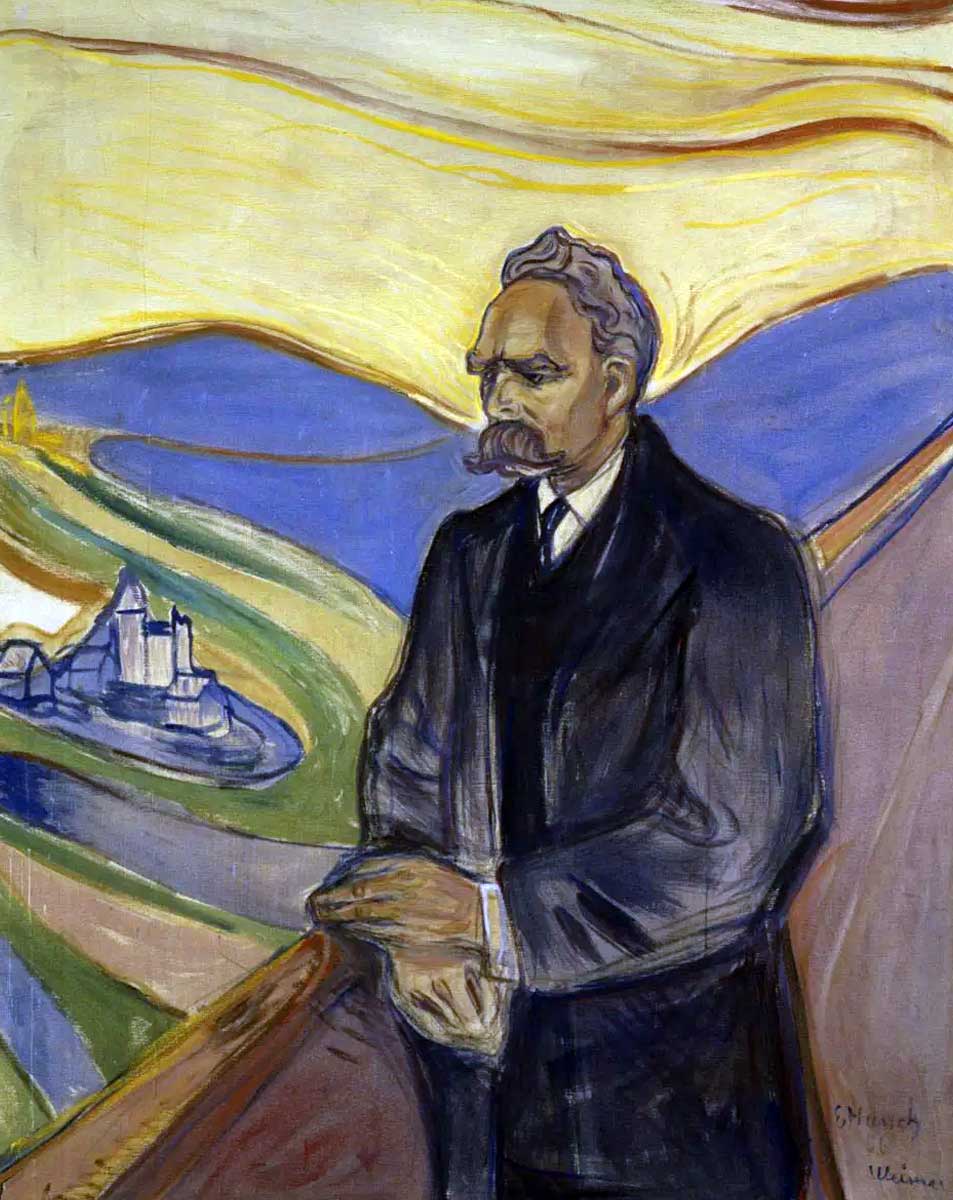
It means not being passive, rejecting outdated values, and actively shaping your life for yourself. It’s about having ambition (Will to Power), developing your values (Master Morality), and striving for mastery over yourself (Übermensch).
To be a Nietzschean is to take radical responsibility for your life. Rather than having meaning given to you, you create your own meaning. Rather than going along with the crowd, you create your own way. That doesn’t mean life will always be easy—Nietzsche’s philosophy isn’t about ease but about struggle and overcoming.
In a society in which most opt for mediocrity, the Nietzschean ventures, creates, and overcomes borders. It’s about living a big, fat, juicy, and unapologetic ‘yes’ to life, with all its disorder and opportunity, and turning obstacles into fuel for transformation.
But most of all, it’s about taking charge. No more sitting and waiting for meaning to fall in your lap. No more blaming everyone else for your problems. Nietzsche’s message: grasp life. Own it. Live so richly that if you had to repeat it for eternity, you wouldn’t change a single thing.