
Mainstream media has grossly misrepresented the history of ninjas (shinobi) and the weapons that they used. While pop culture has built up many myths over generations, the actual shinobi were highly skilled scouts and true experts in unconventional warfare.
Living and fighting by the principles of total practicality and discipline, they chose weapons based mostly on how well they worked in the field. Moreover, many of the tools used by these operatives were not specialized weapons, but rather modified farming, masonry, and carpentry tools.
Why Real Shinobi Preferred Short Swords Over Katanas
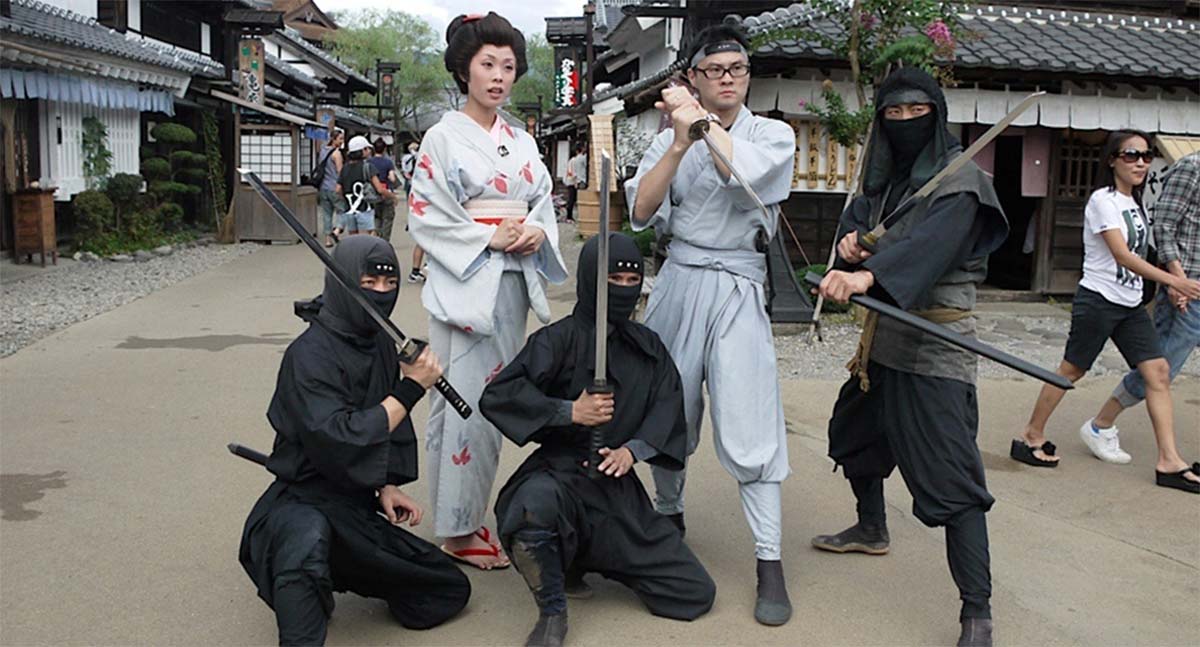
While pop culture makes it seem like shinobi only ever used straight-bladed short swords known as ninjato, both Edo period chronicles and the 1676 ninja manual Bansenshukai indicate that shinobi often favored shorter blades rather than relying primarily on the standard uchigatana of Japan. Often, the longer blade of the katana was exchanged for shorter blades for practical operational reasons.
Trying to be stealthy in the confined corridors of a daimyo residence, for example, required a shorter blade known as a wakizashi. Its blade length usually ranged between 30 cm and 60 cm (12 to 24 inches), as opposed to the 60 cm minimum for a katana. This shorter length made it easier for operatives to unsheathe the weapon while keeping the blade from striking architectural obstacles during close combat.
Secret Scabbard Compartments
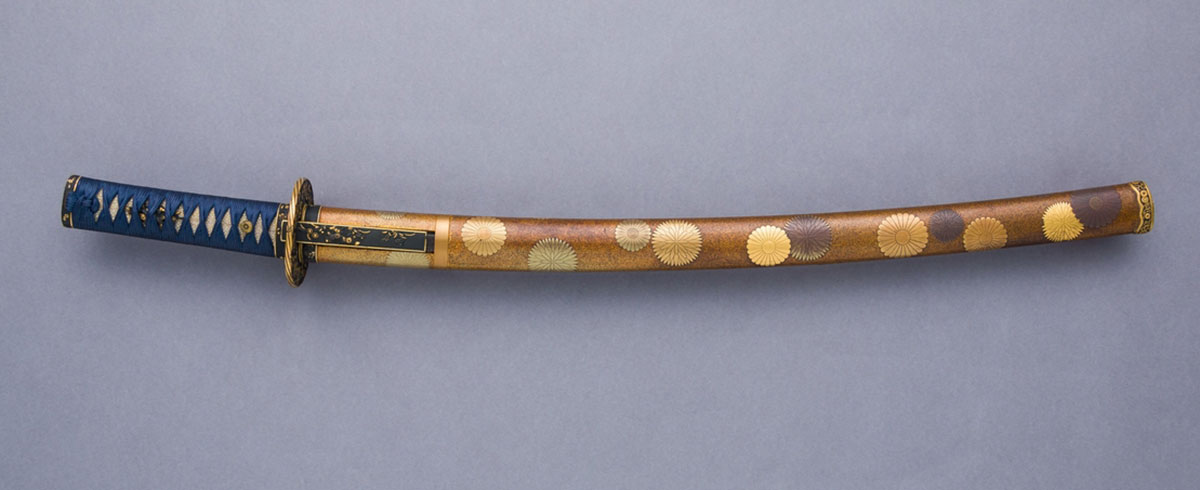
Beyond merely sheathing the blade, the scabbard, or saya, was a versatile piece of equipment. It occasionally had integrated cavities that were used to store items such as documents or visual distractions termed metsubushi. These distractants were often sand, ash, or metal dust that would be thrown into an enemy’s eyes to blind them. The cavity zones were occasionally created by providing extra length at the kojiri of the scabbard to allow the wood to extend past the tip of the blade, thereby creating an empty space.
Some accounts also state that shinobi would often use square handguards (tsuba) as a footrest to scale walls. However, historical records suggest that operatives used specialized climbing equipment to do this.
Why Shuriken Were Distraction Tools Instead of Lethal Weapons
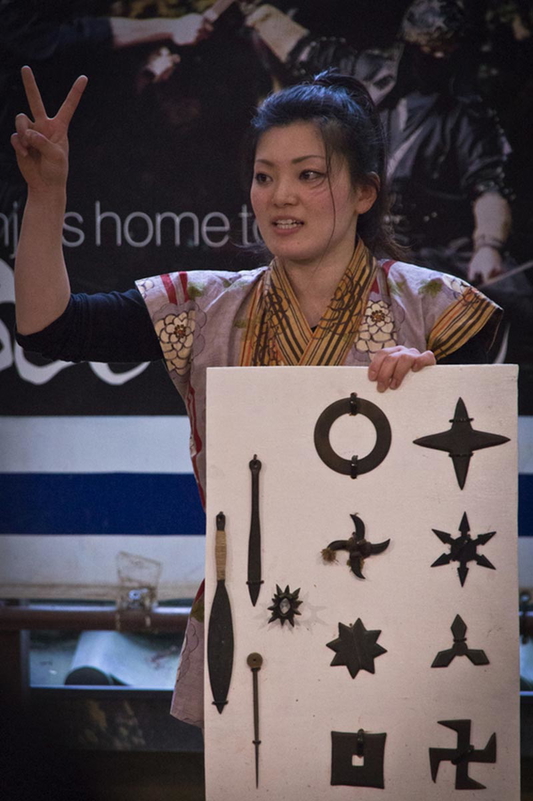
While no weapon has been associated with stealthy shinobi agents more than the shuriken, these weapons were actually deployed much less commonly as killing instruments than is popularly portrayed today in films.
Shuriken literally means “blade hidden in hand.” Its users during the Sengoku period typically employed them to slow down pursuers or to gain valuable time to flee from a confrontation. Shuriken were of two primary types, including cylindrical spikes known as bo-shuriken and flat disk blades called hira-shuriken. Throwing stones called uchizute, as well as iron caltrops known as tetsubishi, have been discovered at archaeological sites associated with the 1590 Siege of Odawara, a major military campaign led by Toyotomi Hideyoshi. Many historians believe that these adapted objects were the predecessors to formal shuriken.
How the Kunai Functioned as a Hidden Work Tool
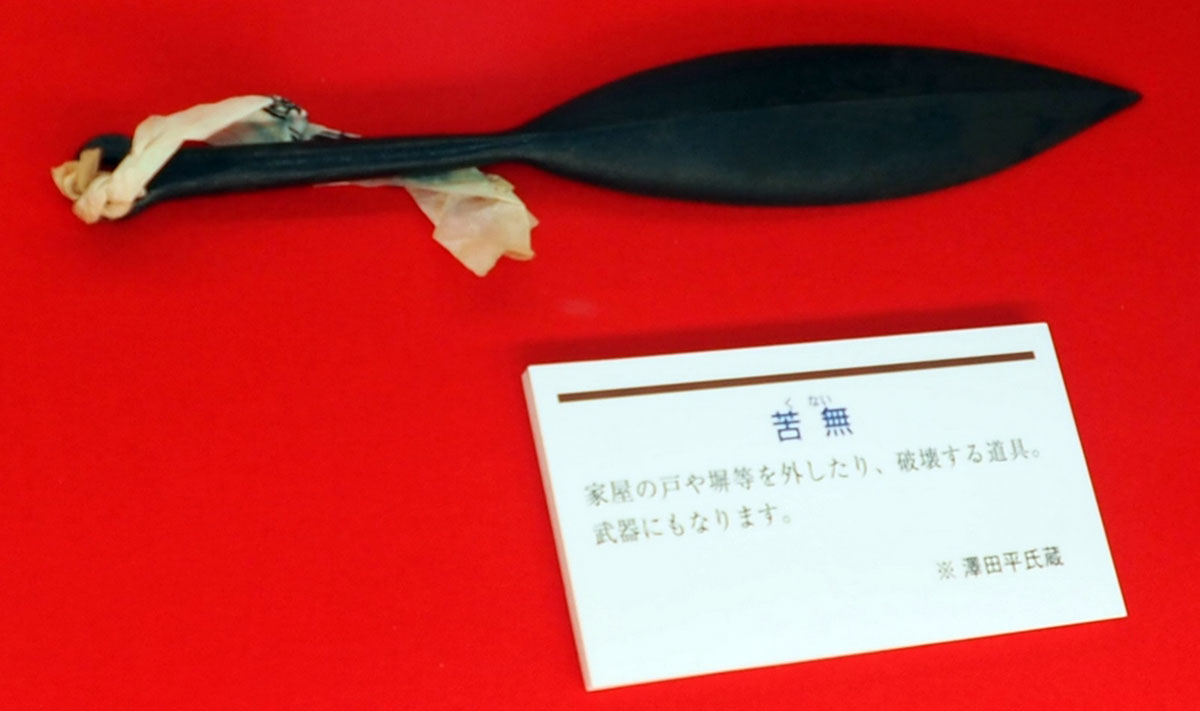
Shinobi tools worked best when they offered a clear sense of concealed utility to the individual operative. The most well-known example of this practical design is the kunai. The tool was usually between 20 and 30 centimeters long, though larger varieties existed, and was derived from gardening and masonry tools used to pry out stones or dig into the ground. It was made of soft iron with an unsharpened edge and a leaf-shaped blade, which allowed it to be cheaply produced for general heavy work.
If a shinobi was caught moving stealthily around a village or a daimyo residence as a gardener or laborer, it would not raise much suspicion if that shinobi were carrying a kunai. Once on site, the kunai could be used for digging or leverage by firmly using it against stone walls. It could punch through shoji panels or carefully pry open locking mechanisms. While it worked as a stabbing weapon in extremely close combat, its true value lay in its multifunctional utility.
Turning Farm Sickles into Deadly Kusarigama Weapons
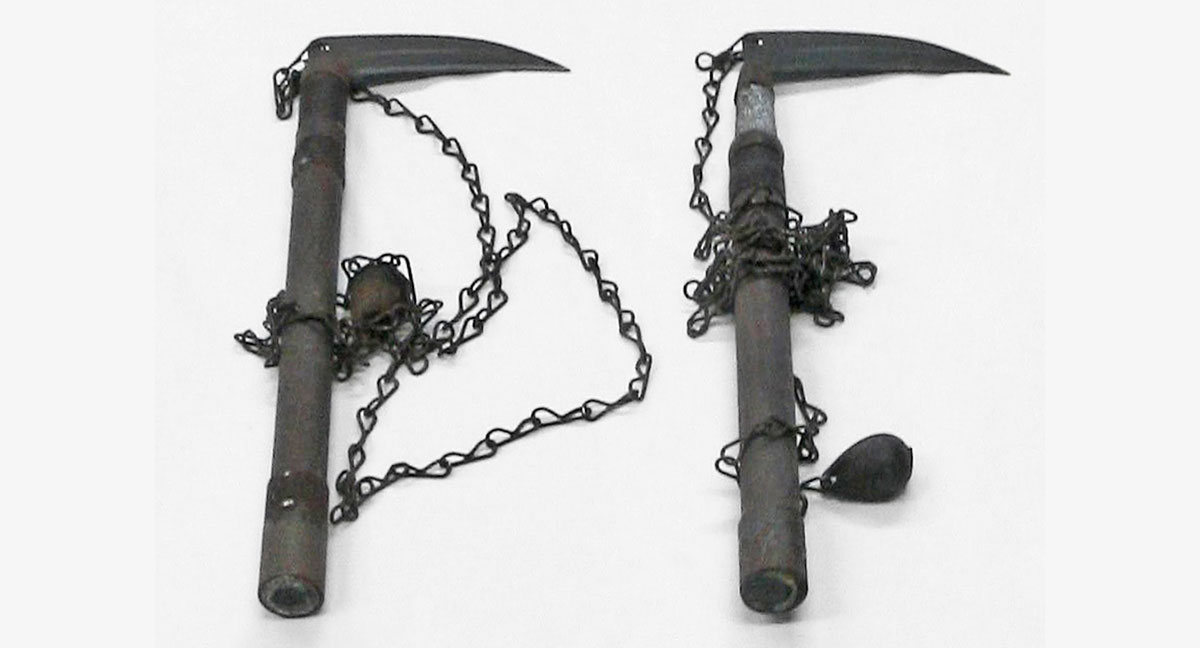
The kusarigama was another example of a combined tool that functioned as a weapon. It featured a sharp sickle attached to a chain between 2 and 4 meters long, with a heavy metal weight attached at the end. It incorporated an agricultural kama (a traditional Japanese agricultural sickle). Its formal techniques were codified in the 17th century as martial arts schools began to teach full mastery of this unique weapon. The weighted chain could be swung to entangle an opponent’s weapon or limbs before the warrior used the sickle to strike a lethal blow.
Shinobi were also some of the earliest and most accomplished users of gunpowder mixtures in Japan. Even before firearms were introduced to Tanegashima in 1543, the ninja of Iga and Koga were already looking for ways to use gunpowder. They created numerous incendiary devices and explosives for covert disruption and psychological warfare. Documents from the period include precise formulas for smoke mixtures and explosives that were used mostly for stealth operations, including traditional bow-shot incendiary arrows known as hiya.