
The Tiger’s initial design started before World War II on September 1, 1939. The Tiger, or Panzerkampfwagen VI, stood as an anomaly. The Wehrmacht’s fast-moving combined-arms doctrine emphasized flexibility and maneuverability, but the Tiger was meant to be a slow breakthrough tank.
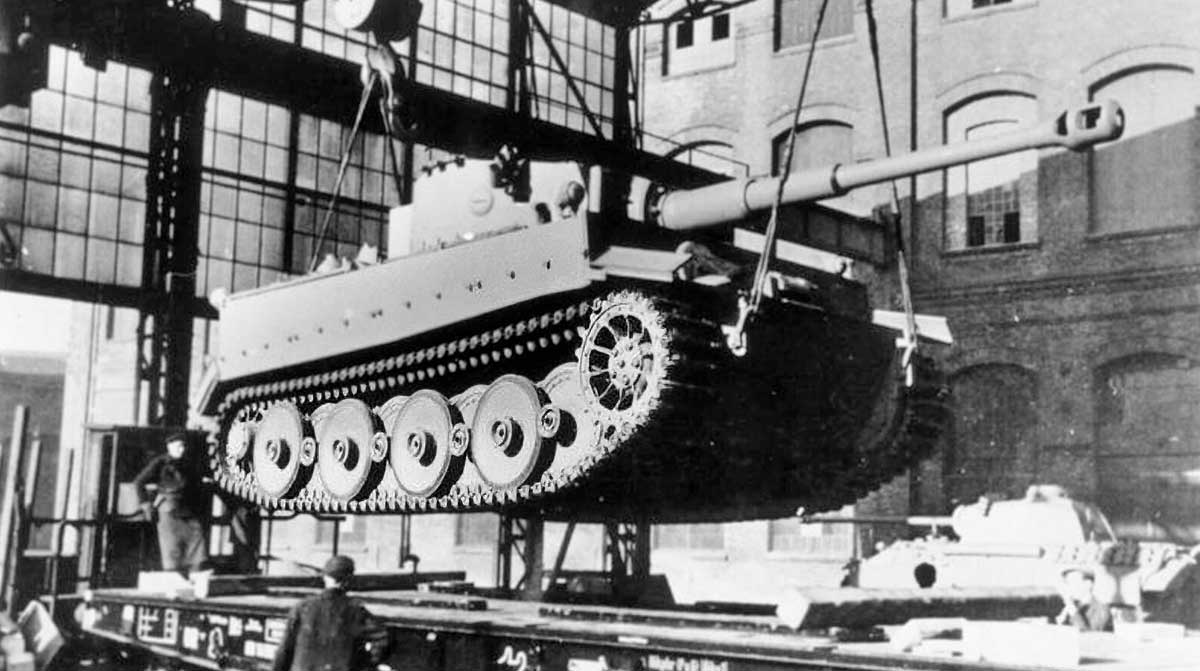
The design process gained a sudden urgency during 1941’s Operation Barbarossa. The Russian armored twins, the KV1 and T-34, utterly shocked the Wehrmacht. Nothing in the German inventory matched these tanks, especially the behemoth KV1. The two design companies, Henschel and Porsche, presented their prototypes for Hitler’s birthday on April 20, 1942. The Henschel model got the nod and entered production, equipping Heavy Tank Battalion 502 in August 1942.
With a deadly high-velocity 8.8-centimeter cannon and armor 100 millimeters thick, the Tiger became the tank that was sought. The Tigers equipped only heavy tank battalions, going where needed but fighting on all fronts. Soon, its battlefield reputation was built, and with a trained crew, it became deadly.
How Tiger 231 Survived 252 Hits in a Single Battle
Beginning with their first deployments, the Tiger tanks earned their reputation. Battlefield tales of Tigers abound, usually commanded by tank aces. Blessed with steel spines, determination, and smart officers, these men got the most out of their crews. One story shows how tough the Tiger really was.
On February 12, 1943, before the 1943 Battle of Kursk, Tiger 231 fought in a battle near Rostov. Lieutenant Zabel led a tank attack against a collective farm. Lighter tank units followed his Tiger charge into a nasty fight.
For over six hours, the Soviets concentrated on the lead Tiger. It withstood 252 hits from four different-caliber anti-tank weapons. The damage included a knocked-out main gun, a burned engine, damaged wheels, a damaged fuel tank, and two broken torsion bars. Yet the Tiger still functioned, and Lieutenant Zabel drove it over 30 miles to the German lines. Tiger 231 returned to Germany for propaganda, ending its days as a training tank.
How Legendary Tank Aces Made the Tiger Tank Unstoppable
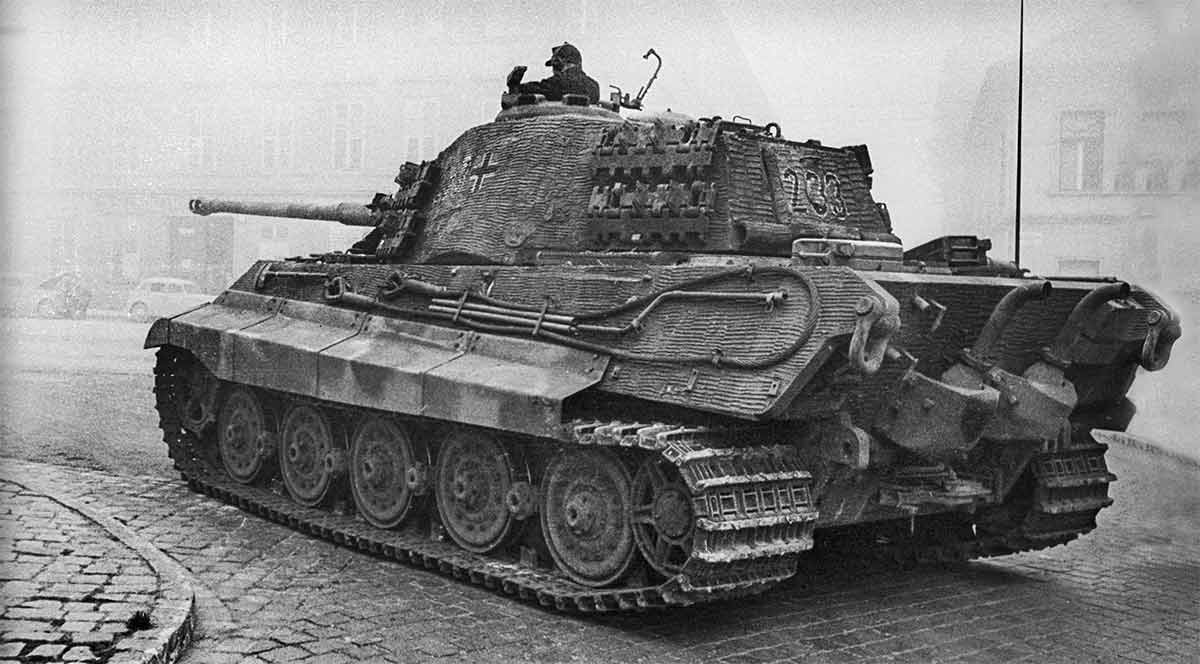
As the tide turned against the Axis, Tiger units became armored plugs. They shifted around where needed to fill gaps in defenses in the West and the East. To knock out a Tiger, the Allies estimated five tanks were required, and never from the front. And when manned by an exceptional commander, the Tiger became nearly unstoppable. Most Tiger aces shuffled between the Western and Eastern fronts.
Kurt Knispel and the Longest Tank Shot of WWII
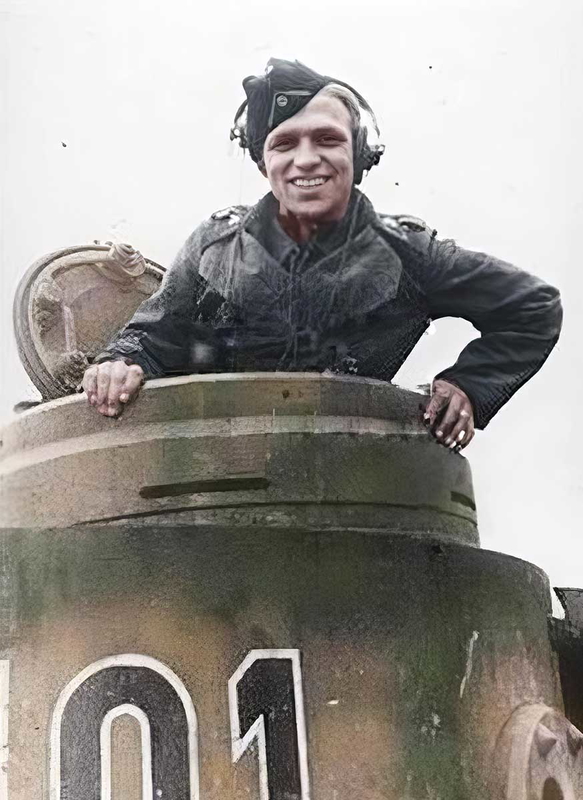
The highest-scoring Tiger ace, Kurt Knispel, racked up 168 tanks destroyed, but unconfirmed figures stand at 195. Knispel’s service started in 1940, aged 17, as a gunner in two armored vehicles. By 1943, his score stood at 12 tanks, and he had taken command of a Tiger. Most of his kills were in a Tiger I. Using its 8.8-centimeter gun and superior optics, he destroyed a Soviet tank at 3,000 meters, the longest tank shot of the war. Knispel died in action in April 1945, just ten days before the end of the war.
Michael Wittmann and the 15-Minute Armored Rampage
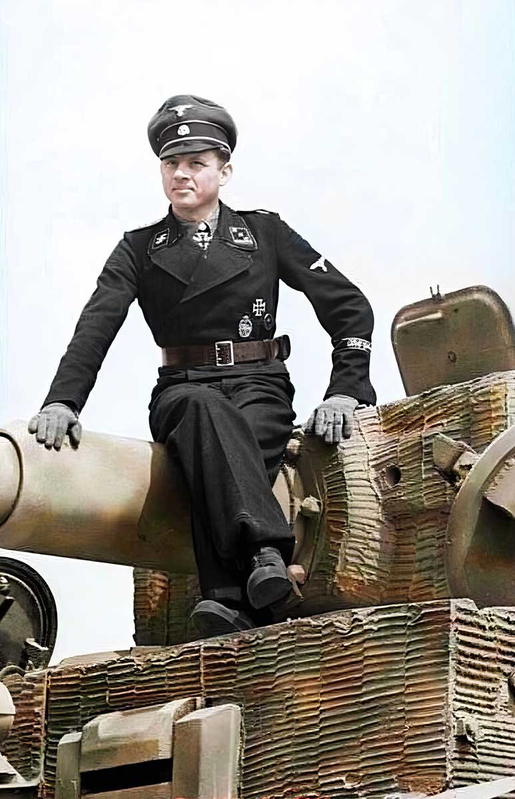
No Tiger battle can be discussed without mentioning tank ace Michael Wittmann. Like Knispel, he served in other tanks but shined in command of a Tiger. He distinguished himself with a score of 56 tanks destroyed by January 1944, before taking the controls of a Tiger.
He was transferred to Normandy in June 1944 to engage the British forces. On June 12, Wittman ordered his crew to charge onto a road filled with British vehicles in the legendary battle near Caen, France. Knocking out several tanks there, he then charged into a small town, firing at any perceived threat. British guns had almost no effect on the tank’s tough frame until anti-tank gun fire knocked his Tiger out of action. During the fight, Wittmann destroyed 15 tanks, two anti-tank guns, and 15 trucks in 15 minutes. His luck ran out when he was killed in action on August 8, 1944
Captain Hans Bölter and the Battle of Pskov
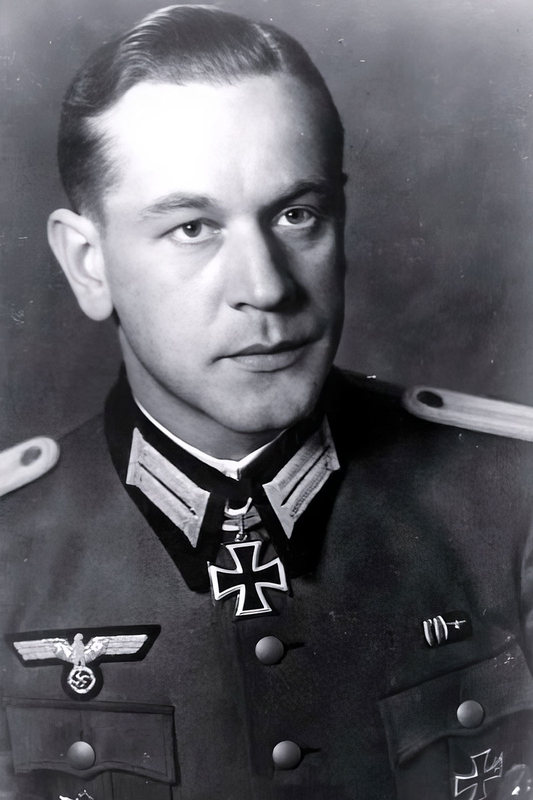
A little-known tank ace, Captain Hans Bölter commanded a Tiger at the 1943 Battle of Pskov. Using the Tiger’s optics, thick armor, and big gun, he single-handedly destroyed 22 Soviet tanks in one battle. Bölter destroyed 144 tanks before he died in action in September 1944.
Ultimately, the Tiger tank’s statistics matched its formidable reputation, and the psychological impact of this first big-gun armored behemoth was undeniable.