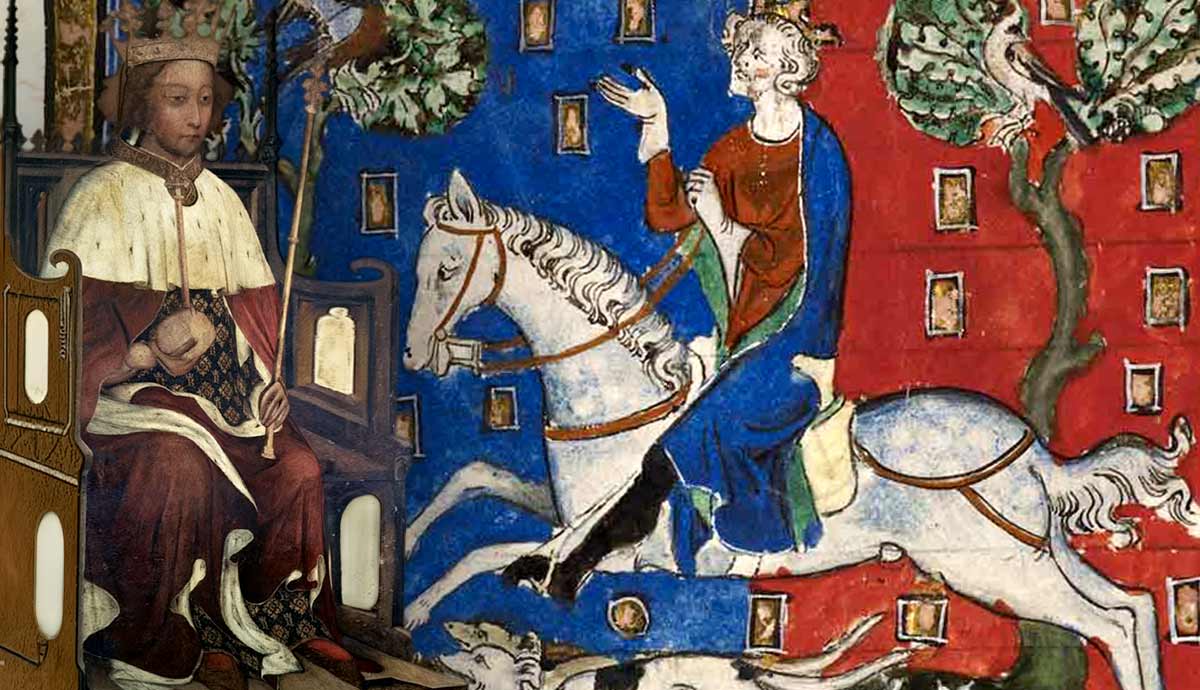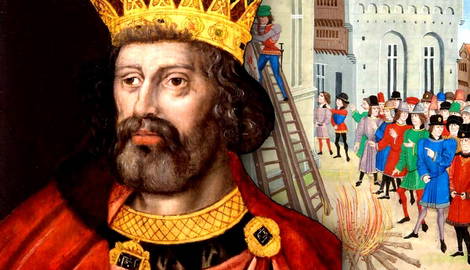

Unlike his father, Edward II was not celebrated for his military accomplishments. His unpopular reign was dominated by military disasters, war with his barons, and, most infamously, his favorites. Edward failed in his royal duty to seek counsel from or distribute patronage to his barons and instead focused his attention and patronage on two individuals, Piers Gaveston and Hugh Despenser the Younger. Their ambition and bonds with the king sparked bitter jealousies, eventually driving Edward’s queen to ignite a rebellion that would tear the crown from Edward’s head.
Who Was Piers Gaveston to King Edward II?
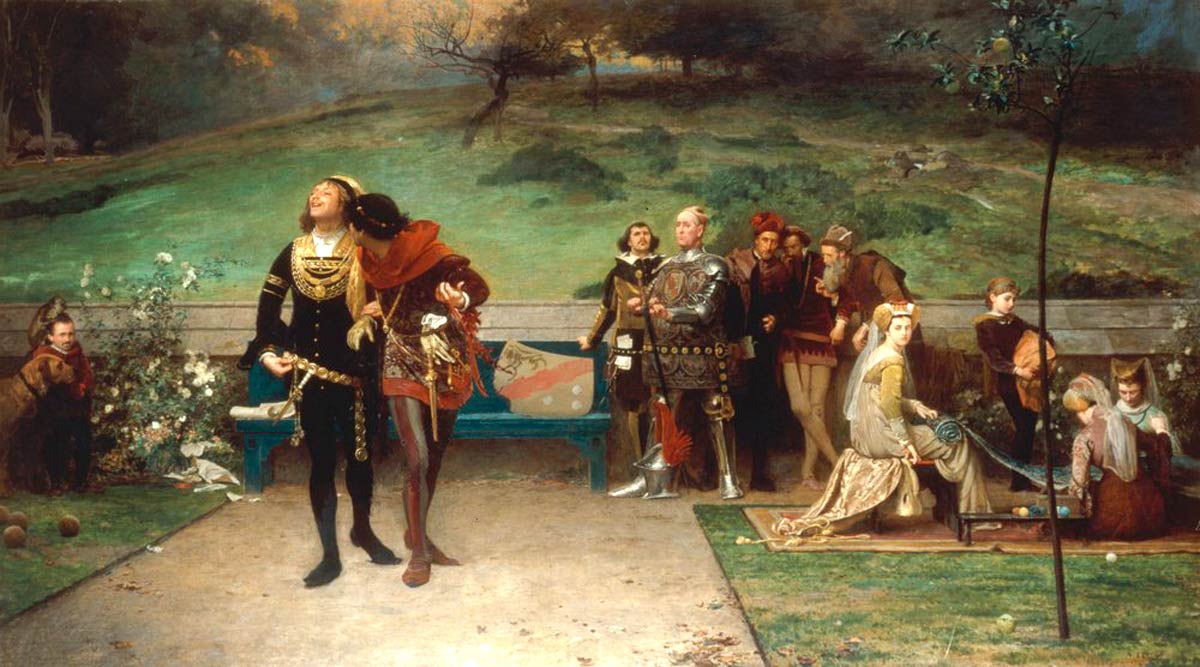
In 1300, King Edward I of England placed a Gascon knight by the name of Piers Gaveston into the household of his eldest son, Edward of Caernarvon. It was hoped the young, dashing knight would have a positive influence over his heir and instill in him some of the chivalric virtues the king had little time to impart to his son. But Gaveston proved to be a less-than-suitable mentor.
Embroiled in a dispute with his father’s treasurer at Gaveston’s instigation in 1306, Prince Edward was banished from his father’s court. As a punishment for his insolence, the king cut off financial assistance to his son and removed his household knights, including Gaveston. Concerned by Gaveston’s influence over his son, the king nevertheless eventually relented and reinstated his son’s favorite.
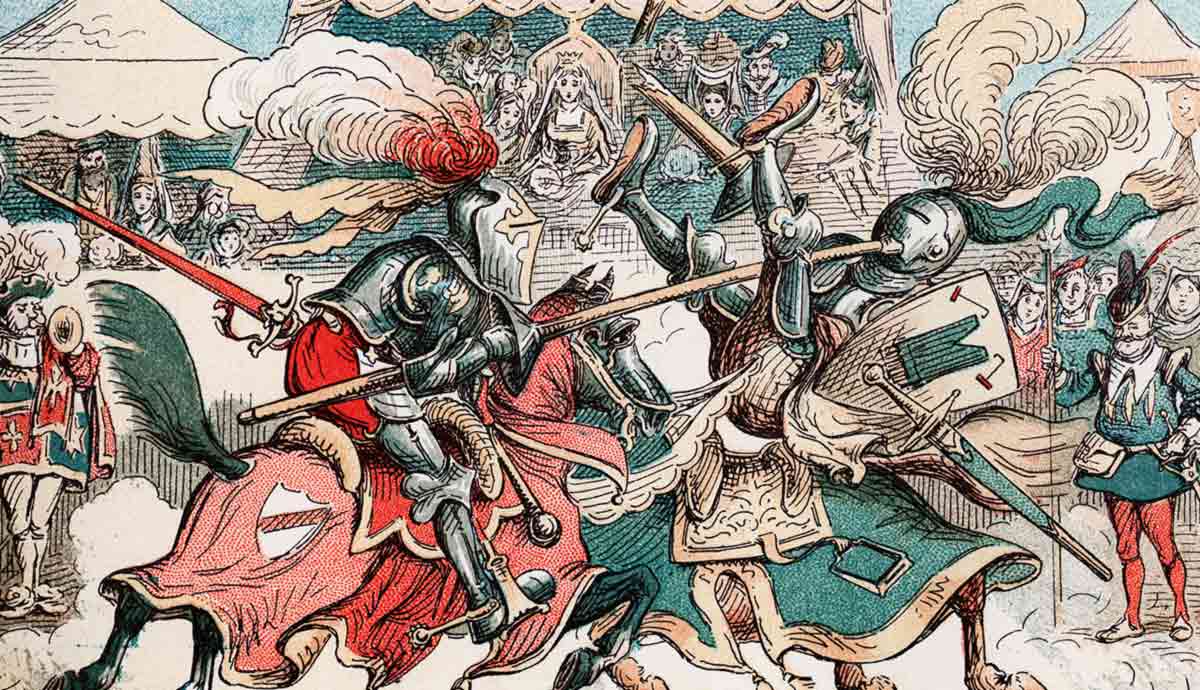
Later the same year, Gaveston and several other members of Edward’s household were accused by the King of deserting his Scottish campaign to travel abroad for a tournament. They were pardoned some months later, but the king was increasingly concerned about his son’s desire to lavish Gaveston with lands and wealth. He banished the man with whom his son had formed a close attachment.
When Edward I died in July 1307, Edward II succeeded to the throne. In one of his first acts as king, he recalled his favorite from exile and granted him the earldom of Cornwall. When Edward was crowned alongside his twelve-year-old bride Isabella in 1308, he insulted his new queen at the ceremony by focusing his attention on Gaveston. While popular accounts often view their bond as sexual, many medieval historians emphasize that the relationship was formally structured as sworn adoptive brotherhood (fraternitas) and political alliance.
Unchecked Power and the Execution of Gaveston
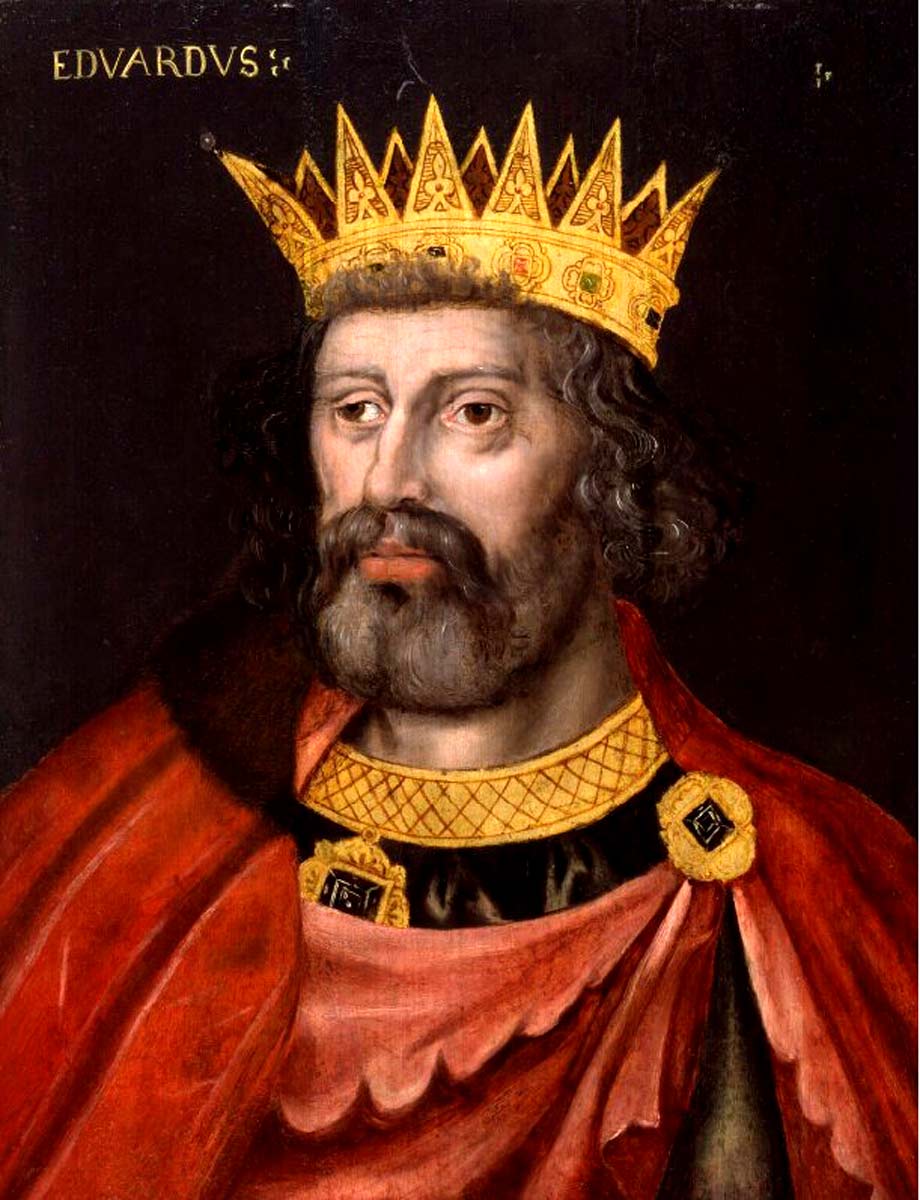
Edward alienated the barons and failed to call upon their advice. Gaveston was seemingly his only counselor, and as the bond continued to grow between the two men, some considered the favorite as a second king. The gifts of land and wealth bestowed upon Gaveston caused further annoyance and jealousy among the barons who were excluded from receiving similar largess as Edward devoted all of his time and energy to pleasing his favorite.
In May 1308, the barons insisted that Gaveston be exiled once again. Edward initially resisted their demands but eventually sent his favorite to Ireland as his lieutenant. But the exile was short-lived and within a year, the king’s favorite returned to Edward’s court.
Matters came to a head in 1311 when a group of 21 barons presented Edward with a list of grievances known as the Ordinances. Their purpose was to address abuses and reform in Edward’s government; number 20 on the list related specifically to Gaveston, who it was claimed had “led the lord king astray, advised the lord king badly, and persuaded him deceitfully and in many ways to do wrong” (Covert, 2024).
Gaveston was exiled once again, but this time the king recalled him after only one month. The barons prepared for war, determined to rid themselves of this upstart once and for all. They captured Gaveston at Scarborough and took him to Blacklow Hill, where he was beheaded as a traitor for violating the terms of the Ordinances in June 1312. The grief-stricken king vowed to avenge the death of his favorite but nevertheless came to a treaty with the barons to restore peace within the realm.
Enter Hugh Despenser the Younger
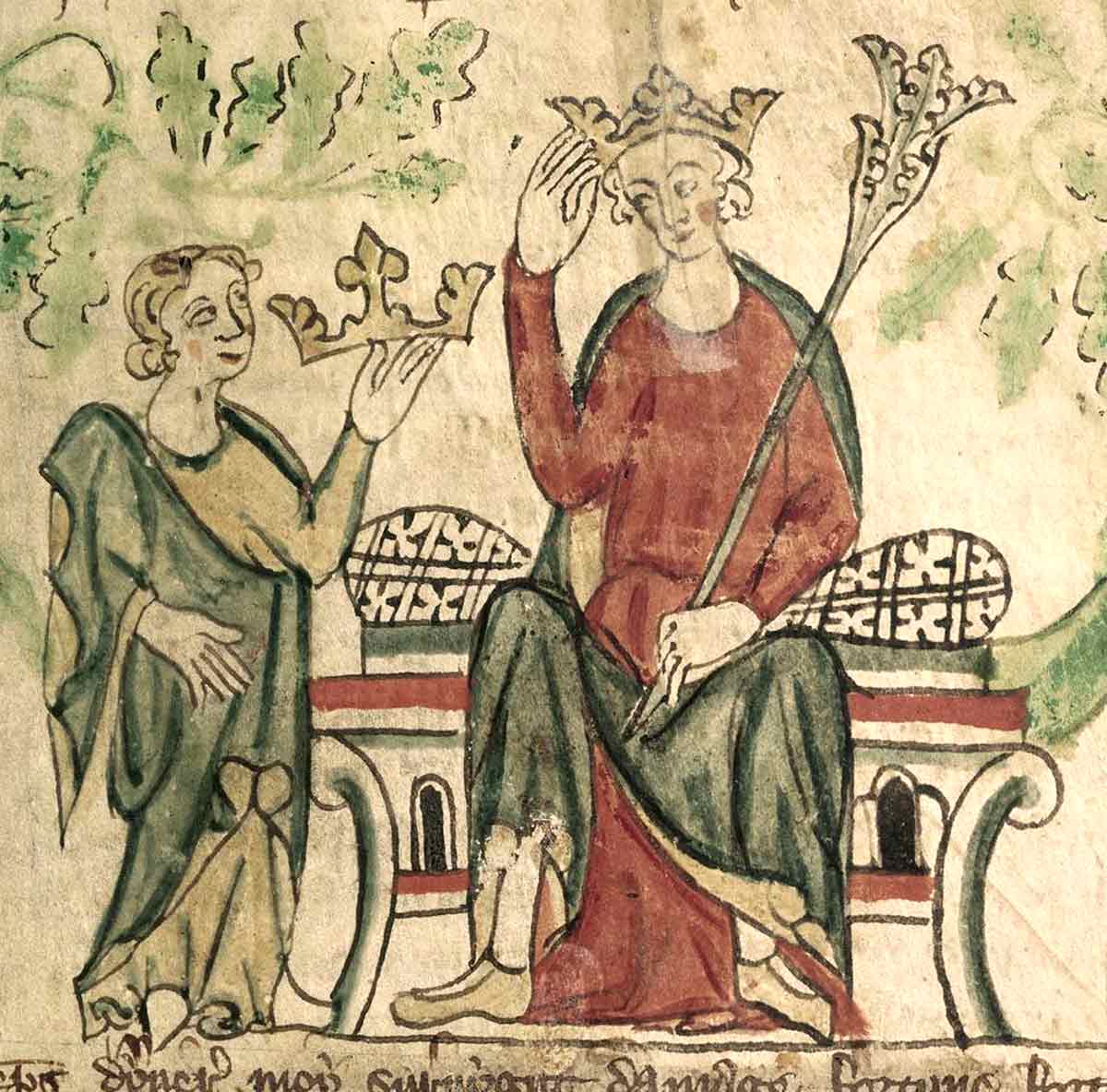
Had he been a wiser king, Edward would have learned a lesson from this gruesome tale, but he lacked the capacity to do so. In October 1318, he appointed Hugh Despenser the Younger to the position of chamberlain to the king. This was a powerful position at court, and through it, a familiar pattern repeated itself. Edward elevated Despenser and members of his family at the expense of the barons. It is assumed the pair were lovers. Despenser was ruthless and ambitious, not above killing hostages entrusted to his care and confiscating their land. He fully utilized his proximity to the king and his favor to increase his own wealth and power as well as that of his family members and allies.
The barons responded by departing Edward’s court and refusing to return. This was the beginning of the civil war known as the “Despenser War.” The barons, led by Roger Mortimer and Humphrey de Bohun, two Marcher lords with extensive lands on the Welsh borders, were determined to rid the court of Despenser’s influence and restore proper order. In early 1321, the barons attacked Despenser’s lands in Wales to halt his expansion in the region. Terrified that his favorite would fall into the hands of the rebels and driven by a fear of history repeating itself, Edward sent Despenser to the continent for his own safety.
Edward sent his wife, Queen Isabella of France to Leeds Castle in October 1321, occupied by a rebel baron, Bartholomew Badlesmere. When the Queen was refused entry, Edward responded by besieging the castle. Edward executed many leading rebels, including his cousin Thomas of Lancaster, following his victory at the Battle of Boroughbridge in March 1322. After the rebellion was crushed, Despenser was recalled to England, where his influence continued to grow. The ambitious courtier now began to covet Queen Isabella’s lands.
Why Did Queen Isabella Turn Against the King?
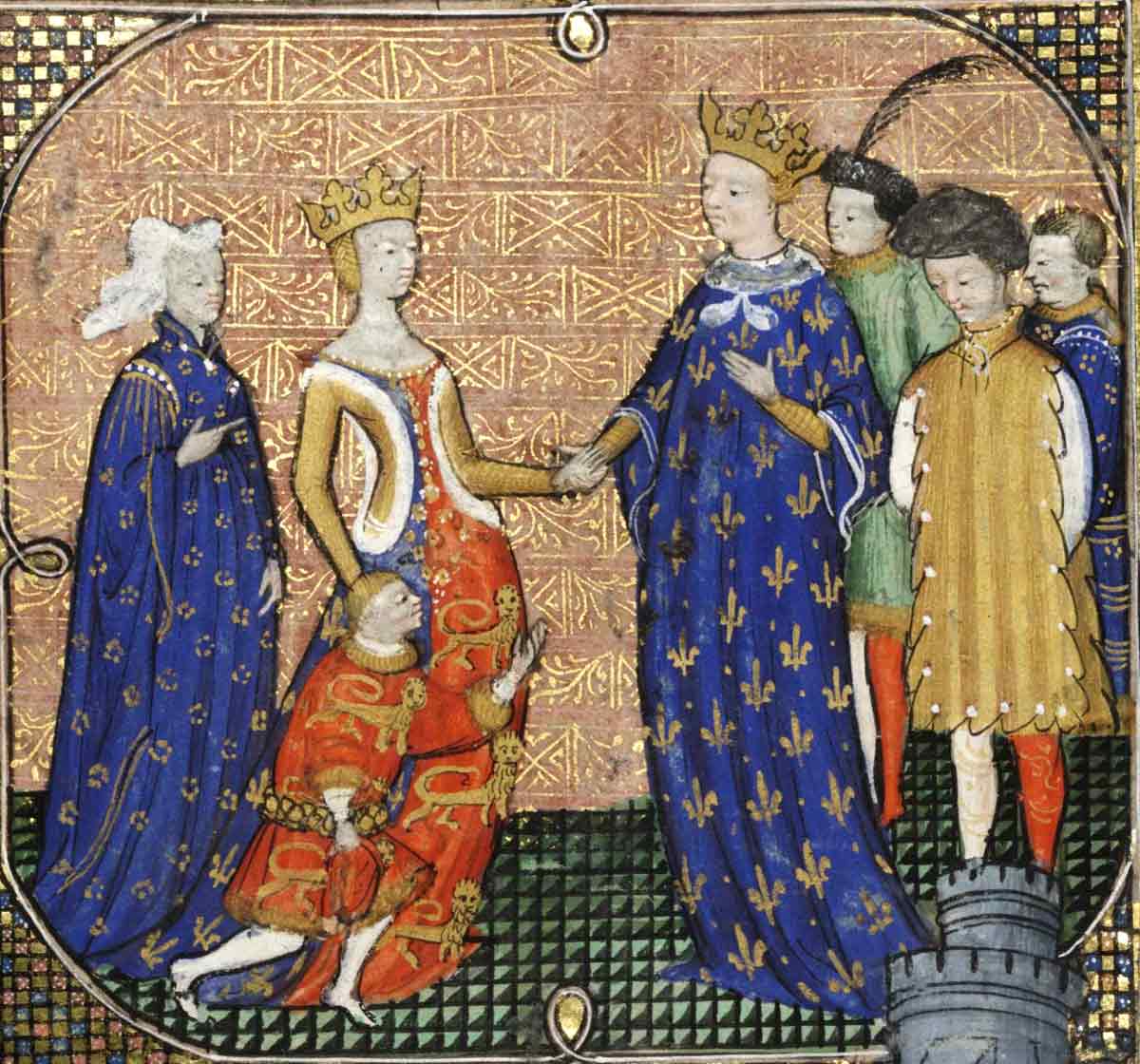
While Gaveston had posed little threat to Isabella, Despenser directly challenged her position, envious of her power and influence over the king. Edward’s attitude towards Despenser caused the queen great offense. The breakdown in her marriage to Edward was undoubtedly caused by Edward’s inability to separate himself from his favorite.
Following her involvement in the plot at Leeds Castle in October 1321, Isabella begged Edward to exile Despenser so proper order could be restored throughout the realm. In response, Despenser convinced the king to confiscate all of Isabella’s lands and remove her servants from her household. But the most devastating blow was yet to come. In 1324, at Despenser’s suggestion, Isabella’s children were also removed from her custody and Despenser’s wife was placed in the queen’s household, presumably to serve as a spy for her husband.
In 1325, Edward sent his wife to the court of her brother King Charles IV in Paris to address growing tensions between the English and French crowns. Once there, Isabella met with exiles residing in France, many of whom had fled England following the Despenser War. One prominent member of this group was the former rebel Roger Mortimer, who had managed to escape from the Tower of London.
Isabella established peace for Edward with her brother and then requested her eldest son Prince Edward, to be sent to the French court to pay homage to his uncle. Once Prince Edward was in her custody, Isabella refused to return to England or to send her son home. Rumors quickly circulated of a love affair between Isabella and Roger Mortimer, to the outrage of her husband.
Rebellion and the Downfall of a Monarch
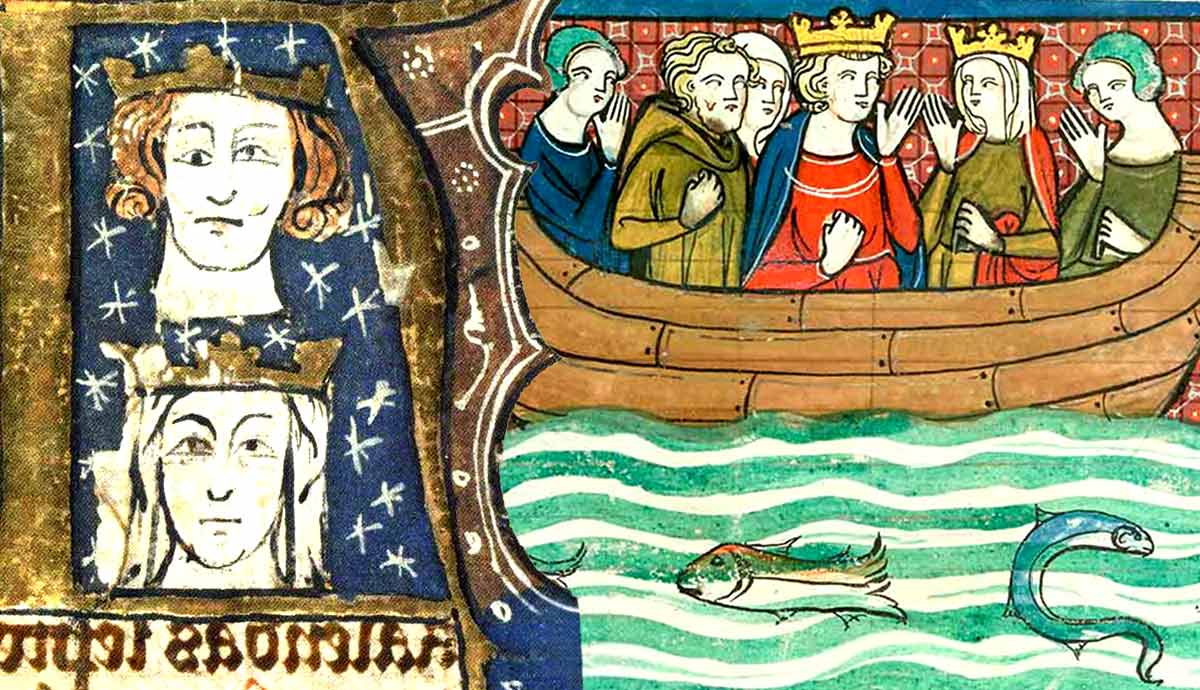
Isabella decided to act in summer 1326. With the support of Mortimer and her brother, she gathered a significant naval force for the purpose of an invasion of England. The queen lost faith in her husband’s ability to exercise his royal powers without Despenser’s influence and instead worked to secure the succession of her son, Edward.
After Isabella landed at Orwell in Suffolk in 1326 with her son and her alleged lover, the invasion party marched straight towards London. Despenser’s unpopularity throughout the realm caused Edward’s reputation to suffer; consequently, Isabella encountered little resistance, taking towns as she approached the capital. Edward, petrified that Despenser would meet the same fate as Gaveston, fled with his favorite to Wales. Two disheveled figures were apprehended at Neath in November 1326.
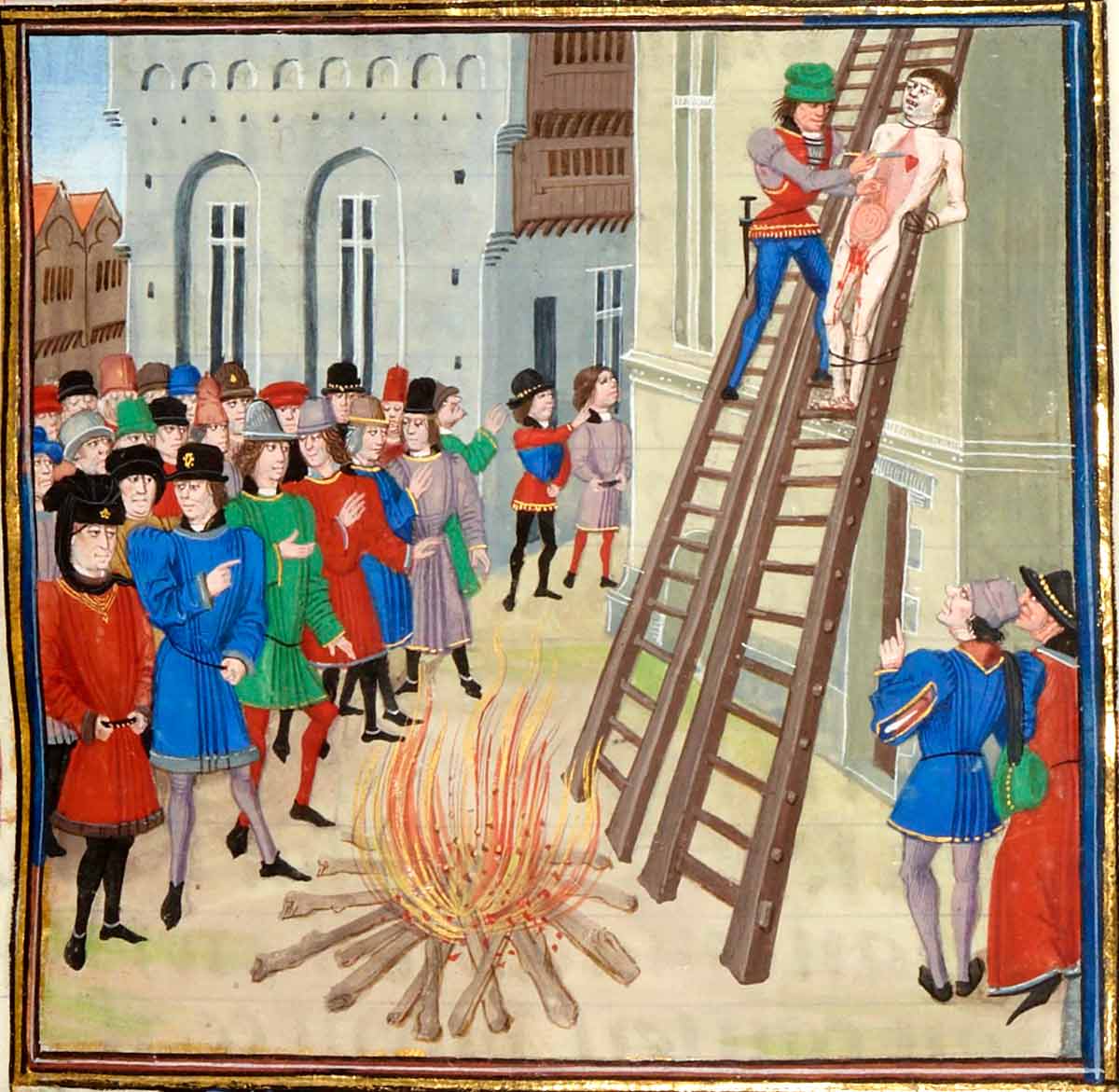
Despenser was taken to Hereford, where he was hanged, drawn, and quartered while Isabella watched on. Isabella and Mortimer called a meeting of Parliament in January 1327 which deposed the king and placed his son on the throne as Edward III. This was unprecedented; never before had an English king been deposed, least of all by his own wife. Executing the old king was considered to be a step too far and he was imprisoned in Berkeley Castle in Gloucestershire instead. Several failed rescue attempts made it clear to Isabella that as long as her husband lived, he was a threat to her son’s regime.
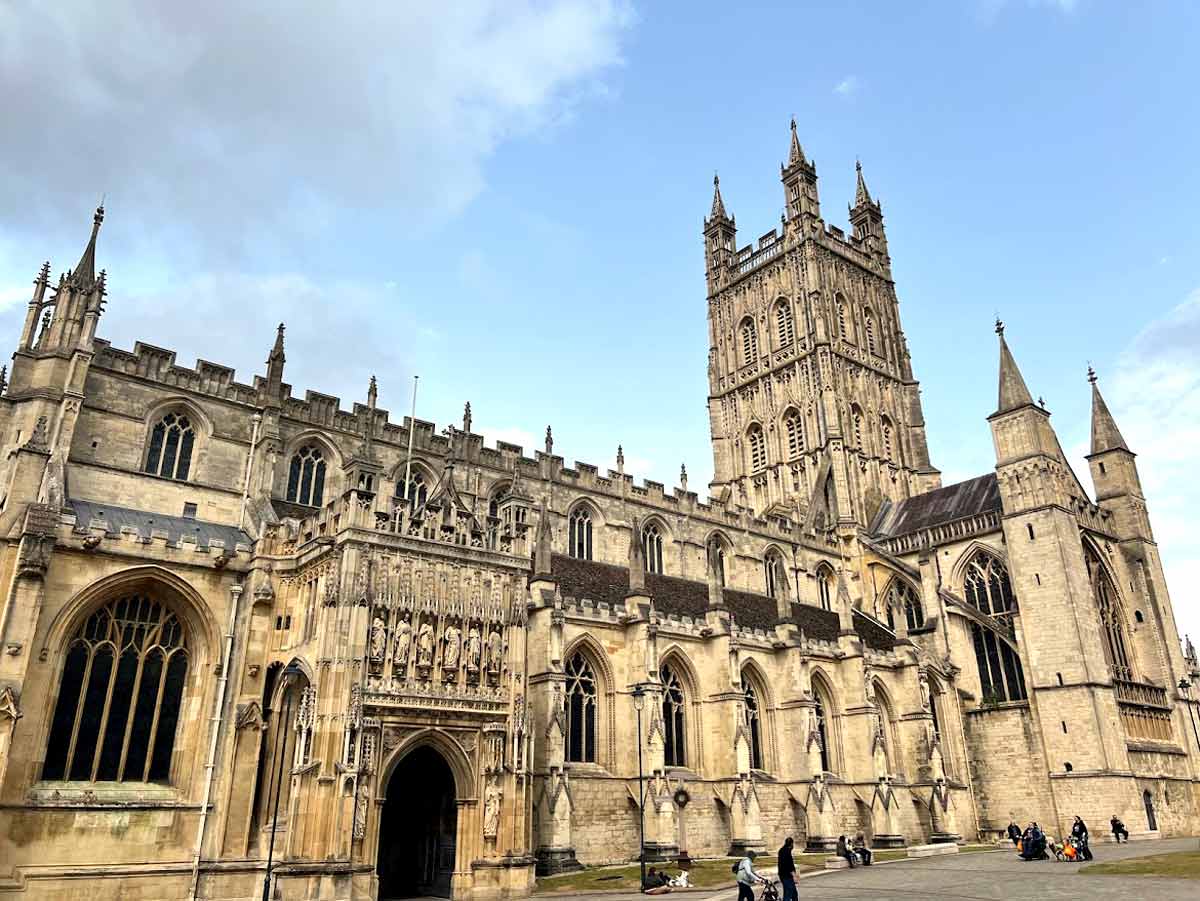
On September 21, 1327, Edward II was found dead at Berkeley Castle. Many have come to the natural conclusion that Isabella and Mortimer had a hand in his death. While Edward III recognized his father’s death and executed Mortimer for regicide, some scholars believe that Edward II escaped from Berkeley Castle and lived undercover in Italy into the 1330s.
Edward II was unpopular because of the attention he paid to his favorites. His behavior towards the barons caused them to rebel throughout this reign and forced his wife into a difficult position. Isabella’s successful invasion was only made possible because Edward was an ineffective king whose reign had torn his kingdom apart.
Sources:
- Covert, A., ‘Sine Communi Favore: The Intersection of Power, Perception, and Sexual
- Morality in the Careers Of Piers Gaveston and The ‘Royal Favourites’ of Fourteenth-Century
- England’, in Storey, G. and Rohr, Z.E., (eds.) Premodern Ruling Sexualities: Representation, Identity, and Power, (Manchester University Press, Manchester, 2024), p. 237.