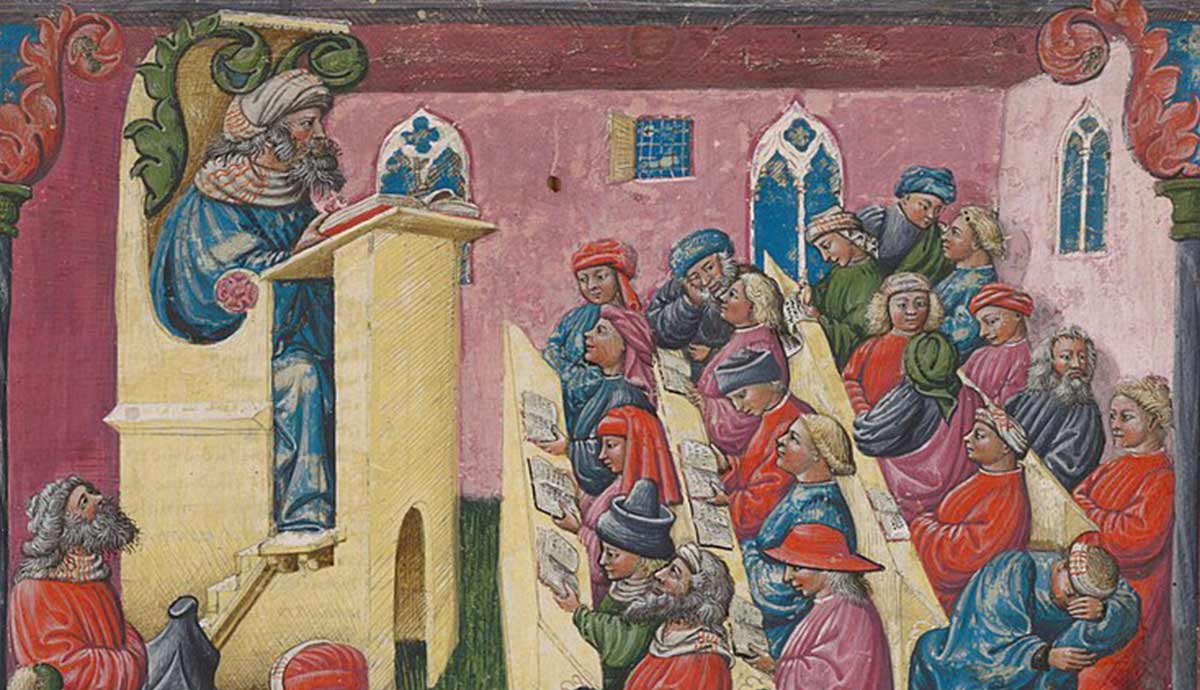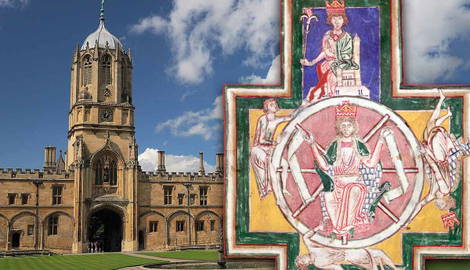

Universities in Europe have a long history. Indeed, the first ones appeared around the 11th and 12th centuries, developing from the so-called cathedral schools, institutes for learning attached to churches where the clergy was trained. By the 13th century, institutions like the University of Bologna (the oldest university in Europe, founded in AD 1088) and the University of Paris had become major centers of learning, drawing thousands of students from across the continent. From getting up before dawn to arguing in Latin, their routines are both familiar and startling for a modern reader. Read on to discover more about university life in the Middle Ages.
Medieval Universities & Their Students: A Brief Overview
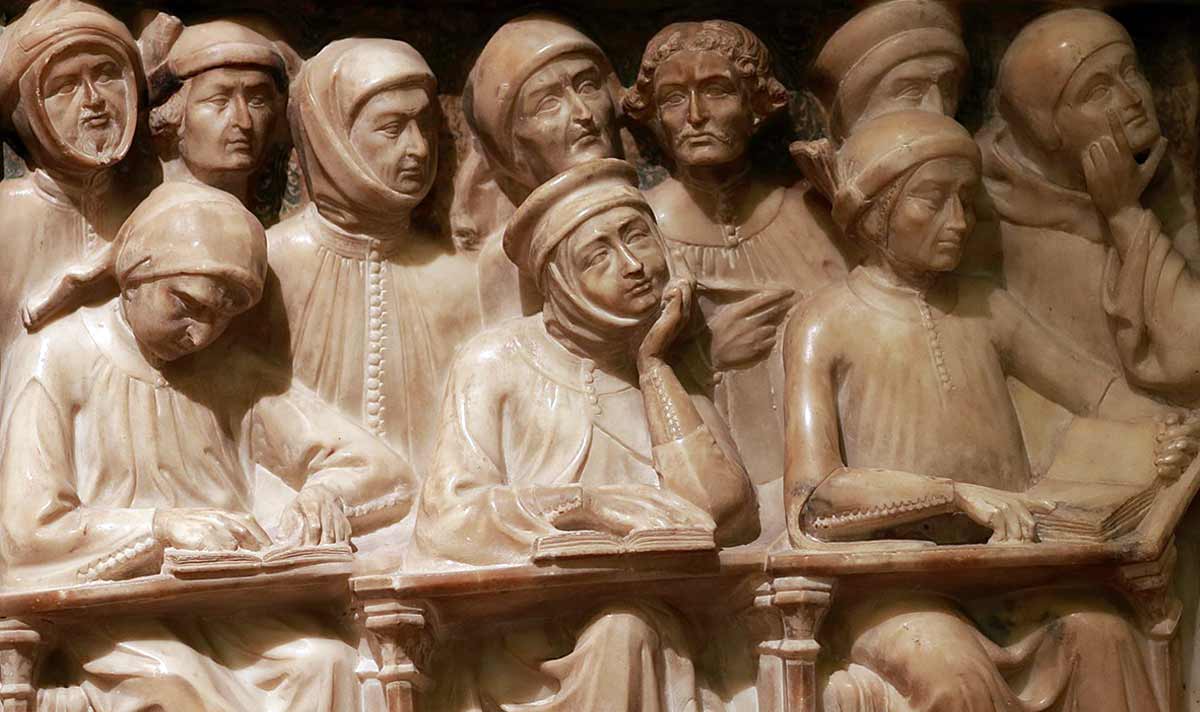
In the Middle Ages, university students were almost exclusively male, as women generally had no access to formal higher education. Their ages varied: they could be surprisingly young or closer to their 30s. At the Universities of Paris and Oxford, for example, boys often enrolled between the ages of 14 and 15, making them closer in age profile to a present-day high-schooler. On the other hand, at the University of Bologna, renowned for its law faculty, students were often already working professionals, many being clergymen or lawyers in their thirties.
In the 1215 Statutes for the University of Paris, Robert de Courçon specified that “no one is to lecture … in arts before he is twenty years old” and that he “is to listen in arts at least six years, before he begins to lecture. He is to promise that he will lecture for at least two years, unless he is prevented by some good reason, which he ought to prove either in public or before the examiners.”
The most renowned universities housed students from all over Europe. At the University of Bologna, “international” students established mutual support groups that evolved into more structured and influential associations known as Nationes. Banded together, the Nationes formed a larger association, the Universitas (Latin for “the whole”), a body that represented the entire student community.
Latin was the universal language of scholarship, and students were expected to speak it not only during lectures but also in the lodgings. In some institutions, students caught speaking their native tongue could even receive a punishment.
Where Did Medieval University Students Live?

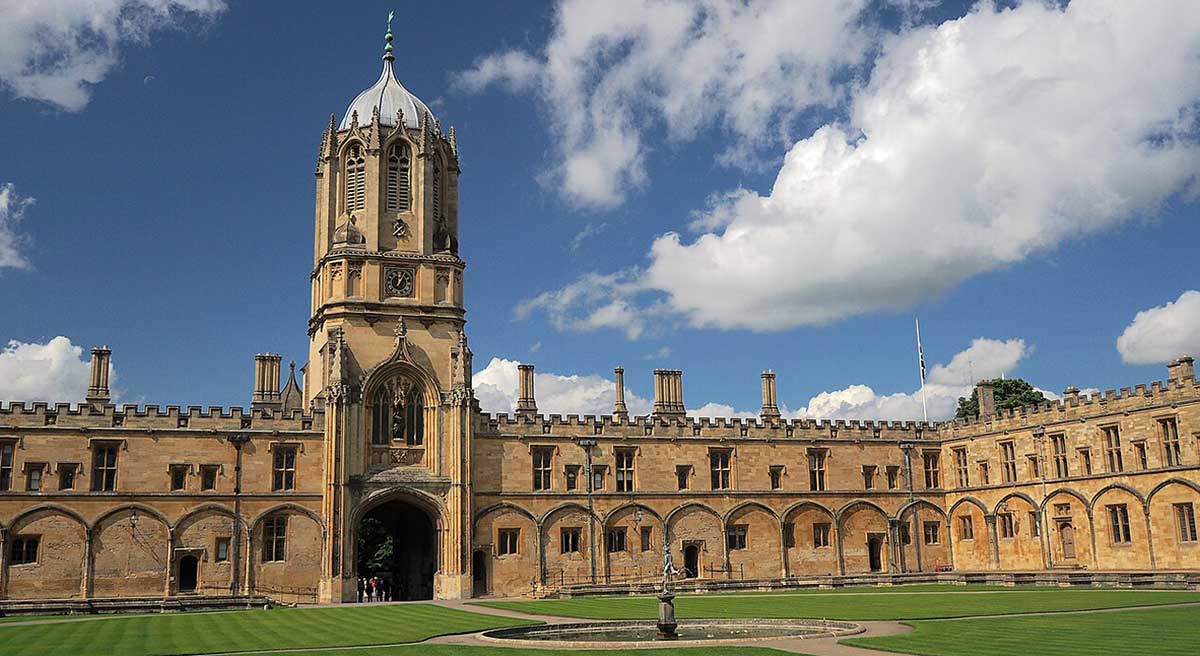
Medieval universities had no campus. Indeed, more than physical spaces, these institutions were a community of students. In Bologna and Oxford, for example, lectures took place in rented halls, church naves, or even in the open air. Housing was also improvised. In the earliest periods, students simply lodged with townspeople, sleeping in spare rooms, sheds, or barns.
Gradually, more structured living arrangements emerged. At Oxford, student lodgings known as hospitia were regulated by 1214, when a papal legate issued an ordinance halving the rent of all houses let to scholars for ten years. The hospitia eventually evolved into academic halls. In Germany, students lived in bursae (from the Latin bursa, meaning “purse”), hostels where daily life revolved around meals, devotions, and study.
The first true colleges were charitable foundations for impoverished students. In Paris, the Collège des Dix-Huit (c. 1180) housed 18 scholars, while the Collège de Sorbonne, founded by Robert de Sorbon, the son of a peasant, in 1253, and confirmed in 1257, supported 16 theology students, who received housing, meals, and access to a library. At Oxford University, University College (1249), Balliol (1263), and Merton (1264) established the English collegiate model. Yet, even where colleges existed, they accommodated only a small percentage of scholars. Most students had to secure an accommodation in halls or private lodgings.
Securing Funds & Other Financial Matters
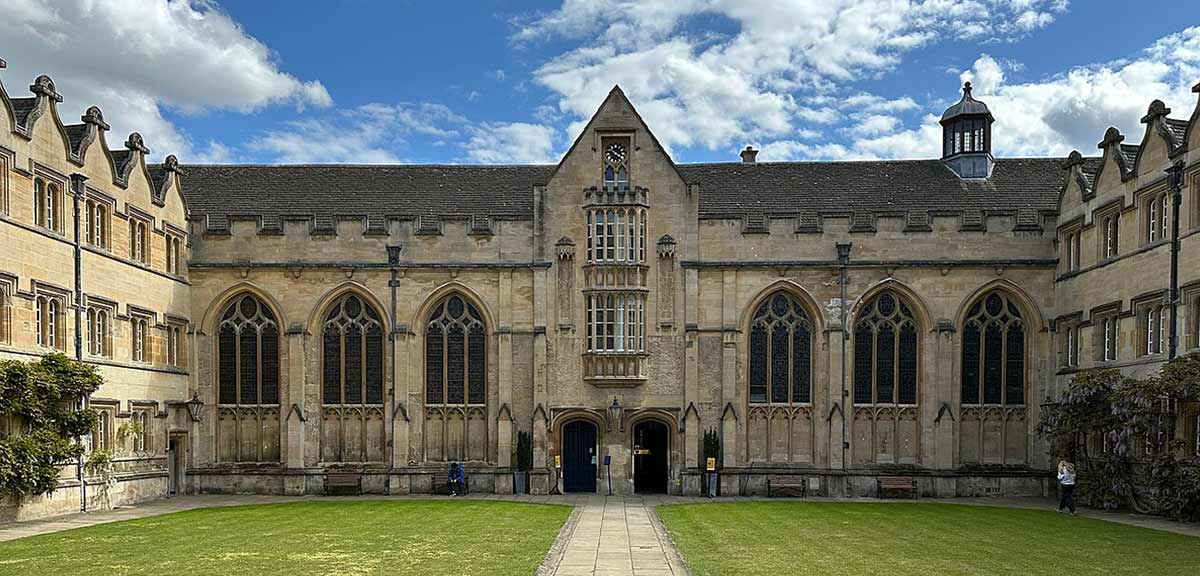
Harvard medievalist Charles Homer Haskins, in The Rise of Universities (1923), comments that “by far the largest element in the correspondence of medieval students consists of requests for money.” Haskins quotes an Italian father’s weary observation: “A student’s first song is a demand for money, and there will never be a letter which does not ask for cash.”
The desperate search for funds emerges in a letter written by a 13th-century Oxford student:
“This is to inform you that I am studying at Oxford with the greatest diligence, but the matter of money stands greatly in the way of my promotion, as it is now two months since I spent the last of what you sent me. The city is expensive and makes many demands. … Wherefore I respectfully beg your paternity that by the promptings of divine pity you may assist me, so that I may be able to complete what I have well begun.”
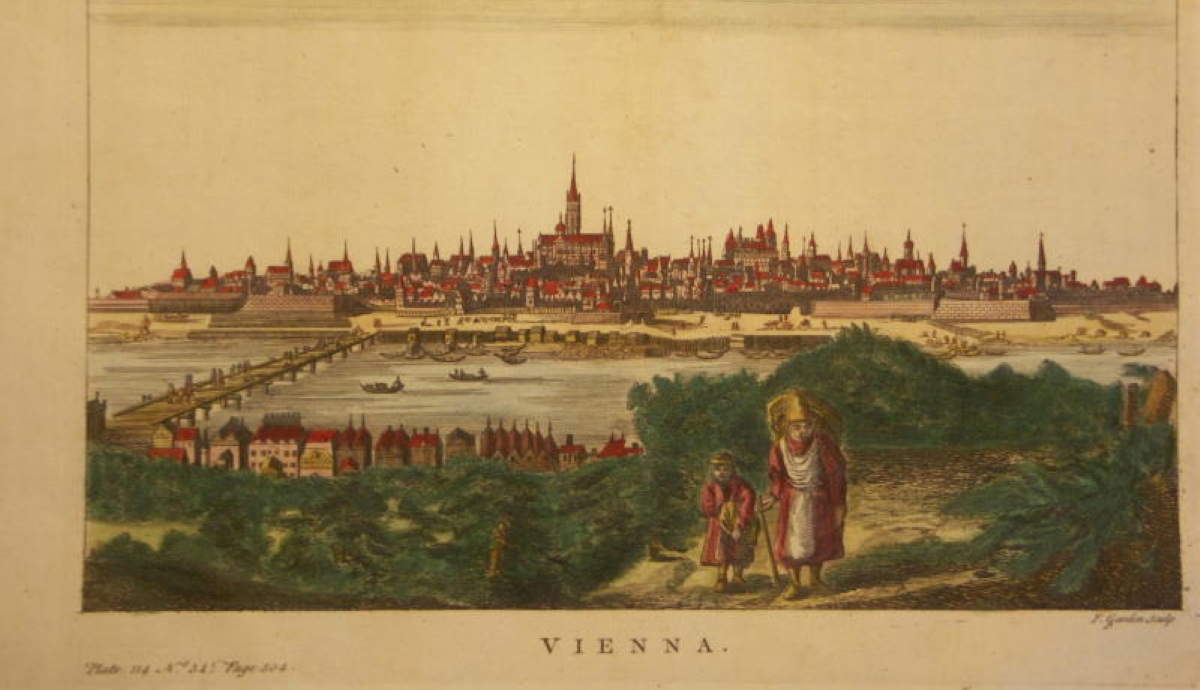
There is no way of knowing whether the author of the missive managed to persuade his father to send him more money. That studying at medieval universities was expensive, however, is certain. At the University of Vienna, for example, in the early 15th century, students had to pay matriculation fees (ranging from 12 to 24 Kreuzer depending on the faculty), lectures, and disputations. Books and writing materials were also far from cheap.
Medieval students funded their degrees through a combination of family wealth, ecclesiastical benefits (religious institutions sponsored promising young men on condition they return to serve as priests), aristocratic patronage, or loans. At Oxford, loan chests, established after a period of violent confrontation between the university and the town (more on that later), offered interest-free loans to impoverished scholars. The first one was kept at St. Frideswide Priory and offered financial support against pledges of books, clothes, or clothing.
Up Before Dawn
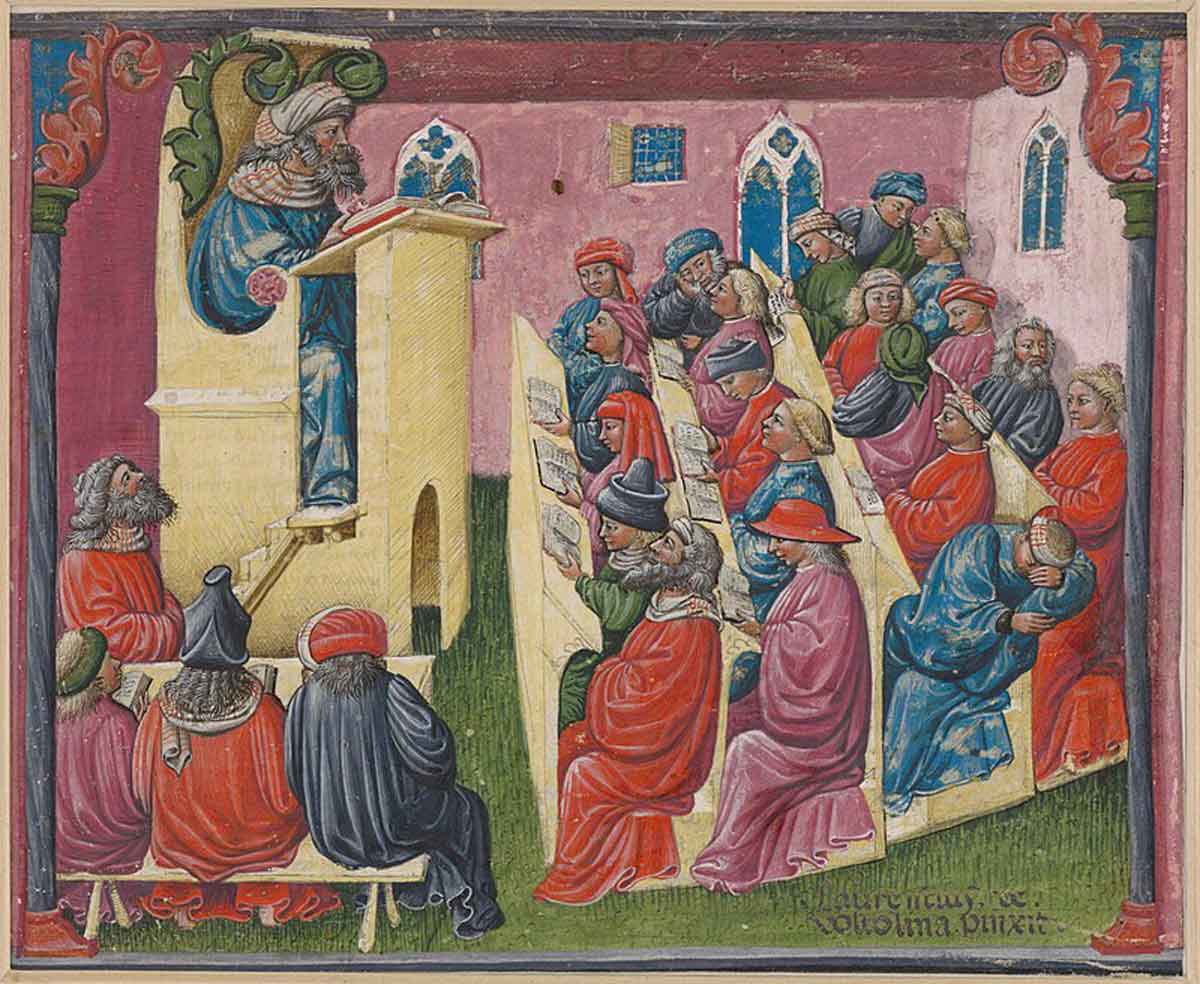
A medieval student’s day began quite early. According to Hunt Janin’s The University in Medieval Life, 1179-1499, the typical liberal arts scholar rose at around 4:00 a.m., attended an early lecture, heard a church service at 6:00 a.m., and did not sit down to a first meal until sometime between eight and ten o’clock. At Oxford, for example, no meals were served before 10:00 a.m. and the hours from dawn until mid-morning were reserved entirely for lectures.
These early lectures, known as lectiones ordinariae (ordinary lectures), were delivered by senior masters and consisted of reading (legere in Latin, hence the term “lecture”) and commenting on the core texts of the discipline. In the afternoon, the medieval university students attended the so-called lectiones extraordinariae (extraordinary lectures), where junior scholars in advanced bachelor’s programs covered supplementary materials.
In the evening, students did not have a rigid schedule, but were generally free to organize their own time. College statutes, however, typically forbade excesses. This does not mean that brawls did not occasionally erupt between students or between students and townspeople.
How & What Did Medieval Students Learn?
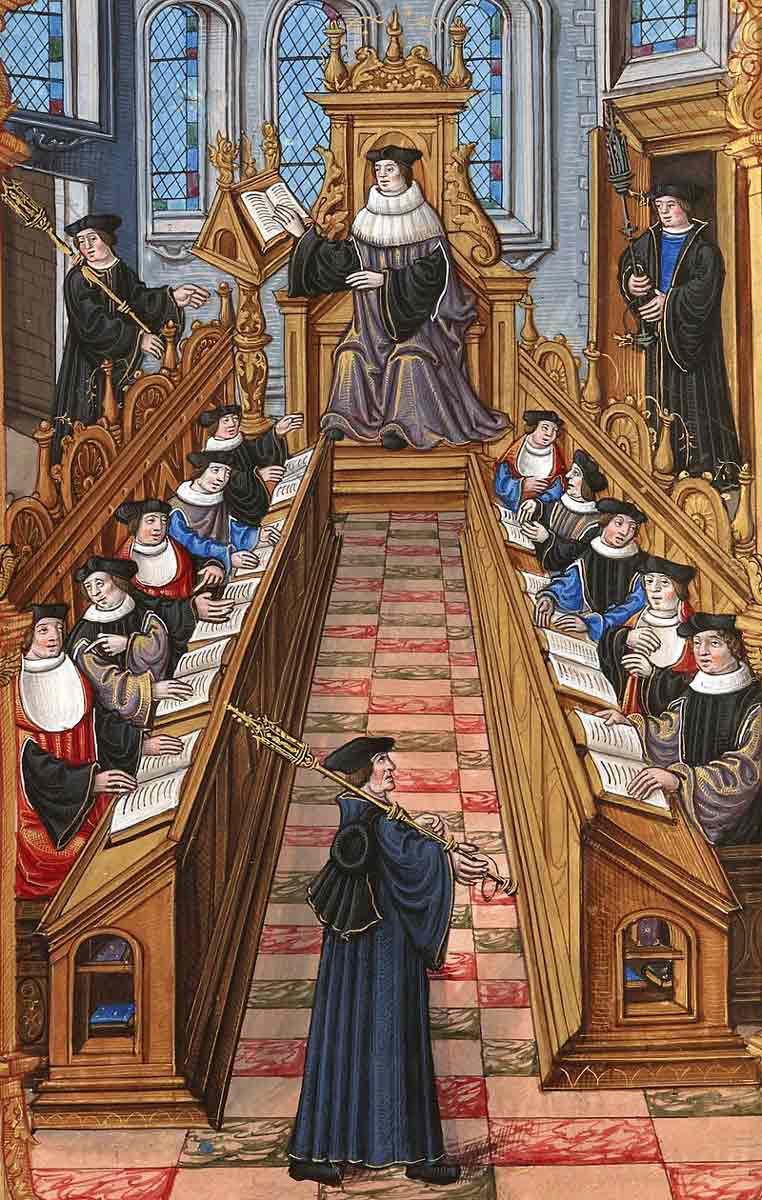
Medieval teaching mostly consisted of two methods. The first was the lectio, the formal reading of an authoritative text. In a typical lecture, a master would read a passage aloud and then deliver a running commentary that defined terms, explained the most difficult points, and explored the core themes in the text. In Verbum abbreviatum, Peter Cantor, a 12th-century French theologian, described the lectio as “the foundation and basement for what follows, for through it the rest is achieved.”
The second method was the disputatio, a debate in which a respondens defended a claim, while an opponens formed an argument challenging it. The master would then deliver a determinatio, or a formal resolution synthesizing the strongest arguments. At the University of Paris, masters and bachelors engaged in the disputatio twice a week. Cantor emphasized the crucial role of such debates in the medieval teaching method, referring to it as the “wall in the building of study for nothing is fully understood or faithfully preached, if it is not first chewed by the tooth of disputation.” During a special type of this academic contest, the quodlibetal, held twice a year, any member of the audience could propose any question to the master. Thomas Aquinas was particularly talented in this feared intellectual exercise.
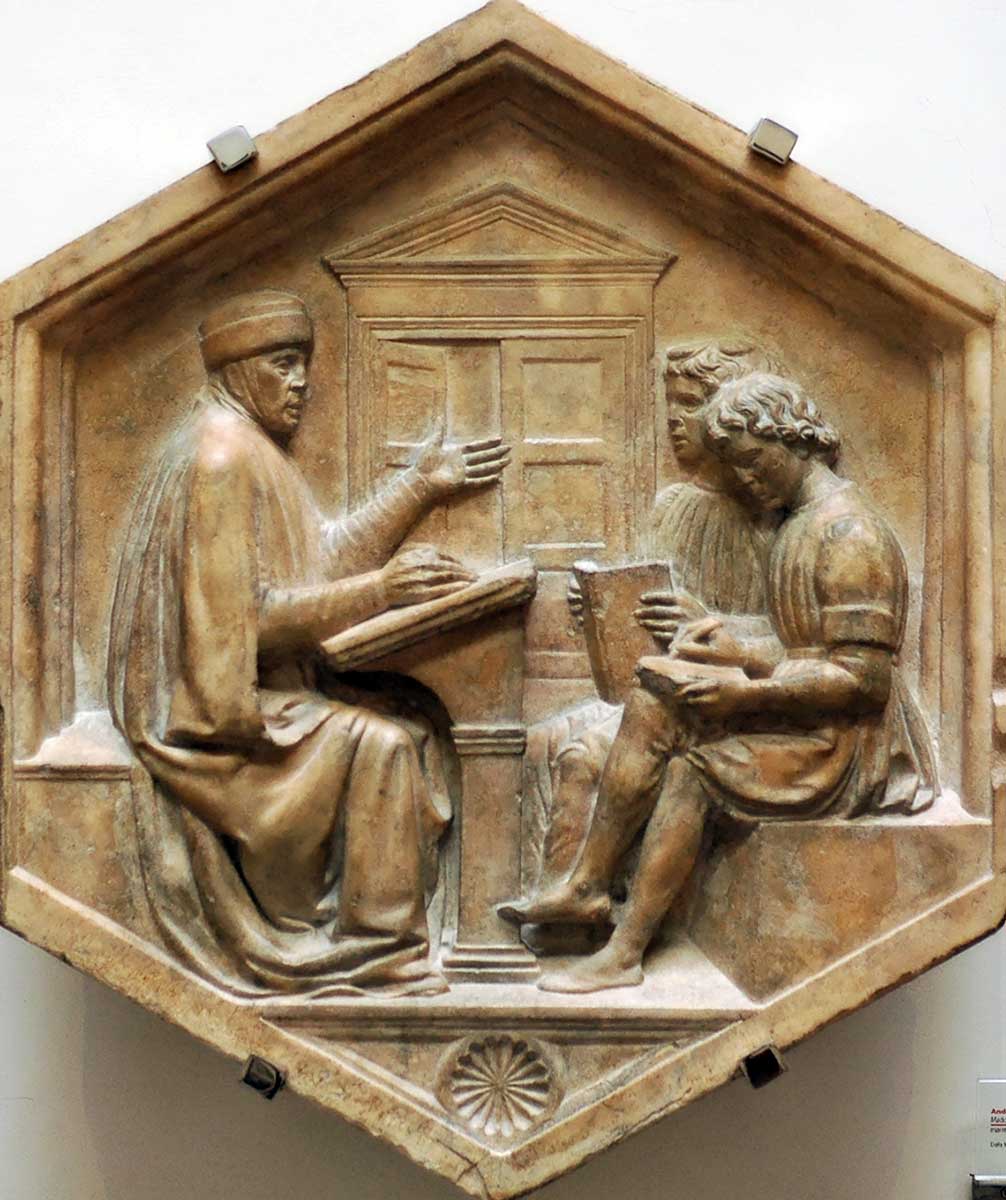
Generally, medieval students began their higher education with the Trivium, a language curriculum consisting of grammar, rhetoric, and dialectic (logic). The Quadrivium, formed by the quantitative arts of arithmetic, geometry, music, and astronomy. After completing the Bachelor of Arts, scholars could become masters by enrolling in an additional study period leading to the Master of Arts. The medieval curriculum culminated in three higher faculties: law, medicine, and theology, at the time considered the regina scientiarum (queen of the sciences).
Town vs. Gown: Riots & Brawls
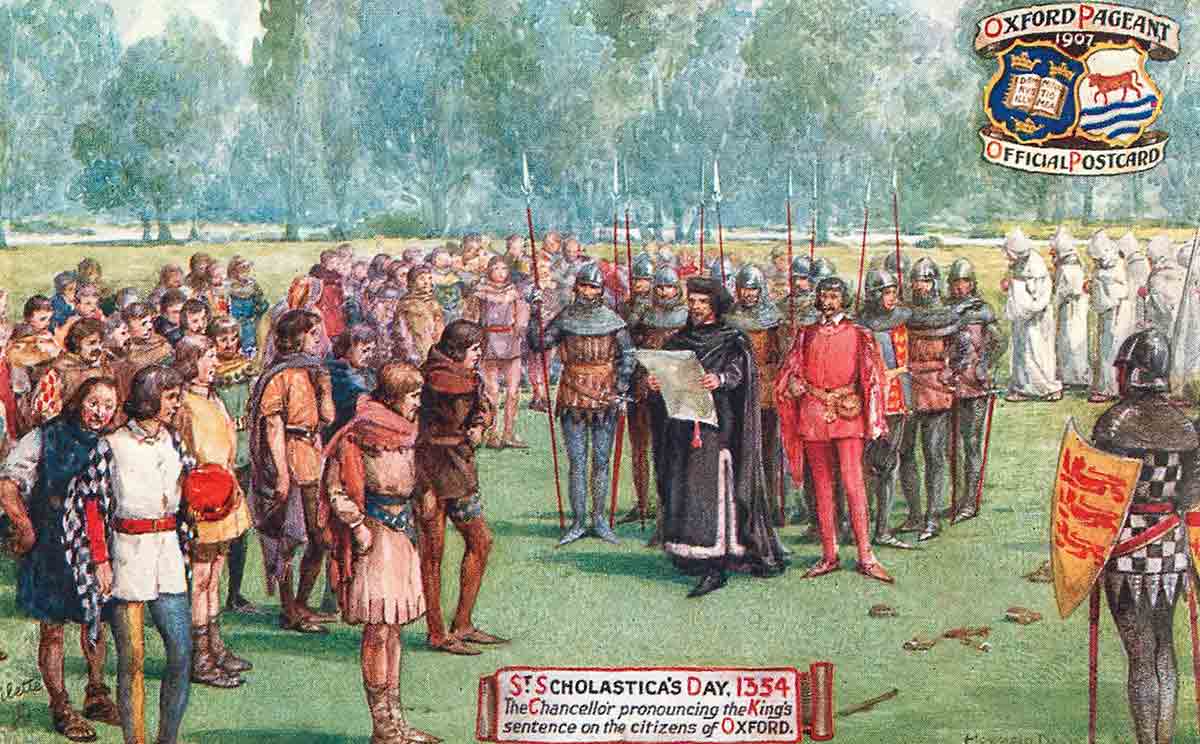
The presence of large numbers of students in medieval towns could be profitable for the local economy, as they brought with them not only books but also money. The relationship between scholars and townspeople, however, was far from peaceful, often leading to riots and brawls.
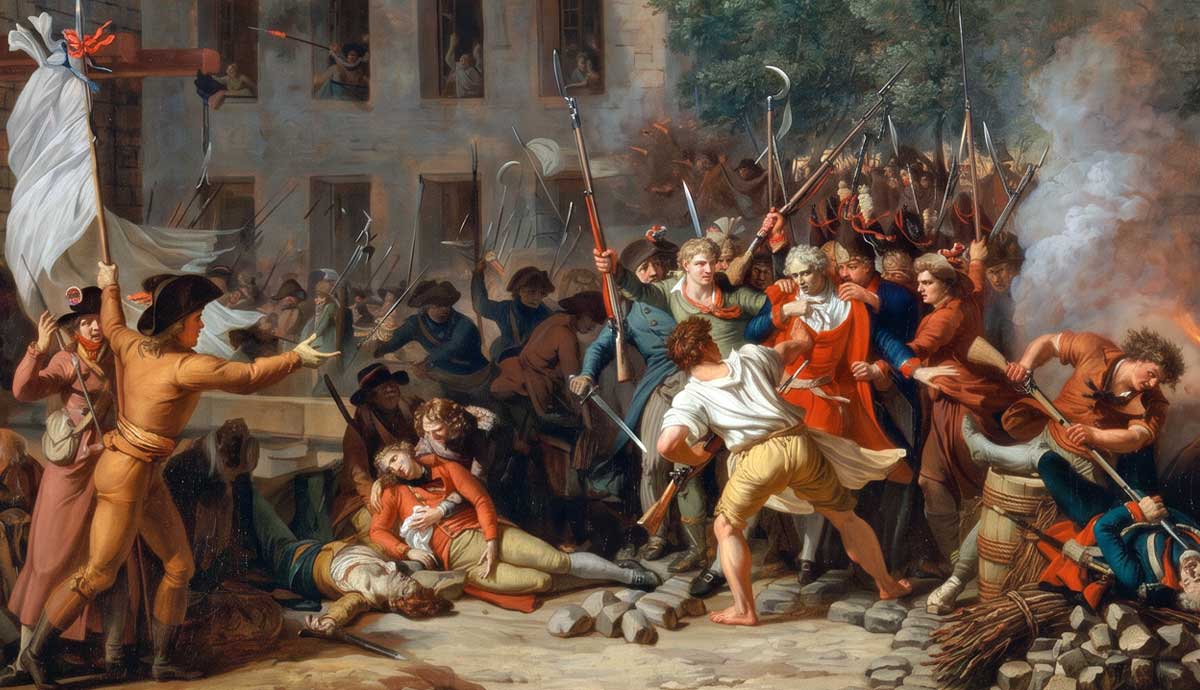
In 1229, for example, a fight between students of the University of Paris and tavern-owners degenerated into a violent confrontation. The police intervened, killing several scholars. To protest the incident, the university left Paris for the following two years. In 1231, Pope Gregory IX’s bull, Parens Scientiarum, ended the crisis, granting the university independence and self-governance. At the same time, the pope prohibited students “from carrying weapons in the city, and the university from protecting those who disturb peace and study.”
Tensions between students (Gown) and townspeople (Town) were also high in Oxford. The conflict led to violence in 1208-1209, when, after a scholar killed a woman in a tavern brawl, the town retaliated by hanging a group of students who shared their lodgings with the murderer. The violent episode then became enmeshed in the larger confrontation between the Church, which sided with the university, and King John, who sided with the town. Eventually, the monarch and the town submitted. As punishment, the town had to pay 52 shillings every year to support impoverished students. The episode also prompted several scholars to seek refuge in Cambridge, where they set up a second university.
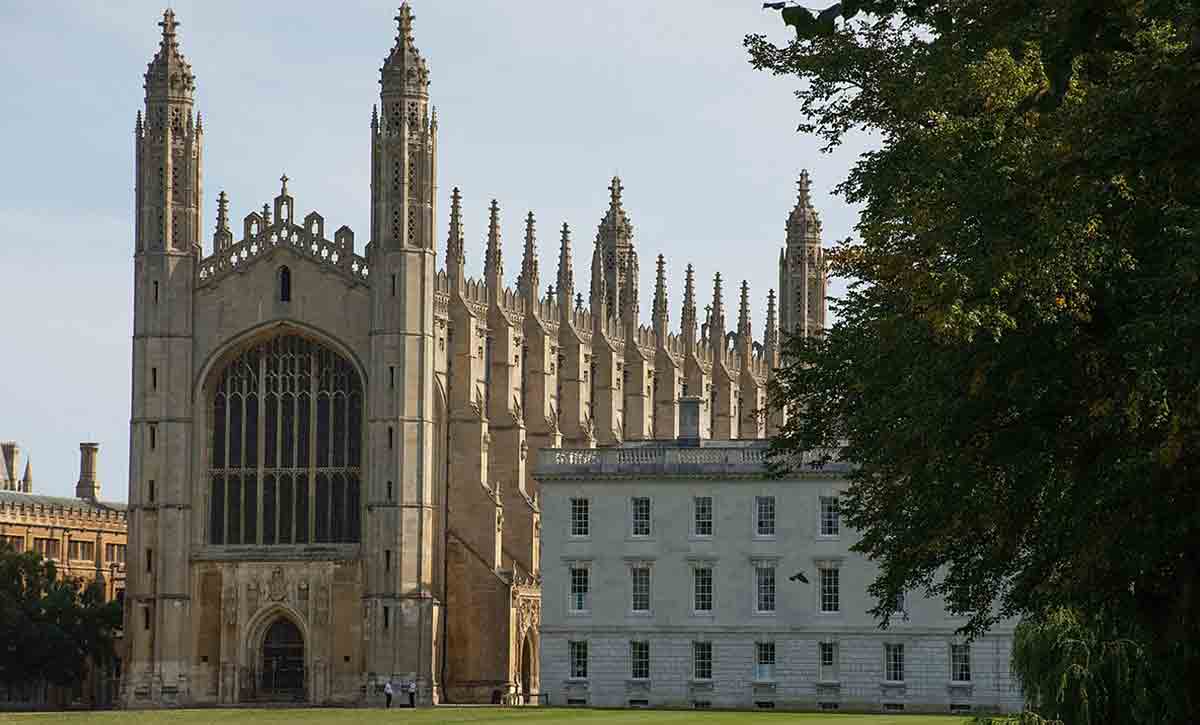
The rivalry between Oxford students and residents, however, continued. The most notorious outbreak of violence, known as the St. Scholastica Day Riot, erupted on February 10, 1355, when a complaint about wine at the Swindelstock Tavern escalated into three days of pitched battle. Armed townspeople killed 62 students and ransacked halls. King Edward III sided with the university and imposed an annual penance on the town: every February 10, the mayor, bailiffs, and 62 townspeople were required to attend a memorial mass and pay a penny for each dead scholar.
Student Life in the Middle Ages: Songs & Taverns
Brawls broke out not only between students and townspeople, but also among scholars. Jacques de Vitry, a 13th-century canon, drew an unflattering portrayal of the wilder side of student culture, claiming that very few students “studied for their own edification.” Rather than focusing on their curriculum, scholars, according to de Vitry, “wrangled and disputed not merely about the various sects or about some discussions; but the differences between the countries also caused dissensions, hatreds and virulent animosities among them and they impudently uttered all kinds of affronts and insults against one another.”
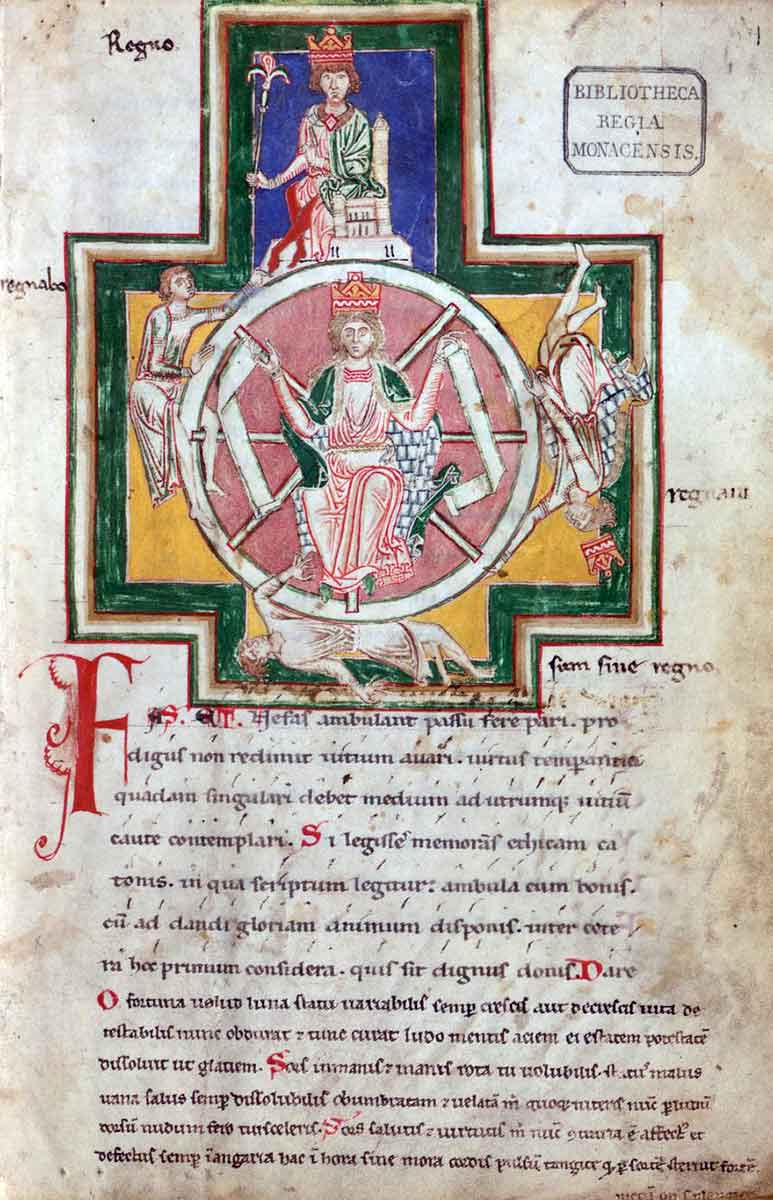
The rowdy life of medieval students was also captured by the so-called Goliards, wandering scholar-poets and clerics in England, France, and Germany. Their songs and poems, often revolving around drinking and other excesses, can be found in the Carmina Burana, a 13th-century manuscript written in Bavaria that German composer Carl Orff used as the basis for his 1937 oratorio of the same name.
These songs are not only a celebration of the “bohemian” and pagan side of the student existence at medieval universities, but also a reminder that certain aspects of university life have changed less than modern readers might suppose. “Meum est propositum in taberna mori” (I desire to end my days in a tavern drinking), jokingly declares one of the most famous compositions in the manuscript, “may my neighbor hold for me the glass when I am sinking.”