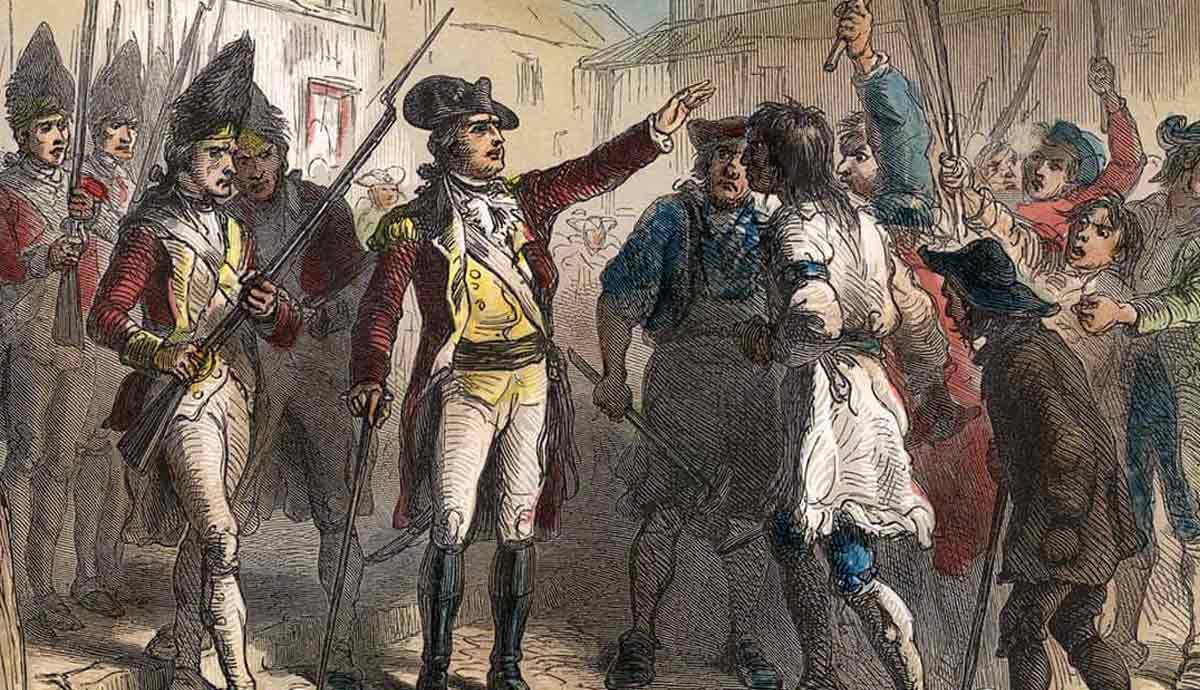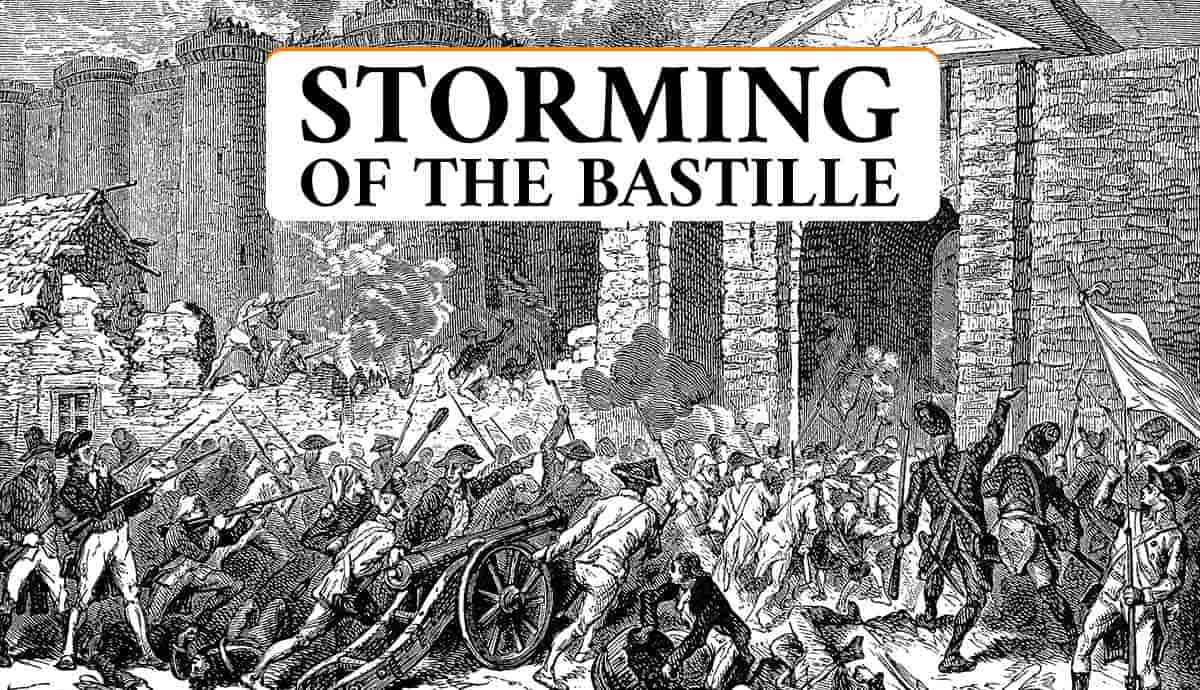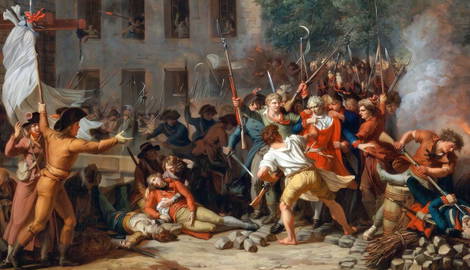

In July 1789, Paris erupted in rebellion as Parisians believed King Louis XVI’s government was prepared to disband the nascent National Assembly and reject any meaningful social and political reforms. While searching for arms and gunpowder, a mob shockingly seized control of the Bastille fortress. The storming of the Bastille became the defining image of the French Revolution. However, the Bastille’s fall did not immediately destroy the absolute monarchy or the old order and privileges in France. So, why is the Bastille the ultimate symbol of the French Revolution?
Quick-Glance Timeline
| Date / Period | Key Event |
|---|---|
| 14th Century | The Bastille fortress is constructed in Paris as a defensive structure. |
| 17th Century | The fortress is established as a state prison under King Louis XIII and Cardinal Richelieu. |
| 1774 | Publication of Joseph Marie Brossays du Perray’s highly influential memoir exposing the Bastille. |
| 1783 | Simon-Nicolas Henri Linguet publicly calls for the destruction of the Bastille. |
| June 1789 | The National Assembly is founded, marking the first major act of the French Revolution. |
| July 14, 1789 | The storming of the Bastille takes place, securing the revolution’s survival. |
The Origins and History of the Bastille Fortress
The answer is largely in how the Bastille came to be associated with the privileges of absolute monarchy and aristocracy, as well as rampant corruption and abuse of power in France. According to historian Nicole Bauer (2023), this was the product of a culture of secrecy designed to keep the public in fear of royal power and the uncertain fate that awaited those inside the Bastille prison.
As we’ll see below, the official secrecy surrounding the Bastille fostered a “black legend” where former prisoners and writers shaped a narrative of terror and arbitrary government power.
While French readers and foreign audiences craved terrifying prison stories from the Bastille, many of these exaggerated or fictional tales fueled anger and resentment at the monarchy and government.
This anger would boil over by July 1789, leading to the storming of the Bastille and a demand for greater transparency in the French government and society at large.
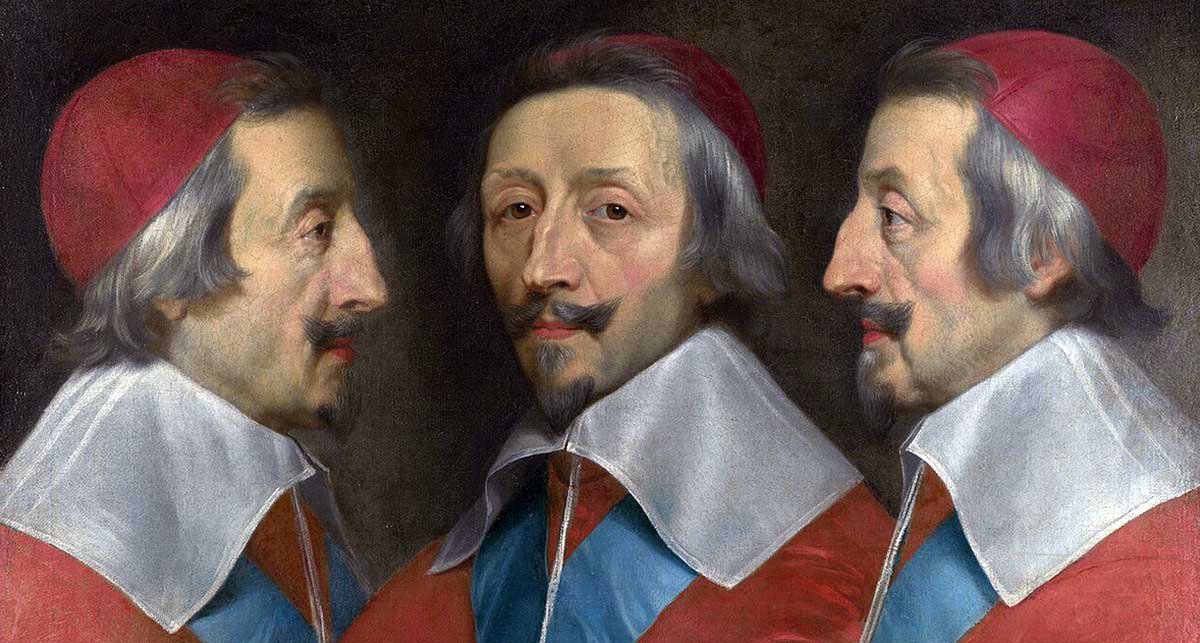
The Bastille fortress in Paris dates from the 14th century and emerged as an imposing, feared prison in the 17th century, during the reign of King Louis XIII, under the supervision of the chief minister, Cardinal Richelieu.
King Louis XIV, France’s long-reigning monarch (1643-1715), made prolific use of the Bastille as a prison. As Nicole Bauer points out, the 17th and early 18th centuries witnessed the birth of the modern Paris police force. At this point, the Paris police force took responsibility for managing the Bastille prison (2023, 55).
The Bastille in Operation During the 18th Century
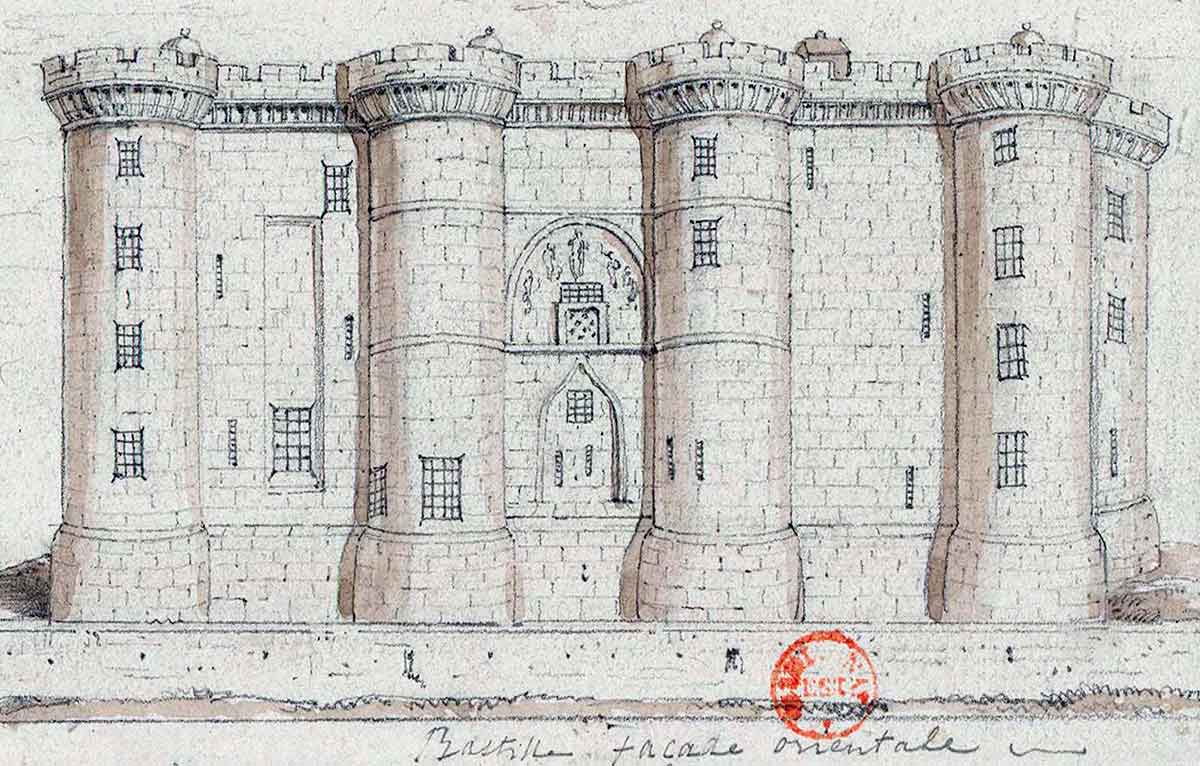
Scholars Hans-Jürgen Lüsebrink and Rolf Reichardt note that multiple bastilles existed across France at different moments in history. In fact, they point out that a bastille initially referred to defensive towers built during the Hundred Years’ War (1997, 6).
By the 18th century, the term “Bastille” referred to the royal fortress and prison in Paris. The Parisian Bastille became an increasingly loathed and feared symbol of royal power and the Ancien Régime in the decades leading up to the crises that culminated in the French Revolution of 1789 (Lüsebrink & Reichardt, 1997, 7-8).
According to Nicole Bauer (2023), before the French Revolution, the police believed that keeping the processing of prisoners, their interrogations, and their release secret was a powerful tool for maintaining public order.
As a result, prisoners generally entered or were released from the Bastille late at night. Moreover, if prisoners died at the Bastille, they were buried at night, all in hopes of avoiding public observation (Bauer, 2023, 57).
The lack of information surrounding the fate of prisoners fueled rumors of terrible conditions and torture. At the same time, released prisoners were forced to take a vow of silence about their imprisonment in the Bastille, or risk the king’s reprisals (Bauer, 2023, 62).
Secrecy thus bred not only fear but, by the late 18th century, an increasing suspicion and resentment of royal authority and government power.
Voltaire and Sensationalizing the Bastille in Literature

The rumors of torture, brutal conditions, and the overall practice of maintaining official secrecy surrounding the Bastille did not mix with the growing notion of public opinion and exchange of Enlightenment ideas.
A growing sense of anger and resentment over imprisonment at the Bastille is captured in the accounts of some of those who broke the vow of silence.
François-Marie Arouet, better known simply as Voltaire, was one of the former Bastille prisoners to break the vow of silence. Imprisoned twice in the Bastille, Voltaire took a strong interest in the prison’s history. For example, Voltaire contributed to the Bastille’s “black legend” by writing about the story of the “Man in the Iron Mask” in the 1750s.
Many scholars believe claims of rampant abuse and terror within the Bastille to be largely exaggerated. However, it is difficult to generalize about the average prisoner’s experience in the Bastille.
Nevertheless, archivist Frantz Funck-Brentano, during the Third Republic, worked tirelessly to debunk the “black legend” of the Bastille. Although Funck-Brentano argued that conditions within the prison were generally appropriate, he had to admit that the best treatment and food were reserved for prisoners of higher social status (Bauer, 2023, 58).
Why Was the Bastille a Symbol of the French Revolution?
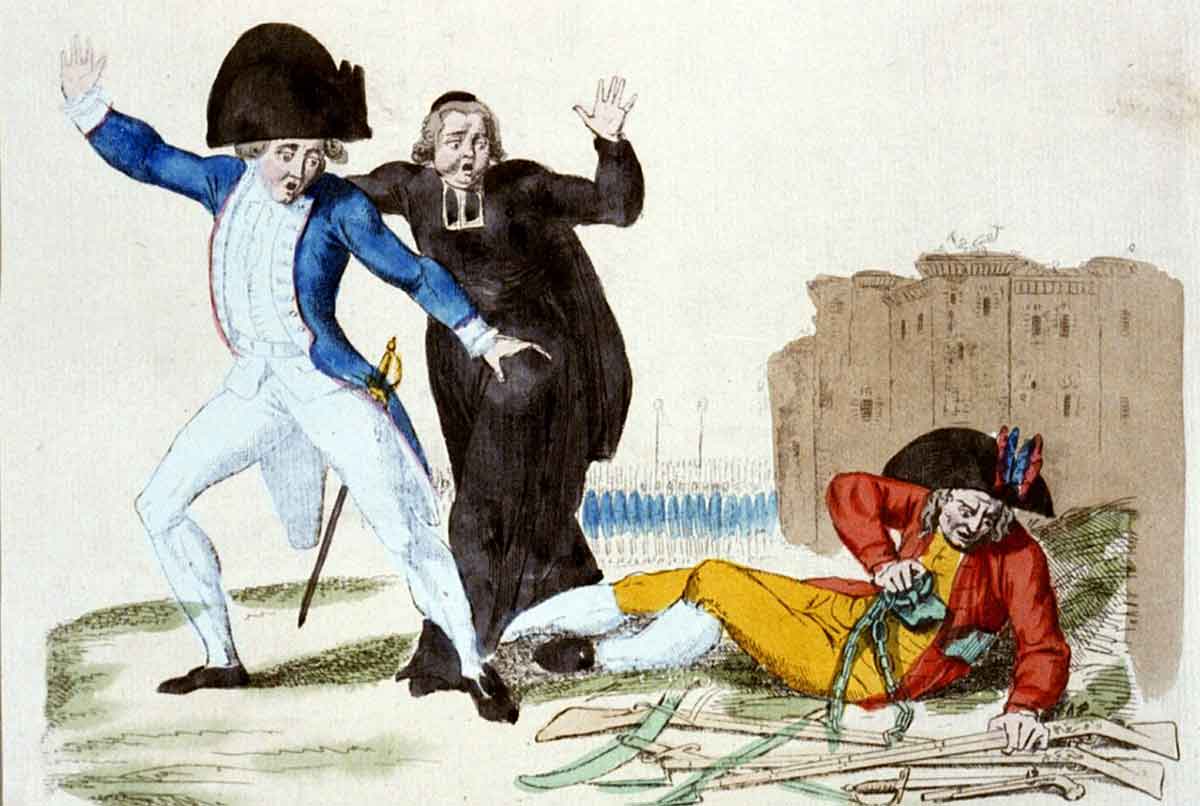
The commercial success of memoirs by former prisoners and of fictional accounts cemented the Bastille’s image as a notorious royal prison and symbol of oppression.
Simon-Nicolas Henri Linguet, a lawyer and popular writer in the 18th century, was among those who broke the vow of silence to condemn his imprisonment in the Bastille. Nicole Bauer points out that while in exile in England, Linguet wrote a four-volume exposé of the Bastille’s terrible conditions. In 1783, Linguet called for the Bastille’s destruction (2023, 62-63).
According to historian Brecht Deseure (2023), the most influential Bastille memoir was Joseph Marie Brossays du Perray’s Remarques historiques et anecdotes sur le château de la Bastille (1774). Perray’s work was not only a bestseller in France but also had successful English and German translations.
The Bastille’s role as a symbol of oppression and dark secrets contributed to the growing demand for transparent government that accompanied the early stages of the French Revolution.
The Storming of the Bastille and Its Revolutionary Legacy
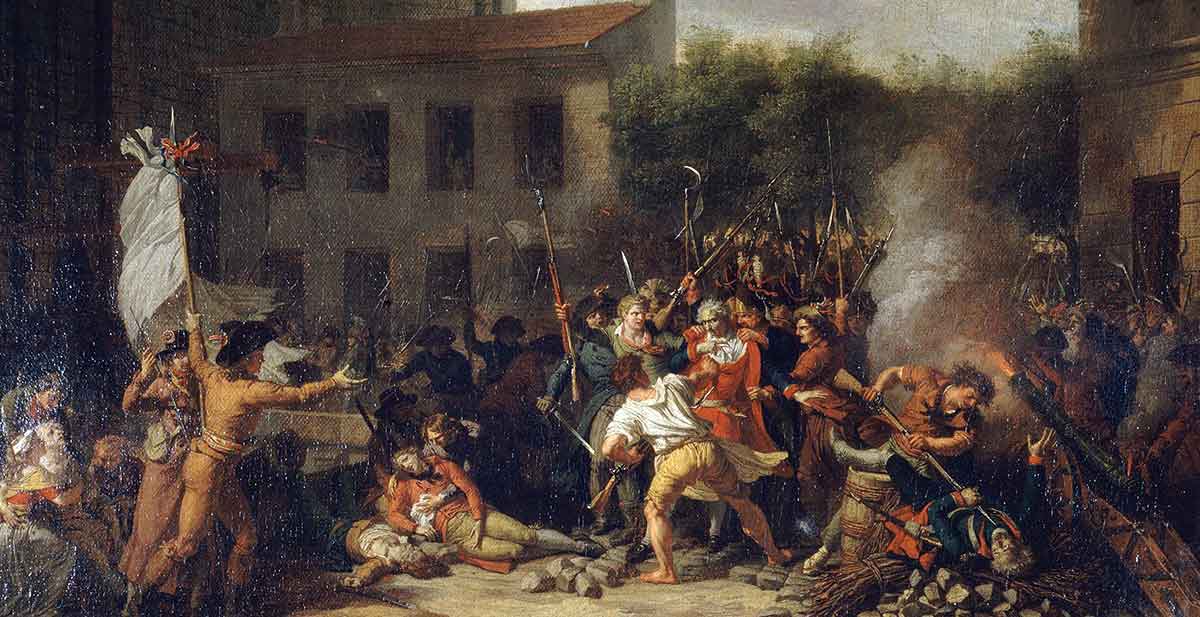
Parisians spontaneously began dismantling the Bastille immediately after its fall on July 14, 1789. However, historian P.M. Jones notes that soon the building contractor Pierre-François Palloy oversaw the demolition. Palloy’s work was also meant to serve as revolutionary propaganda (2022, 32).
Indeed, the “black legend” of the Bastille as a notorious prison led to tours of its interior, where Jones notes that Palloy embellished the story by adding a “dungeon” and a skeleton (2022, 32). The messaging, of course, was to suggest that former prisoners endured torture and were even killed at the whim of their jailers.
According to Nicole Bauer (2023), excavations did reveal the remains of Bastille prisoners, but it was precisely the culture of secrecy that kept the public in the dark about that area being an established cemetery.
Visitors to the Bastille were charged an admission fee and urged to donate to the families of those lost during the attack. Pieces of the Bastille were distributed throughout France to serve as symbols of the revolutionary triumph over absolutism and corruption. For example, the city of Lyons received more than 700 lbs (318 kg) of relics, including a miniature Bastille made of material from the actual fortress (Jones, 2022, 32).
If, as historian William Doyle argues (2001), the founding of the National Assembly in June 1789 was the founding act of the French Revolution, then the storming of the Bastille was the event that ensured the movement against absolutism would survive.
Sources
- Doyle, W. (2001). The French Revolution: A Very Short Introduction. Oxford University Press.
- Bauer, N. (2023). Keeping you in the dark: the Bastille archives and police secrecy in eighteenth-century France. Continuity and Change, Volume 38 (1), 53 – 73. https://doi.org/10.1017/S0268416023000097
- Deseure, B. (2023). The Bastille as a transnational symbol of despotism: translations and editions of Remarques historiques et anecdotes sur le château de la Bastille (1774–98). European Review of History: Revue Européenne d’histoire, 30(6), 929–957. https://doi.org/10.1080/13507486.2023.2169108
- Jones, P.M. (2022). The French Revolution, 1787-1804. Fourth Edition. Routledge.
- Lüsebrink, H-J & Reichardt, R. (1997). The Bastille: A History of a Symbol of Despotism and Freedom (N. Schürer Trans.). Duke University Press.