
The death of the childless Edward the Confessor in January 1066 set the stage for one of the most dramatic years in English history. Edward’s brother-in-law Harold Godwinson was first elected to the throne and defeated an invasion by the Norwegian king Harald Hardrada in September, before succumbing to Duke William of Normandy at Hastings on October 14, 1066. Although the Saxon aristocracy elected the young Edgar Ætheling to the throne after Harold’s death, Saxon resistance soon melted away in the face of Norman military strength.
The Power Vacuum Left by Edward the Confessor
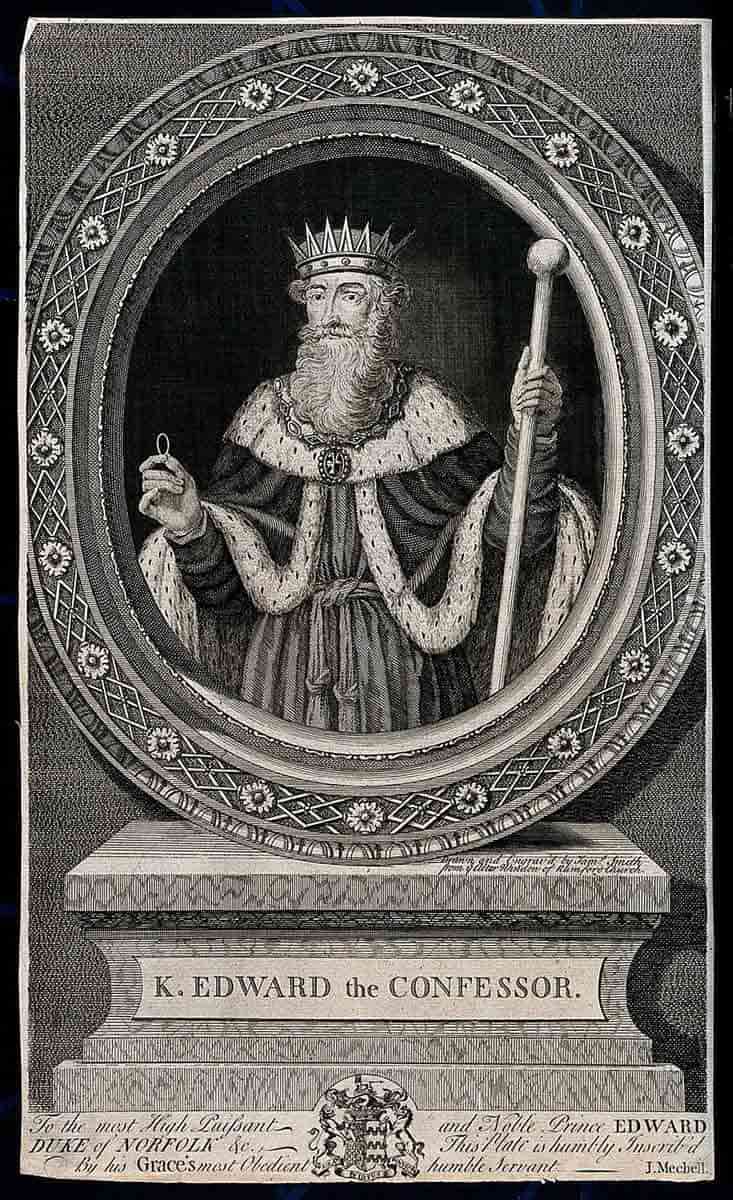
In 1042, Edward the Confessor was crowned king of England after a quarter-century of Danish rule. Edward’s father, Æthelred the Unready, had died in 1016 during an invasion by King Cnut of Denmark. Æthelred’s son and successor Edmund Ironside was a capable warrior who defeated Cnut in battle on several occasions but died in November 1016 shortly after agreeing to divide the realm with Cnut, leaving the latter as the undisputed king of England.
While the 13-year-old Edward went into exile in Normandy, his widowed mother Emma of Normandy married Cnut the following year. Cnut and Emma had a son, Harthacnut, whose death in 1042 enabled Edward to return from exile and claim the throne.
In 1045, Edward married Edith, the daughter of Earl Godwin of Wessex, one of the most powerful noblemen in England. While Godwin hoped that the marriage would produce a grandson who would become king, Edward resented Godwin’s influence on the government and may have purposely abstained from the marital bed. With the royal marriage remaining childless, Edward had no obvious successor.
In Anglo-Saxon England, the king was officially elected by a witenagemot or royal council. Nevertheless, candidates for the throne were typically drawn from the Wessex royal dynasty that descended from Alfred the Great. That line threatened to go extinct with the childless Edward. Having spent much of his life in Normandy, Edward considered designating Duke William of Normandy as his heir. Although William was a cousin on his mother’s side, he was still a foreigner and the king soon had second thoughts.
Edgar Ætheling and the Surviving Wessex Line
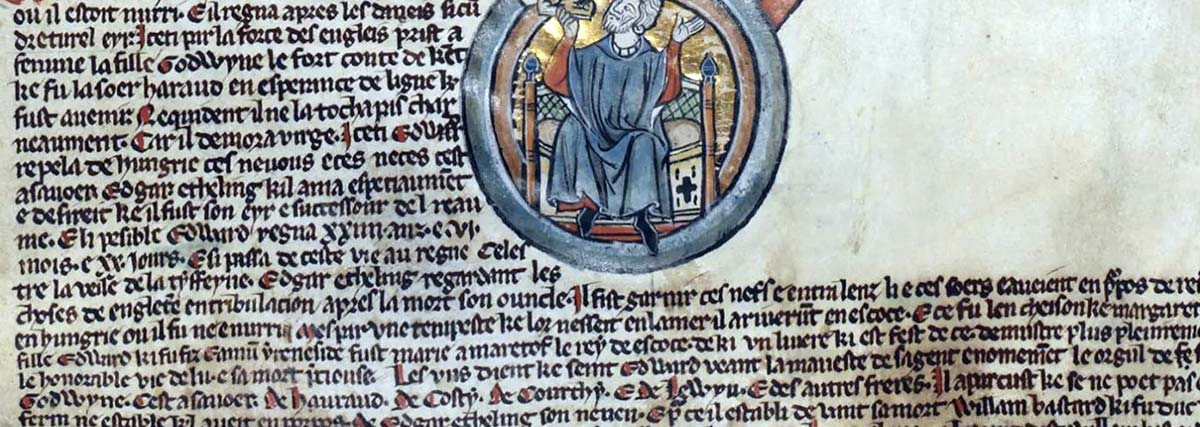
In 1054, Edward the Confessor learned that Edmund Ironside had a surviving son, known to history as Edward the Exile, who lived in Hungary. The king believed that his exiled namesake was best placed to be his successor and invited him to England. Edward the Exile returned to England in 1057 but died shortly after, leaving behind a six-year-old son known to history as Edgar Ætheling. The term Ætheling means “throne-worthy,” suggesting that Edward may have considered Edgar as a potential successor.
While Edgar was brought up at Edward’s court, he was not named in any of Edward’s charters, nor was he given any major estates. Edward the Confessor may have recognized that Edgar was too young to be king and planned to grant him titles and responsibilities once he reached adulthood.
When Edward died on January 5, 1066, Edgar was still in his early teens and the succession was still undecided. Despite his strong dynastic claim, Edgar was overlooked by the Witenagemot after the Confessor’s death. The members of the royal council chose a proven statesman and military leader who could defend the kingdom from foreign invasion. However, the young Edgar would re-emerge on the scene later in the year.
Harold Godwinson: England’s Most Powerful Nobleman
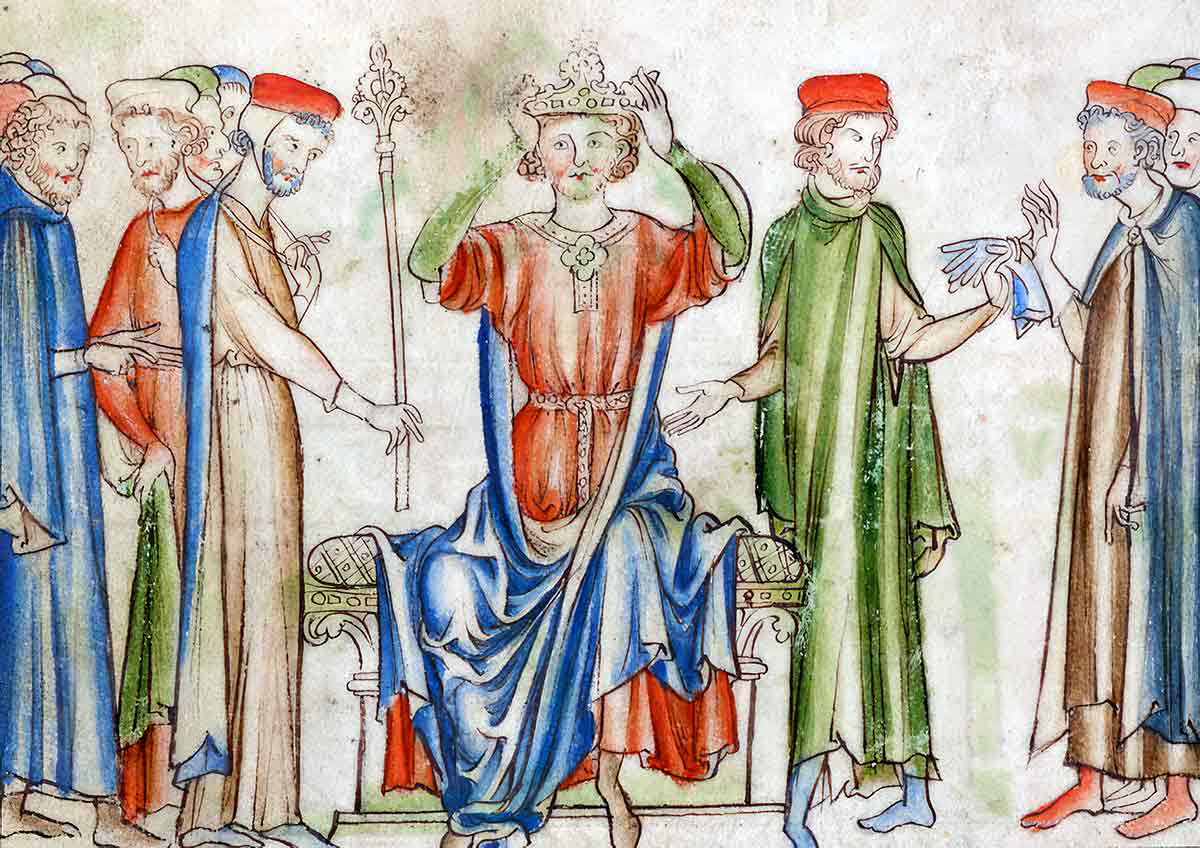
When Godwin of Wessex died in 1053, his estates were inherited by Harold, his eldest surviving son. Harold Godwinson proved an effective military leader who led successful campaigns in Wales in the 1050s and fought with distinction alongside William of Normandy against the Duke of Brittany in 1064.
At the time of Edward the Confessor’s death, Harold was in prime position to stake his claim to the vacant throne. According to the Vita Ædwardi Regis, a 1067 biography of the late king commissioned by his widow Edith, Harold was in attendance as King Edward lay dying. Shortly before his death, Edward entrusted Harold as the “protector” of the kingdom.
Within 24 hours of the Confessor’s death, Harold had arranged for his election and coronation as king by the witenagemot. This was highly unusual, since Anglo-Saxon kings would usually wait several months before being crowned. Harold’s rapid elevation as king reflected his sense of urgency in the face of rival claimants. For much of 1066, Harold was anticipating an invasion by Duke William of Normandy and deployed an army to the south coast.
Why William of Normandy Claimed the English Throne
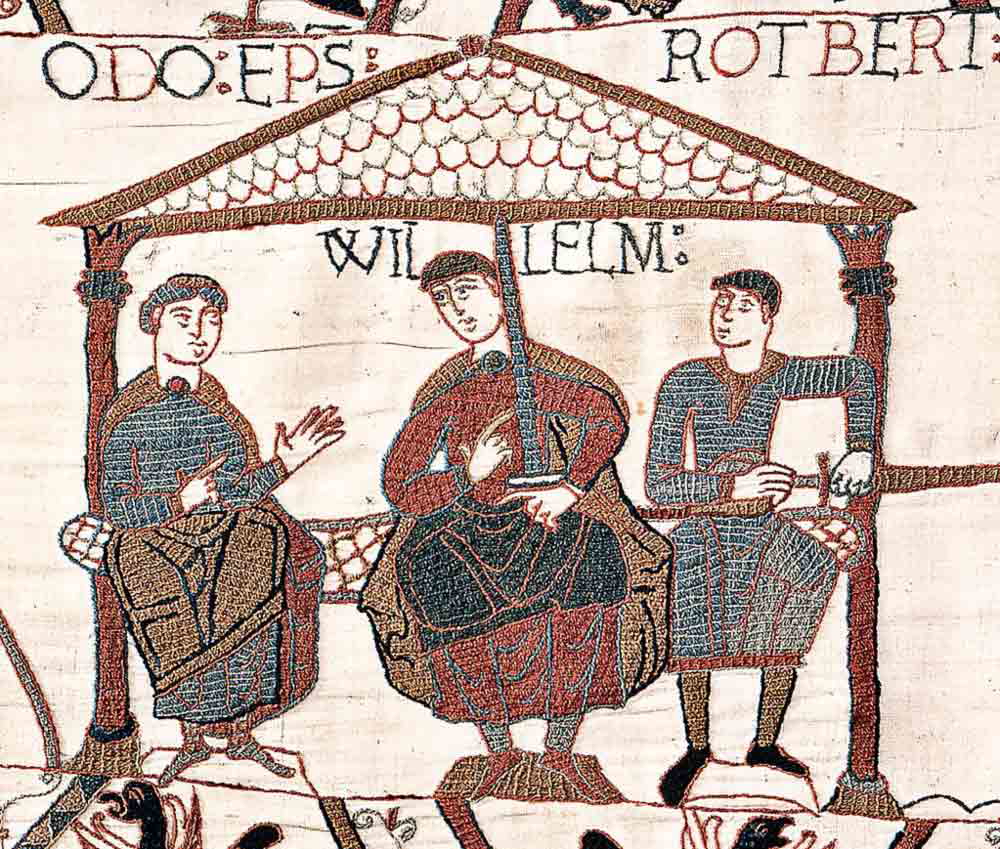
Aside from his dynastic ties to the late king of England, the Norman sources claim that Edward had promised to make Duke William his heir in 1051. That year, Edward the Confessor exiled Godwin and his sons after receiving reports that Godwin was intending to overthrow him. However, in 1052 Godwin returned to England at the head of an army, forcing the king to back down.
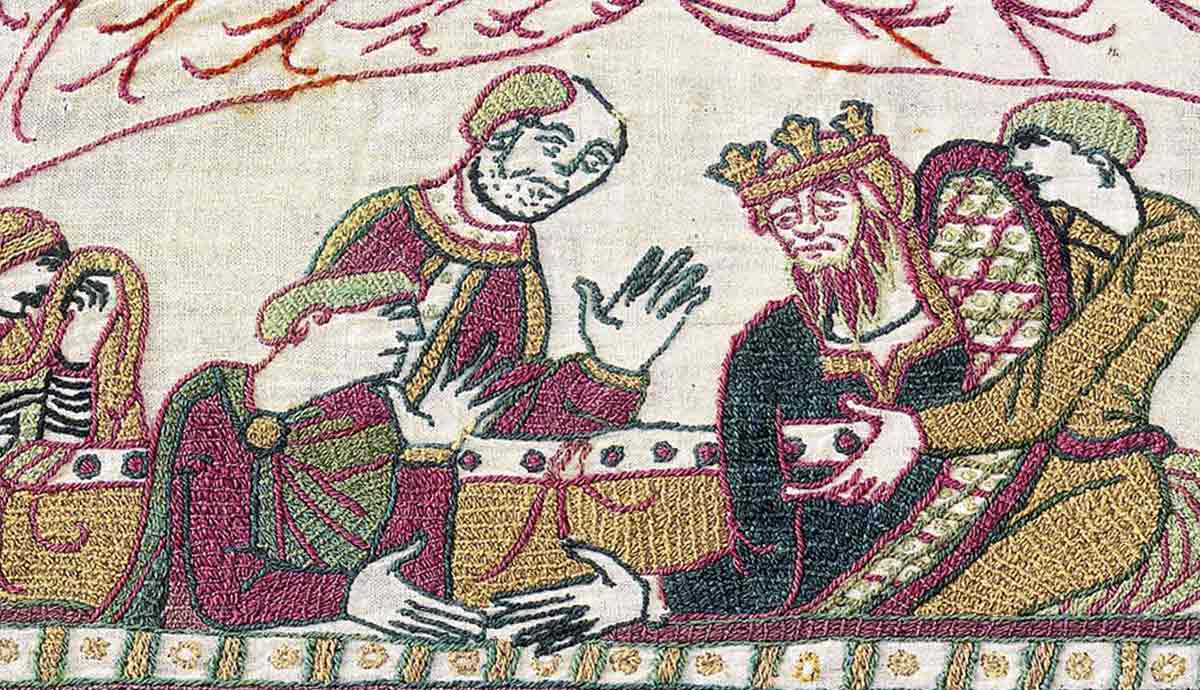
In 1064, Harold Godwinson crossed the Channel to Normandy. Early Norman chroniclers claim that the purpose of the visit was for Harold to swear an oath to recognize William as Edward’s successor on the king’s instructions. The Bayeux Tapestry depicts Harold swearing the oath on sacred relics. From the Norman perspective, Harold had broken the oath by taking the crown himself in January 1066. On this basis, Norman diplomats successfully persuaded Pope Alexander II to grant papal sanction for the Norman invasion of England.
William’s invasion fleet was ready by August, but adverse winds foiled his first attempt to sail to England. By early September, Harold was convinced that the campaigning season was over and disbanded his army. Within a couple of weeks, Harold learned that his realm had been invaded. It was not the Normans in the south, but the Vikings in the north.
The Viking Ambitions of Harald Hardrada
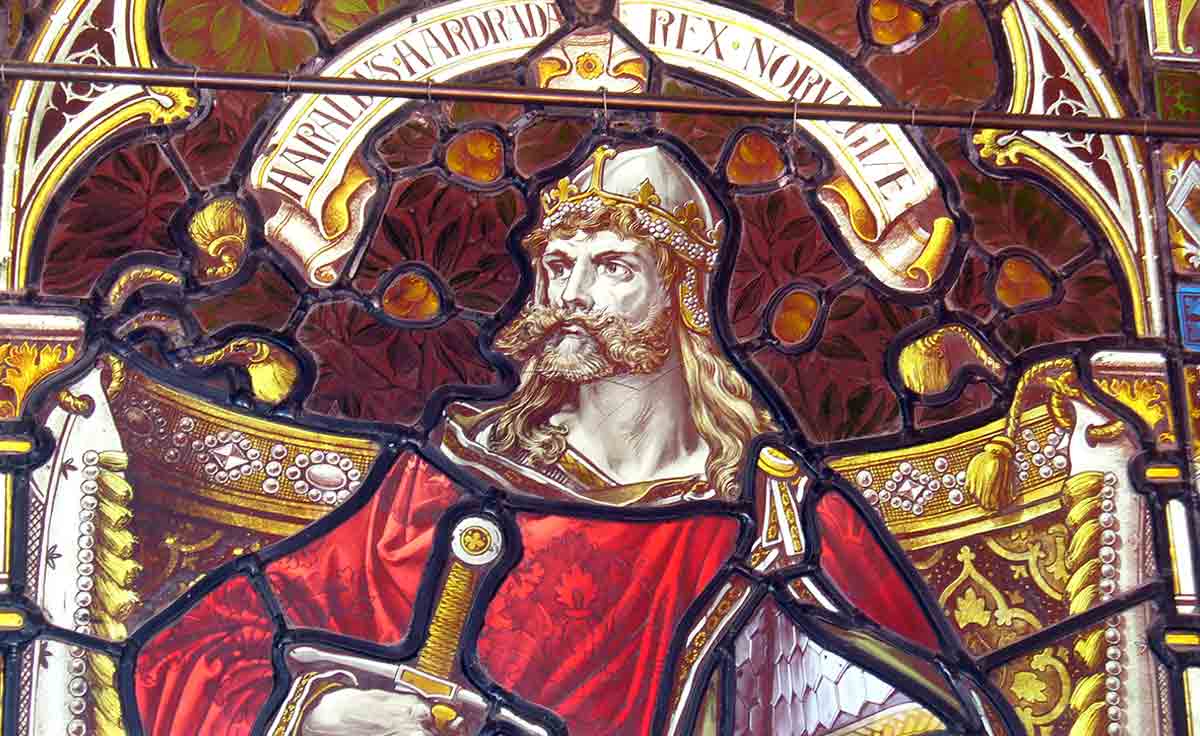
When Harald Hardrada invaded England in summer 1066, he enjoyed a reputation as the foremost warrior in Christendom. The half-brother of King Olaf II of Norway, who was canonized following his death at the Battle of Stiklestad in 1030, Harald distinguished himself as a warrior in the service of his kinsman Grand Prince Yaroslav the Wise in Kyiv, and later as commander of the Varangian Guard in Constantinople. In 1046, he returned to Norway to contest the claim of Olaf’s illegitimate son Magnus the Good. The two men briefly shared power until Magnus’ death in 1047.
Upon becoming king of Norway, Harald Hardrada also inherited his claim to England. In around 1040, Magnus signed a treaty with Harthacnut, King of Denmark. The two men agreed that the first to die would be succeeded by the other. Harthacnut soon succeeded his half-brother Harold Harefoot as king of England. When Harthacnut himself died in 1042, Magnus became king of Denmark but struggled to assert his claim in England.
Harald did not make a serious effort to contest the English throne until Edward the Confessor’s death in 1066. Harald was encouraged to stake his claim by Tostig Godwinson, Harold Godwinson’s younger brother. In late 1065, Tostig was overthrown from his earldom of Northumbria in a popular rebellion and appealed to his brother for help. Harold recognized that Tostig’s rule had been unpopular and instead consented to his overthrow. Tostig was disgusted and offered his services to the Norwegian king. Harald Hardrada now had a powerful English ally who promised him local support in northern England.
The Three Battles That Decided the Succession of 1066
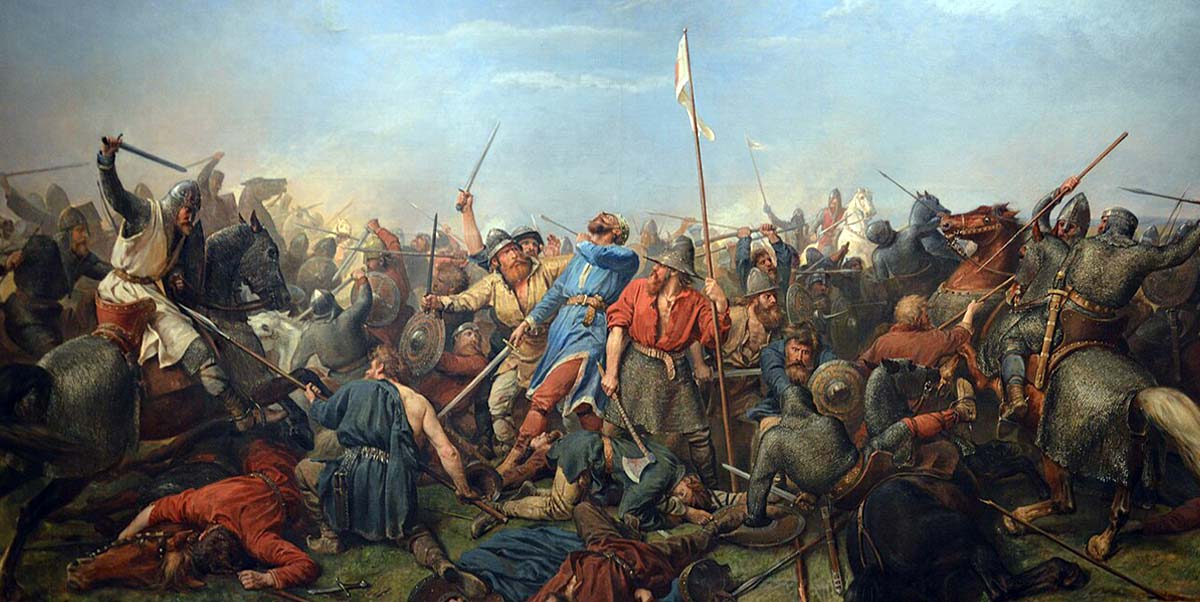
On September 18, the Viking longships carrying Harald and Tostig reached the Humber estuary in northern England. They marched on York and met an English army under the brothers Edwin and Morcar, earls of Mercia and Northumbria respectively. On September 20, the Viking army emerged triumphant at the Battle of Fulford Gate just south of York. The defeated earls surrendered York and agreed to supply hostages to the Vikings.
On September 25, Harald and Tostig and a small contingent of Norsemen arrived at Stamford Bridge to receive the hostages promised by Edwin and Morcar. It was a warm late summer’s day and most of the Viking army left their heavy chainmail at their ships. As they waited, Harald and Tostig were shocked to witness a large body of armed men approaching the bridge. Tostig recognized his brother, King Harold, at their head.
Harald Hardrada decided to fight a delaying action at the bridge and sent messengers to his ships urging the rest of his army to join the fight. The ensuing melee lasted for hours, but by the time the Viking reinforcements arrived both Harald and Tostig had been slain. The Vikings had arrived in England with 300 ships. Harald’s son Olaf only required 24 to bring the survivors back to Norway.
Having defeated one of Europe’s greatest Viking kings, Harold Godwinson disbanded his army once again and returned south. Before long, he received news that William of Normandy’s invasion was finally at hand. William landed at Pevensey Bay on September 28 and began building a castle at nearby Hastings while raiding the local area.
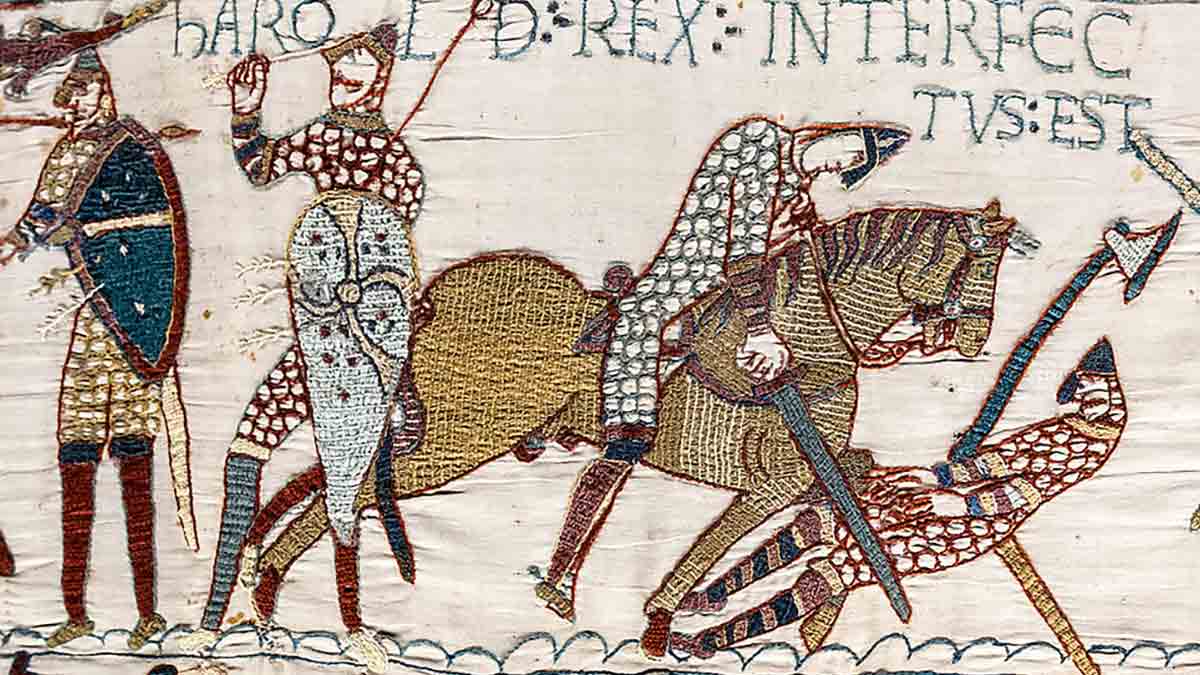
Harold hastily recruited a new army and prepared to meet the Normans. The climactic Battle of Hastings was fought on October 14 six miles from Hastings at a site now called Battle. Harold’s army occupied a strong defensive position on Senlac Hill and formed a shield wall to await the Norman attack.
The early Norman attacks up the hill failed to make much of an impact on the Saxon position. As the two armies engaged in hand-to-hand combat on the ridge of the hill, the Bretons on the Norman left began to waver, possibly in response to a rumor that Duke William had been killed. As a contingent of Saxons poured down the hill to give chase, William lifted his helmet to prove that he was still alive and rallied his army.
While the Saxon shield wall reformed, William recognized that the retreat of the Bretons had rendered Harold’s formation vulnerable. After launching another attack, he staged a feigned retreat to entice more Saxons down the hill. The Norman cavalry was ready to pounce and rode down the isolated Saxon warriors. The Normans may have used this tactic on several occasions as the Saxon shield wall gradually disintegrated. Harold fought bravely and was killed on Senlac Hill, the site of Battle Abbey.
William’s victory at the Battle of Hastings did not immediately secure him the crown. With King Harold dead, leading Londoners and the Archbishop of York convened a witenagemot to proclaim Edgar Ætheling as the new king. The northern earls Edwin and Morcar had promised military support but when this failed to materialize, Edgar and other English leaders submitted to William at Berkhamsted in December 1066, paving the way for William’s coronation as king at Westminster Abbey on Christmas Day.