
Few authentic Renaissance jewelry pieces survive intact, so Renaissance portraiture plays an important role in understanding the way both wearer and viewer interpreted and recognized the power of jewelry. Seemingly simple items that we take for granted and wear every day offered so much more to the wearers of the past. We are going to be taking a deeper dive into the history and art of jewelry from the Renaissance and how it reflected the social standards of the age.
Renaissance Staples: Popular Items to Recognize
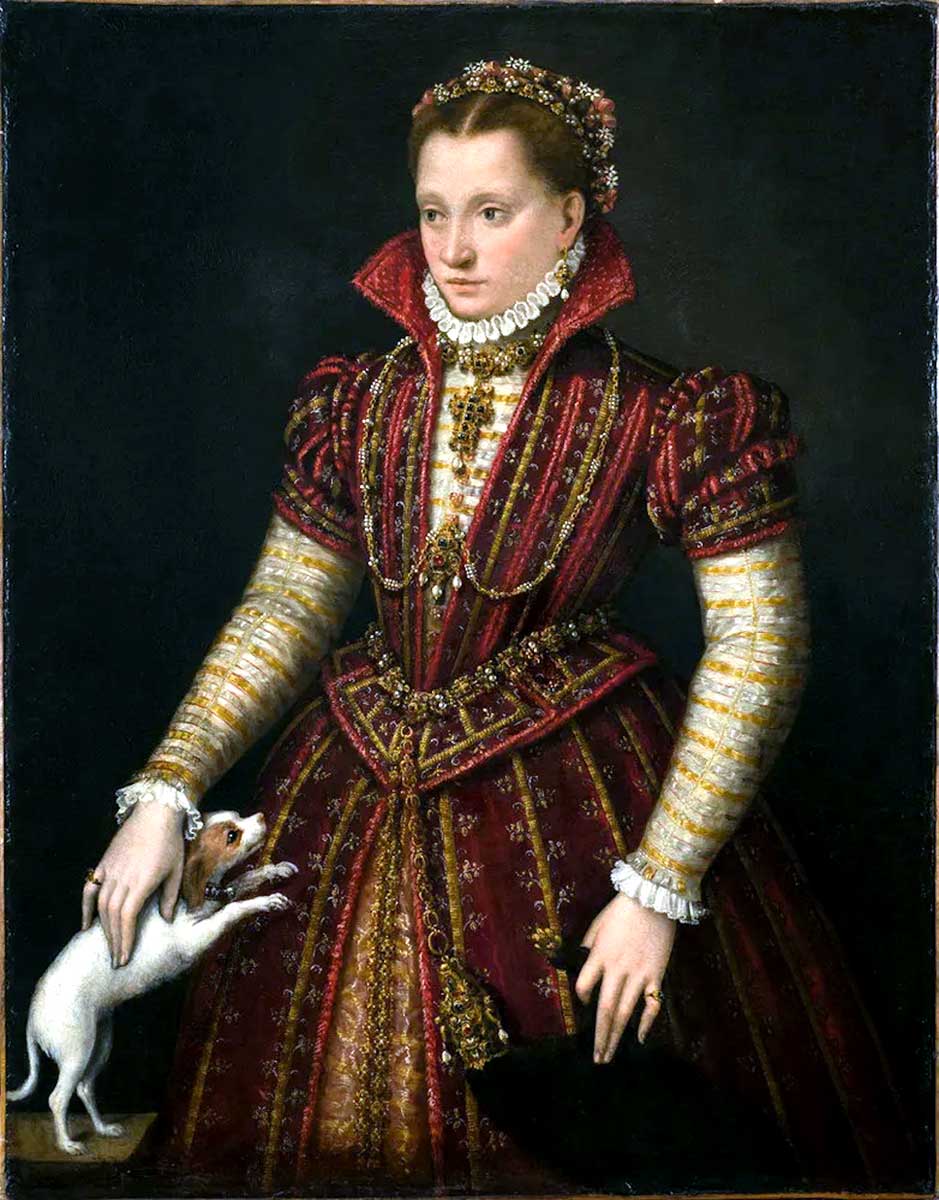
This portrait of a noblewoman contains a majority of the types of jewelry and accessories that are quintessentially Renaissance and were used particularly in portraiture to show wealth and status.
Her gold and jewel-encrusted belt, called a girdle, helped to cinch in the waist and is typically seen with a longer chain strap hanging down the center. This could be used to hold onto other items such as purses, prayer books, rosaries, or a zibellino, as seen here. The zibellino includes marten fur, in which the heads are often decorated in gold and precious stones. It was a wealth flex for the time, and symbolized maternity and fertility.
The pendant is the most dominant jewelry piece from the Renaissance. Here, she wears a golden piece that contains three different types of jewels with three dangling pearls. This set-up was a popular choice, and can be seen in various configurations in women’s portraiture of this time. Her large diamond cross necklace demonstrates her faith and devotion. Golden rings with precious stones were very common for the wealthy to display their prominence, with table, point, or rose cuts being the most frequent. Earrings and bracelets, while they do appear, were not nearly as popular as pendant necklaces and girdles, as these items were the most prominent and elaborately decorated.
Bonds of Love and Loyalty: Golden Chains of the Renaissance
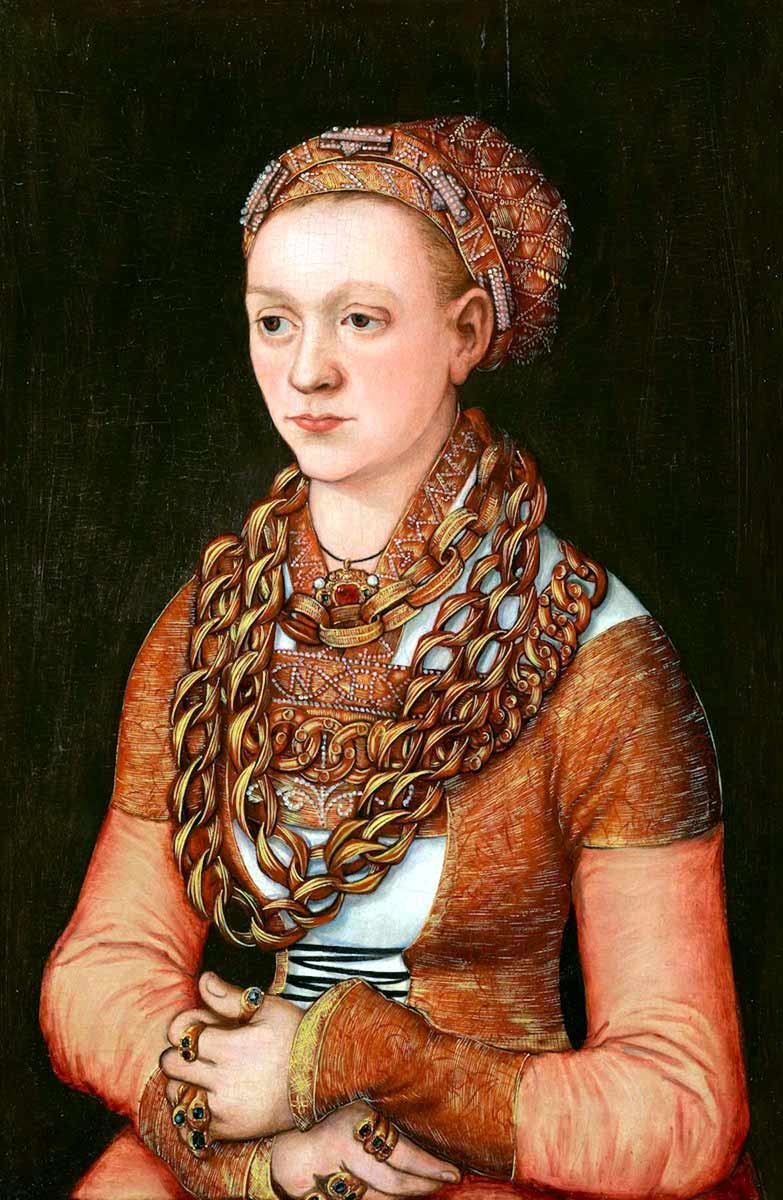
Gold jewelry, particularly golden chain necklaces, was very popular in Germany. This portrait of Anna Buchner by Lucas Cranach the Elder is a prime example of this opulence. Meant to signify her family’s wealth, she has layers of thick, golden chain necklaces wrapped around her neck.
Peeking out from underneath, she also wears a large ruby, emerald, and pearl pendant, set in gold. Her multiple golden rings were a fashionable statement, signaling that she comes from wealth and high status. Golden rings made by skilled goldsmiths were expensive, especially if they contained other rare gems or diamonds. Gold chains were also seen as symbols of fidelity, called bonds of love. The thick interlocking links signaled devotion and faithfulness.
Thick golden livery chains were another popular form of decoration. They would be worn draped across the shoulders and signified class, military, scholarly, or social ranking. Typically, they feature thick and heavy golden chains with specific emblems to signify what order or person they had connections to.
Practical Accessories: Jewelry That Served a Dual Purpose
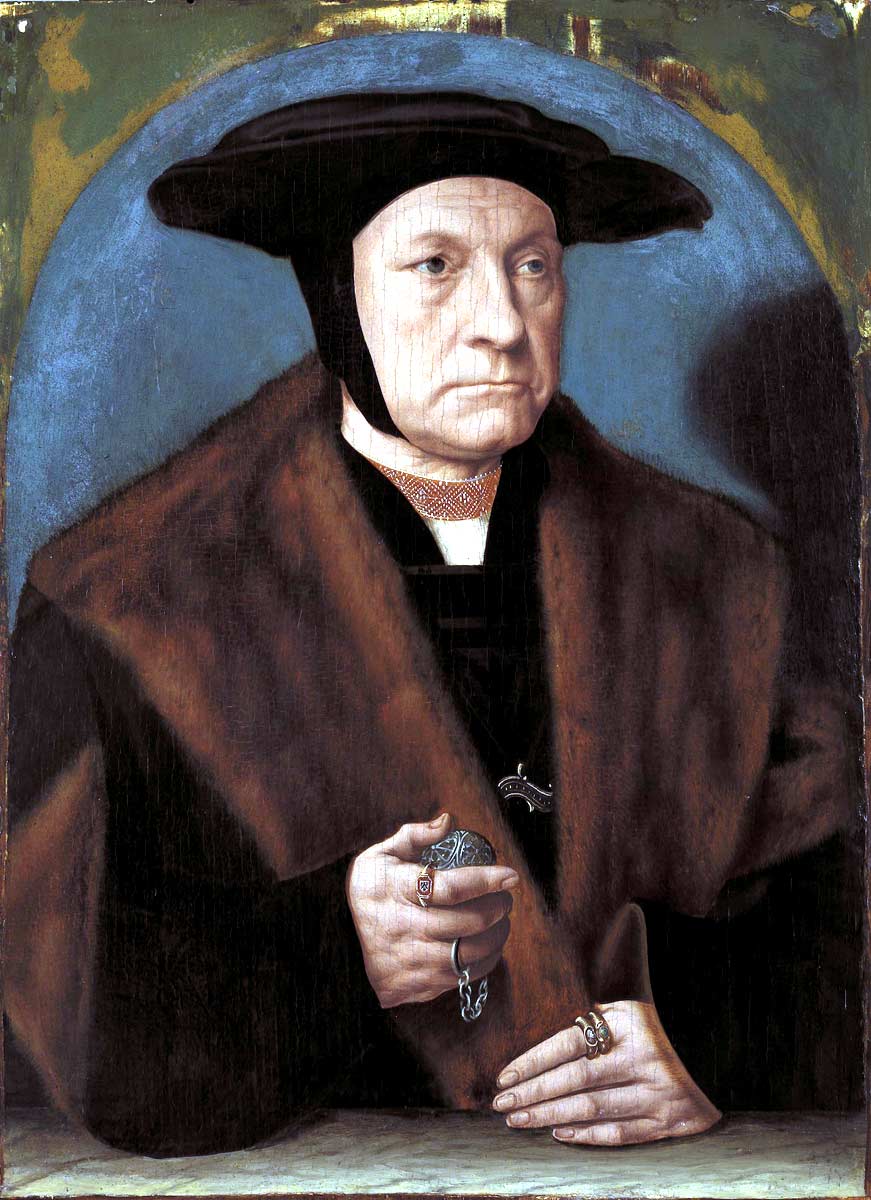
Aside from having symbolic or personal meanings, jewelry was also used for everyday uses for both men and women. Wealthy individuals who could afford this luxury believed they were investing in their health by using precious stones and jewelry pieces.
Pomanders, seen above, were sphere-shaped devices attached with a chain. They would fold out like an orange in order to be filled with sweet-smelling products. The object could contain compartments to hold herbs, ambergris, or pleasant perfumes, which the wearer could discreetly hold up to their nose. People believed that foul odors were a leading cause of disease, so the pomander was not only used to ward off unpleasant smells, but also potential illness. Rings with hidden compartments were also used for a very similar purpose. Metal curved toothpicks were another trendy item and could be attached with chains to conveniently use during meals. Items such as these indicated that the wearer was of a higher class, and therefore, cared about their personal hygiene and appearance.
Signet rings for men served the practical purpose of being used to create wax seals on letters or documents. They could contain symbols, initials, crests, or coats of arms and indicate who the wearer was. The gems, depending on the type, were meant to provide protection against disease and evil, and to benefit the wearer.
Renaissance and Ancient Revivals: Jewelry Inspired by the Past
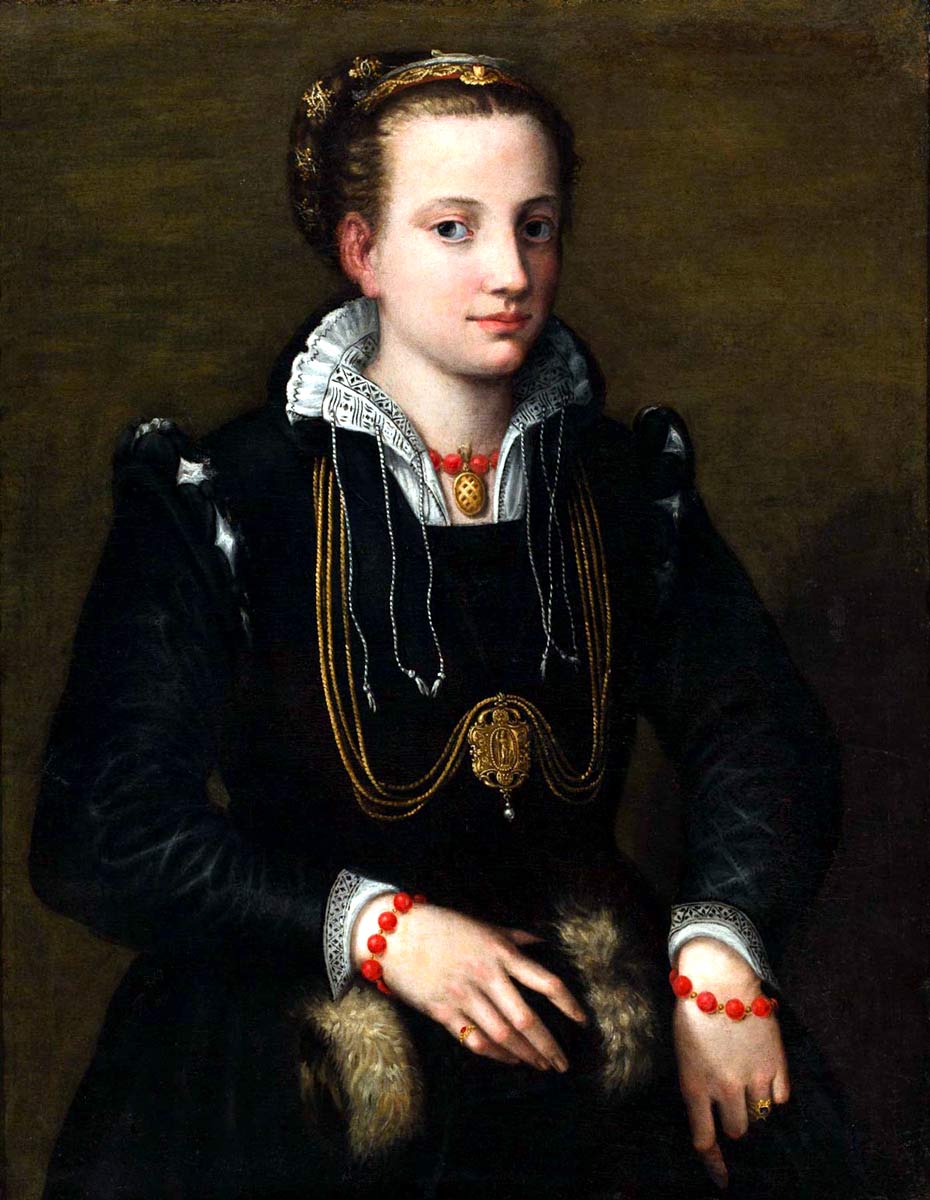
The Renaissance saw the revival of Ancient Greek and Roman motifs and artifacts, inspiring a new generation of artists and collectors alike. This trend can also be seen in the jewelry and types of stones that Renaissance wearers coveted and loved to wear.
Motifs and depictions of Greek and Roman Gods and Goddesses were popular for gem engravings, cameos, and pendants in order to symbolize connections to a person’s namesake or personal qualities. The sitter in this portrait by Sofonisba Anguissola was unidentified for a long time until closer inspection of her gold medallion offered new insights into who this woman could be. Because of the emblem of the Goddess Minerva on her golden necklace, it is thought to be the artist’s sister, Minerva. The red coral beaded bracelets on both wrists were also a popular choice in the Northern Italian states, and reference ancient Roman aesthetics of wearing matching double sets of bracelets.
Signet rings and cameos were another revival that flourished during the Renaissance. Intaglio and enameling techniques realized a greater appreciation for elaborate and decorative styles. These personalized pieces were used as mementos and sometimes protection, as the precious and semi-precious materials had healing attributes and offered insights into the quality of the person wearing them. Designs from ancient Rome or Greece could be copied into designs of Renaissance artisans.
Side by Side: A Married Couple’s Guide to Jewelry
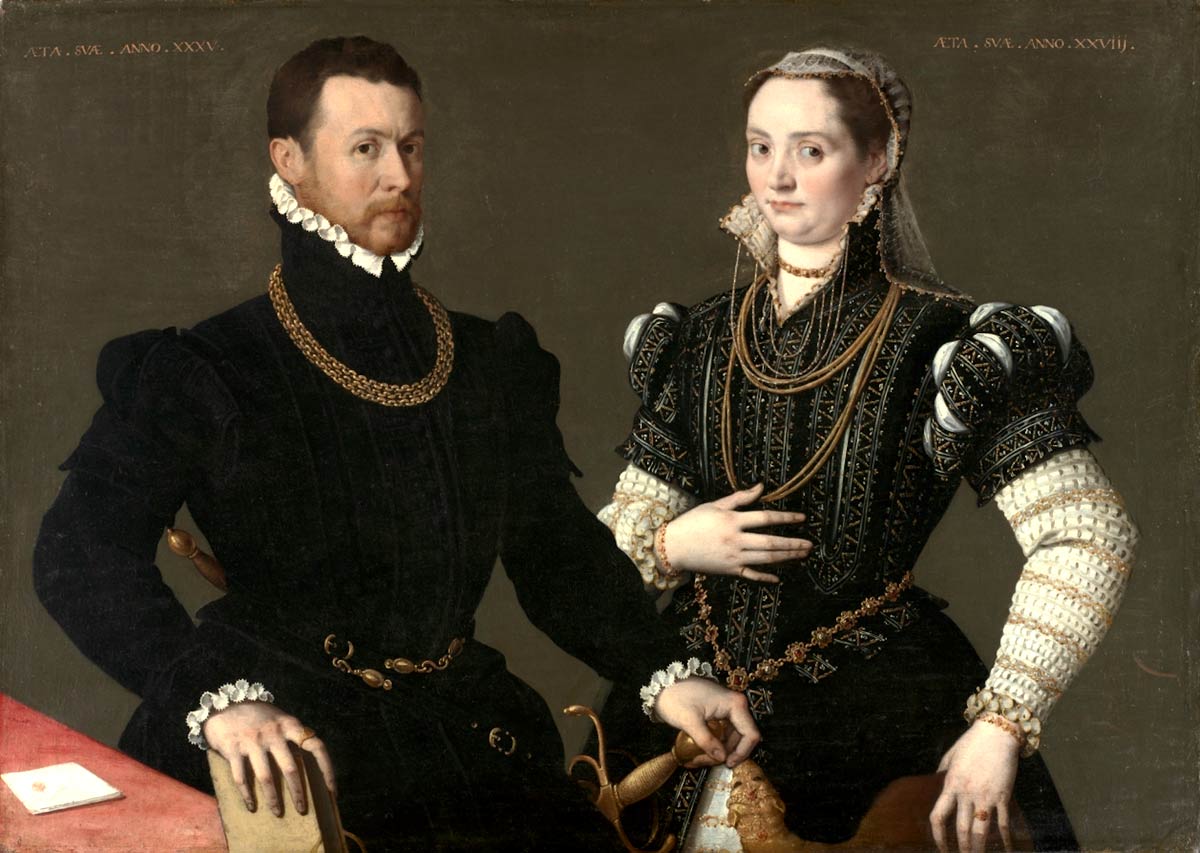
Portraits featuring married couples are like time capsules that tell us what values, aspirations, and ambitions couples had back in the Renaissance. While these kinds of portraits may not share intimate or personal details about the actual sitters, they do, however, show the hopes that they placed in creating a lucrative and fruitful marriage.
The couple seen here is unknown, but their jewelry conveys the type of image that they may have wanted to project. The wife is covered in multiple types of jewelry. She wears a ruby and pearl-encrusted girdle, which also contains a zibellino. Frequently seen by women holding it above the womb to signify pregnancy and fertility, this portrait interestingly shows the head pointing up and touching the index finger of the husband. Her bejeweled girdle and layers of golden chain necklaces can also symbolize chastity, fidelity, and love.
The man’s thick, golden chain could represent a high social standing or military rank, as he’s also wearing gold weaponry. His golden accessories indicate that he was wealthy enough to not only provide these luxury items for himself and his wife, but for it all to be commissioned by a painter as well. He also wears a ring, visible on his right hand. It was common during this time for both men and women to wear multiple rings on different fingers. The wedding ring wasn’t necessarily on one specific finger to represent the marriage itself, but rather as another status symbol.
Generational Wealth: Renaissance Children and Their Jewels
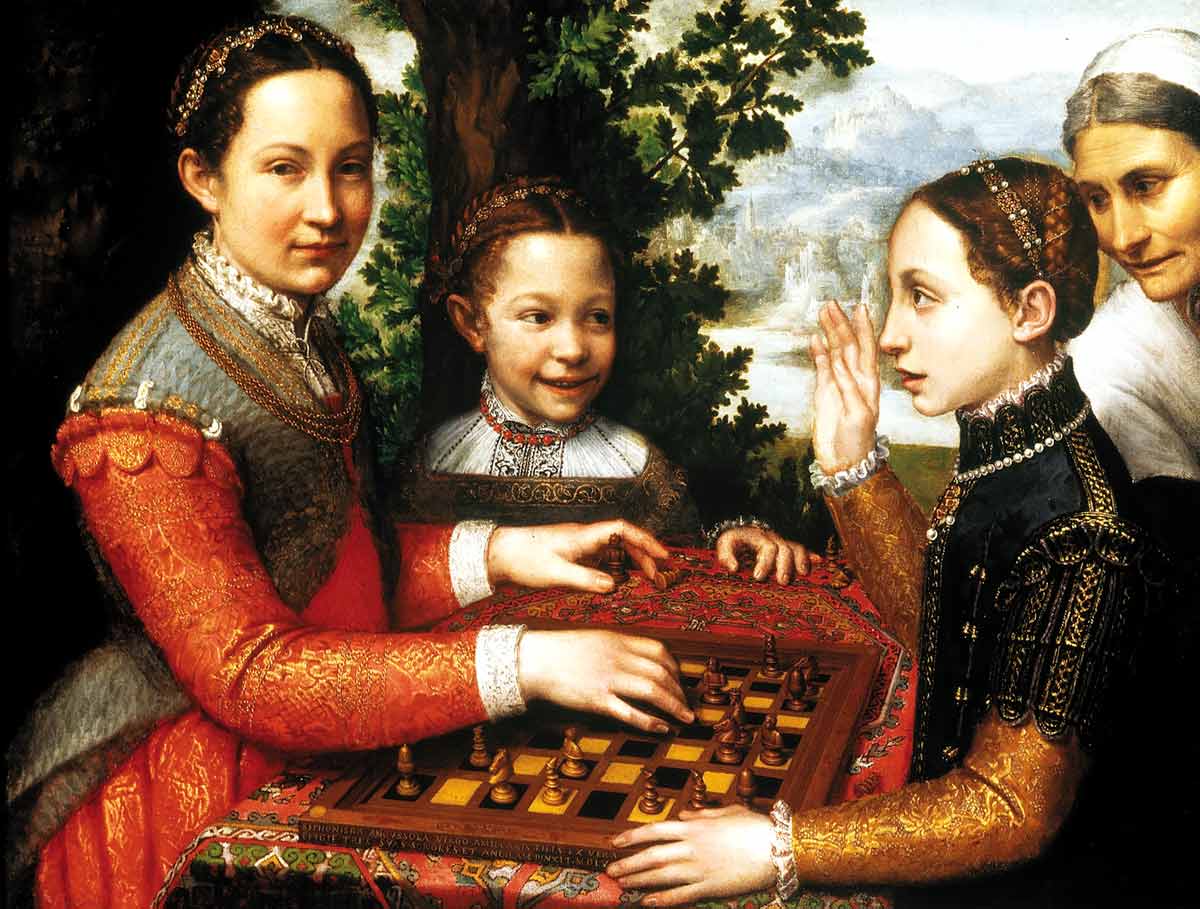
Portraits of children dressed in the latest fashions of the time were another indicator of status. Whether it was the child of a prosperous banker, a scholar, or a royal, portraits of children reflected the growing dynasty of a Renaissance family. In The Chess Game, we see Sofonisba’s sister Europa (middle) wearing a coral necklace. Coral was extremely popular among children because it was thought to ward off evil, protect them from disease, and even be used as a teething tool for babies. Strands of pearls or coral could also be reworn from childhood into adulthood by either being re-strung or adjusting the length. In this painting, the pearl-and-ruby necklace worn by Minerva (right) also appears in another portrait by Sofonisba featuring their mother. Jewelry and the precious materials that they were made from could be handed down through the generations. Sometimes they were used as dowries or given by men to their future wives.
The bedecked attire of the children in the painting is in stark contrast to the nursemaid seen off to the side, and shows this particular family’s noble rank. Because this scene was painted from life, it offers insight into the actual types of jewelry that not only her sisters but the artist herself would’ve worn. Renaissance girls’ jewelry could initially symbolize innocence and purity, but came to represent wisdom and maturity as they grew older.
Idealized Beauty Standards: Renaissance Betrothal Portraits
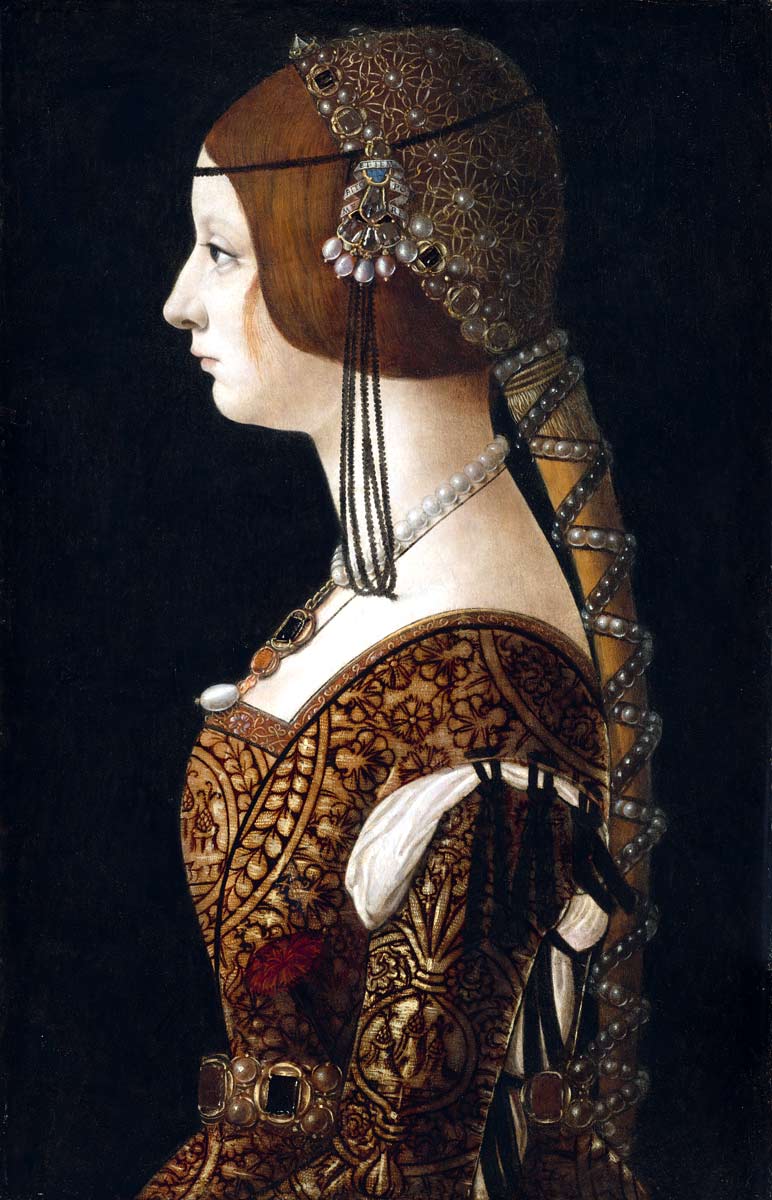
The type of jewelry used in betrothal or marriage portraits could symbolize not only a person’s physical beauty, but the ideal virtues and characteristics that would have been both desired and expected for women of the time. In this betrothal portrait of Bianca Sforza, the jewelry does most of the talking. Her side profile creates more of a focus on the sheer quantity of precious stones and gems that she’s wearing, rather than her actual physical attractiveness. The jewelry and gems tell a story of Bianca’s virtuosity, devotion, and obedience. Pearls typically symbolized virginity and purity because of their white and luminous color.
Pearls also didn’t need to be faceted or placed in components as other gems did in order to reflect light, so their radiance was considered purer than other stones. The pearls here also showcased that the Sforzas had money, as it cost an extreme amount to purchase pearls, and Bianca is covered in them. The sheer volume of gems, gold, rubies, and diamonds is used to advertise the wealth that the Sforzas could provide to any prospective marriage alliance.
Dynastic Propaganda: The Economic Power of Jewelry
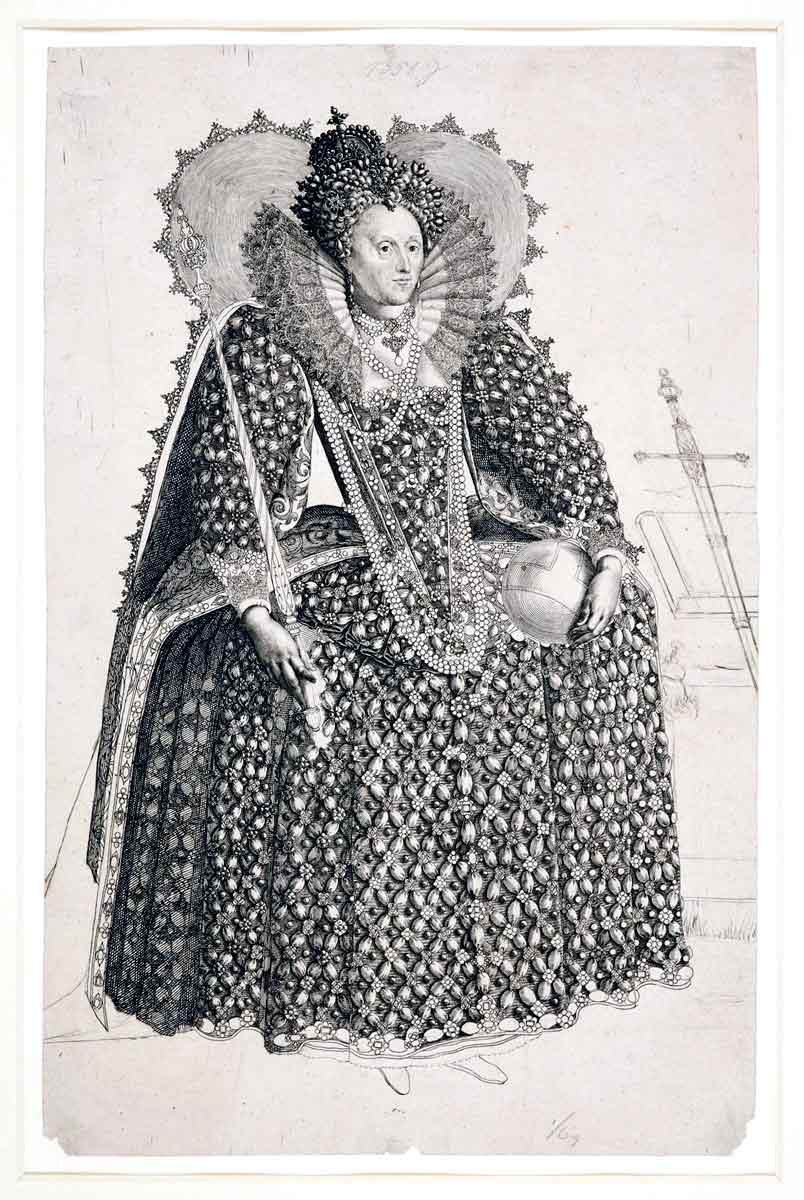
Renaissance royal courts displayed lavish and distinctive styles that were meant to symbolize the culture and national identities that they represented. Cultivating these lifestyles was integral for future generations, and the jewelry that they wore symbolized the growing economic powers.
Prior to the discovery of the Americas, pearls primarily came from the Persian Gulf. However, once new lands were discovered and trade routes were established, this led to a large influx of precious materials and resources being shipped across the world. Spanish conquistadors would force Indigenous peoples and enslaved people to pearl dive off the coasts of Venezuela, mine for emeralds in Colombia, and mine for silver in Mexico. Some of Queen Elizabeth’s famous pearls came from the English raiding and looting of Spanish ships. Just as she used pearls as symbols of chastity and purity, the Spanish used pearls to display their dominance and immense wealth from new trade routes and the discovery of lands in the Americas.
These precious stones and jewels could be handed down and worn throughout multiple generations, signifying a royal dynastic family’s strength. They were also used as physical currency, and were used for dowries, collateral, or to pay off debts. Coating oneself in these rare and exotic materials gave monarchs the look of divine rights and protections, and thus showcased their divine right to rule and govern.
Middle-Class and Minimalism: The Flip-Side of Renaissance Excess
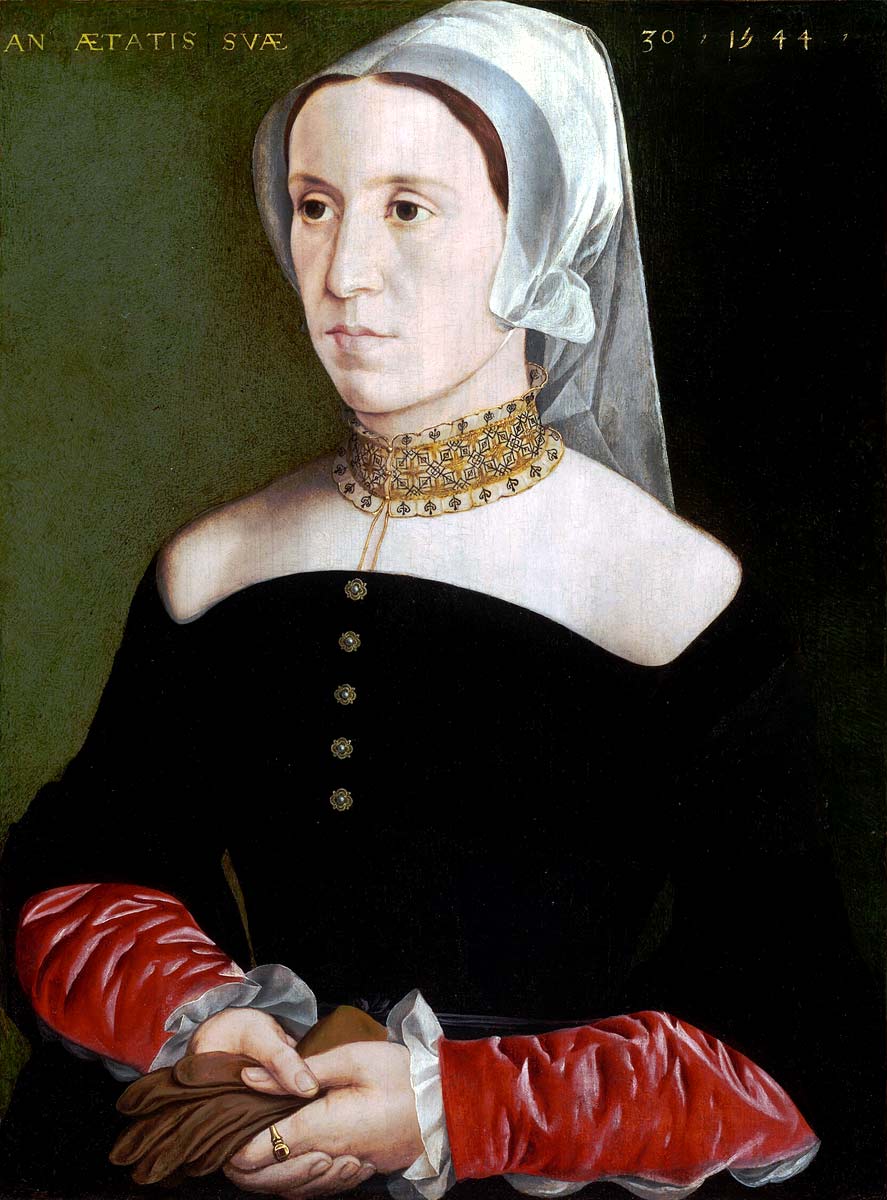
While showcasing one’s wealth and status through jewelry was common, those belonging to the middle class had to find other ways to display their individual wealth. Various sumptuary laws throughout the Renaissance restricted things such as the amount of jewelry one was allowed to wear. These laws were particularly targeting women, so in order to get around this, women needed to get a license or pay a fine to continue wearing their jewels. This also divided the classes, with these laws being enacted in order to curb the lower classes from copying the looks of the aristocratic classes. The faux pearl trade became so prevalent and popular that Venetian Sumptuary Laws made it punishable. One could lose a hand and get a ten-year exile for selling fake pearls.
In this Portrait of a Woman, there is significantly less jewelry displayed. Instead of wearing a bejeweled necklace, the sitter wears a collar made up of delicate and detailed gold embroidery. She also holds onto a pair of gloves instead of a strand of pearls, another symbol of wealth and status. The only jewelry that she is wearing is a ring visible on her left hand that has a single stone. Here, her wealth is seen more so in her dark and velvet attire, with the subtle details of the gold collar and little pearl-like buttons lining the front of her dress.
The rise of these laws also came from an outcry of morality, as the over-excessive displays of one’s wealth could be seen as indulging in vanity and even sensuality, as wearing an extensive amount of jewels was attributed to looser morals and behaviors. Some sumptuary laws dictated that the longer a woman was married, the less jewelry she was expected to wear as the years went on.
Devotional Renaissance Jewelry: Displays of Piety and Fashion
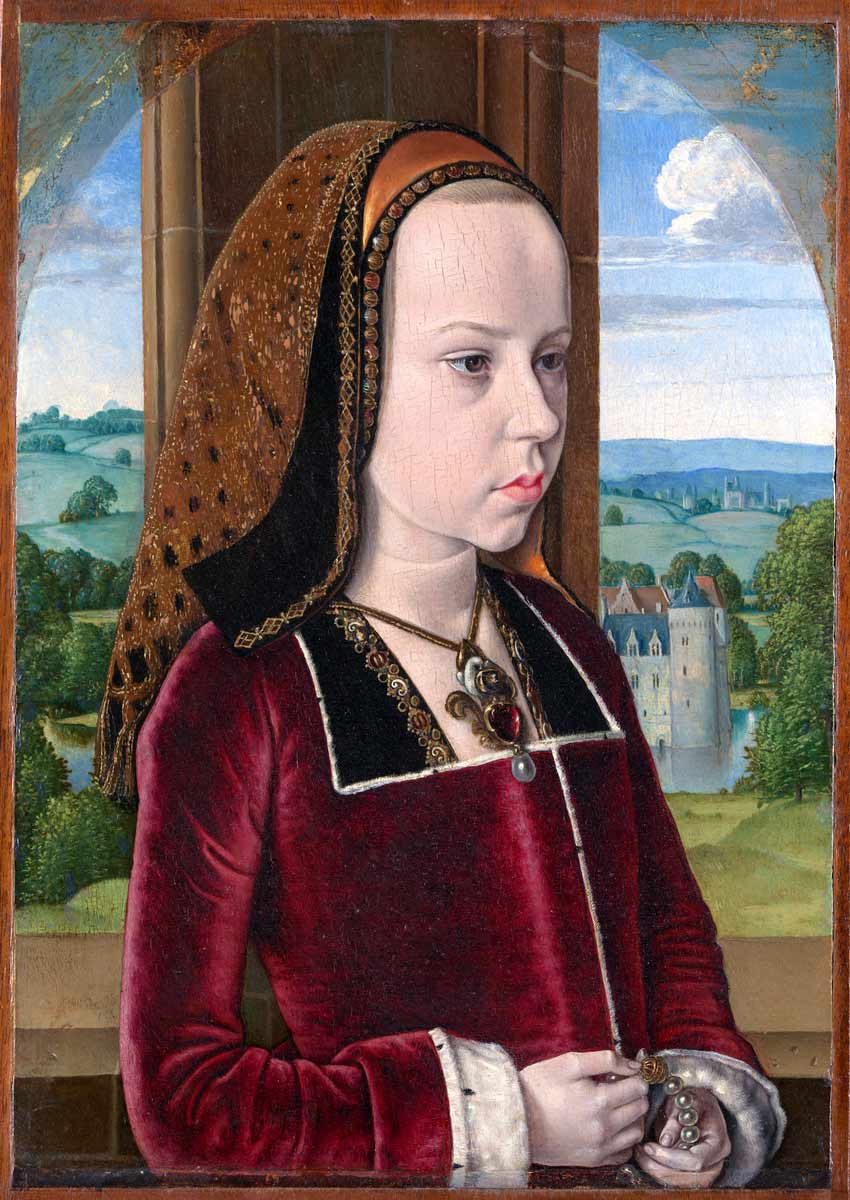
Similar to how patrons would commission artists to paint beautiful devotional frescoes for Churches or Hospitals, wealthy individuals could also use jewelry as a form of religious expression. Using jewelry strategically was important because displaying one’s wealth should not overshadow the other figures in a Biblical or devotional scene in an altarpiece or triptych where Saints or heavenly figures were depicted. There was a particular balance that had to be maintained where a patron would want to show off the wealth that was made during one’s life, but not at the expense of diminishing one’s personal beliefs or faith. Pelicans were a popular jewelry design depicting either the sacrifice of Jesus Christ or motherly love. While the pelican was a famous motif in Renaissance jewelry (most notably in Queen Elizabeth I’s Pelican Portrait), devotional pendants like the Pietà worn by Margaret of Austria in Jean Hey’s portrait were equally popular displays of faith.
Stones and gems had significant meanings. Red rubies can symbolize the blood of Christ, large pearls represent purity and protection, emeralds for long life and eternity, and sapphires for honesty and wisdom. Medallions or pendants that featured scenes or figures from the Bible were also very popular in order to show one’s faith as well as personal attributes that were similar to those depicted. The ‘IHS’ monogram was another popular choice, as it symbolized faithfulness and protection for the wearer. Livery Chains, such as the Order of Saint Michael instituted by King Louis XI of France, or the Order of the Garter featuring Saint George by King Henry VIII of England, were given as high honors by royalty and featured symbolic references to patron saints that held special significance to both King and Country.