
Jean-Jacques Rousseau’s philosophy emphasized the ways that civilization’s development has led mankind to remove itself from its true state of nature. Were he alive today to witness and participate in social media, he’d likely be horrified by the attention economy that ravages the human spirit. Social media forces the individual to be on constant alert; our views are the commodity that clickbait seeks.
Social Media and the State of Nature
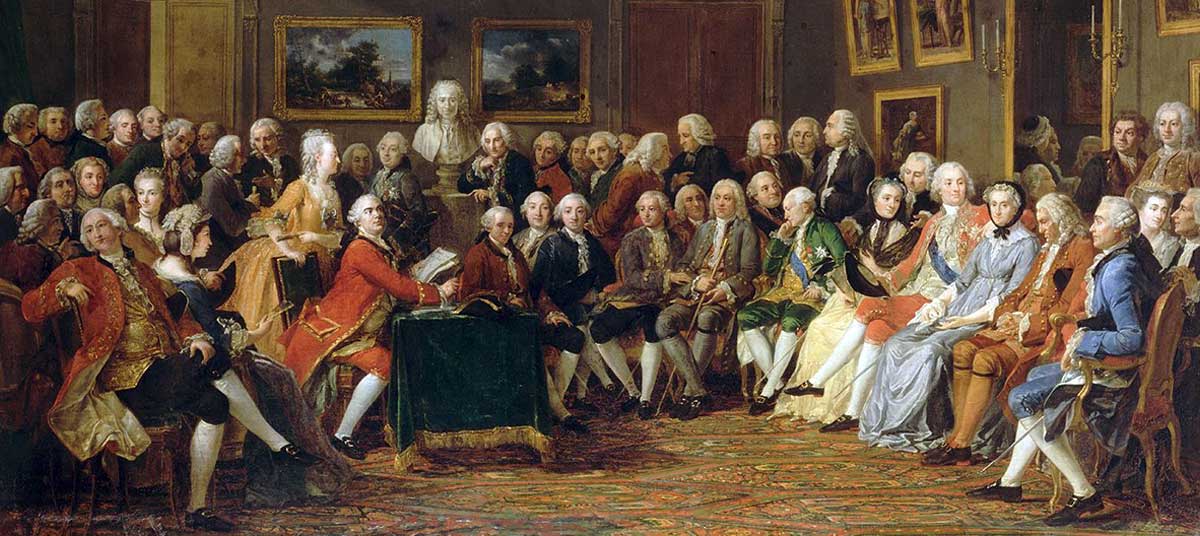
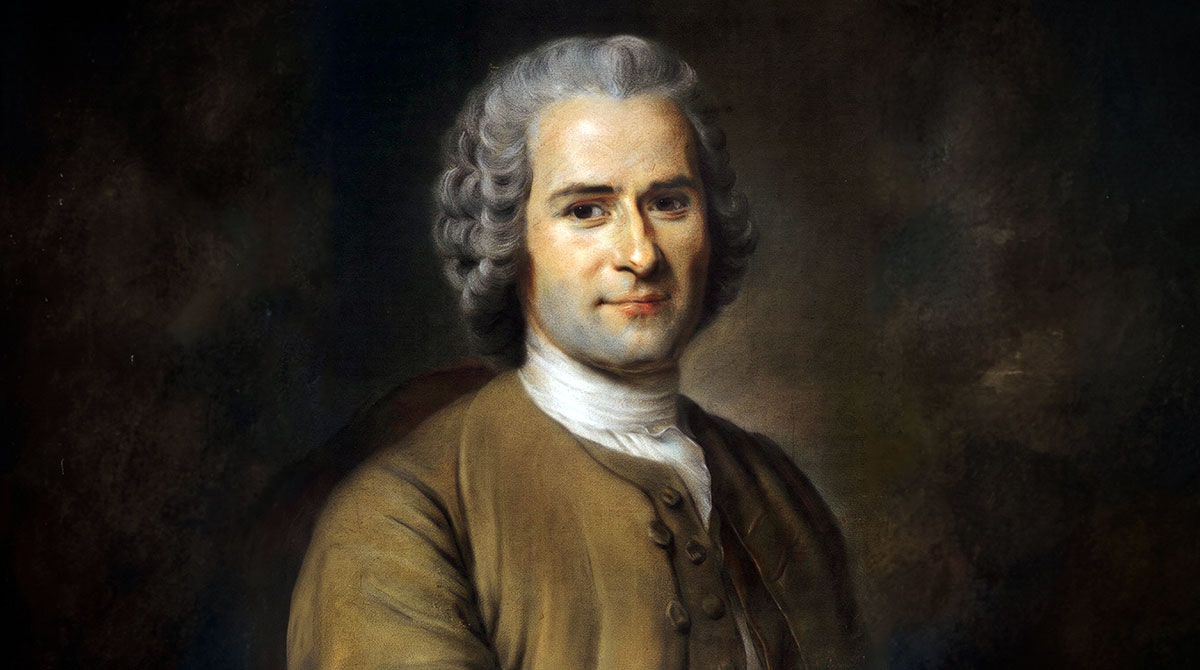
Rousseau, along with Thomas Hobbes and John Locke, debated an idea central to Enlightenment philosophy: the state of nature. The “state of nature” is a concept that asks how mankind lived before settled civilization.
The debate had two key sides. Some Enlightenment philosophers argue that established societies have a “civilizing” influence on man. Thomas Hobbes said life was “nasty, brutish, and short” before mankind began cooperating and structuring society around different social roles and organized government.
Rousseau, however, felt differently. He argued that settled civilizations forced humans to change their material and psychological relations to one another. Human beings were forced to compare their own material wealth relative to others. Rousseau believed early humans lived simply and largely alone, and later in small communities, before larger societies poisoned our relations with one another. We cannot help but compare ourselves, almost as if it is innate to survival.
By participating in social media, Rousseau would argue that we engage even further in this comparison. It is impossible to maintain one’s “state of nature” when the social internet inherently breeds comparison. From comparison, competition arises. For a content creator, the settled civilization presents a captive audience with an abundance of idle time. Our society is a place to farm reactions and ragebait. Social media forces us to look directly at people who can appear wealthier, more beautiful, more capable, and more intelligent.
According to Rousseau, mankind is bound by the chains of society. Now, beyond rules and regulations, social pressures and expectations are stockpiled for our perusal on platforms.
Children and Education in the Age of a Social Internet
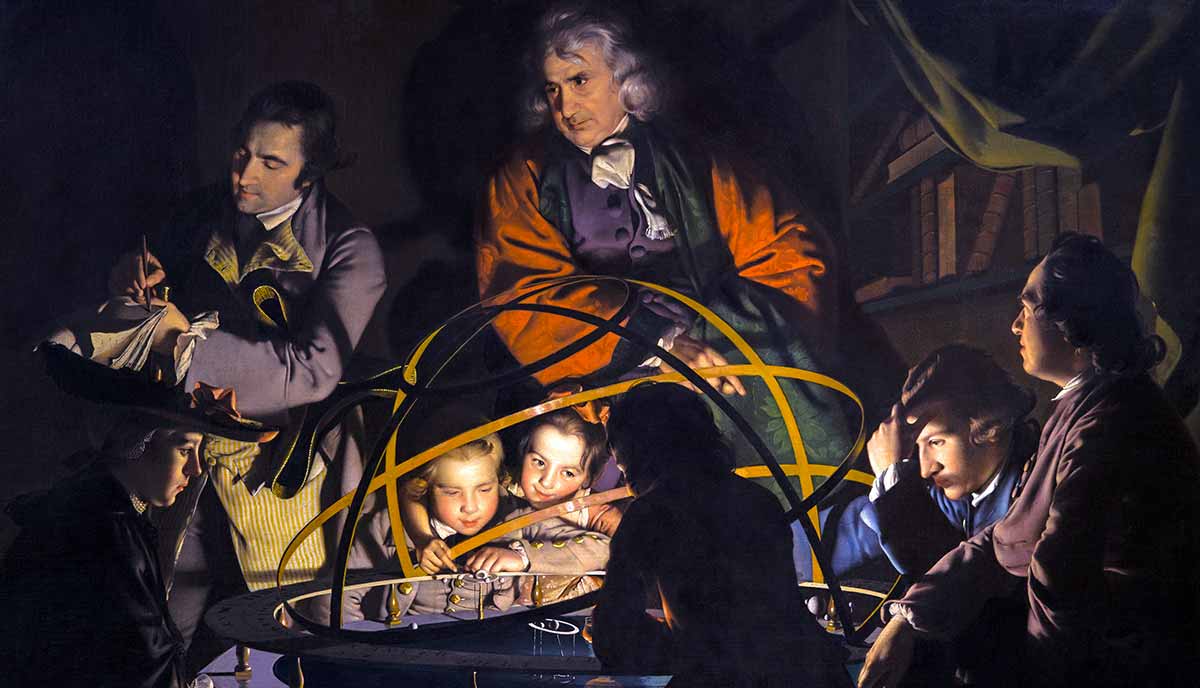
Rousseau was the father of five children, but they were all given up to the foundling hospital. For a man who had certainly a lot to say about the way society corrupted us, abandoning each of his children to a foundling hospital was likely dooming them to death. Despite his decisions, Rousseau does go on to have a lot to say about how children ought to be educated.
Rousseau argued that children should be shielded from society itself, raised close to nature by a tutor until they could resist its corrupting influence. When children are protected from degeneracy, they are less likely to become corrupted themselves. His 1762 treatise, Emile, or On Education was condemned and burned, and the Parlement of Paris ordered Rousseau’s arrest.
If Rousseau were to time travel to our era, he would witness the number of children and adults who have succumbed to the screen. In Rousseau’s view, he might feel that adults being permissive with screens themselves allows children to do the same. Social media has created an affliction that haunts each successive generation.
Rousseau discourages rote memorization and lectures, arguing that education should allow for experiments and experiences. Rousseau believed children are naturally good, and they can learn independently. Infants also should be given freedom, while ensuring their safety. Given his claims, he would undoubtedly find the role screens play in children’s day-to-day lives highly unfulfilling.
While we may ultimately be able to agree with Rousseau regarding screens, he unfortunately does adopt a highly sexist attitude toward the education of women.
In Book V of Emile, he writes: “The entire education of women must be relative to men. To please them, to be useful to them, to be loved and honored by them, to rear them when they are young, to care for them when they are grown up, to counsel and console, to make their lives pleasant and charming, these are the duties of women at all times, and they should be taught them in their childhood.”
Perhaps without realizing it, Rousseau has contradicted his own philosophy by forcing women to never be considered as capable or worthy of pursuing their own “state of nature.” They were always to live lives relativized to men. Unfortunately, social media also furthers these ideals. Women content creators can amass viewership by exploiting a “male gaze.”
Amour de Soi and Amour Propre
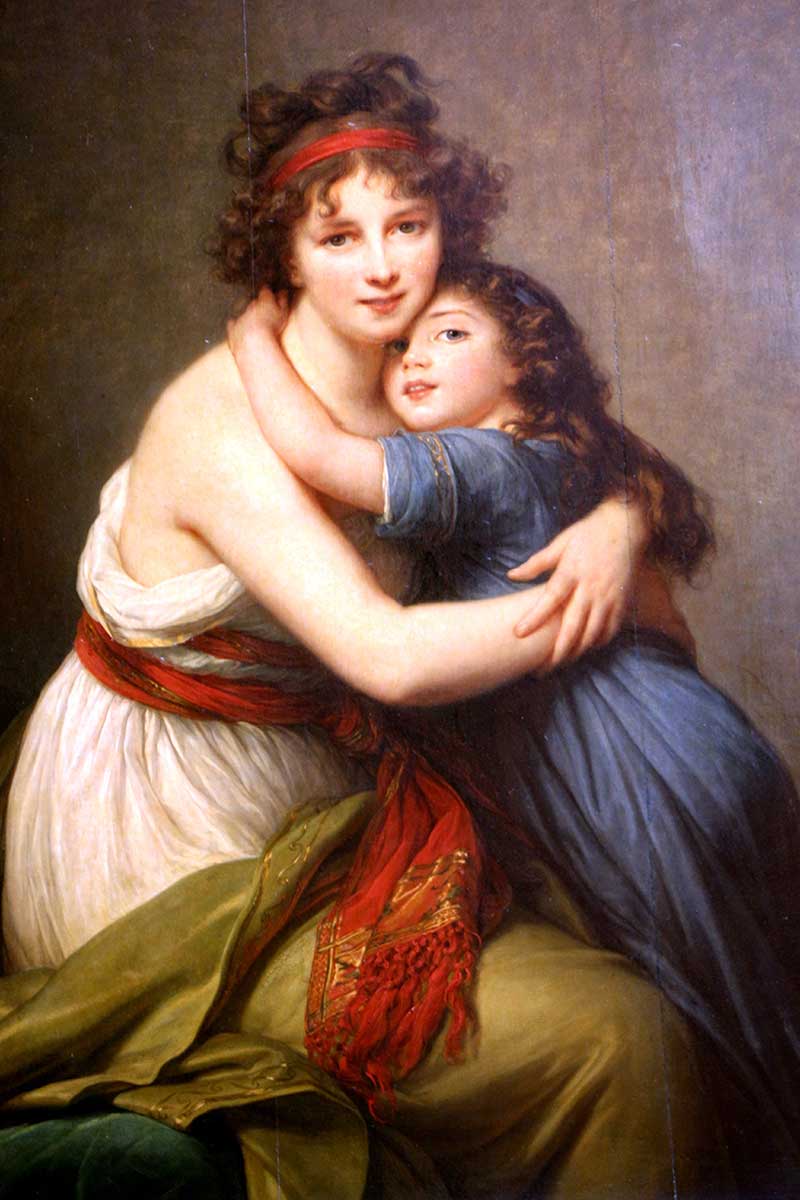
Rousseau also wrote about two types of love: amour de soi (love of the self) and amour propre (“your own love,” often translated as pride or vanity). The distinction between these two is exemplified by the day-to-day exchanges on social media platforms.
Amour de soi is the natural instinct to look after our own survival, such as finding food, water, and shelter, much like the physiological level of Maslow’s hierarchy. Rousseau paired it with a second natural instinct, pity, which makes us reluctant to see others suffer. There are, of course, now many schools of thought that refute the notion that humans only survived by being individualistic. But if Rousseau were able to log in to a social media platform and watch people scroll past news stories depicting unspeakable suffering, he would certainly wonder how the world could have any compassion left at all.
But another type of love exists beyond simply caring for one’s biological needs: amour propre. It is often translated as pride, or even vanity. It is a self-worth that depends on how others see us. Amour propre says that we can’t just acknowledge the mutual worth in one another. We have to compare, and then seek superiority on the basis of this comparison. Rousseau would find that social media also encourages this, as creators are forced to compete with one another for their audience’s attention.
We can see amour propre manifest when people take on other identities in order to garner other people’s approval. These online personas are completely separate from one’s actual lived identity and reality.
General Will
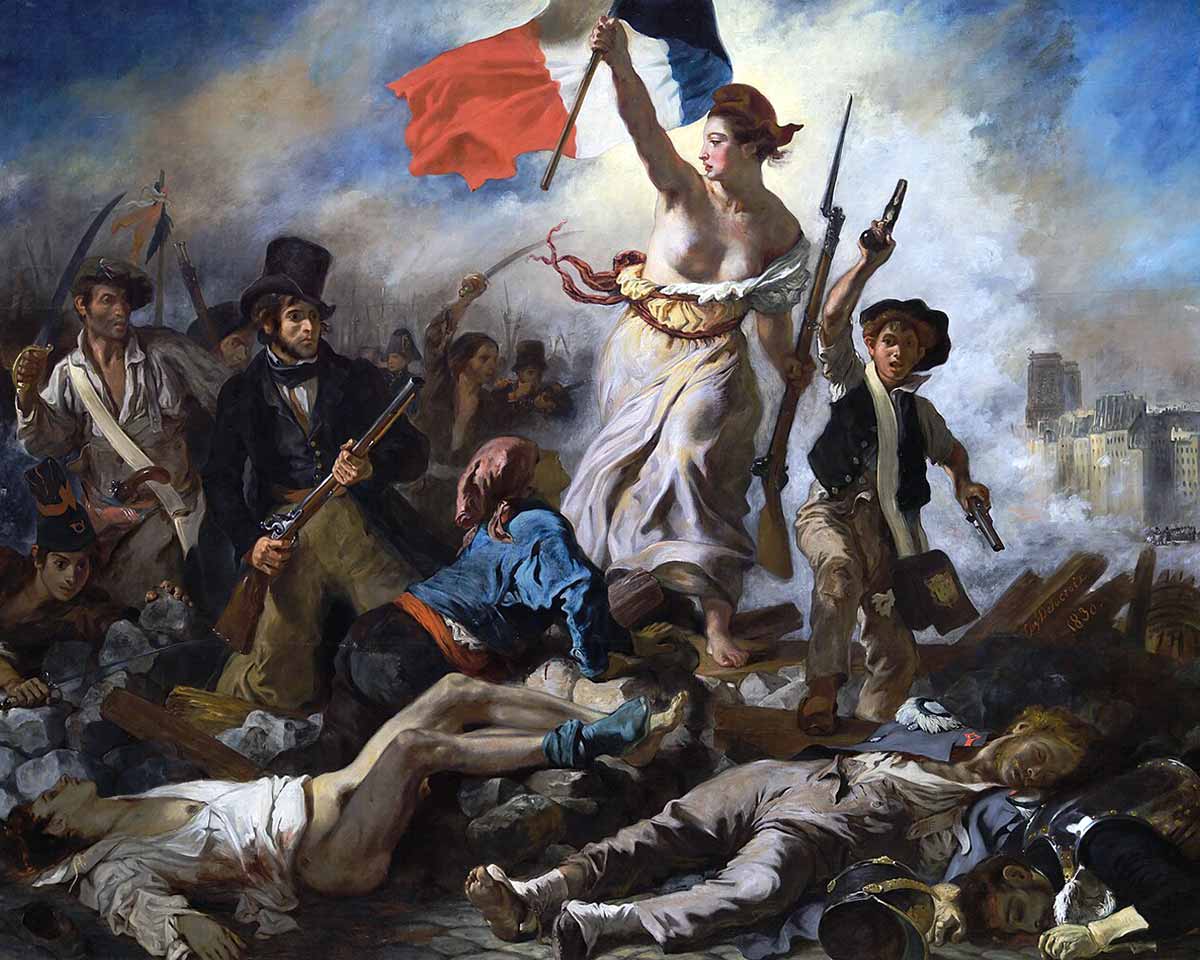
Another key aspect of Rousseau’s political philosophy is the notion of general will. General will is when the collective works in favor of “the common public interest.” For Rousseau, this was something society should strive for. Rousseau knew humanity could not return to the state of nature, so the general will was his answer for living together freely, a shared commitment to the common good that each citizen helps make and agrees to obey. When the general will is upheld, we are also working according to a social contract.
In the social media sphere, Rousseau would still be able to find benevolent pockets of the internet. There are numerous charity initiatives that allow attention and aid to situations that might have otherwise gone overlooked. People who never meet face-to-face are able to help one another.
While the social internet can do considerable good, Rousseau would also see how the algorithms encourage people to see the common good through a partisan lens. It has become much harder for the individual to conceptualize their role in furthering public interest. The media seeks attention and viewership in order to remain profitable. It has no choice but to paint stories in broad strokes that appeal to the algorithmically-defined groups.
Rousseau, a Social Media Hater
There are corners of the internet that yearn for life before smartphones. People do like to post pictures of animals running free and romanticize their freedom to exist on Earth unburdened by technology. If settled society has resulted in inequality, the social internet has inundated us with examples of how unfair the world can be.
Rousseau would likely have abhorred social media spaces that we occupy today. And his philosophy, while flawed, does ask us to consider the ways we are binding ourselves to chains that prevent us from living free. Maybe it is worth using some of his ideas to guide our relations to one another, as well as ourselves, as we navigate the ills of settled society in the digital age.