
The Second Polish Republic was looked upon as a period of freedom and hope by Poles who suffered under Nazi and Communist rule. However, the state was also weakened by serious instability and internal divisions. The country’s failure to reconcile with its minority communities undermined its unity. Its politics were autocratic and chaotic. When Poland was invaded in 1939, the Second Republic’s weaknesses meant that the state was doomed.
Restoration of Polish Statehood
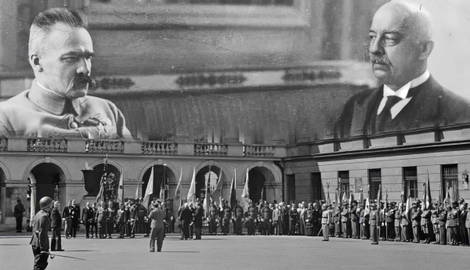
The Polish nationalist movement that had been gaining strength in the 19th century achieved its wildest dreams when the First World War ended in 1918. Ever since the partitions of Poland in the 18th century, the Poles hoped to resurrect the old Polish-Lithuanian Commonwealth. One of the most prominent Polish nationalists was General Józef Piłsudski, who founded the Polish Socialist Party. During the fighting on the Eastern Front of WWI, Piłsudski commanded the Polish legions in the Austrian Army. He knew that Poles were also fighting in German, French, and Russian uniform and his main aim was to unify them all under a restored Polish state.
On November 11, 1918, Poland formally declared independence. By this point, the Russian Empire collapsed and descended into civil war, Germany’s and Austria’s empires also disintegrated, and the victorious Entente powers aimed to rebuild Europe. Piłsudski had refused to sign an oath of allegiance to Germany, leading to his imprisonment in Magdeburg Fortress. However, he was freed after Germany signed the armistice. In Warsaw, civil servants began to organize government ministries and prepare the state for full independence.
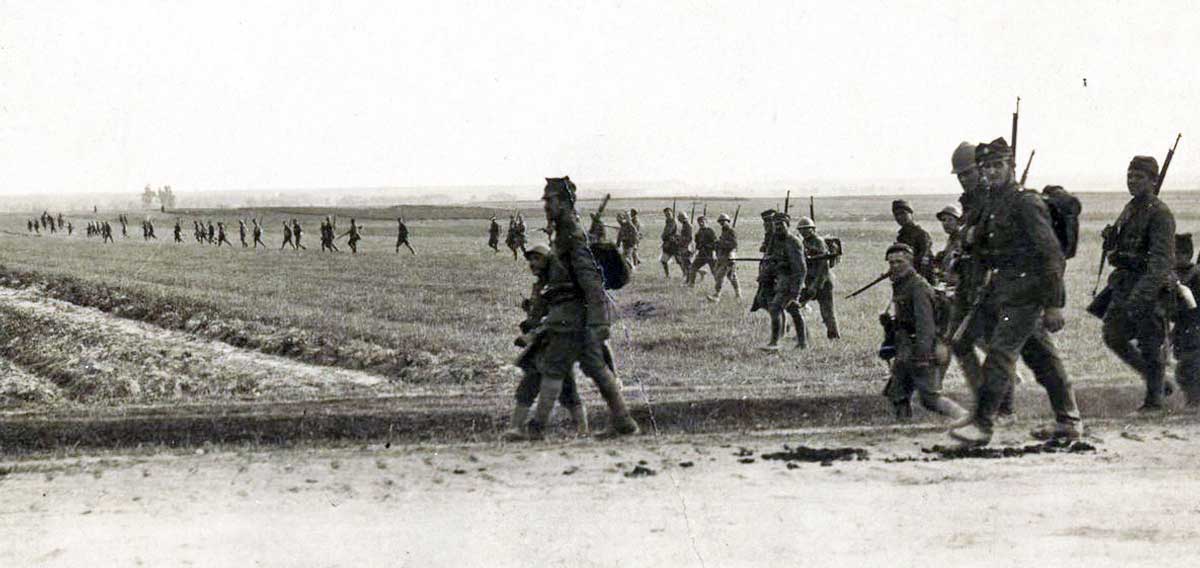
Polish politicians hoped to gain as much international sympathy as possible while also ensuring that the country had the means to defend itself. Veterans of Piłsudski’s legions joined alongside Polish soldiers who had fought in the Russian, German, and French armies to create a new Polish army. US President Woodrow Wilson and French Premier Georges Clemenceau were prominent backers of Polish independence. As soon as Poland declared independence, it sought to expand its frontiers by armed force.
The Borders of the Second Republic
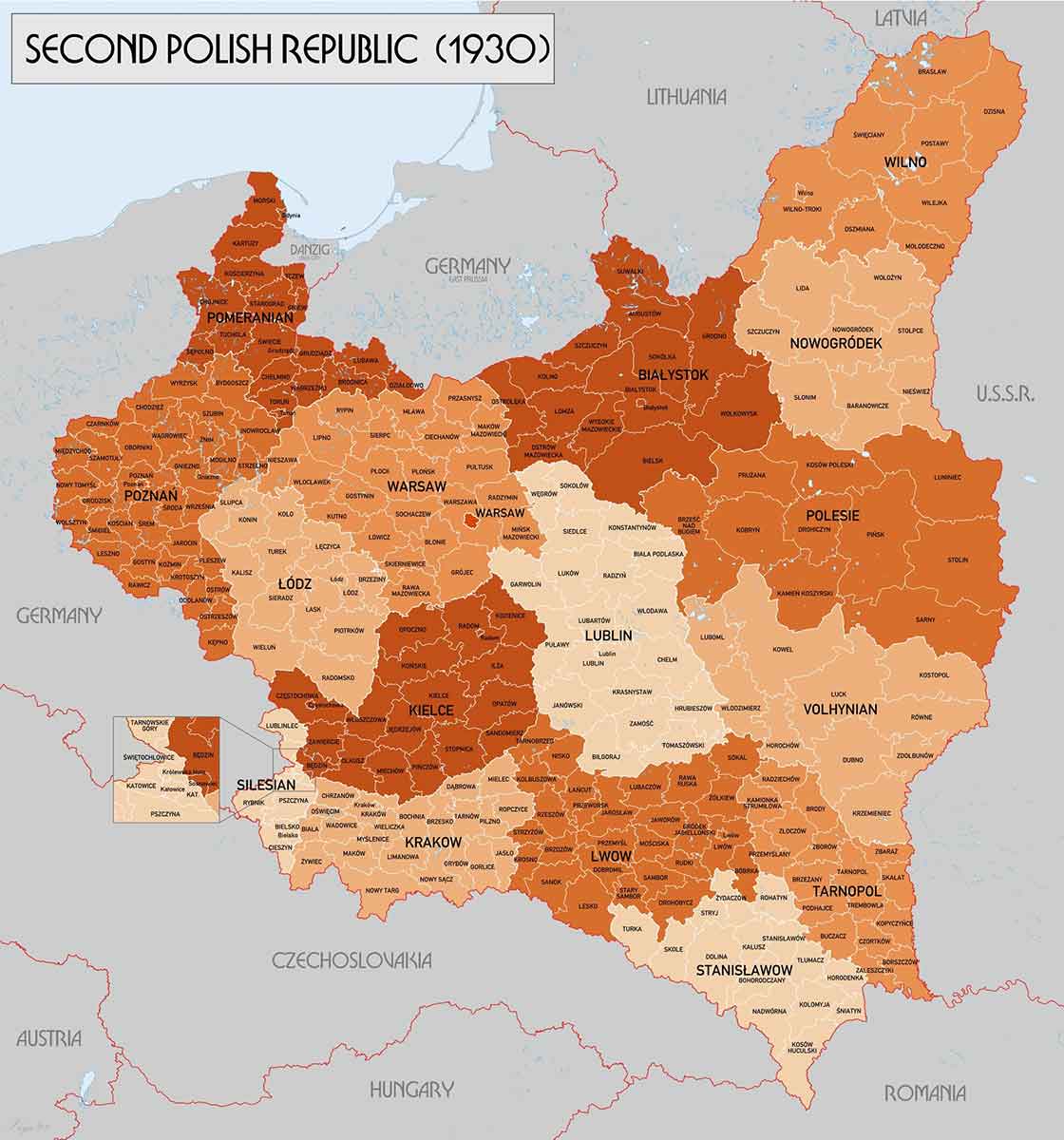
Prior to independence, the Polish nationalist movement was split between the socialist Piłsudski and the conservative Roman Dmowski. While Piłsudski hoped to build a Polish-led commonwealth of states that respected minority rights but ensured Polish hegemony, Dmowski believed that Poland should seize as much territory as possible and Polonize anyone in its borders. Both men agreed that Poland should be a powerful state. In the years after independence, Poland fought four wars to establish its borders.
In the west, Polish insurgents battled German troops over control of Silesia, a fight that ended with a plebiscite that partitioned the region. On the border with newly-formed Czechoslovakia, the Czechs seized control over the disputed region of Cieszyn Silesia. However, the bulk of Poland’s wars came in the east over the border regions known as the Kresy. In 1919, the Polish Army seized control of Galicia from the Ukrainian Galician Army which also sought control over the territory.
Poland’s main adversary between 1919 and 1921 was Soviet Russia. Vladimir Lenin believed that the Polish government stood in his way of a global revolution. He sought to overthrow the Polish government and annex the Kresy to Russia. After Polish forces were defeated in an offensive against Kyiv, the Red Army invaded Poland and marched on Warsaw. The Polish forces successfully defended their capital in the so-called “Miracle on the Vistula,” and in 1921 the belligerent parties signed the Treaty of Riga, which recognized Polish sovereignty over much of the Kresy. In 1920, Poland also seized Vilnius from newly independent Lithuania.
Political Instability
After independence, the new government was designed to be a parliamentary republic. The legislature was composed of two houses: the Sejm and the Senate. There were to be elections for every member and there was universal suffrage in the country. Polish politicians aimed to model their state after the French Third Republic and the Constitution of 1921 was based on the French constitution. On paper, Poland was supposed to be one of the most democratic societies on Earth.
However, there were major issues that paralyzed Polish governance. The country had been devastated by years of war. Due to the policies of Poland’s occupiers before WWI, there were few experienced civil servants capable of administering the new state. The inclusion of large minority groups and their political parties in the country caused a rise in ethnonationalist sentiments that undermined the democratic ideals of the state. Dmowski blamed Piłsudski for many of the state’s problems and sought to go after any politician that aligned himself with Piłsudski. The failure of coalition governments to stay in power for extended periods of time contributed to major unrest.
In 1922, Gabriel Narutowicz became the first president of Poland under the Constitution of 1921. He was supported by left-wing and minority parties in the legislature and was opposed by right-wing candidate Maurycy Zamoyski. Narutowicz’s election resulted in riots by nationalist Poles and he was assassinated on December 16, 1922, five days after taking office as president.
The Coup of 1926 and the Creation of the Sanation Regime
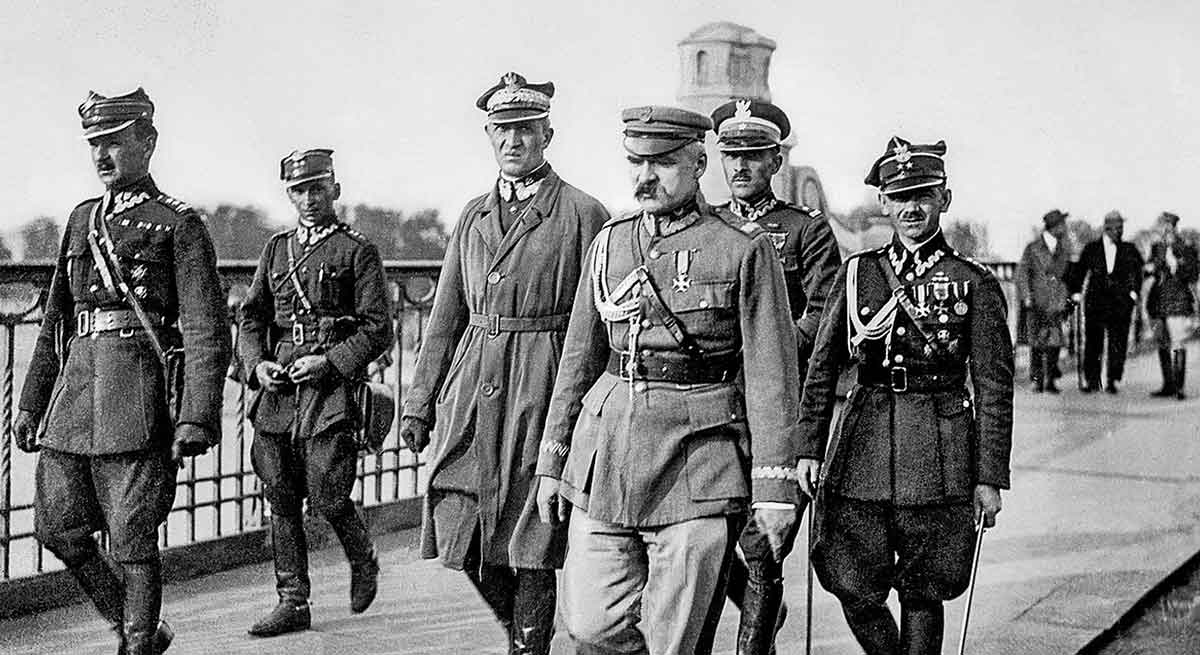
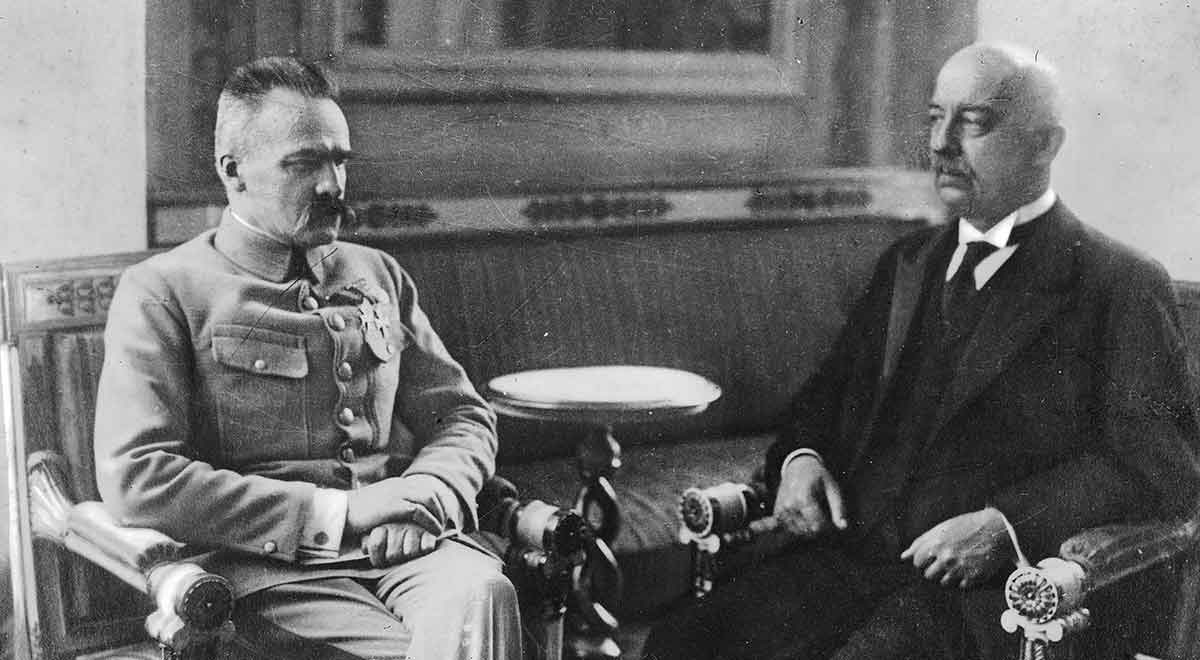
Piłsudski was appalled by the assassination of his friend Narutowicz and doubted whether Poland could become a successful democracy. Although he had retired from politics in 1923, he was disillusioned by the conduct of right-wing governments and launched a coup on May 12, 1926 to force the resignation of Prime Minister Wincenty Witos and President Stanisław Wojciechowski. Piłsudski thought that both men were losing control of the state and he believed that Poland needed a stronger central government.
Witos panicked when the coup began and ordered the military and police to stop Piłsudski’s men. At the same time, Wojciechowski met with Piłsudski on the Poniatowski Bridge over the Vistula in Warsaw to negotiate a peaceful end to the crisis. When he rejected Piłsudski’s demands that the cabinet resign, fighting broke out between the putschists and government loyalists. Garrisons around the country refused to aid the government, making Piłsudski’s task easier. Additionally, he had the support of several political factions including his former Socialist Party.
Piłsudski set up his new Sanacja (or Sanation) regime after the coup. He did not want to be president and instead settled for the post of defense minister, though he also served twice as prime minister. However, he filled out the new cabinet with loyalists and tried to change the constitution to give his supporters more power. Piłsudski’s ally Ignacy Mościcki became president and remained in office until 1939. The new government was an authoritarian republic with limited freedoms.
Interwar Poland’s Minority Conflicts
As a result of Poland’s expansion between 1918 and 1921, nearly a third of Polish citizens were not ethnic Poles. The inclusion of Kresy provinces and Silesia meant that large numbers of Ukrainians, Belarusians, Tatars, Roma and Sinti, Jews, Germans, and Lithuanians became citizens of a country many of them had no loyalty to. The right wing sought to forcibly Polonize these people while the left and center sought an accommodation with them. Part of Piłsudski’s rationale for his coup was to prevent Dmowski’s supporters from harming minorities.
Interwar Poland saw serious unrest in the Kresy as a result of the Polonization policy, which involved converting locals to Catholicism, settling Poles in the territory, and crushing any dissenters. In Galicia and Volhynia, local Ukrainians rebelled against Polish authorities under the leadership of the Organization of Ukrainian Nationalists. They targeted Polish officials such as interior minister Bronisław Pieracki and any Ukrainian who suggested working with the Poles. The Polish policy angered OUN enough into supporting Lithuanian and German claims on Polish territory.
Elsewhere, Lithuanians in Poland resented Warsaw’s claims to Vilnius. In Silesia, ethnic Germans hated Poland and many of them assisted Germany’s invasion in 1939. Poland’s Jewish community was the largest in Europe until WWII. Polish Jews had mixed views of Polish nationalism; some strongly supported the Second Polish Republic while others were ambivalent. While Piłsudski was alive, Jews were protected; this ended in 1935 and Jews became second-class citizens.
Poland’s Foreign Policy
Poland found itself in a very dangerous position between 1918 and 1939. In the east, the Soviets still smarted over their defeat in 1920 and vowed to regain control over Poland’s eastern voivodeships. In the west, Weimar and later Nazi Germany maneuvered to control Danzig and weaken Poland’s western border. The Sanajca regime faced internal divisions over how to respond to these threats. The failure to gain guarantees for Poland’s borders in the Treaty of Lucarno unsettled many Poles.
After the May Coup, Poland decided to embark on a policy of neutrality between the Soviet Union and Germany. At the same time, they hoped to strengthen ties with Western countries. France and Poland signed an alliance in 1921 because both feared a German resurgence. However, the Poles also sought to keep their border quiet. In 1934, the Poles signed a non-aggression treaty with the Germans. Neither Hitler nor Piłsudski wanted to fight each other when the Depression was in full swing and their militaries were unprepared. Poland even downplayed the Holodomor famine in Ukraine to avoid upsetting Moscow.
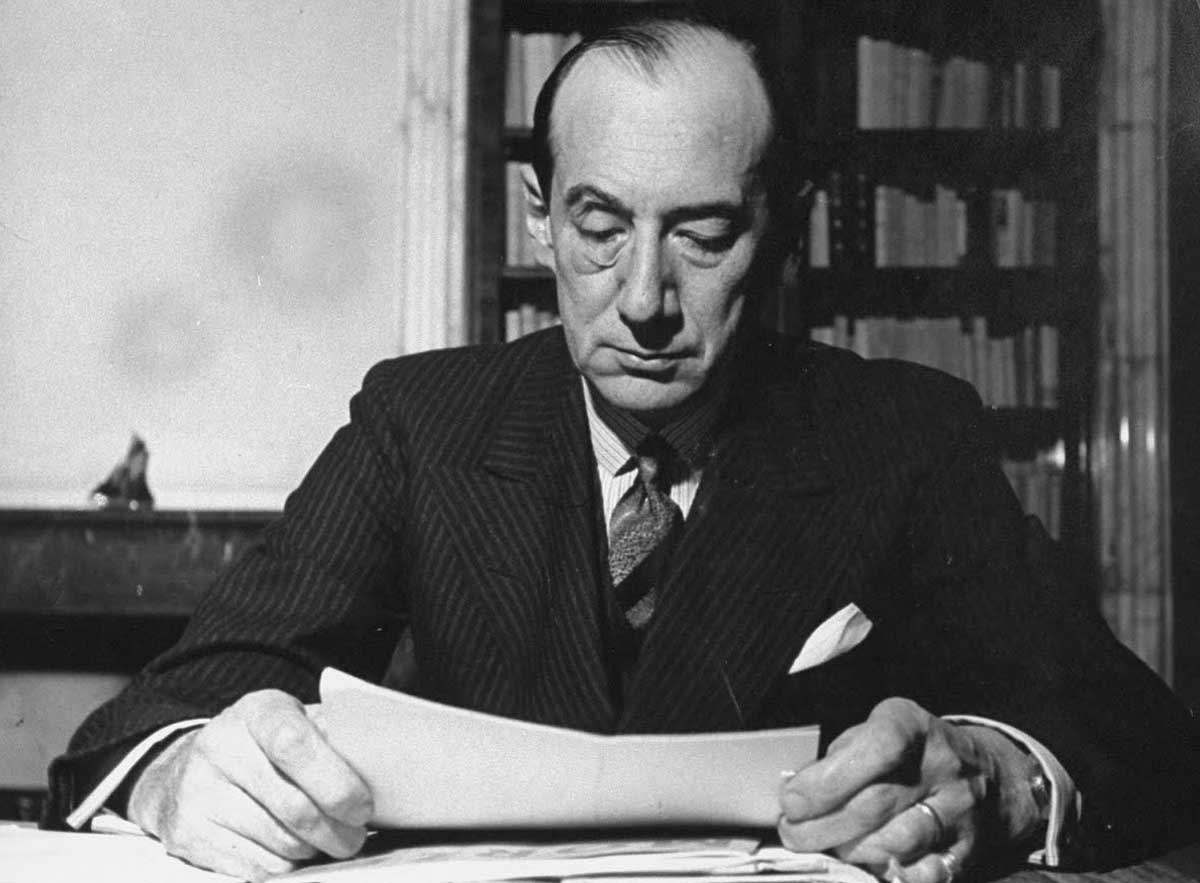
When Piłsudski died and his allies formed a new government, they maintained the same approach to foreign policy. Foreign minister and army colonel Jozef Beck, in office since 1932, feared the Soviets more than the Germans and sought to work with Berlin. At the same time, Germany’s growing strength and the weakness of the League of Nations concerned Polish officials. They strengthened defense ties with France and purchased more military equipment. However, no country was willing to come to Poland’s defense if the latter were attacked.
The Final Years of the Second Republic
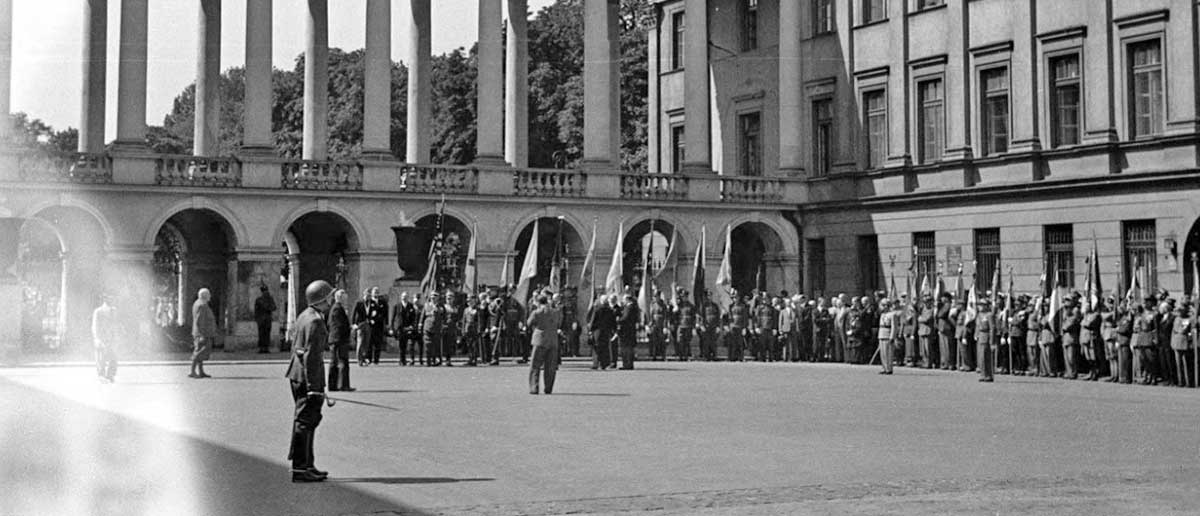
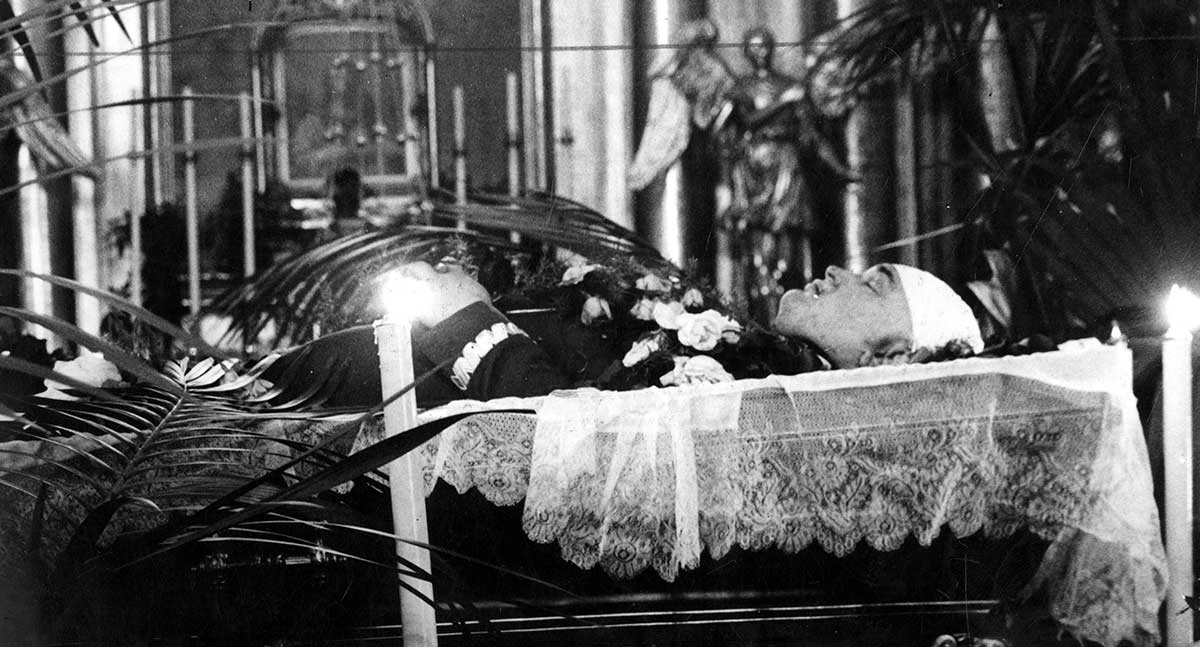
On May 12, 1935, Piłsudski died in the Belvedere Palace in Warsaw, still serving as minister of defense. His passing led to a national period of mourning. In 1936, Polish Inspector General Edward Rydz-Śmigły assumed the rank of Marshal of Poland and became the most powerful man in the country. The Sanacja now became known as the Camp of National Unity (OZON) and sought to govern the country with an iron fist. Military officers controlled the ministries like they had before and OZON coopted much of the right-wing’s rhetoric on ethnic minorities.
Meanwhile, the Soviet Union had been ruthlessly purging its enemies and building up its military strength. Meanwhile, the Nazis began demanding more rights over the Danzig area and accused Poland of abusing its German minority. In the north, Poland had a crisis with Lithuania in which they demanded Lithuania recognize Polish claims to Wilno, something the Lithuanians would not accept. Internally, Poland became more fractured as ethnic nationalists gained more traction and the Polish embraced a xenophobic attitude towards its minorities.
When the Molotov-Ribbentrop Pact was signed on August 23, 1939, Poland’s position became very precarious. Its army was big, but lacked the equipment necessary to fight in a two-front war. Poland sacrificed international goodwill when it annexed some Czech territory alongside the German takeover of Czechoslovakia. While France and Britain promised to declare war on Germany if it invaded Poland, they were not in a position to provide much practical assistance on the ground. The country was in a dangerous place when Germany invaded in September 1939.