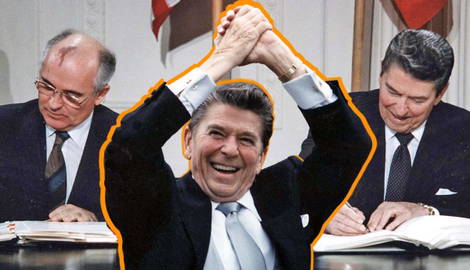

Throughout his presidency, Ronald Reagan pursued policies in Europe designed to weaken the Soviet grip on Eastern Europe. He also sought to align with like-minded European leaders such as Margaret Thatcher and Helmut Kohl. However, his hawkish approach had limits, especially once Mikhail Gorbachev came to power in the Soviet Union. His willingness to open the door to serious diplomacy helped tone down international tensions and paved the way for the end of the Cold War.
A Hawkish Cold Warrior
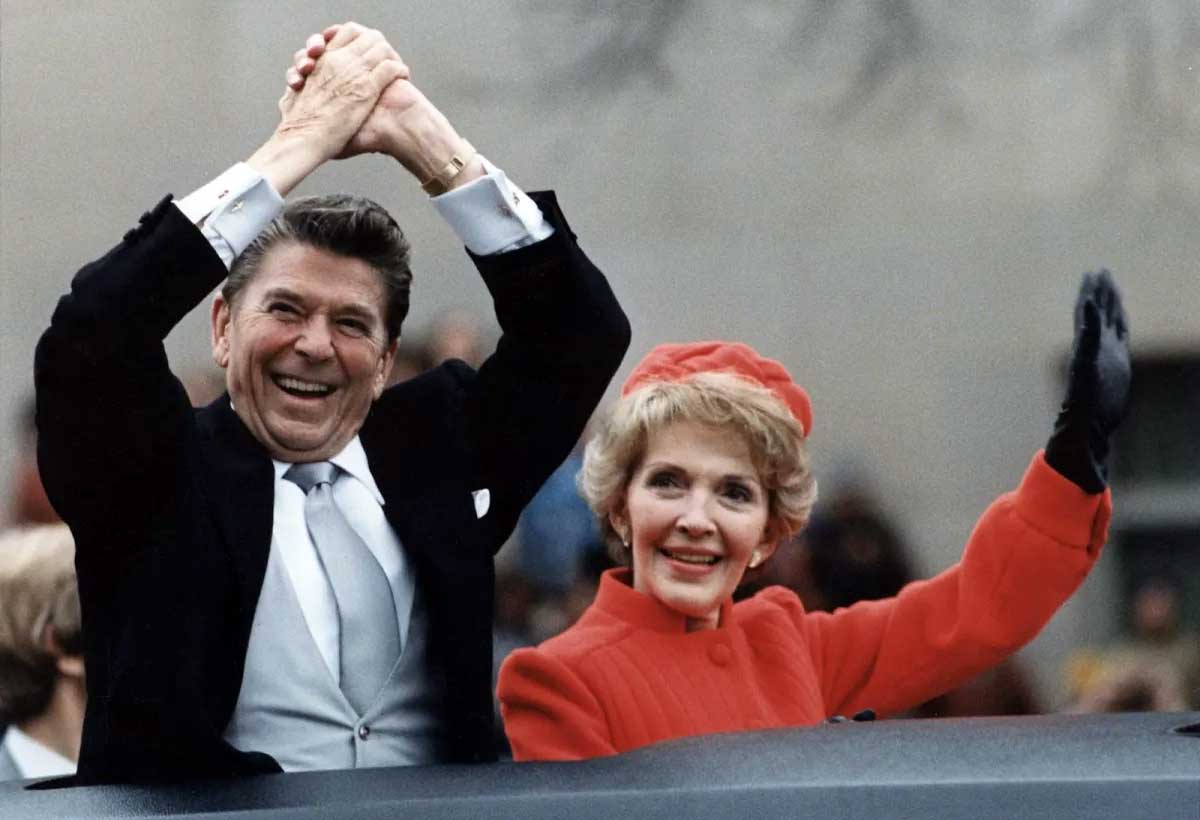
When Ronald Reagan ran for president in 1980 to unseat the incumbent, Jimmy Carter, he made confronting the USSR a major part of his foreign policy platform. That included supporting anti-communist movements in Eastern Europe and increasing America’s military presence on the continent. He argued that his Democratic opponents were too weak to resist Soviet pressure and believed that a forceful stance could end the Cold War in the West’s favor. Even though the Carter administration had started to take a more confrontational stance toward the Soviets, it was still perceived as weak by many Americans.
Reagan was part of a hawkish wing of the Republican Party that rejected the policy of détente practiced by the Nixon and Ford administrations. He believed that détente had emboldened the Soviets to build up their nuclear arsenal and consolidate its control over Eastern Europe. His policy proposals in Europe echoed the start of the Cold War when American policymakers advocated a proactive approach to confronting Communism. This involved expanding the nuclear arsenal, increasing US forces in Europe, and financing anti-Soviet activity among Warsaw Pact countries.
Once he was elected, he nominated advisors who shared his determination to confront the communists. His secretary of defense, Casper Weinberger, was a prominent advocate of increasing America’s military presence in Europe. Bill Casey, the new CIA chief, was an avid promoter of rolling back Communism wherever it existed. These officials hoped to change the balance of power in Europe.
The Reagan-Thatcher Partnership
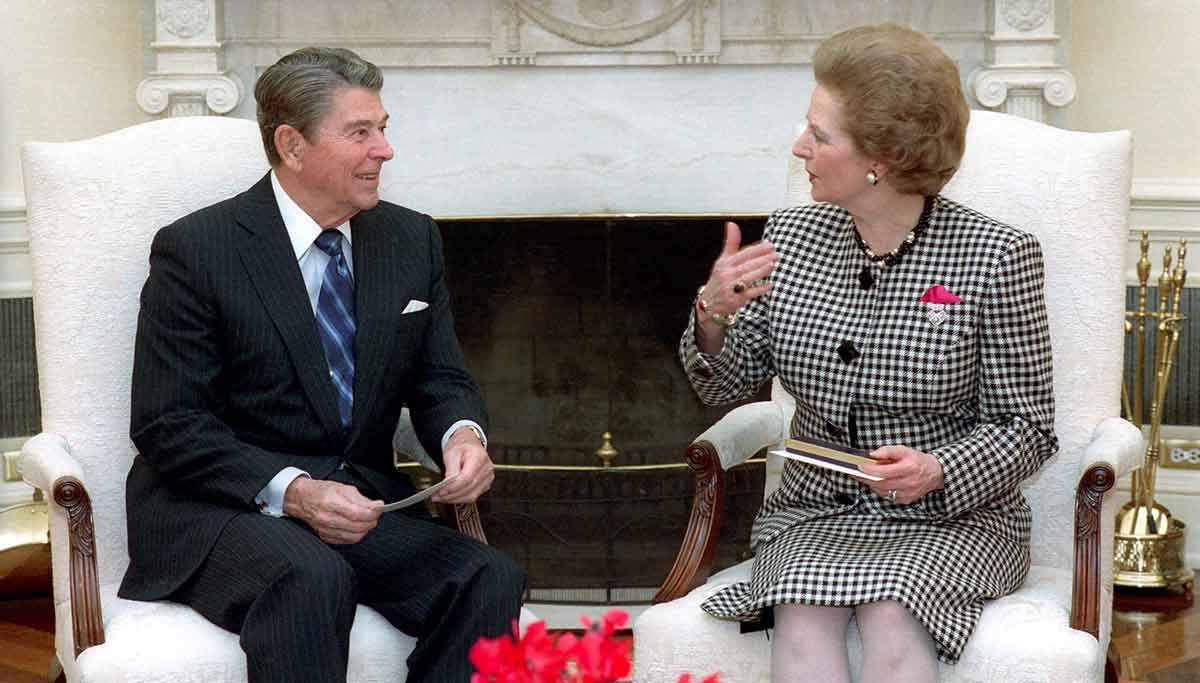
The European leader who came closest to Reagan’s worldview was British prime minister Margaret Thatcher. Thatcher was also a major proponent of confronting the Eastern Bloc. Thatcher promoted the expansion of the UK’s nuclear arsenal and sought to work with the Americans to make that happen.
When Argentina seized the Falkland Islands, Thatcher vowed a major military response. She believed that Britain could only be taken seriously as a global player if the UK used force to expel the Argentinian forces. This put the US in an awkward position because it had close ties to both countries. For a short period, the administration tried to negotiate between London and Buenos Aires. When the talks failed, the administration backed the British. Reagan wanted to assure Thatcher that he remained committed to their friendship. While this stance undermined US ties with Latin America, it was popular throughout Europe.
There were some differences that caused tension between the two leaders. Thatcher opposed the US invasion of Grenada because it was a Commonwealth member. However, she kept her criticism private because she feared undermining her closeness with Reagan. Later, he apologized to her for not warning her in advance. Additionally, he supported the growth of the European Union whereas Thatcher came to be more skeptical of the organization’s political ambitions. Nonetheless, the “special relationship” between Reagan and Thatcher ensured that the US always had a major strategic partner in Europe throughout the 1980s.
Support for the Solidarity Trade Union in Poland
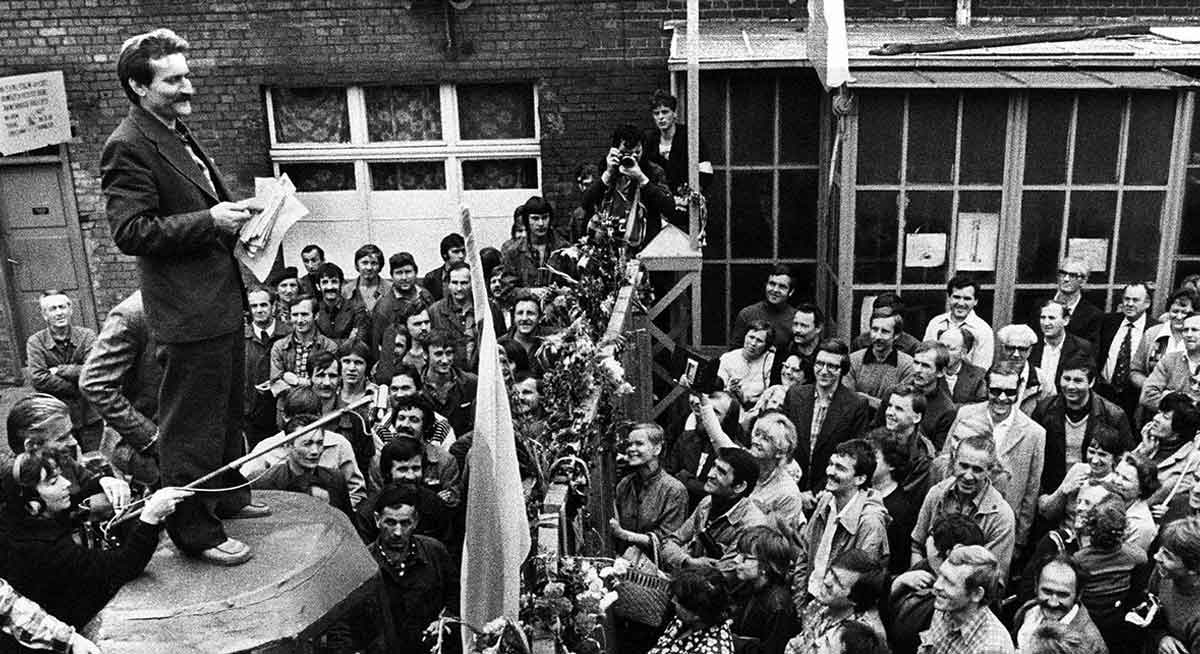
When Reagan assumed office, his National Security Council issued several directives regarding foreign policy in Europe. One major directive was NSDD-32, which called for the US to undermine Communist rule in Eastern Europe. It specifically identified Poland as a country ripe for US covert action. Thus began the CIA’s major plan to finance and support the largest anti-communist organization in Poland: the Solidarność (or Solidarity) trade union.
Formed in 1980 by striking shipyard workers in Gdańsk, Solidarity started out as a small movement with minimal demands: the government must treat workers better. Under the leadership of Lech Wałęsa, Solidarity began insisting on major changes to the structure of Communist rule. They gained support from tens of millions of people who resented the terrible economic conditions they lived under. When the Polish government declared martial law and banned the organization, its leadership found themselves in peril.
The Reagan administration saw an opportunity to deal a blow to the Warsaw Pact. The CIA noted that Solidarity needed funding in order to keep up its operations underground. Reagan believed that once Poland overthrew its communist government, the rest of the Eastern Bloc would follow.
Operation QRHELPFUL involved tens of millions of dollars being funneled to Solidarity by the CIA. This money was used for creating publishing houses, paying striking employees, and gathering intelligence. Under enormous internal and external pressure, the Communist regime agreed to have elections, leading to the fall of the government and Wałęsa’s election as president in 1990.
Deployment of Nuclear Missiles in Europe
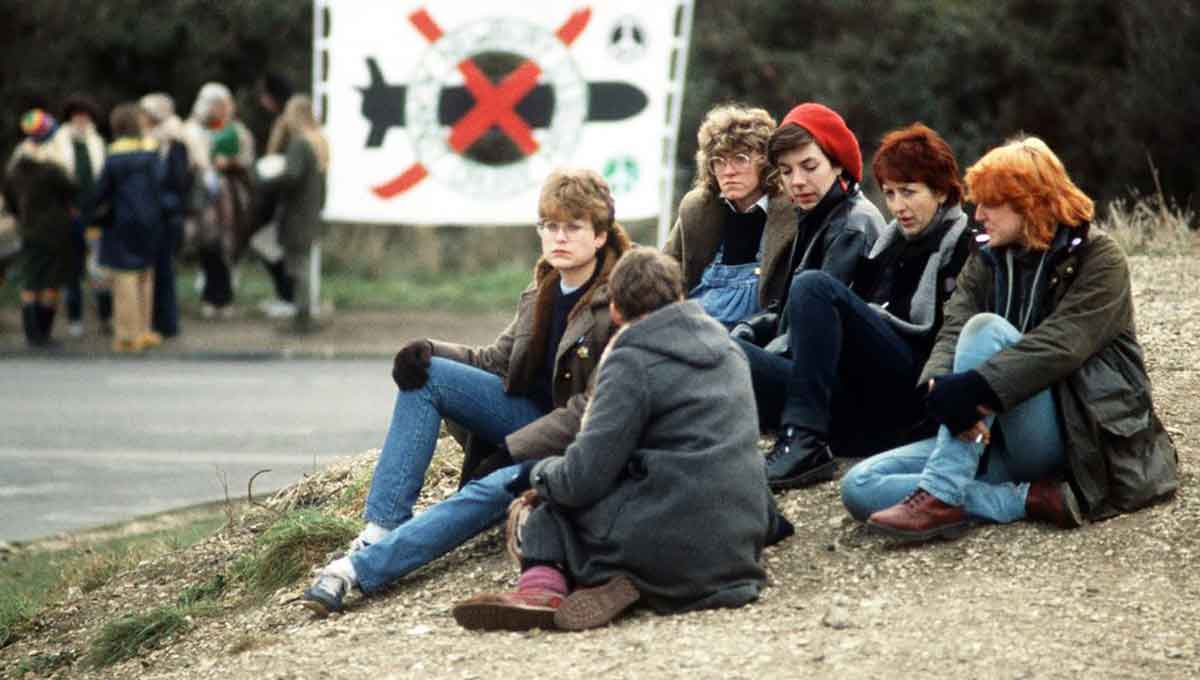
Both the United States and the Soviet Union saw nuclear weapons as a deterrence against the prospect of a third world war. Both countries embarked on major expansions of their nuclear arsenals and efforts to limit them proved ineffective. Reagan vowed that the US would not let the Soviets gain an advantage in the nuclear arms race. Therefore, he embarked on a very controversial decision to deploy American nuclear missiles in Europe in greater numbers.
When the USSR deployed the new SS-20 in 1976, it aimed to intimidate Western Europe and skirt the regulations of the 1972 SALT agreement on arms control. Soviet leader Leonid Brezhnev believed that the US would not respond to the new deployment of missiles. However, Reagan aimed to prove him and his successors wrong. In 1983, the administration announced that it would station 572 intermediate-range missiles, mainly Pershing IIs, in several NATO member states. Reagan and his staff hoped to force the Soviets to climb down and withdraw their SS-20s.
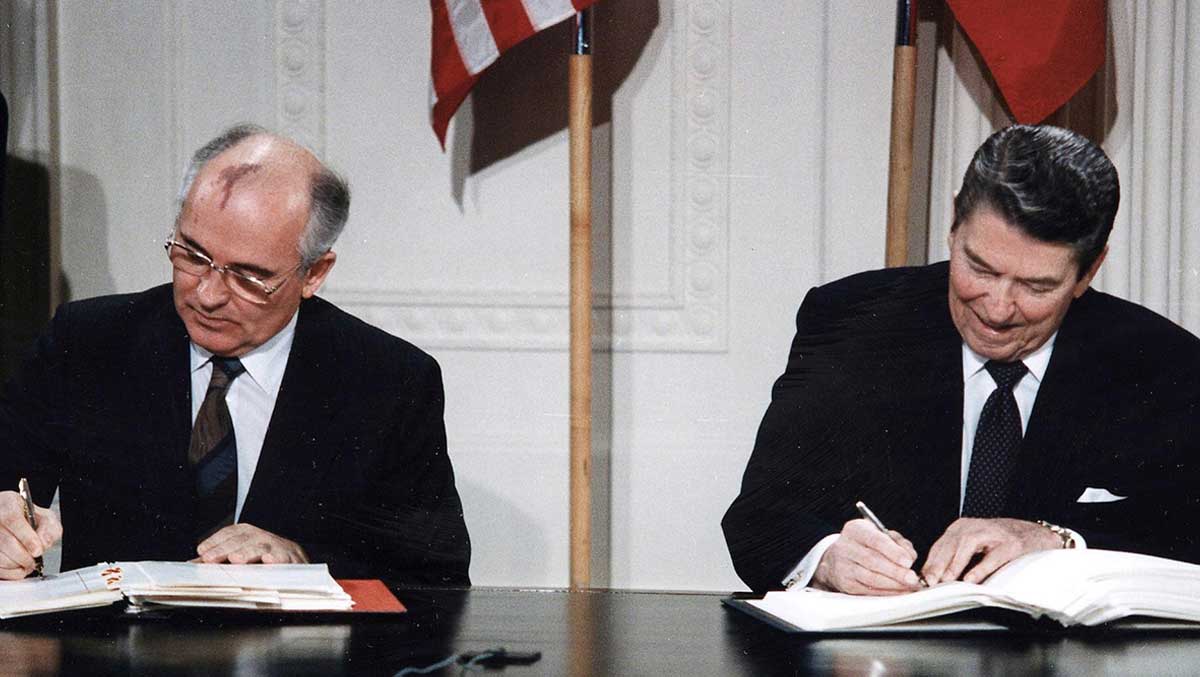
The decision to station these new warheads led to massive demonstrations and denunciations of the White House. Many Europeans feared that instead of deterring the Soviets, the new deployments would expose their countries to greater danger. Reagan watched the protests closely, but insisted on maintaining his course. He got lucky as a result of developments within the USSR. In 1987, the new Soviet leader Mikhail Gorbachev agreed to the INF (Intermediate-Range Nuclear Forces) Treaty, banning the deployment of medium range missiles in Europe.
The Changing of the Red Guard
Reagan’s initial Soviet counterparts—Leonid Brezhnev, Yuri Andropov, and Konstantin Chernenko—were old-school hawks from Moscow’s establishment that did not question Communist orthodoxy. When the 53-year-old Mikhail Gorbachev took power in 1985, he was expected to behave the same way. However, Gorbachev knew that there had to be changes to Soviet domestic and foreign policy if his state was to survive. His rise to power not only changed the Cold War, it also changed Reagan’s approach to US-Soviet relations.
Gorbachev implemented the policies of glasnost (openness) and perestroika (economic restructuring,) which involved liberalizing the Soviet economy and allowing for some political dissent at home. He also sought to cut Soviet military spending after the costly Soviet-Afghan War. Reagan was thrilled to be able to negotiate with Gorbachev, whom Margaret Thatcher famously described as “a man one could do business with.” They held four summits together where they focused on ending the arms race. From this, the INF treaty was signed and they vowed to continue working to lessen nuclear tensions.
Despite this shared desire, Gorbachev still hoped to maintain Communist rule in Eastern Europe while Reagan was determined to undermine it. In 1987, he gave a famous speech in his life at the Berlin Wall, where he urged Gorbachev to support the reunification of Germany under Kohl’s West German government with the cry, “Mr Gorbachev, tear down this wall!” He also denounced the crackdown on anti-Soviet activists behind the Iron Curtain. However, his cordial relationship with Gorbachev ensured that Soviet-American relations remained positive.
Reagan’s Legacy in Europe
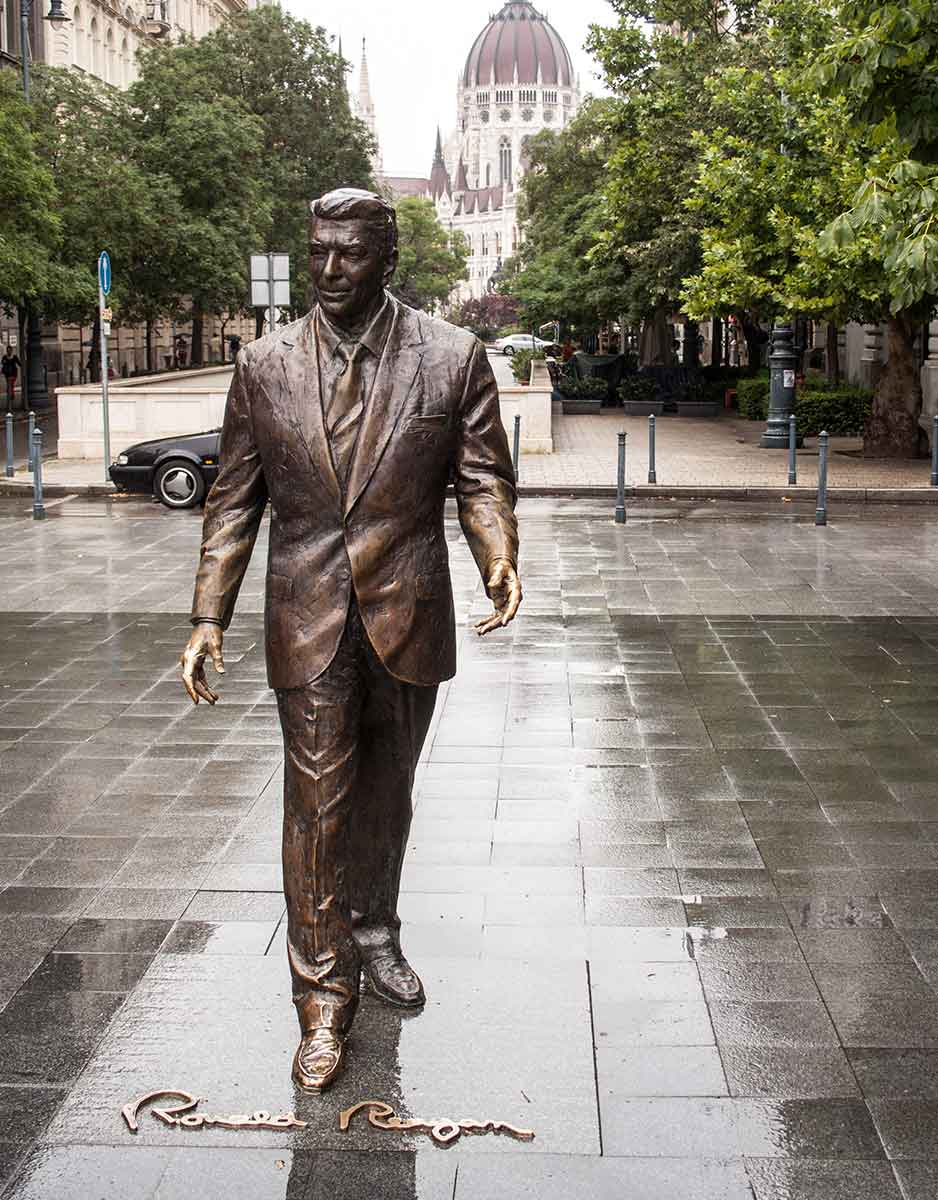
To this day, Reagan has a very complex legacy in Europe. In much of the continent, especially in the East, he is practically deified and seen as a heroic standard-bearer of anti-communism. His repeated denunciations of Soviet imperialism in Eastern Europe won him fans among anti-communists. Additionally, his support of laissez-faire economic policy and hostility to big government made him a hero to center-right parties across Europe, including the Conservative Party in Britain and the Christian Democratic Union in Germany.
At the same time, he faced hostility in Europe for certain decisions and political stances. His decision to go to a German WWII military cemetery, known as the Bitburg Scandal, angered Europeans who still held grievances towards Germany for its actions in WWII. His aggressive posturing towards the USSR and willingness to deploy nuclear weapons in Europe elicited angry responses from people living in the countries where these weapons were deployed. While conservative factions welcomed his economic policy, liberal and socialist parties feared the consequences of Reaganomics.
Reagan managed to match a grim determination to defeat the Communists with a sober understanding of what nuclear war would look like. He never provoked hostilities with the USSR. However, he sought to weaken it and push Eastern Europe away from Moscow. When the Republican Party began to turn away from Europe after Donald Trump’s election as president in 2016, many European politicians felt nostalgic about Reagan’s pro-European policy. This remains his main legacy today in the continent.