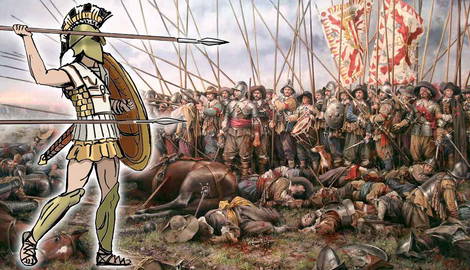
Beginning as little more than a pointed haft, the spear is one of the simplest weapons ever designed. Yet it has seen pragmatic use from the dawn of mankind to the present day. It was, in many aspects, the perfect weapon, finding use in a variety of situations, whether it was on the battlefield, in the forest hunting deer and boar, or on the shores spearing fish for dinner.
The evolution of the spear is one that spans all of history, as well as prehistory, as it was not our Homo sapiens species who invented it, but our long-lost hominin brethren over a million years ago!
Prehistoric Beginnings
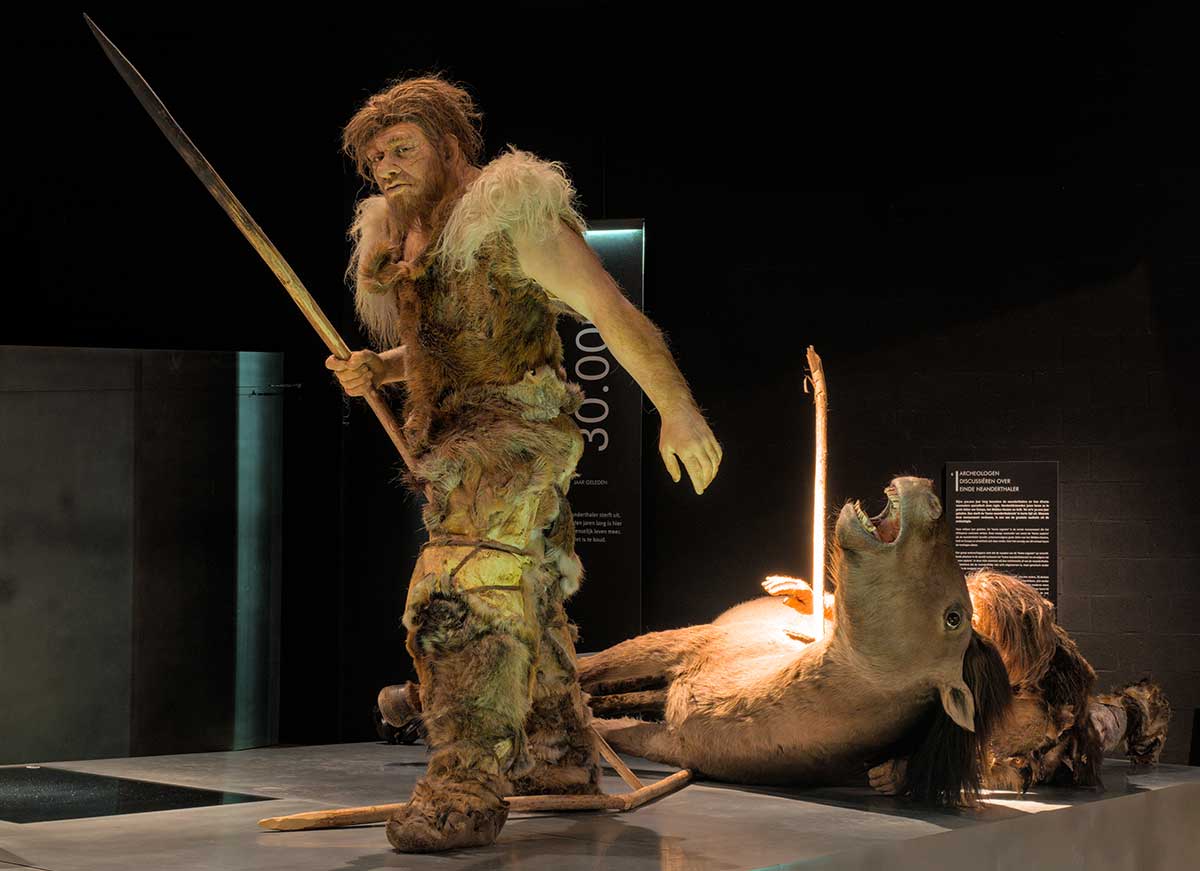
Spears have a story longer than our own species, and they didn’t evolve at a single moment of prehistory. It is likely that our Homo habilis ancestors (2.4 million to 1.4 million years ago) started the evolution with their use of pointed sticks. These tools were simple and a far cry from the spears that came later. Homo erectus (2 million to 250,000 years ago) also made use of pointed sticks with slight refinements. Evidence for these “spears” is lacking and is based on assumption rather than hard evidence. Wood requires specific conditions for preservation, and no spears (or pointed sticks) old enough to confirm these assumptions have been found. Nevertheless, pointed sticks represent a major technological leap in the history of our extended species.
Hard evidence in this quest for the usage of the spear comes from Schöningen, Helmstedt district, Germany. The spears are estimated to be between 337,000 and 300,000 years old and were made by Homo heidelbergensis, the ancestors of Homo neanderthalensis, and us, Homo sapiens. The age of these spears is open to debate, and different analysis suggests they may be older or younger. Nevertheless, they existed at the same time as the Neanderthals, and it is possible the two species met. It is even possible that the spears were made by Neanderthals instead, and this conjecture has gained momentum in recent years, with dating suggesting the spears are as recent as 200,000 years old. It had been suggested that the spears were for throwing and thrusting, but with heads that were carved directly from the wood, rather than made from stone.
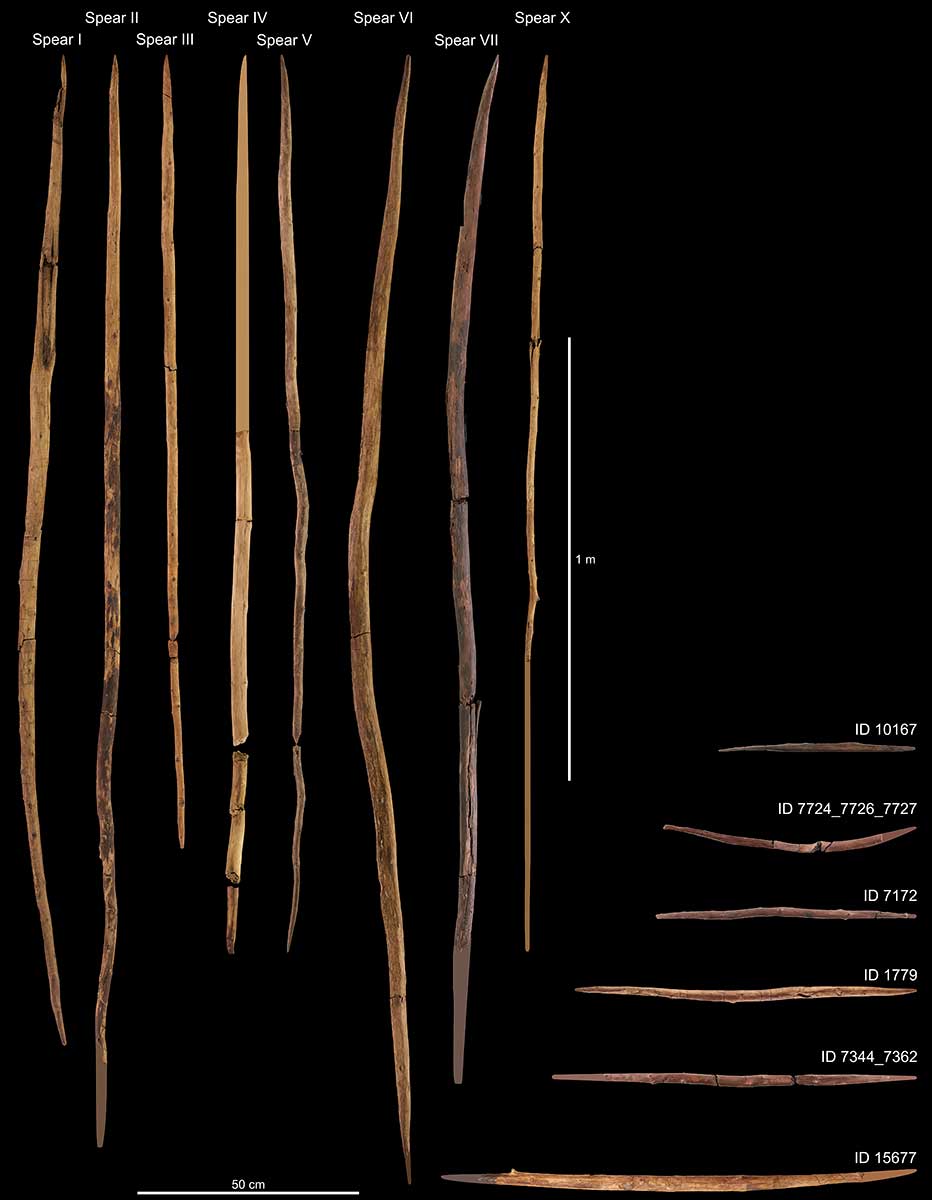
Nevertheless, this is not the earliest hard evidence for spears. That honor goes to stone spear tips found in Kathu Pan in South Africa, which are dated to be around 500,000 years old and are attributed to Homo heidelbergensis.
Neanderthal spears were thick and designed for confrontational hunting, with their mass optimized to deliver maximum impact force, which suited the high physical trauma associated with the Neanderthal lifestyle. The reality, however, may be a bit more complex. Modern research suggests the possibility that Neanderthals also used spears as throwing weapons; however, it is also suggested that Neanderthals did not have the same physiological (based on shoulder and arm morphology) ability for throwing as Homo sapiens, so the argument is one of great debate.
Neanderthal spears were often fitted with stone tips affixed with birch resin, which speaks to the intelligence of Neanderthals, as extracting birch resin is a notoriously difficult and complex process. Homo sapiens spears, on the other hand, were generally designed for throwing and were longer and thinner (although thrusting spears were still used).
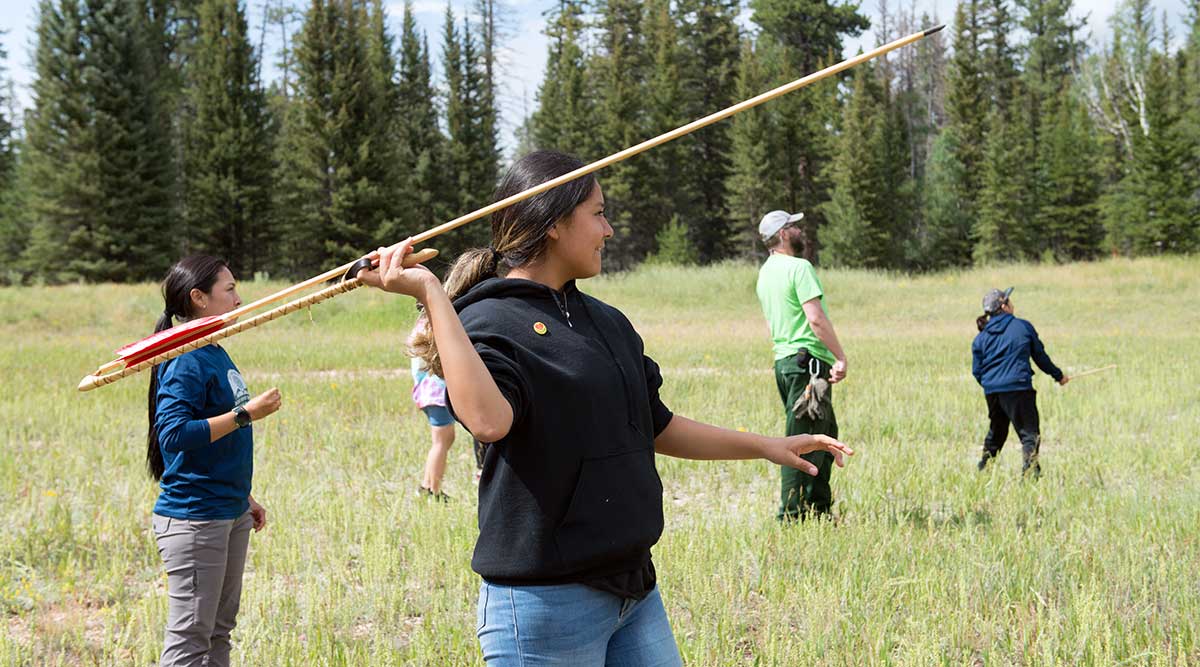
A later invention (at least 17,000 years ago) was the atlatl, a spear thrower, which allowed our ancestors to achieve greater distance, velocity, and penetrating power. The atlatl is based on the concept of a lever and fulcrum design, and has been so popular throughout the ages that it found continued use in Indigenous populations in the Americas and in Australia. Modern atlatl competitions exist, and in certain contexts, atlatls can even be legally used for hunting deer in several states in the US.
Ancient Times and the Spear’s Evolution on the Battlefield
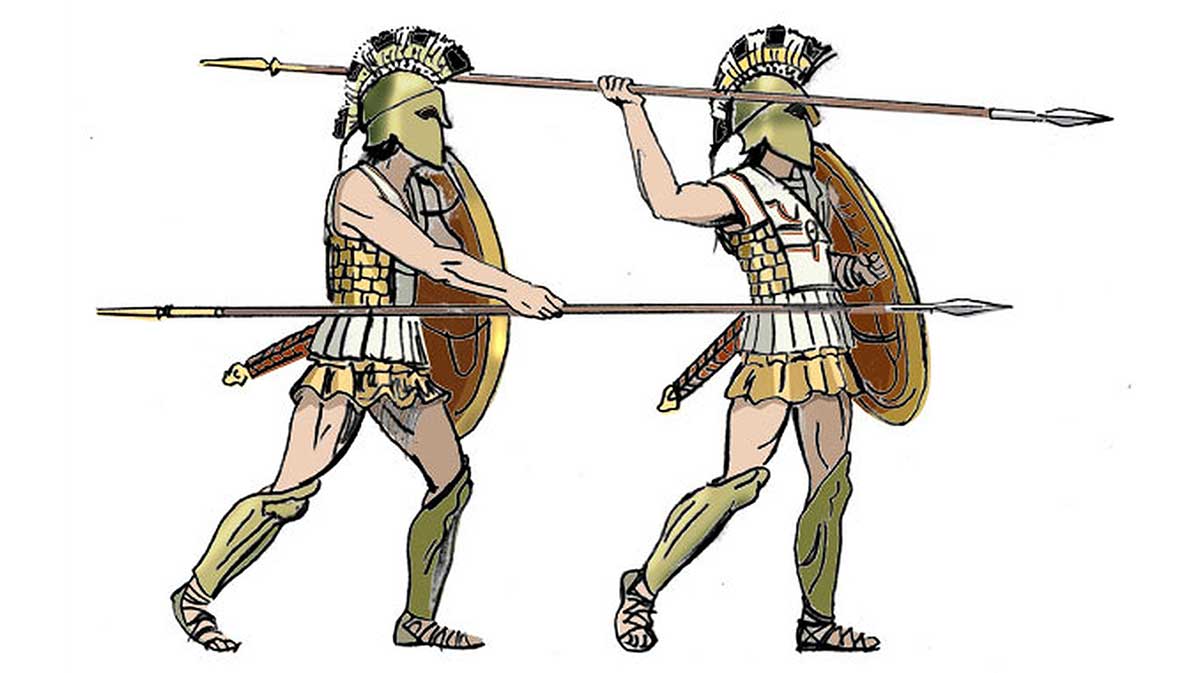
The spear was invented primarily for hunting, but as the Neolithic Era evolved into the Bronze Age, the spear became a vital component as a primary weapon on the battlefield, as metallurgy provided the foundation for the mass production of these weapons. It was cheap and easier to produce in high quantities. It was also extremely effective.
Through the millennia from the Neolithic into the Ancient Era, spears progressed from having stone tips to bronze and then iron, and existed as both thrusting and throwing weapons. Further evolution happened with the Greek dory, which formed the backbone of the Greek hoplite forces. The dory was typically 6’7” to 9’10” long and was used en masse, coupled with the hoplon (round shield of the hoplite soldiers). When used in a shield wall, in close proximity to other spear wielders, the weapon’s effectiveness proved even deadlier, and tight-knit shield wall formations became a tactical standard that lasted through the eras that followed. It could be argued that lines of soldiers, standing shoulder-to-shoulder, were a direct consequence of the use of spears, and is a standard formation still used today in certain circumstances, such as riot control.
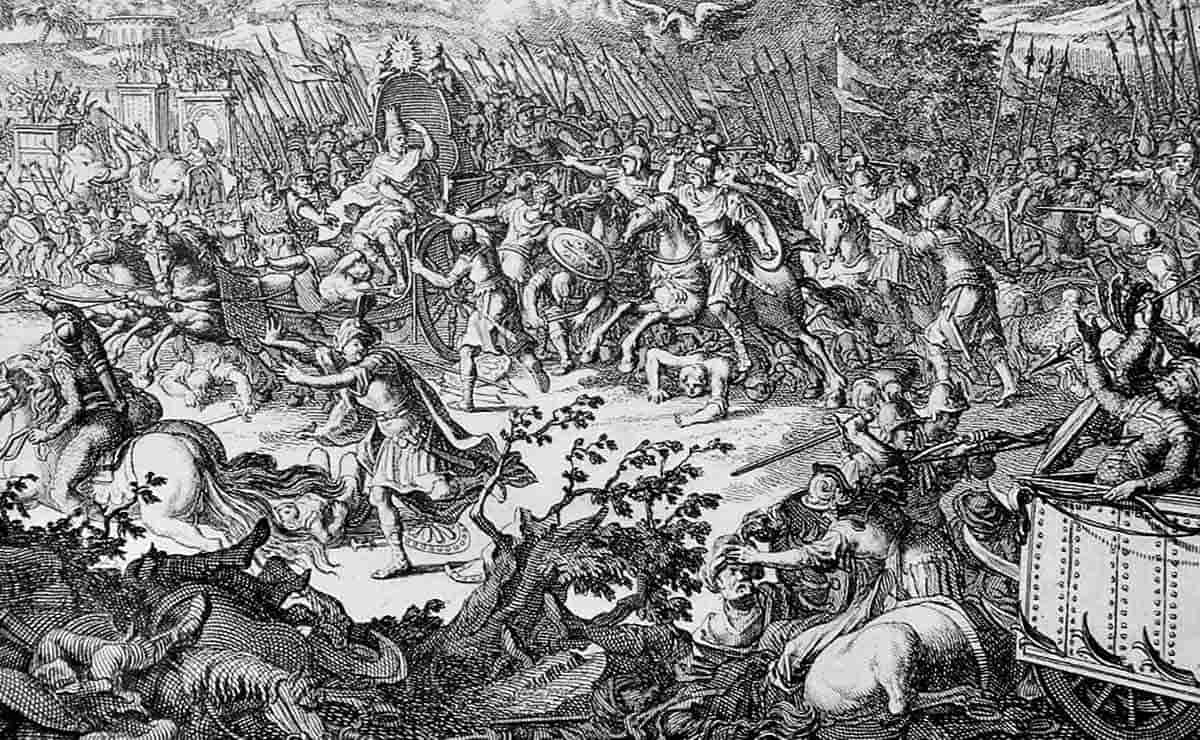
Of great significance in the era of Philip of Macedon and Alexander the Great were the phalanxes, bristling with long spears. Under the leadership of these conquerors, the dory was replaced with the sarissa, typically 16 to 18 feet long, evolving even longer to 23 feet during the time of Macedon’s successor states. In formation, these weapons presented a formidable power on the battlefield that was difficult to defeat without highly mobile troops that could outflank or disrupt the formation.
While these spiky formations were effective in their day, they eventually became obsolete with the advent of more mobile units (and the fact that the Macedonian phalanx couldn’t operate effectively on uneven terrain). Unlike the Greeks and Macedonians, the Romans designed their spears to be thrown to soften the enemy as a precursor to close-quarter melee. The pilum was a famous example of this. Nevertheless, thrusting spears were still used in melee combat and saw use throughout the entire timespan of the Roman state, although there were periods where they were uncommon.
The Spear and the Lance
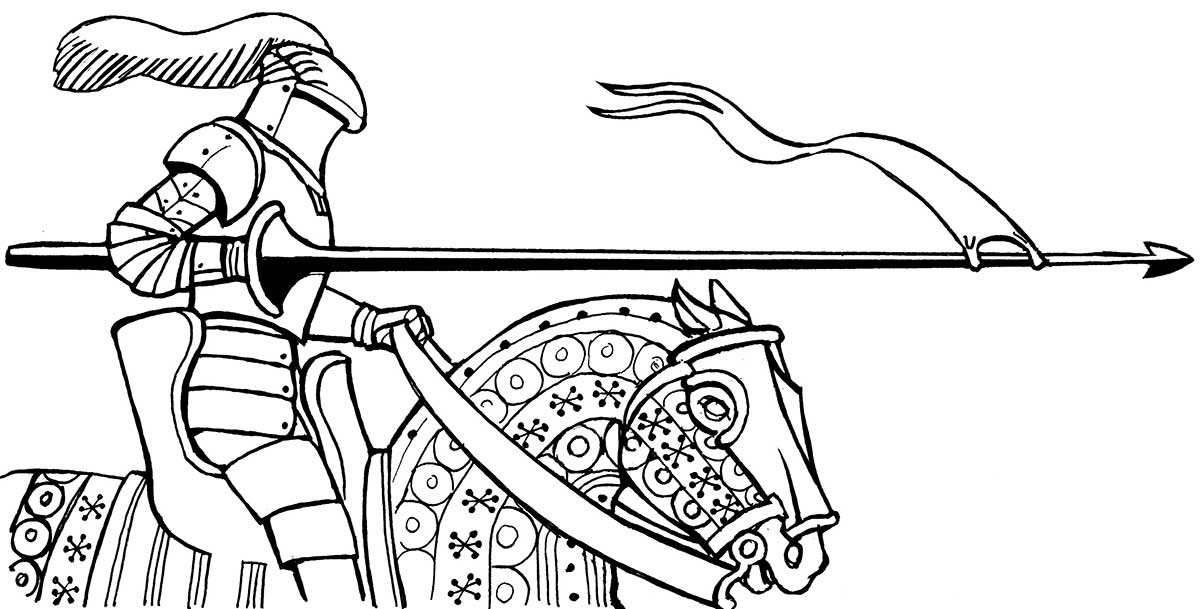
As warfare changed, so too did the spear. While spears of varying lengths were employed with great effectiveness by foot soldiers, the use of the spear as a cavalry weapon underwent massive evolution. Spears had been used in cavalry formations for centuries beforehand, and by the High and Late Middle Ages, European knights had extremely specialized spears (heavy lances), that had grapers (or gaffs) to attach to lance rests (specialized attachments to the breastplate) to absorb impact, and vamplates that stopped the wielders hand from sliding up the shaft upon contact with the target. The “couched” position of the lance rooted it firmly against the knight’s body, and used the horse’s momentum to deliver a powerful blow that ripped through enemy armor and formations with ease.
Meanwhile, spears used by soldiers on foot evolved into specialized polearms such as halberds and billhooks.
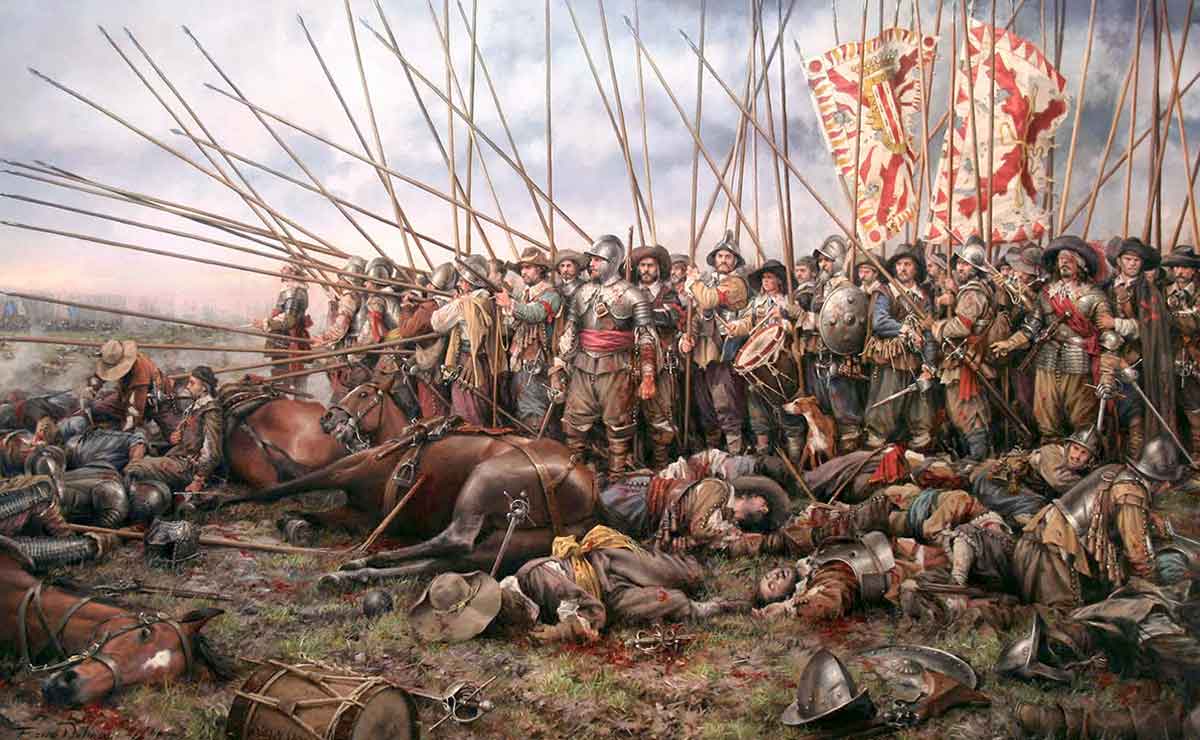
Heavy cavalry charges were the “shock and awe” of their day, and they were powerful enough to be the deciding factor in many battles. Stopping this juggernaut required tactical evolution, and that evolution came in the form of the spear again. The spears of footmen became longer, evolving into the sturdy pike very similar to the Macedonian sarissa. The longer spears presented a major problem for cavalry in that horses simply would not charge headlong into a visible nest of spikes. Which is completely justifiable on the horse’s part, as doing so would mean guaranteed injury or death not just for the horse but for the rider. Accompanied by the advance of gunpowder weapons, the age of the pike signaled an end to the era of the knights.
The Decline of the Spear’s Importance
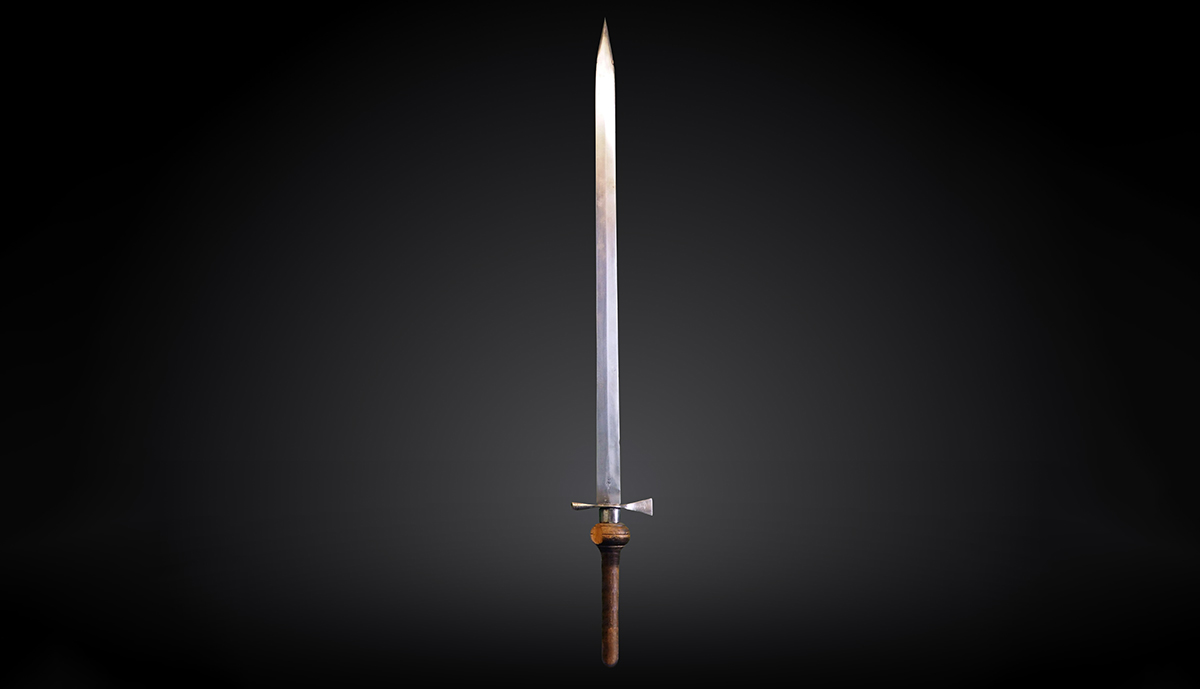
The advent of gunpowder weapons being more common on the battlefield yielded significant changes across all forms of warfare. Pike formations were augmented with musketeers in “pike and shot” formations. As ranged weaponry increased in power, its combat effectiveness eclipsed that of spears. Efforts were made to attach melee weapons to muskets, and over the course of a few centuries, the ultimate winner was the bayonet, first as a plug and then as a socket, attached to the muzzle of the firearm. In so doing, muskets retained their power and added the pointy effectiveness of a spear. As a cavalry weapon, lances continued for some time, but were eventually replaced with pistols and swords.
While these advances primarily occurred in Europe, in parts of the world where gun technology was still relatively underdeveloped or nonexistent, the spear continued to be used well into the 18th and 19th centuries. In the 19th century, for example, the Zulu iklwa was invented as a short stabbing spear and was employed with great effect as a melee weapon, especially against the Zulu enemies who had traditionally used spears primarily as throwing weapons.

In modern armies, bayonets are still affixed to rifles, especially in ceremonial displays. In the 20th century, they were highly effective, but in recent decades, their use has declined as the battlefield continues to evolve in favor of ranged combat and drone warfare, rendering the opportunity to use the bayonet rare.
Bayonets are still issued as part of the standard kit, but they double as all-purpose knives and are generally used without being affixed to the front of a rifle. However, if the need arises, turning the rifle into a spear is always an option!