
The island of Haiti has long been subjected to foreign control due to its rich natural resources and its perennial political instability. The US occupation of Haiti in the 20th century was militarily successful and became a case study in counterinsurgency for the American military. The local population resented the American presence and clashed with them repeatedly. The lessons learned by American commanders shaped the American counterinsurgency doctrine for decades to come.
The Assassination of Jean Vilbrun Guillaume Sam & Arrival of US Troops
Ever since it gained independence from France, Haiti had become accustomed to political turmoil, instability, and meddling from foreign powers. As the United States sought to control businesses and governments throughout the region, it set its eyes on Haiti. America had a standard method when it came to controlling countries throughout Latin America: its businesses coopted local elites, worked with the US military to control infrastructure in the state, and set up local militaries or police forces to do America’s bidding.
In March 1915, Jean Vilbrun Guillaume Sam became president of Haiti. Sam was close to many American officials and industrialists, who sought to use him to gain more access to Haitian sugar and other raw materials. When people throughout the country protested his rule, he crushed the demonstrations, killing 167 people in the process. This only enraged Haitians more, who believed he would sell the country out to foreigners. In July 1915, he hid in the French legation in the capital while crowds of people attacked the building. They forced him out and killed him in public on July 28, 1915.
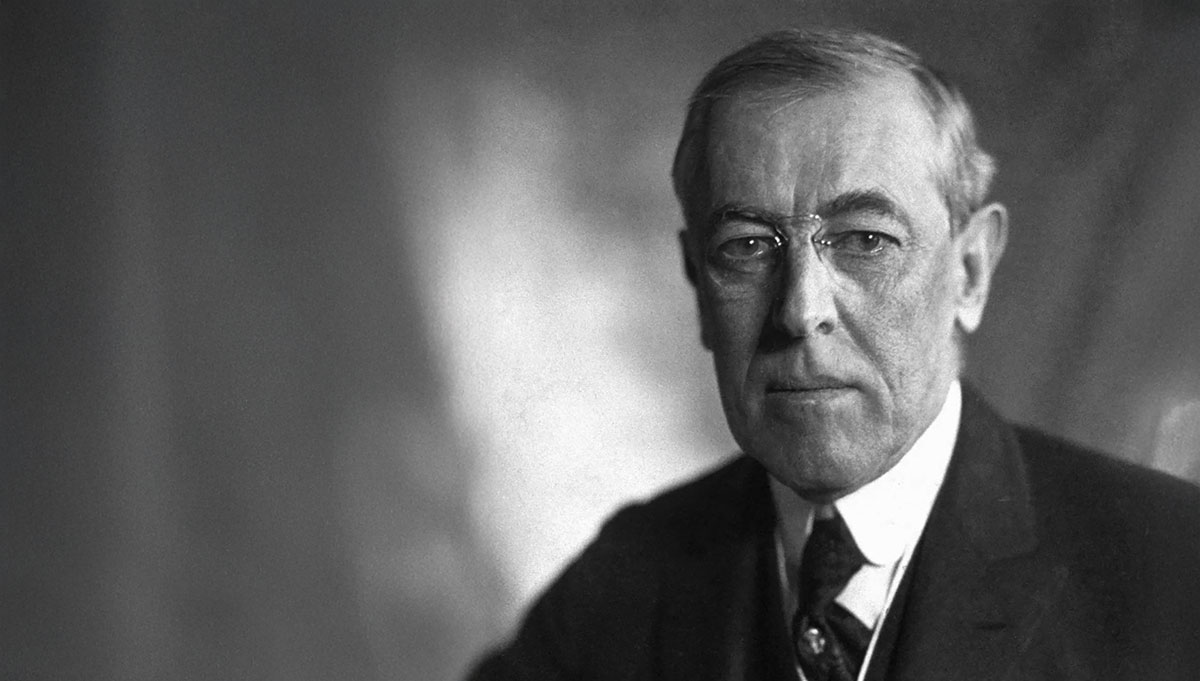
Sam’s killing horrified American officials, who worried that Americans living in Haiti were at risk. Woodrow Wilson’s administration advocated liberal interventionism and believed in intervening in countries facing upheaval. He was also concerned that Germany would take advantage to control the island and set up submarine bases there. Therefore, he ordered 330 US Marines and Sailors to reinforce a small Marine outpost already on the island.
The Beginning of the Occupation
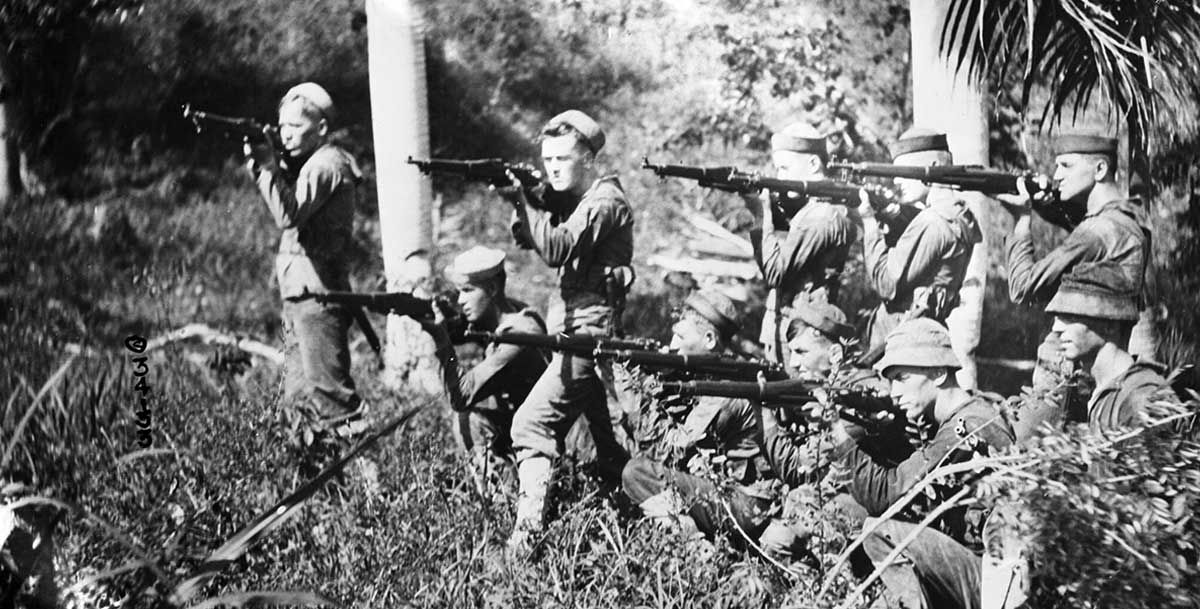
Rear Admiral William Caperton, commander of the Cruiser Squadron of the Atlantic Fleet, took command of the American detachments sent ashore. Initially, the 12th Marine Expeditionary Company and some sailors landed and proceeded to take control of areas within the Haitian capital of Port-au-Prince. They faced resistance from Haitian gunmen opposed to Sam’s government. France also sent a detachment of 50 men to protect its legation in the capital.
In the next month, reinforcements arrived to support Caperton’s force in the form of the 1st Marine Brigade, which consisted of the 1st and 2nd Marine Regiments. By August 12, stability had been regained and Caperton began preparations to hold a new round of elections. American officials hoped to have an ostensibly fair election, but one in which their preferred candidate won. When the election took place, it was closely supervised by the United States and Marine units acted as security for polling sites. The preferred US candidate, Sudre Dartigurnave, was elected on August 12 and in the following month, the United States and Haiti signed a treaty to legitimize the presence of American troops in the country.
For the next two decades, American forces were effectively responsible for the administration of Haiti. Instability was rife due to Dartigunarve’s unpopularity and an American attempt to rewrite the Constitution. The Americans lacked the manpower to patrol the entire country. Therefore, they began to train and arm the Haitian Gendarmerie, a force that would assist US troops in their occupation. 2,500 Haitians became part of this new force that gained a reputation for brutality.
Opponents of the Occupation
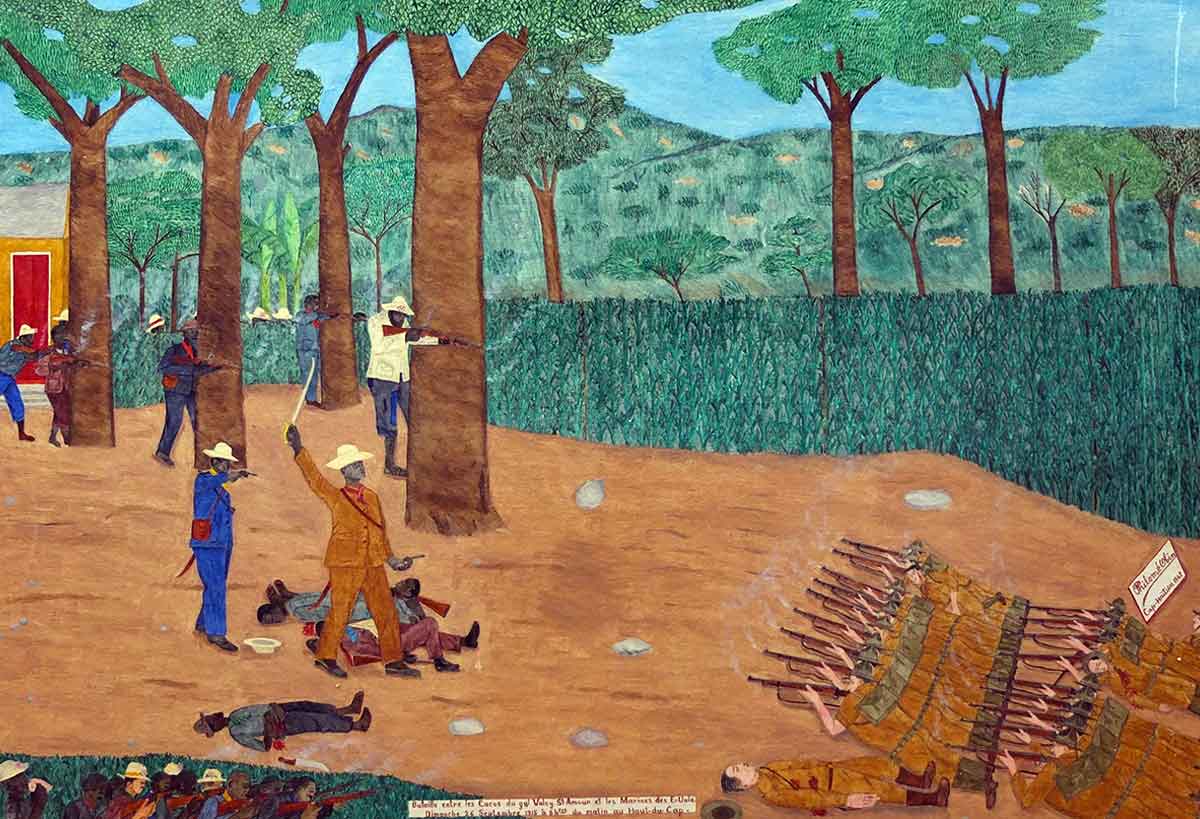
The US decision to back Sam’s government and to directly intervene after his assassination enraged a large number of Haitians. Rosalvo Bobo, a popular Haitian politician, had led the uprising against Sam’s administration. When the Americans announced elections, he agreed to run against Dartigurnave. His defeat led to his exile from the country, where he could not effectively lead an opposition against the Americans.
Bobo’s armed supporters, known as the Cacos, were a tough fighting force that sought to resist the Americans the same way the Haitian rebels resisted the French during the War of Independence more than a century earlier. Once he was forced into exile, Bobo was replaced by Charlemagne Péralte, who sought to use any means necessary to force the Americans to leave. Péralte became a legend in Haiti for his defiant actions. As several thousand Haitians joined the Cacos, the Marines had a serious fight on their hands to keep control of the country.
The Cacos drew much of their strength from Haitian peasants in the countryside. There has always been a celebrated tradition of fighting foreigners on Haitian soil and the American occupation was no different. However, the Cacos struggled throughout the war due to a lack of training, supplies, and foreign assistance. Contrary to the Wilson administration’s fears, Germany had little desire to get involved in Haiti’s internal affairs. No other country in the region wanted to challenge American control of Haiti. As a result, the Cacos had to fight alone against the Americans and their local collaborators in two wars.
The First Caco War
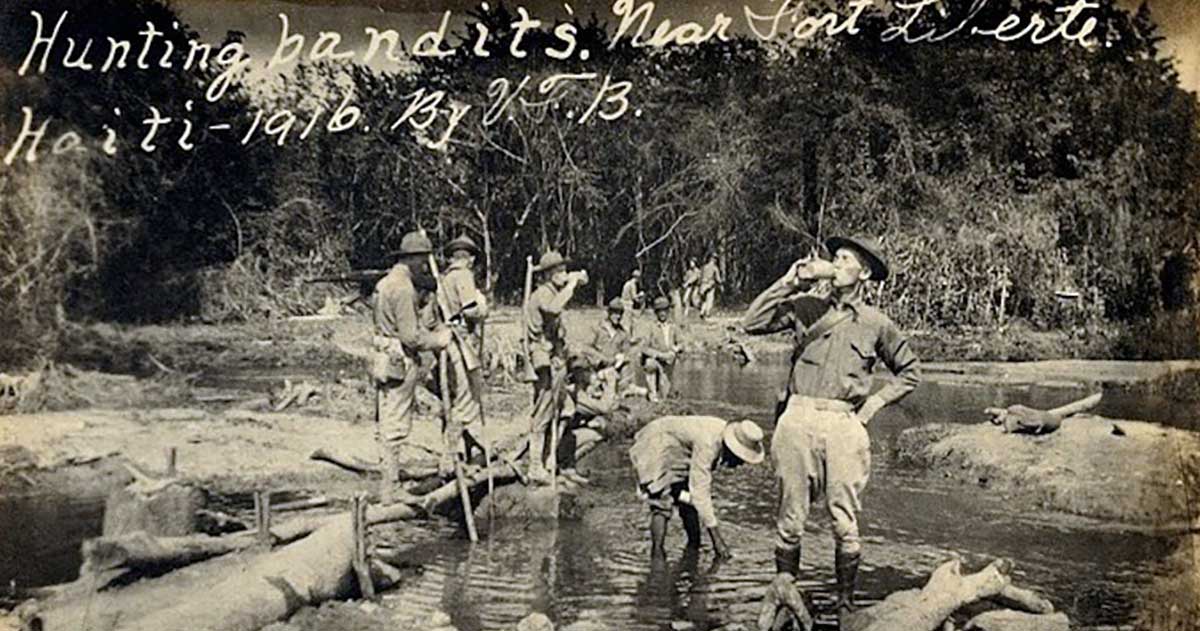
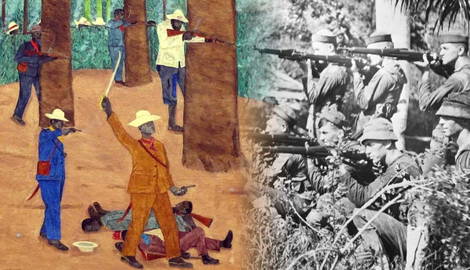
The Cacos began their war of resistance the moment the Americans began to take control of the island. From 1915 to 1918, US forces fought the rebels in what was called the First Caco War. Marine patrols, backed by naval vessels on Haiti’s inland waterways, assaulted Caco strongholds deep within the island to prevent them from creating safe zones. The Cacos were not armed sufficiently and struggled to hold off the American onslaught.
One of the senior Marine officers involved in hunting the Cacos was Major Smedley Butler. A veteran of Marine operations in Asia and Latin America, Butler believed that the best way for American forces to gain control of the country was to directly strike against principal rebel strongholds. His superior, Littleton Waller, shared that view and ordered his brigade to attack the Cacos. He took his battalion into the countryside outside of Cap-Haitien and began attacking the Cacos. Using local scouts that he trusted, Butler was able to find ways around Caco positions to ambush and attack them.
In November 1915, Butler and his men found the Cacos’ main stronghold of Fort Rivière in northern Haiti. He was able to encircle and launch a surprise attack on the garrison, which never expected the Americans to attack so far away from the cities. Butler’s men slaughtered the defenders and managed to escape with few losses. This action effectively ended the First Caco War (although American patrols continued) and Butler was awarded his second Medal of Honor.
Second Caco War and US Occupation After WWI
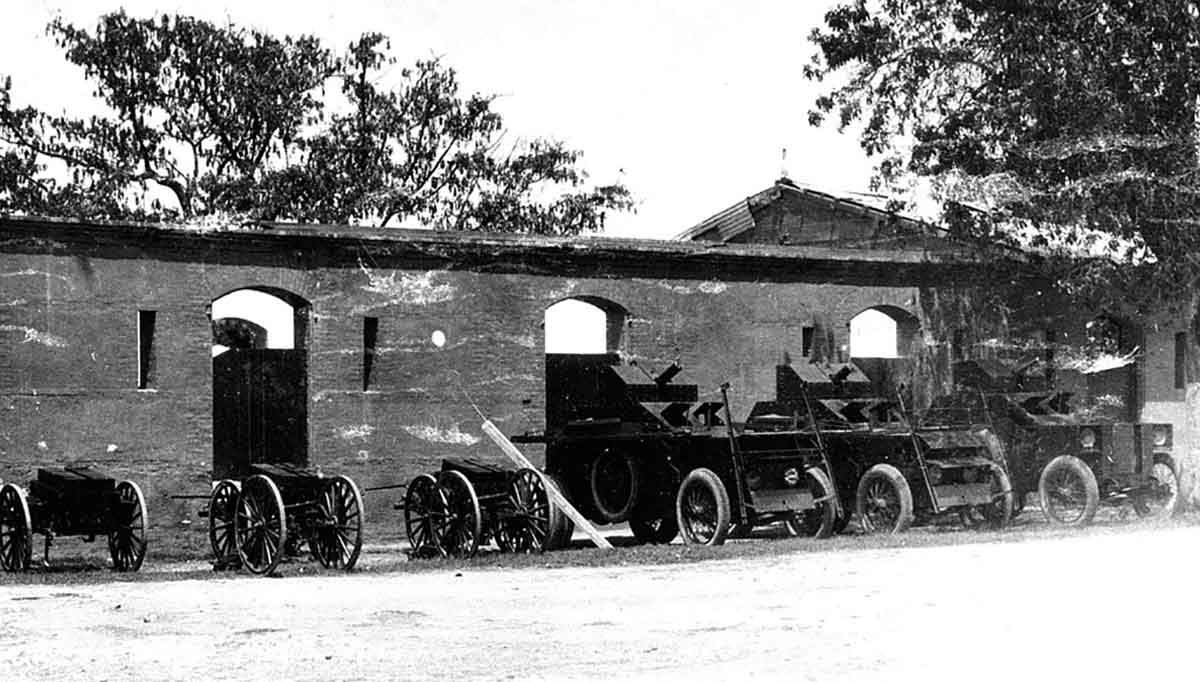
It did not take long for the Cacos to rise up again. The Haitian public hated the American-trained Gendarmerie because of their abuses and atrocities. American forces were distracted by the Wilson administration’s decision to enter WWI in 1917, and a lack of local police meant that the Cacos could set up bases again to attack American forces. The use of the corvée system of forced labor prompted many peasants to join the Cacos, and Charlemagne Péralte’s leadership professionalized the rebel force.
After the Gendarmerie lost several battles, American forces resumed their attacks on the Cacos. Finding that the rebels blended in with the local population, Marine forces ruthlessly targeted anyone whom they suspected of assisting the Cacos. Local informers were recruited by the Marines and Gendarmerie to hunt down rebels. Marine columns moved into the countryside to attack them. The brutal killings of Haitians led to a Congressional inquiry in the US but did not slow down American operations. Casualties ran higher than in the first war, but the Americans held the upper hand.
After a failed assault by the Cacos on Port-au-Prince, American forces tracked down Péralte and killed him, crucifying his body to send a message. His successor, Benoît Batraville, continued to lead the revolt but he too was killed in 1920 after also trying to take the capital. Once the Cacos lost their leadership, the revolt fizzled out and the survivors ran to the jungle to be hunted down. This was the last time any Haitians used force to try and end the American occupation.
End of the Occupation and Lessons for the US Military
From 1922 to 1935, the United States ruled Haiti through a mixture of military and civilian officials whose sole aim was to support American economic interests in the country. Strikes and protests continued after the Caco wars and were brutally put down by the Gendarmerie. Despite modest improvements in local infrastructure, the country was still poor and discontent with the American-backed government remained widespread. Nonetheless, every American president after Wilson insisted on maintaining the occupation.
This changed with the election of President Franklin D. Roosevelt in 1933. As part of his “Good Neighbor” policy, FDR vowed to withdraw US forces from Haiti. Haitian officials gradually took over administration from American officials and the Gendarmerie increased in size. Roosevelt felt that American forces had accomplished everything they could. President Stenio Vincent of Haiti negotiated the withdrawal of US forces during the early 1930s, and the remaining garrison was withdrawn in 1934 though the US continued to fund the Gendarmerie.
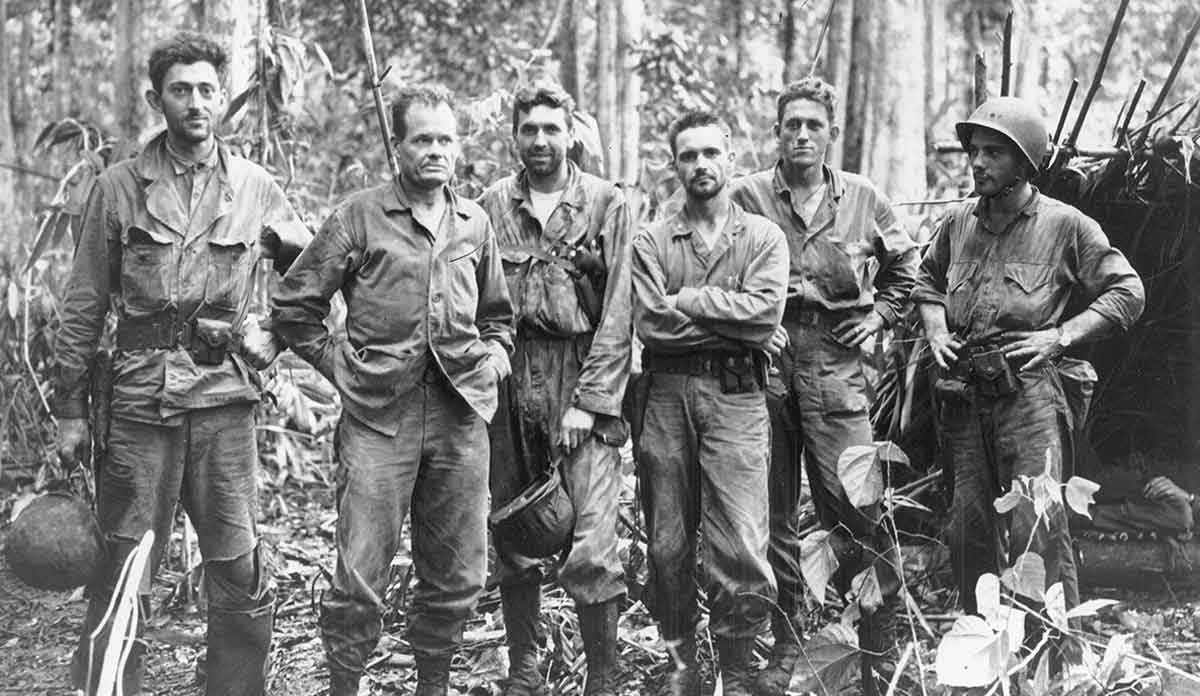
The US Marines, having been the principal force on the island, learned a lot from their experiences. Many Marine officers in WWII, such as Alexander Vandegrift, Lewis “Chesty” Puller, Herman Hanneken, and others learned how to fight in the jungle in Haiti. They applied their experience in Haiti when they fought the Japanese in the Solomon Islands. Additionally, the use of such ruthless counterinsurgency methods became part of Marine doctrine. Such tactics reappeared in Vietnam, Iraq, and Afghanistan. The war in Haiti became a classic study of how the US could use a small force to crush a revolt and bring a degree of stability to strategically important countries.