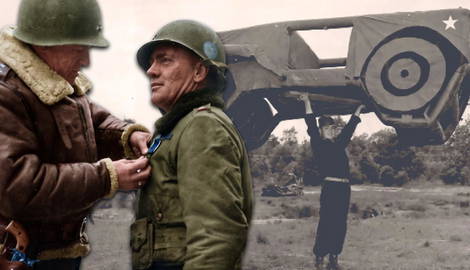

Most Western Allied commanders during WWII were very conventional and often cautious in their operational planning. Their opponents in the German high command were usually unafraid of them. However, they believed that the aggressive American tank commander George Patton was a more effective tactician and struggled to contain his armies on the battlefield.
George Patton: American Practitioner of Blitzkrieg
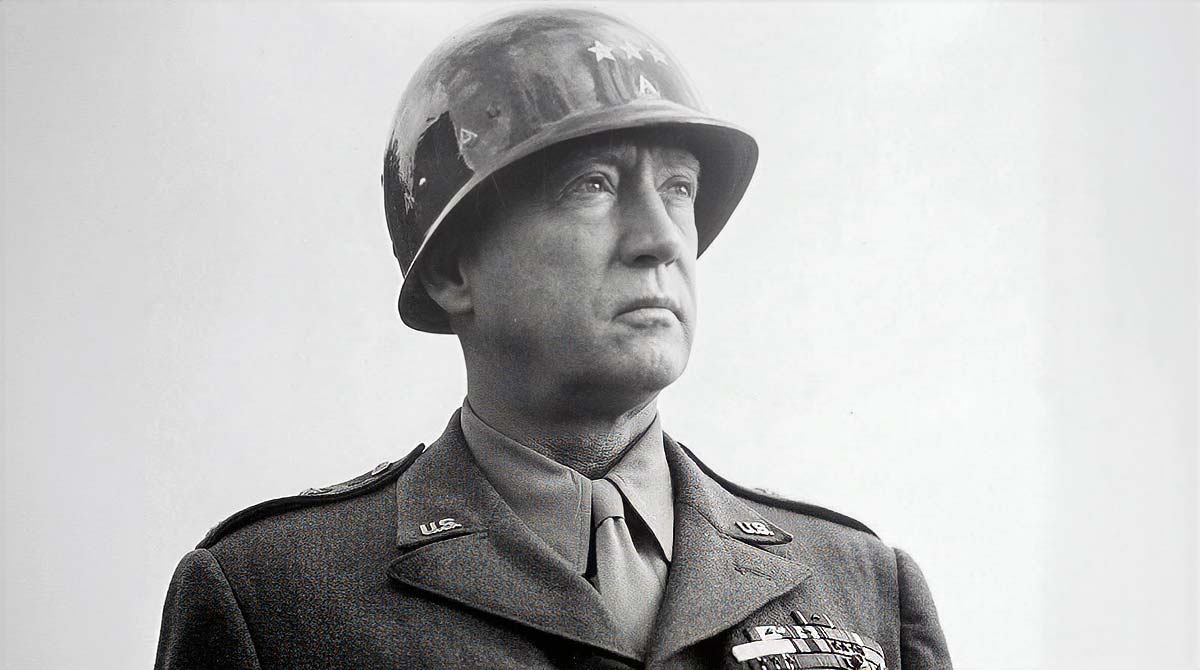
One of the major tactical innovations of the Second World War was the massing of tanks and other armored vehicles to breach enemy defenses in a swift manner, then to follow this breakthrough with waves of infantry. This approach, known in German as Bewegungskrieg (more commonly known as Blitzkrieg), became a defining feature of the war. Because German officers were the first to execute this tactic on the battlefield, they were impressed by Allied commanders who were willing to do the same.
Even before America’s involvement in WWII, General George Patton studied the concept intensely. He read the works of JFC Fuller and Basil Liddell Hart, two British officers who promoted the theory of mechanized warfare. Additionally, he read and studied the writings of German General Heinz Guderian and French General Charles de Gaulle, both of whom also emphasized speedy advances. He himself was a pioneer in the use of tanks for the US Army, having commanded a tank force in World War I. Additionally, he embraced the idea of speed based on his time in Mexico when he was helping hunt down Pancho Villa with a cavalry force.
Patton wasn’t the only Allied commander to embrace rapid maneuver warfare. Soviet Marshal Georgy Zhukov was a firm believer in large-scale, armor-tipped advances. American General Joe Collins earned the nickname “Lightning” for his emphasis on sudden assaults. The Allies built a massive armored force during the war that far outnumbered Axis forces. However, German commanders believed that George Patton was the most effective practitioner of Blitzkrieg in Allied uniform.
Why the Germans Considered Patton More Dangerous Than Montgomery
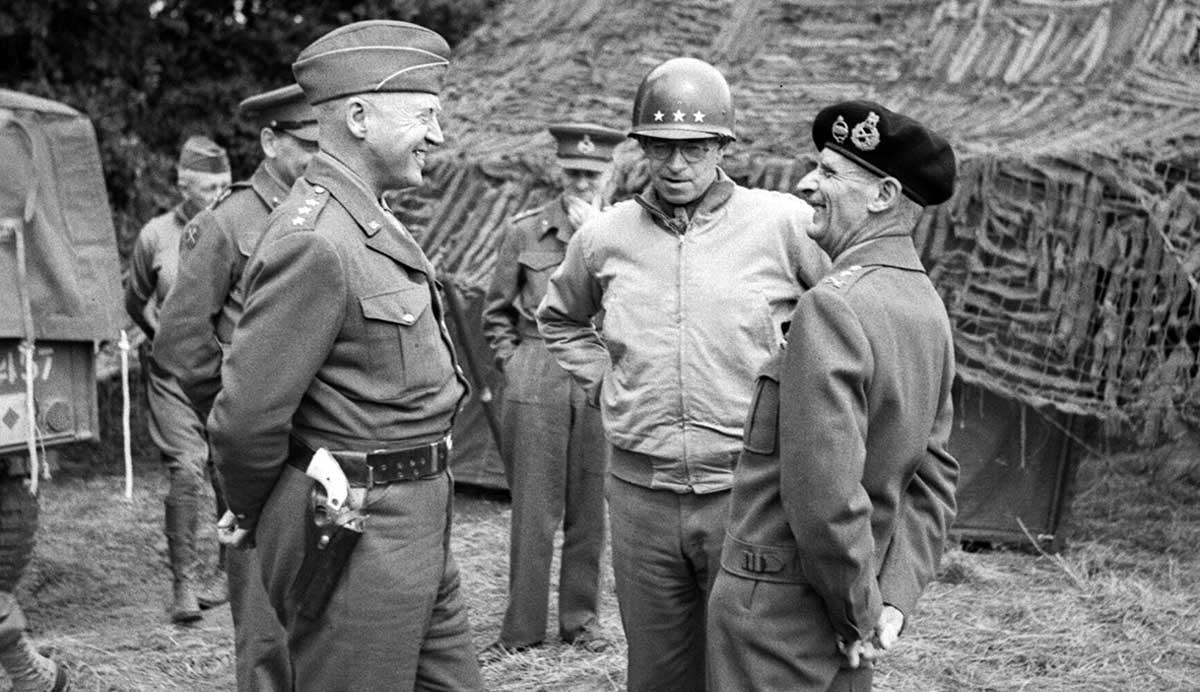
Throughout the war, Patton maintained a brutal rivalry with British Field Marshal Bernard Montgomery. Both men had different command responsibilities (“Monty” outranked Patton and commanded a much larger force by 1945) but received extensive press coverage and both were among the most famous generals of the war. Not only did they feud over resources and strategic planning, but they also embraced different styles of command. This did not go unnoticed by German commanders.
Monty was a believer in using massed firepower and incremental advances. For instance, at El Alamein in Egypt, Monty used a phased offensive with overwhelming artillery and air power to break through the Axis lines. His subsequent effort to pursue the Germans and Italians was rather lethargic, enabling them to fight another day. This method was very common among Western Allied commanders, who were reluctant to push their armies too hard. As such, German commanders embraced the idea of organizing quick counterattacks to blunt the momentum of Allied advances.
Patton’s emphasis on continued movements without delay disrupted German operational planning. Knowing that his forces could be subjected to counterattacks if they moved too slowly, he urged his subordinates to push forward as much as possible. On several occasions, Patton caught Axis commanders off guard by continuing his advances when other Allied generals may have been willing to tolerate a tactical pause.
The Third Army in Normandy and Brittany
In January 1944, General Dwight Eisenhower overruled some of his subordinates and gave Patton command of the newly formed Third Army, then stationed in Britain. At the time, Patton had been effectively sidelined after he slapped two shell-shocked soldiers in Sicily. This incident led to his relief and a formal apology. However, Eisenhower knew that Patton was a ruthless and capable commander who could help lead the Allied breakout from Normandy. Thus, Patton was given a crucial role in the Allied plans.
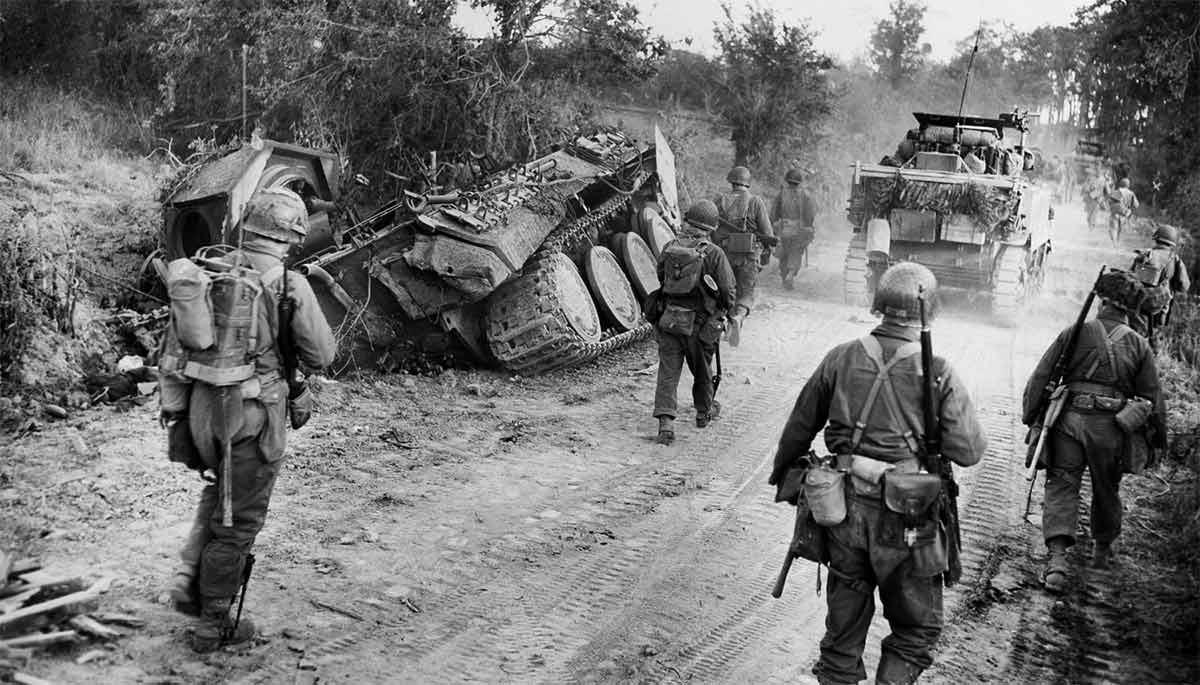
On August 1, 1944, the Third Army officially became operational and began following the First Army’s advance as part of Operation Cobra. Patton reported to General Omar Bradley, now commanding the Twelfth Army Group. Bradley wanted Patton to pivot west towards the German garrisons in Brittany, then pinned down by French resistance units. Patton partially agreed, but modified his orders to take advantage of the collapsing German lines. He sent one corps into Brittany while another one, with a heavy concentration of armor, pushed south and east to cut off the retreating Germans. He insisted on driving hard, embracing the rapid maneuver warfare that made his reputation.
German intelligence had not anticipated the arrival of the Third Army in Normandy. At the time, they thought Patton was in Britain and that the newly arriving troops and equipment were replacements for the First Army’s casualties. When American forces stormed out of the Normandy pocket in multiple directions, they were stunned and unprepared for Patton’s ruthless drive. An attempt to cut off the Third Army from the First Army at Mortain failed miserably. Only Bradley’s decision to pause the advance kept Patton from cutting off the retreating Germans at Falaise.
Patton and Operation Fortitude
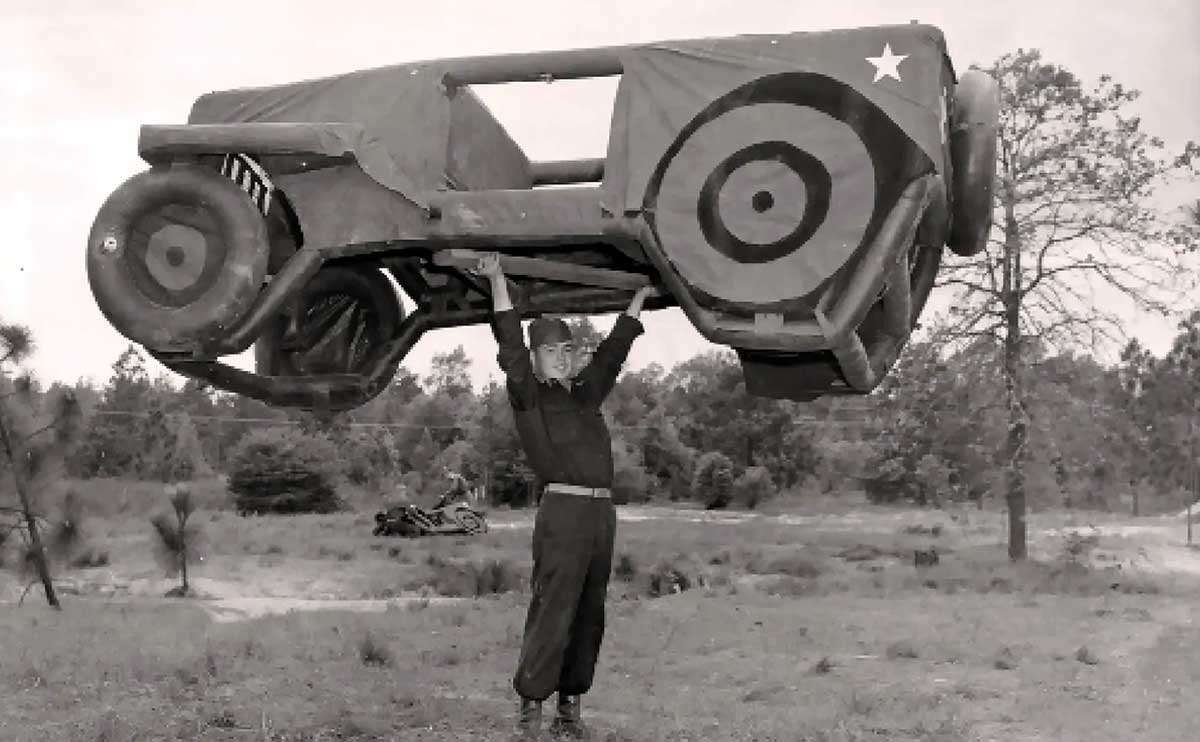
Before Patton arrived in France, SHAEF (Supreme Headquarters of the Allied Expeditionary Force) chose to weaponize the German fear of his reputation by giving him command of the First Army Group, a new headquarters formed in Britain. This new command was a total fabrication. The Allies had learned through a spy network that the Germans were afraid of him and wanted the Wehrmacht to assume that he was going to play a major role in the Normandy landings. Thus, Operation Fortitude was born, one of the largest deception plans in military history.
The scale of the deception was remarkable. Thousands of dummy vehicles, tanks, artillery, and other equipment were manufactured throughout Kent and East Anglia in eastern England. Radio broadcasts were generated to pretend that an army was being formed. Some actual units were attached to this “army group” before being sent to fight under a real headquarters in France. All the while, Patton “inspected” his new command while secretly preparing the Third Army’s battle plan. Privately, he disdained his role, but was willing to follow orders if it got him back in Eisenhower’s good graces.
Fortitude succeeded beyond SHAEF’s wildest dreams. The Abwehr, Germany’s military intelligence branch, believed that Patton was planning on taking a force with 1,000,000 men in fifty infantry and armored divisions into France, specifically by landing them in the Pas-de-Calais. As a result, the German 15th Army was ordered to stay in that area, depriving the two German armies in Normandy of much-needed reinforcements. This enabled the Allies to build up control over the beachhead. Berlin only learned that Patton was in Normandy by the time Cobra was launched.
The Third Army on the Siegfried and Moselle Lines
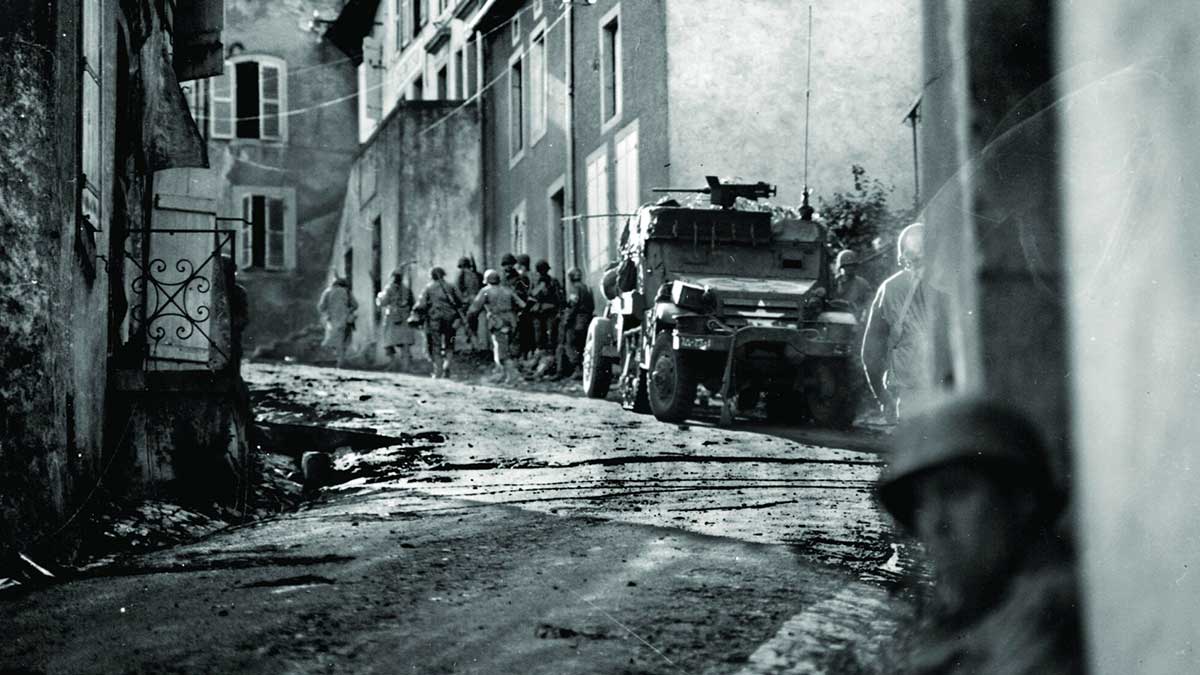
Patton’s drive deep into France was one of the best examples of the United States practicing Blitzkrieg the way the Germans had done in 1940. Much of the countryside was overrun very quickly and German units struggled to react to the Third Army’s spearheads. However, by September 1944, Patton’s forces were forced to halt due to acute gas shortages. General Eisenhower ordered supplies and gasoline in reserve to be sent north to Montgomery’s armies, forcing the Third Army to come to a complete halt on the Moselle River. This gave the retreating Germans enough time to regroup and prepare additional defenses on the Siegfried Line on the Franco-German border.
While German commanders did fear Patton’s advance, they did not have enough armor to mass against his forces. Therefore, they relied on a series of fortifications, including the city of Metz, to slow his men down. A series of counterattacks on the Third Army as it crossed the Moselle failed, but did buy time for German forces to dig in. Despite poor weather causing vehicles to get stuck in mud, American forces pushed onwards, seizing Metz after three months of fighting and crossing the Saar River.
German Army Group G was a formation created from the remnants of several different German field armies in France. Initially very weak, the command received significant reinforcements and managed to hold off the Third Army before it could make serious gains. While German commanders were not totally obsessed with Patton personally, they understood that his army was one of the most heavily armed in SHAEF’s order of battle and they allocated resources accordingly.
The Relief of Bastogne and Patton’s Final Attacks
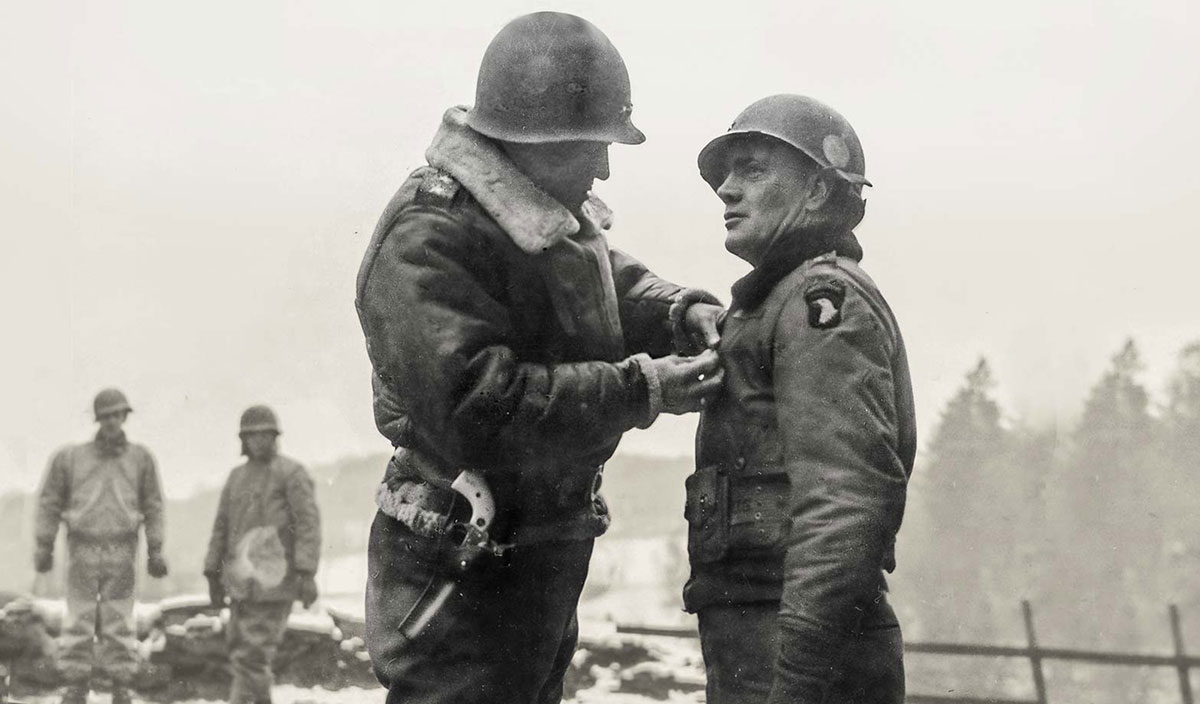
In December 1944, the Germans pulled off a stunning feat by driving a hole deep into the First Army’s positions on the Belgian-German border. Allied commanders feared that German troops could reach the Meuse River and sought to stem the breakthrough. General Patton, at the time planning his own offensive against the Siegfried Line, sent his forces north and attacked German troops besieging the Belgian town of Bastogne. The Third Army inflicted enormous losses that the Germans could not easily replace. This set the stage for the Allied drive towards the Rhine River in spring 1945.
Alongside the Seventh Army, Patton’s men conducted a massive encirclement operation on the west bank of the river, capturing 60,000 Germans. By March 1945, he successfully slipped some of his forces over the Rhine before other Allied units could do so. From then on, it was a swift advance towards the German border with Czechoslovakia. Apart from a disastrous order to raid a POW camp believed to hold his son-in-law, Patton’s final battles were well-executed. He briefly commanded the Third Army during the occupation before he was relieved for making statements contradicting Eisenhower’s policy. He died in a hospital in Germany in December 1945 following a car accident and is buried at the American cemetery in Luxembourg.
The famous movie Patton, starring George C. Scott, as the general, depicted German officers as being obsessed with him and even assigning a staff officer to monitor his activities throughout the war. This was an exaggeration; German generals may have feared him, but did not deify him. German commanders believed that his army was successful largely due to the heavy amount of equipment it received. Nevertheless, they regarded him as a formidable commander who emulated their own tactical doctrines on the battlefield.