Vaiśeṣika is one of six philosophical schools or darśanas. The common denominator among all schools was the acceptance of the authority of the Vedas and the idea that true knowledge enables achieving salvation from the cycle of birth, death, and rebirth (samsara). Vaiśeṣika, however, offered a naturalistic framework, classifying entities into categories (padārthas) and positing atoms (paramāṇu) as the building blocks of matter. Although in our Western intellectual landscape we associate Democritus as the father of atomism, who paved the way for discoveries in 20th-century physics, the metaphysics of Vaiśeṣika is oddly modern. Although there is textual evidence that Democritus, as well as other Presocratic thinkers, traveled to the East, it is hard to establish direct connections.
The Invention of Vaiśeṣika: When, Where, Who?
Vaiśeṣika takes its name from the Sanskrit word viśeṣa, meaning “particularity” or “distinction,” and referring to existing, different, innumerable, individual entities. Its central concern is how to classify and explain reality in its most basic constituents.
Traditionally traced to Kaṇāda Kashyapa (6th‒2nd century BC), a sage sometimes described as a “particle-eater” (kaṇa meaning particle or grain), the foundational text, the Vaiśeṣika Sūtra, lays out the categories of being and a theory of atomism. This text prioritizes metaphysics and ontology over epistemology. Legend has it that Kaṇāda began his reflections while observing the smallest particles of food that fell from a ritual offering, marveling that even these minute fragments had structure and significance. Such stories, while apocryphal, capture the spirit of the school: a fascination with the infinitely small and the systematic.
However, later commentaries, such as those by Praśastapāda (5th century AD), Śrīdhara (10th century AD), and Udayana (11th century AD), contributed further refinements, most notably in integrating Vaiśeṣika metaphysics with the Nyāya syllogistic system and arguments for the existence of God. It’s for this reason that Vaiśeṣika’s epistemology, though it provides the firm footing for its metaphysical speculations, has rarely taken center stage.
Interestingly, this darśana positioned itself squarely against the entire philosophical and theological landscape, challenging both the orthodox (āstika) schools that affirmed the Vedas and the heterodox (nāstika) systems that rejected them. Early Buddhist philosophers denied the existence of enduring substances, insisting that what we perceive are fleeting bundles of qualities. Vaiśeṣika responded with realism: if the world were nothing but fleeting impressions, they argued, then stability, causality, and knowledge itself would be impossible.
Sāṃkhya, one of the six darśanas, proposed a rival vision of reality, dividing existence into puruṣa (pure consciousness) and prakṛti (primordial matter). Vaiśeṣika countered that such dualism needlessly multiplied entities (this might remind you of Ockham’s razor).
The Central Concepts of Vaiśeṣika
Naturally, we will first cover the concept of an atom. According to Kaṇāda’s Vaiśeṣika Sūtra, all material substances (dravya) are ultimately composed of indivisible, eternal atoms (aṇu). The atoms of earth, water, fire, and air possess distinct qualities and combine in specific configurations to form dyads (dvyaṇuka) and triads (tryaṇuka), which in turn constitute perceptible, macroscopic objects.
Unlike the atomism of Democritus, however, Kaṇāda’s theory is not mechanistic but teleological and ethical in structure. The combination and separation of atoms occur not merely through physical contact but also under the influence of adṛṣṭa, an unseen causal principle often identified with the moral residue of past actions (karma). Thus, cosmological order and moral law are unified within a single explanatory framework.
The atomism of Vaiśeṣika cannot be understood apart from its broader ontology of padārthas (“categories” or “reals”). Kaṇāda enumerated six fundamental categories, later expanded to seven, through which all existent entities can be described: dravya (substance), guṇa (quality), karman (motion), sāmānya (universal, the common nature by which many things can be grouped under one class), viśeṣa (particularity), samavāya (inherence), and later abhāva (non-existence). Atoms, in fact, exemplify this classification of categories.
They qualify as dravya (substance) because they serve as the substrates in which qualities (guṇa) and motions (karman) inhere. Each atom also possesses its own viśeṣa (particularity), a distinctive feature that distinguishes it from all other atoms, even of the same type. Their combination and separation, which underlie all physical transformations, are instances of karman (motion). The connections among these categories are governed by samavāya, a relation of inseparable inherence that binds qualities to their substances and parts to the wholes they constitute.
Eastern and Western Categories
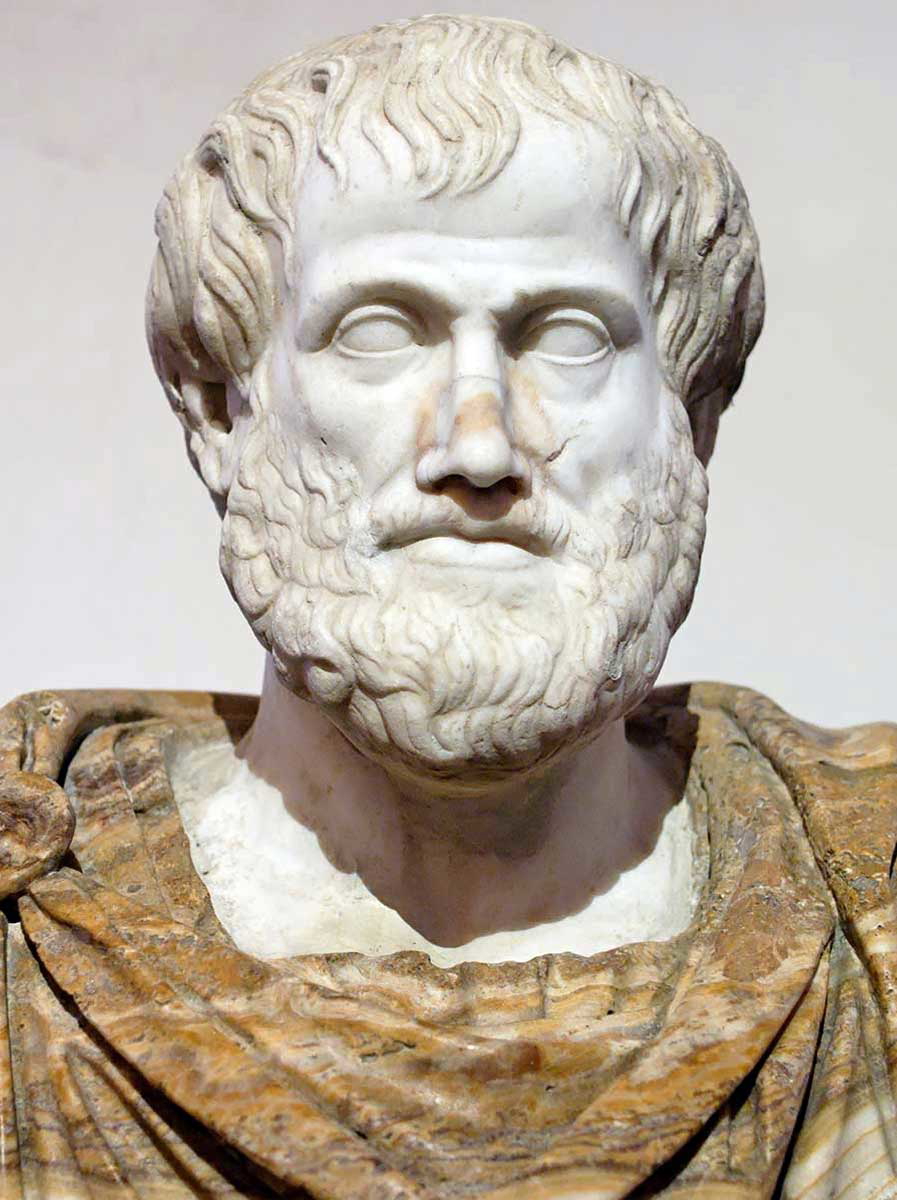
Though separated by geography and intellectual lineage, Vaiśeṣika’s padārtha classification and Aristotle’s Categories reveal striking conceptual convergences. Both systems aim to provide an exhaustive taxonomy of being, understood in Aristotle’s terms as an ontological grammar underlying all predication and knowledge.
Aristotle’s ten categories, namely substance, quantity, quality, relation, place, time, position, state, action, and passion, serve as modes in which a subject may be said to exist. Similarly, Kaṇāda’s six (later seven) padārthas, namely dravya (substance), guṇa (quality), karman (motion), sāmānya (universal, the common nature by which many things can be grouped under one class), viśeṣa (particularity), samavāya (inherence), and later abhāva (non-existence), seek to classify all that can be real or knowable. Both traditions begin from substance as ontologically primary, with qualities and motions depending upon it for their existence.
Yet Vaiśeṣika’s inclusion of samavāya (inseparable inherence) as a distinct category marks a notable departure: it provides a metaphysical account of the unity between substances and their attributes, a problem Aristotle leaves implicit in his notion of substantial form. Aristotle’s focus on relation and quantity has no strict analogue in Kaṇāda’s system, where these are subsumed under qualities and motions.
The brief comparison thus shows us two parallel yet independently developed realist metaphysics: Aristotle’s categories articulate the grammatical structure of language as a mirror of being, while Vaiśeṣika’s padārthas delineate the constituents of being itself as the foundation for knowledge.
The Building Blocks of Knowledge: Vaiśeṣika‘s Realist Epistemology
Although Vaiśeṣika is primarily a metaphysical system, its ontology presupposes a distinctive realist epistemology. Knowledge (jñāna) arises through genuine contact (sannikarṣa) between the self (ātman) and external reality. Originally, Vaiśeṣika recognized only two valid means of obtaining knowledge (pramāṇas): perception (pratyakṣa) and inference (anumāna). Later, under Nyāya influence, it incorporated additional pramāṇas such as verbal testimony (śabda).
Be it as it may, true knowledge may stem either from the contact of sense organs with substances that are, with the number and spatial arrangement of atoms and their qualities embedded into particular things, or from syllogistic reasoning when it comes to unperceived relations and entities.
For Kaṇāda and later commentators such as Praśastapāda, the categories (substance, quality, motion, generality, particularity, inherence, and absence) are not merely linguistic conveniences but ontological commitments. Knowing something correctly means recognizing the appropriate category to which it belongs and understanding the lawful relations that connect it to others. The epistemological project, therefore, mirrors the metaphysical one: just as reality is atomically composed, so too is knowledge built from discrete, veridical instances of human cognitive capacities that correspond to the world’s actual constituents.
The Relevance of Vaiśeṣika for Analytic Philosophy

So far, we have covered the relatively evident and uncontroversial connections between ancient philosophy, most notably Democritus and Aristotle, and Vaiśeṣika. One of the most philosophically provocative features of later Vaiśeṣika thought is its systematic treatment of the seventh category named abhāva, or nonexistence. Its introduction in later commentaries was no mere metaphysical curiosity: abhāva addressed the problem of how we know that something is not there. This question resonates strongly with contemporary discussions of negation, reference failure, and negative existential claims.
Vaiśeṣika thinkers distinguished four kinds of abhāva: prāgabhāva (prior absence), pradhvaṃsābhāva (posterior absence), anyonyābhāva (mutual absence or difference), and atyantābhāva (absolute absence). These distinctions enabled them to analyze statements such as “The offering bowl is absent on the altar” with remarkable logical precision, accounting for the temporal, relational, and categorical nuances of negation.
Moreover, absence is a legitimate ontological category required for the coherence of discourse and perception alike. To perceive the absence of an offering bowl, for instance, is not to hallucinate a void but to apprehend a structured lack within a determinate field. When a householder enters the courtyard at dawn and sees that the offering bowl is absent on the altar, she does not merely fail to see the bowl. According to Vaiśeṣika, she literally perceives and, if asked, later recounts its absence.
Such insights resemble debates in analytic philosophy about the ontological status of negative facts and the semantics of non-referring terms. D.M. Armstrong similarly defends the reality of negative facts, arguing that statements such as “the cat is not on the mat” correspond to actual facts in the world that constrain and structure reality.
On the other hand, Bertrand Russell’s theory of descriptions grappled with explaining how statements involving non-referring terms, such as “The present king of France is bold,” can have truth conditions without positing non-existent entities. Vaiśeṣika anticipates these concerns centuries earlier, demonstrating that certain philosophical puzzles transcend time and culture and belong to humanity as a whole.