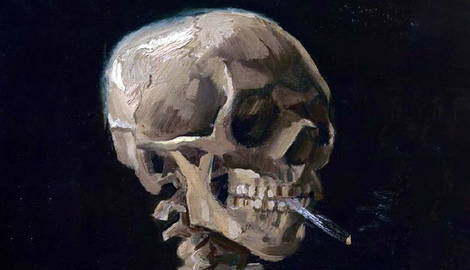
Vincent van Gogh focused most of his paintings on nature, taking inspiration from both the vibrant landscapes of Provence and rural scenes in the Netherlands. But sometimes he indulged in painting witty and unusual subjects that can only be recognized as belonging to the Dutch artist because of his unique style. One such painting is the Head of a Skeleton with a Burning Cigarette, painted in Antwerp in early 1886. It depicts a skeleton on a dark background with a lit cigarette held between its teeth.
Van Gogh’s Moving to Antwerp
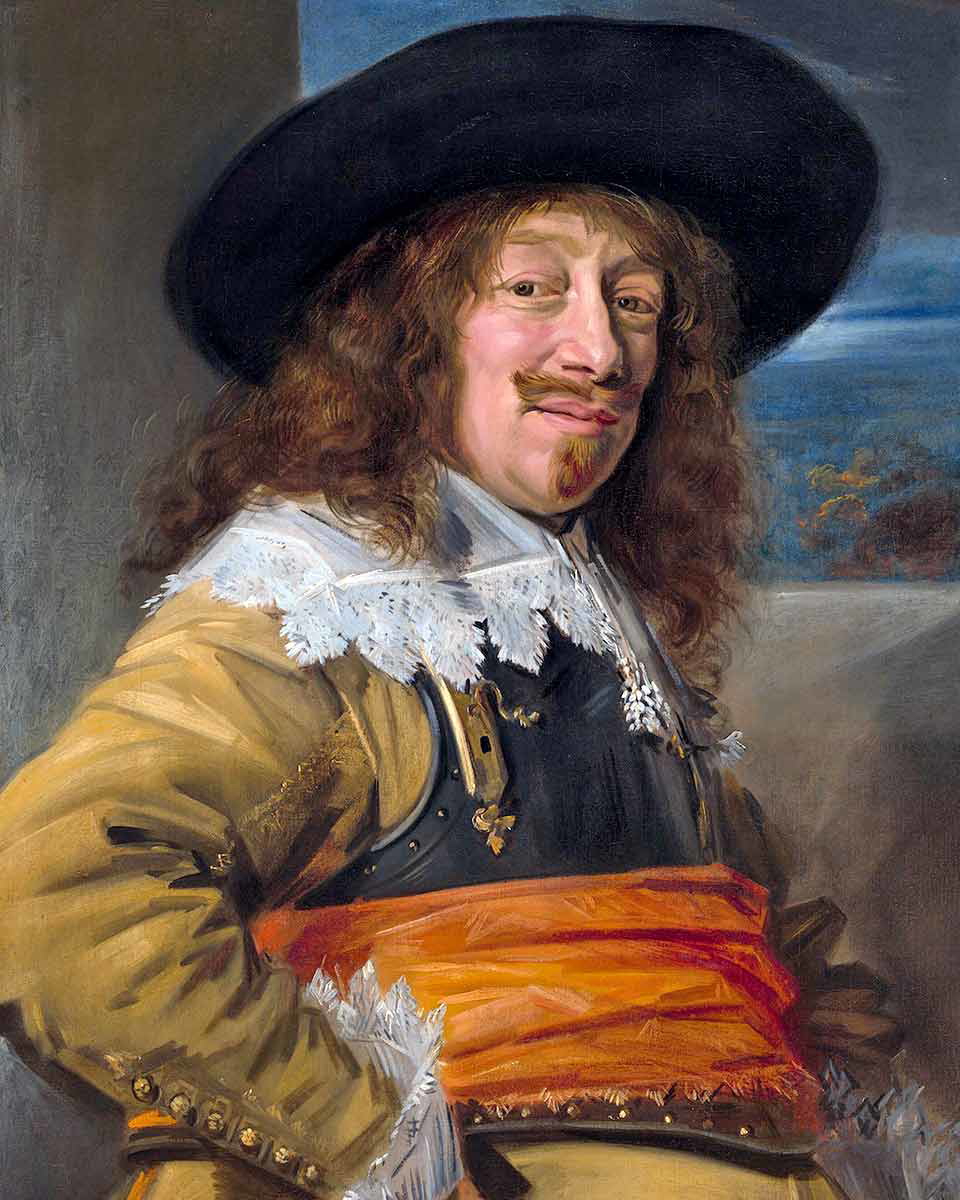
In 1885, Van Gogh moved to Antwerp, Belgium, at age 32. He had already been engaged in making art for a few years, and the decision to move to this city had been under consideration for some time. He was excited to explore the city and particularly looked forward to visiting its museums, including the Royal Museum of Fine Arts Antwerp and Musée Moderne, which housed a rich collection of European fine art. Here, Van Gogh came across numerous works by 16th and 17th century Flemish artists such as Henri Leys, Frans Hals, and Jan van Eyck that inspired him.
The works of the Flemish artist Peter Paul Rubens had a notable impact on him. Describing his admiration of Rubens, Van Gogh wrote to his brother Theo in December 1885, “Rubens is certainly making a strong impression on me. I find his drawing immensely good, by which I mean the drawing of heads and hands in themselves. . . I go to the museum quite often and then look at little else but a few heads and hands by him and Jordaens.”
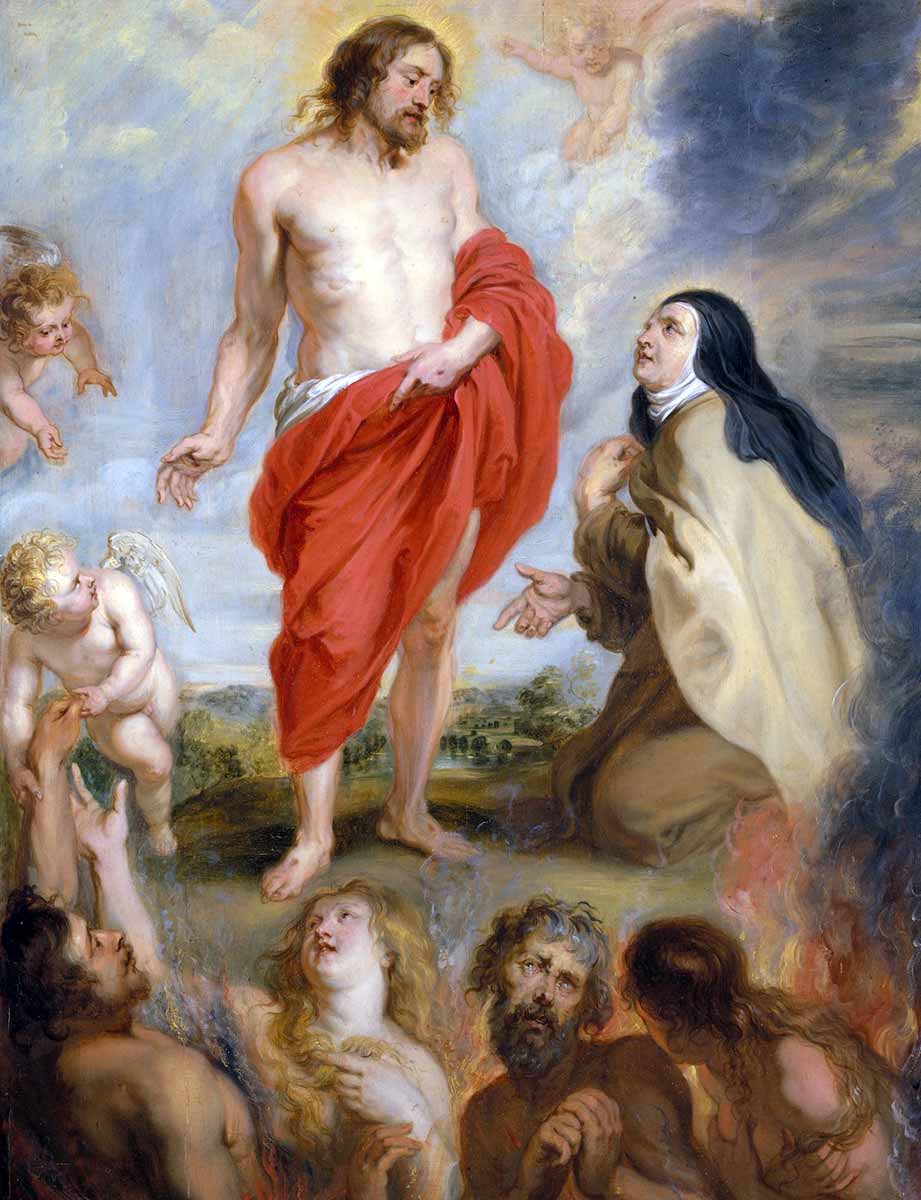
With marvelous forms, colors, and mastered lines passing before his eyes in this abundant cultural environment, Antwerp breathed new life into Van Gogh’s artistic passion. Driven by this passion, he enrolled at the Royal Academy of Fine Arts in Antwerp (Koninklijke Academie van Beeldende Kunsten) in January 1886. Here, he hoped to gain knowledge at an institutional level that would benefit his development as an artist: “I can probably learn something there that could be useful to me, be it for painting, be it for drawing. And in any event it’s an attempt to get to know people.”
Soon enough, Van Gogh started taking a drawing course under the tutelage of Frans Vinck and, eventually, Eugène Siberdt in the evenings. He also took a painting course during the daytime.
Despite this immersion into art, the artist’s experiences during his stay in Antwerp were not solely positive. He made several unsuccessful attempts to sell his works, lived in poverty most of the time, and came to view the institutional modes of art teaching with dissatisfaction after joining the academy.
In the 19th century, art academies in Europe primarily focused on developing specific skills, such as drawing from live models, sculptures, and objects with accuracy. Although Van Gogh was inspired by the Old Masters, he sought to move in a different direction beyond the realist tradition upheld by the academy.
He vehemently opposed the mechanical manner of teaching and making art that he experienced there, writing: “how flat, how dead and how bloody boring the results of that system are.” His work was often judged harshly by his instructors for not following the expected manner of naturalistic depiction, which led him to develop difficult relationships with them: “All the same, even though I don’t say anything, I irritate them—and they me.”
This experience led Van Gogh to realize that art academies worked under rigid conventional systems to produce artists who drew and painted ‘correctly,’ leaving no space for originality and creative individuality.
Painting “Head of a Skeleton With a Burning Cigarette”
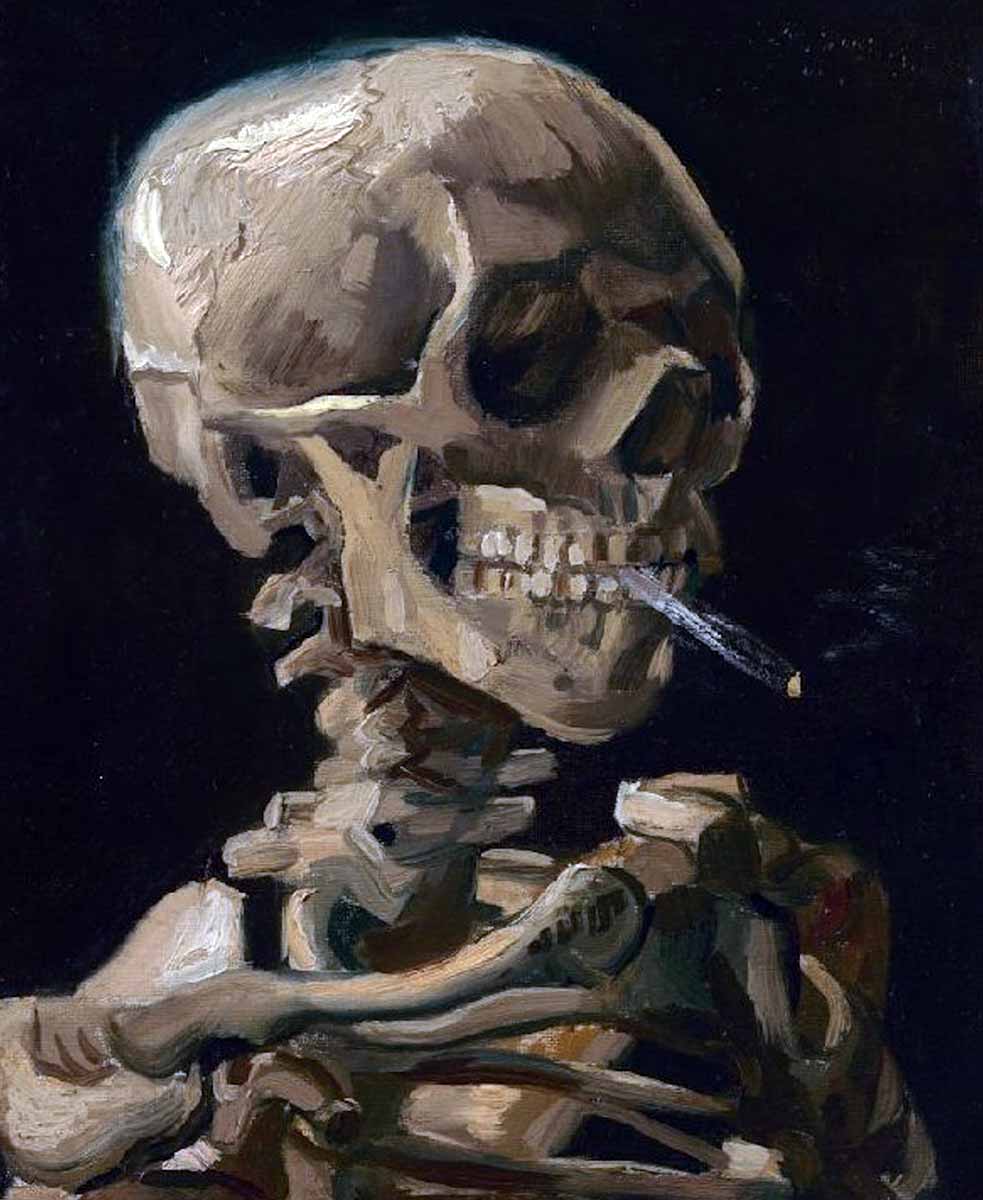
While attending the art academy in Antwerp, Van Gogh hoped to perfect his skills as a figure painter and often painted live models. One of the academy’s practices involved drawing skeletons to grasp the proportions and details of human anatomy. Head of a Skeleton with a Burning Cigarette was painted with this practice in mind. This painting, which was titled Skull with cigarette by Van Gogh’s sister-in-law Johanna van Gogh-Bonger, was actually based on a full skeleton. It depicts the skull and the thoracic bones with a lit cigarette between the teeth emitting smoke. Van Gogh painted this work in one session and captured anatomical proportions impressively.
The composition is earth-colored, in accordance with the instruction of the art academy. Van Gogh used colors from the Dutch palette that dominated his early canvases painted in the Netherlands, such as ochres and browns. The skeleton is painted with subtle shades of yellow and brown, with hints of blue and red to capture the color of bones. Placing the composition in front of a dark background highlights the anatomical details of the skeleton head, as well as Van Gogh’s handling of color while working with a darker, limited palette. Overall, the composition is well executed, demonstrating a solid grasp of human anatomy and the ability to depict it on canvas with precision.
What Does It Mean?
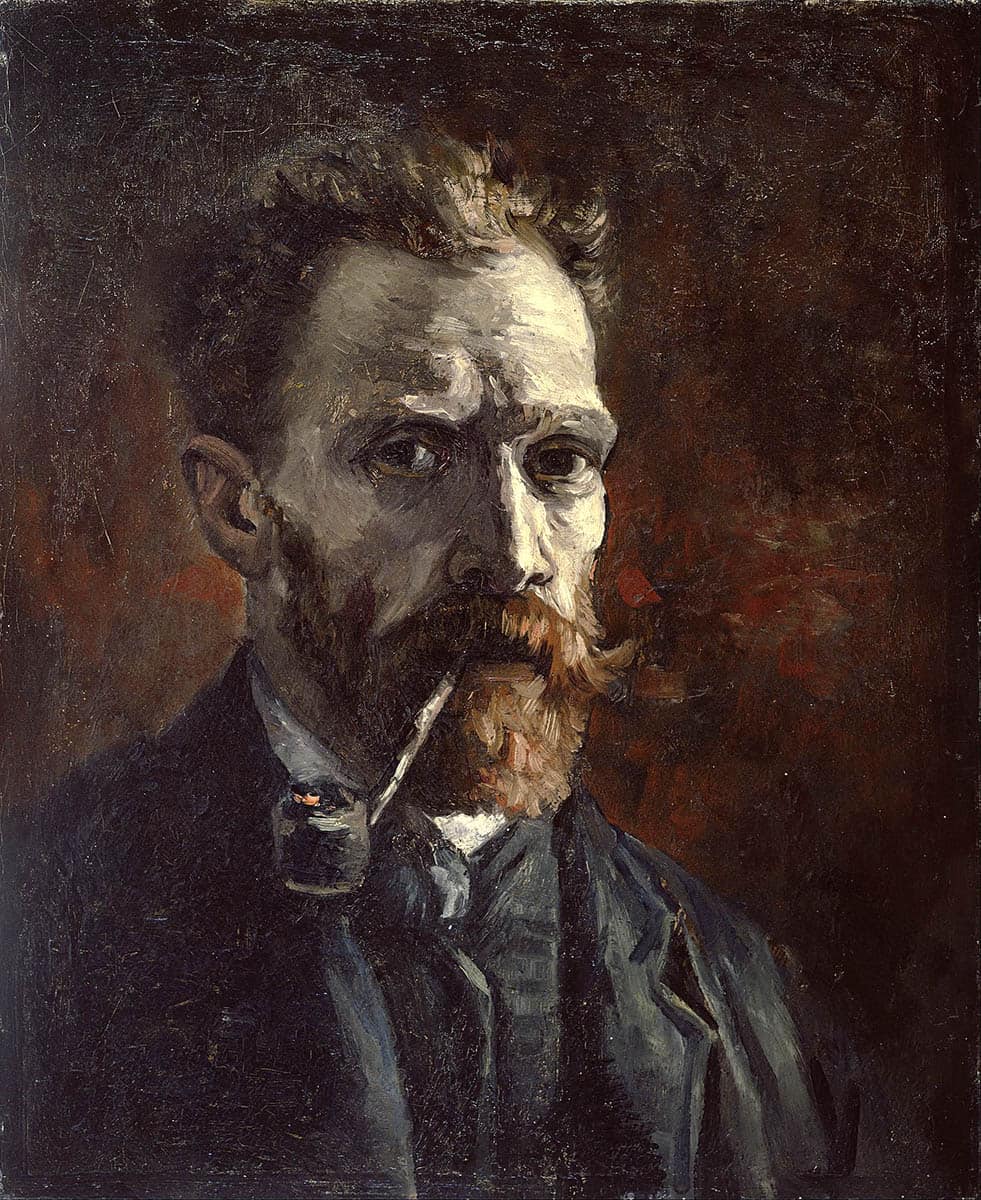
The practice of the art academy was limited to making drawings of skeletons for anatomical study, which suggests that Van Gogh painted this independently outside classes. However, the painting must be based on studies of a skeleton he would have made during his drawing lessons. Van Gogh depicts the skeleton as smoking a cigarette, adding a layer of satire and humor to an otherwise fine composition. The act of smoking adds both a sense of life to the skeleton, as well as plays on the concept of death.
Head of a Skeleton with a Burning Cigarette has been subject of much debate among scholars with some claiming this to be a rejection of his Christian views by treating the subject of death with humor, while others believe it to be an inconsequential joke originating from his boredom and lack of creative stimulation during his drawing lessons at the art academy.
Nevertheless, this painting was inspired by Van Gogh’s opposition to the academy’s principles, which promoted realist art and suppressed individual expression. It shows his artistic prowess alongside his ability to express his creativity freely, while also subverting the expectations of the academy, something that would not have hesitated Van Gogh given his troubled relationships with the instructors. In a letter to Theo from February 1886, he recalled an instance of his instructor Eugène Siberdt attempting to start an argument with him during one of the drawing lessons: “That Siberdt, the teacher of the antique, who spoke to me at first as I told you, definitely tried to pick a quarrel with me today, perhaps with a view to getting rid of me.” Experiencing an atmosphere he considered stifling, Van Gogh did not shy away from making a humorous painting that would displease members of the academy.
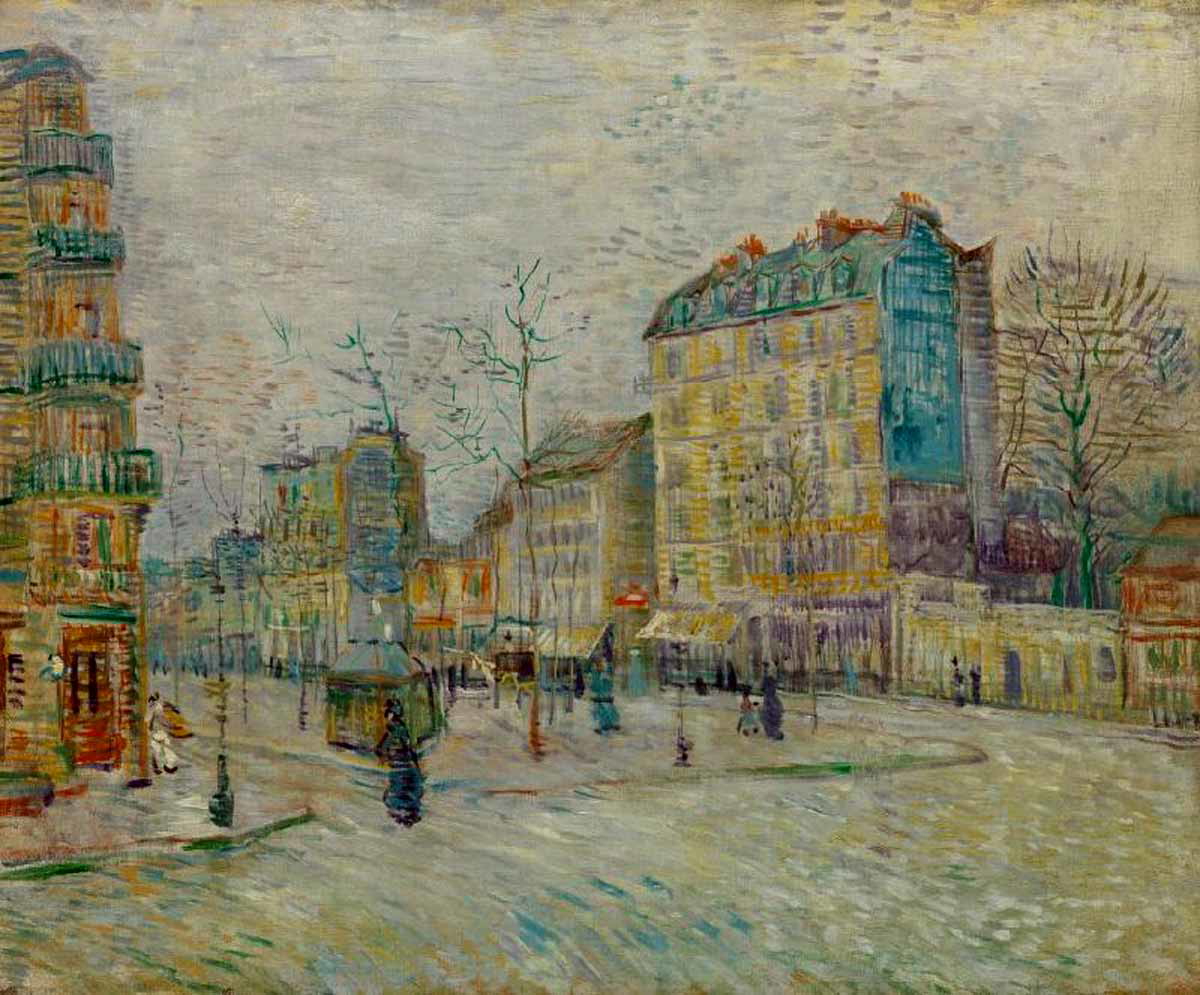
Disillusioned with the institutional practices he witnessed in Antwerp, Van Gogh left the city on February 28, 1886 to move to Paris. His intolerance was reciprocated as the academy had demoted Van Gogh to a lower grade, but he had already left the city by then.
In Paris, Van Gogh would go on to discover avant-garde modes of handling color and forms that later completely transformed his art. For the most part, Paris allowed him to work freely, without institutional constraints, and to experiment with his creativity. Head of a Skeleton with a Burning Cigarette can be seen as a precursor to this experimentation. The painting is a satirical piece that shows his dissent for the rigid rules of art upheld by the academy. Its ownership remained within the Van Gogh family until the establishment of the Van Gogh Museum, where it is housed today.
Other Works With Skulls
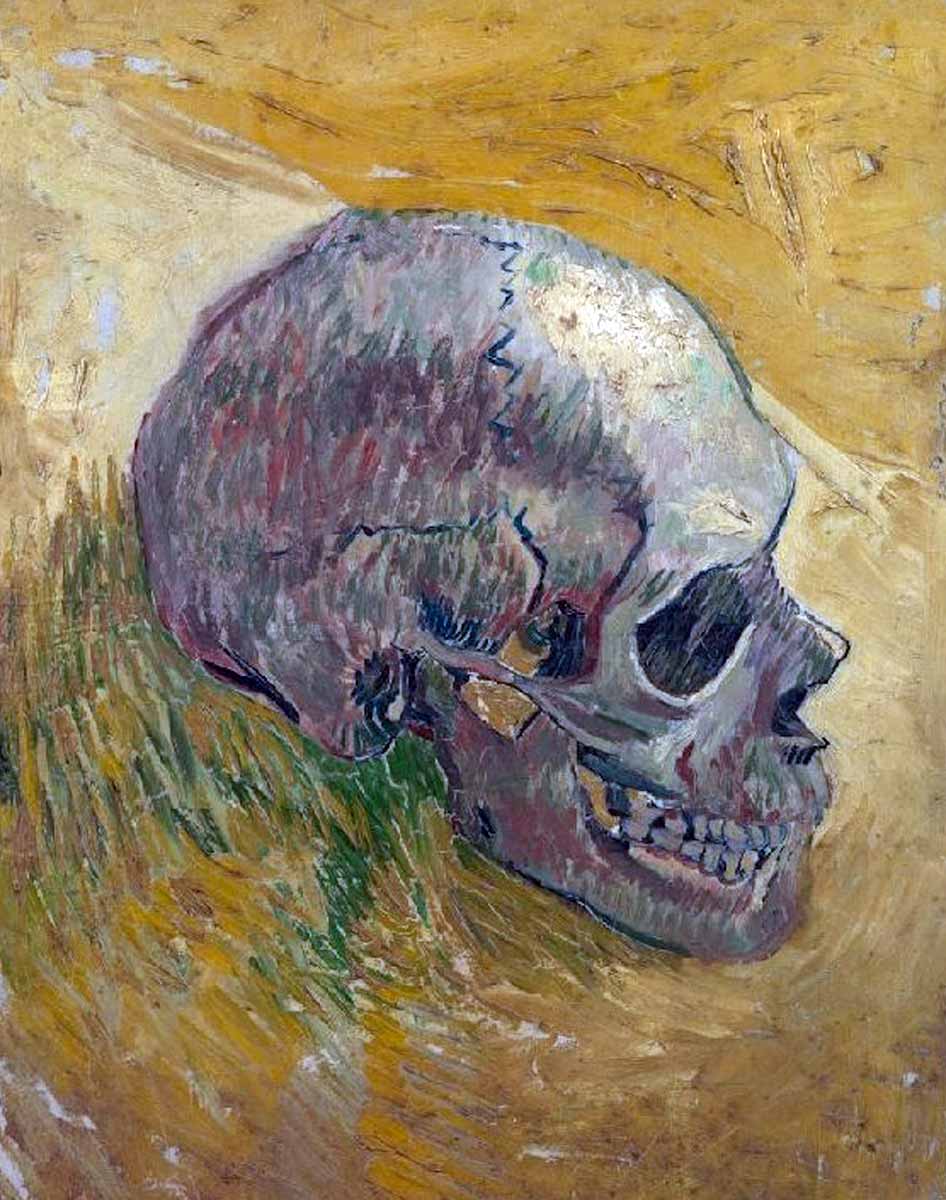
In addition to the Head of a Skeleton with a Burning Cigarette, Van Gogh made three other works with a similar subject. One of these was painted in Paris in May 1887. This is a much brighter work than the Antwerp version, and it shows an evolution in Van Gogh’s style. The Paris painting features a yellow background and employs a more luminous palette. It also shows Van Gogh’s attempts at stippling, that is, painting with small dashes of color placed next to each other. He was inspired to use this technique by the French artist Georges Seurat, who pioneered the Pointillist style of painting in the 19th century.
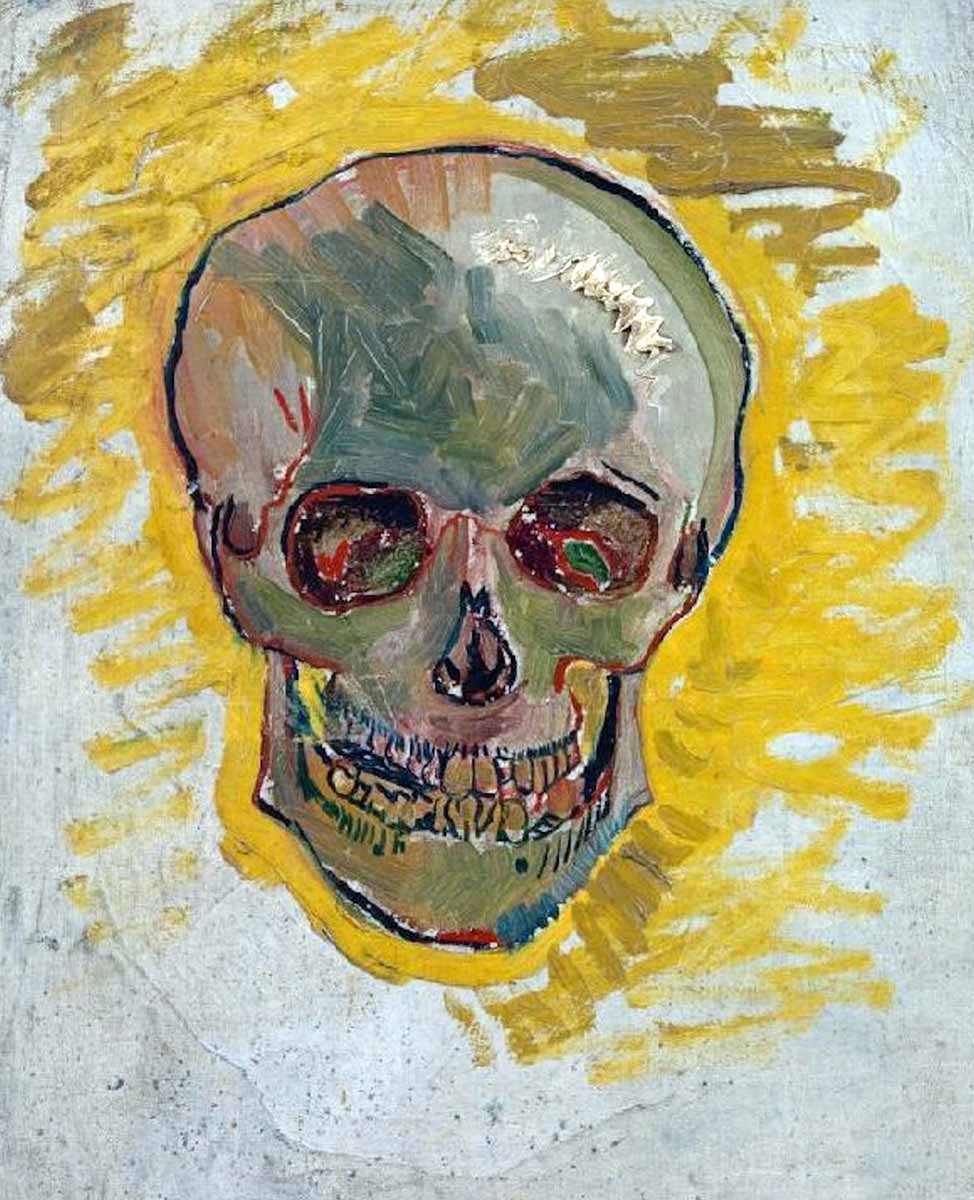
Skull, however, is clearly an attempt at a still-life painting without any satirical connotations. Van Gogh was experimenting with color theory during this period, as evidenced by his use of shades of red and green on the skull and blue outlines, rather than a muted palette as in the Antwerp version.
Moreover, the use of stippling distinguishes it from Head of a Skeleton with a Burning Cigarette which carries traces of the traditional Dutch brushwork through its use of broad strokes of paint.
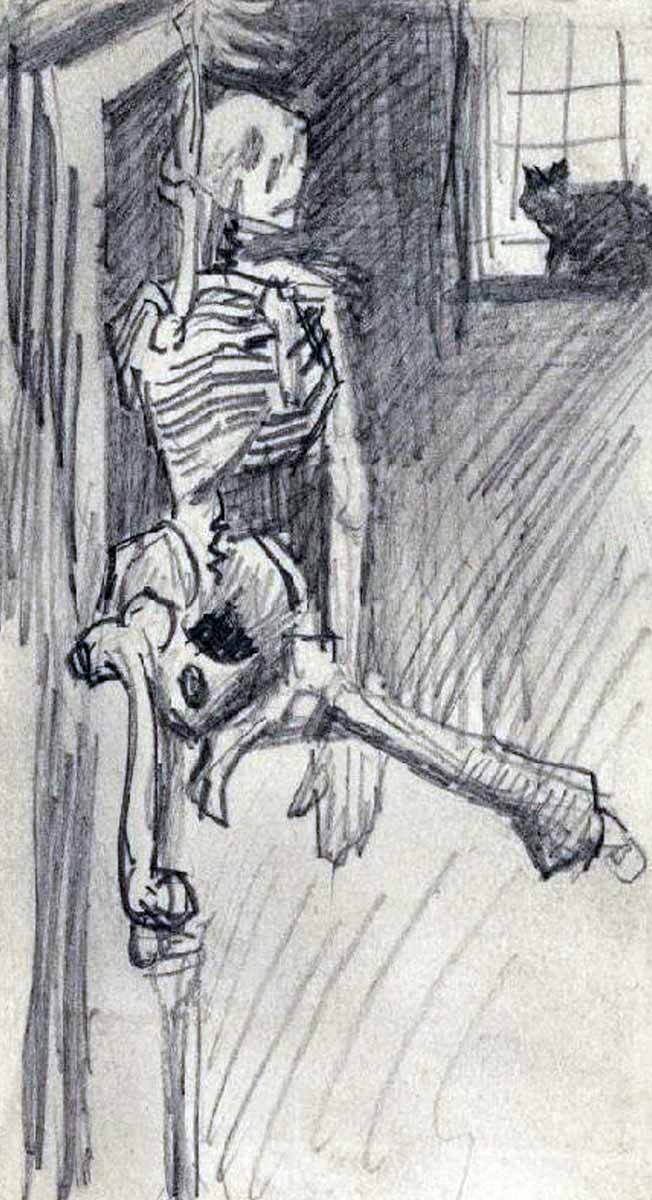
Another painting made around the same time in Paris with the same title depicts a skull viewed from the front. It is not as well-painted as the other two and it was made as a study to experiment with color. This version has more defined outlines and uses reds, yellows, and greens. Somewhere between 1886 and 1887, Van Gogh also made a pencil drawing on cardboard depicting a skeleton in front of a window with a black cat perched on the windowsill. The exact date of the drawing is not known, but it was most likely painted in Antwerp or Paris.
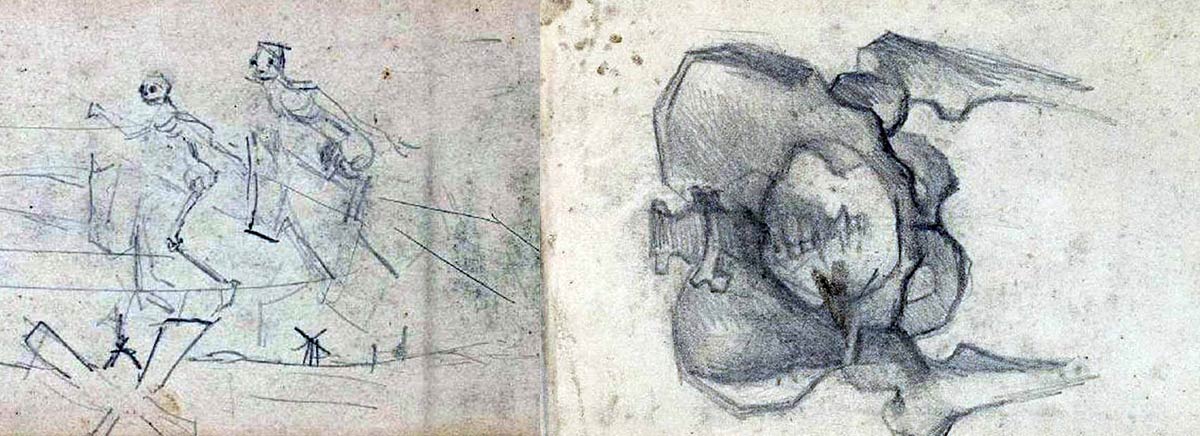
All of his works depicting skeletons fall within the same period, perhaps due to greater exposure to this subject in the art academy at Antwerp and in the studio of Fernand Cormon in Paris. In addition to these works, Van Gogh made two small sketches of skeletons in his sketchbook: one depicts a pelvis, while the other is less detailed and more imaginative, showing two skeletons riding horses side by side, with windmills surrounding them.
Van Gogh’s Sense of Humor
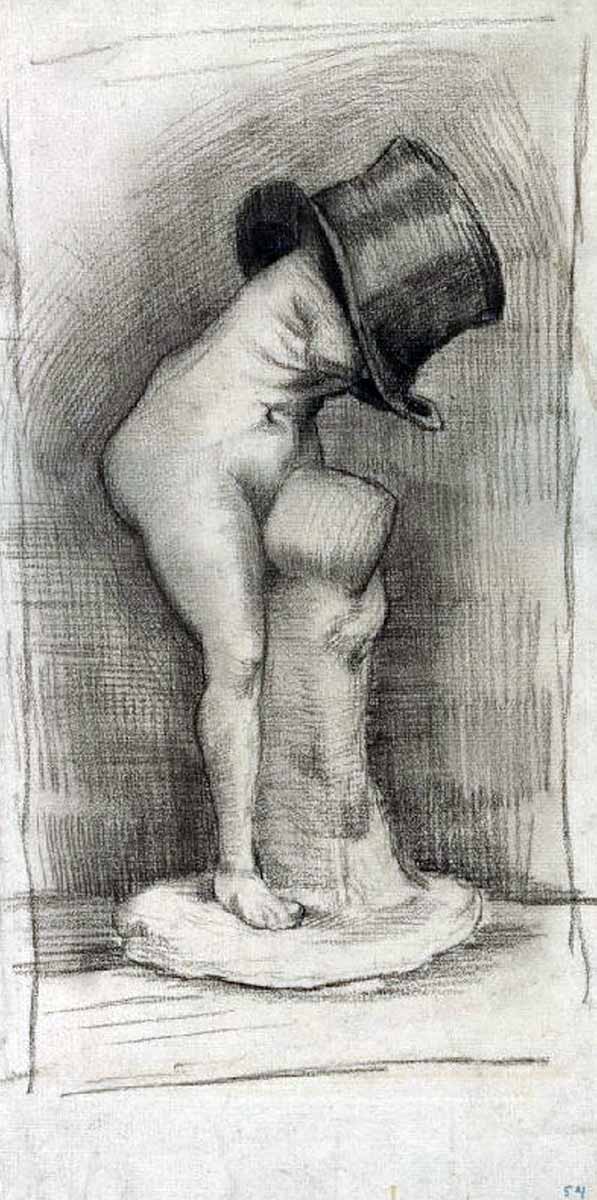
Head of a Skeleton with a Burning Cigarette is not the only work where Van Gogh displays his playful side. After moving to Paris, he joined the studio of Fernand Cormon to continue his practice of figure painting. Pupils frequently worked with plaster casts as models when drawing. Van Gogh made several drawings of such objects during his time in Cormon’s studio.
One of the works, titled Venus in a top hat, made with black chalk, depicts a plaster cast of Venus with the head comically covered in a top hat. This was likely also intended as a joke, treating the plaster cast of Venus as a hat stand. The drawing is otherwise well-made, with dark shading in the background that centers the white plaster cast. Van Gogh also drew framing lines around the sketch, suggesting his fondness for it.
Although Van Gogh is often regarded as a troubled figure today, he still had a sense of humor and made lighthearted jokes through his art. At the same time, he was opinionated and held a strong sense of individuality and desire for artistic freedom. Head of a Skeleton with a Burning Cigarette is an excellent example of this creative individuality.
He remained open to experimentation with both style and subject matter throughout his life, learning various techniques from his peers in Paris and developing an exceptional oeuvre that demonstrates his evolution as an artist beyond the constraints of art academies.