
Political myths are how a people see themselves. Myths express who we are and what we are supposed to be doing. The very idea that there is something ‘we’ are supposed to be doing is essential for societal cohesion and our psychological well-being. Without myths to make our lives meaningful in some way, we would have no impetus to endure the sacrifices and suffering that are inescapable aspects of living and working together in societies. When political myths are evoked, there is always a call to action, good or bad.
The Political Myth
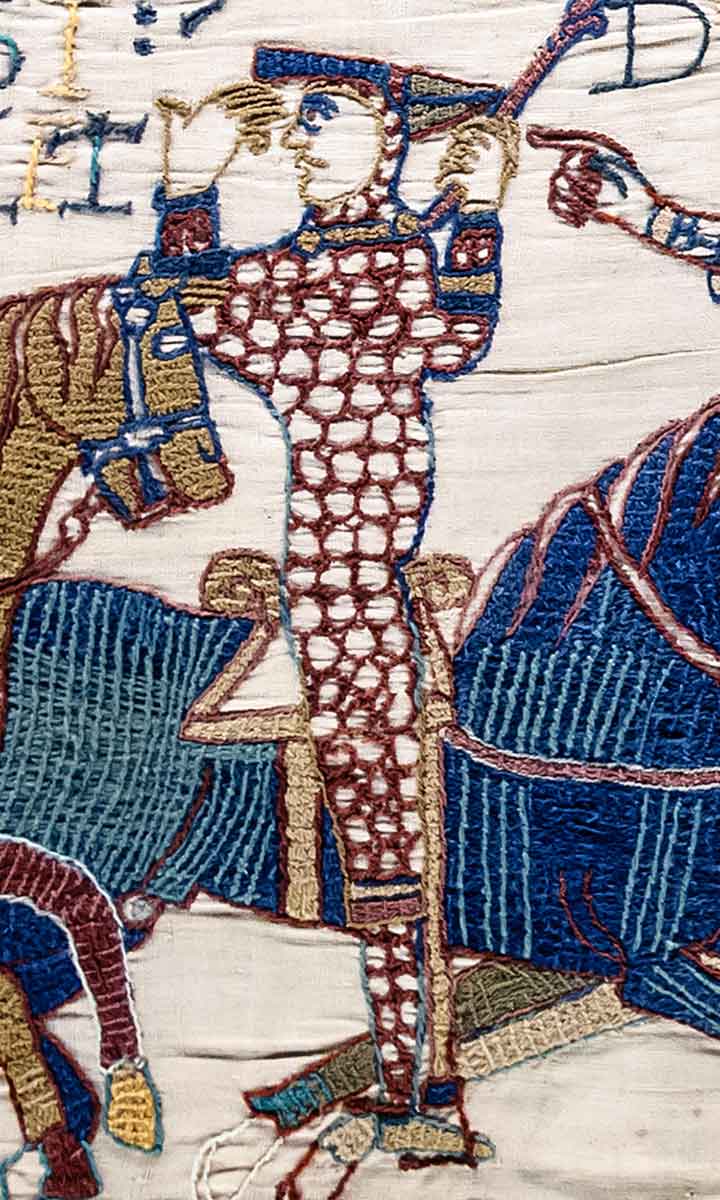
We will be looking at political myths, what they are, and how they are used. We will use the political myth of manifest destiny as a case study. However, all political myths typically work in the same way. For example, we could have just as easily used the myth of the Norman yoke, the idea that William I of England was not a legitimate king and that he oppressed the native people.
The key idea of the myth is that there was a time before the Norman invasion when England was supposedly a happier place. This view of ‘Merrie England’ became the source material for numerous stories and fairytales. A yoke is the wooden beam that ties the heads of oxen so a plough can be pulled. Used politically, a ‘yoke’ refers to the subservience of a people toiling for their masters.
The idea of the Norman yoke is the idea of overthrowing illegitimate masters and returning to a happier, legitimate way of life. Over time, the idea that the way things are now is somehow wrong and we need to return to the old ways has become ‘common sense.’
Manifest Destiny
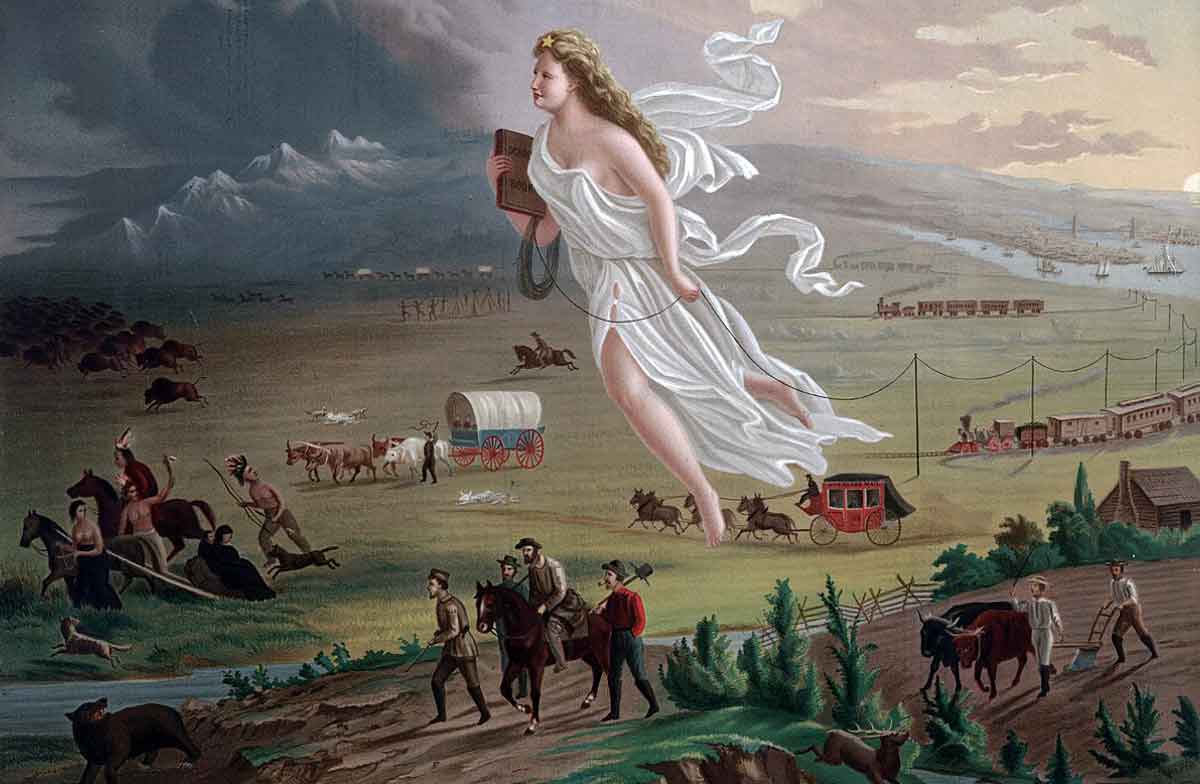
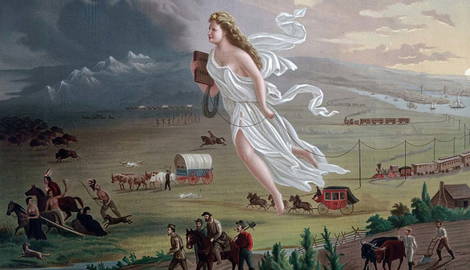
The myth of ‘Manifest Destiny’ concerns the idea that the United States has a clear (manifest) destiny (or fate). Here, we see two key ideas: (1) that the United States is doing something that it is supposed to be doing, and (2) that this thing will be done because it is its destiny. There is also an implicit suggestion that this progress is good and that everyone in the United States is united in a single mission. We often see the idea of manifest destiny coupled with a divine destiny.
In the mid-1800s, when the myth of manifest destiny was first used in the United States, the spread westward of colonial settlers was believed to be fated. This expansion across North America was, of course, motivated in large part by economic considerations. Still, there was also a great religious zeal fuelling the idea of a manifest and divine destiny.
Many settlers were Christian protestants convinced that the drive west was ordained and blessed by God. Indeed, they saw the Christianization of the native peoples and the occupation of the land as a religious duty. For many, it was not just the souls of the native peoples that were being saved but those of people worldwide. The idea was that the United States would stand out as an exemplar for the rest of the world. That is, acting under God’s instruction and command, the United States could show the world how human civilization ought to be done. It is not hard to see the potential dangers in ideas such as these. Let us take a closer look at this idea, beginning with the political use of the idea of a ‘city on a hill.’
City on a Hill

The idea of the United States as being some kind of shining beacon for the world—a city on a hill—comes from a religious speech given by a 17th-century Puritan, John Winthrop, speaking to a group of Puritan settlers:
“Ye are the light of the world. A city that is set on a hill cannot be hid. Neither do men light a candle, and put it under a bushel, but on a candlestick; and it giveth light unto all in the house. Let your light so shine before men, that they may see your good works, and glorify your Father which is in heaven.”
Winthrop’s speech was intended to strike a cautionary note. He was saying that the world would see the colony they were about to establish, and if they failed and fell into sin, God would withdraw his favor.
Since Winthrop’s speech, references to the United States being a ‘city on a hill’—in the sense of a shining example of God’s will—have been found in American political discourse on many occasions. The idea is inseparable from the myth of Manifest Destiny. Indeed, to evoke the idea of being a ‘city on a hill’ is to evoke the myth of manifest destiny.
Whenever a politician or political thinker wants the American people to think of themselves as united in a mission, sharing a common destiny ordained by God, they can evoke the idea of the United States being a ‘city on a hill.’ There is today a strong negative association between the idea of manifest destiny and such things as slavery, oppression of native peoples, and jingoism. Accordingly, modern politicians often talk about cities on hills rather than manifest destiny.
Political Use of Myth
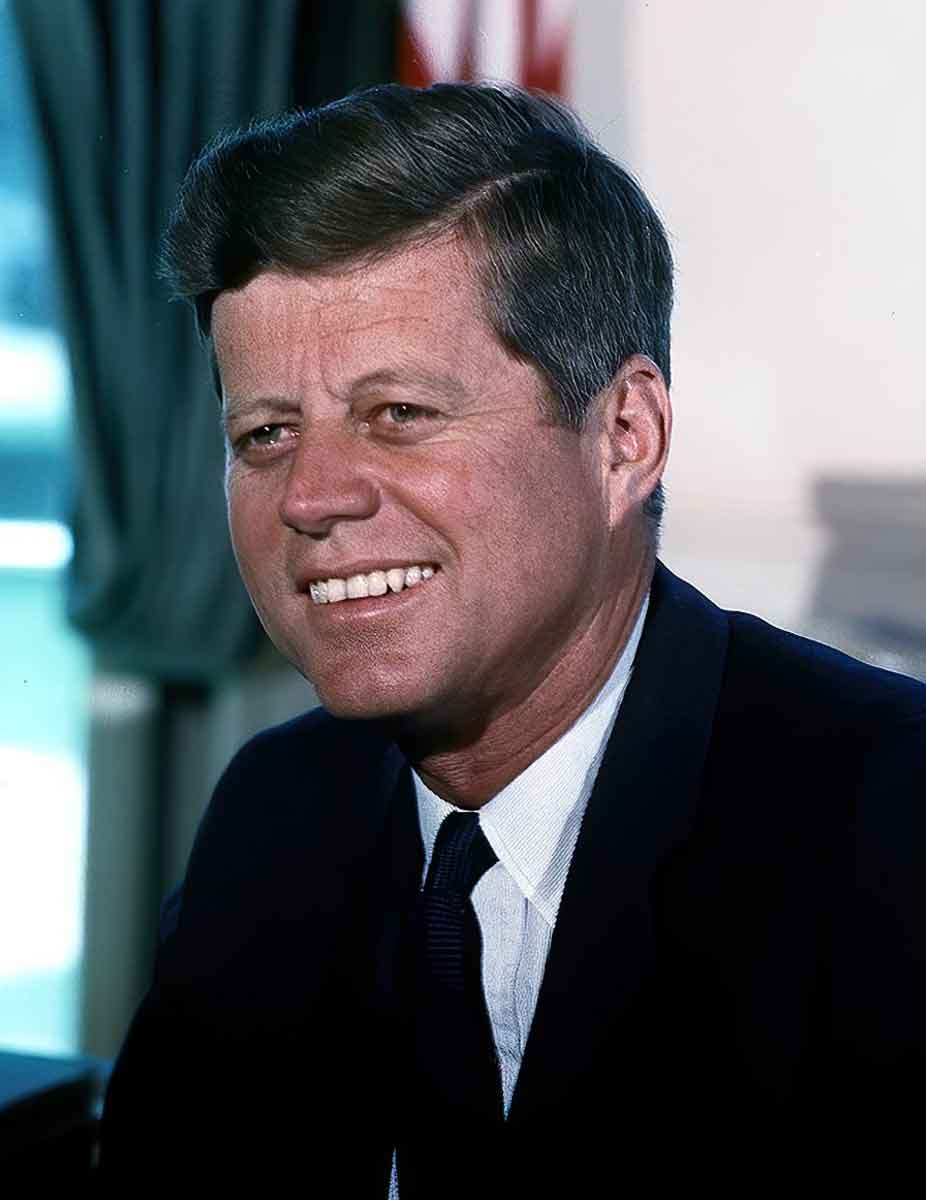
President John F. Kennedy, in a 1961 speech in Massachusetts, cited Winthrop as his guide and quoted Winthrop’s city on the hill words directly. Ronald Reagan quoted Winthrop repeatedly, notably in a speech on the eve of his election and during his farewell speech. Barack Obama also frequently referred to a city on a hill. Recently, the idea was evoked at the beginning of the 2022 hearing into the January 6th attack on the United States Capitol.
We can see from the brief sample above that it does not seem to make a difference whether the person evoking the city on a hill (a version of the myth of manifest destiny) is a Democrat or a Republican. In addition, despite the myth being based on a particular deeply felt religious belief, those using the myth do not all share the same religious views. For example, Kennedy was Catholic and Reagan was Presbyterian. Mitt Romney, who evoked the myth in a speech condemning Donald Trump in 2016, is a member of the Church of Jesus Christ of Latter-day Saints.
Political myths do not require those for whom particular myths are evoked to be very knowledgeable about the contents of these myths. For example, the myths of manifest destiny and the city on a hill do not need audiences to know specific Bible passages, who Winthrop was, or the history of colonial America. It is important that audiences experience the emotional pull of the myths and recognize and appreciate the ideas appealed to. The myth of manifest destiny includes the idea that the United States is morally virtuous and an example for the rest of the world.
What Lies Behind the Myth?
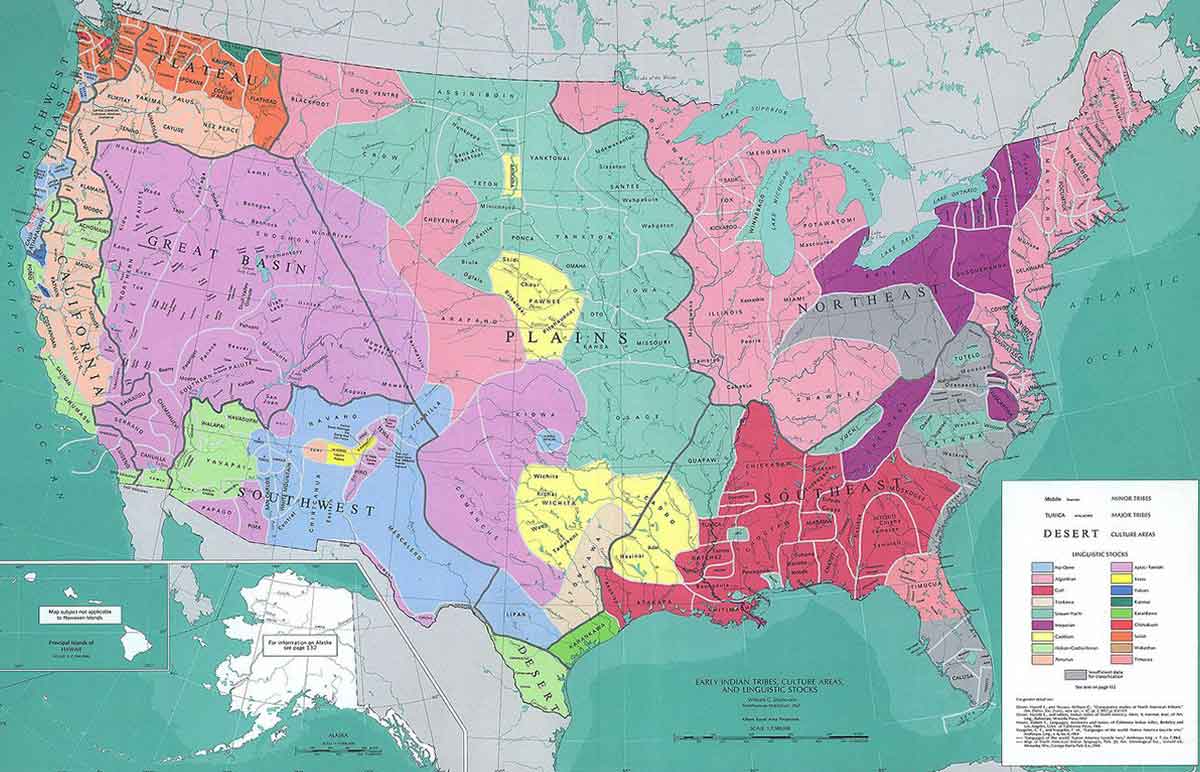
We have seen that the myth of manifest destiny appeals to ideas of a united people on a mission sanctioned by God. However, the reality is that not all Americans agreed with the ideals behind the ideas included in the myth. And even for those that did, they did not represent a united front. For example, both sides of the American Civil War (1861-1865) appealed to the idea of manifest destiny.
Abraham Lincoln delivered one of the most famous speeches to evoke manifest destiny during the 1863 Gettysburg Address. Here he talks of America’s ‘great task’ under God. In a speech to Congress the previous year, he referred to America as “the last best hope of the earth.” The idea of America being a shining example to the rest of the world is clear, as is the idea that Americans are carrying out God’s plan. Who exactly were these Americans, and why did God choose them?
The myth of manifest destiny originally expressed the idea that it was God’s will that settlers drive westward. This meant settling land that native Americans already occupied. Today, the idea that white Protestants should lead the way in showing others how human beings ought to live is deeply offensive. The focus of the myth is solely on certain white Christian settlers and ignores entirely the needs and wants of others. Implicit is the racist idea that some people are better suited to carrying out God’s will than others.
It might seem odd that this myth would still be widely evoked in the United States. Many of those employing the myth would never dream of explicitly endorsing the colonial fantasies of those using the same myth in the 1800s.
Political Myths as ‘Common Sense’
When political myths are evoked, it always coincides with some call to action. Typically, myths conjure up something from the past (actual or perceived) and look ahead towards an imagined future. The intent, however, is to call for action today. In the most simple sense, the political myth-maker says to their audience: this is how we were and what we should be doing; if we do not do X, we will cheat ourselves out of our future.
We have seen in our case study of the myth of manifest destiny that anyone using this myth (the myth-maker) points to an imagined past in which it was established that God gave all Americans a divine mission to lead the way and show the world how humans ought to be.
Past: God gives the United States a divine mission
Future: The United States becomes a city on a hill, an exemplar for the world
X: the thing that must be done to secure that future
Of course, if the future is pre-told and unavoidable, then X is what must be done to stay on the right path to this future. Not doing X becomes a diversion, a waste of time, and futile.
It is possible to strip back political myths to the bare bones. That is, to a basic idea repeated so often, and in so many ways, that it becomes ‘common sense.’ In the United States, the myth of manifest destiny simply becomes the idea, taken for granted, that the nation or its leader is and ought to be an example to the world. We see this clearly in the often-repeated idea that the United States, or sometimes the President of the United States, is the leader of the free world.
Political Myth-Makers
When we talk of political myth-makers, we are not referring to the first person to come up with the idea of manifest destiny. The origins of political myths are always obscure. The reason is that the users of political myths will always take existing myths and work them together to create a new myth that exactly serves their purpose. We have already seen how the ideas of manifest destiny and a city on a hill work so well together. In the last section, we also saw how the idea of the United States being the ‘leader of the free world’ fit into the overall political myth. This idea emerged during the Cold War; the city on a hill has Biblical origins and came into political use during the 1600s, and the idea of manifest destiny came to prominence in the 1800s.
We saw that political myths give people something to do: they call people to action. But they also give people a meaning and purpose. The myth of manifest destiny makes it simply common sense that Americans have a purpose and their endeavors, struggles, and successes are meaningful. They are on a mission.
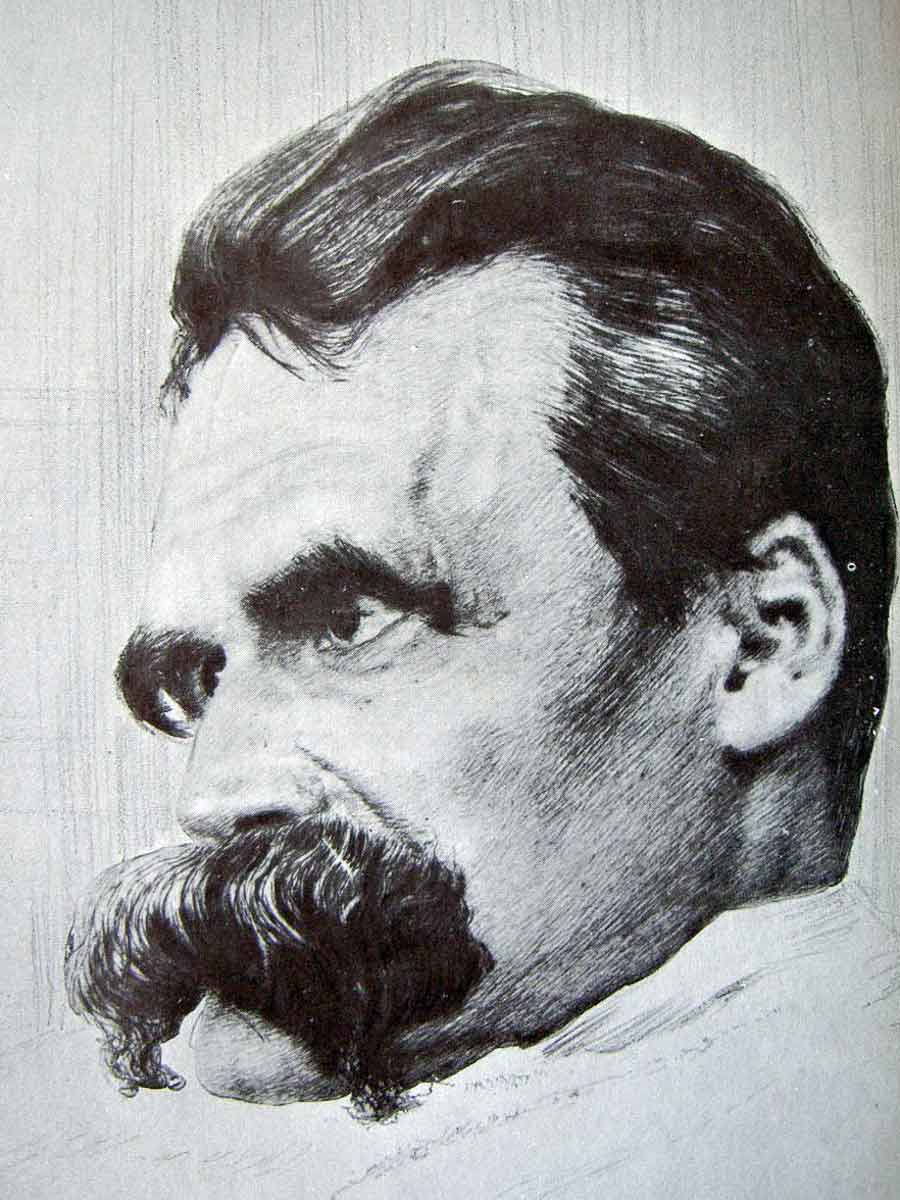
The German philosopher Friedrich Nietzsche once said that all myths are intended to counter the wisdom of Silenus. The mythical creature is said to have revealed the terrible secret that is the worst thing for humans to hear: that the best thing in life is to have never been born, and the second best thing is to die as soon as possible. This myth captures the idea that life is not worth the effort; that everything is meaningless. For Nietzsche, all other myths, including political myths, counter Silenus. Political myths are so powerful because they give meaning to our lives.
Political Myths Must Be Believed
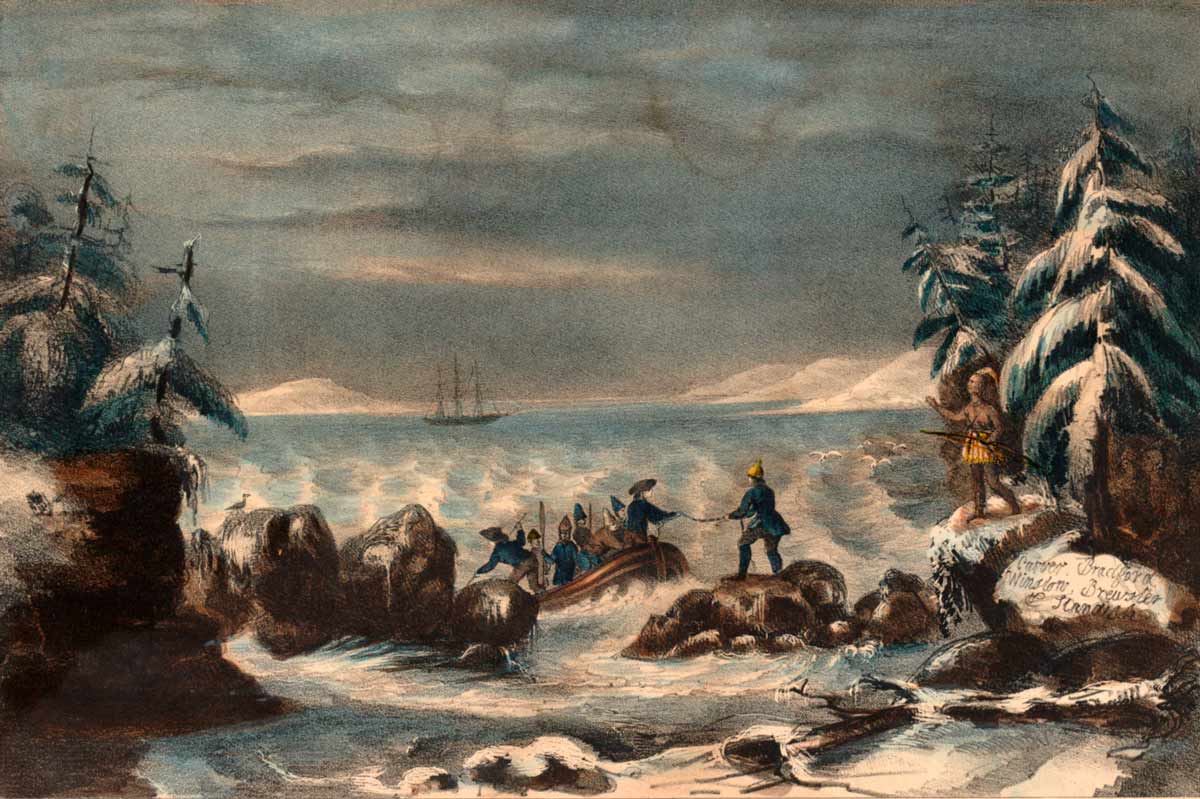
For the ideas expressed by political myths to be believed, they must be taken for granted as common sense. That is, for the myth of manifest destiny to be effective, Americans must simply accept that in some way the rest of the world has some kind of responsibility to do so. Crucially, they do not have to believe in anything particular they have to do or even have a fixed belief concerning how they came to be in this position of being or becoming exemplars. Because there is no fixed content to this notion, various politicians and political thinkers can use the myth so freely and effectively.
There is an adage that if you say something often enough, people will start believing you. We often hear implicit references to the myth of manifest destiny outside the United States. For example, when it goes unchallenged that the President of the United States is the leader of the free world. Usually, references to leading the free world (the idea of the ‘free world’ is a political myth in itself) make no mention of manifest destiny. Still, without the idea of the United States being an exemplar for the world, it makes no sense to see them as a leader.
Can We Do Without Political Myths?
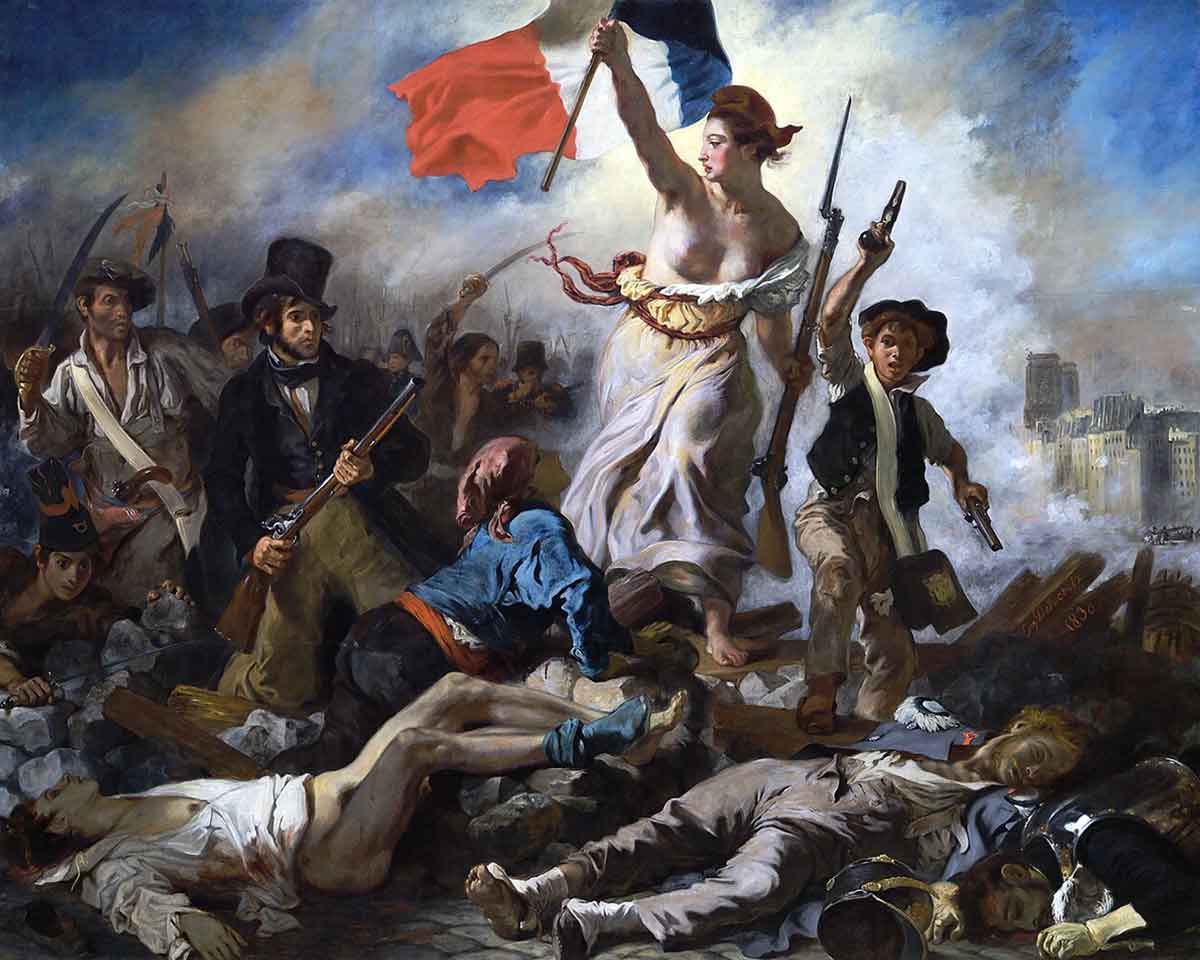
Because political myths draw on existing common sense—the sense of who a people are and what they do—it will be impossible to do away with these myths without harming this common sense. Political myth holds together the common sense of who a people are; destroy the myth and you no longer have ‘a people’. You just have a large group of people with no sense of collective identity. The interesting thing is how, if you wanted to get rid of political myth, you could get people to abandon their collective identity. To do so, you would need to use a different political myth. But this would not get rid of political myth. It would simply replace one with another. Let us break down the problem.
To appeal to people to change the way they see themselves, one would first have to recognize them as a people. But when doing this, you use the common sense and political mythologies that currently unite them. In order to get them to act as a people (to abandon their political myths), you must appeal to them as a people (use their political myths).
Further, if all you are doing is telling people to abandon the common sense of who they are, with nothing to replace it, you are going against common sense. No one would listen to you; it would be common sense not to!
To succeed in eradicating an existing political myth, you would need to make it common sense to abandon the old myths. But to do this, you must establish a new common sense, which requires a new political myth. This is why political myths cannot be totally destroyed. Myths can only be replaced by new myths.