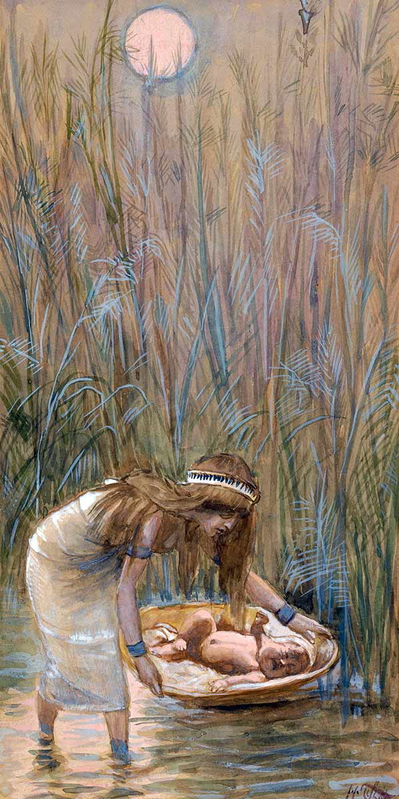
The Exodus is one of the Bible’s most dramatic stories. It has been made into multiple feature films, all of which include the scene of Moses’s mother Jochebed putting the baby Moses to float in a basket on the Nile River. The baby’s sister keeps a vigilant eye on him from a distance to see what would happen. This affectionate scene, however, contrasts with the relationship these siblings seem to have had as adults.
Miriam Is Moses’s Older Sister
The stories of Moses in Egypt leaves many key players unnamed. The Pharaoh, for example, is never identified. This has led to a great deal of debate about when Moses lived in Egypt.
Two others left unnamed in the story of Moses’s infancy are his mother and sister. If read on its own, this story would leave the reader assuming that Moses was his mother and father’s first child, and that his sister is either a half-sibling or a person of more distant kinship. Later, when Moses is an adult, Aaron is introduced as his older brother, but he does not appear in the narrative of Moses’s early childhood.
Ambiguity about Miriam’s relationship to Moses arises again in Exodus chapter fifteen, where she is identified as the “sister of Aaron.” While readers are aware that Aaron is Moses’s brother and can, therefore, logically conclude that the three of them are siblings, the reference to Aaron and Miriam’s familial tie without a mention of Moses has drawn attention from some scholars. Some suggest that there were originally differing traditions about Miriam—one in which she and Aaron are Moses’s nuclear siblings and another in which she and Aaron are related to him more distantly.
Regardless, once the pieces are fitted together, Moses is presented as the youngest of three siblings who all have the same mother and father. Miriam appears to be the oldest of the three.
Moses Was Adopted by an Egyptian Princess
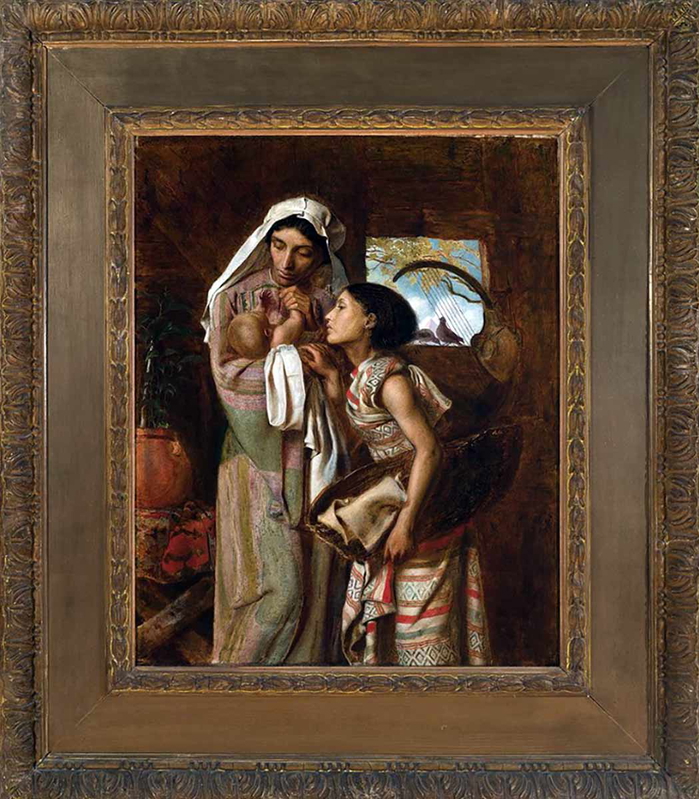
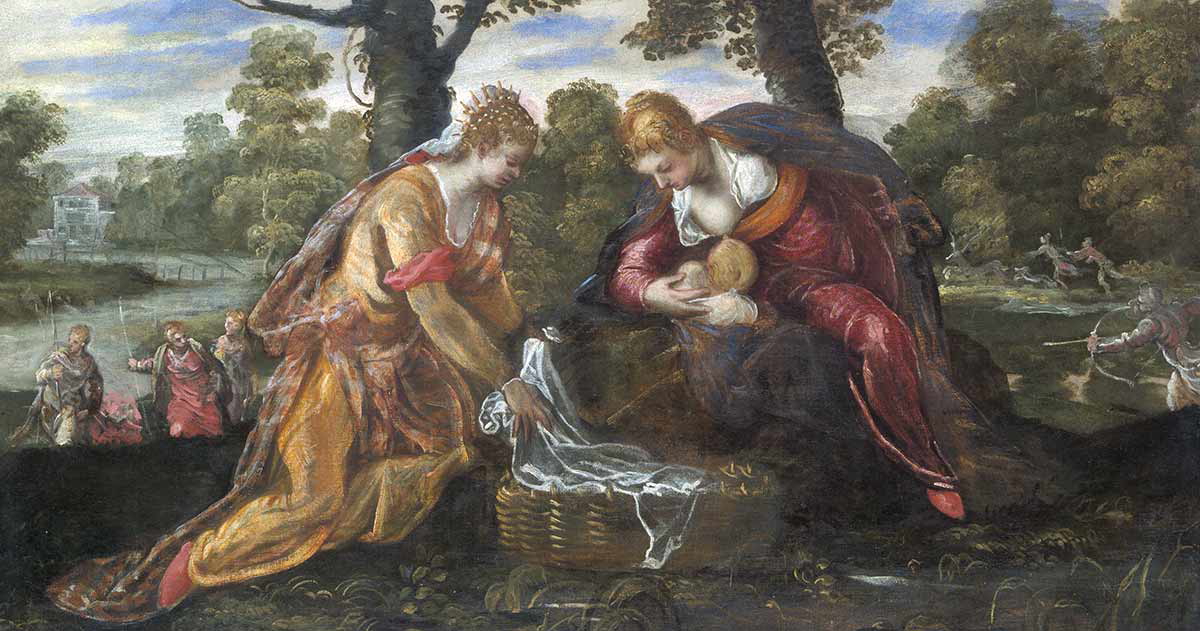
Moses’s upbringing was clearly distinct from that of his siblings. Because she also goes unnamed, the identity of the princess who fishes Moses out of the Nile River and then adopts him as her child remains unknown. But according to the narrative, it is due to the quick thinking of Moses’s sister—traditionally, Miriam—that he grew up with some Hebrew influence. The text does no clarify exactly how much, but he was under the care of his biological mother at least until he was weaned.
When the princess draws Moses out of the river, Miriam immediately approaches the royal and asks if she might be in need of a wet nurse for the child. Miriam then brings Jochebed, his biological mother, to fulfill the role. Her action, thus, puts Moses back into the care of his Hebrew parents even as he is adopted into the royal family.
Miriam Is One of Israel’s Leaders after Their Exodus from Egypt
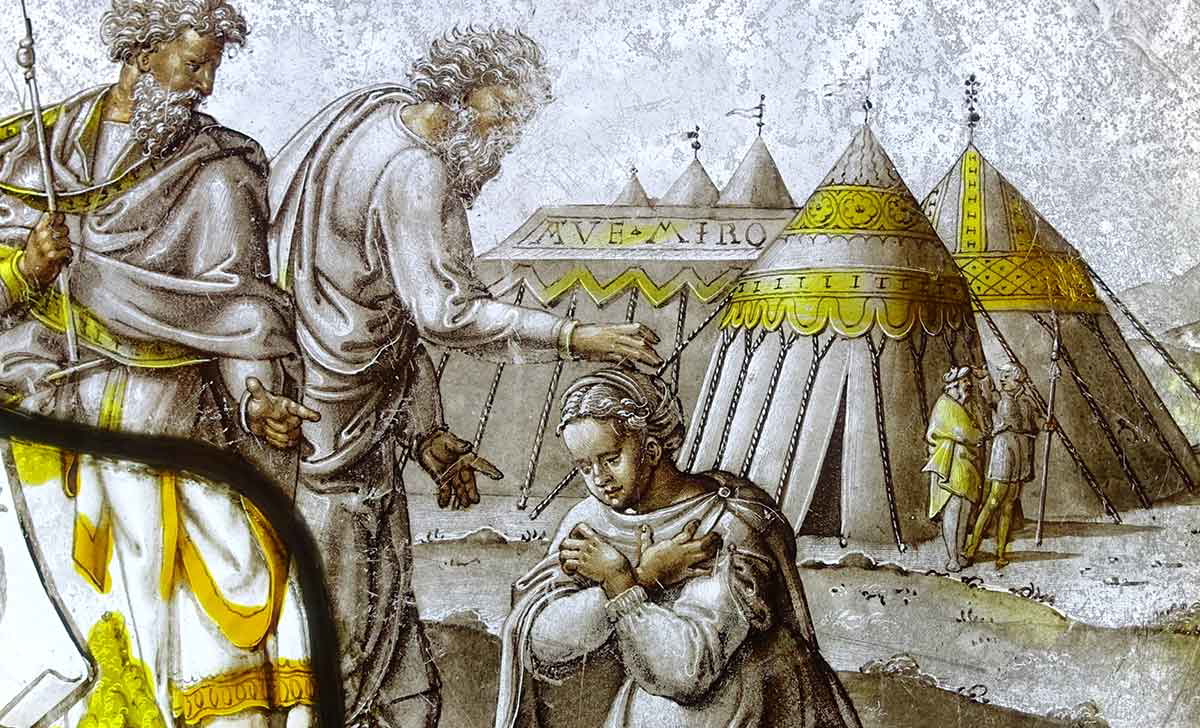
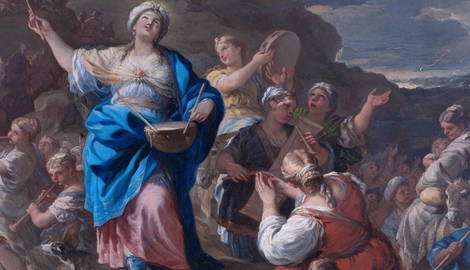
Miriam is one of only four women given the title of “prophet” in the Bible, and the text clearly suggests that her authority held sway during Israel’s years of wandering before they entered Canaan. She is remembered fondly as the leader of the celebratory procession after the Israelites’ storied crossing of the Red Sea.
Unfortunately, however, a rivalry developed between Miriam and Aaron and their brother Moses. In Numbers chapter twelve, the two siblings challenge Moses regarding something having to do with his Cushite wife. The text provides no details about why they disapprove of his marriage, but it is somehow related to how Moses seems to view his own prophetic status. It appears that Miriam and Aaron thought themselves equals to Moses as prophetic leaders. In a stern rebuke of their audacity, God strikes Miriam with a severe skin rash. Aaron, however, does not seem to have suffered a similar consequence.
Who Is Miriam in Ancient Sources Outside the Bible?
When few details are provided in the biblical text, later traditions often arise that fill in gaps about characters in its stories. The Dead Sea Scrolls contain a text that dates to the second century BCE called the Visions of Amram. Amram is the name of Moses, Aaron, and Miriam’s father in the Bible. In this ancient document, Miriam is said to have married her uncle Uzziel, who is identified in the Bible as Amram’s brother. The couple is said to have had three sons. Writing in the first century CE, the Jewish historian Josephus identifies Hur, a different biblical character, as Miriam’s husband.
Did Miriam have a family? If she did, neither her husband nor her offspring are mentioned in the Bible. Like Moses, Miriam’s legacy cannot be traced through a physical lineage. The meaning of her life lies instead within her own character, her place in the biblical story, and her contribution to the formation of ancient Israelite and, later, Jews’ understanding of their own identity and values.