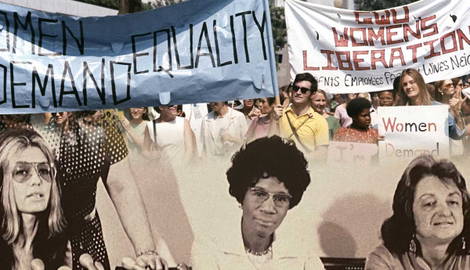

Although the 14th and 19th Amendments to the US Constitution had seemingly put women on equal legal status with men in the United States, the reality was that sexism was deeply entrenched in all parts of life. However, the growing successes of the Civil Rights Movement (1948-1965) inspired women to launch their own movement for greater equality. In the 1960s, women began organizing and protesting for equal rights in the areas of employment, marriage, health care, and personal finance. During this era, women were often denied access to many jobs, forced to remain in unhappy or oppressive marriages, and had to receive their husbands’ or fathers’ approval for certain medical care or financial transactions.
Setting the Stage: Early Feminists Urge Equality
There was little gender equality in early America, but there were still many individual women who fought hard to make positive changes in this area. Perhaps the original American feminist was Abigail Smith Adams, wife of the second US President John Adams. Remembered for her famous quote to the Founding Fathers to “remember the ladies,” Abigail Adams was an intelligent and hardworking woman who handled her family’s business affairs while her husband was away from home as a diplomat. In a rarity for the time, Adams deeply appreciated and respected his wife’s advice on political affairs.
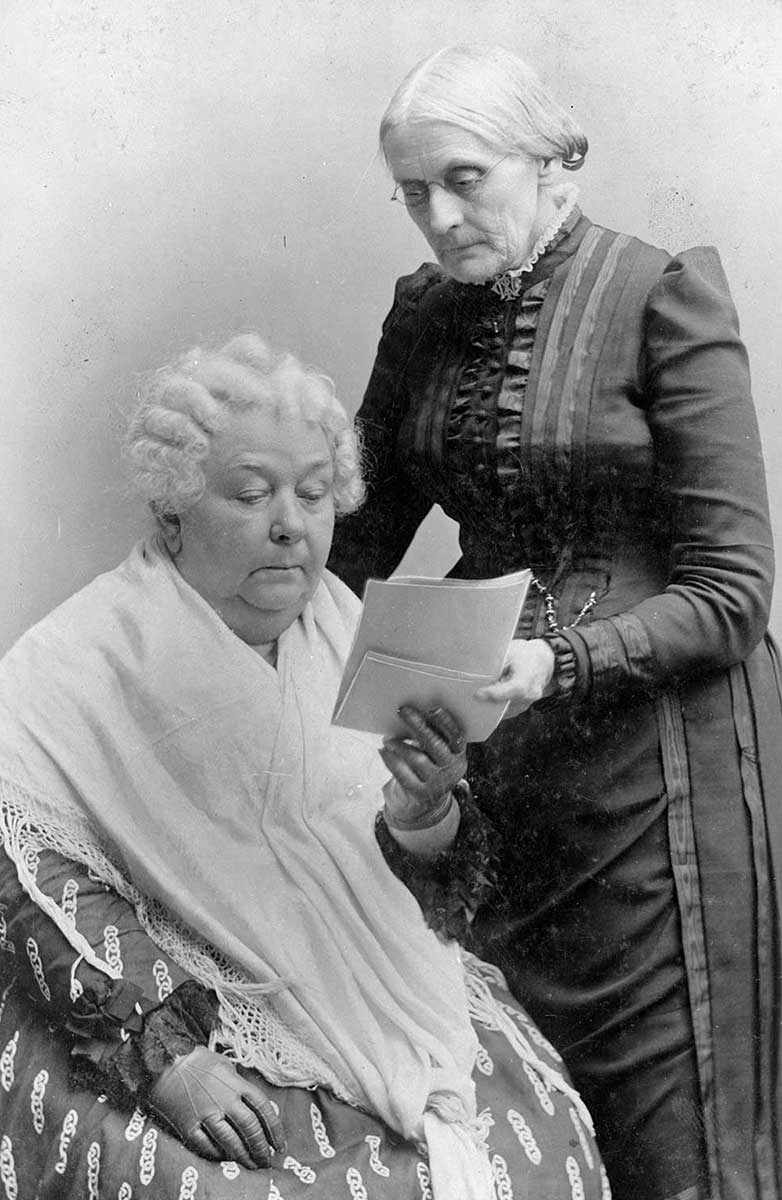
More widely known as an original feminist is Susan B. Anthony, who was born around the time of Abigail Adams’ death. Anthony believed in equality and was an abolitionist who argued passionately against slavery. She and Elizabeth Cady Stanton held conventions beginning in the late 1840s to advocate for women’s suffrage, or the right to vote. The most famous of these, held in 1848 by Stanton and fellow suffragist Lucretia Mott, was the Seneca Falls Convention in New York. This event is considered the first Women’s Rights event in the United States.
Setting the Stage: The Suffrage Movement
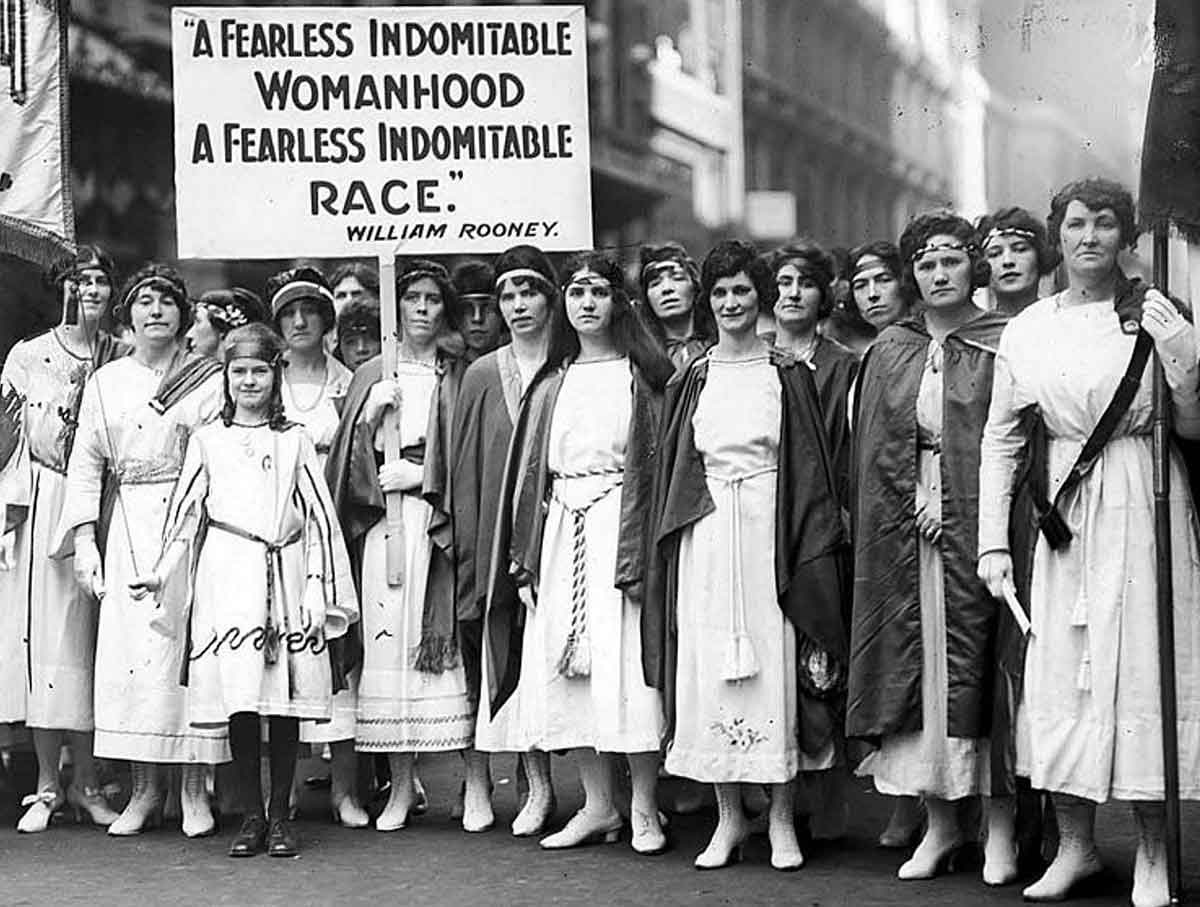
Despite the best efforts of Susan B. Anthony, who passed away in 1906, the suffrage movement faced staunch resistance from social conservatives. However, Anthony’s death occurred during the Progressive Era, when American society was more receptive to government and social reforms. Suffragettes were well-organized during the early 1900s and had the support of many Progressive Era reformers. Many individual states began granting women the right to vote, though most Southern states did not.
Although a US Constitution amendment to grant women the right to vote had been proposed as early as 1878, shortly after Anthony and others cast their own ballots in violation of the law, women’s groups were only firmly united behind passing this amendment in the 1910s. In 1917, the changing of New York state law to allow women to vote swayed US President Woodrow Wilson to support the women’s suffrage amendment and created a critical mass (necessary minimum to grow) of support behind the amendment. Three years later, in 1920, the 19th Amendment to the US Constitution was ratified by the states, granting women the right to vote in all elections.
Setting the Stage: World War II and Factory Labor
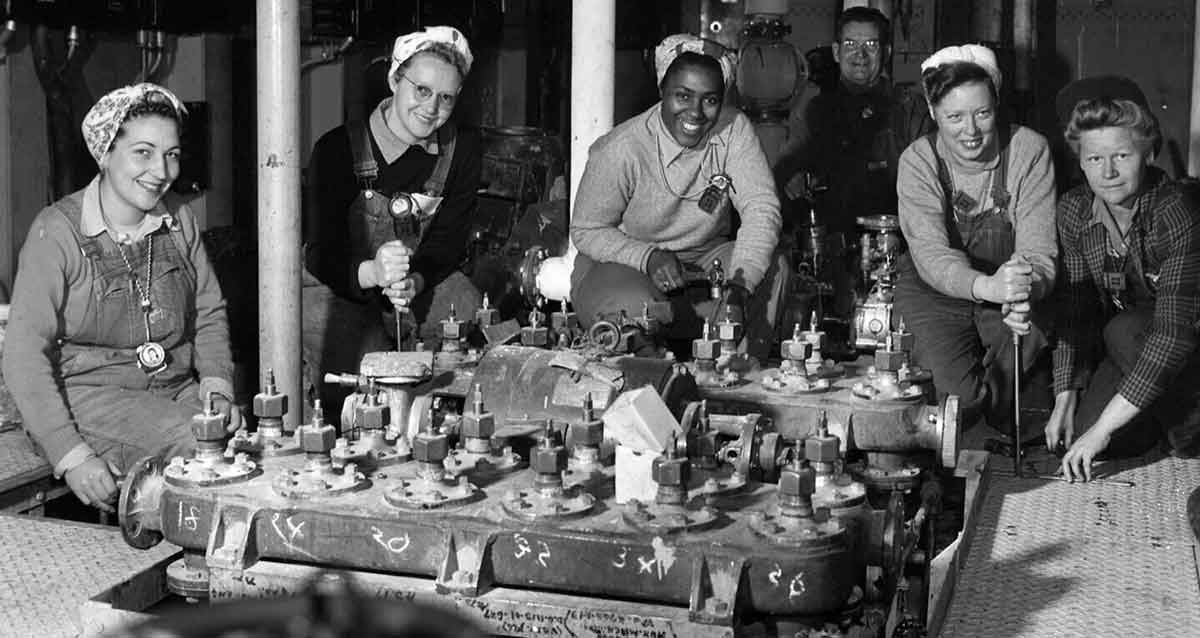
Sadly, the right to vote did not significantly change women’s positions in society as many suffragettes and progressives had hoped—at least not very quickly. There was slow progress in increasing women’s ability to work outside the home, which reached approximately 50 percent of single women by 1930. However, only 12 percent of married women worked outside the home, and most were relegated to domestic employment (household help), nursing, or clerical work (typing and other secretarial tasks). During the Great Depression, women’s employment prospects were actually harmed as jobs went to men, who were seen as the default breadwinners for families.
World War II erupted in December 1941 with the Japanese attack on Pearl Harbor and swiftly pushed the United States into full mobilization for war. As men entered the military, their jobs needed to be filled to maintain industrial production and keep society running. For the first time, large numbers of women took on industrial jobs and skilled positions, proving they could handle such tasks with distinction. In both World War I and World War II, the legal basis for equal pay for equal work was established but was often ignored or manipulated by factories to underpay women. Despite lower pay, women worked admirably and constituted 37 percent of the civilian labor force by 1945.
1946-1950s: Women Forced Back Into Domesticity

When World War II ended in September 1945, millions of men returned from military service and retook their previous positions in industry. Women were forced out of jobs, and many employers that had hired women during the war changed their policies to only hire men. If women did remain employed, they sometimes saw their pay reduced due to changing job descriptions. Part of this reversal of women’s employment was due to fears of men being underemployed (working jobs with lower pay or lower skill), and part was due to Cold War societal pressure on women to become homemakers to contrast with working women of the Soviet Union.
An economic boom during the 1950s reduced the need for most white women to work, and most sources of influence on young girls—educators, mass media, and political leaders—pushed the narrative that women should quickly get married, have children, and stay home to run the household. However, women continued applying political pressure to be included in government and given equal pay for equal work. Underneath the positive imagery of the 1950s economic boom, many low-income and minority women did not enjoy what the media depicted and were forced to work outside the home for unfairly low pay. However, their feelings of oppression were about to be met with two tools: a powerful social movement and increased education that provided tools for change.
1963: The Feminine Mystique Sparks a Movement
The Civil Rights Movement, considered by many to have begun in 1948 when US President Harry S. Truman desegregated the military, became widespread in the South during the 1950s. Black men and women used peaceful protest to demand desegregation and equal treatment and slowly achieved victories through boycotts, sit-ins, marches, and lobbying public officials. The Civil Rights Act of 1957 was the first federal law regarding equal rights for minorities since the Reconstruction Era after the American Civil War. Women saw these victories and questioned their own condition of being treated as less-than-equal.
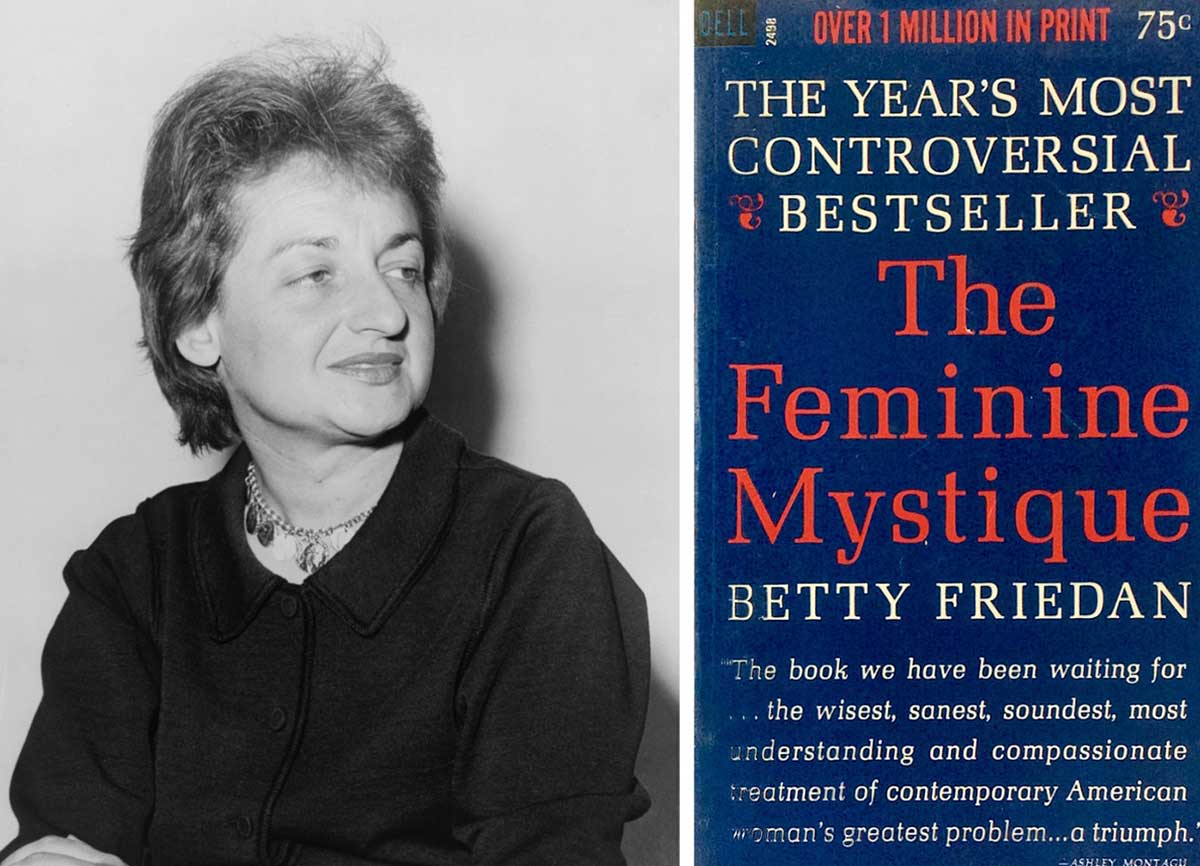
In 1963, author Betty Friedan published a book that received a small initial printing of 3,000 copies: The Feminine Mystique. The book was the result of research Friedan had conducted on women college graduates and the lives of women, including media portrayal, during the late 1950s. Women found the book groundbreaking, as something finally detailed their feeling unfulfilled due to societal expectations of domesticity, and it triggered demands for equality. The fight for women’s equality surged to unprecedented levels since the suffrage movement, and US President John F. Kennedy added women’s rights to his civil rights platform.
Late 1960s: Women Seek Liberation From Oppressive Standards
The Civil Rights Act of 1964, proposed under Kennedy and signed into law by his successor, Vice President Lyndon B. Johnson, included gender as a protected class. This was a major legal victory for women’s equality and complemented the Equal Pay Act of 1963. Unfortunately, some business leaders resisted and argued that it was costlier to employ women. While women had won political and legal victories, many societal leaders still expected women to take subservient roles. Second-wave feminism arose to fight oppressive social standards that had almost as much power as the previous legal standards.
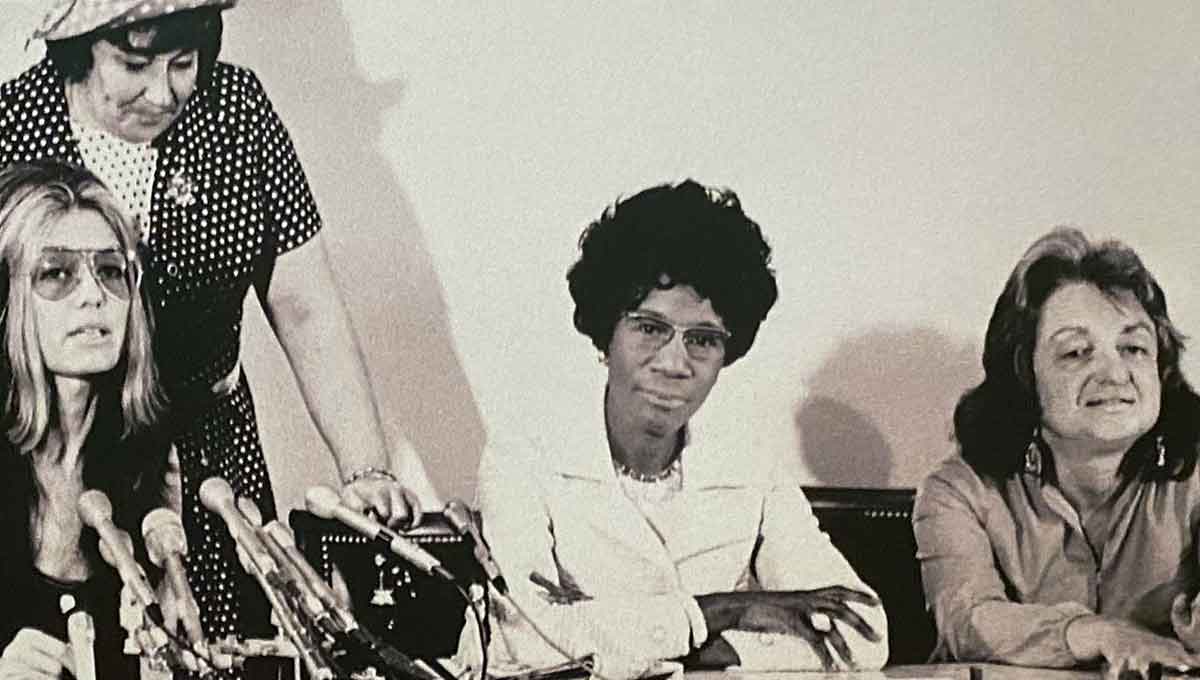
Gloria Steinem became a leader of second-wave feminists by fighting to increase abortion rights for women in 1969. Up through the 1960s, many women had no legal access to abortion and were forced to give birth to children in impoverished or unsafe homes. Pregnancy could be used to trap women into unhappy and even violent relationships. Steinem and Freidan, who had founded the National Organization for Women (NOW) in 1966, helped grow a women’s movement to pursue equality in non-employment areas like marriage, personal finance, and health care to prevent women from being trapped in bad relationships.
1967-71: Incremental Improvements for Women
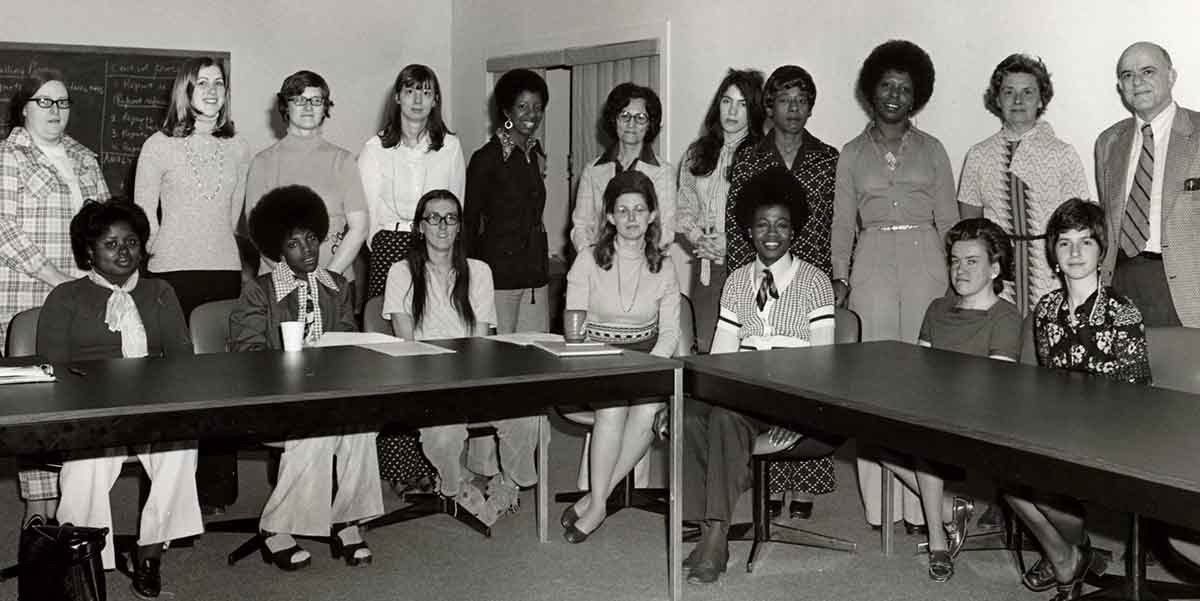
Although laws in 1963 and 1964 granted equal pay and hiring/termination protections for women, some employers resisted by avoiding hiring women. In 1967, President Lyndon Johnson used executive orders to expand requirements that federal government agencies and contractors (companies that provide services for government agencies) provide equal employment opportunities for women. This prevented many jobs from being labeled as “men only.” In 1968, regulatory agencies determined that job openings could no longer mention a gender preference or requirement.
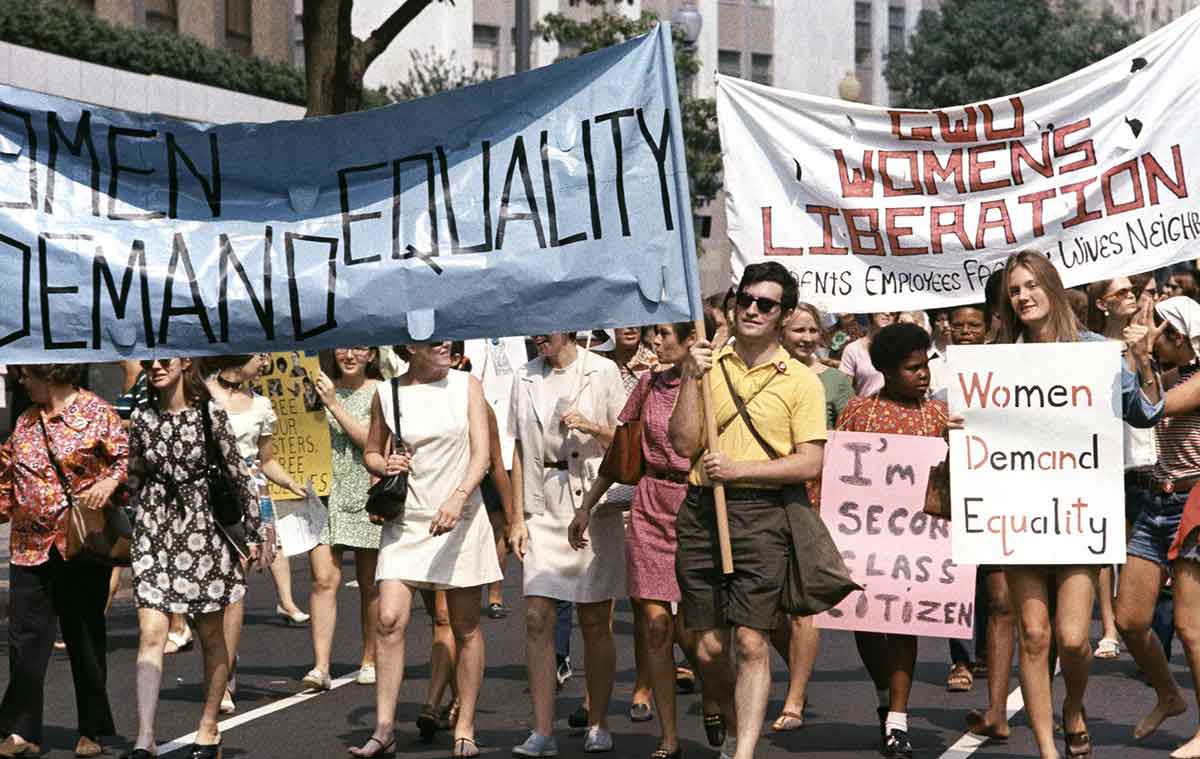
The year 1969 was a landmark year for women’s rights, with single-sex job requirements being deemed unconstitutional in the case Bowe v. Colgate-Palmolive. Women had to be given the chance to meet gender-neutral standards of strength and skill, opening up many industrial jobs and first responder positions. Socially, a major breakthrough in women’s liberation was achieved that same year, with California becoming the first state to allow no-fault divorce. Previously, women could be trapped in bad marriages if they could not sufficiently prove abuse or adultery to a court. By 2010, all US states had legalized no-fault divorces.
1972: Congress Passes Title IX and Equal Rights Amendment (ERA)
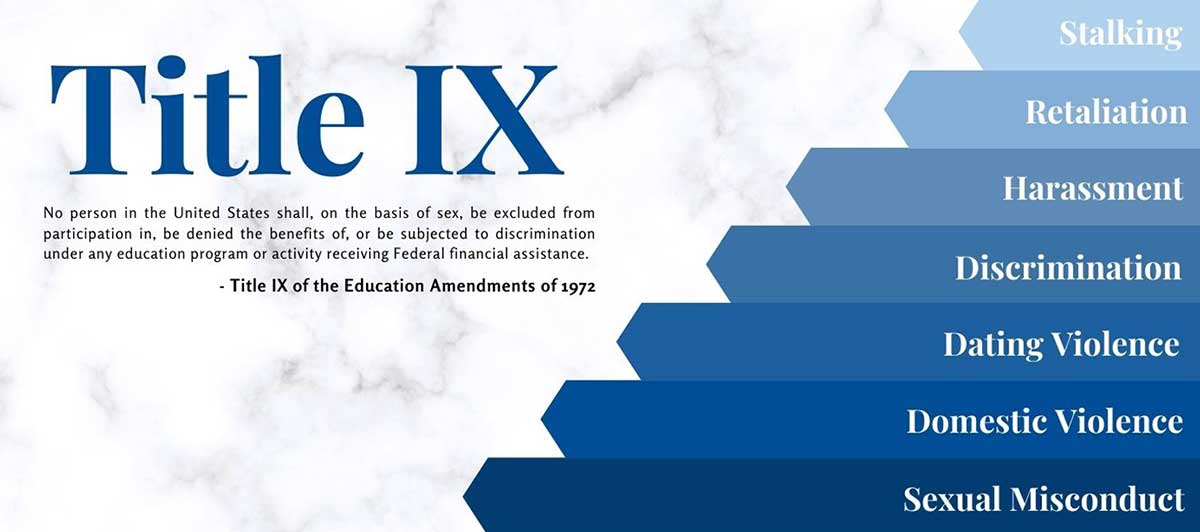
Three years after the landmark victories of 1969, two major federal acts energized women’s participation in American society. The first was the passage of the Title IX amendments to the Elementary and Secondary Education Act. This periodically amended education law applies to all public institutions that receive federal funding assistance, including colleges and universities. Title IX requires equal funding to be provided to girls’ and women’s extracurricular activities and requires institutions to investigate allegations of sexual harassment and sex-based discrimination. It revolutionized education for girls (K-12) and women (higher education) by opening up many programs, extracurricular activities, and sports.
An even greater political event occurred with Congress’ passage of the Equal Rights Amendment (ERA) of 1972. The simple amendment to the US Constitution would have allowed Congress greater power to prevent any state from “denying or abridging” anyone’s rights on the basis of sex. This groundbreaking event, which had been attempted previously in the 1870s and 1920s, was finally achieved with the help of new women legislators in Congress, especially Shirley Chisholm of New York, who introduced the ERA in the US House of Representatives in 1969.
Late 1970s-1980s: Legal Movement Wanes
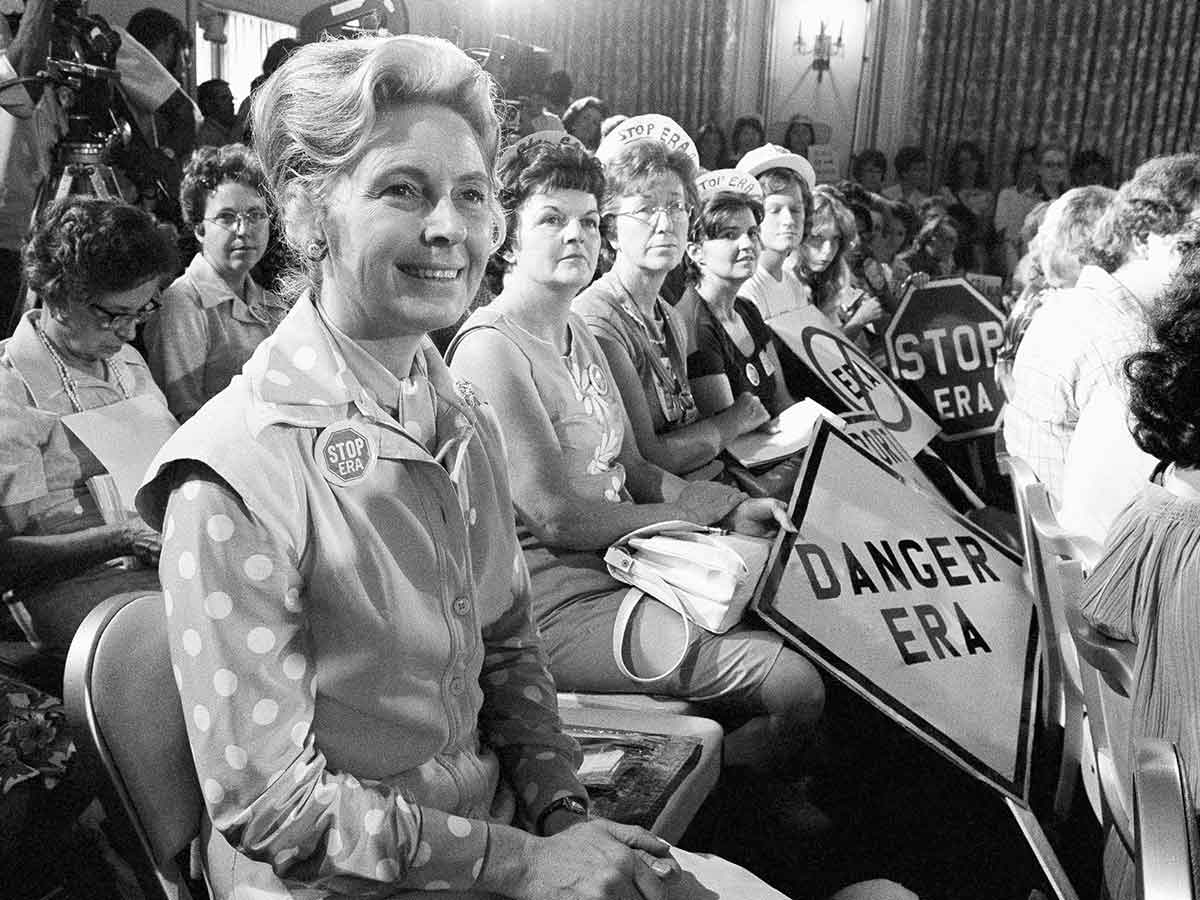
To ratify the ERA, 38 of the 50 US states needed to approve it through their state legislatures. Quickly, 30 states did so, but then momentum stalled. There was a 10-year time limit for ratification, so the June 1972 passage by Congress meant a deadline in June 1982. Sadly, the ERA expired with 35 of the necessary 38 states having ratified. In 2020, the 38th US state, Virginia, ratified the 1972 ERA. Although the amendment has expired, subsequent state ratifications signal support for women’s equality.
The loss of momentum for ERA ratification in the late 1970s was part of renewed conservatism in American society. In 1980, Republican presidential nominee Ronald Reagan helped usher in the New Right and a reinvigorated conservative movement. His political ally, conservative attorney Phyllis Schlafly, successfully criticized the ERA as having gone too far to grant women equality. She said the amendment would subject women to a military draft and hurt women when it came to legal and child custody issues.
Today: Women’s Equality Still a Socio-Political Movement
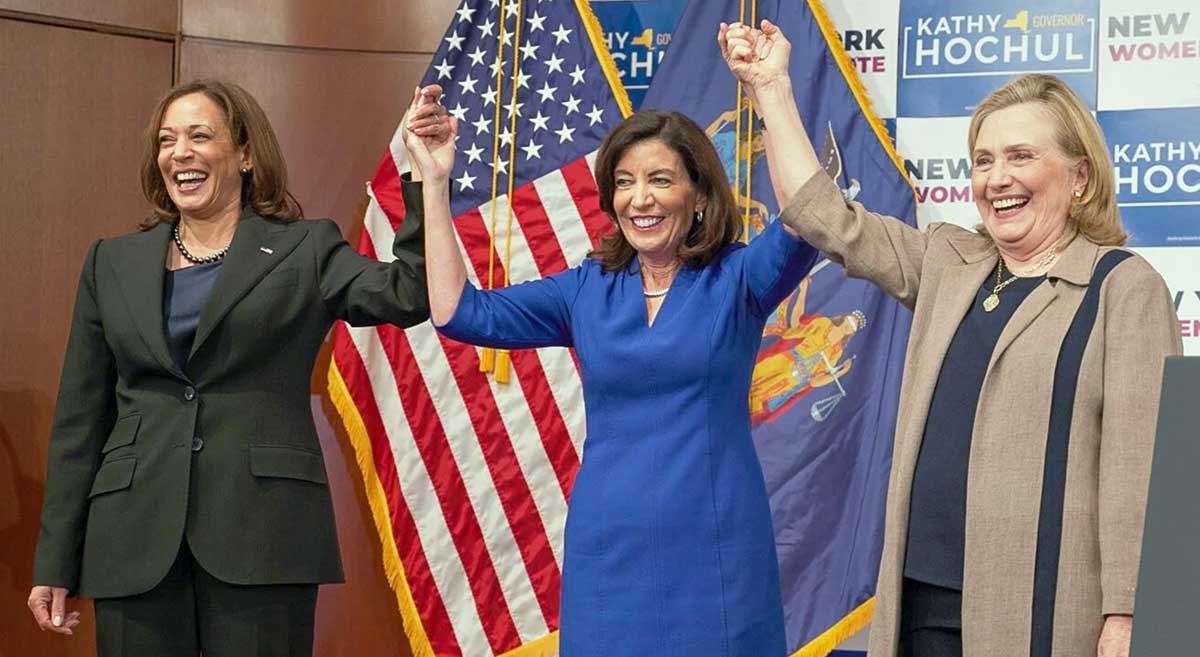
Despite the renewed conservatism of the 1980s, women still held an unequal role in American society. In the early 1990s, the return of a more liberal administration to the White House, with Democratic US president Bill Clinton and outspoken First Lady (and later presidential candidate) Hillary Clinton, helped usher in the age of third-wave feminism. Women pushed for more political representation and more inclusive policies in education and employment that prevented women from being tacitly punished for being mothers. Although women often seemed equal to men on paper, they routinely faced glass ceilings that prevented them from holding executive positions.
In the mid-2000s, the continued fight against glass ceilings was joined by the Me Too movement against sexual harassment. The movement gained prominence in 2017 when Hollywood actresses began speaking out against sexual harassment and assault they had experienced in their careers. This began nationwide discussions about discrimination still faced by women through personal relationships, including employers. Power differentials explained how many women in the 2010s and 2020s, although equal on paper, were manipulated or trapped into harmful relationships that limited their social, educational, or professional potential.