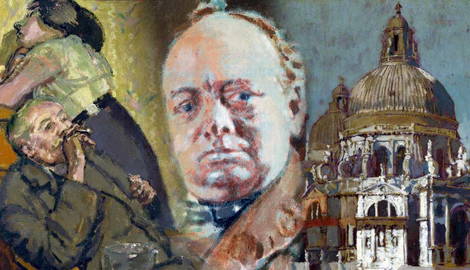
Walter Sickert is a rather obscure figure. A British Impressionist trained by James McNeill Whistler and Edgar Degas, he preferred dark tones and deep shadows. Outstandingly talented, Sickert was challenging to be around, shifting his beliefs and ideas as fluidly as he blended colors on his easel. Read on to learn more about seven works by Walter Sickert you need to know.
1. Walter Sickert’s “Little Dot Hetherington at the Old Bedford,” 1888-89
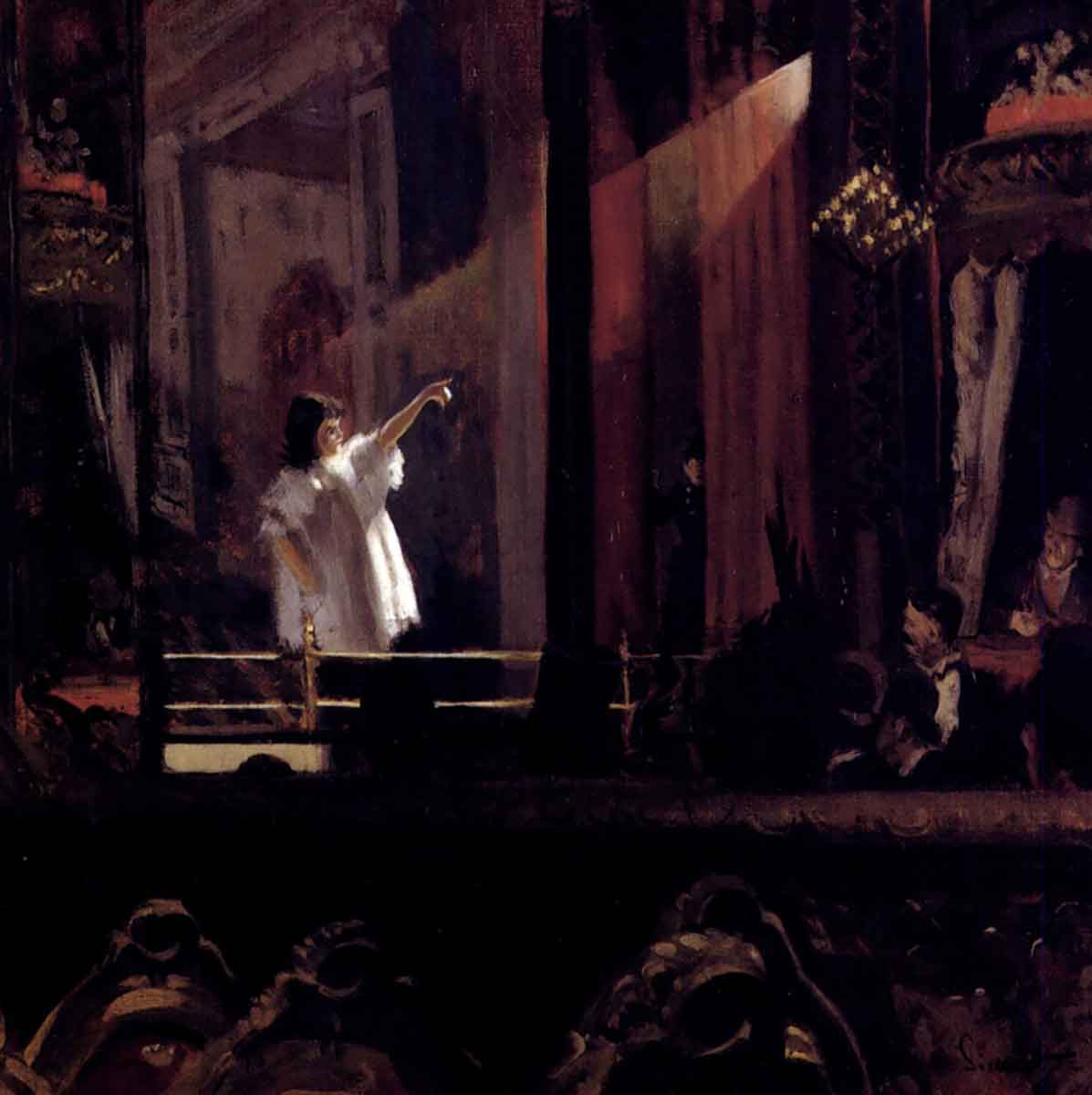
Before becoming an artist, Walter Sickert was interested in theater. Expressive and prone to drama from a young age, Sickert was an insufferable child who aggressively dominated his siblings, skillfully played the victim in every possible situation, and enjoyed the unconditional support of his mother, who clearly favored him over other children. Sickert’s stage career was rather brief. After playing several minor roles, he got bored with theater and started studying art in 1881. Ambitious up to the point of arrogance, he managed to secure a job as the assistant for James McNeill Whistler.
Despite a career change, the theater never truly left his life. Apart from frequently attending the shows, he regularly painted both actors on stage and the crowd that came to see them. In Victorian England, theater was a place for the middle to upper classes to socialize and present themselves to those of similar status.
2. Venetian Series, 1901
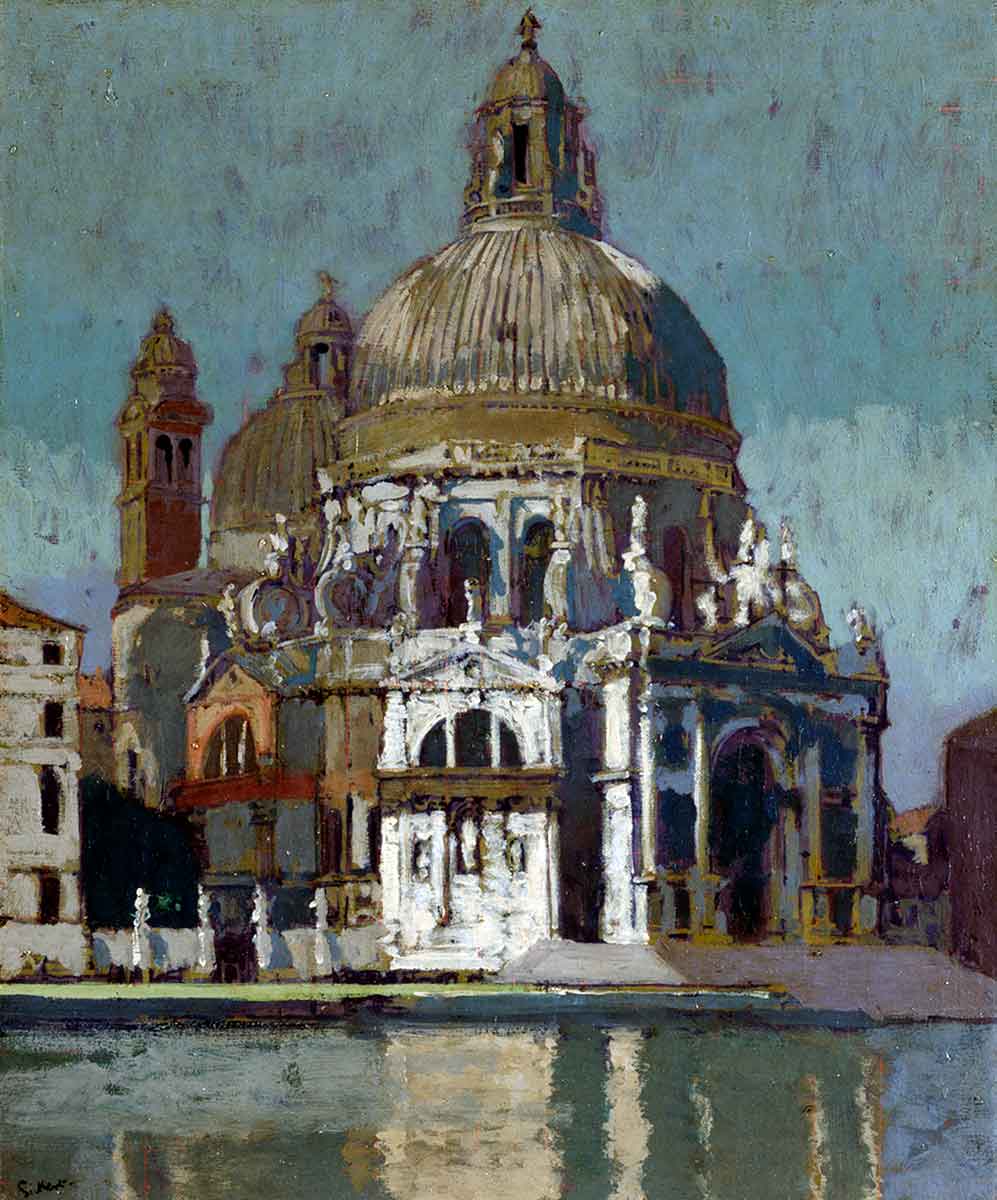
Sickert moved from Whistler’s studio to Paris, where he took lessons from Edgar Degas. Combining the influences of the two great modern artists, Sickert developed his own version of Impressionism based on dark tones and deep shadows. He also developed a deep connection to France, spending several years there throughout his life. Venice was another crucial space for Sickert’s oeuvre. In the mid-1890s, Sickert traveled there for the first time, and this trip left a formative impact on his style. Impressed by the architecture and the beauty of the city, he learned how to manipulate light and space by painting Venetian scenes.
Despite being considered a British artist, Sickert had a fluid natural and cultural identity. Born in Bavaria to Danish and Irish parents, in his early years, he identified as German and later as English and even French. The desire to shock and confuse was stronger in him than any other belief, so he changed political affiliation, opinions, and details of his biography as he pleased. He even changed his name in the 1960s, spending his final years as Richard Sickert.
3. La Hollandaise, 1906
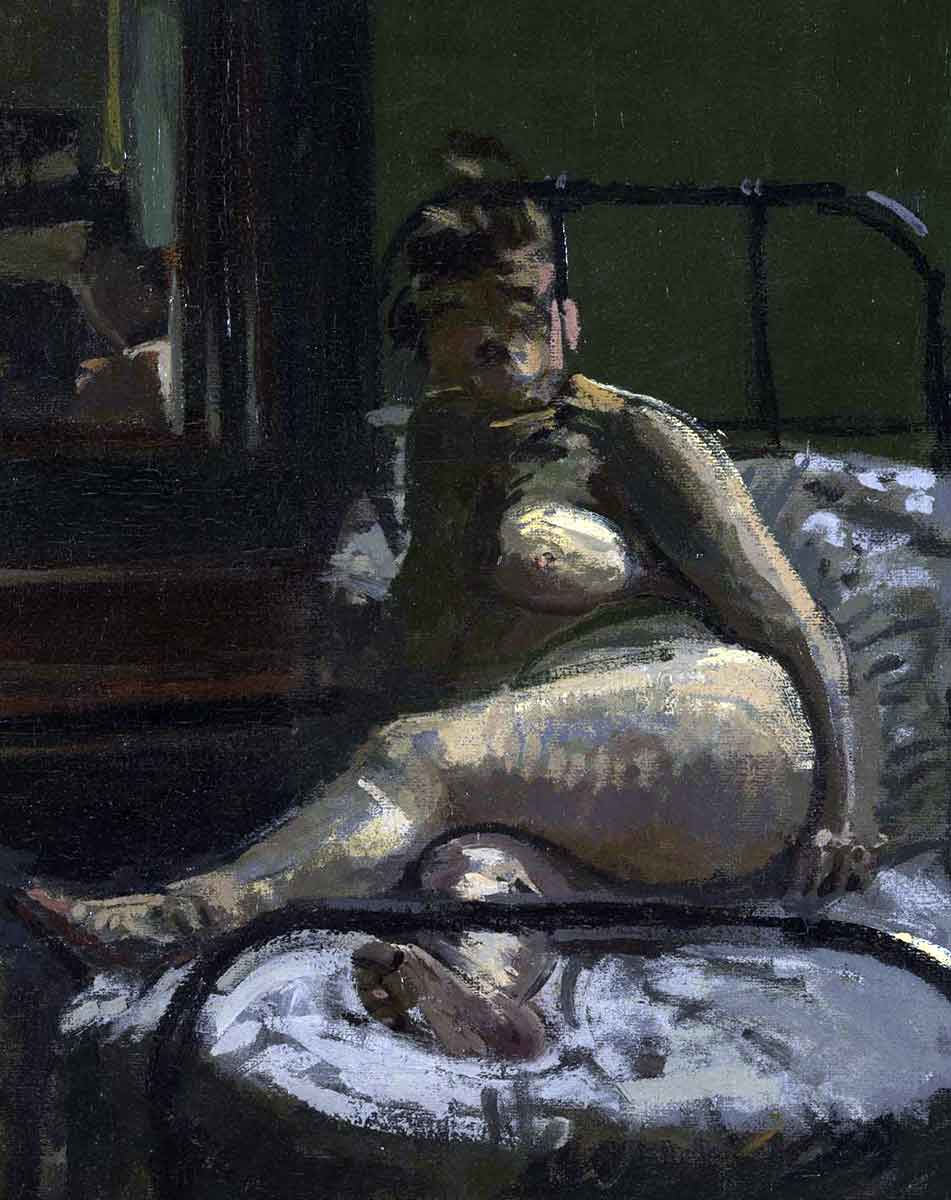
The nude feminine figure was one of Sickert’s most popular subjects. His style of painting was rather raw and without idealization. Something uncomfortably physiological in his works still repulses some viewers, especially women.
Most of Sickert’s painted subjects came from the working class. Wealthy and popular, he expressed a borderline unhealthy and fetishistic interest in working-class realities and bodies. He called himself a Realist, yet unlike the famous Realist Gustave Courbet, who felt a deep inner connection to the workers he painted, Sickert was an outside observer—a voyeurist, enjoyably picking at someone’s burdens and suffering.
4. Jack the Ripper’s Bedroom, 1906-07
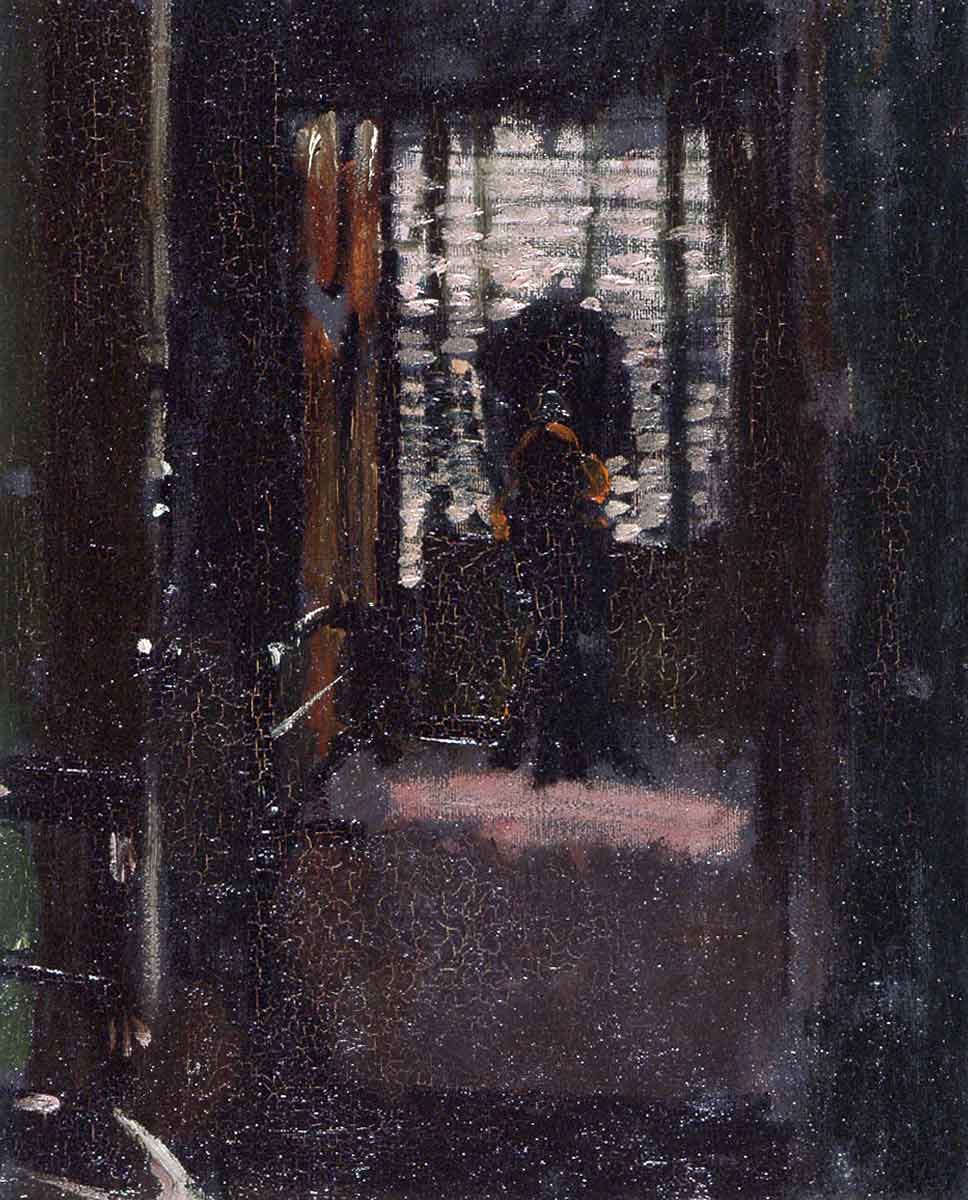
In 1888, London was shaken by a series of gruesome murders of sex workers. The victims’ bodies were slashed, and some of their inner organs were missing. The killer sent mocking letters to the police officials, introducing himself as Jack The Ripper. His identity was never revealed, and the horrific murders suddenly stopped in 1891. Historians believe that he either died or moved away from London.
In 1907, Walter Sickert painted the dark bedroom of the notorious killer, with the perpetrator’s figure looking out of the window. The layout of the room corresponded to one of Sickert’s studios in London, which he kept secret from his wife and most of his friends. The morbid undertone of the painting, as well as a series of factual coincidences, made some authors and enthusiasts assume that Sickert was, in fact, Jack the Ripper, who confessed his crimes through his art.
Jack the Ripper was the first serial killer to get extensive media coverage, yet, contrary to the popular misconception, he was not the first criminal of such sort. Modern urbanization and changing life pace made these crimes much more visible and easy to cover. Moreover, with the development of psychiatry and medicine, people became able to rationalize the presence of some horrific crimes. Some experts believe that before the modern era, especially in rural areas, the appearances of serial killers might have been attributed to supernatural forces. Thus, the medieval accounts of werewolves and vampires might have been actually the works of serial killers, who were dehumanized in desperate attempts to explain the motives for their actions.
5. Camden Town Murder Series, 1907
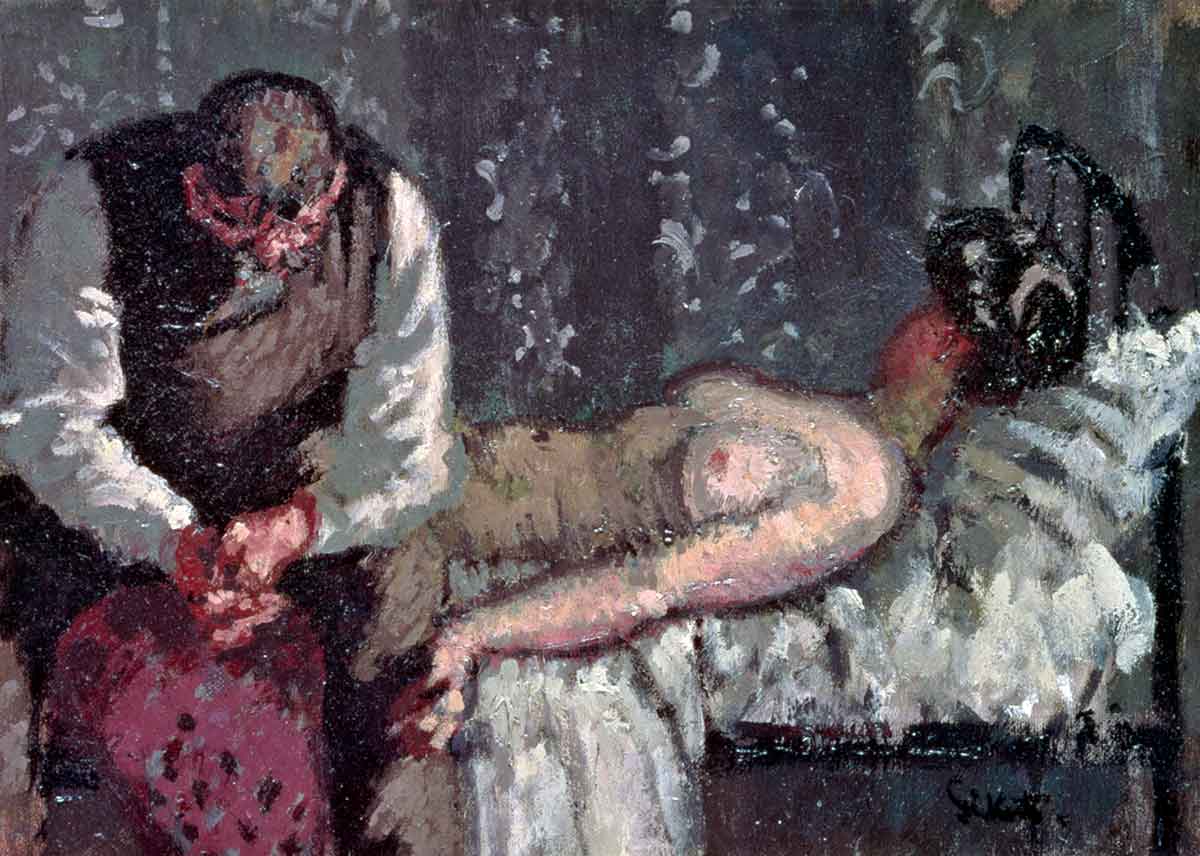
Another incriminating evidence against Sickert was revealed the following year. In 1907, a sex worker named Emily Dimmock was murdered in her bedroom in Camden Town, London. Although there was no clear link between the Ripper’s crimes and Dimmock’s murder, the press immediately announced the return of the notorious serial killer.
At the time, Sickert rented a studio in Camden Town. A famous and popular painter, he appeared at the crime scene while the police were there. Later, he attended a public hearing for the murder suspect, a former client of Dimmock who was soon cleared of all charges. The following year, he presented a series of paintings titled Camden Town Murder, with nude (and supposedly dead) women lying on beds next to fully clothed and desperate men.
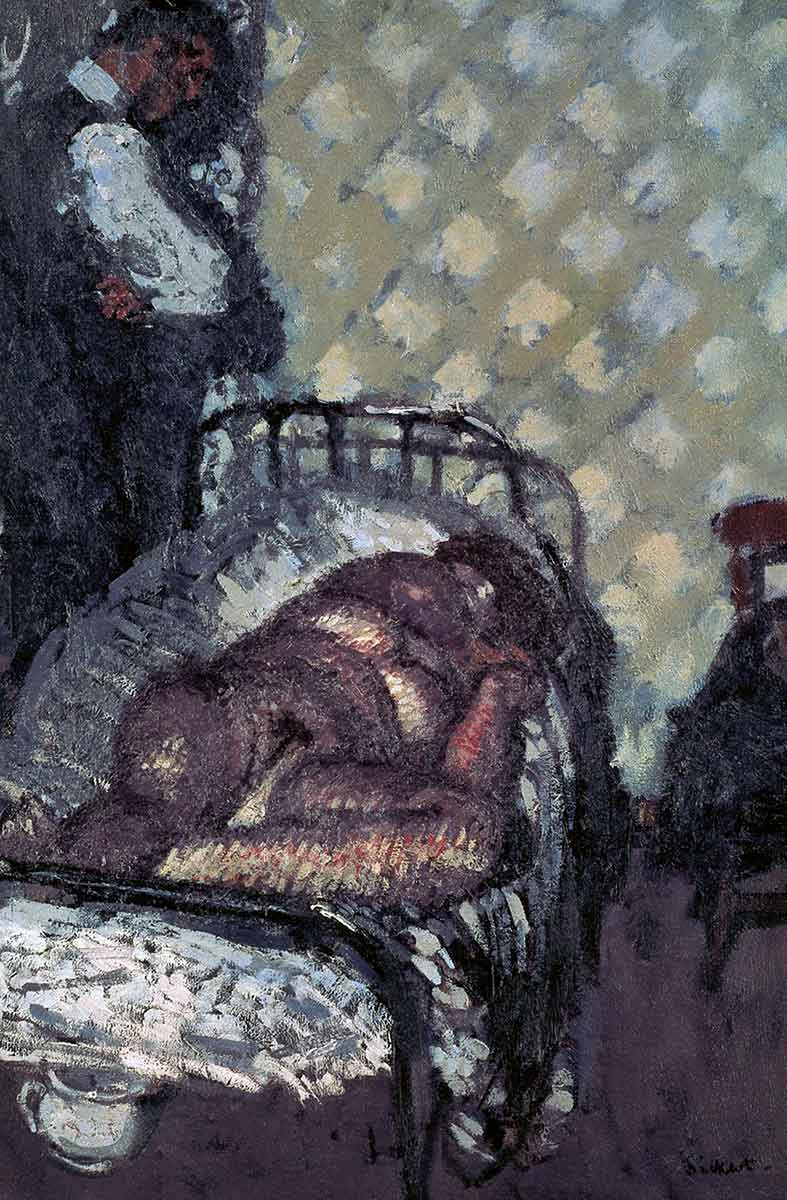
The proponents of the Ripper theory focus on Sickert’s obsession with the case and the supposed matches of the victims’ photographs with nude figures in his painting. Although this connection seems tempting, true crime enthusiasts need to understand how fanatical the public obsession with this case was, especially in the circles of cynical intellectuals. The media spread theories of various degrees of absurdity and recounted every gruesome detail of the murder. Thousands of people found it funny to send forged Ripper letters to the police, looking for attention and trying to confuse the authorities. Some were horrified by the crimes, refusing to let their wives and daughters leave their houses, while others found them amusing.
Attending public trials was also nothing out of the ordinary, especially for artists at the time. Sickert’s teacher, Edgar Degas, was interested in physiognomy and went to trials and prisons to study the faces of criminals. Like many of his contemporaries, he believed that the inclination towards crime was reflected by a person’s facial features and body. That being said, while Sickert’s interest seems gruesome, it was not entirely unconventional. For sure, it cannot lead to any accusations or even suspicions. As noted by Jack the Ripper experts, with the same degree of success, one could accuse Vincent van Gogh, Mark Twain, or even Queen Victoria herself of being the infamous murderer.
6. Ennui, 1913
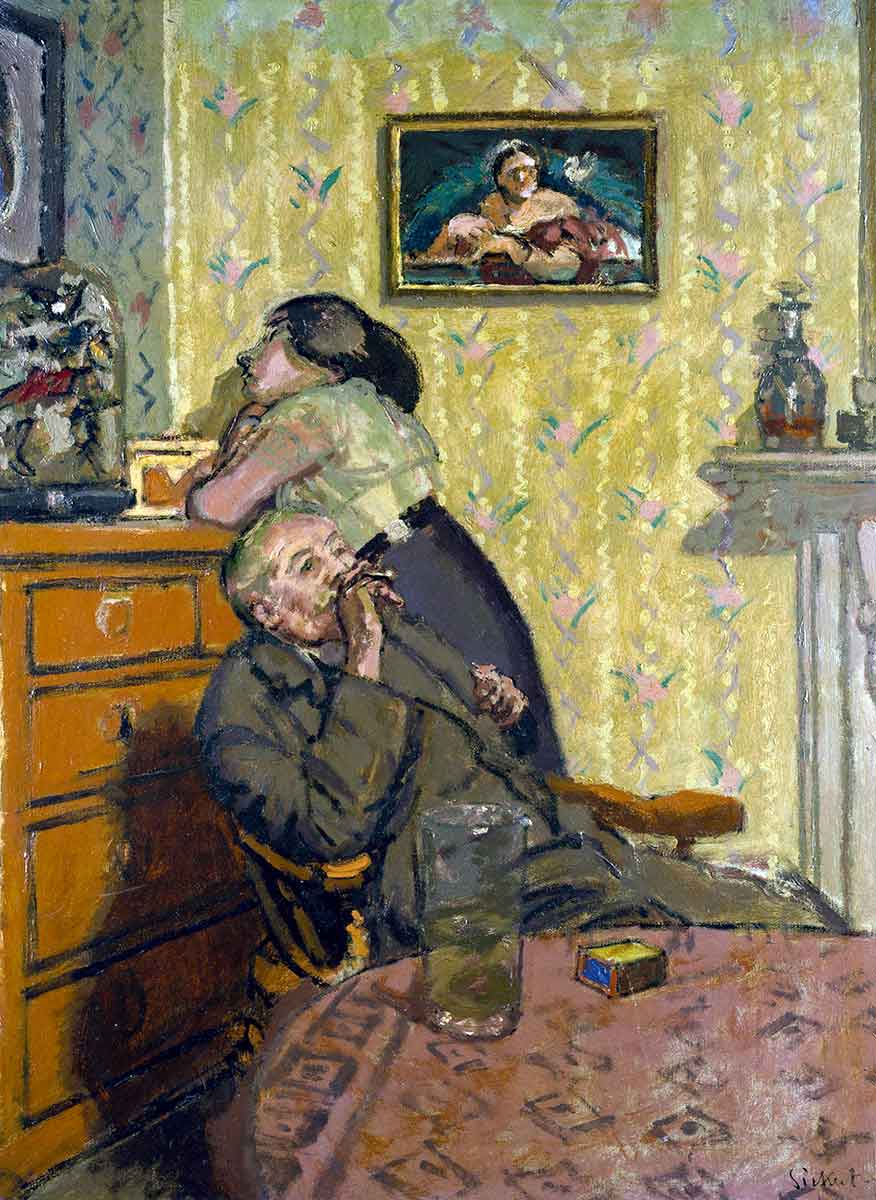
Sickert was progressive in painting style but rather conservative in his work habits. For years, he moved the same props from studio to studio (including the iron bed frame that appeared on many of his paintings) and worked with the same models.
One of his most cherished models was a couple, Hubby and Marie Hayes, a former sailor and Sickert’s housekeeper. Hubby Hayes has also worked in the Sickert household for a while but was fired for being constantly drunk. Ennui was one of the most famous paintings that featured a couple, bored and annoyed with each other, yet living together out of habit. Their sharp emotional detachment is unsettling. Virginia Woolf noted that the scene did not offer a hint of a possible solution for the two, with “the accumulated weariness of innumerable days” discharging its burden over them.
7. Walter Sickert’s Portrait of Winston Churchill
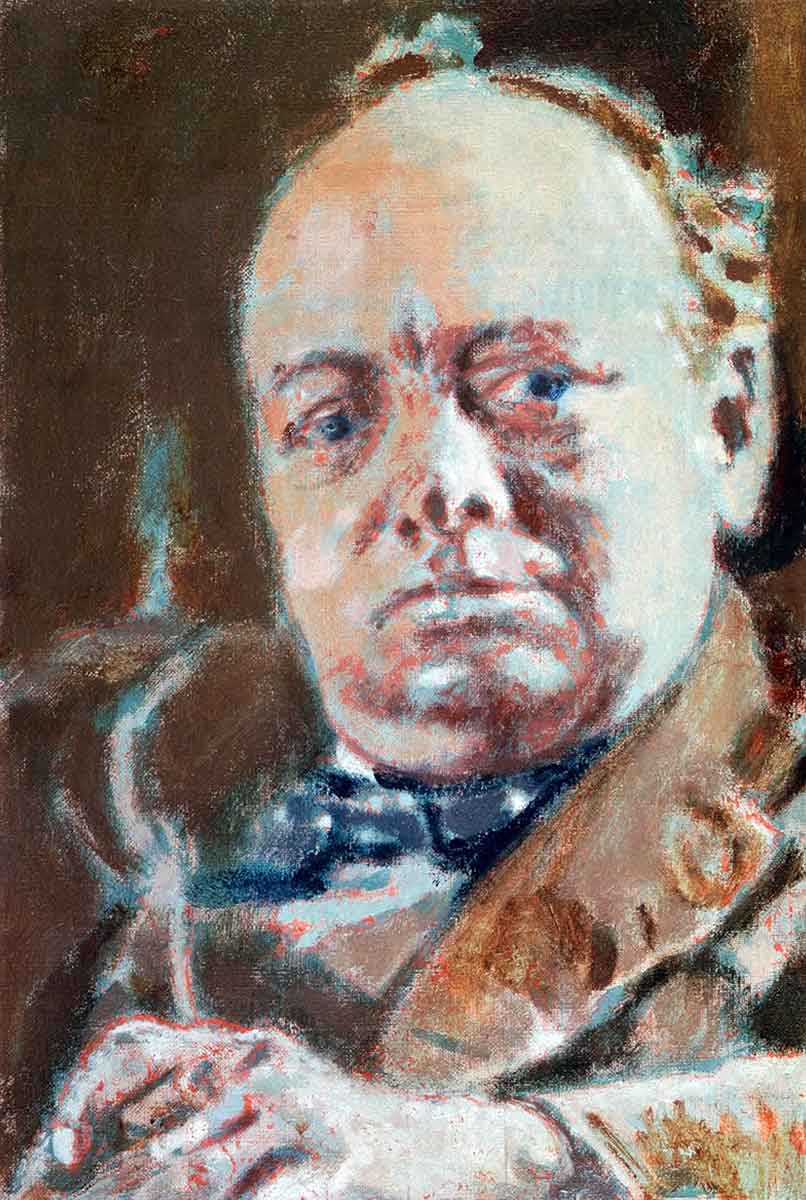
A lesser-known yet important work in Walter Sickert’s later oeuvre was his 1927 portrait of Winston Churchill. Churchill was an amateur painter, rather conservative in his artistic views. Still, he liked Sickert’s work and even befriended the artist after several visits to his studio. Sickert occasionally gave Churchill painting lessons, broadening his creative horizons.
Despite their friendship, Churchill disliked the portrait and gave it away to an art gallery. At the end of his life, Sickert became ill and impoverished despite his previous success. Churchill was among those who raised funds to cover Sickert’s debts. When Churchill became the Prime Minister, he awarded Sickert an annual pension that would support him until his death in 1942.